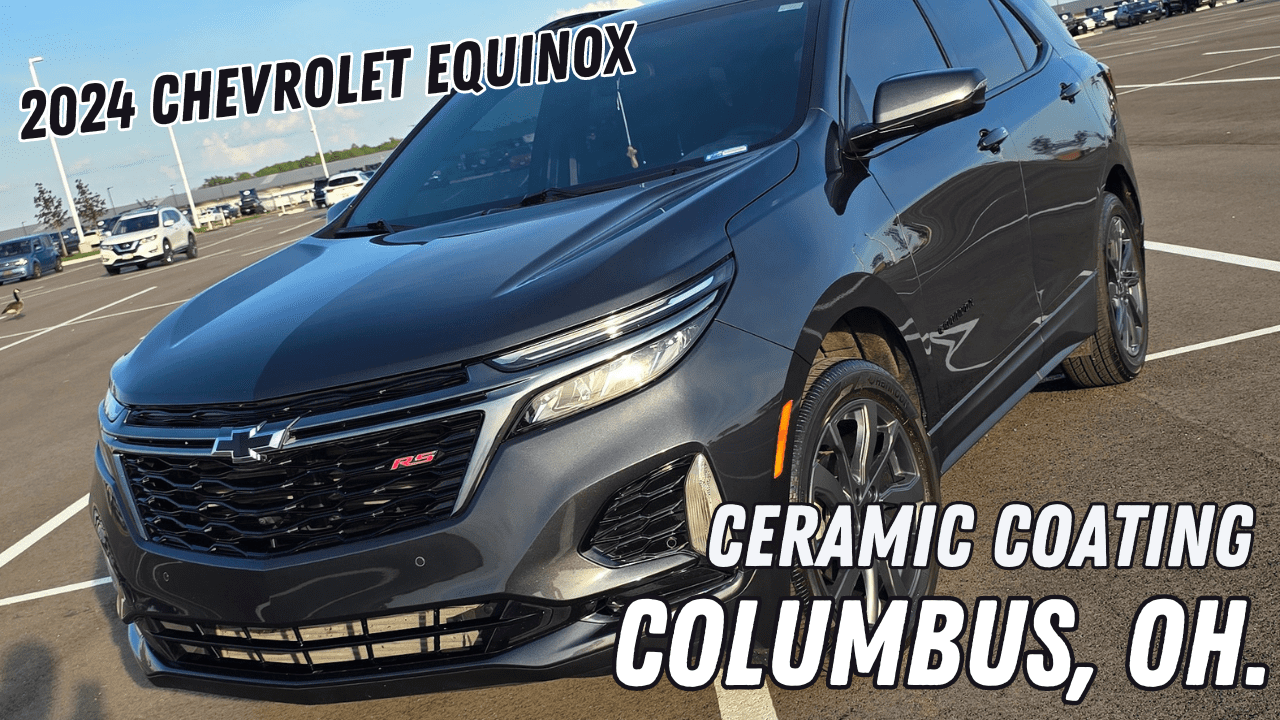
You're standing in the garage with a $99 DIY ceramic coating kit in one hand and a quote from a local shop in the other, and the numbers don't look close. If you drive around Hilliard or Columbus, you already know the key question isn't which bottle costs less. It's which choice survives winter salt, summer UV, and constant washing without turning into a regret job six months later.
The straight answer is this, professional ceramic coating is usually the better buy for newer cars, nicer cars, and anyone who wants the finish done right the first time. DIY ceramic coating can make sense on an older daily driver or a car you're willing to treat as a learning project. The gap is not mainly chemistry. It's prep, environment, and skill.
Table of Contents
- Why Columbus Drivers Are Asking This Question Right Now
- What Each Option Actually Includes
- Real Costs in 2026 and the Hidden DIY Expenses
- How Each Coating Holds Up Through a Columbus Year
- Common DIY Mistakes We See in the Shop
- Prep Quality and Installer Skill Make the Real Difference
- Which Option Is Right for Your Car and How to Move Forward
Why Columbus Drivers Are Asking This Question Right Now
A few years ago, most people who asked about coating a car wanted the shop to handle it. Now I get the same question from folks in Dublin, Hilliard, and Westerville who've watched enough videos to feel like they can do it themselves. That shift makes sense. Consumer kits are more visible, more affordable, and a lot easier to buy, while pro coatings have moved from niche to mainstream premium detailing.
The real decision is about time, not just price
If you're comparing a bottle on the counter to a shop quote, you're comparing the wrong things. The better comparison is how long the finish stays clean, how predictable the result is, and how much correction risk you're taking on. A professional service commonly includes decontamination, paint correction, panel prep, controlled application, and curing, while DIY usually leans on a basic wash, a wipe-on product, and hope.
Practical rule: if the car's paint already has swirls, water spots, or light haze, coating it without correction just seals those defects in.
That matters in Columbus because the car doesn't live in a climate-controlled brochure. It lives through road salt in winter, tree pollen in spring, UV and heat in summer, and repeated drive-thru washes all year long. A coating that looks great on day one but fails early in real use is not a win.
The other change is that the market has matured. Professional ceramic coating is no longer a rare luxury service reserved for collector cars. It's now a normal protection choice for daily drivers, lease returns, and new vehicle owners who want easier maintenance and a more durable finish. The important question is whether your car, your garage, and your patience line up with the DIY route.
For a local breakdown of how Ohio weather beats on paint, see how Columbus weather affects your car paint and how ceramic coatings help.
What Each Option Actually Includes
The mistake I hear most often is treating DIY and professional coating like the same service with a different price tag. They are not the same. The bottle matters, but the prep and the working conditions decide whether the coating bonds cleanly or seals in problems.

DIY usually skips the hard part
A basic DIY job looks simple on video. Wash the car, wipe on the coating, wait, then call it protected. That is the version that sells kits. The actual job takes more discipline. You still need a decontamination wash, and if the paint has embedded grit or rail dust, a clay bar treatment may be needed before anything touches the panel.
The next step is where most DIY jobs go sideways. Paint correction means machine polishing the paint to remove swirl marks, haze, and light scratches before coating. Skip that step and you do not remove the defects, you trap them under the coating. You get gloss over flaws, which is not the same thing as a corrected finish.
Professional work adds control at every step
A proper professional process includes more than product application. The vehicle is washed, decontaminated, corrected, wiped with a panel-prep solution, coated panel by panel, leveled carefully, and then cured in a controlled environment. That is where the quote goes up. You are paying for hands-on labor, lighting, tools, and judgment, not just product.
Here is the difference in plain terms.
- DIY route: basic wash, wipe-on coating, maybe a garage cure, and very little margin for error.
- Professional route: decontamination, correction, prep wipe, careful application, inspection under bright light, and controlled curing.
A shop also has tools not commonly found in a garage. Dual-action polishers, calibrated lighting, microfiber systems, and curing support all change the result. One detailing source notes that professional jobs can involve 6-16 hours of prep plus 3-4 hours of application before cure time source material from Feynlab's comparison guide. That is where the work is.
Real Costs in 2026 and the Hidden DIY Expenses
The price tag on a DIY bottle looks low next to a shop quote, and that is why people get tempted. Consumer products are often priced around $100-$300 per bottle, and DIY kits can start near $50-$150. Professional detail shops commonly charge about $1,000-$5,000 for the full job, including prep, coating, and maintenance Feynlab comparison guide.
What DIY buyers forget to budget
The bottle is not the whole bill. A serious DIY setup usually needs a proper wash kit, clay or decontamination supplies, panel prep spray, several microfiber towels, and sometimes a machine polisher if the paint needs correction. If you do not already have a garage with stable temperature and humidity, you are also betting on weather, timing, and a clean place to work.
A realistic DIY setup can climb well above the bottle price once the extra pieces are in the cart. You can keep the process simple, but the moment the paint needs correction or the garage environment is poor, the spend rises fast. That is the part people miss when they compare a bottle to a shop invoice.
| Cost Item | DIY Route | Professional Route |
|---|---|---|
| Coating product | Lower upfront product cost | Included in service package |
| Wash and decontamination supplies | Extra purchase | Included in prep |
| Paint correction tools | May be required separately | Included as part of the job |
| Microfiber towels, prep spray, applicators | Extra purchase | Included in service package |
| Controlled curing environment | Usually DIY garage or driveway | Built into the process |
| Rework if coating fails | Paid separately | Lower risk when the first application is done correctly |
The real economics show up later
The hidden cost is not just the gear. It is the chance that you end up paying a shop to undo a bad result. If a DIY coating flashes unevenly, streaks, or leaves high spots, the correction work can erase the savings fast. Feynlab's DIY vs professional ceramic coating guide makes the same basic point, the prep and application standard behind the finish matters as much as the product itself.
That is why the total-cost view matters more than the counter price. If the car already needs paint correction, or if you know you will not tolerate a flawed finish, the professional route usually makes more sense over time. The cheap bottle is only cheap if the first try goes right.
How Each Coating Holds Up Through a Columbus Year
A coating does not live in a lab. It lives through an Ohio commute. Winter throws salt and grime at the finish. Spring brings pollen and sap. Summer adds harsh UV and heat. Fall brings rain, leaf debris, and another round of washing. That is the part most online comparisons skip.

What winter and summer do to the finish
Consumer coatings in hot, high-UV conditions can show meaningful degradation in about 12-18 months Euroluxe's pro vs consumer comparison. Other guidance describes DIY 9H coatings as often expected to last about 2 years, while professional coatings can last up to 5 years under good conditions. A different industry source places consumer coatings in the 1-3 year range and professional-grade coatings at 3-7+ years depending on product tier and maintenance Redline Car Garage guide.
The pattern is plain. DIY coatings usually give you a shorter service life, while professional coatings are built for longer protection and more predictable results. That is why local owners who keep a vehicle for several years usually go pro. If you want a more detailed look at longevity, how long ceramic coating lasts gives a solid baseline.
What you should expect from maintenance
Ceramic coating is hydrophobic, so water sheets and beads more easily, and washing gets simpler Lionheart's Columbus driver guide. It does not eliminate washing, and it does not stop rock chips. If impact protection is the goal, paint protection film is the better tool, not coating.
Bottom line: coating helps with cleanup and chemical resistance, but it does not make the car bulletproof.
For Columbus drivers, a professional coating earns its keep when you want the finish to hold up through repeated seasons with less babysitting. If you only want short-term gloss and easier washing, DIY can be fine. If you want stronger multi-year protection, the pro route is the safer play.
Common DIY Mistakes We See in the Shop
When a DIY coating goes bad, the problems usually look obvious once the car rolls under the lights. High spots, streaks, and dull patches show up fast. The frustrating part is that most of those issues start before the bottle ever touches the paint.
The failures that show up most often
- High spots that never leveled: The coating was left on too long or not wiped evenly, so it hardened in visible patches.
- Streaking from uneven application: Too much product went on one panel, not enough on the next, and the finish dried unevenly.
- Contamination locked under the coating: The paint was not fully decontaminated, so dirt or bonded fallout ended up sealed under the layer.
- Hazy sections from poor lighting: The garage looked fine to the owner, but application marks were easy to miss in weak light.
- Flash time problems in a warm garage: The coating cured too quickly, which made leveling difficult and left visible residue.

What it costs to fix
If the coating is badly uneven, the shop usually has to polish it off and start over. That's where the savings disappear. A light mistake can become a full correction job, and once you add re-polishing, new prep materials, and reapplication, the DIY bill doesn't look so cheap anymore.
For context on why correction matters before coating, read how to remove car swirl marks. The short version is simple, if the finish is not clean and corrected first, coating just preserves the mess.
DIY is still a fair option in the right situation. It makes sense on an older daily driver, in a garage with stable light and temperature, or for an owner who enjoys the process and accepts the risk. It's not a good gamble if the car is new, dark-colored, or hard to repaint without pain.
Prep Quality and Installer Skill Make the Real Difference
Two cars can get the same coating bottle and end up miles apart in result. That's not because the bottle changed. It's because the surface prep, application technique, and inspection process changed.
The human factors you should care about
Surface prep decides whether the coating bonds well or fails early. Application technique decides whether it levels cleanly or leaves streaks. Environment control matters because heat, humidity, and dust change how the product behaves. Post-application inspection catches the defects before the coating fully sets.
Installer training matters because it teaches the timing and handling around that process. Certification doesn't guarantee perfection, but it does signal that the installer understands product behavior, flash times, and environmental control. That matters a lot more than most buyers realize.
Ask the shop what correction is included, what product is being used, what the warranty covers, and how the car is stored during cure.
For DIY, ask yourself the same thing. Do you have the lighting to inspect every panel? Do you have the patience to correct problems before they harden? Do you have a place to keep the car still while the coating sets? If the answer is no, don't pretend the process is the same as a pro job.
One Columbus option for owners who want the service handled in-shop or on-site is Lionheart Detailing, which provides ceramic coating along with paint correction and paint protection film. That combination makes sense when the paint needs more than a quick wipe-on layer.
Which Option Is Right for Your Car and How to Move Forward
Here's the honest recommendation. If the car is an older daily driver, a DIY coating can be perfectly reasonable as long as you understand the limits and accept the risk. If the car is new, leased, luxury, specialty, or a vehicle you plan to keep long term, go professional. The prep work drives most of the outcome, and that's where DIY usually falls short.
A simple decision rule
- Choose DIY if the car already has wear, you have a controlled garage, and you want a lower-cost project.
- Choose professional if the paint needs correction, the car is valuable, or you want the finish to hold up through several Ohio seasons.
- Choose PPF instead of coating alone if you're worried about rock chips and abrasion, because coating doesn't stop impact damage.
That's the practical split for Columbus drivers. DIY is for budget and experimentation. Professional coating is for results and risk control. If you want the finish to look right and stay that way longer, pay for the prep.
For Hilliard and Columbus owners who want a straight opinion before booking, Lionheart Detailing handles ceramic coating, paint correction, and Columbus PPF / Hilliard paint protection film work from its Hilliard location at 4402 Weaver Court North, Suite 204, and the shop can also come to you with a mobile setup. The phone number is +1 614-620-6039, and the crew works Monday through Friday, 9:00 AM to 5:00 PM.
If you're trying to decide between professional ceramic coating vs DIY ceramic coating in Columbus, bring the car to a shop that does this work every week and get a real opinion on the paint first. Lionheart Detailing can inspect the finish, explain whether correction is needed, and walk you through ceramic coating, PPF, or full detailing without the sales pitch. Visit Lionheart Detailing to ask for a quote and get the right protection plan for your car.