A DIY ceramic coating kit can look like the easy answer at first. You see a bottle online, read the promise of gloss and protection, and start wondering why anyone would pay for professional ceramic coating services when a consumer-grade kit costs much less.
That is usually where the confusion starts.
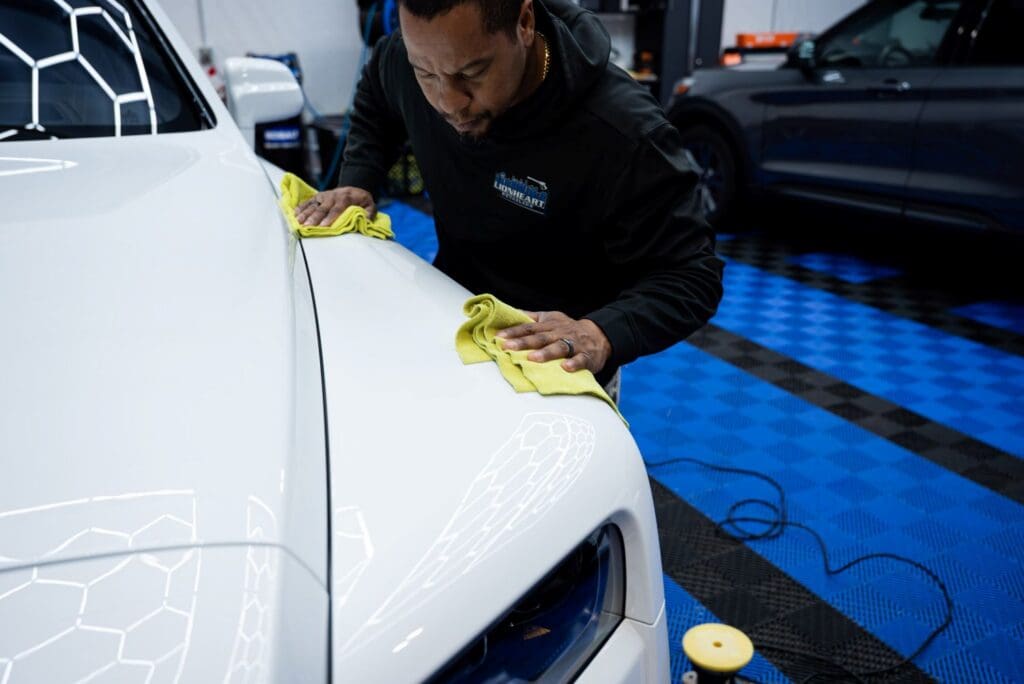
Ceramic coating is not just about wiping a product onto paint. The final result depends on the condition of the vehicle before the coating is applied, the type of coating used, the prep process, the curing environment, and the skill of the installer. If the paint has swirl marks, oxidation, bonded contaminants, or old wax left behind, the coating can lock in those issues instead of solving them.
So, is car ceramic coating worth it? For many Columbus drivers, yes, but the answer depends heavily on how it is installed. A professional ceramic coating is designed to protect your vehicle’s paint, increase gloss, make maintenance easier, and provide longer-lasting results. A DIY kit may help with short-term water beading, but it usually cannot match the durability, finish, or risk management of a professional installation.
If you are comparing DIY vs professional ceramic coating, here is what you should know before choosing the cheaper option.
Table of Contents
- Your Guide to Ceramic Coating Options in Columbus
- DIY vs Professional Ceramic Coating: The Main Difference
- Why Paint Correction Matters Before Ceramic Coating
- Product Quality, Durability, and Long-Term Protection
- Application Risk and Curing Process
- Is Car Ceramic Coating Worth It for Columbus Drivers?
- Choose Professional Ceramic Coating in Columbus
- FAQs
Your Guide to Ceramic Coating Options in Columbus
A ceramic coating is a protective layer that bonds to your vehicle’s paint and helps defend it from everyday exposure. For Columbus drivers, that can mean protection against UV rays, road grime, rain, dirt, winter salt, bird droppings, pollen, and other contaminants that build up over time.
But not every coating is the same.
Some products are made for quick consumer use. Others are professional-grade coatings that require proper prep, controlled application, and trained installers. The difference matters because ceramic coating is not a magic shield. It performs best when the paint underneath has been properly cleaned, decontaminated, polished, and prepared.
At Lionheart Detailing, ceramic coating services are built around that process. Their ceramic coating packages include options such as enhancement polishing, one-step paint correction, two-step paint correction, multi-year coating protection, trim and headlight coating, warranty access, maintenance program access, and professional application.
That is a very different experience from applying a bottle of coating in your garage over paint that may still have scratches, oxidation, or leftover residue.
What most car owners get wrong about ceramic coating
A lot of car owners think ceramic coating is mostly about shine. The shine is part of it, but it is not the whole point.
The real value comes from the full system:
- Washing and decontaminating the paint
- Removing embedded contaminants
- Inspecting the paint under proper lighting
- Correcting swirl marks, oxidation, or scratches when needed
- Applying the coating evenly
- Allowing the coating to cure properly
- Maintaining the coating correctly afterward
The coating is the final layer. The prep work is what determines whether that final layer looks clean, glossy, and consistent.
Practical rule: If your vehicle already has swirl marks, hazy paint, oxidation, or rough spots, a DIY ceramic coating will not fix those issues. It may simply seal them in.
DIY vs Professional Ceramic Coating: The Main Difference
The biggest difference between DIY and professional ceramic coating is not just the bottle of product. It is the entire process before, during, and after the coating is applied.
A DIY kit is usually built for ease of use. A professional service is built for surface preparation, paint correction, proper bonding, durability, and long-term results.
Quick comparison table
| Category | DIY Ceramic Coating | Professional Ceramic Coating |
| Prep Work | Usually basic wash and wipe-down | Full wash, decontamination, inspection, and proper prep |
| Paint Correction | Often skipped | Included or recommended based on paint condition |
| Product Quality | Consumer-grade coating | Professional-grade coating systems |
| Durability | Usually shorter-term | Multi-year protection depending on package |
| Application Risk | Higher risk of streaks, high spots, uneven coverage, or poor bonding | Lower risk due to trained installation and proper lighting |
| Curing Process | Depends on home environment | More controlled process and better aftercare guidance |
| Final Finish | Depends heavily on user skill and paint condition | Cleaner, glossier, and more consistent result |
| Long-Term Value | Lower upfront cost but more risk | Higher upfront investment with stronger finish and protection |
A DIY kit can still offer some benefits when used correctly on a well-prepped vehicle. But the average driver does not have the tools, lighting, compounds, polishers, prep chemicals, or controlled workspace needed to get professional-level results.
That gap becomes even more obvious on darker paint, luxury vehicles, daily drivers with wash marks, or cars that have gone through automatic brush washes.
Why prep work decides the result
Ceramic coating bonds to the surface it is applied to. That means the coating does not know whether the surface is clean, polished paint or paint covered in water spots, old wax, swirl marks, or embedded grime.
If the prep is rushed, the coating may not bond properly. If the paint has defects, the coating can highlight them. If the product is applied unevenly, high spots or streaks can show up under sunlight.
Professional ceramic coating services reduce those risks because the vehicle is prepared before the coating goes on. That is why Lionheart Detailing connects ceramic coating with polishing, paint correction, and package levels based on the condition of the vehicle.
Why Paint Correction Matters Before Ceramic Coating
Paint correction is one of the biggest reasons professional ceramic coating usually outperforms DIY.
Before applying a coating, the paint should be inspected for defects. These can include:
- Swirl marks
- Light scratches
- Oxidation
- Holograms
- Water spots
- Bug etching
- Bird dropping marks
- Dull or hazy paint
- Improper wash damage
If these issues are left alone, the ceramic coating will not remove them. In many cases, the coating can make them easier to see because the added gloss increases reflection.
What happens if you coat over scratches and swirls
Imagine putting a clear protective layer over a dirty window. The window might be protected, but it still looks dirty underneath. Ceramic coating works the same way.
If you apply a DIY coating over paint that has not been corrected, the scratches and swirls stay there. Worse, the coating can make future correction more complicated because the coating may need to be polished off before the paint can be properly corrected.
This is why professional installers do not treat coating as a simple wipe-on product. They look at the condition of the paint first.
Lionheart Detailing’s ceramic coating packages reflect this. Their Level 1 package includes an enhancement polish designed to add gloss, while higher packages include one-step or two-step paint correction for more noticeable defect removal. That matters because the right prep level depends on what the paint actually needs.
Protection should come after preparation. Skipping prep is one of the fastest ways to turn a ceramic coating investment into a disappointing result.
Why professional inspection matters
Most car owners do not see the full condition of their paint until it is under direct sunlight or proper shop lighting. A vehicle may look clean in the driveway but show swirl marks, haze, and wash damage once inspected closely.
A professional detailer can identify whether the vehicle needs:
- Basic decontamination
- Enhancement polishing
- One-step paint correction
- Two-step paint correction
- Spot correction for specific problem areas
- Trim, wheel, glass, or headlight coating add-ons
That inspection helps match the service to the condition of the vehicle instead of guessing.
Product Quality, Durability, and Long-Term Protection
Another major difference in the DIY vs professional ceramic coating conversation is product quality.
DIY ceramic coating kits are usually made for easier application. That can be helpful for beginners, but it often comes with trade-offs in durability, chemical resistance, and long-term performance.
Professional-grade coatings are typically designed for stronger bonding and longer-lasting protection. They also require more care during installation, which is why they are usually applied by trained professionals.
DIY coating kits
DIY kits may be useful for car owners who enjoy detailing and want a short-term layer of hydrophobic protection. They can improve water beading and make the vehicle feel slicker when applied correctly.
However, DIY coatings have limitations:
- They may not last as long as professional coatings
- They rely heavily on proper paint prep
- They can be difficult to apply evenly
- They may leave high spots if not leveled correctly
- They may fail early if applied over residue or contaminants
- They usually do not include warranty support
- They do not replace paint correction
For a newer vehicle in good condition, a DIY kit may offer a temporary upgrade over wax or sealant. But for a vehicle that is driven daily around Columbus, exposed to winter road salt, rain, sun, and pollen, a professional coating usually offers better long-term value.
Professional-grade ceramic coatings
Professional ceramic coatings are built for stronger protection and longer performance. At Lionheart Detailing, coating packages include multi-year options, including coatings applied to paint, trim, headlights, and other surfaces depending on the package.
The value is not just the coating itself. It is the complete installation process.
Professional ceramic coating can help provide:
- Deeper gloss
- Easier washing
- Better hydrophobic behavior
- Stronger resistance to dirt and grime
- UV protection
- Resistance against chemical staining
- Longer-lasting protection than traditional waxes or sealants
- Better preservation of the vehicle’s appearance
- Improved long-term maintenance
Ceramic coating does not make a vehicle scratch-proof, rock-chip-proof, or maintenance-free. It still needs safe washing and proper care. But when installed correctly, it can make the vehicle easier to clean and help preserve the finish for years.
Application Risk and Curing Process
DIY ceramic coating mistakes are common because the process looks easier than it is.
The product may come in a small bottle with simple instructions, but real-world application is sensitive to timing, temperature, humidity, lighting, surface condition, and leveling technique. If one section flashes too long or is not wiped properly, high spots can appear. These may look like oily streaks, dark patches, or rainbow-like marks in the paint.
Once the coating cures, those mistakes are not always easy to remove.
Where DIY applications usually go wrong
The most common DIY ceramic coating problems include:
- Applying coating over old wax or sealant
- Skipping clay bar or decontamination steps
- Coating paint that still has swirl marks or oxidation
- Using too much product
- Waiting too long before leveling
- Missing high spots
- Applying coating in poor lighting
- Applying coating in a dusty garage or driveway
- Getting the vehicle wet too soon after application
- Washing too aggressively after the coating is installed
These mistakes can reduce durability and create uneven results. In some cases, the vehicle may need polishing to remove the failed coating before the job can be corrected.
That is where the “cheap” option can become expensive.
Why controlled installation matters
Professional coating installation gives the product a better chance to bond and cure properly. A trained installer understands how to prep the surface, apply the product evenly, monitor flash time, level the coating, and inspect the finish before the vehicle is returned.
Curing is also important. Ceramic coatings need time to bond. During that window, the vehicle should avoid rain, harsh washing, water spotting, and contamination when possible. A professional shop can give clear aftercare instructions so the coating is not compromised immediately after installation.
For Columbus drivers, this matters because weather can change quickly. Rain, humidity, pollen, and winter grime can all interfere with a coating if timing and aftercare are ignored.
Is Car Ceramic Coating Worth It for Columbus Drivers?
For many drivers, yes, car ceramic coating is worth it when it is professionally installed and properly maintained.
The value comes from more than shine. A quality ceramic coating can help protect the paint, reduce how strongly contaminants bond to the surface, make washing easier, and maintain a cleaner, glossier appearance over time.
That is especially helpful for Columbus drivers dealing with:
- Winter road salt
- Rain and road film
- Pollen-heavy seasons
- UV exposure
- Tree sap
- Bird droppings
- Brake dust
- Daily commuting grime
- Automatic wash damage from previous care
However, ceramic coating is only worth it when expectations are realistic.
It will not stop rock chips. It will not prevent every scratch. It will not eliminate washing. If you want physical impact protection from road debris, paint protection film is the better option for high-impact areas. If you want easier maintenance, gloss, and surface protection, ceramic coating is a strong choice.
When DIY may make sense
A DIY ceramic coating may make sense if:
- The vehicle is already in excellent condition
- You understand proper prep work
- You have experience with detailing products
- You have the right lighting and workspace
- You are comfortable accepting the risk of uneven application
- You only need short-term protection
- You are not expecting professional-level durability or finish
DIY maintenance products can also be useful after a professional coating, as long as they are coating-safe and used correctly.
When professional ceramic coating is the better choice
Professional ceramic coating is usually the better choice if:
- You want multi-year protection
- Your vehicle has swirl marks, scratches, or oxidation
- You own a dark-colored vehicle
- You want the best possible gloss
- You drive daily in Columbus weather
- You want warranty-backed protection
- You want proper paint correction before coating
- You do not want to risk high spots or coating failure
- You care about long-term appearance and resale value
This is where Lionheart Detailing is positioned as the safer choice. Their professional ceramic coating services are designed around preparation, correction, product quality, and long-term maintenance support.
The Real Cost Difference: Upfront Price vs Long-Term Value
The main reason people consider DIY ceramic coating is price. A kit costs less upfront. But upfront cost does not always tell the full story.
A DIY coating can become more expensive if you need to buy extra tools, clay bars, prep chemicals, towels, polishers, compounds, lighting, and maintenance products. It can cost even more if mistakes need to be polished out later.
Professional coating costs more because the service includes labor, skill, inspection, prep, correction, controlled application, and product quality. You are not just paying for the coating. You are paying for the result.
That difference matters when the vehicle is newer, valuable, dark-colored, freshly corrected, or something you plan to keep for years.
The cheapest ceramic coating is not always the lowest-priced bottle. It is the option that gives you the best result without needing to redo the job.
Common Ceramic Coating Mistakes to Avoid
Whether you choose DIY or professional installation, avoid these common mistakes:
- Do not apply ceramic coating over dirty or contaminated paint
- Do not skip paint correction if the paint needs it
- Do not assume coating will hide scratches
- Do not use dish soap or harsh cleaners for maintenance
- Do not run a coated vehicle through automatic brush washes
- Do not apply wax over the coating unless recommended
- Do not ignore curing instructions
- Do not wait until the paint is heavily damaged before protecting it
A coating performs best when it is installed correctly and maintained properly. Safe washing, soft towels, proper drying, and coating-safe maintenance products all help preserve the finish.
Choose Professional Ceramic Coating in Columbus
DIY ceramic coating can work for basic protection, but it is not the same as a professional ceramic coating service.
The difference comes down to prep work, paint correction, coating quality, application skill, curing process, warranty support, and long-term results. If the paint is not properly prepared, the coating will not deliver its full value. If the coating is applied incorrectly, the finish can look uneven or fail early.
For Columbus drivers who want lasting protection, high gloss, easier maintenance, and a safer installation process, professional ceramic coating is usually the better investment.
Lionheart Detailing offers ceramic coating services in Columbus, OH, with professional application, premium-grade coating products, paint correction options, warranty access, and maintenance support.
FAQs
Is professional ceramic coating better than DIY ceramic coating?
Yes, professional ceramic coating is usually better for drivers who want stronger durability, better gloss, proper paint correction, and lower application risk. DIY ceramic coatings may provide short-term protection, but they usually do not match the finish or longevity of a professional installation.
Is car ceramic coating worth it?
Car ceramic coating is worth it for many drivers who want long-term paint protection, easier washing, improved gloss, and better resistance against everyday contaminants. The value is strongest when the coating is professionally installed after proper prep and paint correction.
Can I apply ceramic coating myself?
Yes, you can apply a DIY ceramic coating yourself, but the final result depends on your prep work, application skill, workspace, and paint condition. Mistakes such as high spots, streaks, or poor bonding can happen if the coating is not applied correctly.
Does ceramic coating remove scratches?
No. Ceramic coating does not remove scratches, swirl marks, or oxidation. Those issues need to be addressed before coating through polishing or paint correction. Applying coating over damaged paint can lock in the defects.
How long does professional ceramic coating last?
Professional ceramic coating can last multiple years depending on the product, installation quality, package selected, maintenance routine, and driving conditions. Lionheart Detailing offers multi-year ceramic coating package options for Columbus drivers.
Do I still need to wash my car after ceramic coating?
Yes. Ceramic coating makes the vehicle easier to clean, but it does not eliminate washing. You should still wash the vehicle regularly using safe wash methods and coating-friendly products.
What is the biggest risk of DIY ceramic coating?
The biggest risks are poor prep, uneven application, high spots, streaking, and reduced durability. If the coating cures incorrectly, it may need machine polishing to remove or correct.
Should I get paint correction before ceramic coating?
Yes, paint correction is recommended if your vehicle has swirl marks, scratches, oxidation, or haze. Correcting the paint first helps the ceramic coating deliver a cleaner, glossier, and longer-lasting result.