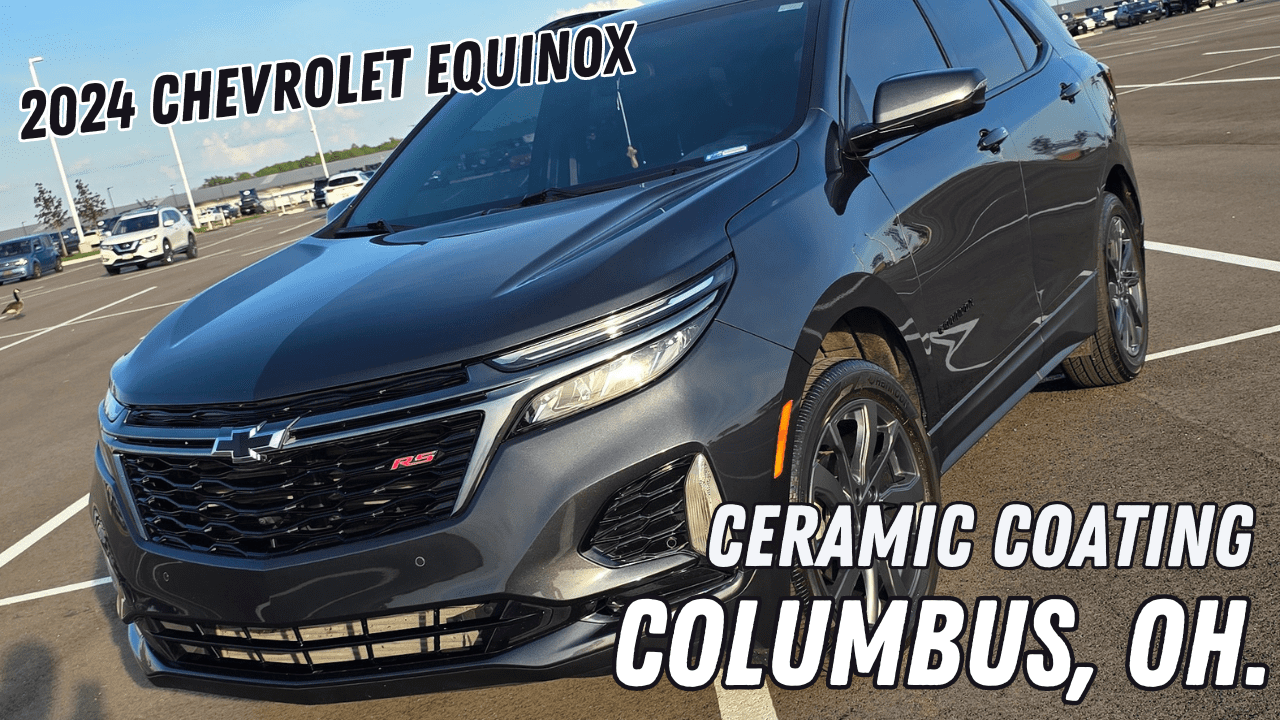
Most passenger vehicles in Columbus land between $599 and $2,399 for professional ceramic coating, depending on vehicle size, paint condition, prep work, and warranty length. Paint correction is usually the line item that moves the price most, not the bottle of coating itself.
You may be looking at your car under a parking-lot light in Hilliard, noticing swirls that weren't obvious when you bought it. After an Ohio winter, road salt, brine, pollen, and automatic car washes leave plenty of drivers wondering whether ceramic coating is worth the money, or whether a cheaper wax or sealant will do the job.
The honest answer is that ceramic coating cost in Columbus, Ohio, depends on the condition of the paint you're protecting. A newer vehicle with clean, defect-free paint can need only light polishing and surface preparation. A used black SUV may require extensive decontamination and paint correction before the coating can be applied safely.
Table of Contents
- What Columbus Drivers Pay for Ceramic Coating in 2026
- What Ceramic Coating Is and Why It Matters in Ohio
- How Columbus Shops Build the Final Price
- Ceramic Coating Compared to Wax, Sealant, and PPF
- What Happens During a Professional Ceramic Coating Install
- DIY Kits Versus Professional Application in Columbus
- Maintenance Schedule and Common Buyer Questions
What Columbus Drivers Pay for Ceramic Coating in 2026
A Hilliard driver pulls into the Walmart lot and sees the paint clearly under bright afternoon light. The hood still looks glossy from several feet away, yet close inspection shows circular wash marks and a dull haze from months of winter grime. The first question is simple: will this job cost a few hundred dollars or several thousand?
For 2026 Columbus pricing, locally advertised ceramic coating packages commonly start around $599 to $1,050. Premium packages reach approximately $1,599 to $2,399, based on warranty, vehicle size, and preparation requirements. National professional-installation benchmarks commonly range from about $600 to $3,500, with many passenger-vehicle jobs around $900 to $2,500. Compare local package structures through the Columbus ceramic coating pricing reference. The broader professional ceramic coating cost guide provides another national pricing reference.
| Vehicle and paint situation | Likely Columbus package position | What usually drives the quote |
|---|---|---|
| Compact sedan with light defects | Around $599 | Basic prep, light polishing, shorter protection term |
| Daily-driven sedan, SUV, or truck | About $1,000 to $1,500 | More surface area, stronger prep, longer warranty |
| Large SUV or truck with neglected paint | Approximately $1,599 to $2,399 | Significant correction, larger panels, premium coating |
| Premium or long-warranty installation | Can approach the upper end | Multiple layers, registered warranty, deeper correction |
A compact sedan with minor defects and a short-term coating can stay near the entry point. A full-size SUV or truck needing multi-stage correction and a 7-year warranty can reach about $2,399. Size affects labor, but paint condition often changes the quote more. Two identical Silverados can differ by $700 when one has clean paint and the other requires heavy correction.
Your final bill is built from three practical pieces: prep labor, paint correction, and coating layers. Washing, chemical decontamination, polishing, inspection, and panel preparation create the surface the coating needs. The product matters, but preparation determines how much of your money goes into a clean, durable installation rather than a quick application.
For daily drivers commuting on I-70 and parking beneath maple trees, the $1,000 to $1,500 middle tier usually makes the strongest case. It pays for more thorough preparation and a longer protection term without automatically moving into the highest package.
Ask these questions before approving a quote:
- What is ceramic coating doing?
- How much of the quote pays for labor and preparation?
- What will your specific vehicle and paint condition add to the final bill?
What Ceramic Coating Is and Why It Matters in Ohio
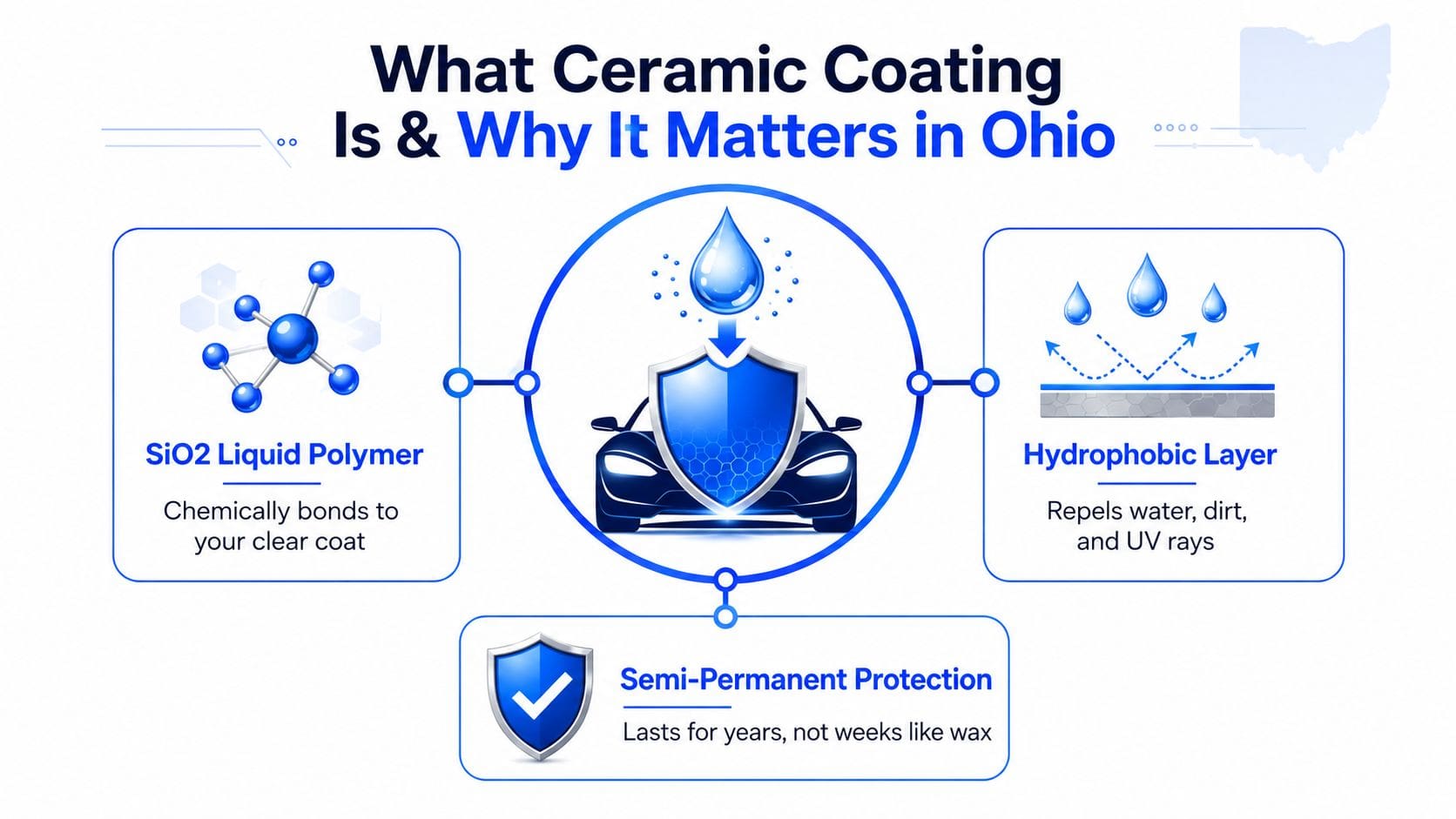
Ceramic coating is a liquid polymer, commonly based on silicon dioxide, or SiO2, that bonds to the vehicle's clear coat and hardens into a semi-permanent protective layer. It isn't wax, and it isn't a conventional paint sealant. It also isn't the same thing as paint protection film, which uses a physical film to absorb impacts from rocks and road debris.
The coating changes how water and contamination interact with the paint. Instead of spreading across the panel, water tends to bead and move away more easily. Dirt can release more readily during a careful wash, and the cured layer provides hydrophobic and UV-resistant protection. A ceramic coating service can be valuable because the product material itself is only a small part of the total job. Labor, inspection, preparation, and application make up most of what customers pay.
Why Central Ohio conditions matter
Columbus drivers deal with road salt and brine on routes such as 270, I-71, and I-70. In spring, magnolia and oak pollen settle into every horizontal surface. During cloudless July days, UV exposure adds another source of stress to the clear coat, including when your vehicle sits outside near a Crew game.
A coating doesn't make paint invincible. It won't stop a stone chip, prevent a deep scratch, or repair clear-coat failure. What it can do is create a slicker, more resistant surface that makes routine washing easier and reduces direct exposure to environmental contamination.
Wax generally wears away much sooner, while sealants last longer but still require regular renewal. A properly installed ceramic coating is designed to remain in place for years, provided the owner follows the maintenance requirements. That longer service life is why coating prices are tied to protection duration rather than only to the amount of product used.
Practical rule: Ceramic coating protects a properly prepared finish. It doesn't hide poor preparation, and it won't turn neglected paint into new paint.
For a new vehicle, the value may come from preserving a clean factory finish and making washes less frustrating. For an older vehicle, the value starts with correction. If the paint already contains swirls or etching, applying a coating over those defects can lock the appearance in rather than improve it.
How Columbus Shops Build the Final Price
A quote for a 2019 Ram 1500 with neglected paint should not match a quote for a clean 2024 C-Class. The coating itself is only one part of the bill. Prep labor and correction usually control the final price, so a shop that gives you only a “starting at” figure without inspecting the paint has not told you enough.
The four line items behind the invoice
| Service Component | What It Covers | Typical Price Range |
|---|---|---|
| Preparation | Wash, iron removal, clay treatment, and coating-safe surface cleaning | Often bundled into the package |
| Paint correction | Polishing to reduce swirls, haze, oxidation, and other clear-coat defects | Add-ons can start around $300, with heavier correction costing more |
| Coating layers and product | The selected coating, applicators, panel-by-panel installation, and curing | Tied to product tier and coverage |
| Warranty and registration | Protection term, maintenance requirements, and any certification process | Higher tiers cost more than shorter warranties |
Preparation covers more than a quick wash. A proper sequence can include foam washing, iron fallout removal, clay treatment, paint inspection, and final cleaning before the coating touches the surface. Columbus package structures show that some providers separate correction fees beginning around $300. That is why a low advertised price can rise after the vehicle is examined.
The local coating package breakdown from Touch It Up Automotive illustrates how installations can take from one day to three days when washing, decontamination, and correction are included. The time reflects hands-on preparation, not just spreading product over the paint.
Paint correction creates the biggest price swing. A newer car with light wash marks may need only a light polish. A dark truck with severe swirls can require multiple polishing passes, repeated inspections, and extra care around thin or previously repaired paint. Ask the shop what it expects to improve and which defects will remain. Correction improves the surface, but it cannot replace missing clear coat or repair deep damage.
Coating layers also change the quote. One or two layers are common in professional packages, while higher-tier products and longer protection terms add application and warranty requirements. A professional installation can take about 15 to 20 hours. That labor includes the controlled application and curing process, not just the coating material.
Two quotes that look different for good reasons
A 2019 Ram 1500 traded in on Morse Road may need two-step correction plus a five-year coating, putting the job around $1,650. A 2024 C-Class used for commuting, with relatively clean paint and only a light polish, may finish near $850 with an entry coating.
Those examples are not price promises. They show why the same package name can produce different totals. Request a quote based on your vehicle's paint condition, correction needs, coating layers, and warranty, not a generic menu price.
Ceramic Coating Compared to Wax, Sealant, and PPF
Columbus drivers usually choose among four protection approaches: carnauba wax, a spray sealant, professional ceramic coating, or paint protection film. Each solves a different problem, so the cheapest option isn't automatically the best value.
| Option | 5-Year Cost | Gloss | Protection Level | Longevity | Maintenance Time |
|---|---|---|---|---|---|
| Carnauba wax | About $80 every two months | Warm, rich appearance | Basic environmental protection | Measured in weeks | High, because it needs frequent renewal |
| Spray sealant | About $40 quarterly | Clean, reflective finish | Better short-term resistance than wax | Measured in months | Moderate, with repeated applications |
| Professional ceramic coating | $599 to $2,399 once, depending on package | Deep, glossy finish | Hydrophobic and UV-resistant protection | Measured in years | Lower wash effort, but routine care remains necessary |
| Paint protection film | About $1,500 to $5,000 or more for full-front or full-body coverage | Clear factory appearance | Strongest option for rock and abrasion impact | Long-term physical barrier | Moderate, with film-specific care |
The five-year comparison for wax and sealant uses repeated applications, not a single purchase. That means the owner spends more time washing, drying, and reapplying protection. Ceramic coating costs more at the start, but it places the work into one professional installation and a defined maintenance routine.
Ceramic coating sits below full-body PPF in upfront cost and offers a different type of protection. It helps with water behavior, contamination, UV exposure, and ease of cleaning. It won't absorb a rock strike the way PPF can. If your commute puts the front bumper behind gravel trucks every day, PPF versus ceramic coating deserves a closer look.
Match the option to your driving life
- Choose wax if you enjoy frequent hands-on care and want a traditional gloss boost.
- Choose sealant if you want a simple improvement without committing to a professional coating.
- Choose ceramic coating if you keep the car outside, drive through Central Ohio winters, and want easier maintenance for years.
- Choose PPF if rock chips and impact damage worry you more than water spotting or wash time.
For a Tesla, BMW, or newer luxury vehicle, many owners combine PPF on high-impact areas with ceramic coating on the remaining painted surfaces. For an older commuter or work truck, coating the entire vehicle may not make financial sense if the paint already has clear-coat failure or deep scratches.
What Happens During a Professional Ceramic Coating Install
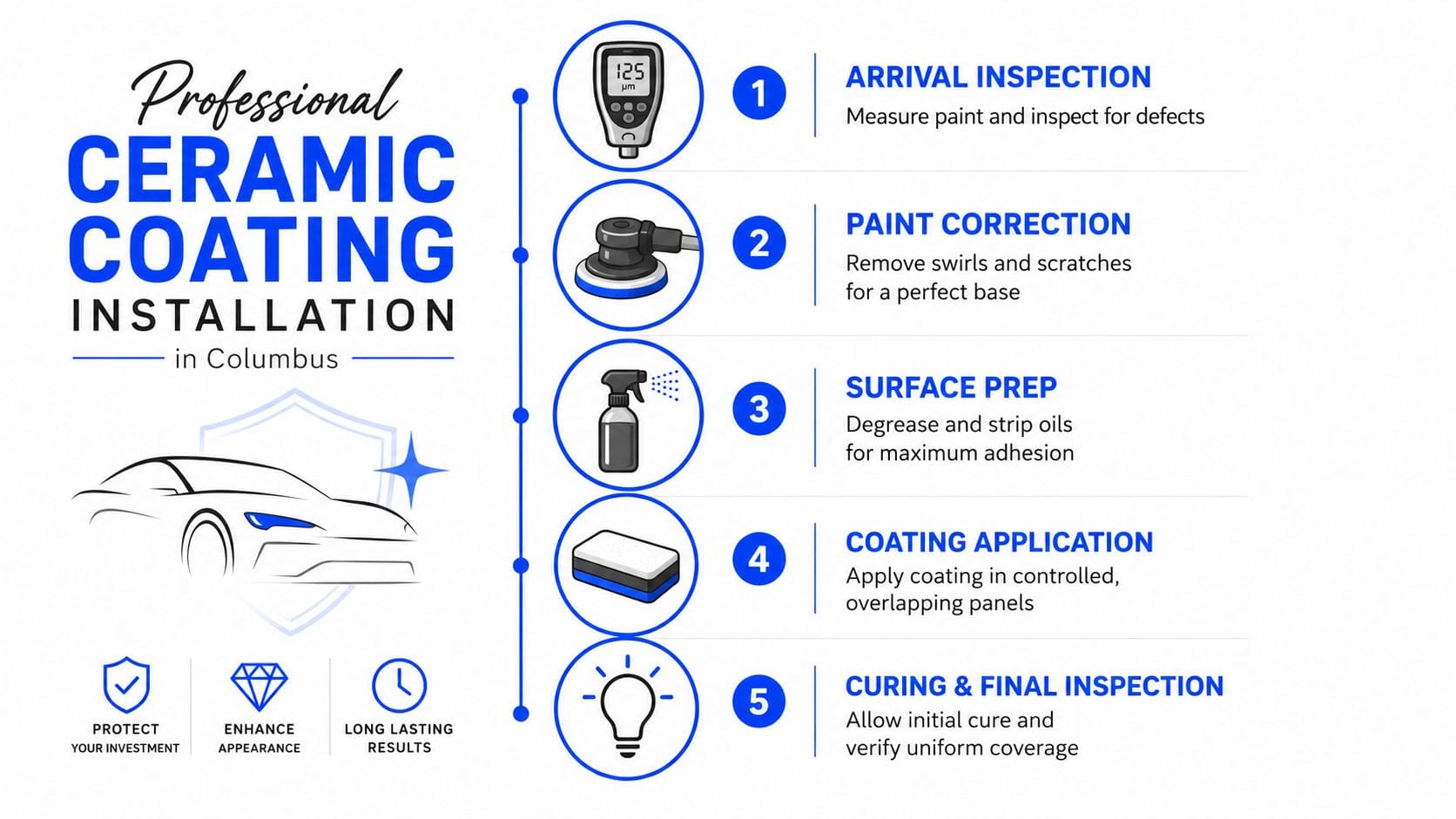
At a Hilliard shop, the process starts before anyone opens a coating bottle. The technician inspects the vehicle under proper lighting, records existing chips and scratches, checks paint thickness, and confirms exactly what the package includes. That protects both sides from confusion about what was present before work began.
Preparation creates the bond
The vehicle receives a foam-cannon wash followed by a careful two-bucket hand wash. Iron remover breaks down bonded metallic fallout, and a clay bar removes contamination that remains attached to the surface. Those steps matter because a coating cannot bond evenly to dirt, industrial fallout, or old wax.
After drying, the technician inspects each panel again. Depending on the finish, the vehicle may receive a light polish or a multi-stage paint correction. A correction pass uses a machine polisher and the least aggressive combination that can produce the agreed result. The technician then removes polishing oils with an appropriate surface-prep solution, often including an isopropyl alcohol wipe-down.
Application is slow and panel-specific
The installer works in controlled sections rather than spreading the product across the whole car at once. The coating goes onto the panel with an applicator, flashes for the appropriate time, and is leveled with a suede microfiber towel. Poor leveling can leave high spots, so lighting and patience matter.
Higher-tier packages may include an additional topper or coating layer. After application, the vehicle can receive controlled infrared curing, then remain inside the shop for an initial cure period. Many professional installations require a 24-hour shop stay and a 7-day no-wash period before the final walk-around, according to the service process described in the brief.
Before you book: Ask whether the quote includes correction, whether the coating covers wheels or glass, how long the vehicle stays indoors, and what maintenance keeps the warranty valid.
A proper handover should include care instructions, the product information, and any warranty documentation. The coating should look uniform under inspection lighting, with no visible high spots, streaks, or missed sections.
DIY Kits Versus Professional Application in Columbus
DIY ceramic kits have a legitimate place, but the buyer needs the right vehicle and the right expectations. An older daily driver with already-corrected paint, a garage-based owner who enjoys detailing, and a strict sub-$200 budget can make a kit work.
Product costs for a DIY coating commonly sit around $60 to $150, plus a full day of labor, based on the DIY versus professional coating comparison. That price doesn't include a machine polisher, lighting, towels, wash chemicals, clay products, or correction compounds if you don't already own them.
Where DIY kits fall short
Most owners buy the bottle and underestimate the surface preparation. A kit won't correct heavy swirls by itself. It also won't give you the controlled lighting, paint-thickness checks, or warranty support that come with a professional installation.
Common DIY mistakes include:
- Skipping decontamination: Bonded fallout and tar can remain beneath the coating.
- Applying in poor conditions: Humidity, temperature, dust, and direct sunlight can affect leveling.
- Leaving high spots: Uneven residue can cure into visible dark patches or streaks.
- Using too much product: More coating doesn't automatically create better protection.
- Washing too soon: Early moisture and contamination can interfere with curing.
Central Ohio makes the decision less forgiving. Road salt and brine can settle into neglected paint, and used vehicles often arrive with heavy wash marks from dealer-lot cleaning. A professional can identify whether the finish needs light polishing or serious correction before coating it.
My recommendation
DIY makes sense for a beater kept in a garage, especially when appearance is secondary and the owner accepts the possibility of an uneven result. Professional application is the smarter purchase for a dark BMW, Tesla, truck, or any vehicle you plan to keep for three or more years, especially if it parks outside through Ohio winters.
A warranty typically covers two to seven years, depending on the package. That warranty doesn't replace maintenance, but it gives the owner a defined process if the coating doesn't perform as promised.
Maintenance Schedule and Common Buyer Questions
Your coating needs maintenance, not neglect. During the first 30 days, follow the installer's cure instructions closely. Keep the vehicle away from automatic washes, avoid aggressive rubbing, and don't apply unapproved products over the fresh coating.
After the initial cure, use a two-bucket wash with a pH-neutral soap and clean microfiber towels. Rinse thoroughly, then dry with a soft microfiber drying towel rather than allowing mineral-heavy water to evaporate on the paint. Use the booster spray recommended for the specific coating brand, not a random ceramic-labelled product.
A practical routine looks like this:
- First 30 days: Follow the shop's no-wash and cure instructions.
- Regular washing: Hand wash with pH-neutral soap and safe microfiber tools.
- Through winter: Remove salt and brine promptly, especially after driving I-71 or I-70.
- At quarterly intervals: Inspect water behavior, clean contamination, and use the approved booster.
- Through year five: Keep warranty records and follow the product-specific maintenance plan.
The ceramic coating maintenance guide for Columbus drivers provides a useful care reference, but your installer's product instructions take priority.
Questions I hear at the Hilliard counter
Will rain after the initial cure damage the coating?
Rain after the shop's required initial cure period generally isn't the same concern as washing or scrubbing the vehicle too soon. Follow the exact instructions provided for your coating and contact the installer if unexpected weather affects the first day.
What should I do about bird droppings and tree sap?
Remove them as soon as you can with a safe detailing spray and a soft microfiber towel. Pollen season is not a reason to scrub aggressively. Soften the contamination first, then lift it away without grinding it into the paint.
Will another detailer void the warranty?
It can, depending on the coating brand and warranty terms. Ask for written maintenance requirements before using another shop, and keep receipts for required inspections or approved products.
What should I do before selling the car?
Gather the coating paperwork, maintenance records, and installation details. A clean, well-documented finish can make the protection easier for a buyer to understand, but ceramic coating won't repair chips, deep scratches, or neglected paint.
Lionheart Detailing offers professional ceramic coating, multi-stage paint correction, paint protection film, window tinting, and full detailing for drivers in Hilliard and throughout the Columbus area. Visit Lionheart Detailing to discuss your vehicle's condition, compare coating and PPF options, and receive a quote based on the prep your car needs.