Professional headlight restoration in the U.S. typically runs about $50–$200 per pair in 2026, with mobile jobs and heavy oxidation pushing higher, and DIY kits run $10–$40. If your lenses are just cloudy, restoration is usually the smart buy, not replacement.
You're probably looking at your car in the driveway right now and wondering whether those yellowed headlights are just ugly or expensive. The honest answer is that the price depends on how bad the oxidation is, whether a shop is restoring one lamp or both, and whether you want the work to last or just look better for a few months. If you live around Columbus or Hilliard, the same rule applies for Hilliard auto detailing, Columbus ceramic coating, or a simple ceramic coating near me search, the cheapest quote is rarely the one that gives you the best value.
Table of Contents
- Why Cloudy Headlights Cost You Money and What Restoration Actually Fixes
- What Headlight Restoration Costs in 2026
- DIY Kits vs Professional Restoration
- Four Things That Change the Price on Your Quote
- Sample Quotes From a Real Columbus Shop
- When Restoration Is the Wrong Answer and Replacement Is the Right One
- How Long Restored Headlights Stay Clear and How to Make Them Last
- Headlight Restoration FAQs for Columbus Car Owners
Why Cloudy Headlights Cost You Money and What Restoration Actually Fixes
A cloudy headlight is usually not a bulb problem. It's the plastic lens breaking down on the outside, which spreads light instead of projecting it cleanly down the road. That's why a car can still “have headlights” and still feel dangerous at night.
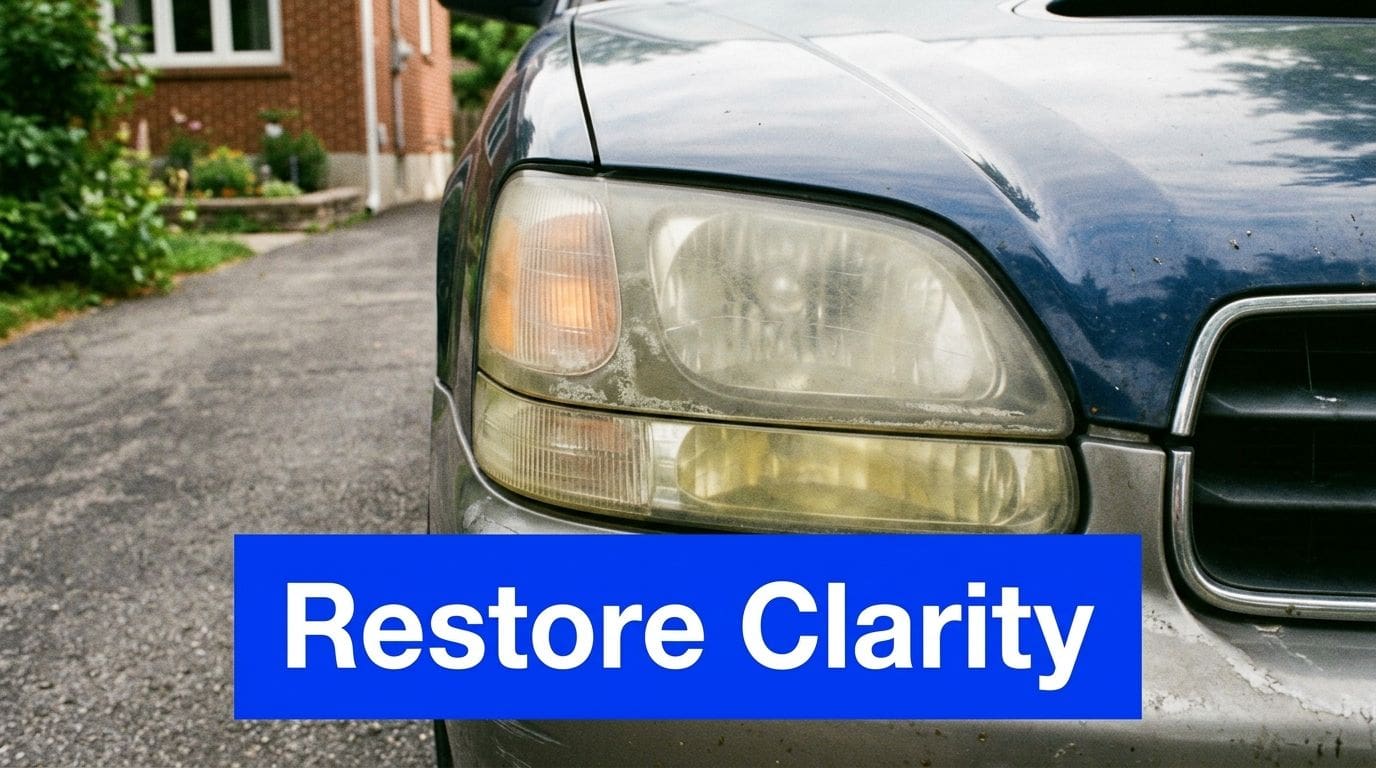
A proper restoration removes the damaged top layer, then seals the lens so the plastic doesn't just haze back up immediately. That's the part most owners miss when they shop on price alone. A wipe-and-buff job can make the lens look better for a bit, but it doesn't solve the underlying UV damage.
Practical rule: if the lens feels rough on the outside, restoration usually makes sense. If it feels smooth but still looks foggy, you may be dealing with moisture inside the housing, which is a different problem entirely.
From a value standpoint, cloudy headlights also make the car look older than it is. That matters if you're trying to sell it, trade it in, or just keep a daily driver from looking tired. It's the same kind of visual correction people want when they compare Hilliard ceramic coating to basic wash-and-wax work, the finish matters because first impressions matter.
A good shop isn't just selling shine. It's restoring clear light output, improving the front-end appearance, and giving you a coating or sealant that slows the damage from coming back. If you want to understand how weather and UV exposure attack exterior surfaces across Columbus, this breakdown on how Columbus weather affects your car paint connects the same idea to paint protection.
What you're really paying for
The work usually includes sanding, polishing, and a UV-protective finish. Professional headlight restoration is typically priced around $45–$120 per pair when it includes wet-sanding, multi-step polishing, and a UV sealant, with higher-end mobile service reaching $65–$125 as detailed by AutomotoFlux. That spread makes sense once you know the process is more than a quick buff.
If your headlights are cloudy because the outer layer is oxidized, restoration is the right fix. If the housing is cracked or there's moisture trapped inside, you're usually past the point where polishing alone can help. That difference is what separates an honest quote from a cosmetic shortcut.
What Headlight Restoration Costs in 2026
The quote changes fast once you know what is being done. A quick polish, a full wet-sand and refinish, a mobile visit, and a UV sealant are all different jobs, and shops price them that way.
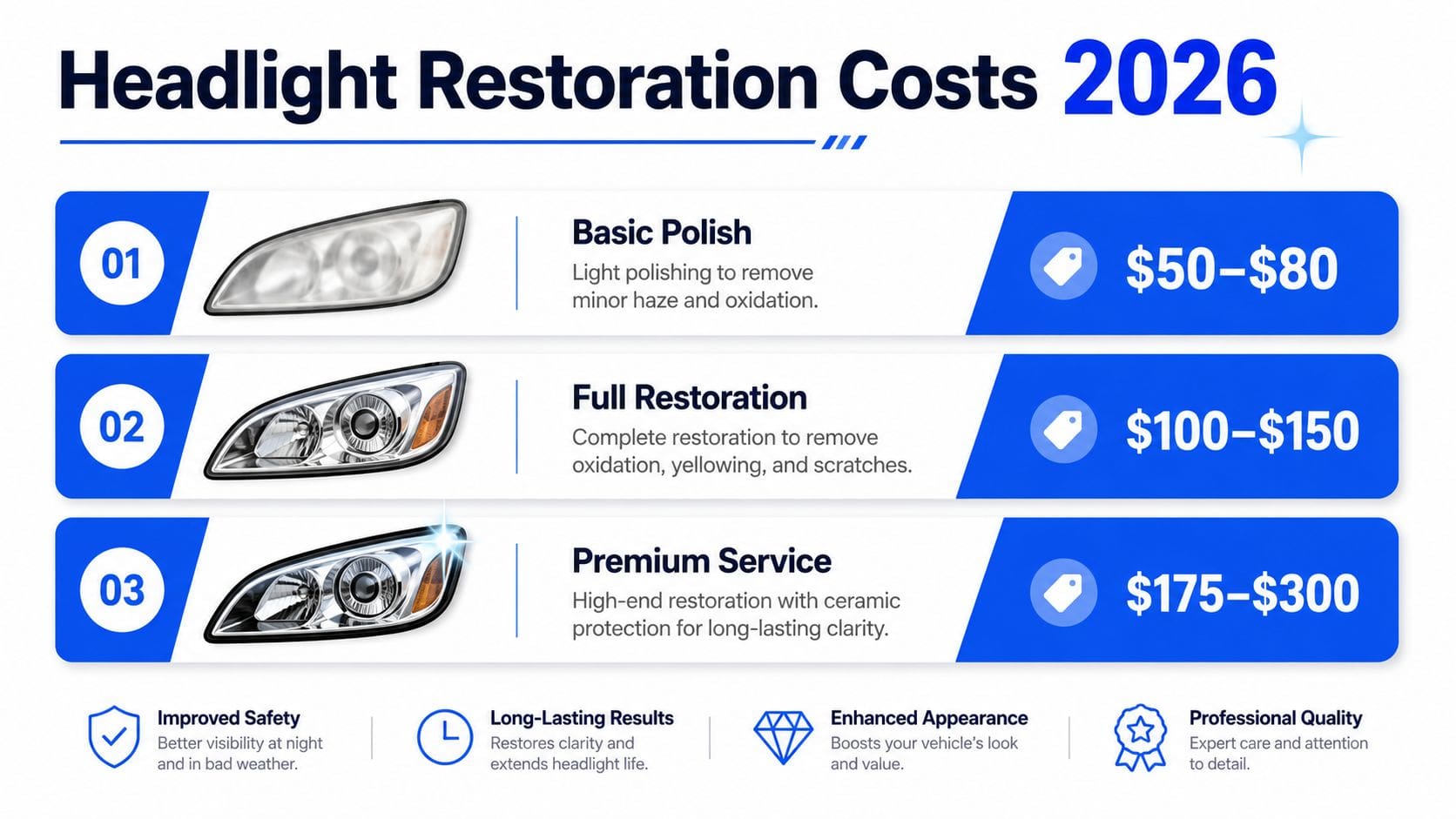
The low end is for headlights that are only lightly hazy and need cosmetic cleanup, not heavy correction. Consumer-facing pricing guides put basic restoration around $80–$150 for polishing cloudy lenses, while DIY kits stay much cheaper at $10–$25 according to Jerry. If a shop gives you a number near that range, expect a straightforward job and not much more.
The middle tier is where most real customer jobs land. Independent pricing guides place typical professional restoration near $50–$200 per pair, and one 2026 guide puts the average around $50–$100 per pair before the work gets heavier or the finish gets upgraded per Rising Sun Arts Centre. That is the range I would expect for a normal Columbus driver with faded lenses, not cracked housings.
The price climbs when the job includes mobile convenience, severe oxidation, or a stronger protection step. Thumbtack reports a 2026 national average of $153–$267 for mobile headlight restoration, with simple jobs near $103 and more difficult work reaching $392+ depending on vehicle type and damage via Thumbtack. In the UK, reported pricing runs about £40–£150 per pair, with UV-protective coating services starting around £85+ and taking 1–3 hours per AUTODOC UK.
My straight recommendation
If your car is a daily driver and the lenses are moderately cloudy, pay for the middle tier and stop there. If the headlights are badly yellowed or you plan to keep the car, spend the extra money on the UV step. That is the part that slows the clouding from coming back.
For local drivers comparing Columbus PPF, Hilliard paint protection film, and other exterior protection work, the same rule applies. You are paying for how long the finish lasts, not just how it looks on pickup day. If you want a useful comparison point, this paint protection film cost guide shows how protection pricing is usually built around durability, not just the initial correction.
DIY Kits vs Professional Restoration
A DIY kit looks cheap because it is cheap. The question is whether you want the headlights to look better this weekend or stay clear long enough to make the work worth your time.
Consumer Reports says DIY kits can cost $10 to $25, and other retail guides put common kits at $15–$40 Consumer Reports. That is a real bargain if the lenses are only lightly hazy and you do not mind doing the labor yourself.
Professional service costs more because you are paying for labor, correction, and protection. A shop job usually lands around $50–$150 per pair, and mobile service can run $65–$125 AutomotoFlux. That gap is why plenty of drivers try a kit first and then end up paying a shop anyway.
What the cheap route really gives you
A kit can improve the look of the lens. It usually comes with sanding pads, polish, and a sealant of some kind. If you follow the directions and finish the job cleanly, you can get solid results on lightly oxidized headlights.
Cheap does not mean useless. It means you are doing the labor and taking the risk.
The weak point is consistency. One bad sanding pass can leave streaks, swirl marks, or uneven clarity. Skip the sealant, or apply it poorly, and the lens can haze again fast. That is why a lot of owners who try DIY later ask a shop why the headlights turned cloudy again.
When I'd choose DIY and when I wouldn't
- Choose DIY: the headlights are lightly hazy, the car is older but still worth keeping, and you have time to tape, sand, polish, and seal carefully.
- Choose professional service: the yellowing is heavy, the lens is pitted, you want mobile convenience, or you do not want to gamble on a one-shot Saturday project.
- Skip the shortcut: if you are thinking toothpaste, bug spray, or random internet hacks, do not bother. You will usually get temporary improvement at best and a mess at worst.
If you are comparing that decision to professional ceramic coating vs DIY ceramic coating in Columbus, the same rule applies. Convenience matters, but so does whether the result lasts. This local guide on professional ceramic coating vs DIY ceramic coating in Columbus lays out the trade-off clearly for owners who want the honest version.
Four Things That Change the Price on Your Quote
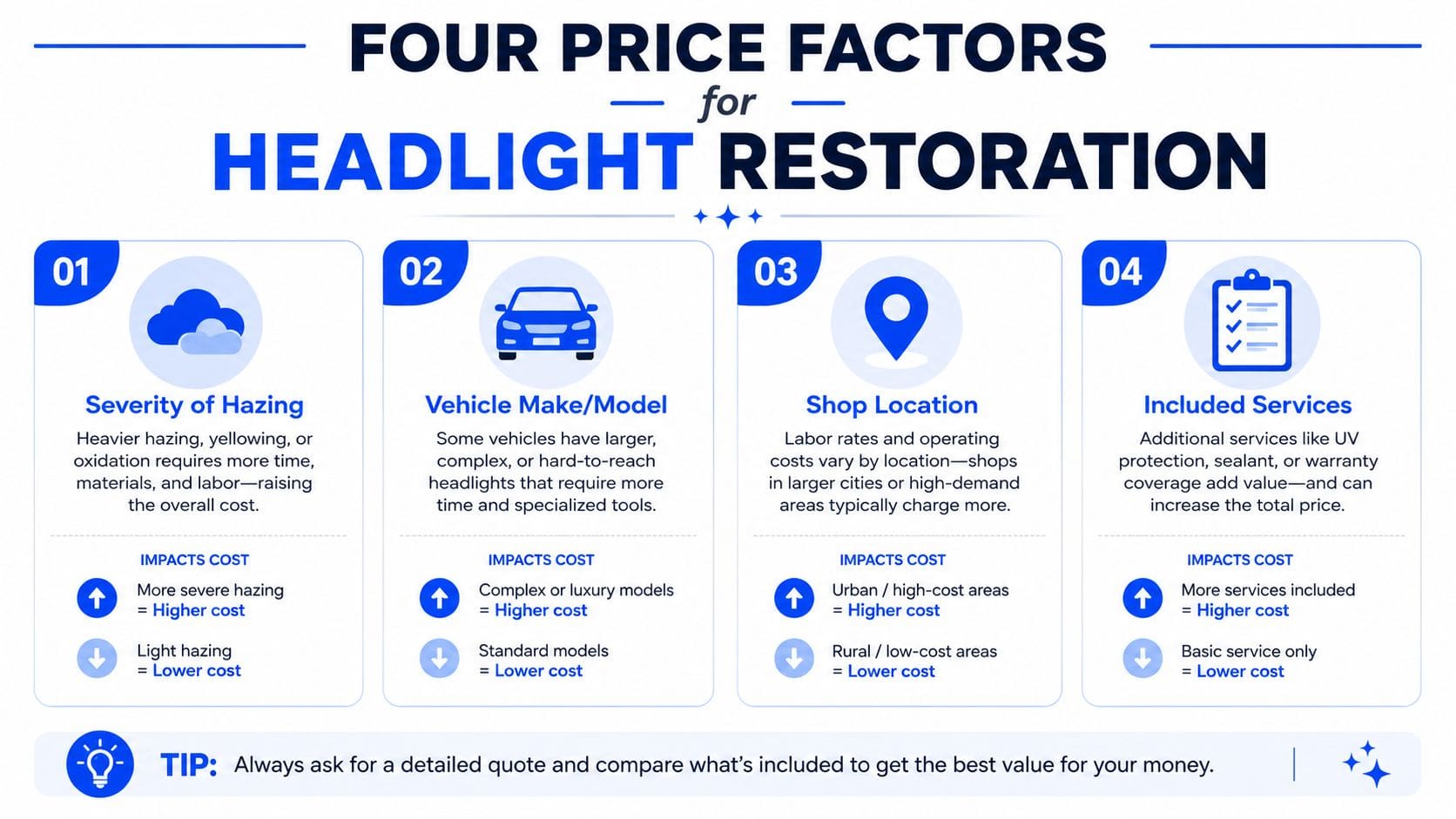
The first mistake shoppers make is asking for a number before they know what drives it. Headlight restoration is not a fixed menu item, because the labor changes from car to car and from lens to lens.
Oxidation severity
Light haze is quick to correct. Heavy yellowing takes more sanding, more polishing, and more time to get the lens back to clear. That extra labor is why severe oxidation pushes a quote toward the high end.
Single lens or both headlights
Shops usually quote headlight restoration per pair, not as one isolated lamp job. If one side is far worse than the other, the price can still shift because the shop is not doing identical work on both lenses. If you are seeing a $20–$60 per headlight type of range, that is the kind of spread that often explains why one quote looks low and another looks higher for the same car according to Jerry. A pair is usually easier to quote cleanly when both lamps need the same level of work.
Mobile or shop service
Mobile service costs more because the shop brings the tools, power, and labor to your driveway or office. You pay for that convenience, and you also save the time it takes to drive in and wait. In Columbus, that is a smart choice for owners who want the work done without giving up half a day.
UV sealant or protective coating
This is the step I care about most when I quote a job. A basic polish without proper protection is cheaper at the start, but restorations finished with proper UV sealing can last 24–36 months, as noted by industry repair guidance. Skip that protection and you are buying a shorter-lived result.
If the quote is low and the lens is not getting a real sealant, the price is low for a reason.
That is why a bargain quote can turn into a bad value. If you are shopping in Hilliard or Columbus and comparing Hilliard auto detailing packages, ask what happens after the sanding. If the answer is vague, the result usually will be too.
Sample Quotes From a Real Columbus Shop
A good quote should sound like it was written by someone who looked at the car, not someone who copied a pricing template. Around Columbus, the numbers usually make sense once you match the car to the damage.
Sample Columbus Headlight Restoration Quotes
| Vehicle Example | Lens Condition | Service Tier | Quoted Price Range |
|---|---|---|---|
| 2018 Honda Accord | Mild haze, surface oxidation | Standard wet-sand, polish, UV sealant | Mid-range professional quote |
| 2014 Ford F-150 | Heavy yellowing, minor pitting | Premium restoration with stronger protection | Higher-end professional quote |
| 2021 BMW with adaptive LED headlights | Clouding plus expensive assembly complexity | Replacement recommendation instead of restoration | Replace rather than restore |
A 2018 Honda Accord with mild haze is the easy one. That car usually needs the standard wet-sand, polish, and UV sealant treatment, which lines up with the middle of the market, not the top. The work is straightforward because the lens damage hasn't gone deep enough to force extra labor.
A 2014 Ford F-150 with heavy yellowing is a different story. The lens needs more sanding, more polish work, and a stronger finish if you want it to stay clear. That's the kind of job where a quote climbs because the labor climbed first.
A 2021 BMW with adaptive LED headlights can push the conversation in the other direction. If the assembly is complex, expensive, or damaged beyond surface oxidation, restoration may not be the smart answer at all. Honest shops will tell you that before they take your money.
That's how we treat the topic in the Columbus area at Lionheart Detailing, whether the car is coming in for a front-end cleanup, a protection package, or just a quick assessment at the Hilliard shop at 4402 Weaver Court North, Suite 204, Hilliard, OH 43026. If you're already weighing options for ceramic coating near me or a broader detail package, headlight restoration is often the small fix that makes the whole front end feel newer.
When Restoration Is the Wrong Answer and Replacement Is the Right One
Restoration is the right answer when the damage is on the outside of the lens. It stops being the right answer when the problem is deeper than the plastic surface.
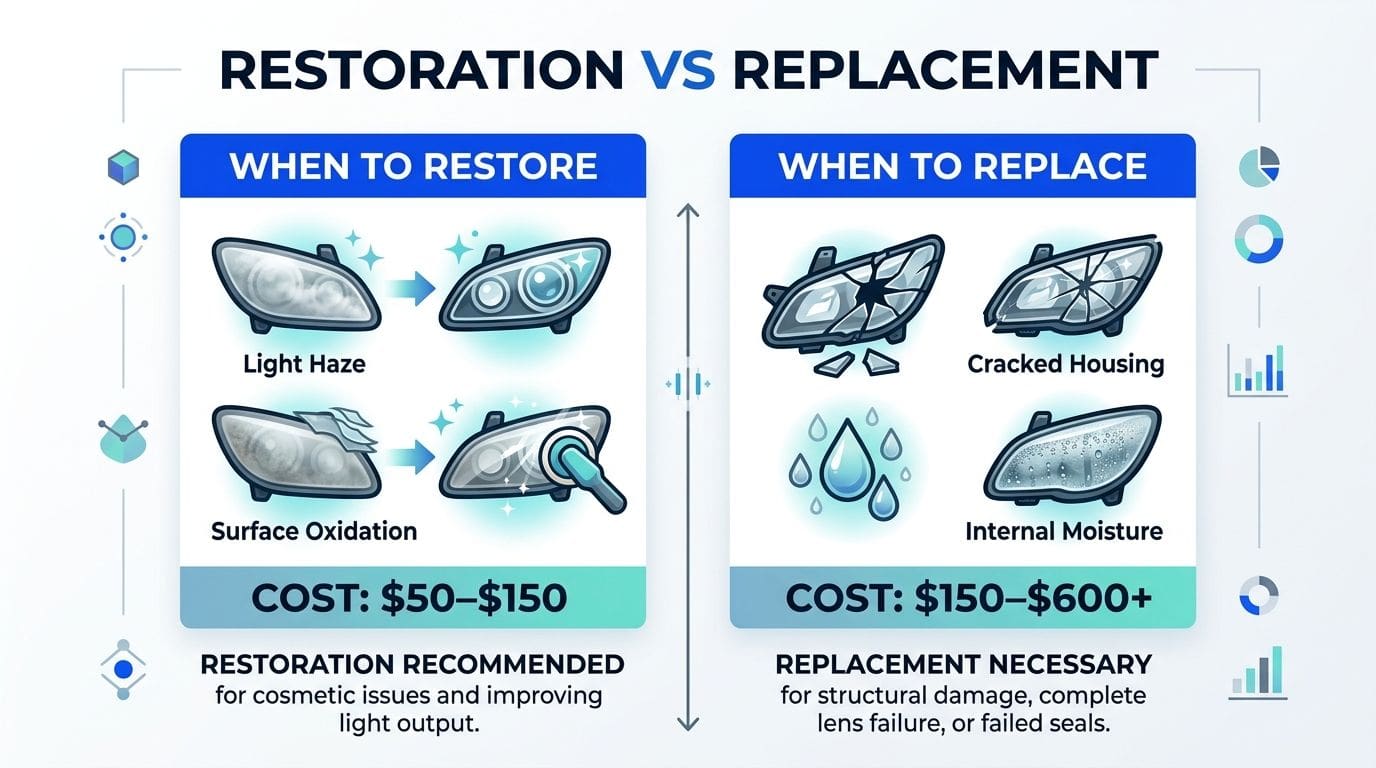
A restoration is usually the cheaper route, with pricing commonly around $15–$200 per PartsMax. Full headlight assembly replacement can run $250–$750 per headlight for mainstream vehicles and $800–$2,500 per headlight for luxury or adaptive LED systems [same PartsMax guide]. That's a huge gap, and it's why restoration is the first option when the lens is only cloudy.
Cracked housings, internal moisture, and failed electronics change the answer fast. If the headlight is leaking, the seal is broken, or the assembly has internal damage, polishing the outside just hides the core issue for a little while. You'll spend money and still end up with a bad light pattern or recurring fog.
The simple decision rule
- Restore it when the lens is yellowed, hazy, or rough on the surface.
- Replace it when the housing is cracked, moisture is trapped inside, or the electronics have failed.
- Ask for a second opinion when the car has luxury lighting, adaptive systems, or a weird prior repair.
Good shops don't force restoration on every car. Some headlights are just beyond the point where correction makes financial sense.
I'd rather tell a customer not to restore a headlight than sell a fix that won't hold. That's especially true on higher-end vehicles, where the replacement cost looks ugly but still may be the smarter call. If you're deciding between a cosmetic repair and a structural fix, ask what's wrong with the lens, not just what it looks like from ten feet away.
How Long Restored Headlights Stay Clear and How to Make Them Last
A cheap restoration quote looks good until the lenses haze again a few months later. The true cost is how long the headlights stay clear before you have to pay to do the job again.
With proper UV sealing, restored headlights can stay clear for a decent stretch of time, often in the 24 to 36 month range, as noted by Jerry. That number is why I keep pushing protection instead of stopping at sanding and polish.
A polish-only job gives you a short-term fix. It removes the yellowing on the surface, but it leaves the plastic exposed, so the haze comes back fast. A proper sand-and-seal job lasts longer because the new protective layer slows down UV damage. If you want the correction to hold, the sealant matters more than the shine.
How to stretch the life of the work
- Wash gently: hand washing is safer than aggressive scrubbing around the lens.
- Park in shade when possible: less direct sun means slower UV breakdown.
- Avoid harsh chemicals: strong cleaners can strip or weaken the protective layer.
- Ask about add-on protection: a ceramic coating on the lens or front-end protection can help the correction last longer.
If you already protect the paint with Columbus PPF or Hilliard paint protection film, use the same mindset on the headlights. You are not just paying for better-looking lenses today. You are paying to avoid doing the same job again too soon.
Headlight Restoration FAQs for Columbus Car Owners
Is mobile headlight restoration worth it?
Yes, if convenience matters to you. Mobile service costs more than a shop visit, but it saves you the drive, the waiting room, and the extra trip.
Does Lionheart Detailing offer both mobile and shop service?
Yes. Lionheart Detailing serves the Columbus metro with mobile service and also works from the Hilliard location at 4402 Weaver Court North, Suite 204, Hilliard, OH 43026. You can book through Lionheart Detailing or call the shop directly if you want to talk through the car first.
Is there a warranty on the work?
Ask before you book. A trustworthy shop should be clear about what the restoration covers, especially if the lens was heavily oxidized or needs more protection to stay clear.
How long until headlights haze again?
That depends on whether the job included proper UV sealing. The better protected the lens is, the longer it tends to stay clear. If the quote doesn't include protection, expect the result to be less durable.
If you want an honest answer on whether your headlights should be restored or replaced, Lionheart Detailing can inspect the lenses and give you a straight recommendation before any work starts. They handle headlight restoration, ceramic coating, and PPF for Columbus drivers who want the job done right, and you can reach them through Lionheart Detailing to schedule mobile service or a Hilliard appointment.