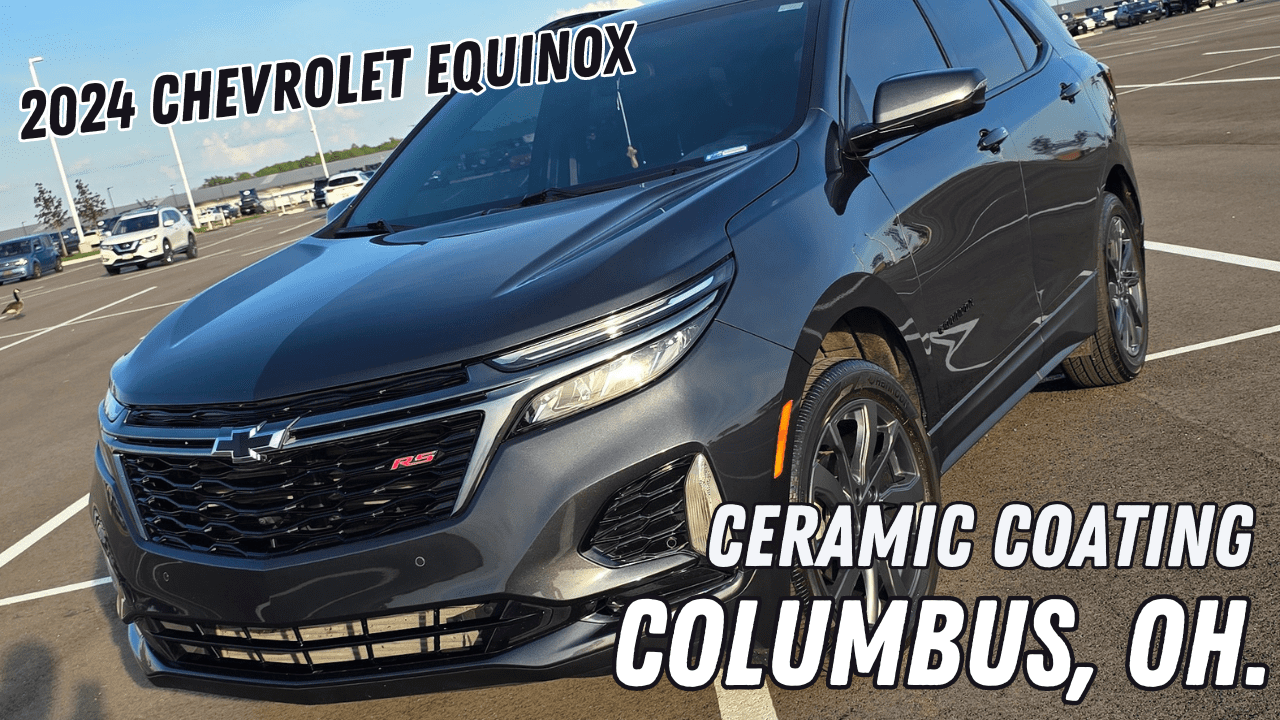
You're probably weighing PPF because you're tired of seeing tiny rock chips, scuffs, and dull spots show up on a vehicle you still enjoy looking at every day. In Central Ohio, that usually starts with a normal commute, a bit of construction debris, a winter salt rinse, or a grocery run where the car comes back with a fresh mark you didn't put there. Paint protection film gives you a clear, physical layer between that kind of daily wear and the paint underneath, which is why a lot of owners look at it as more than just an appearance upgrade.
What matters most is understanding what you're paying for. PPF isn't magic, and it won't stop every kind of damage, but it does act like a sacrificial skin over the painted panels that take the most abuse. If you're comparing Columbus PPF, Hilliard paint protection film, or even thinking about ceramic coating near me, the question is usually simple, which surfaces get hit the hardest, and how much peace of mind do you want from day one.
Table of Contents
- What Paint Protection Film Actually Does
- The Core Protection Benefits Drivers Notice
- Paint Protection Film Compared to Ceramic Coating
- Coverage Options, Costs, and What Affects the Price
- The Panels Most PPF Articles Forget to Mention
- Maintenance Tips and Common Mistakes to Avoid
- Who Benefits Most and How to Get Started in Columbus
What Paint Protection Film Actually Does
A lot of people first hear about PPF after they've already heard the ping. You're on I-70 or I-270, a truck is throwing up road grit, and a second later there's that little click on the hood or bumper that makes you wonder whether the paint just took a hit. That's the moment PPF starts making sense, because it gives the front of the car, and any other covered panel, a clear layer that takes the abuse before the factory finish does.
What the film really is
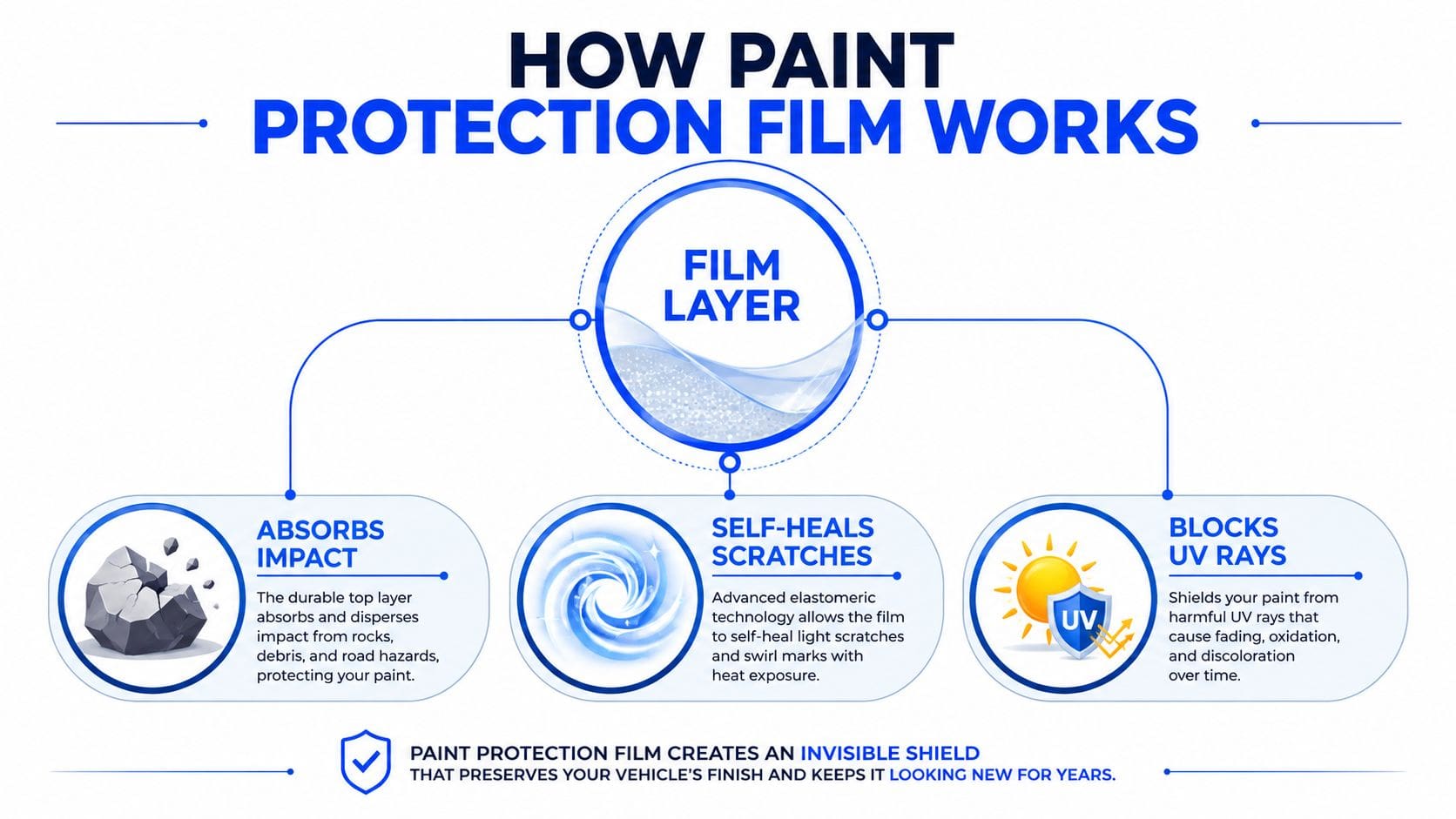
Paint protection film is a thermoplastic urethane film applied to painted exterior panels, and its job is to absorb everyday damage like stone chips, bug splatter, and minor abrasions instead of letting the clear coat take the full impact. 3M describes it as protection against stone chips, scratches, bug damage, road tar, fluid stains, and outdoor weathering, while preserving the original paint finish and appearance over time. The key word is sacrificial, because the film is meant to take the hit so your paint doesn't have to.
That idea matters because first-time buyers often think they're buying a shine product. They're not. They're buying a barrier.
Practical rule: if a surface gets touched by road debris, shoes, cargo, or repeated loading, it's a candidate for film, even if it isn't part of the classic “front end” package.
A quality install usually looks invisible from a normal standing distance, which is why it works so well for drivers who want protection without changing the look of the car. That's also why people shopping for Hilliard auto detailing or Columbus ceramic coating often end up asking about PPF too, because they want the finish to stay looking like the car they bought, not the car after two seasons of daily driving. For a visual reference, place the infographic right here:
The Core Protection Benefits Drivers Notice
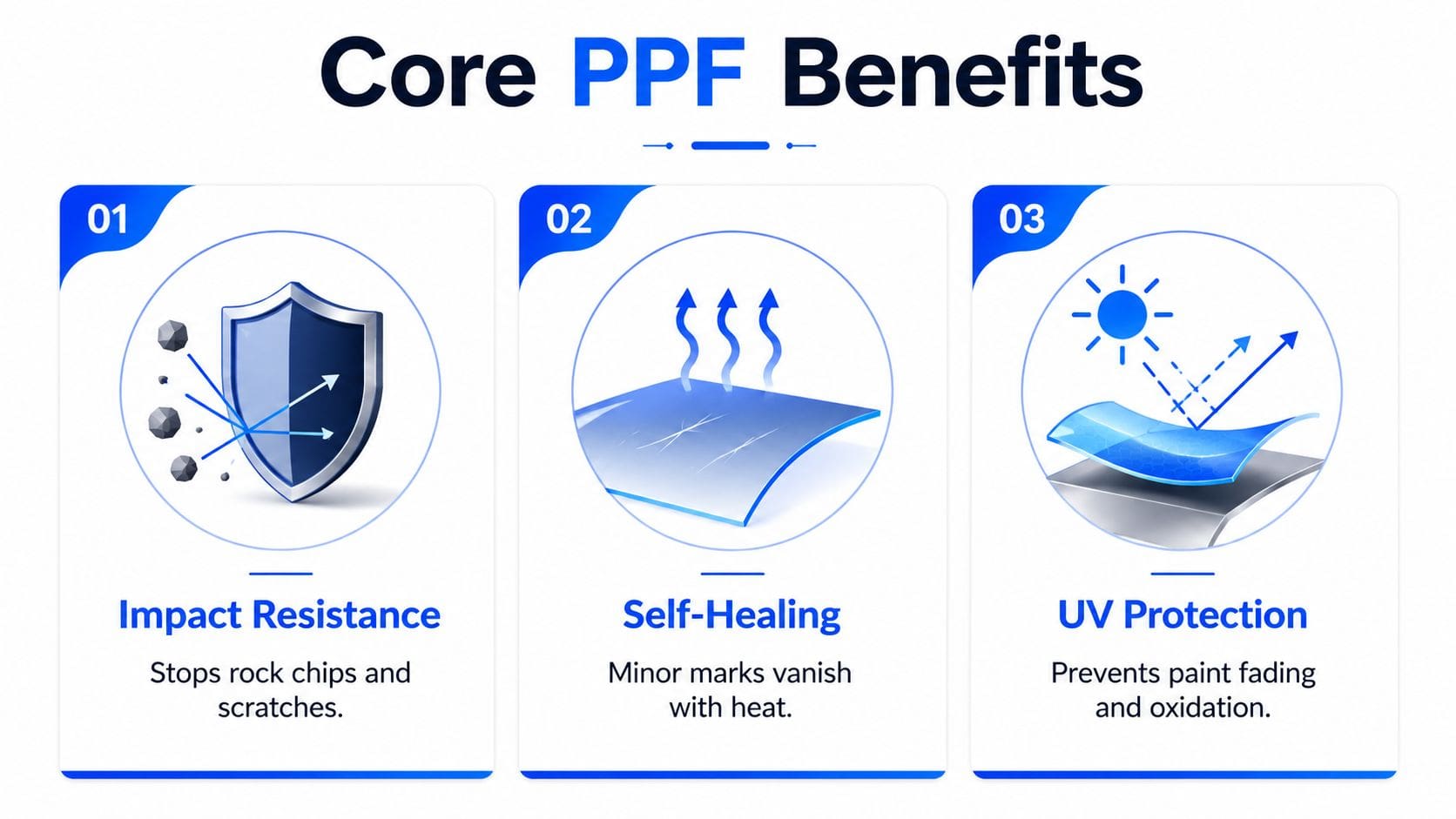
A first-time PPF customer usually wants to know one thing: what will I notice after the film is on the car? The answer comes down to three benefits that show up in daily use. PPF helps with impact damage, reduces the look of minor wash marks, and adds UV defense. Those jobs are separate, and each one solves a different problem for a car that lives on Central Ohio roads.
Impact resistance on real roads
The biggest day-to-day win is still the physical barrier. PPF is designed to absorb stone-chip energy and resist scratching, which is why it helps on bumpers, hoods, mirrors, door sills, rocker panels, and headlight lenses, along with other forward-facing surfaces that get hit by highway debris. One industry overview says vehicles with PPF can experience about 30% less paint damage than unprotected vehicles, and Solar Gard's PPF benefits overview ties that protection to stone chips, bug damage, road tar, fluid stains, and outdoor weathering while preserving the original paint finish. In Central Ohio, that matters on stretches of road where grit, slush, and everyday traffic throw more abuse at the lower body panels than many drivers expect.
The less obvious benefit is resale. A hood with fewer chips, clean door edges, and intact lower panels tends to present better when it is time to trade or sell. Buyers may not study the film itself, but they do notice when the paint underneath still looks cared for.
Self-healing and the wash-day difference
Modern films also use self-healing top coats, which means many fine swirls and light scratches can fade with heat. A warm day, sunlight, or controlled shop heat can help the surface level back out, so the car keeps a cleaner look with less polishing. That does not make deep scratches disappear, but it does keep the small marks that make paint look tired from building up as quickly.
For a driver who washes at home or runs through regular detailing, that changes the way the car ages. The finish keeps its smooth look longer, and the panels that get touched most often, such as door cups, handles, lower doors, and loading areas, stay easier to live with.
UV defense for long-term finish health
Sun exposure matters in Columbus just like it does anywhere else, especially on vehicles parked outside. Industry sources note that newer UV-resistant films can block up to 99% of ultraviolet radiation, and some current products offer fading protection that lasts for years. Ideal Image's PPF guide also explains how UV-absorbing additives help reduce oxidation and long-term yellowing. For the driver, the practical result is simple, the paint keeps looking fresher for longer with less visible dulling.
That long-term finish health shows up in the parts of the car people forget about first. Door sills, rocker panels, and headlight lenses can age faster than the hood if they are left bare. Protecting those surfaces helps the whole car hold together visually, which is part of why PPF can matter to resale even when the film itself is nearly invisible.
Paint Protection Film Compared to Ceramic Coating
A lot of Columbus drivers compare PPF and ceramic coating as if they're competing products. They're not really competitors. They solve different problems, and the smartest setups often use both on the same vehicle.
What each product does well
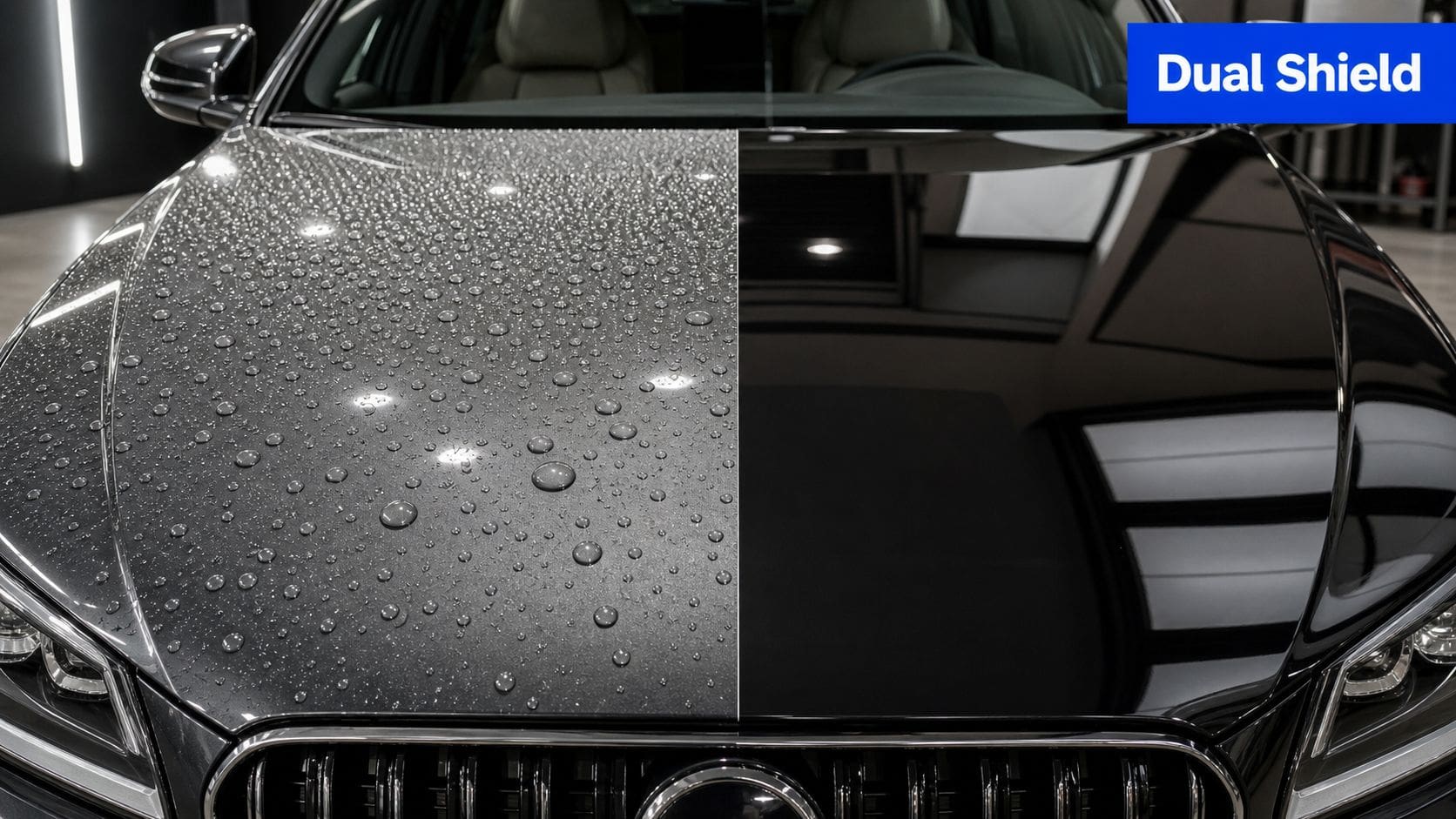
PPF is the physical layer. It takes the hit from rocks, road debris, bug splatter, and light scratches. Ceramic coating is a slick, hydrophobic layer that helps water bead, makes washing easier, and adds chemical resistance and UV support, but it does not absorb impact the way film does. If you want one sentence that separates them cleanly, this is it, PPF protects from contact, ceramic coating helps protect and maintain the surface chemistry.
That's why owners in Hilliard ceramic coating and Columbus ceramic coating searches often end up looking at combination packages. The film goes on the damage-prone panels first, then the coating can be applied over it where the system makes sense. The result is a car that's easier to clean and better defended against road abuse.
Ceramic coating helps you keep the surface cleaner. PPF helps you keep the surface intact.
A customer looking for Hilliard auto detailing sometimes expects one product to do everything. It won't. If you want impact protection, choose PPF. If you want easier washing and stronger chemical resistance, ceramic coating is the better tool. If you want the most balanced setup, put them together on the right areas after proper prep. That prep matters because neither product hides existing paint defects forever.
For a service example that includes the film aspect of the discussion, Lionheart Detailing offers paint protection film installation as one option in the Columbus area. To understand how pricing is typically handled, this internal cost guide is useful: paint protection film cost.
Coverage Options, Costs, and What Affects the Price
A lot of owners start this conversation at the wrong end. They ask, “How much does PPF cost?” before asking what parts of the car need it. The better question is where the film will save you the most grief, because coverage choice usually drives the budget more than anything else, with vehicle shape, film brand, and paint prep also affecting the final number.
Common coverage tiers
| Coverage Tier | Panels Covered | Best For | Relative Cost |
|---|---|---|---|
| Partial front | Front bumper, part of hood, mirrors | Budget-conscious drivers who want basic chip defense | Lower |
| Full front | Full hood, full fenders, bumper, mirrors | New car owners and highway commuters | Moderate |
| High-wear custom areas | Door sills, rocker panels, headlight lenses, loading zones | Families, daily drivers, and vehicles with repeated entry or cargo contact | Variable |
| Full vehicle | Nearly every painted exterior panel | Owners who want the most complete finish protection | Highest |
The first place to spend is usually the area that gets hit every day, not the area that sounds easiest to quote. A partial package can make sense if you want a lower starting point, but full-front coverage is usually the better fit for drivers who rack up highway miles or plan to keep the car a while. Full-vehicle film is the broadest option, and it is usually chosen for long-term preservation rather than convenience.
What drives pricing in the real world
Labor goes up when the body has tight edges, sharp curves, or complex lines that make film harder to fit cleanly. Prep time also matters, because paint correction may be needed before installation if the surface has swirls, defects, or embedded contamination. The installer's skill matters more than the label on the film box, because a poor fit, lifted edge, or debris trapped under the film will stand out every time you wash the car.
A shop that takes time on prep, wrapping, and inspection usually gives you a better result than a quick install that looks good from across the lot. If you are comparing a Hilliard shop with a mobile-only provider, ask who handles the prep, where the work is done, and how edge wrapping is finished. Those details tell you more than a polished sales pitch. For a clearer breakdown of pricing factors, this paint protection film cost guide is a useful place to start.
The Panels Most PPF Articles Forget to Mention
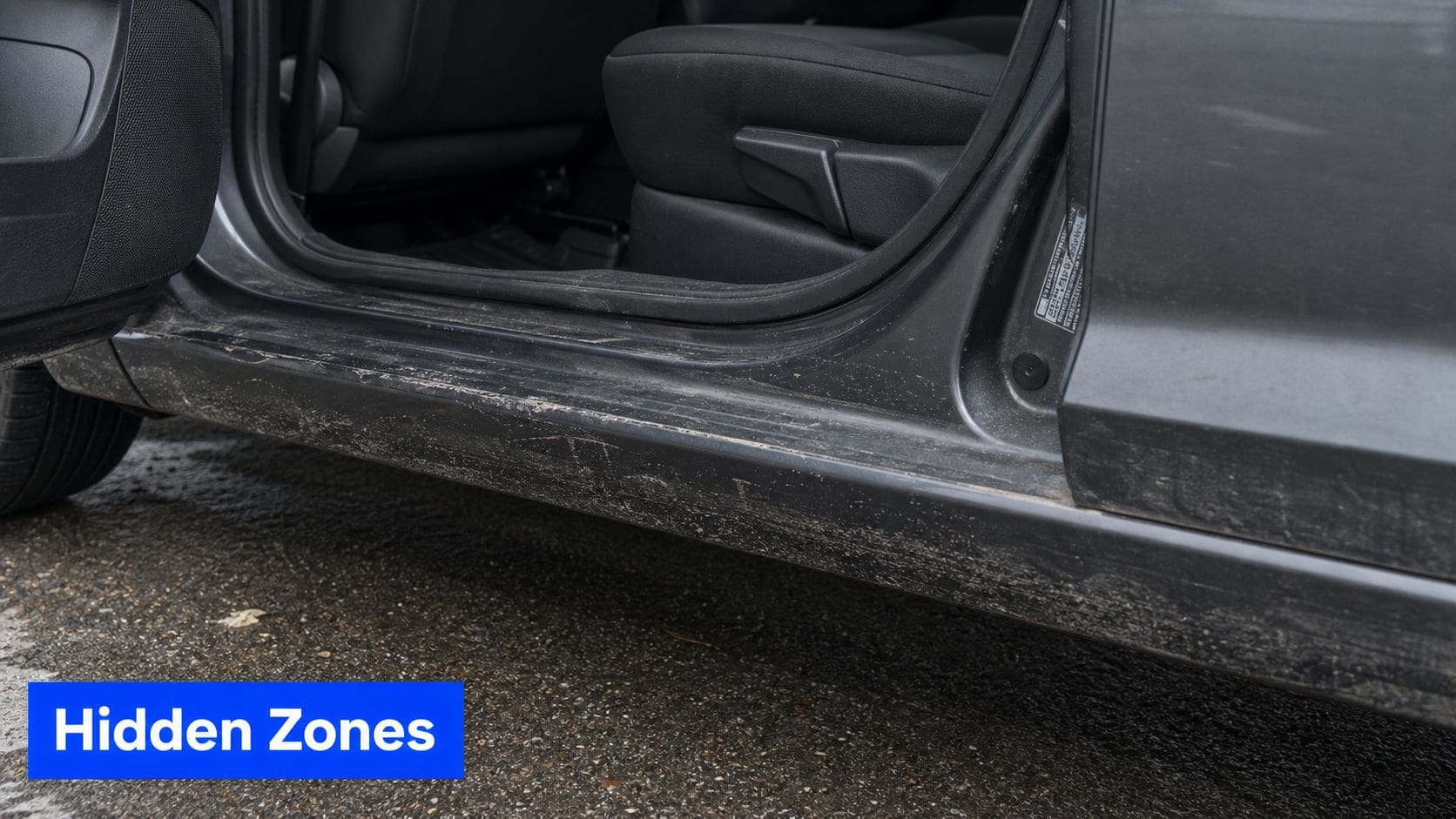
The front bumper gets all the attention, but that's not where a lot of owners get annoyed. The little marks that make a car feel used usually show up somewhere more ordinary, and that's where targeted film can pay off fast.
The wear points people overlook
Door sills take abuse every single day. Shoes scrape them, kids step on them, and groceries slide across them when you're loading the car. Rocker panels get blasted by road grit and can pick up ugly scuffs from winter slush, especially on low vehicles that sit close to the road.
Headlight lenses are another smart area, because they face the same debris and sun exposure that hoods do. If those lenses start to haze or pick up chips, the whole front of the car looks older than it should. Roof rack zones, engine-bay contact points, and interior trim around cargo areas also see more rubbing than most owners realize.
The panels that collect the smallest scratches are often the ones that make the car feel neglected first.
Why targeted protection makes sense
PPF becomes more flexible than a lot of people expect. You don't always need to wrap the whole vehicle to get real value. If your car is new, a daily driver, or a family vehicle with repeated entry and loading, those small high-wear zones can be a smarter use of money than extra coverage on panels that rarely get touched.
For readers who want to go deeper on that exact question, this breakdown of what areas to protect with PPF is a practical place to start. It's especially relevant if you're trying to protect the parts that show wear long before the paint on the hood does.
Maintenance Tips and Common Mistakes to Avoid
PPF doesn't turn your car into a no-care object. It does, however, make ownership easier if you wash it the right way and avoid the mistakes that damage the film early.
Simple care that keeps the film looking good
Hand washing is still the cleanest approach. Use a pH-neutral soap, a soft wash mitt, and microfiber towels for drying. If bugs or bird droppings land on the car, clean them off quickly so they don't sit there baking in the sun longer than they need to.
If the film has just been installed, let the shop explain the curing window before you wash aggressively or pressure-rinse the edges. Fresh film needs time to settle. That's normal, and it's part of why a professional install should come with clear aftercare instructions.
Mistakes that shorten the life of the film
Abrasive polishes can chew up the top surface and make the film look worse, not better. Automatic car washes with rotating brushes can also be rough on the edges and finish. And if a customer skips paint correction before install, every swirl and defect underneath can get sealed in where it's harder to ignore later.
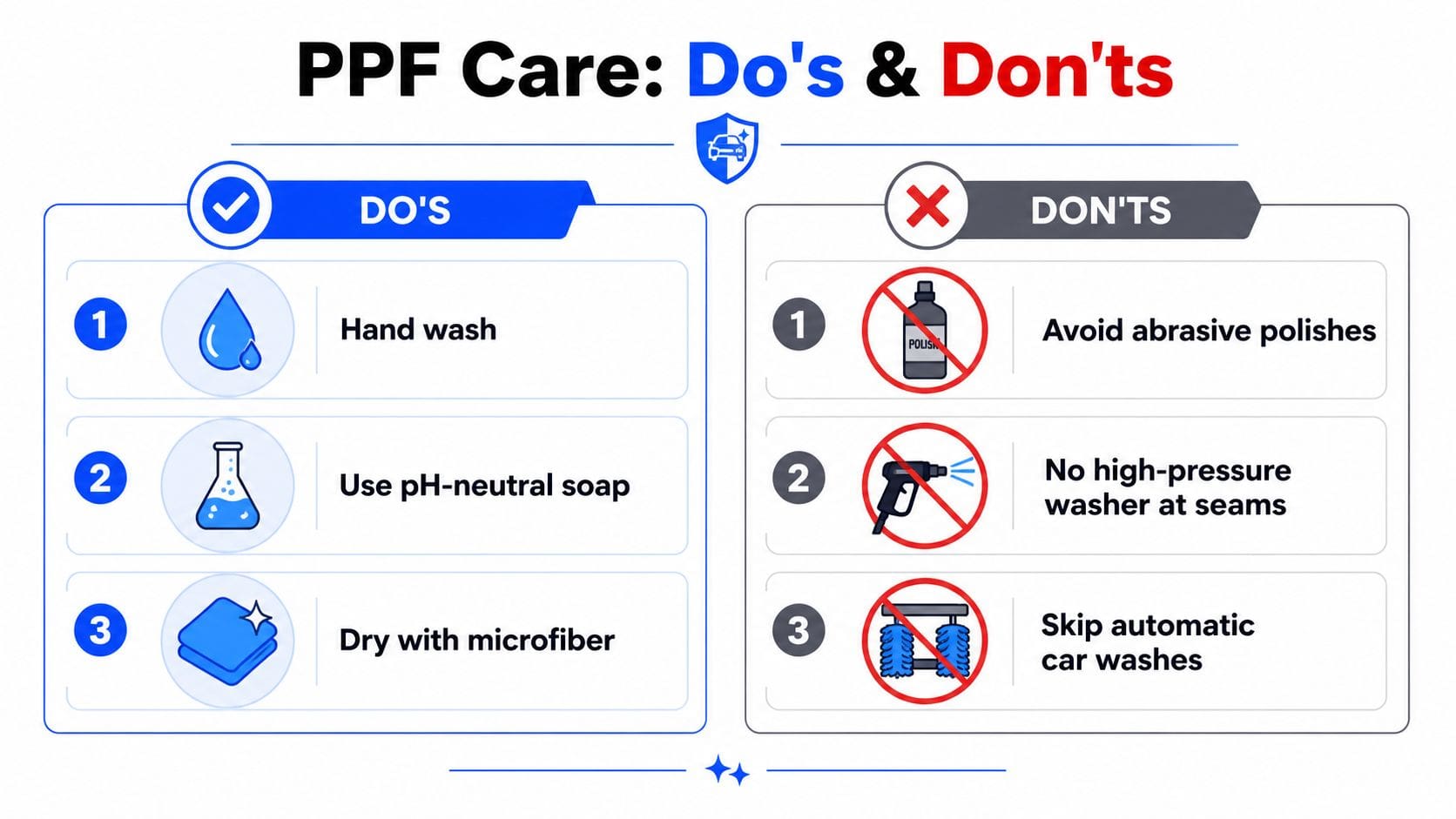
A quick checklist helps:
- Hand wash the vehicle: This keeps grit from grinding across the film.
- Use pH-neutral soap: Strong chemicals aren't needed for normal cleaning.
- Dry with microfiber: Clean towels reduce new marks.
- Avoid abrasive polishes: They can damage the topcoat.
- Don't blast seams with high pressure: Edge lift starts where water is forced under the film.
- Skip brush washes: The brushes can leave marks and stress edges.
That's the kind of care that keeps paint protection film low-stress instead of high-maintenance.
Who Benefits Most and How to Get Started in Columbus
A new car leaves the lot looking perfect. PPF helps keep it that way by taking the hits from road grit, salt, and the little scrapes that happen on the way to work, the grocery store, or a weekend trip across Central Ohio. Luxury and specialty vehicles benefit for the same reason. Fresh paint, custom finishes, and bright trim are easier to preserve than to repair after the first chip or scuff shows up.
Daily drivers around Columbus face a different kind of wear. Winter road treatment, construction debris, crowded parking lots, and constant stop-and-go driving all add up. PPF is practical protection for the parts that get touched most, not just the panels people can see from across the parking lot.
Who should give it serious thought
If you notice every new mark, paint protection film can save you a lot of frustration. It gives the paint a sacrificial layer, so the damage lands on the film first instead of the finish underneath. That matters even more if you keep a vehicle for years and want it to present well at trade-in time. A dealership survey summary at The dealership survey summary reported that many dealership respondents believed PPF helps preserve vehicle value and makes owners feel more confident about resale, especially when protection covers more than just the front end.
Boat owners and drivers who haul gear also have a clear use for it. Gel coat, loading zones, and other high-contact areas take the same kind of abuse as painted panels, so the film can help protect spots that get bumped, brushed, and rubbed repeatedly. A local installer can sort out where that protection makes sense instead of handing you a package that covers the wrong surfaces.
If you are comparing shops in Hilliard, Dublin, Grove City, New Albany, Powell, Upper Arlington, Westerville, or Worthington, start with the installer before you start with the price sheet. This Columbus installer guide explains what to ask about film quality, prep work, and installation habits that affect how the job looks months later.
Door sills, rocker panels, headlight lenses, and the lower edges of bumpers are easy to overlook until they start showing wear. Those are the spots that collect shoe scuffs, gravel strikes, and road film first. A good Columbus install covers the panels that take the abuse, which helps the car look cleaner longer and supports resale by keeping the visible wear down where buyers notice it fastest.
Lionheart Detailing installs paint protection film, ceramic coating, and full detailing services for Columbus-area drivers who want the right protection on the right panels. If you are ready to protect a new car, clean up a daily driver, or plan a smarter package for your Hilliard or Columbus vehicle, visit Lionheart Detailing and reach out for a consultation.