You're standing in the parking lot, looking at the front of your car, and the hood already has a few peppered chips you didn't notice last month. That's usually the moment people start asking about Paint Protection Film, and the key question isn't “what's the most coverage?” It's what areas of your vehicle should you protect with paint protection film so the money goes where the damage really happens.
For most daily drivers in Hilliard and the Columbus area, PPF makes the most sense as a targeted shield, not a full-body wrap. The trick is to protect the panels that get hit first, then decide whether your driving, parking, and ownership plans justify broader coverage. A good shop should talk like a neighbor who knows the roads, not like a salesperson trying to sell every inch of the car.
Table of Contents
- Why the Question Is Really About Where Cars Get Hit
- How Impact Zones Work on a Car
- The High-Impact Panels Worth Protecting First
- Partial Front vs Full Front vs Full Body Packages Explained
- Body Style Changes the Map for Trucks SUVs and EVs
- Replacement Cost and Resale Value Often Decide Coverage
- What to Ask a Shop Before You Book PPF
- Putting It Together and Booking a Coverage Consult
Why the Question Is Really About Where Cars Get Hit
A customer will point at a shiny hood and ask which panels should get PPF, but the better question is which panels take the abuse every day. That's where the value is. A car doesn't get damaged evenly, it gets damaged where the road throws debris, where tires fling grit, and where people touch the paint over and over.
Start with how the car is actually driven
A Columbus commuter who runs I-70 or sits behind traffic on Route 33 sees a different kind of wear than someone who only takes weekend drives in a garage-kept coupe. Highway speed, construction zones, winter salt, and tight parking all concentrate damage in a few predictable places. That's why the most evidence-backed coverage maps focus on the front bumper, hood, front fenders, side mirrors, rocker panels, and lower doors, with the front bumper usually first because it absorbs the biggest share of road impact according to one industry guide, and the same sources identify the hood, mirrors, fenders, and lower body as the next risk zones carsmotology.com.
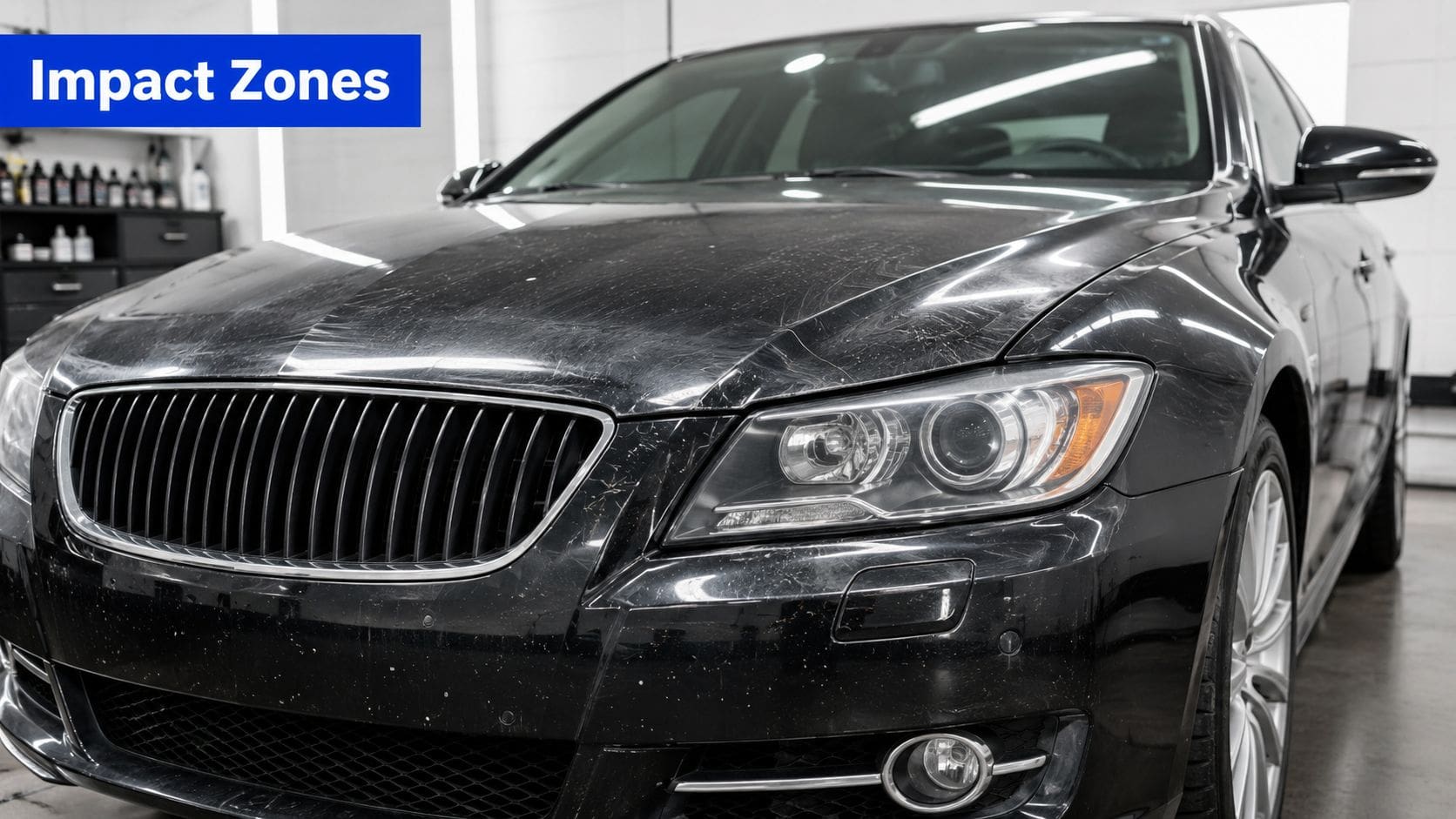
The front of the vehicle usually gets hit first because it meets the road before anything else does. After that, the lower sides catch grit thrown off the tires, and parking-contact areas pick up scuffs from boots, bags, curbs, and door swings. When a shop thinks in those terms, Hilliard paint protection film becomes a practical defense plan instead of an accessory.
Practical rule: protect the surface that meets the road first, then the surface that gets touched second. That's usually where the scratches show up first too.
How Impact Zones Work on a Car
A moving vehicle creates a clear pattern. Air, gravel, tire spray, and tiny bits of road debris hit the leading edges first, then the fallout spreads along the lower body. That is why some panels wear out early while others still look almost new at the same mileage.
Direct strike zones and wear zones are not the same thing
A direct strike zone is where the debris lands. The front bumper, leading hood edge, and front fenders live there, and they are the parts most likely to show chips quickly on a daily driver. A wear zone is different, it is where repeated contact slowly dulls the finish, like rocker panels, lower doors, door cups, and loading ledges.
The reason this matters is simple. A direct strike zone needs film that can take repeated hits. A wear zone might only need smaller sections or edge guards because the damage is less about impact and more about abrasion. That is why many package guides define partial front coverage as the bumper plus the leading hood section, often with mirrors and sometimes the front fenders, while more complete packages expand from there Premier Vehicle Films.
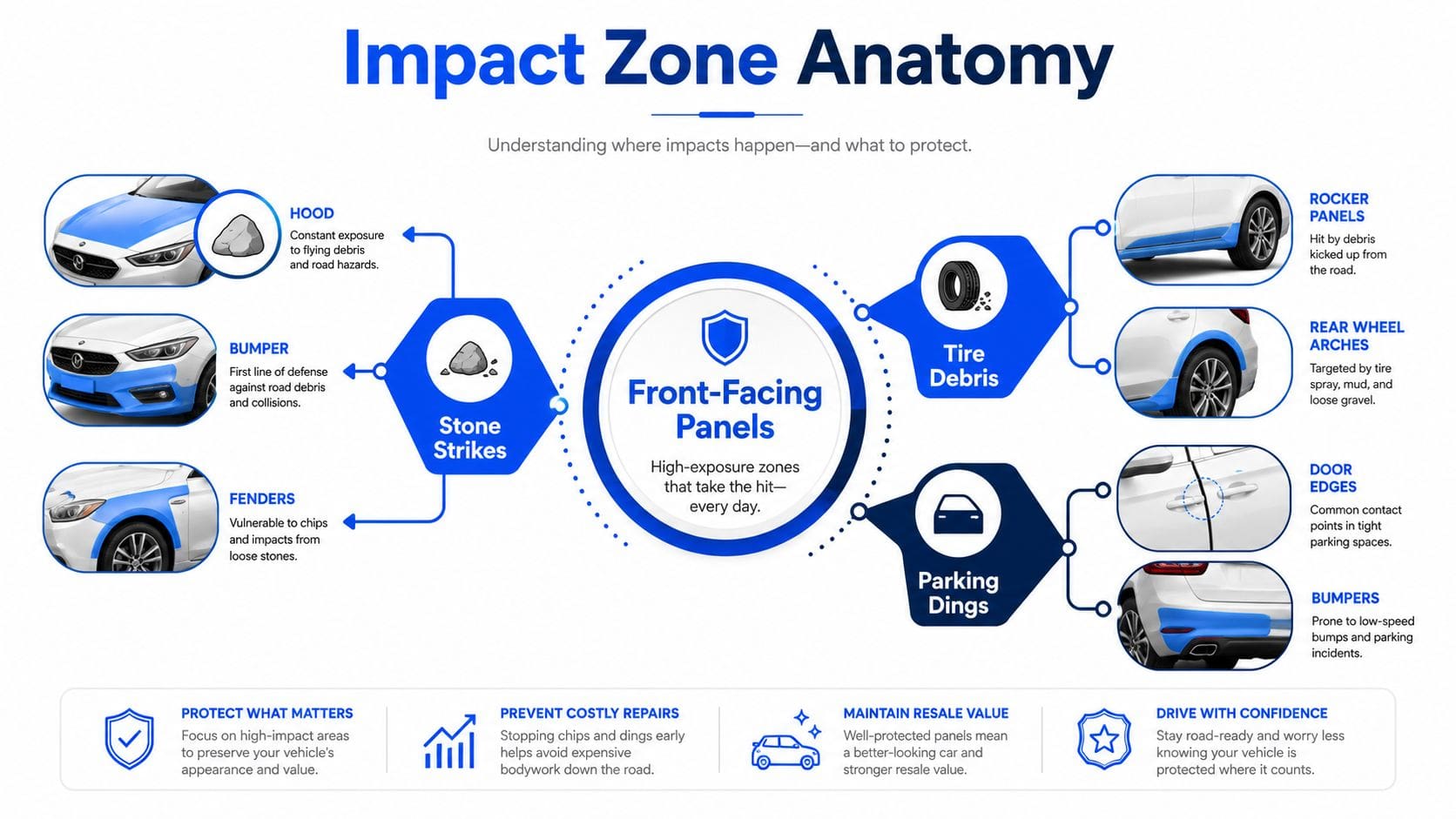
The front bumper earns special attention because it is the first point of contact with road grit and tire-throw. The hood's leading section matters for the same reason, and many installers only cover the front 18 to 24 inches of the hood on partial packages, since that is the part most likely to get peppered on the road. If you drive a lot of miles outside the city, that narrow strip is often a smarter spend than chasing random square footage elsewhere.
The right map is built from the front of the vehicle outward. Not from the shape of the quote.
Why lower panels matter more than they look
Rocker panels and lower doors do not always look exposed when the car is parked, but they take constant abuse from tire spray, slush, road salt, and gravel. That is especially true on trucks and SUVs with bigger tires and a higher spray pattern. If you have ever seen the lower edge of a dark vehicle get that sandblasted look, that is impact concentration in action.
The key takeaway is that PPF is supposed to intercept damage at the highest-risk points first. If those are protected well, the rest of the car can often stay unwrapped without feeling incomplete.
The High-Impact Panels Worth Protecting First
The best PPF list is short, clear, and tied to real damage. A good installer should be able to tell you what each panel faces on the road and why it earned a place on the quote. In the Columbus area, that usually starts with the front end and works back from there.
The front bumper, hood edge, and front fenders
The front bumper is the first line of defense, so it usually earns top priority. It catches bugs, grit, stone strikes, and the junk that gets kicked up by traffic ahead. The hood leading edge is next because it sits directly in the debris stream, and the front fenders collect the peppering that comes off the front tires and surrounding traffic.
Side mirrors are worth serious consideration too. They sit out in the airflow, they get blasted by grime, and they're easy to nick in tight parking lots. On many vehicles, mirror caps are also a pain to replace cleanly because they're small parts with specific paint or trim matching.
The lower body gets more abuse than most people expect
Rocker panels and lower doors don't get much attention until they're already scarred. They catch gravel spray, winter road salt, and the kind of scratch marks that happen when shoes, bags, and road grime keep rubbing the same area. For trucks and SUVs, those lower sections often deserve protection almost as much as the hood and bumper.
Rear loading areas matter too, especially for family vehicles and utility platforms. The rear bumper loading ledge sees repeated contact from groceries, strollers, tools, dog crates, and cargo. That part of the car rarely gets glamorous attention, but it's one of the most useful places to add film.
- Front bumper: Best first pick for stone strikes and road debris.
- Hood leading edge: Smart if you drive highways often.
- Front fenders: Useful when your commute throws a lot of tire debris.
- Side mirrors: Good for tight parking and airflow exposure.
- Rocker panels and lower doors: Strong choice for dirty roads, winter driving, and trucks.
- Rear bumper loading ledge: Worth it if you load cargo often.
Secondary zones that make sense for some owners
Headlights, door edges, door cups, and trunk or hatch ledges are nice add-ons when the vehicle is new, dark-colored, or easy to scratch during routine use. Lionheart Detailing's coverage options also reflect that logic, with packages built around Full Hood, Roof and Trunk, Full Fenders and Quarters, Full Front and Rear Bumper, Full Doors and Rocker Panels, Mirror Caps & Pillars, and Headlights, depending on how the vehicle is used and what needs shielding most. That kind of menu makes more sense than a one-size-fits-all list.
Partial Front vs Full Front vs Full Body Packages Explained
Most buyers get stuck here, because the names sound similar until you see the panels laid out. The simplest way to sort it is by how much of the front impact zone you want covered and how much you're willing to spend to keep the film invisible and thorough.
| PPF Package Comparison | Panels Covered | Best For | Trade-Off |
|---|---|---|---|
| Partial Front | Bumper, leading hood section, often mirrors and sometimes fenders | Daily drivers, budget-conscious owners, cars that rack up mostly city miles | Leaves part of the hood and some adjacent panels exposed |
| Full Front | Full hood, full front fenders, bumper, mirrors, often more edge coverage | Highway commuters, new vehicles, owners who want a cleaner visual break line | Costs more and takes more install time |
| Full Body | Every painted panel | Long-term keepers, show cars, luxury cars, owners who want maximum coverage | Highest cost, most labor, most material |
How to decide without overthinking it
A partial front package works when you want real protection where the damage starts, but you don't need every painted inch covered. If you commute, park outdoors, and just want the nose of the car protected from chips, it's often enough. A full front package makes more sense when you plan to keep the car a long time or you hate seeing a film line on the hood.
A full body package is usually for owners who want the whole vehicle wrapped for long-term preservation, not just the high-impact panels. That can make sense on special cars, rare colors, or vehicles that live in harsh conditions, but many owners don't need it. I'd rather tell someone to protect the right panels well than sell them more film than they'll ever notice.
For anyone comparing pricing and coverage, this full-front PPF page is a useful place to see how a more complete front-end package is put together.
If you're new to PPF, don't start with square footage. Start with the parts you'd hate to repaint.
The resale angle matters too, and the next section gets into that, because sometimes the right package is the one that protects the panels that are hardest to fix, not just the ones that get hit most often.
Body Style Changes the Map for Trucks SUVs and EVs
A sedan is the default in a lot of PPF articles, but that's not how people in the Columbus area drive. Trucks, SUVs, and EVs bring different front-end shapes, different trim, and different failure points. The coverage map should shift with the body style, not fight it.
Trucks and SUVs need more lower-body attention
On a truck, the front bumper still matters, but the bedside leading edges and lower panels start to matter more than they do on a typical sedan. Gravel spray and loading scuffs show up fast on work trucks, and the tailgate top can take abuse from gear, coolers, toolboxes, and everyday use. SUVs add a big rear bumper loading ledge into the mix, which is why family haulers often need more rear-area film than people expect.
EVs bring different parts into the conversation
EVs often have smoother front ends, larger gloss-black trim areas, and complex lighting pieces that cost more to replace than they look like they should. Flush door handles, sculpted mirror caps, and wide headlight assemblies make the replacement-cost question more important. The coverage map still starts with impact zones, but the list of “expensive to fix” parts gets longer.
A useful rule for EVs is to think beyond just the hood and bumper. If the design has exposed trim, fragile lighting, or paint that wraps around hard-to-source pieces, those areas deserve attention early. That's where a body-style-specific consult beats a generic package.
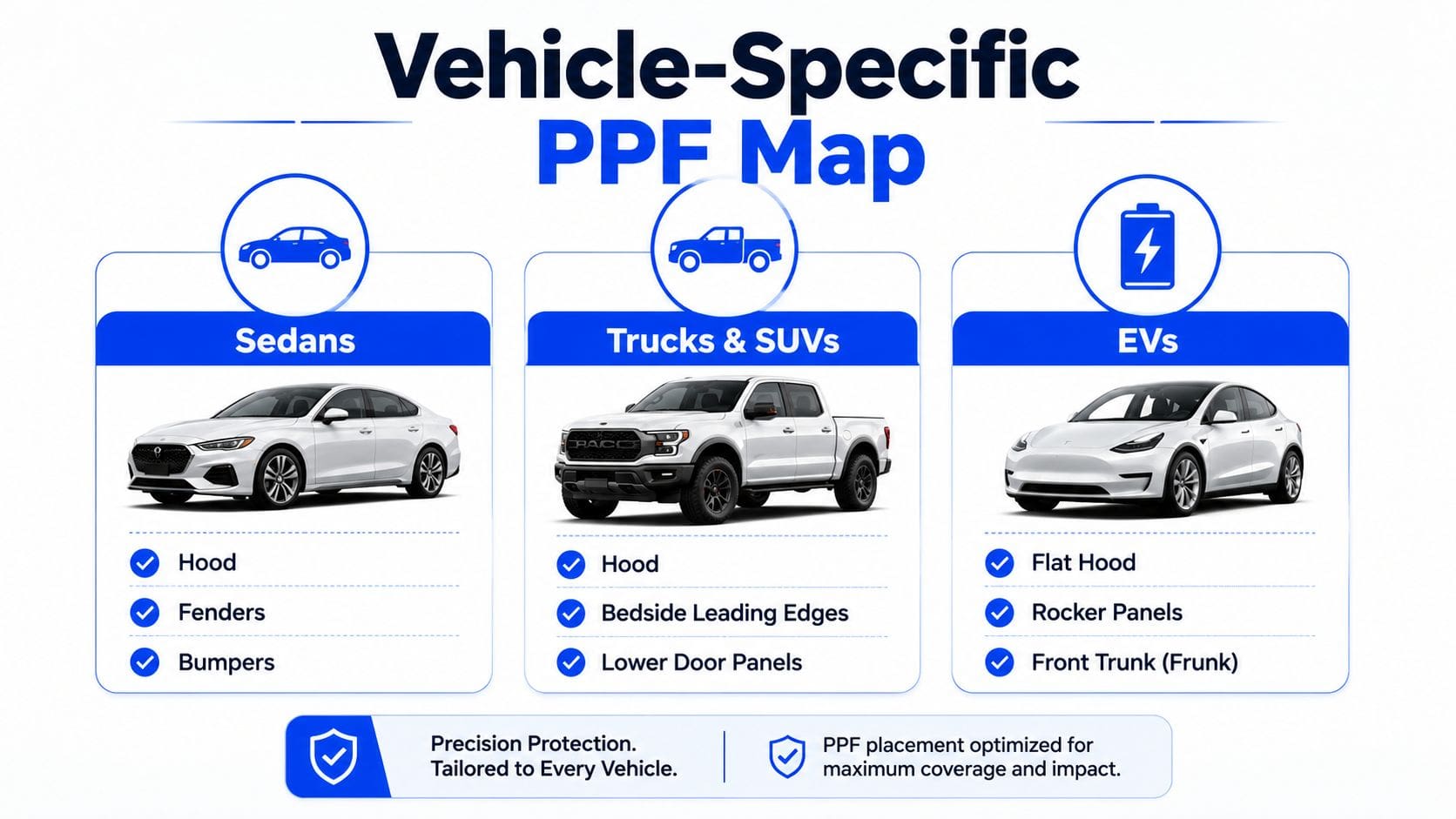
Quick body-style guidance
- Sedans: Focus on bumper, hood, fenders, mirrors, and lower doors.
- Trucks: Add bedside leading edges, mirror caps, and tailgate loading points.
- SUVs: Put more weight on rear bumper ledges and lower side protection.
- EVs: Don't ignore trim, headlights, and front-end pieces with high replacement complexity.
The point isn't to overload every truck or EV with extra film. It's to match the package to the body shape and the kind of damage that platform naturally collects. That's the kind of thinking that makes Columbus PPF feel custom instead of generic.
Replacement Cost and Resale Value Often Decide Coverage
Impact alone doesn't tell the whole story. Some panels don't get hit the most, but they're expensive, annoying, or slow to replace when they do get damaged. That's where the second filter comes in.
Protect the parts that are painful to replace
Headlights are a good example. On modern vehicles, they can be expensive and complicated to source, and a replacement can turn a minor chip into a frustrating repair cycle. Mirror caps can be similar, especially when the paint finish or trim design is specific to the vehicle. A bumper cover may not be the most expensive part in the world, but it can still mean downtime, paint matching, and a trip through the body shop.
That's why the smartest PPF plan isn't just about where the debris lands. It's about where the repair is most irritating. If a part is hard to source, hard to color-match, or tied to sensors and modern trim, film starts to make more sense even if the panel isn't the absolute hardest-hit spot.
Why resale keeps showing up in dealer conversations
A dealership survey found that 96% of respondents said applying PPF to all painted areas helps preserve value during the first ownership cycle, 92% believed fully protected vehicles would command a higher resale value, and 91% said they would advise protecting all exterior areas rather than only the front end. The same survey said over 70% of dealers saw value-retention improvements of up to 15% Yahoo Finance survey summary.
That doesn't mean every car needs full coverage. It means a lot of professionals see preserved paint as part of the resale story, especially on newer vehicles and higher-end trims. If you plan to trade in sooner, partial protection may be enough. If you plan to keep the car for years and want cleaner paint at sale time, a broader package starts to make sense.
For a clearer breakdown of how coverage choices affect your budget, Lionheart's PPF cost guide is worth reading before you book.
A chip on a cheap panel is annoying. A chip on a hard-to-replace panel is a headache.
What to Ask a Shop Before You Book PPF
Coverage only matters if the install is clean. Bad prep, sloppy trimming, or careless edge work can make even a good film look rough, and that's the fastest way to waste money. Before you book, ask a few direct questions and pay attention to how the shop answers them.
The questions that separate careful installers from volume shops
- Film brand: Ask which manufacturer they install and why they use it.
- Cut method: Ask whether they use plotter-cut patterns or hand-cut work on the vehicle.
- Edge treatment: Ask how they handle seams, wrap points, and exposed edges.
- Warranty: Ask what the warranty covers and whether it transfers if you sell the car.
- Prep process: Ask how they clean the paint before film goes on and what they do after installation.
- Shop condition: Look at the work area, lighting, and cleanliness.
A detailed answer usually tells you more than a polished sales pitch. If the installer can explain why a partial front makes sense for one car and a fuller package makes sense for another, that's a good sign. If every car gets the same answer, keep shopping.
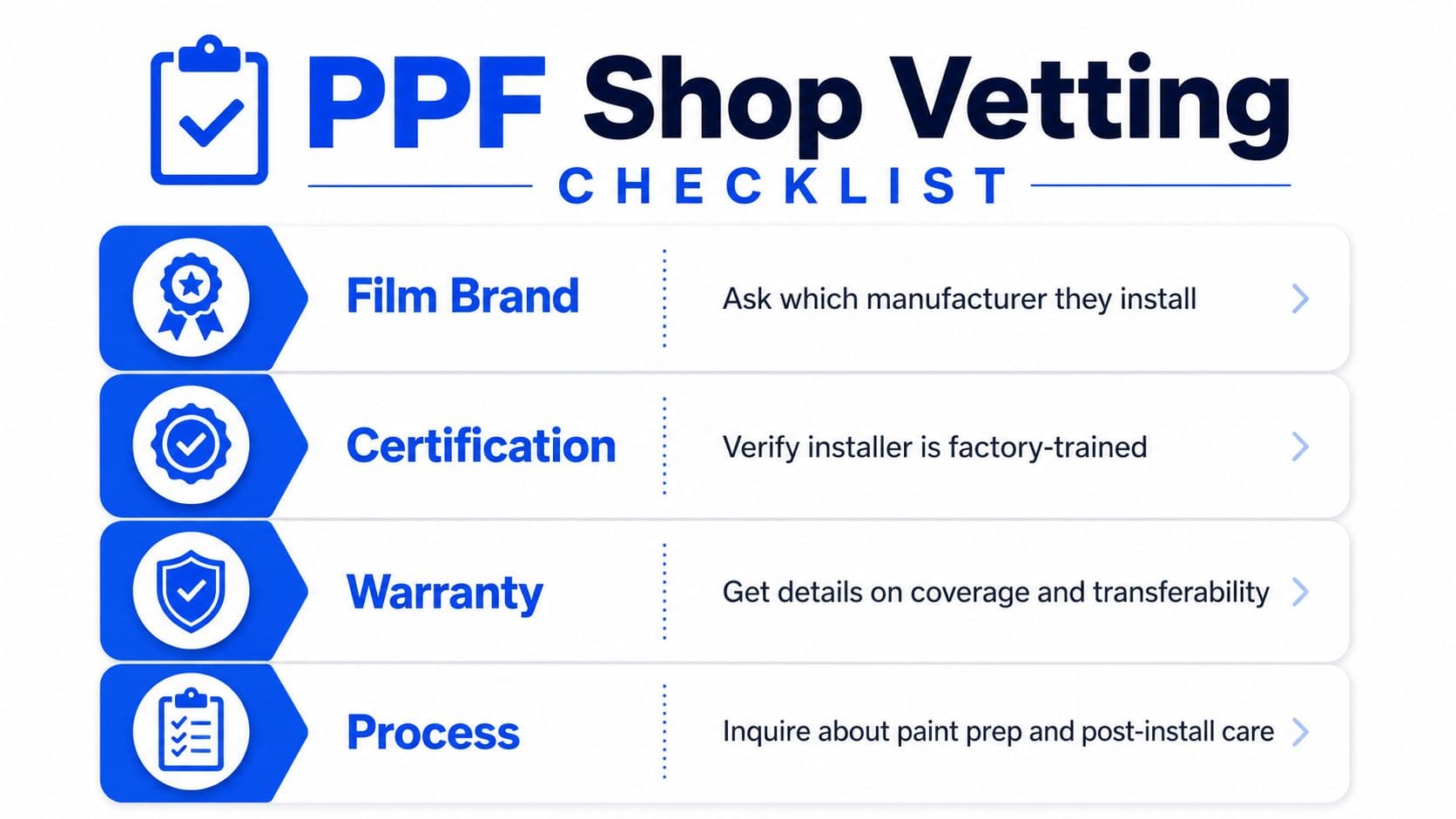
For Columbus-area shoppers, this installer guide is a good way to compare options without getting lost in jargon.
What good communication sounds like
A solid shop should be willing to say you probably don't need full-body film if you mostly drive in town and park in a garage. That honesty is a good sign. It means the recommendation is built around use, not upsell.
Lionheart Detailing offers PPF installation as part of its protection work in the Columbus area, along with detailing and other vehicle care services, so it's one local option to compare against any quote you get.
Putting It Together and Booking a Coverage Consult
The right PPF map usually comes down to three filters. First, where the car gets hit. Second, how expensive the parts are to fix. Third, how much value you want to preserve over time. If you use those three filters, the answer becomes a lot less confusing.
Keep the expectations realistic
Paint Protection Film won't stop every chip forever, and it won't hide bad paint underneath it. What it does is take the abuse before the factory finish does, which is the whole point. A good install should look clean, stay out of the way, and make the vehicle easier to live with day to day.
For most owners, the smart move is a partial front or full front package, then add pieces like mirrors, rocker panels, door edges, or rear loading areas only when your car's use pattern calls for them. That's especially true for Hilliard auto detailing customers who want real protection without turning the car into a full wrap project.
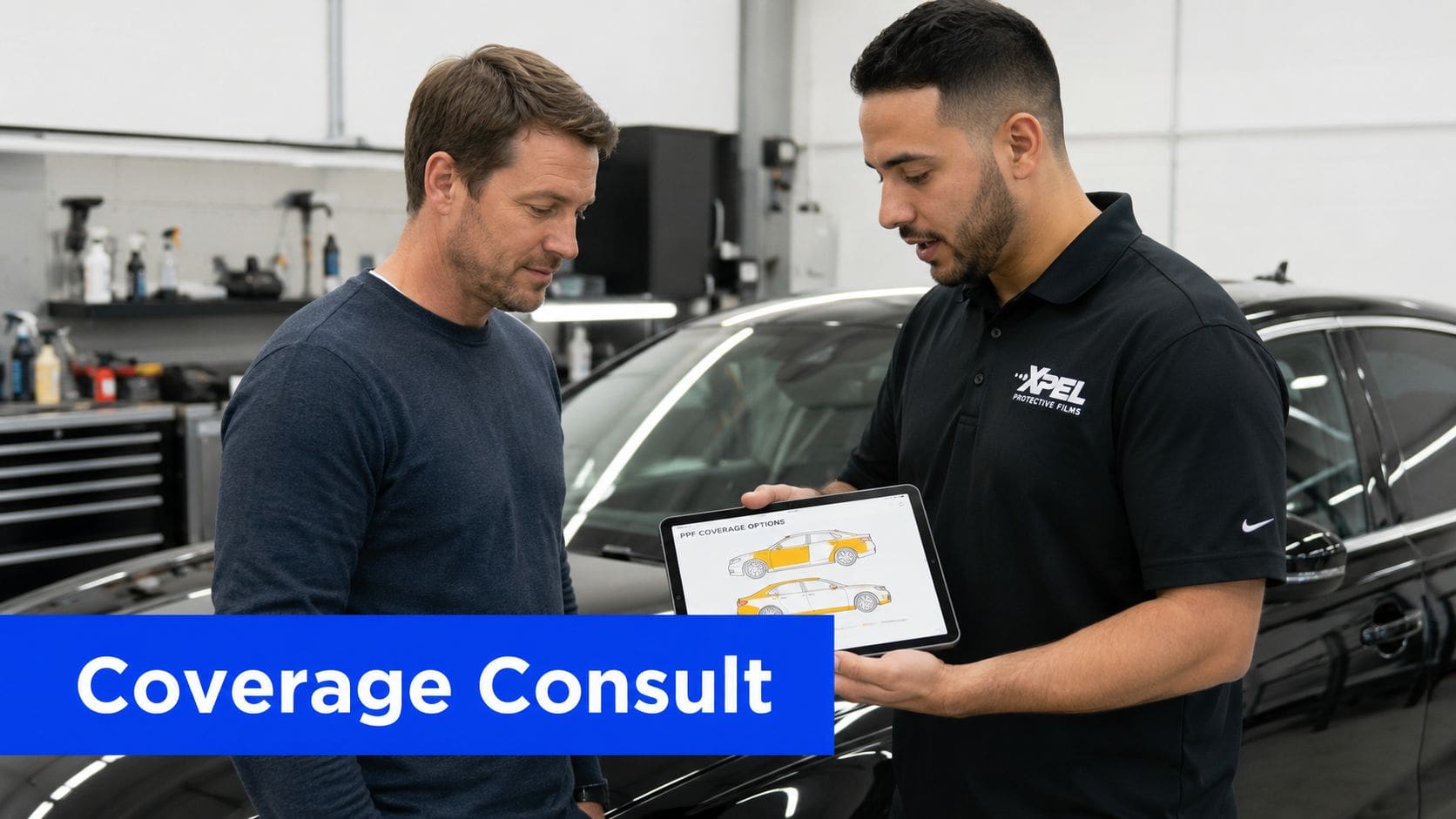
If you want a straight answer on what to protect, Lionheart Auto Detailing & Protection can walk through the vehicle with you at the Hilliard shop at 4402 Weaver Court North, Suite 204, Hilliard, or through the fully equipped mobile unit anywhere in the Columbus metro. That's usually the easiest way to turn a general question into a coverage plan that fits the way you drive.
If you're weighing Hilliard paint protection film or comparing Columbus ceramic coating and PPF for a new vehicle, reach out to Lionheart Detailing for a no-pressure coverage consult. We'll look at how you drive, what your vehicle really needs, and which panels are worth protecting first so you can make a clear decision without paying for film you don't need.