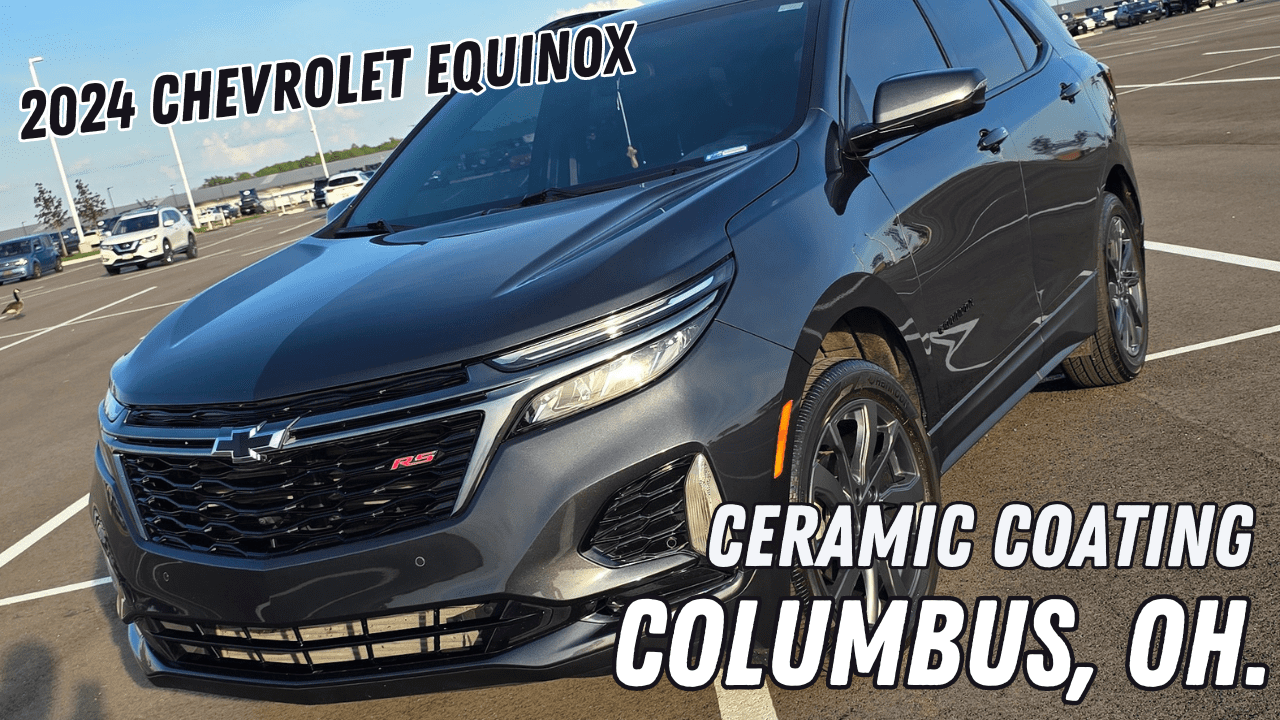
You're staring at a new car, or maybe the one you've owned for a few months, and the first chip is already on the hood. In Columbus, that moment usually comes faster than people expect, especially after highway miles, construction zones, winter grit, and everyday commuter traffic. That's why choosing the right PPF installer matters so much, because paint protection film is only as good as the hands that apply it.
For Columbus shoppers, this is not really a brand comparison problem, it's a risk-management decision. The difference between a clean install and a costly redo often comes down to prep, edge work, coverage planning, and whether the shop can explain what it's doing before the film ever touches the paint.
Table of Contents
- Why Choosing the Right PPF Installer Matters in Columbus
- What Paint Protection Film Does
- What a Quality PPF Shop Looks Like Behind the Scenes
- Understanding PPF Coverage Tiers and What to Pick
- Mobile Versus Shop Installs and Why It Matters
- How to Vet Reviews, Warranty, and Installer Reputation
- Your Step-by-Step Plan for Booking and Inspecting a Columbus PPF Job
- Common PPF Questions and the Next Step for Columbus Drivers
Why Choosing the Right PPF Installer Matters in Columbus
A lot of Columbus drivers learn about PPF the hard way. They pick up a new vehicle, enjoy the clean paint for a week or two, then an I-70 drive or a stretch of road with fresh debris sends the first chip straight into the hood. At that point, the conversation changes from “Should I protect the paint?” to “How much damage am I willing to live with?”
That's the right way to think about paint protection film in Columbus. The local market has real price spread, and that spread tells you exactly why installer quality matters. A partial front kit runs about $800–$900, a full front coverage package is roughly $1,800–$2,000, and a full vehicle wrap comes in at about $6,000–$7,000+ in Columbus examples from Performance Auto Spa (source). Once a service reaches that level of investment, a small mistake in prep, pattern placement, or edge finishing can turn into a visible flaw you'll look at every time you walk up to the car.
The installer is the real product
A quality film can do its job only if the install is disciplined. That means the installer understands coverage tiers, knows where the film should end, and can show you close-up finished work instead of only wide glamour shots. On higher-end cars, the difference between smooth and sloppy is often visible at the edges, around emblems, and in tight corners.
Practical rule: if the shop can't explain how it handles corners, edges, and surface prep before the quote, keep shopping.
This matters even more in Columbus, where buyers increasingly expect proof of workmanship and a local footprint they can verify. Local installer guides emphasize proven experience, quality film, customer reviews, clear warranty coverage, and proper prep work as the baseline for deciding who's worth trusting (source). A provider with a fixed shop address, visible vehicle examples, and a clean workflow is usually easier to evaluate than one selling only on price.
What Paint Protection Film Does
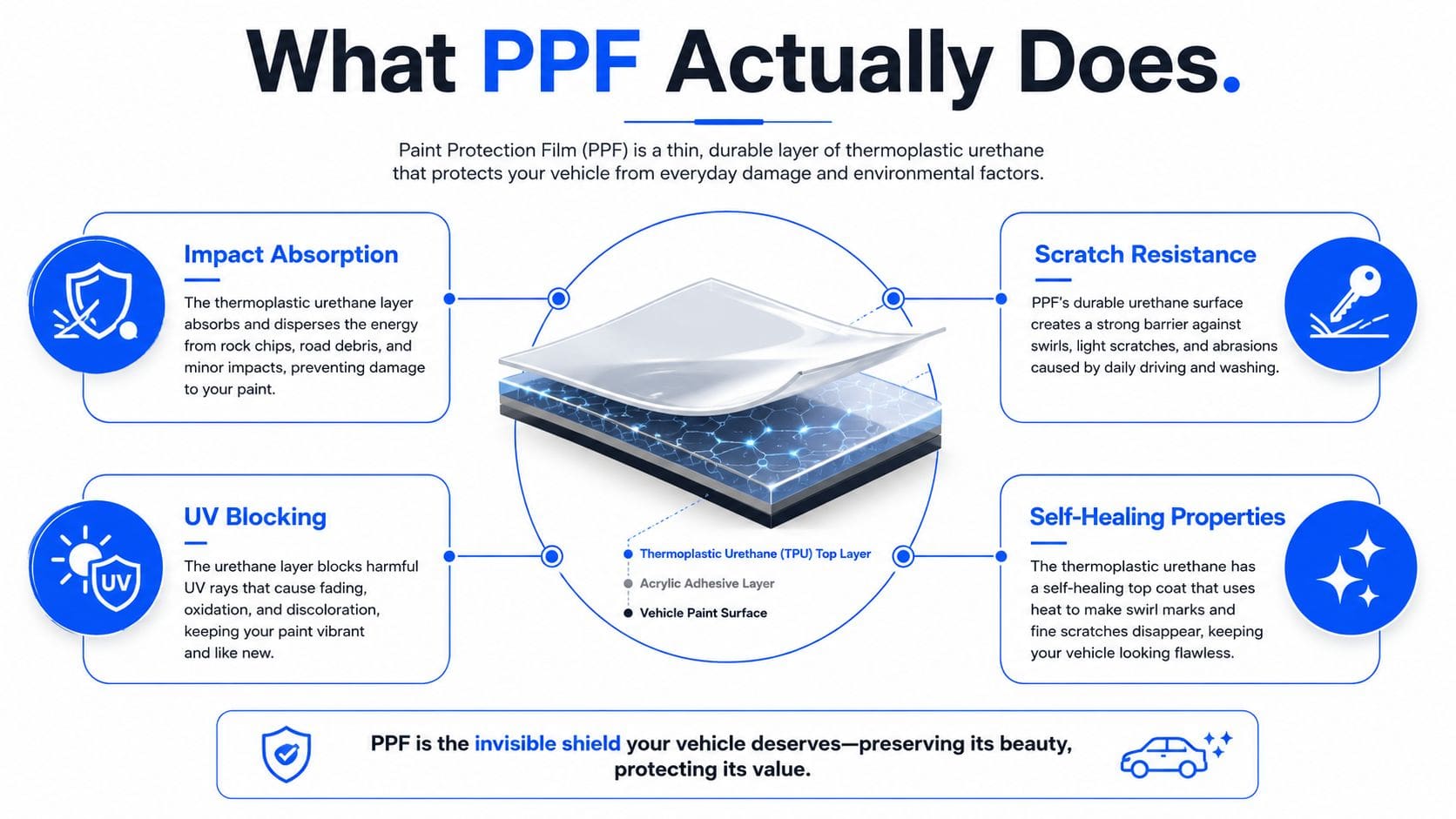
Paint protection film, or PPF, is a clear urethane layer that sits on top of your paint and takes abuse before the clear coat does. In plain English, it absorbs impact from road debris, helps resist light scratches, blocks UV exposure, and reduces the chance that small surface marks turn into bigger eyesores. That is why so many Columbus owners pair it with ceramic coating, because the two services solve different problems.
PPF and ceramic coating are not the same thing
PPF is about physical protection. Ceramic coating is about chemical resistance, easier washing, and hydrophobic behavior. If a rock hits the bumper, PPF is the layer doing the heavy lifting. If brake dust, road film, or winter grime sticks to the car, a coating helps with cleanup. The two work well together, but they should never be treated as substitutes.
The finish choice matters too. PPF can be installed in gloss or matte styles, and some films include self-healing top coats that can reduce the look of minor swirl marks when heat is applied. That is not magic, and it will not erase every defect, but it does help a well-kept car stay cleaner-looking between washes. If you want to understand how different film builds affect fit and finish, see this PPF training overview from Lionheart Detailing.
What to expect after installation
A new PPF owner should plan on basic care, not neglect. You still need gentle washing, a clean towel process, and some patience during the initial curing period. The film is built to protect, not to make maintenance irrelevant.
Expect the installer to explain how the film is built, how it finishes at the edges, and how it should be maintained after pickup. That conversation tells you more than a sales pitch about brand names ever will.
What a Quality PPF Shop Looks Like Behind the Scenes
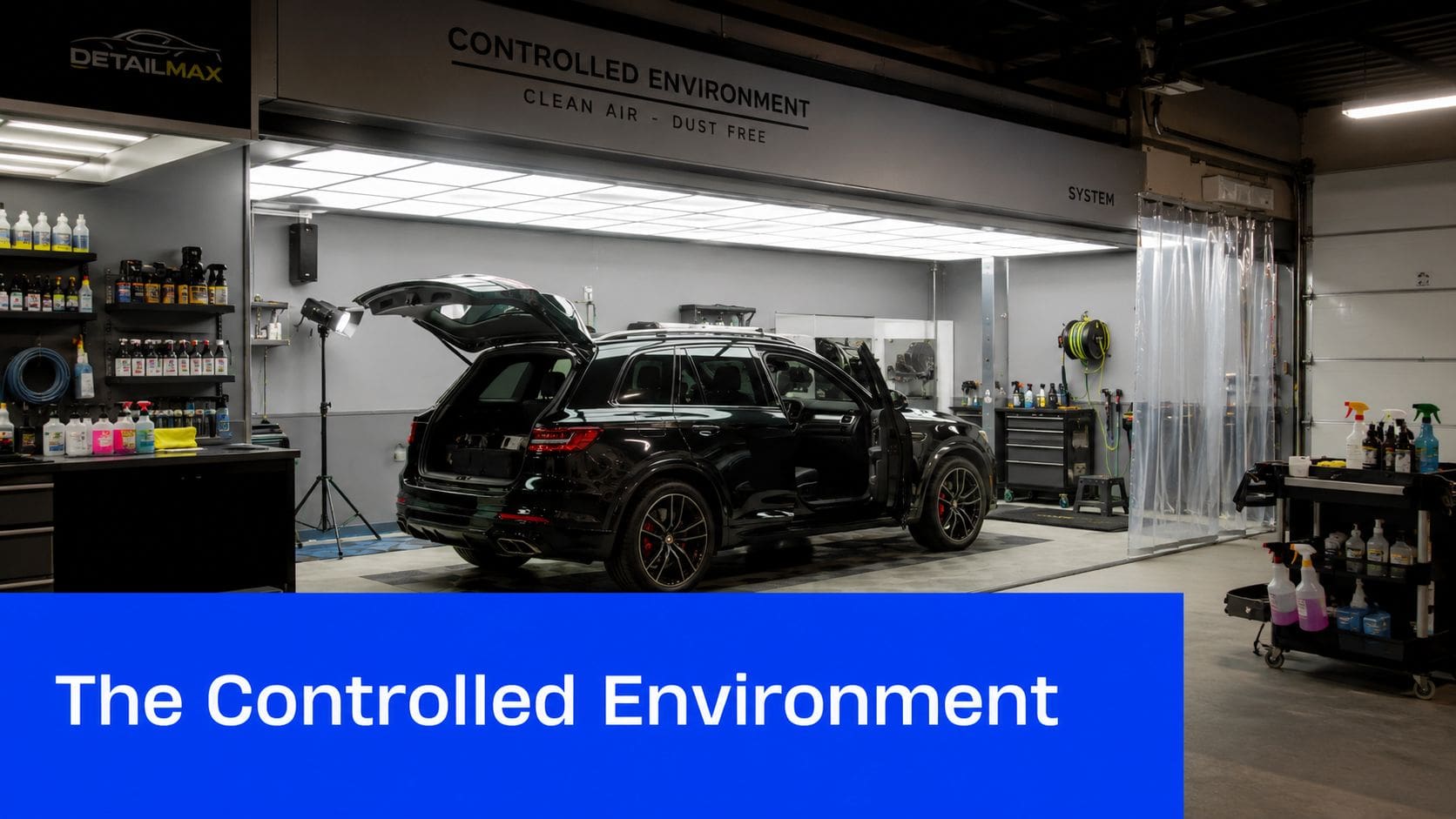
The shop environment is one of the first places quality shows up or falls apart, and most buyers never look past the brochure wall. A technically strong installer should work in a very clean, controlled bay with filtered air, proper lighting, and ventilation, because airborne dust can get trapped under the film and stay there for the life of the install (source). That is not a cosmetic detail, it is a workmanship problem that becomes part of the car.
Ask about the bay, not just the film
Before you book, ask whether the shop has a dedicated PPF prep area, how it manages airflow, and what it does to keep the floor and surrounding surfaces clean. You want clear answers about decontamination, panel prep, and how the installer handles the vehicle before film touches the paint. If the reply is vague, the process is probably vague too, and that is where contamination and rushed prep start costing money.
The portfolio should tell the same story. Close-up photos of wrapped edges, tucked borders, and clean cut lines matter more than polished wide-angle shots. Those details are where the installer shows discipline. A neat edge means the technician controlled the pattern, the surface, and the finish work well enough to avoid obvious visual interruptions.
A good PPF bay does not have to look fancy. It has to look controlled.
The installer is the core product. A Columbus-area guide points shoppers toward businesses with direct contact points and a verifiable local footprint, including a shop at 4402 Weaver Ct Unit 204, Hilliard, OH 43026, which helps confirm the business is real and established (source). For a customer, that kind of transparency matters because it makes the install easier to inspect before money changes hands. For anyone who wants a clearer look at how a serious shop trains its process, Lionheart's PPF training page is a useful reference point for the kind of documentation and discipline that should exist somewhere in the business's public presence.
Understanding PPF Coverage Tiers and What to Pick
The right coverage tier depends on how you drive, where you park, and how much of the car you want protected. Columbus roads do not punish every panel the same way. The front bumper, hood, mirrors, headlights, and forward-facing fenders take the hardest hits from debris, while lower panels and rocker areas deal with a different mix of road grime and impact.
Match the package to the car's real use
A partial front package is the practical entry point for many drivers who want core impact protection without covering the whole vehicle. A full front package expands that coverage and is often the better choice for newer cars, luxury vehicles, and anyone who wants cleaner visual consistency across the most exposed panels. A full vehicle wrap is the most complete option, but it only makes sense when the owner wants maximum preservation and is willing to pay for it.
The Columbus price structure makes the decision clearer. Partial front work sits around $800–$900, full front protection is roughly $1,800–$2,000, and full vehicle coverage lands at about $6,000–$7,000+ (source). Those numbers are the reason the installer matters so much. The pricier the package, the less room there is for sloppy fitment or contamination that gets buried under film.
| PPF Coverage Tiers at a Glance | Typical Panels Protected | Columbus Price Range | Best For |
|---|---|---|---|
| Partial Front | Hood section, bumper section, mirrors, leading edges | $800–$900 | Daily drivers that need basic front-end defense |
| Full Front | Full hood, full bumper, full fenders, mirrors, headlights | $1,800–$2,000 | New vehicles, luxury cars, and stronger highway protection |
| Full Vehicle Wrap | Every painted exterior panel | $6,000–$7,000+ | Owners seeking maximum preservation |
If you are comparing package levels, Lionheart's full front PPF page shows what full front-end coverage usually includes in a real shop setting. The key question is not only how many panels get film, but whether the shop can explain why that coverage fits your driving pattern.
Buy for your habits, not your ego
A commuter who racks up highway miles should think differently than a garage-kept weekend owner. If the car sees lots of I-71 or outer-belt driving, full front coverage usually makes more sense than a minimal package. If the vehicle spends most of its life protected and only needs basic chip defense, partial front may be enough.
A better installer will say that plainly. They will not push the highest tier for every car, because the right job is the one that matches how the vehicle is used, where it is exposed, and how long the owner plans to keep it.
Mobile Versus Shop Installs and Why It Matters
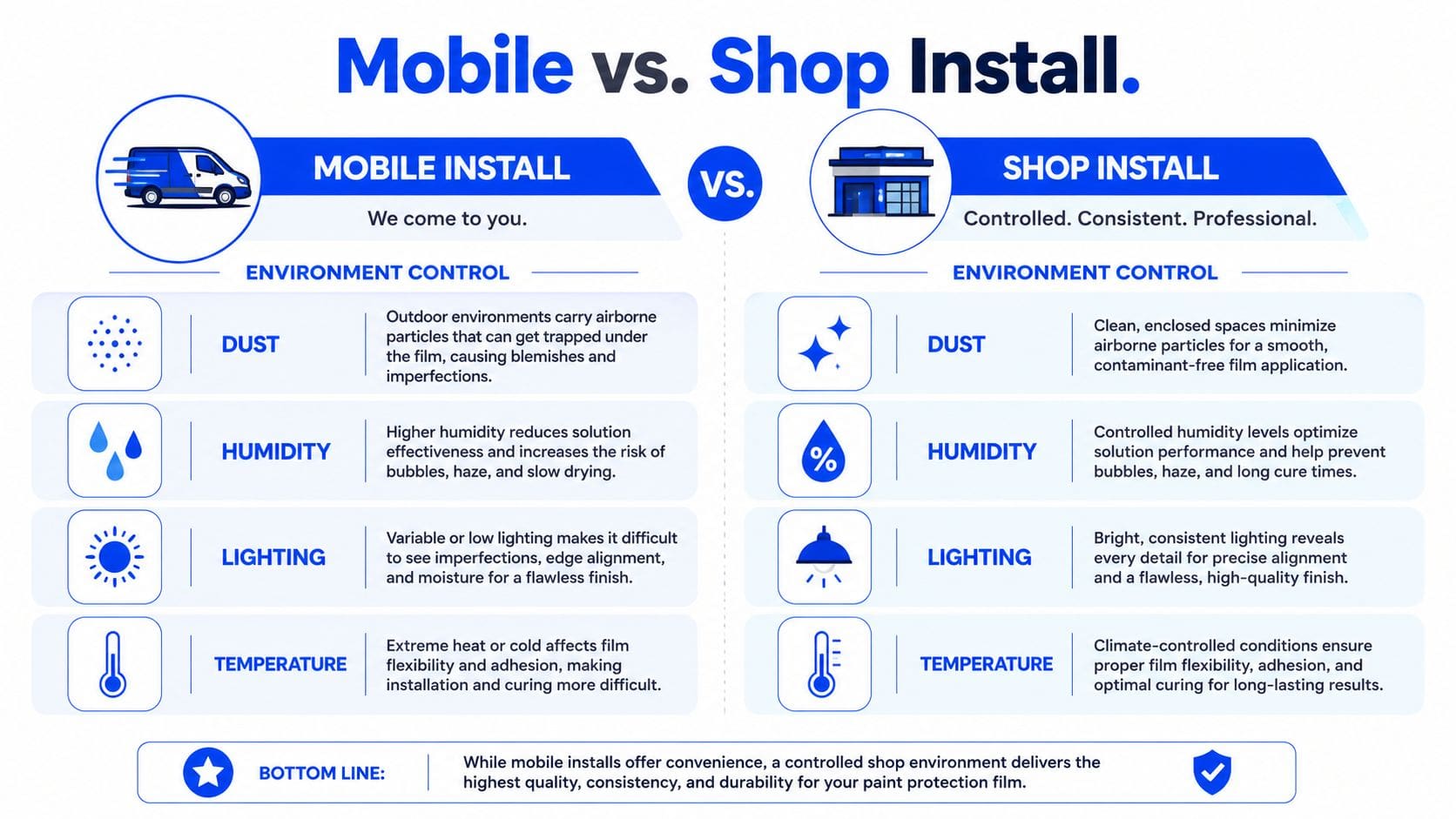
Mobile PPF service sounds convenient, and sometimes it is. But convenience isn't the same thing as identical quality control. A film install is sensitive to dust, humidity, lighting, and temperature stability, so the work environment matters more than many first-time buyers realize (source).
Convenience has trade-offs
A mobile setup can still produce strong results on simpler jobs when the workspace is properly managed and the weather cooperates. It can be a practical choice for some Columbus drivers who want service at home or work. The trade-off is that the installer has to control the environment manually, and that isn't always equal to a fixed studio's repeatability.
That's why the best question isn't “mobile or shop?” It's “how is the workspace controlled?” Ask whether the installer tents the area, what filtration it uses, how it handles airflow, and whether it will reschedule if the conditions aren't right. If the answer is “we can do it no matter what,” that's not confidence, that's a red flag.
Use the install complexity to guide the delivery model
A simple front-end package has more room for environmental variability than a full wrap on a complex vehicle. The more panels, curves, and edges involved, the more a stable shop environment helps. That's especially true when the vehicle has tight body lines, sensitive paint, or specialty trim.
Columbus competition already includes both fixed studios and metro-wide service models, so the delivery model itself is part of the buying decision. The goal is to match the service environment to the job, not to assume one format is automatically superior. If you're weighing the two, inspect the conditions, ask about curing time, and pay attention to how the installer talks about contamination control.
A good shop should be comfortable explaining why it chose its setup. If it can't, keep looking.
How to Vet Reviews, Warranty, and Installer Reputation
A star rating by itself doesn't tell you much. What matters is whether the reviews describe specific panels, mention long-term ownership, and show photos that match the installer's claims. A real Columbus PPF reputation is built on visible workmanship, not just a clean headline number.
Read the review like a buyer, not a browser
Look for comments that mention the hood, bumper, mirrors, edges, or a full front install. Those details show the customer had the work done and paid attention to the result. Reviews that only say “great service” without context are less useful than a short note about fitment, clarity, and aftercare.
Specialization also matters. One Columbus-area provider describes itself as a premier installer of ceramic coatings and PPF, while another local company explicitly markets paint protection film, detailing, protective coatings, and training from a fixed New Albany location. That kind of positioning tells you PPF is not an occasional add-on, it's part of the shop's core routine (source). Repeat work tends to build repeatable process.
Separate film warranty from workmanship warranty
A serious quote should explain what the film manufacturer warranty covers and what the installer's workmanship covers. Yellowing, peeling, and lifting edges are the kinds of issues customers should ask about directly. If a provider won't explain what happens when a panel fails, that's a problem.
Practical rule: a good warranty sounds specific, not vague. It should tell you what fails, who handles it, and how the claim gets reviewed.
The other thing to look for is documentation. Shops that keep prep notes, post-install instructions, and before-and-after photos usually take the work more seriously. That doesn't guarantee perfection, but it does make accountability easier.
If you want a simple filter, ask this question: “Can you show me examples of installs like mine, and can you explain exactly what your warranty covers?” A solid installer answers that without hesitating.
Your Step-by-Step Plan for Booking and Inspecting a Columbus PPF Job
Start by getting two or three quotes, and make sure each one reflects the same vehicle, same coverage tier, and same expectations. If one quote is for a partial front and another is for a full front, you're not comparing the same job. The quote conversation should include your driving habits, where the car is parked, and whether the goal is basic chip defense or full preservation.
What to bring to the quote conversation
Give the shop the year, make, model, trim, color, and whether the vehicle has existing chips or paint correction needs. If there are swirl marks, scratches, or touch-up areas, say so up front. A good installer will want to see the paint in its current condition before promising a clean result.
Before install day, document the car with clear photos. Take shots of the hood, bumper, mirrors, rocker panels, and any visible defects. That protects both sides and gives the shop a clean baseline.
The inspection at pickup matters just as much. Look closely at edges, seams, mirror caps, headlights, and panel alignment. A cured film should sit cleanly, with no obvious contamination, lifted corners, or sloppy cut lines.
Use Lionheart's PPF cost page when you want to compare package pricing against your own budget before you commit. That kind of comparison helps you ask better questions instead of reacting only to the first number you hear.
A phone checklist worth saving
- Confirm the coverage: Make sure the quoted panels match your goal.
- Inspect the environment: Ask how the shop controls dust, lighting, and temperature.
- Ask about edges: Find out how tight corners, tucked borders, and seams are handled.
- Review the warranty: Separate product coverage from workmanship coverage.
- Check the pickup: Look over the car in bright light before you leave.
If a shop rushes the quote, it usually rushes the install too.
Common PPF Questions and the Next Step for Columbus Drivers
PPF usually lasts a long time when it's installed well and cared for properly, but the Ohio environment still asks a lot from any exterior protection. It's worth protecting leased vehicles too, because turn-in damage and cosmetic wear can become expensive later. If a panel ever fails, the right installer should explain the claim process clearly and stand behind the workmanship.
A lot of owners also ask whether PPF and ceramic coating should be stacked. In practice, they solve different problems, so the combination often makes sense when the goal is both impact defense and easier maintenance. If you're comparing Columbus PPF, Hilliard paint protection film, or Columbus ceramic coating for a new car, the installer who can explain those trade-offs plainly is usually the one worth trusting.
Lionheart Auto Detailing & Protection works from 4402 Weaver Court North, Suite 204, Hilliard, OH. You can view the shop location on its Google Business Profile and reach a Columbus metro provider that offers in-shop and mobile service across the area.
If you want a straightforward quote for PPF, ceramic coating, or full detailing, contact Lionheart Detailing and ask for a Columbus or Hilliard estimate. They can walk you through coverage options, inspect the vehicle, and help you choose a protection plan that fits how you drive.