When a truck has been sitting outside a Columbus shopping center all afternoon, the first few minutes behind the wheel can be miserable. The steering wheel is hot, the seat feels baked, and the air conditioner has to work through a wall of heat coming through the windshield and side glass. Many owners start by asking how dark their tint can be. The more useful question is which film will reduce cabin heat without creating legal, visibility, or electronics problems.
This guide to window tint for trucks in Columbus, Ohio focuses on that practical decision. Dyed, metallic, carbon, and ceramic films don't perform the same way, and a darker shade isn't automatically a cooler one. Ohio's rules also measure light transmission and visibility, not just whether the vehicle is a pickup or a passenger car. A professional installer should help you match the film's performance to your truck, your driving habits, and the glass you need treated.
Table of Contents
- Why Truck Cabins in Columbus Get Uncomfortably Hot
- How Window Tint Blocks Heat
- Comparing Tint Film Types for Trucks
- Real-World Temperature Drops You Can Expect
- Ohio Tint Laws Every Truck Owner Should Know
- Why Darker Does Not Always Mean Cooler
- Picking the Right Film and Installer for Your Truck
- Wrapping Up and Next Steps for Your Truck
Why Truck Cabins in Columbus Get Uncomfortably Hot
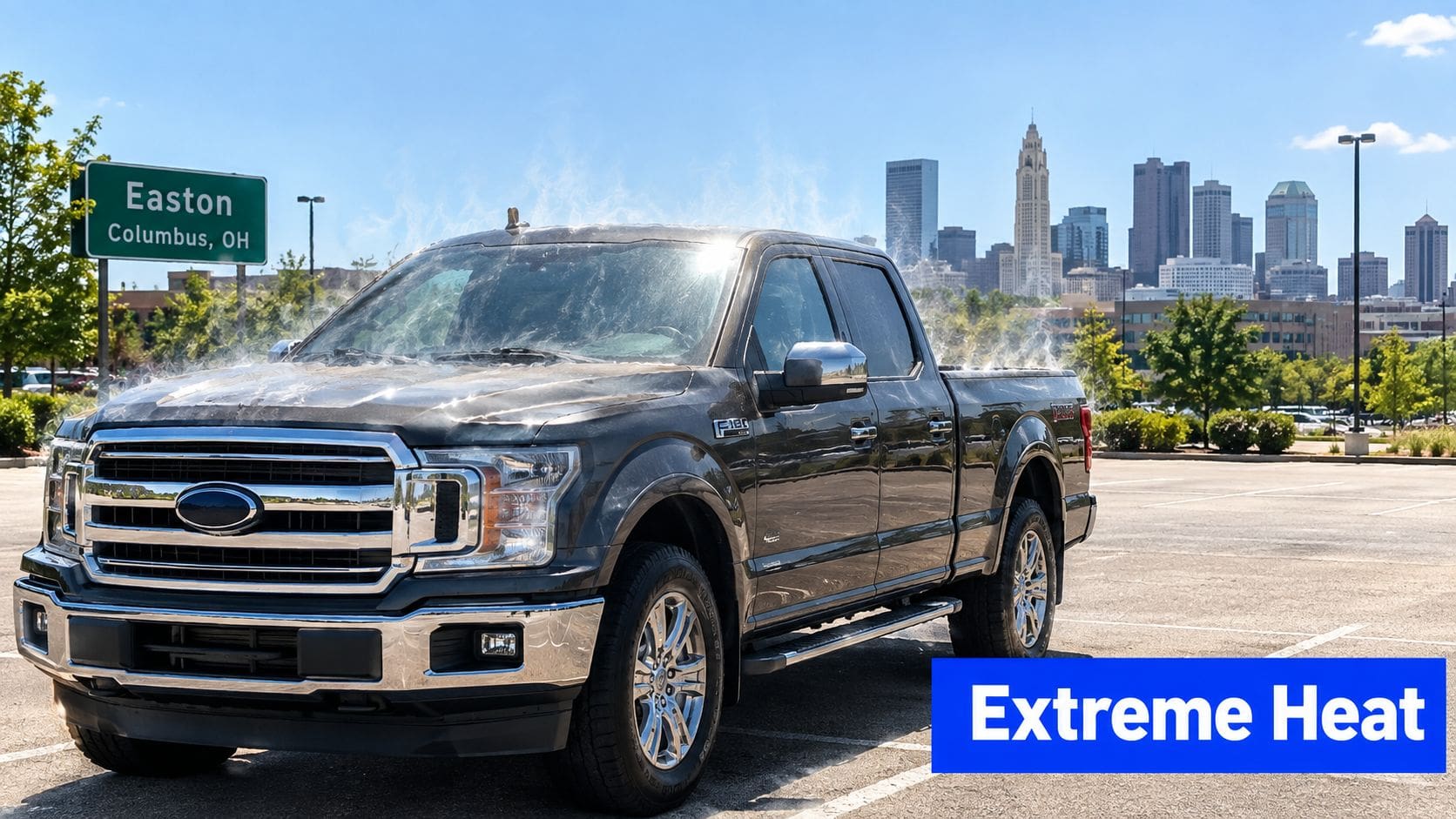
Truck heat starts with the glass. A full-size pickup exposes a broad windshield, tall front door windows, and upright rear glass to direct sunlight. That solar load warms the dashboard, seats, console, door panels, and interior plastics. Those surfaces continue radiating heat after you start the engine, so the air conditioner has to cool both the cabin air and the materials around you.
Columbus summers make the effect more noticeable. Humidity makes a warm cab feel heavier, while afternoon sun can strike the driver-side glass at an angle that sends heat toward the steering wheel and seat. Work trucks, delivery vehicles, commuters, and tow rigs may sit outside for hours, so this problem affects daily-use trucks as much as weekend pickups.
Why trucks feel different from sedans
Truck glass is usually more vertical than sedan glass. That angle exposes the windshield and side windows to a heavy solar load, while the larger cab gives heat more interior surfaces to warm.
Film type matters more than darkness alone. Dyed film mainly changes visible appearance and can reduce glare, but it offers limited heat control compared with higher-performance materials. Metallic film reflects more solar energy and can cool the cabin effectively, though some owners prefer a less reflective appearance. Ceramic film generally provides stronger heat filtering with a clearer, more neutral look, making it a practical choice for a large windshield and broad front glass.
Factory privacy glass can make the rear of a truck look dark without addressing the entire heat problem. Visible darkness only shows how much light reaches your eyes. It does not show how much infrared energy the glass rejects.
Practical rule: Choose the film by measured heat-rejection performance first, then select a shade that works with Ohio's visibility rules.
Tint slows solar heat entering through the glass, reduces glare, and gives the air conditioner less work to do. It will not turn a sun-baked truck into an icebox immediately. It can make the first few minutes after parking more manageable, which matters every time you return to a work truck or towing rig in direct Columbus sunlight.
How Window Tint Blocks Heat
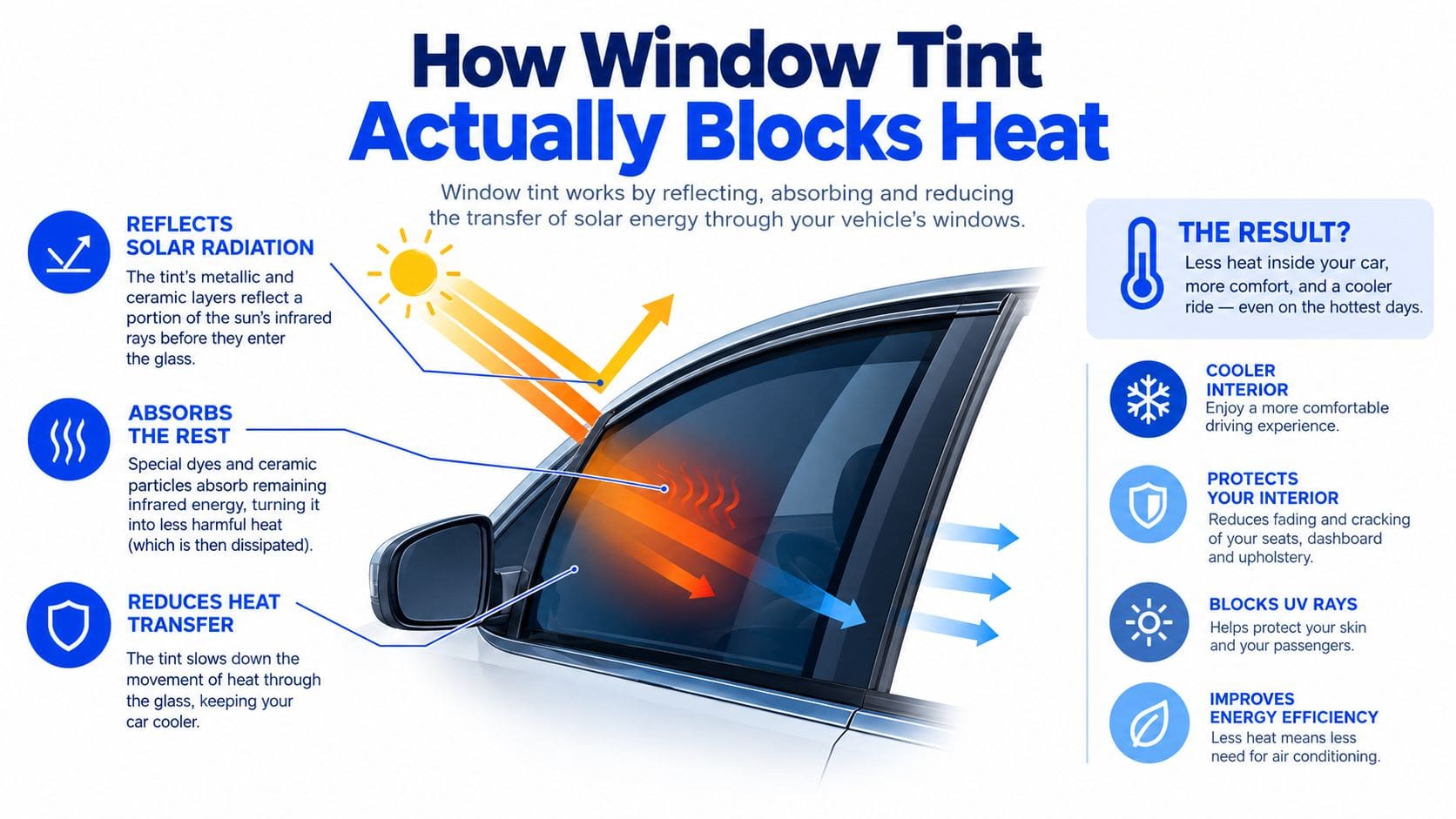
A truck can still feel hot after the windows look noticeably darker. The shade changes visible brightness, while the film's construction determines how much solar energy enters the cab. Before approving an installation, review the film's technical sheet and compare four measurements: VLT, TSER, infrared rejection, and UV rejection. Each measures a different part of the glass system.
VLT controls visible brightness
Visible light transmission, or VLT, is the amount of visible light that passes through the glass and film. Ohio uses light transmission as a key measure for front side windows. Under Ohio Revised Code Section 4513.241, the practical Columbus benchmark is that front side windows must allow more than 50% of visible light, while rear side and rear windows may be any darkness.
VLT helps with legal compliance and nighttime visibility, but it is not a heat rating. A darker film can block more visible light while allowing more infrared energy through than a lighter film with better solar performance. That distinction matters on a full-size truck, where the large windshield and upright side glass receive substantial sun.
TSER gives the clearest heat comparison
Total solar energy rejection, or TSER, measures how much of the sun's combined energy the glass and film reject. It covers more than visible light, so it is often the most useful single figure when the complaint is a hot cab.
A premium automotive film can reject up to 64% of total solar energy, according to 3M's automotive window film information. The result varies with the film line, factory glass, installation quality, and window location. A windshield specification may not predict the same result on a vertical rear window.
IR and UV answer different questions
Infrared rejection describes how a film manages a portion of solar energy associated with radiant heat. Use the manufacturer's test conditions when comparing products, because an advertised infrared figure does not automatically represent the performance of every complete truck installation.
UV rejection addresses ultraviolet exposure. It helps limit fading and photo-oxidation in leather, upholstery, plastics, and dashboard materials. 3M's automotive film overview describes film performance through heat, glare, and UV protection, rather than darkness alone.
For two films with legal front-side VLT, the one with stronger TSER and infrared rejection can produce a cooler cab than a darker dyed film. Ask to see the specification sheet, and compare the tested figures for the glass locations being tinted.
Comparing Tint Film Types for Trucks
The film category affects heat control, appearance, durability, and compatibility with the electronics built into modern trucks. A basic dyed film may be adequate for appearance and glare reduction, but it isn't the same product as a ceramic film designed to reject solar energy while remaining optically clear.
Four common choices
Dyed film is usually the entry-level option. It darkens the glass and can improve privacy, but its heat performance depends heavily on the product. It may make the truck look cooler without delivering the strongest reduction in infrared heat.
Metallic film uses reflective particles to manage solar energy. It can perform well thermally, but metallic content may interfere with GPS, cellular connectivity, radio reception, toll transponders, keyless entry, or other signals. That risk matters in trucks equipped with OnStar, built-in navigation, ADAS features, or aftermarket electronics.
Carbon film offers a non-metallic alternative with a muted appearance and useful heat rejection. It generally avoids the signal concerns associated with metallic film, although you should still request the product's measured specifications rather than relying on the category name.
Ceramic or nano-ceramic film uses non-metallic ceramic particles to target infrared energy while maintaining clarity. It is usually the strongest fit for a truck owner whose priority is cabin heat, glare, interior preservation, and electronics compatibility.
| Film Type | TSER Range | VLT Options | Signal Safe | Price/Sq Ft Installed |
|---|---|---|---|---|
| Dyed | Varies by product | Multiple shade choices | Usually non-metallic, confirm product | Shop-specific |
| Metallic | Varies by product | Multiple shade choices | Potential interference risk | Shop-specific |
| Carbon | Varies by product | Multiple shade choices | Generally electronics-friendly, confirm product | Shop-specific |
| Ceramic | Varies by product | Multiple shade choices | Generally electronics-friendly, confirm product | Shop-specific |
The categories are useful for narrowing the field, but they don't replace a measured specification sheet. For a deeper comparison of two popular non-metallic options, review ceramic tint versus carbon tint.
What works for different owners
A lightly used older pickup may not need the highest-performing film on every window. A truck that spends long hours at job sites, carries children, or has a large windshield usually benefits more from ceramic performance than from just choosing a darker appearance.
For most modern trucks, I would be cautious with metallic film unless the installer can explain how the product interacts with the vehicle's signals and sensors. A non-metallic carbon or ceramic film is the safer starting point for a connected truck.
Real-World Temperature Drops You Can Expect
Customers often ask for one exact temperature number. That isn't a responsible promise because parked-cabin temperature depends on sun angle, exterior color, interior materials, wind, glass construction, shade, ventilation, and how long the truck sits. A shop that guarantees one precise cabin temperature without discussing those variables is oversimplifying the installation.
The useful comparison is how quickly the truck accumulates heat and how much solar load reaches the surfaces you touch. A high-performance film on the windshield and rear glass can make a noticeable difference because those areas often receive more direct solar exposure than a small door window. The air conditioner still has to cool the cabin, but it isn't fighting the same incoming load.
What you should feel after parking
With a basic dyed film, the cab may feel less glaring and somewhat more comfortable, particularly on the side windows. The steering wheel and seat can still become very hot because the film's visible darkness doesn't necessarily indicate strong infrared rejection.
A ceramic film with a legal front-side VLT can keep the cabin from building heat as aggressively while preserving useful visibility. That doesn't mean the truck will feel cold immediately after a long parking period. It means the surfaces generally become easier to tolerate, and the HVAC system can begin making progress sooner.
| Film Type | VLT on Windshield | Peak Cabin Air Temp | Steering Wheel Surface | Time to Feel Cool |
|---|---|---|---|---|
| Dyed | Installation and legal limits vary | Depends on conditions and product | Can remain very hot after direct sun | Cooling response varies |
| Carbon | Product-specific | Lower heat load than basic dyed film when TSER is higher | More manageable with stronger solar rejection | Usually improves with measured TSER |
| Ceramic | Product-specific and subject to Ohio rules | Reduced solar buildup when the film has high TSER | Less radiant heat when the glass is directly exposed | HVAC can regain comfort more efficiently |
The windshield deserves special attention. It is the largest forward-facing source of glare and solar gain, but Ohio restricts where tint may be installed. A legal top strip can help with glare, while a high-performing, compliant treatment on other glass handles more of the cabin's solar load.
For practical comparisons specific to local summer driving, see our guide to window tint for heat rejection in Columbus summers. Treat any stated result as an estimate, not a guarantee for every truck.
Ohio Tint Laws Every Truck Owner Should Know
You can have a large, comfortable truck cabin and still fail an inspection if the glass and film combination is too dark. Ohio rules apply to both the vehicle glazing and the sunscreening material, not just to the fact that the vehicle is a truck. Before installation, confirm the glass already in the truck, the film's measured VLT, and the window location with the shop.
Front side glass and windshield limits
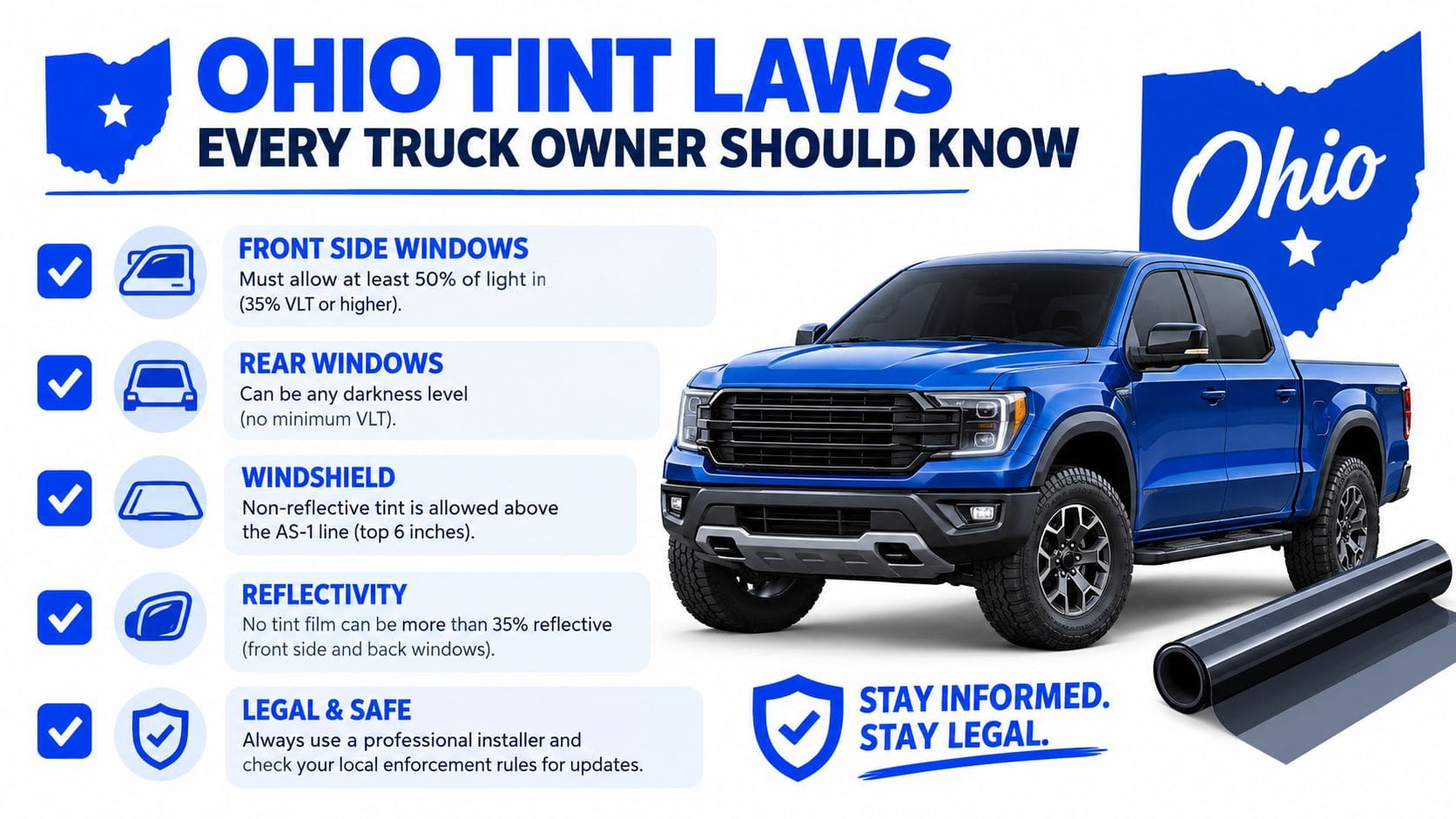
For Columbus truck owners, the practical front-side threshold is more than 50% visible light transmission under Ohio's tint statute. The windshield may have non-reflective tint only across the top 5 inches. Film installed below that permitted strip can create a visibility issue even when it appears relatively light from outside.
Ohio also restricts reflective material and any material that prevents a person with normal vision from seeing into the truck. A mirror-like finish is not a useful workaround for a front-window VLT requirement. It can create glare and draw unwanted attention during a traffic stop.
Rear glass and compliance markings
Ohio generally allows rear side and rear windows to be any darkness, but safe visibility still matters. Check mirror coverage, backup cameras, and the final appearance before adding film over factory privacy glass. Dark factory glass is not permission to skip a combined VLT check.
The Ohio Administrative Code rule on sunscreening material addresses material that makes glazing nontransparent, more reflective, or less light-transmitting, with stated exceptions such as compliant original manufacturer glazing. The manufacturer's name and the film's light-transmission percentage must be permanently marked between the film and glass. Ask the installer where that marking is located, and keep the paperwork with your truck records.
Medical exceptions may apply to qualifying conditions, but a darker installation is not automatically lawful without the required documentation. Before booking, review this plain-English guide to Ohio window tint laws and legal limits.
The shop itself also matters. Section 4775.02 states that a person may not act as a motor vehicle window tint operator without registration and identifies unregistered operation as an unfair and deceptive act. Ask whether the installer is registered before work begins.
Why Darker Does Not Always Mean Cooler
A full-size truck can look noticeably darker after tinting and still feel hot across the dash, steering wheel, and front seats. The reason is simple: visible light is only one part of the solar energy entering through the large windshield and vertical door glass. Shade controls appearance, while film construction determines how much heat the glass handles.
Dyed film mainly absorbs and filters visible light. It can create a darker cabin, but more infrared heat may still pass through than with a lighter ceramic film. Metallic film reflects more solar energy, although its metal content can create signal concerns. Ceramic film uses non-metallic particles for more selective infrared rejection, so it can reduce cabin heat without requiring an extremely dark appearance.
Factory privacy glass needs a closer look
Many trucks leave the factory with dark rear privacy glass. That glass improves privacy and cuts visible light, but it does not automatically perform like a heat-rejection film. Adding another dark layer can make the rear cabin look nearly black while producing only a modest additional cooling effect.
Evaluate the rear glass as a complete system. The final result depends on the factory glass, added film, combined visible light transmission, camera view, and the film's TSER and IR specifications. A shade meter reading is more useful than judging darkness from outside the truck.
| Film Type | Visible Light Blocked | Infrared Blocked | UV Blocked | Total Solar Energy Rejected |
|---|---|---|---|---|
| Dyed | Primarily manages visible appearance | Product-specific, with broader heat absorption | Often substantial, verify sheet | Product-specific |
| Metallic | Manages visible light and reflects solar energy | Can be strong, with possible signal concerns | Product-specific | Product-specific |
| Carbon | Controls visible light with a non-reflective appearance | Product-specific, usually without metallic signal interference | Product-specific | Product-specific |
| Ceramic | Can reduce heat without extreme darkness | Selective IR rejection targets heat more directly than dyed-film absorption | Premium lines can reject up to 99% of UV | Cited earlier: premium films reject up to 64% of total solar energy, according to 3M's product information |
The practical target is more heat rejection per legal, usable shade. For a Columbus truck owner, that usually means comparing film performance on the windshield and front glass, not choosing the darkest available rear shade.
Picking the Right Film and Installer for Your Truck
A good film installed carelessly can still produce poor results. On a modern truck, the installer needs to understand more than glass cleaning and squeegee technique. Before applying film, the shop should identify ADAS cameras, rain sensors, antenna locations, GPS modules, defroster lines, and any head-up display equipment.
Metallic film deserves extra scrutiny near sensors and electronic components. Non-metallic ceramic or nano-ceramic film is often the more practical direction for late-model trucks, but the installer should still confirm the product's compatibility and provide its specifications in writing.
Questions to ask before booking
- Which exact film line are you installing? Ask for the manufacturer, product name, VLT, TSER, IR rejection, and UV rejection.
- How do you handle ADAS equipment? The shop should explain whether the windshield has a camera or sensor zone that must remain clear.
- Do you use plotter-cut patterns? Computer-cut patterns can improve edge consistency and reduce the risk of a knife contacting the glass, trim, or rubber.
- What does the warranty cover? Look for clear terms covering bubbling, peeling, discoloration, and workmanship, not just a vague promise that the film is covered.
- Can you show similar trucks? In-bay photos of F-150, Silverado, Ram, or Tundra installations reveal how the shop handles tight door glass and large rear windows.
Installation details affect the result
The glass must be thoroughly cleaned before the film touches it. Dust, adhesive residue, and contamination can create visible specks under the film. Door panels and trim also need careful handling so the installer doesn't damage clips, weather seals, or wiring.
After installation, your shop should explain the curing process and window operation. Don't roll the windows down until the installer says the film has had enough time to bond. Use a soft microfiber towel and a tint-safe cleaner afterward, and avoid abrasive tools that can scratch the surface.
Lionheart Detailing offers professional window tinting in Hilliard as part of its Columbus-area vehicle protection services. Whether you compare Lionheart with another shop, insist on a written film specification and a clear explanation of how the installation will protect visibility and vehicle electronics.
Wrapping Up and Next Steps for Your Truck
Choose the film based on the problem you want to solve, not darkness alone. For a full-size truck that stays hot after sitting outside, compare TSER and infrared rejection across the large windshield and vertical side glass. Dyed film mainly changes appearance and glare. Metallic film can reject more heat but may affect radio, GPS, or phone signals. Ceramic film usually offers stronger heat rejection without that signal concern. If fading matters, check UV performance. Privacy can still guide the shade, but it should not be the only specification.
Use this buying sequence:
- Inspect the existing glass. Check factory privacy glass, windshield markings, camera areas, defroster lines, and any existing film.
- Set the legal boundaries. Confirm that front side glass remains above Ohio's practical 50% VLT threshold and that windshield tint stays within the permitted top 5 inches, as described by Ohio law.
- Compare the film sheet. Review TSER, IR rejection, UV rejection, VLT, reflectivity, and signal compatibility. Ask how the film performs on the truck's windshield, front doors, and rear glass.
- Confirm the shop's process. Get the film specification, warranty terms, and a clear explanation of how the installer will protect visibility and vehicle electronics.
- Plan for aftercare. Follow curing instructions, keep the windows closed for the recommended period, and do not scrub early haze or moisture.
A quality ceramic installation can make direct sun feel less harsh across a truck's broad glass. It will not remove every hot surface or cool the cabin immediately after the door opens. What you can expect is lower solar load, less glare, better UV protection, and an air conditioner that recovers the cabin more quickly.
Keep related services separate when comparing Columbus ceramic coating and window tint. Ceramic coating protects exterior paint, while film addresses cabin heat and glass exposure. For gravel and road debris, paint protection film options can complement tint.
Contact Lionheart Detailing to discuss window tint for your truck in Columbus, Ohio, along with ceramic coating, paint protection film, and detailing services.