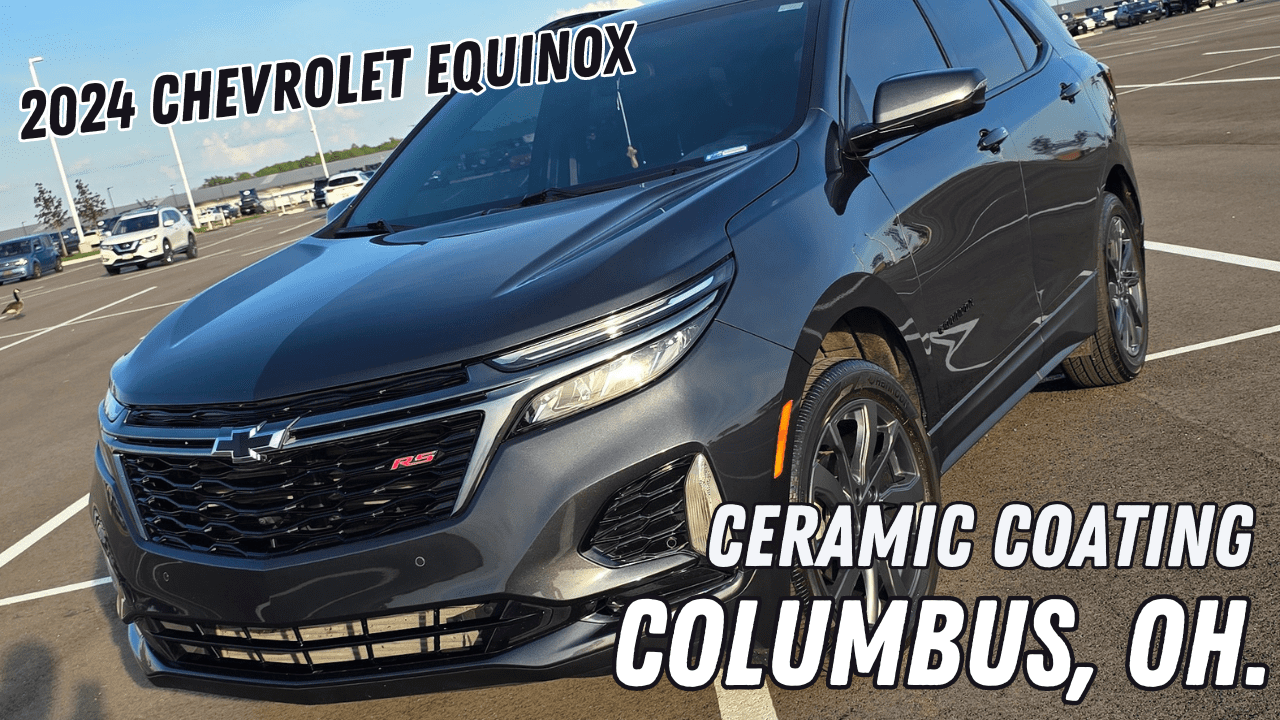
You're probably reading this because you're tired of opening your car door after it's been sitting outside in a Columbus parking lot and getting hit with that wall of heat. The steering wheel is hot, the seat feels worse, and the cabin looks dark but somehow still feels like a greenhouse. That's usually the moment people start shopping for tint and run straight into the same question: ceramic tint vs Carbon tint.
Most online comparisons stop at a spec sheet. They'll throw around technical terms, make every film sound similar, and skip the part that matters when you drive every day in Hilliard, Dublin, Grove City, or across I-270. What matters is how the car feels at a stoplight, how much glare hits your eyes on the commute, how your interior holds up over time, and whether the extra money buys you something you'll notice.
That's where a practical comparison helps. Carbon and ceramic are both major upgrades over entry-level film. They both look good. They both improve comfort. But they don't feel the same in daily use, and they aren't always the right fit for the same driver.
Table of Contents
- Why Your Window Tint Choice Matters More Than You Think
- What Is Carbon Window Tint and Is It a Good Value
- What Makes Ceramic Tint the Top-Tier Choice
- Ceramic vs Carbon Tint A Side-by-Side Breakdown
- Choosing the Right Tint for Your Columbus Driving
- Why Professional Installation Is Non-Negotiable
Why Your Window Tint Choice Matters More Than You Think
Ohio drivers know this feeling well. You park for a short errand, come back out, and the cabin feels like it's been sealed under glass all afternoon. It doesn't even have to be a brutal summer day for it to happen.
The reason this matters isn't just comfort. Heat changes how your car feels, how your interior ages, and how quickly you want the air conditioning blasting the second you start driving. According to the CDC, on an 80°F day, the interior of a parked car can reach 100°F in just 10 minutes, which is why heat buildup is such a real concern for passengers and interior materials alike (CDC guidance on heat in vehicles).
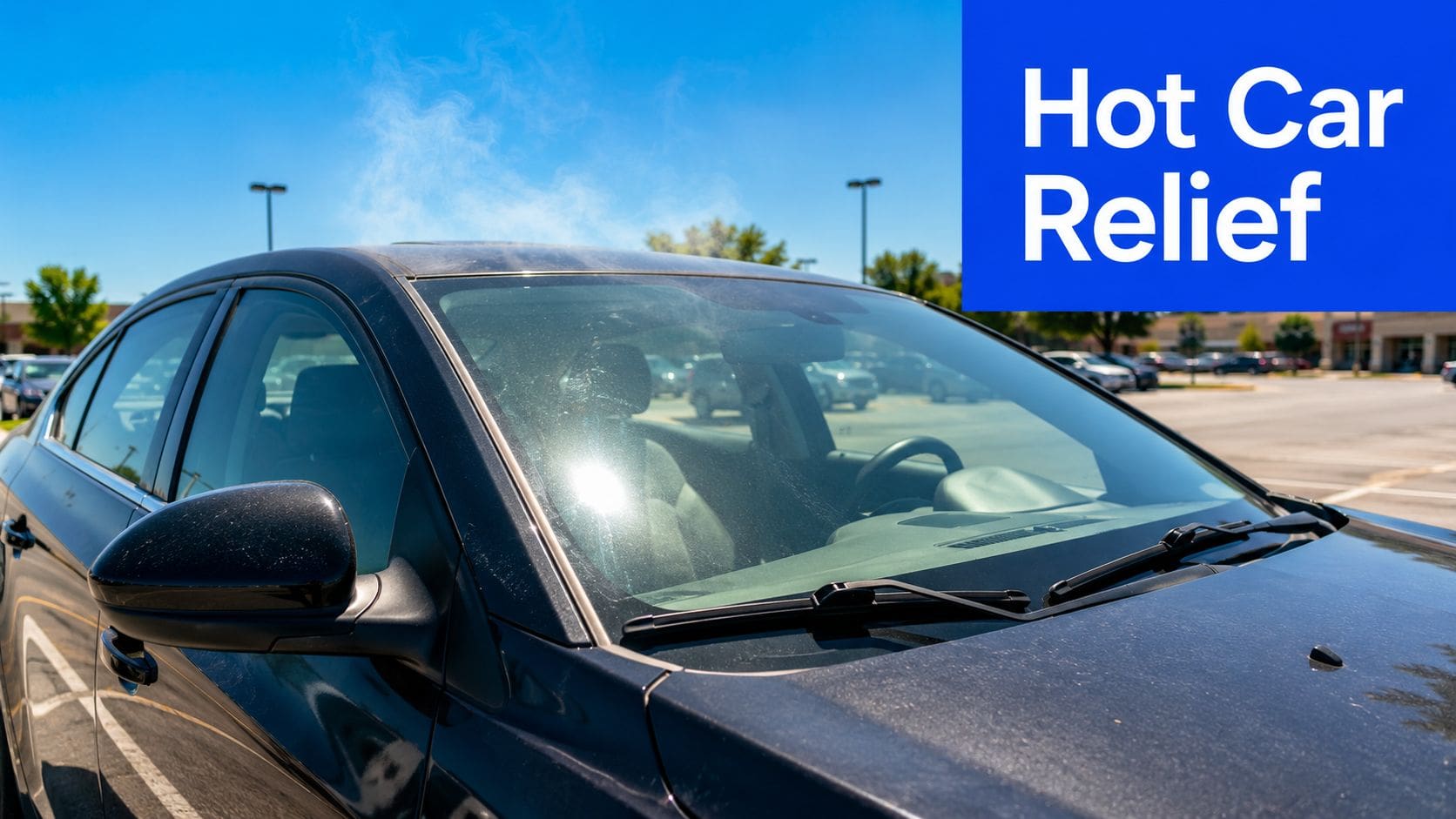
A hot car is more than an inconvenience
A lot of customers first ask about tint because they want privacy or a cleaner look. That's fair. Tint absolutely changes the appearance of a vehicle.
But after a good installation, the comment I hear most often has nothing to do with style. It's usually about how much more manageable the cabin feels during normal driving, especially when the vehicle sits outside at work, at the gym, or in a big open lot with no shade.
Practical rule: If your main complaint is “my car feels cooked every afternoon,” film choice matters more than shade choice.
That's why ceramic tint vs Carbon tint is a real decision, not just a premium upsell conversation. One option gives you strong everyday value. The other gives you the best comfort and the most noticeable performance. Neither choice should be based on marketing words alone.
Factory glass leaves a gap
This is another point that confuses people. Many newer vehicles already have darker rear glass from the factory. Drivers assume they're covered.
In most cases, that darker rear glass mainly changes appearance and privacy. It doesn't deliver the same performance benefits as a quality aftermarket film applied by a professional installer. The windshield and front windows also remain a major source of heat and glare, so the cabin can still feel rough even when the back half of the SUV looks tinted.
If you've seen conflicting advice online, it helps to sort out common misunderstandings first. A good place to start is this guide on window tinting myths debunked, especially if you're deciding between appearance-based tint choices and performance-based ones.
Here's the short version. Window tint is one of those upgrades you feel every day. Pick the wrong film, and the car may look better but still not deliver the comfort you expected. Pick the right one, and the difference shows up on your commute, in traffic, and every time the sun sits low across the road.
What Is Carbon Window Tint and Is It a Good Value
Carbon tint is what I'd call the smart middle lane. It isn't bargain-bin film, and it isn't the most expensive option on the menu. For a lot of drivers, it lands in the sweet spot where the performance feels worthwhile and the price still feels reasonable.
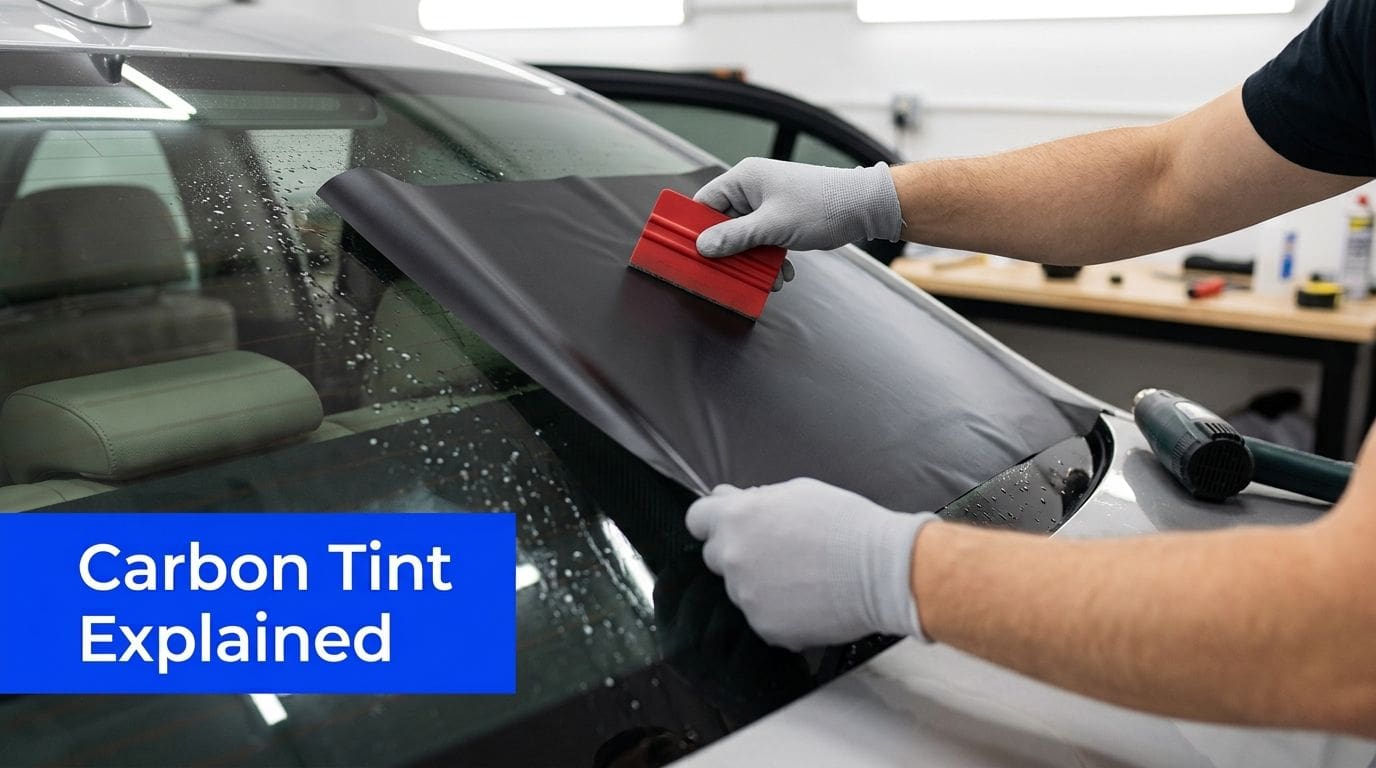
How carbon film works in plain English
Carbon film uses carbon-based material built into the tint itself. You don't need to get deep into the chemistry to understand what that means in real life. It means the film is designed to handle sunlight better than older dyed films, and it does it without the metallic layer that can create problems with electronics.
For the driver, carbon usually translates into a few practical wins:
- Better cabin comfort: Carbon film helps cut down the amount of heat you feel coming through the glass.
- Reduced glare: Bright sun, reflective pavement, and harsh afternoon light become easier on your eyes.
- Stable appearance: Carbon is known for a rich, darker look that doesn't have that cheap, washed-out feel.
- No electronic headaches: Since it isn't metal-based, it won't create the signal interference people used to worry about with certain older tint types.
That last point matters more now than it used to. Modern vehicles rely on phones, GPS, Bluetooth, and connected tech every day. A quality non-metal film keeps that simple.
Where carbon tint makes the most sense
If you want a strong upgrade without paying for the top shelf option, carbon deserves a serious look. It's especially good for drivers who care about appearance, glare control, and better daily comfort but don't need the absolute best heat performance available.
Carbon makes sense for people like this:
- The owner who wants a clean look: Carbon has a deep, often matte-style finish that looks more refined than basic dyed film.
- The practical buyer: You want meaningful performance, but you're still watching budget.
- The older-vehicle owner: If you're improving a daily driver and want to avoid overspending, carbon often fits the car well.
- The driver who parks outside often: You'll notice an improvement in comfort without jumping all the way to premium ceramic pricing.
Carbon tint is the workhorse choice. It isn't flashy in the sales pitch. It just keeps doing its job well.
Carbon also tends to be a strong answer for customers who come in after having a bad experience with low-end film. Maybe they had tint that looked fine at first but aged poorly, lost its clean color, or never felt like it made a big difference in the heat. Carbon is usually the first point in the lineup where people say, “Okay, this feels like a real upgrade.”
What it doesn't do is beat ceramic at the very top end of performance. If your goal is maximum comfort, especially in a black interior car or a vehicle with a huge glass area, you may still want to step up. But if you're looking for a dependable result and a good value, carbon is far better than many first-time buyers realize.
What Makes Ceramic Tint the Top-Tier Choice
Ceramic tint is the film people choose when they're done compromising. They want the best comfort they can get from window film, they care about visibility, and they plan to keep the vehicle long enough to appreciate the upgrade every season.
Near the top of the decision, it helps to look at what premium work should feel like in the first place.
Why ceramic feels different on the road
Ceramic film uses non-metallic ceramic particles. The practical takeaway is simple. It manages solar energy more effectively than carbon, and that usually shows up as a cooler-feeling cabin and better comfort when sunlight is hitting the glass directly.
Drivers often notice ceramic in situations like these:
- Long westbound or eastbound commutes: When the sun stays low and keeps pouring through the side glass.
- Large SUVs and trucks: More glass means more exposure, so better-performing film becomes easier to appreciate.
- Cars with dark interiors: Black seats, dark dashboards, and black trim soak up heat fast.
- Road trips: Hours behind the wheel make comfort differences easier to notice.
Ceramic also tends to have excellent optical clarity. That matters because a film can be dark without looking clean. A better film looks more refined from inside the cabin. The view out feels clearer, especially in changing light.
A lighter ceramic film can sometimes feel better in the cabin than a darker lower-tier film. Shade and performance are not the same thing.
That's a key point many people miss. They shop by darkness first. In reality, film construction often matters more than the shade itself when comfort is the goal.
Who notices the upgrade most
Ceramic is usually the right call for drivers who are sensitive to heat and glare, spend a lot of time in the car, or prefer a durable installation that offers lasting peace of mind.
A few owner types almost always appreciate ceramic:
- New vehicle buyers: You're already protecting the car and don't want to cut corners on a daily-use upgrade.
- Drivers with highway commutes around Columbus: More seat time makes every comfort improvement more valuable.
- Performance and luxury owners: Premium interiors deserve film that matches the rest of the vehicle.
- People planning other protection work: If you're already considering Hilliard ceramic coating, Columbus ceramic coating, or Hilliard paint protection film, ceramic tint fits that same mindset of long-term care.
Later in the decision process, it also helps to see the product in motion and not just in still photos. This quick clip gives useful visual context on film application and finished appearance:
Ceramic isn't automatically the right answer for every budget. But when someone asks which option gives the best overall driving experience, ceramic usually takes it. That's why it remains the premium pick for drivers searching for the best window tint experience rather than just the darkest windows.
Ceramic vs Carbon Tint A Side-by-Side Breakdown
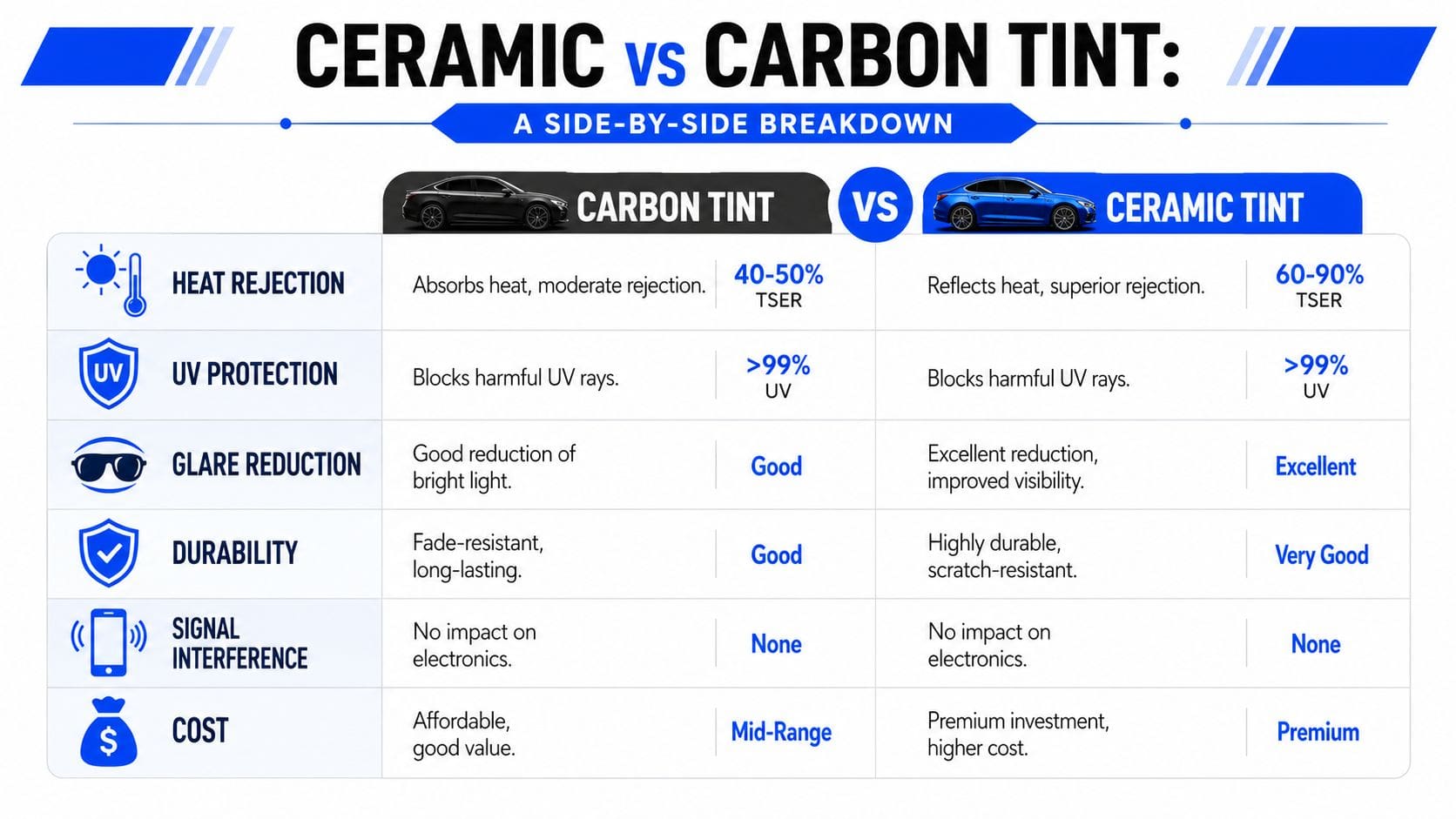
The ceramic tint vs Carbon tint decision becomes practical. Forget marketing labels for a minute. Think about what you'll truly notice in a week of driving around Hilliard and greater Columbus.
Heat rejection and daily comfort
This is the biggest separator.
Carbon tint does a good job reducing the heat you feel. For many drivers, that alone is enough to make the car more pleasant and the A/C feel less overworked. If you've never had quality tint before, carbon can feel like a big jump.
Ceramic goes further. In daily driving, it tends to feel better when the sun is beating through the glass for an extended time. That can mean a more comfortable arm by the window, less harshness on the face during an afternoon commute, and a cabin that settles down faster once the car is moving.
A simple way to think about it:
- Carbon tint: Better shade from the sun.
- Ceramic tint: Better shade plus stronger heat management.
If your route includes long stretches on I-270, open parking lots, or afternoon stop-and-go traffic, ceramic's advantage is easier to feel.
Glare, clarity, and visibility
Both films help cut glare. That matters more than people expect, especially when the sun reflects off concrete, glass buildings, or wet pavement.
Carbon usually gives you a comfortable, darker look with solid glare control. It's a noticeable improvement over bare glass and low-end tint.
Ceramic often stands out in clarity. The view through the film can look cleaner and more neutral, especially from the driver's seat. That's one reason people who drive at dawn, dusk, or at night often lean ceramic. Good film shouldn't make the outside world look muddy.
The best tint is the one you forget is there, until you park another untinted car in the same sun.
Privacy is a separate issue from film type. Both carbon and ceramic can be selected in shades that create more privacy. What many people confuse is darkness with quality. A dark film can still perform poorly if the film itself is low grade.
Durability, electronics, and long-term value
This category is tighter.
Carbon is durable, stable in appearance, and a major step above old dyed film. It's a very respectable long-term option if installed well and cared for properly.
Ceramic also offers strong durability, and in many premium lines it feels like the more refined long-term choice. If you keep your vehicle for years, that can matter. You're not just paying for first-week appearance. You're paying for how consistently the film performs and how clean it continues to look.
For electronics, both are easy choices over metalized film. In a modern vehicle with connected features, that non-metal construction is a real advantage.
For cost, carbon wins. It's the better value play for shoppers who want high-quality tint without pushing into premium pricing. Ceramic costs more because it delivers more. The question becomes whether you personally will notice and appreciate that difference often enough to justify it.
Carbon vs Ceramic Tint At a Glance
| Feature | Carbon Tint | Ceramic Tint |
|---|---|---|
| Heat rejection | Strong everyday improvement | Best overall comfort and heat management |
| UV protection | Strong protection for interior and occupants | Strong protection for interior and occupants |
| Glare reduction | Very good | Excellent |
| Visual clarity | Good, with a rich darker appearance | Excellent, often cleaner-looking from inside |
| Signal interference | None in quality non-metal film | None in quality non-metal film |
| Durability | Long-lasting and fade-resistant | Long-lasting and premium-feeling |
| Cost | Better for value-focused buyers | Higher investment for top performance |
Here's the honest bottom line. Ceramic tint vs Carbon tint is not a battle between good and bad. It's a choice between very good value and maximum performance. If you frame it that way, the decision gets much easier.
Choosing the Right Tint for Your Columbus Driving
Drivers don't need more theory. They need to know which film fits the way they use their vehicle. If your search started with “ceramic coating near me” or “Hilliard auto detailing” and then turned into window tint questions, this is usually the section that clears things up.
The daily commuter
If you spend a lot of time driving between Hilliard and downtown Columbus, or your route keeps you in traffic with the sun hitting the same side of the car day after day, ceramic usually makes the most sense.
The reason is simple. A commuter feels the differences more often.
Choose ceramic if these sound like you:
- You drive every day for work: More road time means more exposure to heat and glare.
- Your car sits outside all day: Office lots and uncovered parking make film performance more noticeable.
- You're picky about comfort: You want the cabin to feel as controlled as possible.
- You plan to keep the vehicle: Long-term ownership makes the premium option easier to justify.
The value-focused owner
This driver wants the car to look better, feel better, and stay within a sensible budget. That's where carbon shines.
Carbon is a strong fit if you want:
- A big step up from basic tint: It delivers a meaningful improvement without going all the way premium.
- A deep, stylish finish: Carbon often has the look people want on sedans, trucks, and SUVs.
- Solid everyday comfort: You'll still notice less glare and a more manageable cabin.
- A smart spend on an older daily driver: Not every vehicle needs the top-tier film to feel much better.
For a broader look at day-to-day advantages beyond just style, this overview of the advantages of window tinting is worth reading before you choose shade and film type.
The family vehicle and road-trip car
If the vehicle regularly carries kids, passengers, or family on weekend trips, the decision comes down to budget and how much comfort you want during long sun exposure.
For family use:
- Pick ceramic if comfort is the top priority and the vehicle sees frequent highway travel.
- Pick carbon if you want excellent all-around value and a clear improvement over untinted glass.
- Don't choose based on darkness alone. Comfort, visibility, and clean installation matter more than just making the windows look dark.
If you're protecting a vehicle the same way you would with Columbus PPF or Hilliard ceramic coating, ceramic tint usually fits that ownership mindset better.
The enthusiast crowd tends to lean ceramic too. If you care about the total ownership experience, from paint finish to interior preservation, premium tint feels like part of the same package. But for plenty of Columbus-area drivers, carbon is still the right answer because it delivers where it counts without overreaching on budget.
Why Professional Installation Is Non-Negotiable
You can buy excellent film and still end up with a bad result. That's the part too many articles skip.
Good film can still fail in bad hands
Poor installation shows up fast. You'll see trapped dust, crooked edges, fingers in the film, hazy areas, contamination, or peeling near the border. None of that means the film itself was bad. It means the install was.
DIY kits look tempting because the product seems simple. In reality, automotive glass is curved, tight around edges, and unforgiving under direct light. Rear windows are especially tricky. One mistake during shrinking, trimming, or squeegeeing can leave a flaw you'll notice every time you drive.
A quality installer controls the environment, preps the glass correctly, and works with patterns that match the vehicle. That's the difference between tint that looks clean on day one and tint that still looks clean after it cures.
What a professional installer looks for
A proper installation process usually includes several things customers never see unless they've spent time around a tint bay:
- Clean glass preparation: Any leftover debris, residue, or oils can affect adhesion and appearance.
- Accurate film handling: Good shops don't force film into place and hope it settles later.
- Tight edge finishing: Clean borders are a major part of what makes tint look factory.
- Correct curing guidance: Owners need to know what to expect during the drying period and how to care for the film afterward.
If you're wondering about the practical side of scheduling, curing, and vehicle downtime, this guide on how long window tinting takes answers the questions most first-time customers ask.
The summary is straightforward. Carbon tint is an excellent option for drivers who want strong performance and strong value. Ceramic tint is the better choice when maximum comfort, clarity, and premium feel matter most. In both cases, the installer matters just as much as the film.
If you're comparing options for window tint, Lionheart Detailing can help you choose the right fit for your vehicle, budget, and daily driving around Hilliard and Columbus. If you're also considering Columbus ceramic coating, Hilliard paint protection film, or full Hilliard auto detailing, reach out for a no-pressure recommendation and a professional quote.