Ohio requires at least 50% VLT on the front side windows, 70% VLT on the windshield's upper strip, and any darkness on the rear windows if you've got outside mirrors on both sides. That's the short version, and it's where a lot of drivers get tripped up because the film that looks fine in the shop can still read illegal once it's on your glass.
A customer pulls out of Hilliard, gets stopped for what feels like a routine check, and then hears the bad news, the tint “looked fine,” but the meter said otherwise. That's the part most first-time tint buyers don't expect. Ohio enforcement doesn't care what the windows look like from ten feet away, it cares what the meter measures on the car as it sits on the road.
Table of Contents
- Why Ohio Tint Laws Catch Drivers Off Guard
- Understanding Visible Light Transmittance and Ohio Legal Limits
- The Hidden Trap of Factory Glass and Aftermarket Film
- Choosing the Right Film Darkness for Ohio Roads
- How to Verify Your Tint Is Actually Legal
- Common Tint Mistakes and How to Avoid Them
- Getting Legal and Professional Window Tinting in Columbus
Why Ohio Tint Laws Catch Drivers Off Guard
A lot of people walk into tint conversations thinking the same way they think about wheel tints, exhaust tips, or black badges, if it looks good, it must be fine. That's where Ohio gets people. The state's rules are built around measured visible light transmittance, or VLT, not the shade you think you see with your eyes, and that means a car can look “light enough” and still fail on the meter.
I've seen this catch drivers who bought a used car with tint already on it, then added more film because it didn't seem dark. The problem is that factory glass and aftermarket film are judged together, so the reading is the installed stack, not the label on the box. If the glass already has some tint to it, that “50%” roll you ordered online can become a ticket waiting to happen. For more on the practical side of tint benefits, see our window tint advantages guide.
Why the same shade can be legal in one state and illegal in Ohio
That's the big mismatch. Drivers cross state lines, see darker cars every day, and assume the same setup must be fine here too. Ohio is stricter on the front of the vehicle, especially the driver and passenger windows, and that's where officers tend to focus when they pull a car over for suspicious tint.
Practical rule: if you're guessing based on appearance alone, you're guessing wrong.
The smart move is to treat the law as a measurement problem, not a style choice. If your front windows are close to the limit, the only thing that matters is what the meter says after installation. That's why professional shops don't pick tint by eye, they verify the final reading on the vehicle itself.
Understanding Visible Light Transmittance and Ohio Legal Limits
VLT sounds technical, but the idea is simple. It works like sunglasses for your car, except the law cares how much light still gets through after the glass and film are combined. Higher VLT means lighter tint, lower VLT means darker tint.
Ohio's legal setup is straightforward once you break it into window positions. The windshield gets only a legal visor strip at the top, the front side windows must stay at at least 50% VLT, and the rear side windows plus the rear window can be much darker on many passenger vehicles. Ohio also limits windshield material to a non-reflective strip above the AS-1 line or the top 5 inches, whichever is lower, and the windshield tint can't be red or yellow.
Ohio Window Tint Legal Limits by Position
| Window Position | Minimum VLT | Notes |
|---|---|---|
| Windshield | 70% ± 3% VLT | Legal only on the upper strip, non-reflective, above the AS-1 line or top 5 inches, whichever is lower |
| Front side windows | 50% ± 3% VLT | Must stay relatively light, this is where most citations happen |
| Rear side windows | Any darkness | Legal on many passenger vehicles |
| Rear window | Any darkness | Dual outside mirrors are needed if the rear window is tinted below 50% VLT |
What that means in plain English
The front half of the car has to stay light enough for visibility and enforcement. The back half can go darker, which is why a lot of sedans, SUVs, and trucks wear a lighter front with darker rear glass. That two-tone look is common for a reason, it fits Ohio law and still gives you privacy where it matters.
Ohio's rules are easiest to follow when you choose the film around the car, not the other way around.
For customers shopping around Columbus, professional window tinting in Hilliard beats guesswork. A good installer looks at the glass first, then picks film that leaves enough room for the final meter reading to stay legal.
The Hidden Trap of Factory Glass and Aftermarket Film
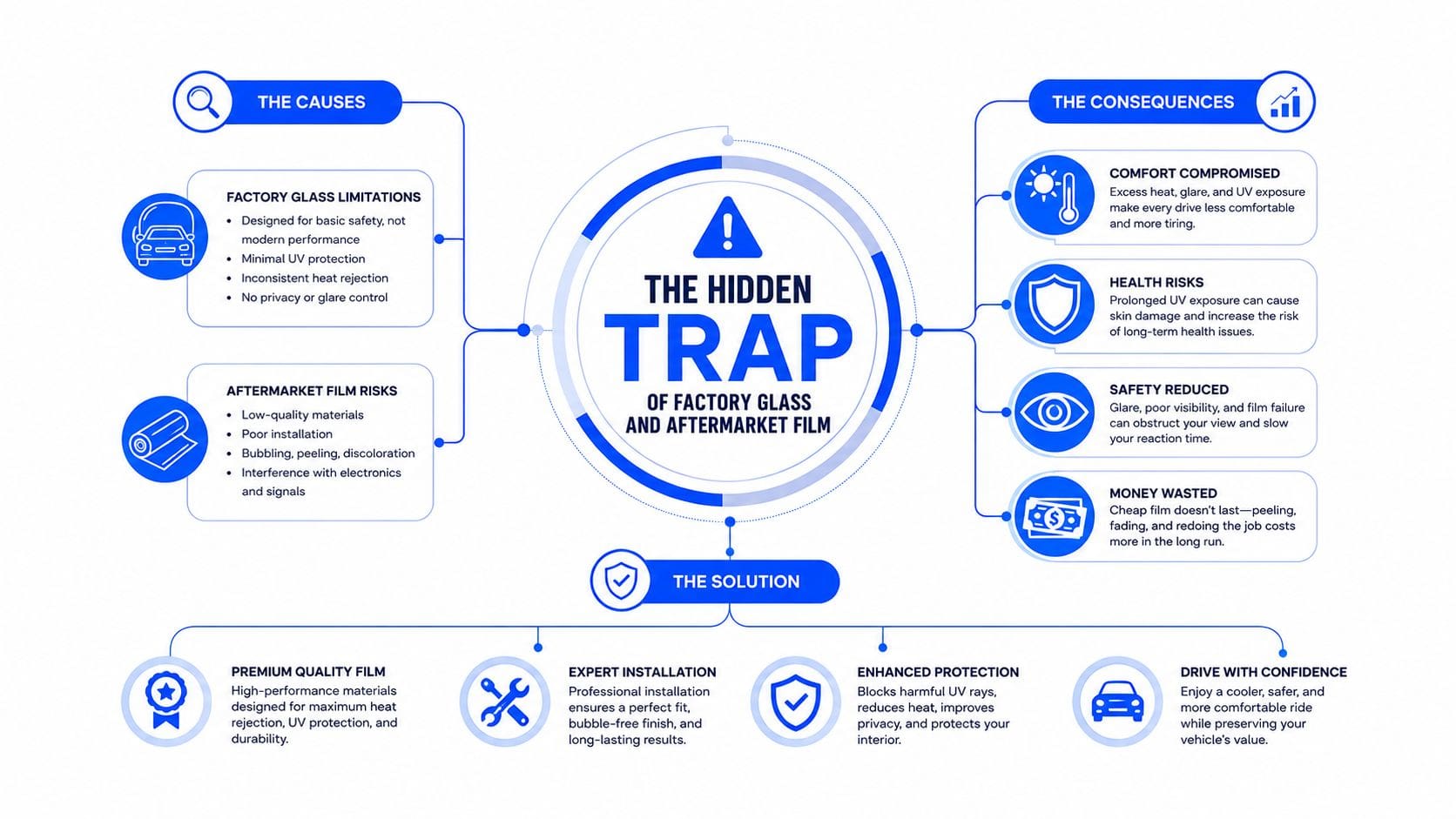
This is the part a lot of Ohio tint guides skip, and it's the part that causes the most regret. VLT is measured on the combined glass plus film, so the number printed on the film roll is not the same thing as the number the officer measures on your car. That's why a film labeled “50%” doesn't automatically mean your front windows will test at 50% once it's installed.
Why the box label can mislead you
Factory glass already has its own light transmission. Once you add film, the combined reading drops. So if the starting glass is already tinted from the factory, the final result can end up darker than the film package suggests, even if the tint looks light to your eye. That's the hidden trap that turns a clean-looking install into an illegal one.
A calibrated VLT meter takes the guesswork out of this. Shops that do tint every day don't rely on color charts or film labels alone, they test the actual glass before and after the install. That matters because even a car that seems identical to another model can measure differently once you account for OEM glass variation.
What to ask before you sign off on a tint job
Use this quick checklist:
- Ask for a pre-install reading: The shop should measure the factory glass before choosing film.
- Confirm the final stack: The installed glass plus film should be checked immediately after the job.
- Keep proof in the car: Save the paperwork or compliance record where you can show it if you're stopped.
- Match the film to the glass: Don't assume the same film that worked on someone else's car will work on yours.
A car with light-looking tint can still fail if the factory glass was darker to begin with.
If you're comparing film types, our ceramic tint vs carbon tint guide is useful because the choice isn't just about heat rejection, it also affects how safely you can stay within Ohio's limits after installation.
Choosing the Right Film Darkness for Ohio Roads
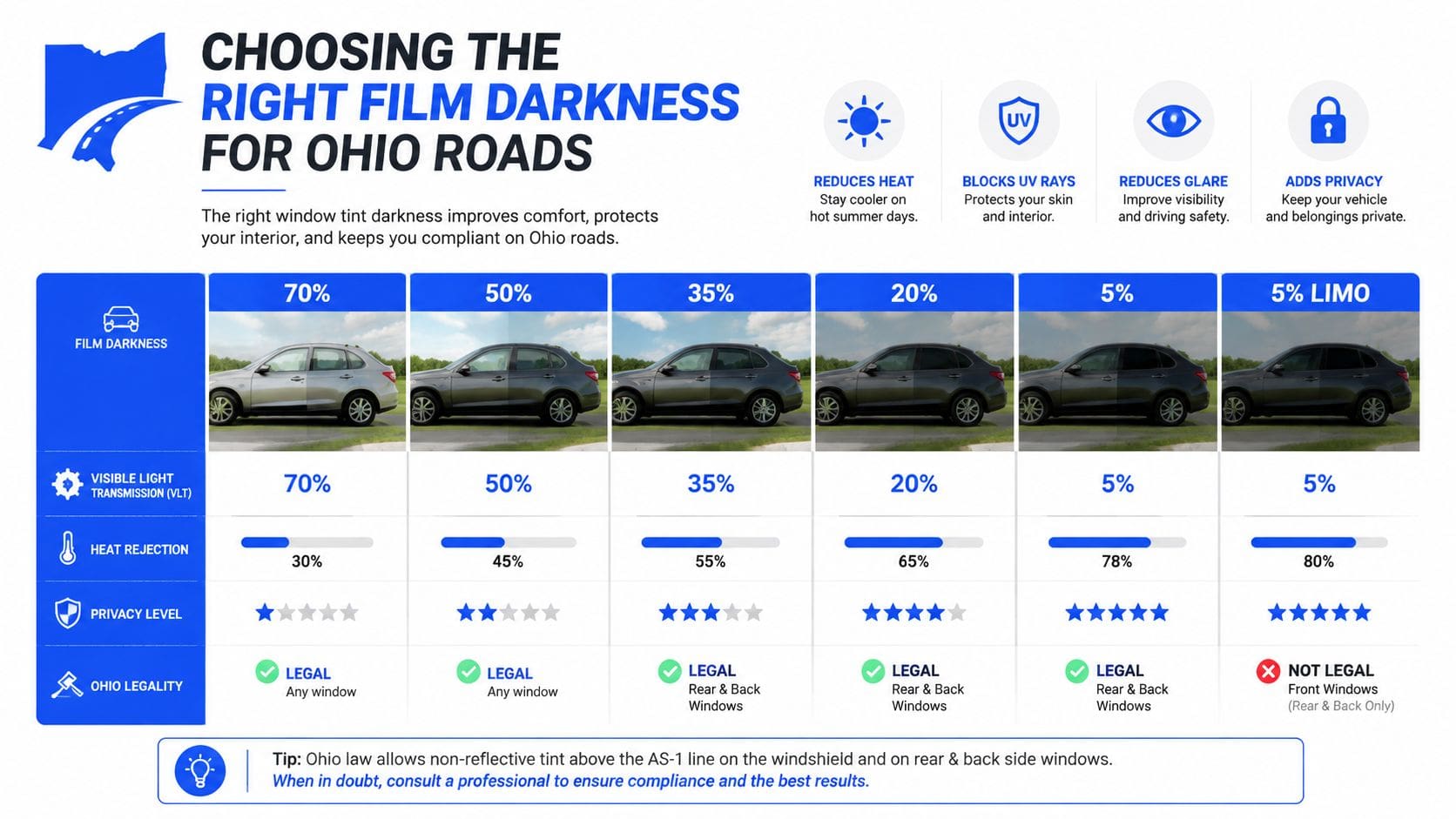
The easiest way to choose tint in Ohio is to work from the legal window position first, then decide how dark you want the rear glass to be. The front windows have the narrowest lane, so the smart choice there is the darkest legal film that still leaves you enough margin on the meter. The rear of the vehicle gives you more freedom, which is why trucks and SUVs can usually achieve a much darker look without creating a front-window compliance problem.
How common shades usually fit Ohio use
A 50% film is the safe conversation starter for front windows because it's built around Ohio's legal floor. It still gives glare control and UV protection without making the glass look obviously dark. For rear windows, a 35% film is a popular middle ground because it improves privacy without making the cabin feel cave-dark in daylight.
A 20% film or even 5% film belongs on the rear side windows and rear glass if that's the look you want. The trade-off is obvious, the darker you go, the less easy it is to see into and out of the vehicle at night. That matters more on sedans than on tall SUVs and trucks, where the driver sits higher and usually has a better line of sight.
Heat, privacy, and nighttime visibility
Ceramic film is where a lot of Ohio drivers end up after comparing options, especially if they're looking for the best window tint for heat rejection in Columbus summers. The shade still matters, but the film technology matters too. A lighter legal film can still perform well if the material is high quality and installed correctly.
For daily driving in Hilliard, Dublin, Powell, or Upper Arlington, I usually tell people to think in terms of use case. If you're commuting before sunrise or after dark, a lighter legal front window setup makes more sense. If the vehicle is mostly a family SUV or a truck with rear-seat passengers, the darker rear tint can be worth it for comfort and privacy.
How to Verify Your Tint Is Actually Legal
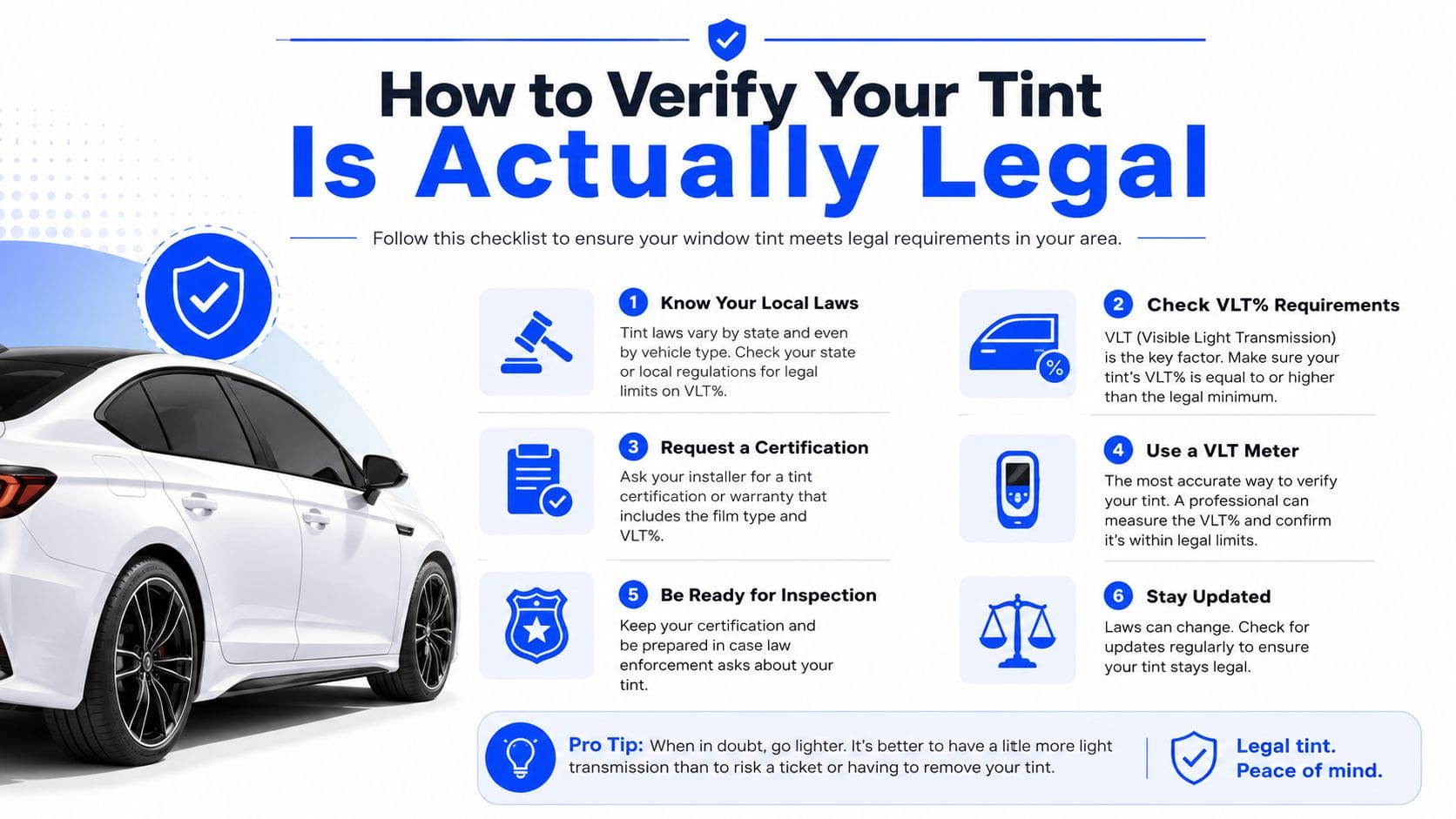
The cleanest way to avoid a citation is to verify the car before and after the film goes on. A professional installer uses a calibrated VLT meter, not a guess, because that's the only way to know what the combined glass and film are reading. That matters even more if you bought a used car with tint already on it.
The three checks I'd never skip
First, measure the factory glass before you pick a film. That tells you how much room you really have. Second, check the installed stack right after the job is done so you know where you stand before you drive away. Third, keep a simple compliance record in the vehicle, especially if you travel outside your normal area and want something to show if you're questioned.
What to do with an unknown car
If you just bought the vehicle and the previous owner tinted it, don't assume it's legal because it looks mild. The only safe answer is to meter the windows. If the result is close, it's better to know now than after a stop on the way to work.
Here's a simple shop-floor rule I use with customers:
If the reading is borderline, choose the safer film or remove the old tint before adding anything new.
That's the difference between a clean install and a costly redo. It also keeps you from paying twice, once for the install and again for removal if the car gets flagged.
Common Tint Mistakes and How to Avoid Them
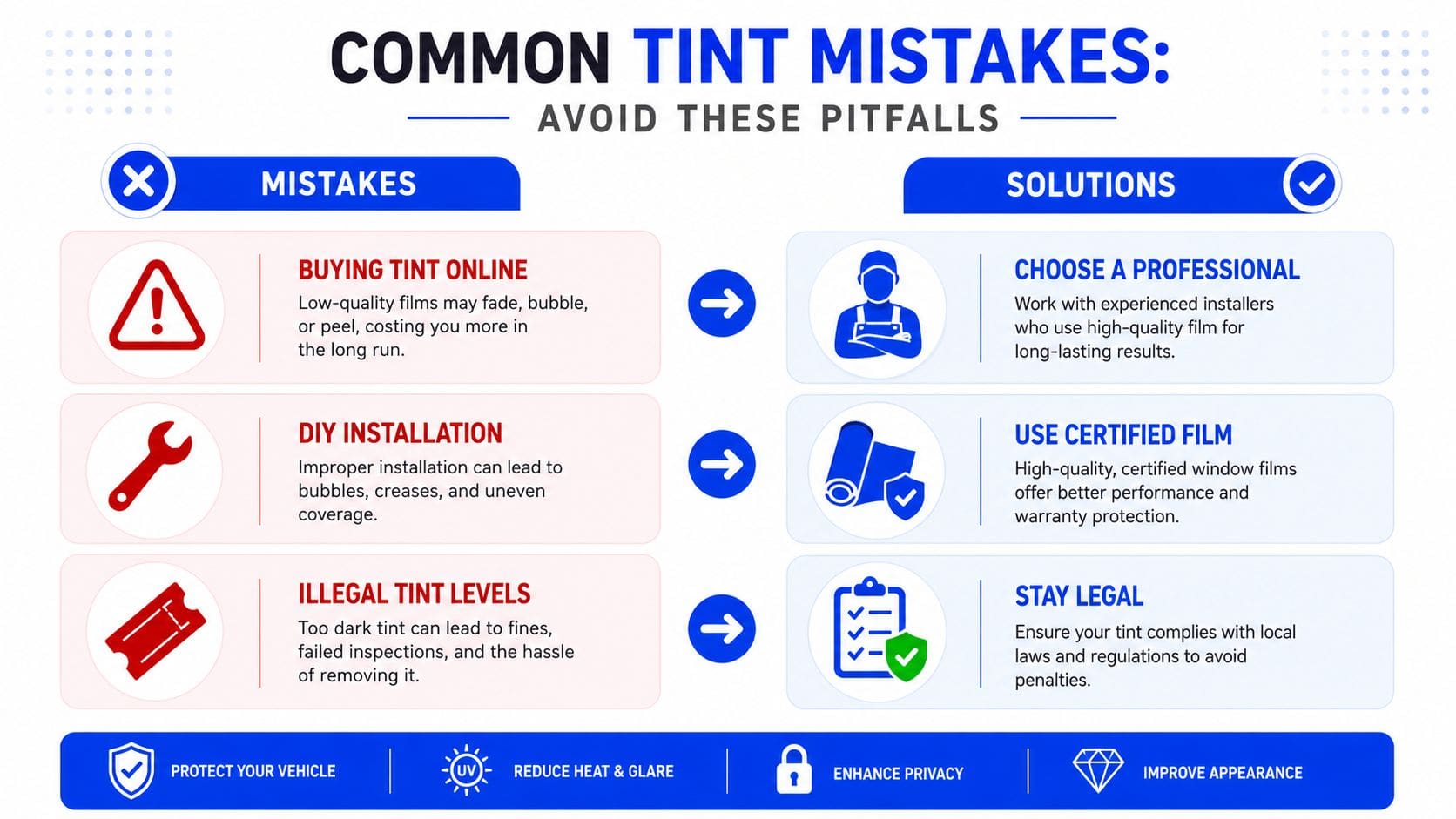
Most bad tint jobs start with one of three mistakes, buying the wrong film, installing it yourself, or choosing a shade that looks cool but doesn't fit Ohio's rules. The front windows are where people take the biggest risk. A front door that's too dark, too reflective, or too close to the edge on VLT is the fastest route to a fix-it ticket.
Mistakes that cost drivers the most
- Buying tint online by shade only: The film label doesn't tell you the final reading on your glass.
- Using reflective film: Ohio sources describing enforcement say mirrored or highly reflective film isn't allowed, even when the darkness seems reasonable.
- Skipping the mirror requirement: If the rear window is tinted below the stated threshold, the car needs outside rear-view mirrors on both sides.
- Putting “limo” tint on the front windows: That's not a close call, it's a citation risk.
The fix is pretty simple. Use non-reflective film, choose it based on the car's actual glass, and let a shop verify the finished result with a meter. That saves time, saves money, and avoids the ugly cycle of stripping and redoing the same windows.
Why professional install still matters
A professional installer also helps with the small stuff that gets overlooked, like where the windshield strip should stop and how the final job should be documented. For buyers in Columbus who want a single place to handle protection work, Lionheart Auto Detailing & Protection can also coordinate tint with ceramic coating services and paint protection film options so the whole vehicle plan makes sense, not just one mod at a time.
Getting Legal and Professional Window Tinting in Columbus
Good tint work in Ohio starts with measurement, not sales talk. A reputable installer checks the glass, recommends the right film for the vehicle, verifies the final reading, and gives you documentation you can keep in the car. That's the process that keeps you legal and gives you a finish that lasts.
For drivers around Hilliard, Dublin, Powell, Upper Arlington, and the rest of the Columbus area, that matters because the same car can have very different outcomes depending on the glass and the film choice. If you want a clean install that follows Ohio law without guesswork, the smart move is to have a local shop handle it from start to finish. You can also view our location and reviews through our Google Business page.
If you're already thinking about the rest of the vehicle, tint pairs well with Hilliard ceramic coating, Columbus ceramic coating, and Columbus PPF for owners who want comfort and protection in one plan. That's the kind of practical setup that makes sense for new car buyers, Tesla owners, BMW drivers, and truck owners who want the car to look right and stay legal.
If you want help choosing legal film, verifying your current tint, or scheduling a clean professional install, reach out to Lionheart Detailing in Hilliard. We handle window tinting, ceramic coating, paint protection film, and full detailing for Columbus drivers who want the job done right the first time.