Rock chip repair averages $15 to $800, depending on the method, while partial PPF starts at $900. For most highway drivers, PPF pays for itself within 3 years by preventing cumulative damage.
You bought a used BMW, Tesla, truck, or daily-driven sedan, and the front bumper already has a handful of chips. The paint isn't ruined, but every new mark makes you wonder whether to keep touching up the damage or cover the vulnerable panels with paint protection film. That decision gets harder when the car is worth keeping clean for a future trade-in.
After hundreds of paint correction, chip repair, and PPF jobs, the practical answer is straightforward. Rock chip repair fixes damage that already exists. PPF reduces the chance of new impact damage reaching the paint. The cheaper choice depends on how often you drive, how long you'll keep the vehicle, how much damage is already present, and whether appearance or upfront cost matters more.
Table of Contents
- Understanding Rock Chip Repair and Paint Protection Film Options
- How Rock Chip Repair Actually Works
- Paint Protection Film as Preventative Coverage
- When to Repair Chips Before Applying Paint Protection Film
- Comparing Total Cost of Ownership Over Five Years
- Making the Right Choice for Your Vehicle and Driving Pattern
- Professional Assessment and Next Steps
Understanding Rock Chip Repair and Paint Protection Film Options
Small chips are easy to ignore when there are only one or two. Repeated repairs become less attractive when the hood, bumper, mirrors, and fender edges keep collecting new damage. The repair itself may be inexpensive, but each appointment takes time, and cosmetic touch-up rarely produces the same uniform result as intact factory paint.
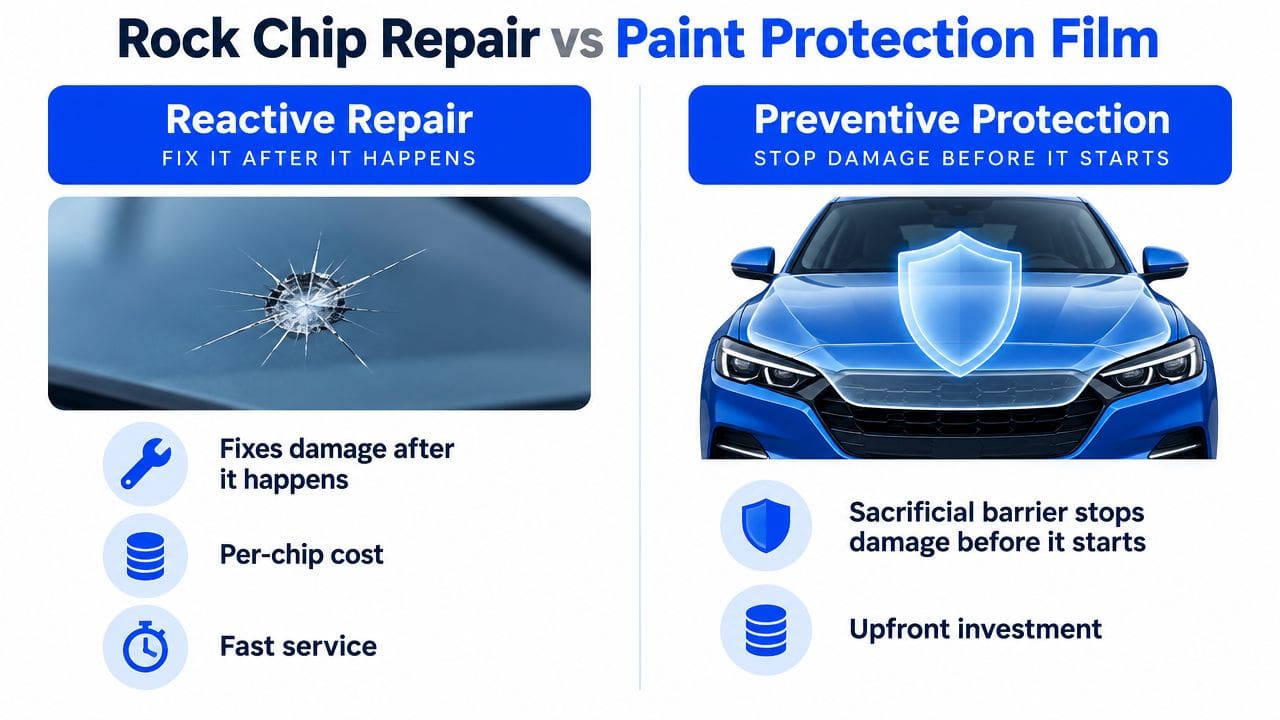
Rock chip repair is a reactive, localized fix. A technician cleans an individual defect, fills the missing area, levels the material, and polishes the spot. The process can make a chip far less noticeable, but it doesn't protect the surrounding paint from the next stone.
PPF takes the opposite approach. It adds a clear, sacrificial polyurethane layer over selected panels or the entire vehicle. Market reporting places global PPF at about $502.55 million in 2024, with a projection of $726.63 million by 2030, implying a 6.6% CAGR, while another estimate places the 2024 market at $593.9 million with installed volume above 39.2 million square meters globally that year. These figures are reported in the global paint protection film market analysis.
The real difference in daily use
U.S. reporting shows equivalent PPF installation volume rising from about 140,000 vehicles in 2020 to 207,500 vehicles in 2025, with annual growth reaching 14.8% in 2023 and remaining at 5.2% in 2025. Average installed ticket values were around $1,146 in 2020 and $1,200 in 2023, according to KBV Research's PPF market report.
That doesn't mean PPF is automatically the right answer. A lightly driven older car may be better served by careful touch-up work. A highway commuter, leased vehicle, or premium car usually benefits more from preventing the damage in the first place.
How Rock Chip Repair Actually Works
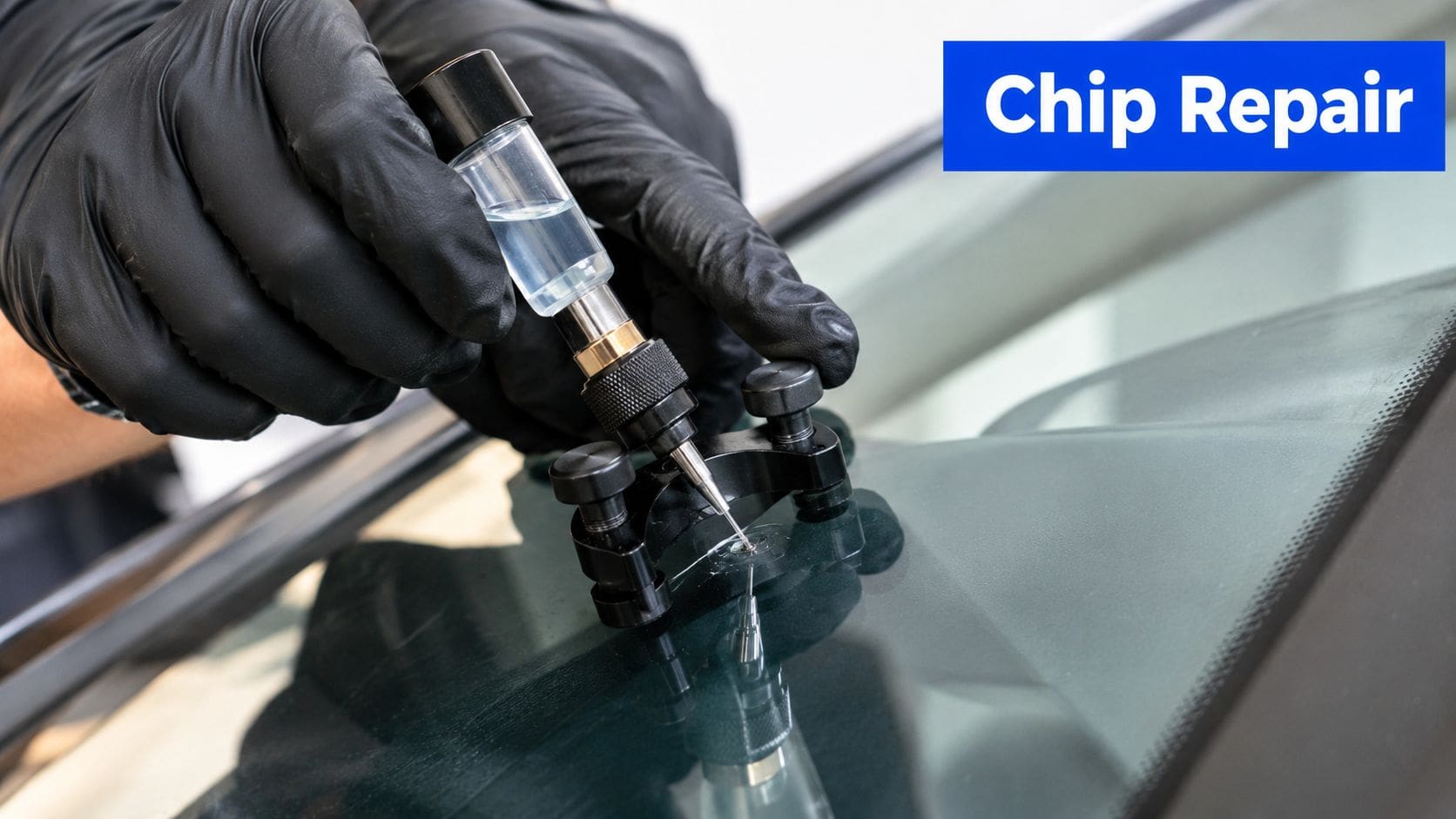
A proper repair is more than dabbing paint into a hole. The finished spot depends on preparation, material control, curing time, and careful leveling. The same method applies whether you're repairing a single chip on a Toyota Camry or addressing several defects before a protection installation.
A clean repair follows a controlled sequence
Wash and inspect the panel. Remove road film, wax, dust, and loose contamination. Bright lighting helps reveal whether the mark is missing paint, a scratch, or surface transfer.
Clean inside the chip. A technician removes loose material and debris without widening the defect. Poor cleaning can trap contamination, producing a cloudy or uneven result.
Apply the matching material sparingly. Depending on the finish and defect, that may mean color-matched touch-up paint, clear resin, or a layered combination. The material should go in thin applications, not one heavy blob.
Allow each layer to flash or cure. Paint and resin need time to settle before the next application. Rushing this stage can cause softness, shrinkage, or an uneven surface.
Level the repair. Once cured, the raised material is carefully reduced so the filled area sits close to the surrounding paint.
Polish and seal the spot. Light polishing blends the edge and restores clarity. A sealant or compatible protective product helps reduce immediate contamination exposure.
A common DIY mistake is overfilling. The owner sees a deep chip and keeps adding paint until it stands above the surface. After curing, that raised blob catches light and can look more obvious than the original defect. The practical rock chip repair process also emphasizes thin layers, proper curing, leveling, and polishing.
When touch-up makes sense
Isolated paint chips smaller than roughly 1 inch across are often candidates for spot repair rather than a complete repaint, as described in this guide to touch-up paint versus repainting. That size isn't a guarantee of an invisible result. Metallic, pearl, and tri-coat finishes can remain visible even when the repair is technically sound.
Repair works best when the surrounding clear coat is healthy and the damage hasn't spread into peeling, cracking, or corrosion. It doesn't recreate the original factory finish, but it can stop a small defect from looking neglected and prepare a stable surface for later protection.
Paint Protection Film as Preventative Coverage
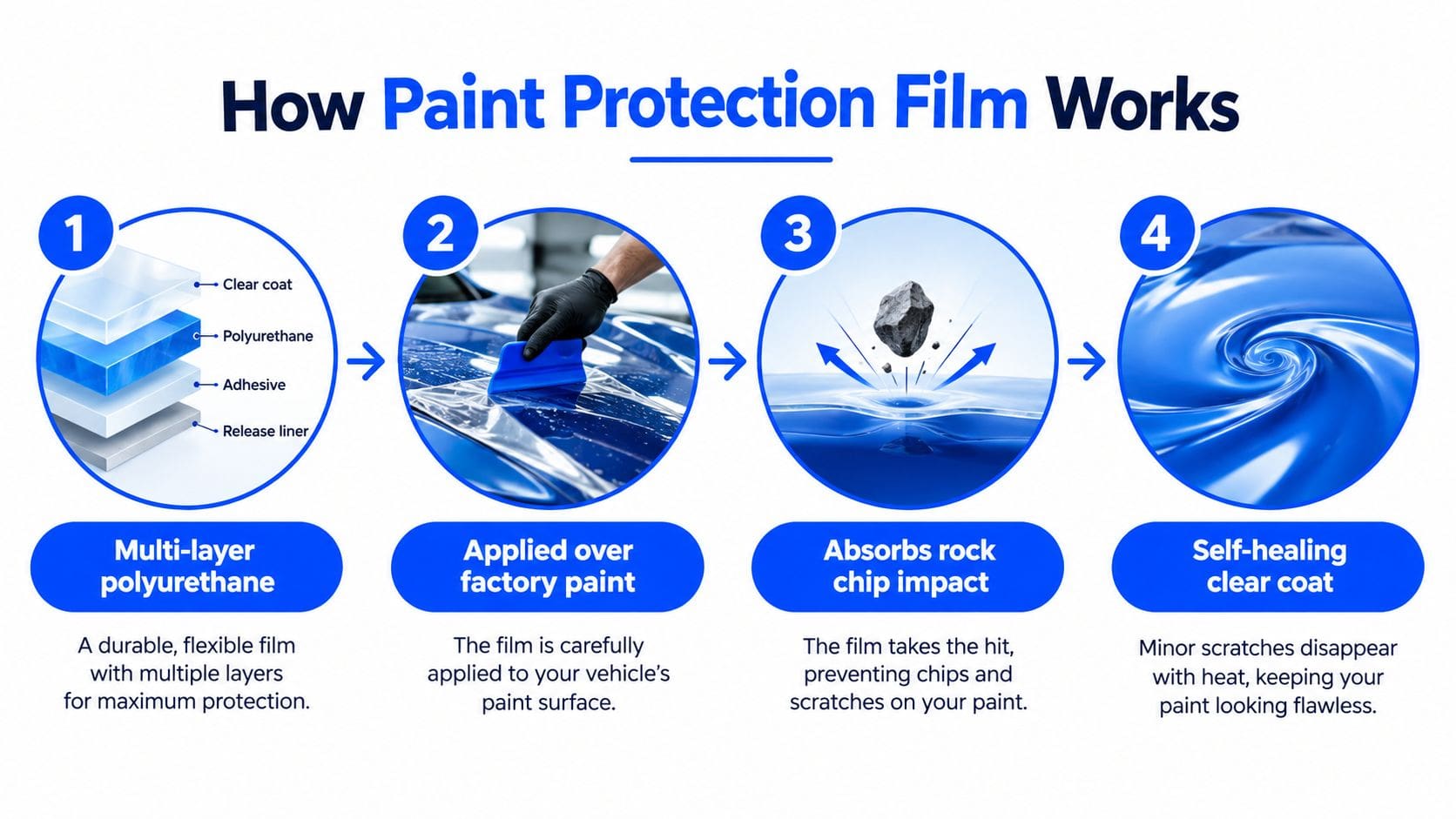
PPF is a physical barrier, not a liquid coating and not a repair compound. Most automotive PPF is made from thick polyurethane and is commonly about 6 to 10 mils thick, allowing the film to absorb some gravel and stone impact before it reaches the paint, as explained in this PPF rock-chip protection overview.
What the film does
A good film system combines a polyurethane body with a clear top surface designed to resist everyday contamination and minor abrasion. One benchmark approach evaluates durability with falling-ball testing and describes resistance to stone-chip intrusion, according to ClearPro's PPF durability guidance.
In practical installation work, coverage matters as much as the film itself. The front bumper, hood leading edge, front fenders, mirror caps, and rocker panels usually face more road exposure than the roof or rear quarter panels. A partial-front package can target those zones without paying for full-body coverage.
Why preparation determines the result
PPF can't restore missing paint. If a chip remains visible beneath the film, the defect may still show through, and the film can make the irregularity more noticeable. Dust, wax, polishing residue, and moisture trapped beneath the adhesive can create bubbles, cloudy spots, or premature edge lift.
A clean installation requires:
- Thorough decontamination, including removal of bonded road film.
- Paint correction where needed, especially on areas with haze or heavy wash marks.
- Correct pattern placement, so edges terminate cleanly rather than sitting in high-exposure locations.
- Controlled stretching, which prevents distortion and visible tension marks.
- Careful edge finishing, because poorly terminated edges collect dirt and can lift.
For a deeper look at why owners choose this approach, see the benefits of paint protection film. PPF is strongest when installed over clean, stable, freshly prepared paint. It won't make neglected paint new, but it can preserve a corrected finish from the next round of road impacts.
When to Repair Chips Before Applying Paint Protection Film
Used-car owners rarely face a perfect surface. The question isn't whether film can physically cover a chip. The better question is whether leaving that chip in place creates an appearance, adhesion, or corrosion problem that outweighs the cost of correcting it.
Some small, stable chips can remain under PPF without causing a practical issue. Other defects need touch-up paint, spot correction, or body-shop work first. The installer should inspect the damage rather than promise that every defect will disappear beneath clear film.
Chip damage decision matrix
| Chip Size | Condition | Recommended Action |
|---|---|---|
| Small, shallow mark | Clean, stable, and not visibly flaking | PPF may be possible without repair if the owner accepts some visibility |
| Small chip through the color coat | Clean but visibly recessed | Apply controlled touch-up and level it before film |
| Deep chip exposing substrate | Moisture exposure, sharp edges, or early corrosion | Repair properly before PPF |
| Cluster of chips | Several defects across one panel | Consider paint correction or panel refinishing before installation |
| Peeling or cracked paint | Unstable edges or clear-coat failure | Body repair first. Film isn't a substitute for a sound surface |
| Large gouge or dent | Metal or plastic deformation | Body-shop assessment before any PPF decision |
The discussion of PPF over scratches and existing defects reflects the split guidance owners encounter. Minor stable damage may be coverable, but film won't fill missing paint or stop corrosion. At the same time, irregular defects can create visible pockets or magnification beneath the film.
Practical rule: If you can catch the edge of the chip with a fingernail, see exposed substrate, or notice lifting paint, don't treat it as a simple cosmetic overlay.
How I make the call
For a used Tesla or BMW with a few shallow marks, I'd usually prioritize cleaning, a conservative touch-up, and a leveled surface in the film's most visible zones. For a truck with a heavily peppered front end, repeated spot repairs may leave too much texture, making panel refinishing the more sensible foundation.
The owner also has to choose between perfect appearance and maximum cost control. Leaving a tiny defect alone may be financially reasonable, but it won't become invisible under PPF. Repairing every mark can produce a cleaner installation, but the preparation cost may exceed the value of covering that panel.
Comparing Total Cost of Ownership Over Five Years
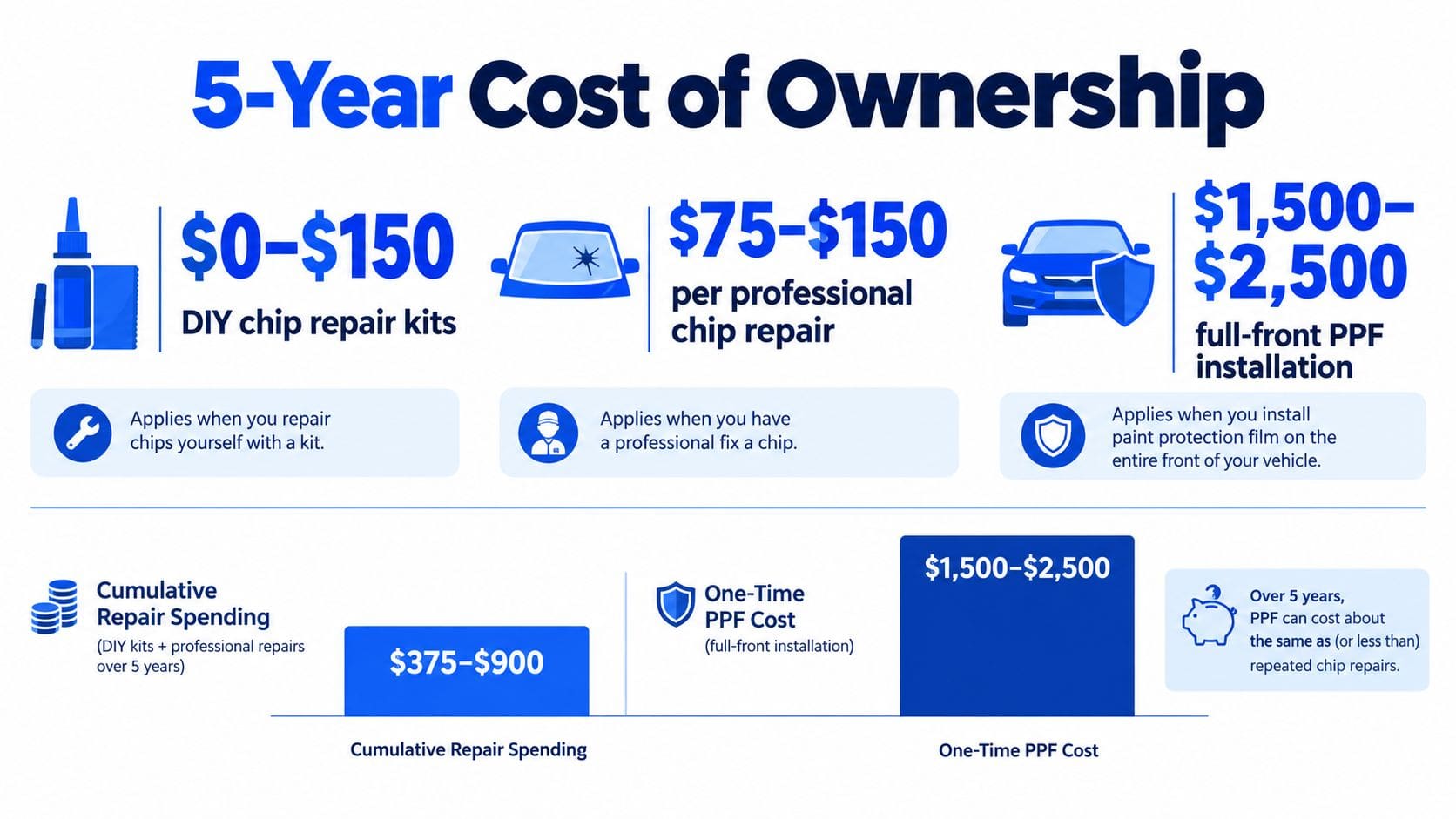
The economics depend on whether you're comparing one repair or a pattern of repairs. DIY chip repair can run about $15 to $70, mobile touch-up about $150 to $300, and body-shop work about $250 to $800 or more per panel, based on the pricing examples in this car paint chip repair guide. Partial front-end PPF often starts around $900 to $2,500, while full-body coverage can reach $5,000 to $8,000 or more, depending on vehicle and scope.
Scenario-based comparison
| Ownership situation | Repair approach | PPF approach | Usually makes more sense |
|---|---|---|---|
| Occasional driver with one or two chips | DIY or isolated touch-up | Upfront partial coverage | Repair, unless preservation is a priority |
| Highway commuter with recurring front-end damage | Repeated touch-up or panel repair | Partial-front installation | PPF often becomes more attractive |
| Premium car kept for several years | Cosmetic repairs plus possible refinishing | Targeted or broader PPF | PPF for appearance and paint preservation |
| Older vehicle with widespread damage | Multiple repairs can become expensive | Prep and film add to the total | Repair selectively, or skip major protection |
| Lease or near-term resale vehicle | Touch-up before inspection or sale | PPF protects during remaining use | Compare remaining ownership time and condition |
A five-year calculation should include more than the invoice. Add the number of repair visits, the possibility of color mismatch, the risk of repainting adjacent areas, and the fact that new chips can appear immediately after a repair. PPF has a larger initial cost, but it changes the expense from repeated defect correction to one preventative installation.
That doesn't make full-body PPF financially sensible for every used car. On a vehicle with tired paint, the preparation required before film can erase the price advantage. On a clean, valuable car driven heavily on interstates, a partial front package may be the more rational choice. Review paint protection film cost factors before comparing quotes, because coverage, paint condition, pattern quality, and preparation all affect the final price.
The cheapest invoice isn't always the lowest ownership cost. Count the repairs you expect to make, not just the first one.
Making the Right Choice for Your Vehicle and Driving Pattern
The right choice starts with your use pattern, not the product brochure. A Columbus driver who spends most weekdays on highways faces a different risk profile from someone who drives a stored classic car only on clear weekends.
Use these decision questions
- How often do you drive near trucks and construction traffic? Frequent highway exposure favors preventative coverage on the front impact zones.
- How long will you keep the vehicle? A short ownership period can favor selective repair, while a longer plan gives PPF more time to protect the finish.
- Is the paint already healthy? PPF performs best over stable, well-prepared paint. Heavy chipping or peeling changes the economics.
- Does resale condition matter? Premium cars and leased vehicles often justify cleaner front-end presentation, but PPF isn't a guarantee of a higher offer.
- What does your budget need to do today? A careful touch-up may be the practical first step when the upfront installation cost isn't comfortable.
A high-mileage commuter generally gets more value from PPF because the same exposed areas face repeated impacts. A low-mileage owner in a low-debris environment may reasonably repair chips as they appear. Owners of trucks should consider rocker panels and mirror caps, not only the hood and bumper. Owners of BMWs, Teslas, and other vehicles with expensive or difficult-to-match finishes may place greater value on preserving original paint.

A simple recommendation framework
Choose repair first when the damage is isolated, the car is older, and your ownership plan doesn't justify preventative coverage. Choose PPF when the vehicle is clean, highway-driven, valuable to you, or likely to face continued road exposure. Choose a hybrid approach when the main impact zones deserve protection but the rest of the car doesn't.
Ceramic coating can complement PPF by making washing and contamination removal easier, but it doesn't replace a physical impact barrier. If you're comparing protection systems, review our ceramic coating packages in Columbus after deciding which panels need PPF.
Professional Assessment and Next Steps
A good inspection should identify three separate things: what can be repaired cosmetically, what needs paint correction, and what should be covered with film. Those decisions shouldn't be bundled into an automatic recommendation, especially on a used vehicle where preparation can represent a meaningful part of the budget.
Lionheart Auto Detailing & Protection provides rock chip repair guidance, PPF installation, ceramic coating, paint correction, and full detailing for drivers in Hilliard and the greater Columbus area. The team serves Dublin, Powell, Upper Arlington, New Albany, Westerville, and Worthington through in-shop appointments and mobile service, with appointments available Monday through Friday from 9 AM to 5 PM. Lionheart Detailing is located at 4402 Weaver Court North, Suite 204, Hilliard, Ohio, and the address can be opened through this Google Business Profile link.
Before booking, ask whether the installer will document existing chips, explain which defects remain visible under film, and separate repair or correction costs from the PPF price. This guide to choosing a PPF installer in Columbus, Ohio can help you evaluate preparation, edge work, and installation quality.
For a used car, the honest recommendation is usually selective. Repair defects that threaten appearance or film adhesion, leave minor stable marks alone when the budget calls for it, and protect the panels that take the most road impact.
Lionheart Detailing can inspect your vehicle, repair or prepare existing chips, and recommend partial or full paint protection film based on how you drive and how long you plan to keep the car. Contact the team for PPF, ceramic coating, paint correction, or complete detailing in Hilliard and Columbus, or visit Lionheart Detailing to request an appointment.