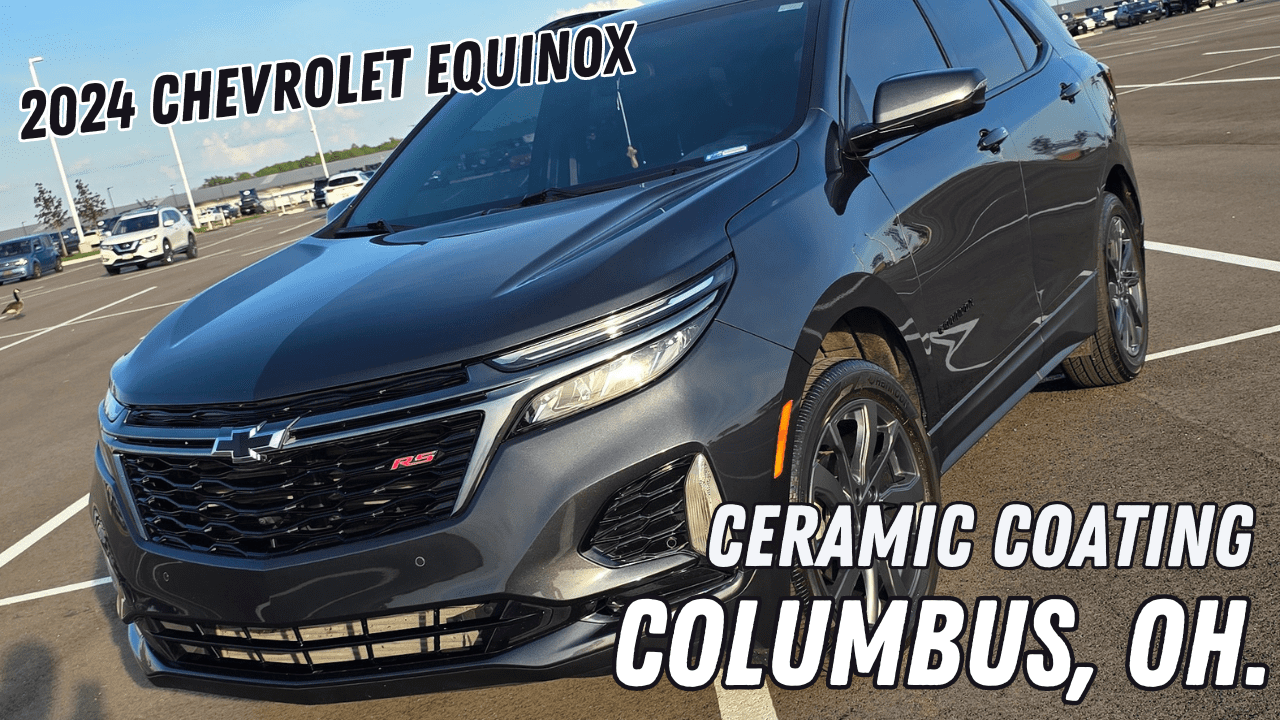
PPF installation cost for a typical Columbus driver usually falls into three practical bands, about $600–$1,200 for partial front, $1,800–$3,000 for full front, and $5,000–$9,000 for full body. The only meaningful comparison is between quotes that define coverage the same way.
That's the part most first-time buyers miss. You're not really shopping one price, you're shopping a scope of work, and the invoice only makes sense once the shop spells out exactly what's covered, what prep is included, and how much labor the install takes.
Table of Contents
- Why PPF Installation Cost Is Hard to Pin Down
- Typical PPF Price Ranges by Coverage Level
- What Drives the Price You Are Quoted
- Columbus Pricing Reality and Mobile vs Shop Installation
- PPF Versus Ceramic Coating and Where Each Makes Sense
- Maintenance, Lifetime Costs, and Warranty Reality
- How to Read a PPF Quote Without Getting Burned
- Planning Your Budget and Booking a PPF Install in Columbus
Why PPF Installation Cost Is Hard to Pin Down
Callers typically reach out after seeing three different ranges online and leave even more confused. That's normal, because PPF installation cost isn't a fixed menu item, it's a mix of coverage area, vehicle geometry, film grade, and skilled labor. A quote for a Civic hood and bumper should never be compared to a quote for an SUV with a wrapped front end and rocker panels unless the panel list is identical.
The four things that change the number
A clean estimate always starts with the same four questions. How much of the car are you covering? How hard is the vehicle to wrap? What film are you using? How many hours of labor are built into the install?
Practical rule: If two quotes don't list the same panels, they're not the same price, even if the total looks close.
Preparation matters just as much as film. A car that needs decontamination, paint correction, badge removal, or extra edge work will cost more than a fresh vehicle with clean, straight panels. That's why a first-time customer should stop asking, "What does PPF cost?" and start asking, "What does this quote include?"
A good written estimate separates prep, film, and labor. If a shop just gives you one number and says “full front,” ask what that means in plain language. Does it include headlights? Are the edges wrapped? Are trim pieces removed and reinstalled? Is paint correction included if the paint has swirls?
The vocabulary matters because it lets you compare apples to apples. In Columbus, a careful shop can quote a bumper-heavy daily driver very differently from a black Porsche or a big truck, and both can be fair if the scope is clear. If you want a broader local benchmark, our auto paint protection film cost guide breaks down the same pricing logic in a way that's easier to compare against real vehicles.
Typical PPF Price Ranges by Coverage Level
Most Columbus quotes fall into three buckets, and those buckets are the right way to think about value. A Hilliard commuter in a Honda CR-V usually doesn't need the same package as a Powell owner protecting a new BMW M3, because the risk profile and the amount of film are different.
Partial front, full front, and full body
A partial front package usually covers the high-impact zone, not the whole car. A full front package goes after the areas that take the most abuse. A full body install covers every painted panel and demands the most film, time, and precision.
| Coverage Level | Typical Film Area | Commonly Included Panels | Typical Price Range |
|---|---|---|---|
| Partial Front | About 15–20 sq. ft. | Front bumper, hood strip, fender tips, mirrors | About $500–$1,000 |
| Full Front | About 60–80 sq. ft. | Full hood, full front bumper, front fenders, mirrors, headlights | About $1,800–$3,000 |
| Full Body | About 240–450 sq. ft. | Every painted panel on the vehicle | About $5,000–$9,000 |
Those ranges line up with published pricing data showing a full-car installation at roughly $1,500–$3,000 on average in 2023, partial installations commonly at $500–$1,000, and premium full-body jobs reaching about $5,000–$8,000 when film grade and preparation go up WorldMetrics pricing data. Another pricing benchmark puts partial-front jobs around $600–$1,200, full-front jobs around $1,800–$3,000, and full-body applications around $5,000–$9,000 paint coverage calculator.
For a daily driver, partial front can make sense if you mostly want chip protection on the bumper and hood edge. For a newer luxury car, full front is usually the smarter middle ground because it protects the most visible damage zones without paying for every painted surface. Full body is a different conversation entirely, usually reserved for exotic cars, high-value trucks, or owners who want the cleanest possible long-term finish.
A lower number isn't automatically a better deal. It can also mean fewer panels, thin coverage, or exposed edges.
If you're comparing shops, look at what they name in the package, not just the package name itself. Two “full front” quotes can be wildly different if one includes wrapped edges and headlights while the other doesn't.
What Drives the Price You Are Quoted
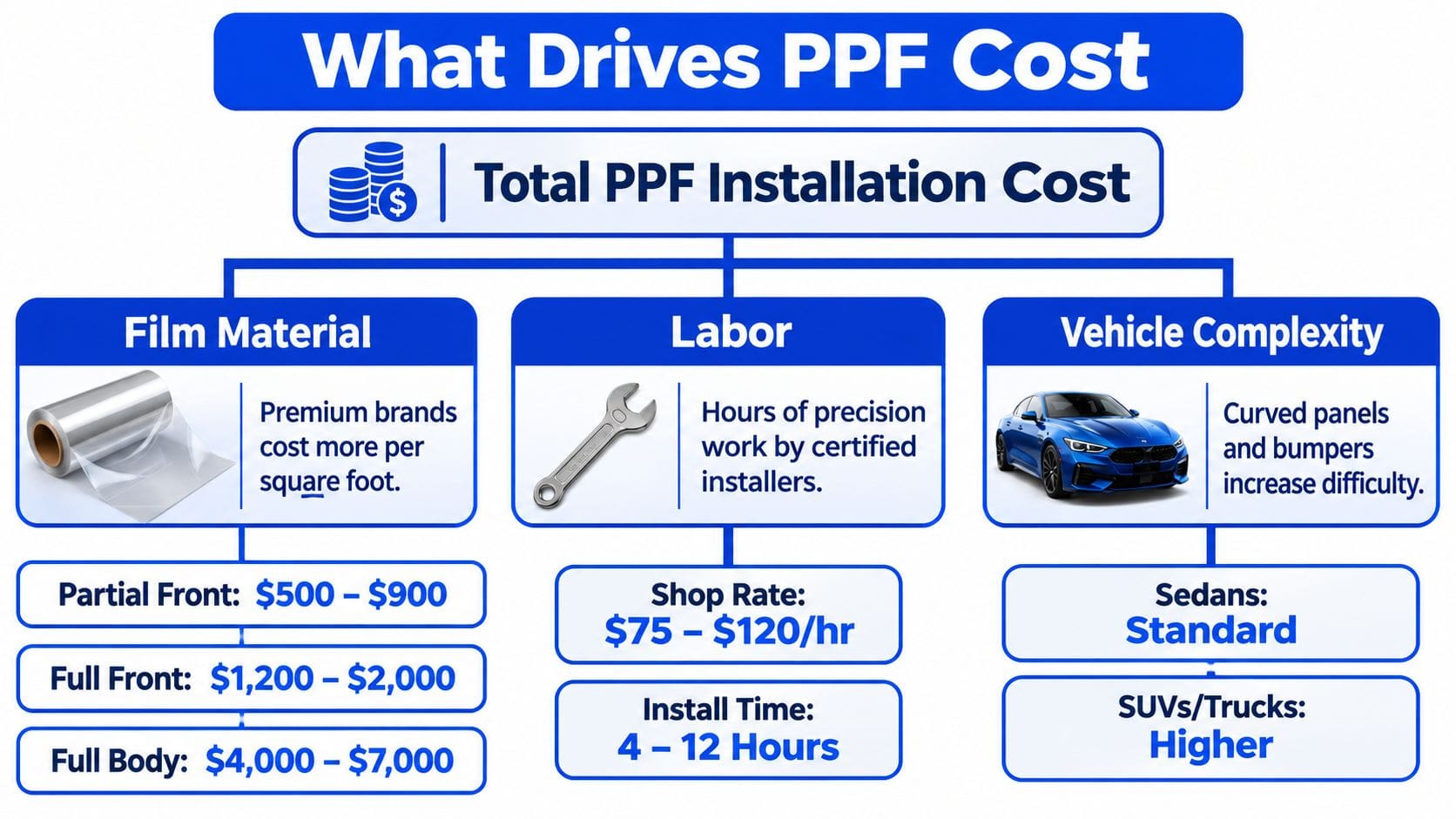
A Columbus shop builds your quote from three cost centers: film, labor, and preparation. Standard material is often benchmarked at roughly $1.25–$4 per sq. ft., while premium or specialty film can run $4–$12+ per sq. ft., according to this industry costing benchmark. The material is only the starting point. Vehicle shape, access, and the installer's process often create the larger difference between two quotes.
Film, labor, and prep each pull their own weight
Partial-front work can take roughly 2–3 hours, while many full-body jobs run 4–6 hours or more. Intricate shapes can extend the schedule further. Curved bumpers, deep recesses, sharp creases, parking sensors, and tight trim lines all require more fitting, stretching, and inspection.
Experience changes the labor calculation. A novice may need 6–8 hours to wrap a hood, while a master installer can complete the same job in 3–4 hours. The difference pays for more than speed. Experienced hands generally reduce mistakes, rework, and visible edge issues, which can matter more than a small labor-rate difference.
A used car may need paint preparation before film touches the surface. Swirls, light scratches, oxidation, and old adhesive residue require attention because PPF preserves the finish underneath it. It does not conceal defects. If the paint is not cleaned and corrected first, those imperfections remain visible beneath the clear film whenever sunlight reaches the panel.
Ask the shop to separate the quote into:
- Film material, including the exact product and thickness.
- Labor hours, based on the vehicle's shape and installation complexity.
- Preparation, including decontamination, correction, and inspection.
A single bundled price is difficult to compare. Itemized pricing lets you see whether one Columbus quote is higher because of better film, more preparation, or the time required to finish your vehicle properly.
Columbus Pricing Reality and Mobile vs Shop Installation
In Columbus, the number changes with the vehicle just as much as with the package. A front-end package on a compact sedan won't price like one on a three-row SUV, and a pickup with big bumper corners usually takes more time than either. That's true whether the customer is in Hilliard, Dublin, Powell, Upper Arlington, Westerville, or Grove City.
What local drivers usually run into
A truck or exotic usually costs more because the panels are larger, the body lines are more complicated, and there's more surface to align. Even when the film looks similar on paper, the installer may spend far longer getting a clean result on a vehicle with aggressive curves or awkward access around mirrors, grilles, and lower fascias.
That's where the mobile-versus-shop choice matters. A fully equipped mobile setup can still handle a lot, especially when it has on-board water, electricity, and controlled lighting. For many driveway jobs, that's plenty. For rocker panels, wide SUVs, or full-body wraps, a Hilliard shop bay gives the installer better lighting, easier access, and a more controlled environment for edge finishing and inspection.
The right answer isn't “mobile is cheaper” or “the shop is better.” It's simpler than that. The right setup is the one that matches the vehicle, the amount of film, and the finish you want.
If you're comparing Columbus PPF options, one practical example is a shop-backed install like paint protection film options from Lionheart Detailing, where the conversation can be matched to either an in-shop appointment or a mobile visit depending on the vehicle. That flexibility matters when you're trying to protect a daily driver, a lease return, or a weekend car without overpaying for a setup you don't need.
If the car is large, low, or heavily contoured, ask whether the installer wants it in the bay instead of your driveway.
That one question can save you from a quote that looked fine on paper but wasn't built for the vehicle sitting in front of you.
PPF Versus Ceramic Coating and Where Each Makes Sense
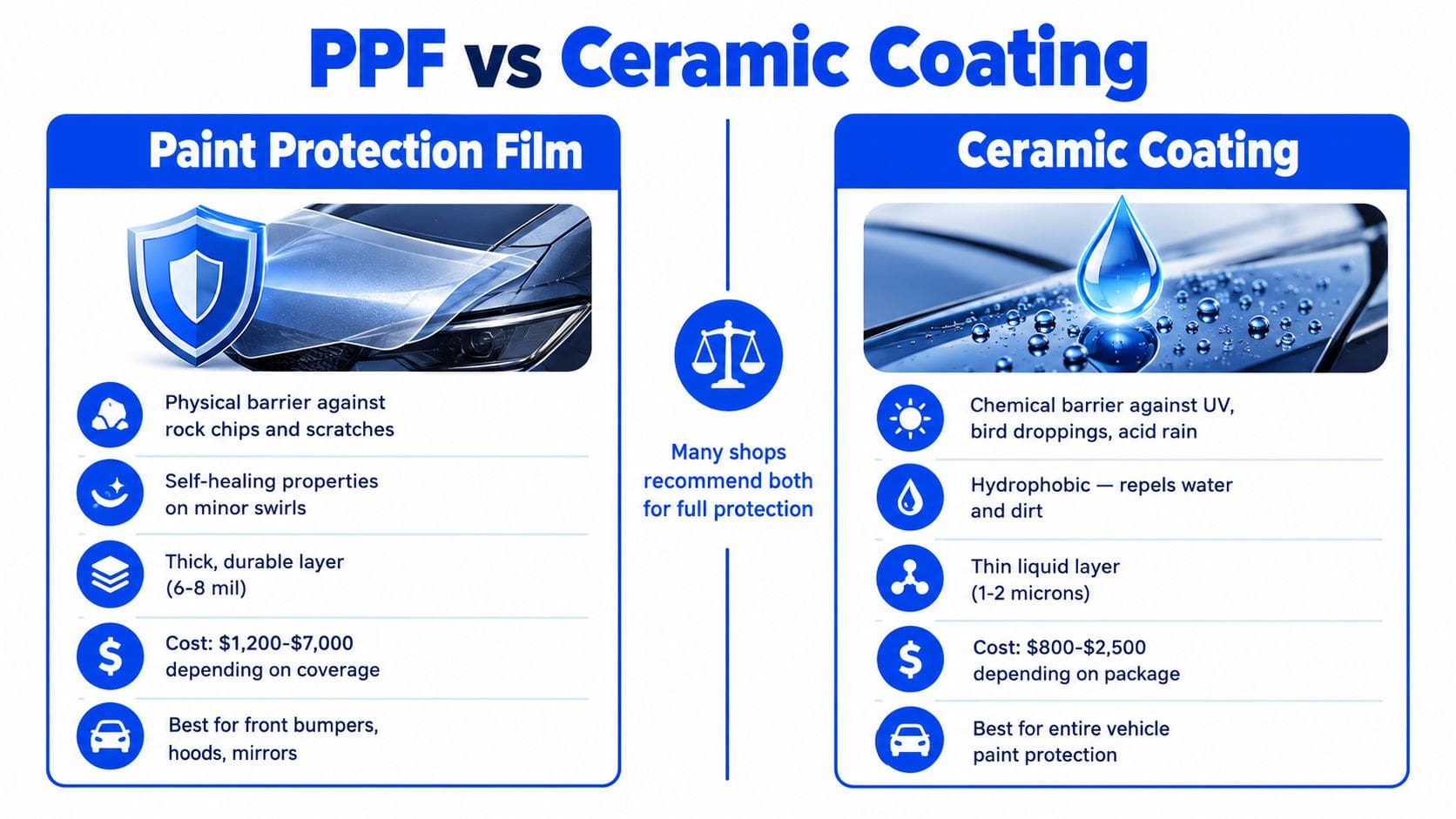
PPF and ceramic coating get compared constantly, but they don't do the same job. PPF is a physical barrier that takes the hit from road debris and minor abrasion. Ceramic coating is a chemical layer that helps with gloss, cleaning, and resistance to contamination.
The common combination that actually works
The most practical setup for many Columbus drivers is PPF on the high-impact zones, then ceramic coating over the rest of the car. That can include coating over the film itself, which helps with washing and keeps the finish looking more even. If you want a deeper comparison, our PPF vs ceramic coating guide lays out where each product helps most.
PPF makes sense when the main concern is chips, scratches, and abrasion from highway use. Ceramic coating makes sense when the main concern is easy maintenance and keeping the paint looking rich between washes. Neither one fixes bad paint. Neither one replaces safe following distance or proper washing.
For a commuter with short drives and low debris exposure, ceramic coating alone may be enough. For a highway driver, a new Tesla, or a BMW that sees winter travel, PPF on the front end is usually the smarter spend. For an owner planning to keep the car long term, the combo tends to make the most sense because each product covers the other's weakness.
A simple decision rule works well:
- Low-risk daily use, lean toward ceramic coating.
- Highway miles or winter debris, lean toward PPF.
- Want the most complete protection, combine both.
Maintenance, Lifetime Costs, and Warranty Reality
A PPF quote isn't just the day you pay for install. It also includes how you'll care for the film, how long it should stay on the car, and what happens if it needs to be replaced later. If you're trying to understand long-term value, this is the point where the decision gets real.
What the film needs after install
Right after installation, the film needs time to settle. After that, it should be washed gently, not blasted through a brush wash that can scuff the surface or catch edges. A pH-neutral soap is the safest starting point, and a compatible topper can help keep the film slick and easier to clean.
The long-term cost is shaped by the fact that PPF is a replaceable layer. A front-end install today may still need removal and reapplication years down the line, especially if the owner keeps the car long enough to see wear, edge lift, or staining. That's not a failure, that's the life cycle of a protective product.
Warranty language matters just as much as install quality. 3M's Scotchgard Paint Protection Film Pro Series carries a 10-year warranty against manufacturing and material defects like yellowing, bubbling, and cracking when the warranty conditions are met 3M warranty card. That warranty does not cover misuse, accidents, misapplication, ordinary wear, or dents caused by rocks and road debris. For a broader service perspective, see how long PPF lasts on a car.
A long warranty is useful, but it doesn't replace a careful install or good maintenance.
Lifetime value comes from matching the film to the way you drive. If the car sees winter roads, highway miles, or frequent wash cycles, the spend makes more sense than it does on a garage-kept weekend toy.
How to Read a PPF Quote Without Getting Burned
A quote can look fair and still hide a weak install scope. The easiest way to protect yourself is to read the estimate like a checklist, not like a sales pitch. Ask the installer to put the details in writing before you leave the shop.
The questions that separate a solid quote from a vague one
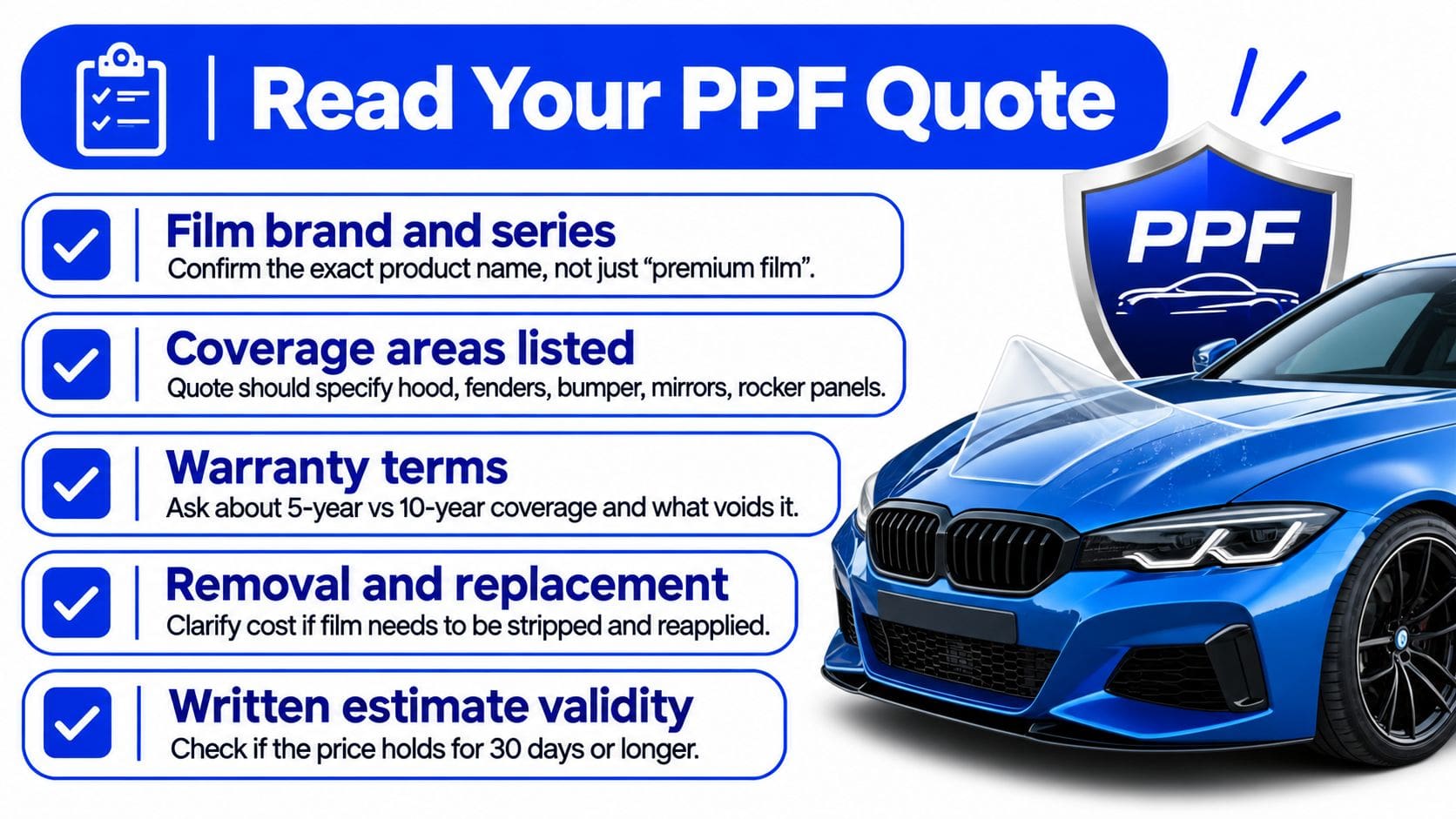
- Film brand and series. Confirm the exact product name, not just “premium film.”
- Coverage areas listed. The quote should spell out hood, fenders, bumper, mirrors, rocker panels, and anything else included.
- Warranty terms. Ask about the warranty length and what voids it.
- Removal and replacement. Clarify whether old film removal or future reinstallation is included.
- Written estimate validity. Check whether the price holds for a set period.
Two red flags show up often. First, a “full front” quote that's far below the local market can mean thin coverage, economy film, or exposed edges. Second, a quote that doesn't separate preparation, film, and labor is hard to compare because you can't tell where the money is going.
If the shop won't tell you whether the edges are wrapped, assume they might not be.
That matters because edge treatment changes both the look and the durability. A clean quote should also tell you whether paint correction is included or billed separately, because a car with swirls or light scratching needs that step before the film goes on. If you're comparing multiple Columbus estimates, the fairest method is simple. Match the exact panels, the film series, the prep work, and the warranty, then compare price only after everything else lines up.
Planning Your Budget and Booking a PPF Install in Columbus
For most first-time buyers, the smartest budget is the one tied to risk, not ego. A partial front package makes sense for some cars. A full front package is the sweet spot for many new vehicles. Full body is a serious investment and should be treated that way.
If you're in Hilliard, Dublin, Powell, Upper Arlington, or anywhere else around Columbus, start by deciding what you're trying to protect. Daily highway use, winter driving, and a new paint finish push the conversation toward more coverage. A garage-kept car with low miles may only need targeted protection in the most exposed zones.
At Lionheart Detailing, the service mix includes Hilliard auto detailing, Columbus ceramic coating, Hilliard ceramic coating, and professional window tinting in Hilliard, so it's easy to pair PPF with the rest of the protection stack when that makes sense. You can also compare the rest of the service menu on the main Columbus service page and check the ceramic coating services if you're deciding how to protect the rest of the car after the front end is covered.
For customers who want to stop by, the shop is at 4402 Weaver Court North, Suite 204, Hilliard, Ohio. You can view the location on Google Maps before you schedule. For a first quote, ask for the coverage map, the film name, the prep steps, and whether mobile or in-shop service makes more sense for your vehicle.
If you want a clear panel-by-panel estimate instead of a vague package name, visit Lionheart Detailing and ask for a written PPF quote that matches your car, your commute, and your budget.