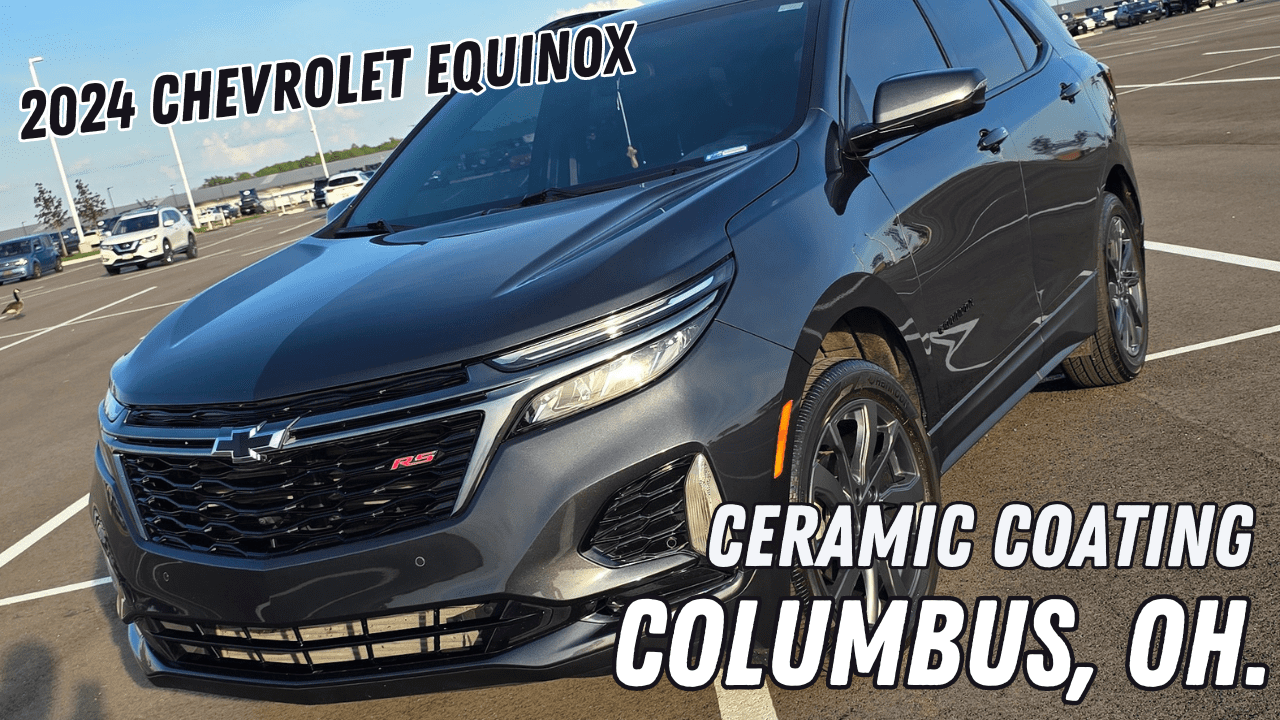
You've just bought a vehicle in Columbus, and the estimate has grown from ceramic coating to window tint. The combined number looks substantial, so you're wondering whether a ceramic coating + window tint package is worth combining, or whether the shop is packaging two unrelated services to increase the ticket.
That's a fair question. Ceramic coating protects painted surfaces. Window tint changes the performance of the glass. They don't share the same chemistry, and one won't improve the other. The value comes from matching two different services to two different ownership problems, then deciding whether bundling them and installing them on the same schedule makes sense.
Table of Contents
- The Question Every Detail Shop Hears After the Second Quote
- What Each Service Actually Does for Your Vehicle
- Why Buyers Pair Ceramic Coating With Window Tint
- Cost vs Value Math for Short and Long Term Owners
- Same Day Bundling Risks Most Articles Skip
- How a Properly Sequenced Install Should Run
- Who the Combo Is Actually Built For and What to Do Next
The Question Every Detail Shop Hears After the Second Quote
At a Hilliard detailing estimate, the question usually comes after the customer has already heard the first number.
The driver came in asking about a ceramic coating for a new BMW, Tesla, truck, or daily commuter. We discussed washing, paint correction, water behavior, and what the finish would need before coating. Then the customer asked about the dark glass on another vehicle in the lot, or mentioned how hot the cabin gets during Columbus summers. A window tint quote followed.
Now the paperwork is on the counter, the vehicle is already scheduled in their mind, and the customer is looking at both figures together.
“Since I'm already here, should I just do both?”
That conversation happens multiple times a week because the services seem naturally connected. Both improve the ownership experience. Both can be installed by a professional protection shop. Both are easier to think about when the vehicle is already off the road.
But a package can be useful without being automatically worthwhile. I separate the decision into two questions:
- Do you want both services for your vehicle?
- Should the shop install both during the same appointment?
Those answers aren't always identical. A customer may benefit from ceramic coating and tint, but still be better served by a staged installation. Another owner may have a tight schedule and a vehicle that needs minimal correction, making a coordinated appointment practical.
The regulatory history of window tint also matters. California's aftermarket tint rules developed through legal changes beginning in 1961, 1967, and 1973, followed by intensified enforcement in the 1980s. Ticketing rose from 28,500 motorists in 1984 to 82,272 in 1988, according to this window tint history and regulatory overview. Federal glazing standards have also long required tinting to meet performance requirements for light transmission and abrasion resistance.
That history illustrates the point I make to customers in Hilliard and Columbus. Tint isn't just a cosmetic shade. It's a regulated modification that must balance privacy, heat rejection, and visibility. The right package should improve the vehicle as a whole, not merely make it look darker.
What Each Service Actually Does for Your Vehicle
Ceramic coating and window tint serve different surfaces, so start by understanding the job each one performs.
Ceramic coating works on finished exterior surfaces
A ceramic coating is a liquid protective product applied over properly prepared paint and other compatible exterior materials. Once cured, it forms a hard, hydrophobic layer that helps water bead, reduces the way road film clings to the surface, and improves resistance to UV degradation and chemical contamination. Technical literature describes these coatings as durable for one to several years, depending on the formula and maintenance requirements, as explained in this review of ceramic coating materials and durability.
The coating doesn't erase scratches or correct swirls. It also won't stop a stone from chipping the hood. If the paint looks hazy before application, the coating can preserve that haze instead of fixing it.
A professional preparation sequence normally includes:
- Thorough washing: Remove loose dirt without grinding it into the paint.
- Decontamination: Clay or chemically remove bonded particles and fallout.
- Paint correction: Polish away swirls, haze, and other defects when the finish needs refinement.
- Solvent wipe: Clear polishing oils so the coating can bond to the prepared surface.
- Controlled application: Apply the product within the manufacturer's temperature and humidity range.
Independent hydrophobic-coating testing found that coatings without pretreatment lost water-contact-angle performance by 34% to 100% after abrasion and salt-spray exposure, while pretreatment improved abrasion resistance. The findings are detailed in this university coating durability study. The practical lesson is simple. Preparation is part of the coating, not an optional add-on.
Window tint works on the glass
Window tint is a film installed onto the inside of automotive glass. Depending on the film, it can reduce glare, limit cabin heat, block UV exposure, and add privacy. Dyed, carbon, and ceramic films can look similar from outside, but their heat-rejection behavior differs.
Ceramic tint is engineered to reject infrared wavelengths while preserving visible-light transmission. Published guidance describes premium ceramic film as rejecting roughly 90% to 96% of near-infrared radiation and blocking 99% or more of UV-A and UV-B when evaluated under the cited product and testing conditions, as discussed in this technical guide to tint heat rejection.
That's why darkness isn't the right buying metric. A lighter ceramic film can reject more heat than a darker dyed film. Compare infrared rejection and total solar energy rejection at a legal visible-light transmission level instead of choosing the darkest appearance.
For a plain-language explanation of those trade-offs, review our guide to the best window tint for heat rejection in Columbus.
Why Buyers Pair Ceramic Coating With Window Tint
The strongest reason to combine the services is that they solve separate problems during one vehicle-protection project.
Window tint addresses the cabin. It can reduce glare, improve privacy, and make the interior more comfortable in bright weather. Modern ceramic tint commonly advertises approximately 99% to 99.9% UV rejection, based on manufacturer guidance summarized by LLumar's ceramic tint information. That protection is useful for occupants and interior materials, especially when the vehicle spends long hours outside.
Ceramic coating addresses the exterior. It helps water and contamination release more easily during washing, while the hydrophobic surface helps reduce the effort required to maintain gloss. It also helps the paint resist UV-related degradation and chemical contamination. Tree sap, bird droppings, and road film still need prompt removal, but the coated surface is easier to manage than neglected, unprotected paint.
The ownership benefits are practical
Buying separately gives you flexibility. Buying together can reduce the number of decisions and appointments.
A combined project may offer:
- One drop-off: You aren't arranging separate transportation or repeating the intake process.
- One protection plan: The shop can discuss paint, glass, maintenance, and legal tint selection together.
- Less scheduling friction: You avoid finding another opening weeks later.
- Potential package savings: Some shops reduce labor or administrative overhead when both services are planned together.
- A cleaner delivery experience: The vehicle comes back as one coordinated upgrade rather than a series of unfinished improvements.
The services also complement each other visually. Clean, glossy paint paired with even, professionally installed tint makes a vehicle look cared for. That doesn't guarantee a higher resale price, and no responsible detailer should promise that it will. It can, however, help the next buyer understand that the vehicle received deliberate care.
Comfort and maintenance are separate wins
A ceramic coating won't cool the cabin. Tint won't protect the hood from bird droppings. The package earns its place only if you value both outcomes.
A driver with a black Tesla parked outside all day may care more about infrared rejection and interior comfort. Someone with a garage-kept BMW may care more about gloss retention and reduced wash effort. A work truck used on dusty roads may benefit from both, but might need PPF on impact areas before coating. For owners comparing paint protection film options, remember that PPF is the relevant choice for rock chips and abrasion, while coating is primarily a surface-maintenance and chemical-protection layer.
Cost vs Value Math for Short and Long Term Owners
A Columbus shop cannot quote an honest universal package price without seeing the vehicle. Paint condition, tint coverage, film type, correction level, and coating system all change the work. Published examples range from about $990 plus GST to $1,549 and from $2,500 to $3,500 for broader protection bundles, as shown in this package pricing comparison. Those figures are not a Columbus price list. They show how much package scope can vary.
Separate two decisions before you approve the work: whether you want both services, and whether having them installed on the same day serves your schedule and the shop's process. The bundle earns its place only when you will use both outcomes.
A short ownership horizon
If you plan to trade in 2 to 3 years, combining the services can work when the vehicle is new, the paint needs little correction, and you care about cabin comfort and appearance while you own it. It is difficult to justify if you expect the trade-in to repay the full package cost.
A dealer may notice clean paint and quality tint during a walk-around, but resale value also reflects the vehicle's condition, market conditions, documentation, mileage, and buyer demand. Treat resale as a possible supporting benefit, not a reimbursement you can count on.
Measure the convenience instead of inventing a dollar value. Record how much time each maintenance wash takes before and after coating, then compare the time saved with the package premium. If you rarely wash the vehicle, easier washing has limited value. If you maintain it regularly, that benefit matters more.
A long ownership horizon
For an owner keeping a vehicle 7 to 10 years, both services have more time to provide comfort, easier maintenance, and exterior preservation. Protecting the original finish also makes more sense than allowing neglected paint to require heavier restoration later.
Tint lifespan depends on film quality, installation, exposure, and care. Coating durability depends on the formula, preparation, maintenance, and environment. Neither product is maintenance-free. Plan for inspections, proper washing, and possible future service rather than assuming the first application will stay perfect indefinitely. These ceramic coating maintenance tips for Columbus drivers outline the habits that protect the coating's condition.
Use this table to compare your written quotes, not to predict a Columbus price:
| Ownership Timeline | Separate Service Cost | Bundle Cost | Savings | Break-Even Trigger |
|---|---|---|---|---|
| 2 to 3 years | Add the ceramic coating quote to the tint quote | Compare the written package scope with both standalone quotes | Subtract the package total from the combined standalone quotes to find the real savings | Comfort and easier washing must provide enough value before trade-in |
| 7 to 10 years | Pay for each service independently if flexibility matters | Compare total coverage, preparation, warranty, and maintenance requirements | Count only the labor or package reduction shown on the written quote | If you keep the car longer, convenience and protection compound in value over time |
Write down three figures: the standalone total, the package total, and the actual difference. Then judge your personal value from easier washing and cabin comfort. If the package removes real duplicated labor and you will use both services for years, combining makes sense. If it adds coverage you do not need, buy the services separately.
Your break-even point changes with paint color, garage parking, daily commute length, and windshield coverage. A dark vehicle parked outdoors demands more maintenance than a light vehicle kept inside. A long commuter may value heat rejection more than an occasional driver. Windshield tint also requires careful attention to legal visibility requirements and film selection.
Same Day Bundling Risks Most Articles Skip
I don't object to bundling. I object to treating same-day installation as automatically superior.
A shop can perform tint and coating during the same appointment because they apply to different surfaces. The problem appears when the schedule forces technicians to rush paint correction, coating application, film trimming, inspection, or cure management. A package price doesn't protect you from poor sequencing.
Preparation can collide
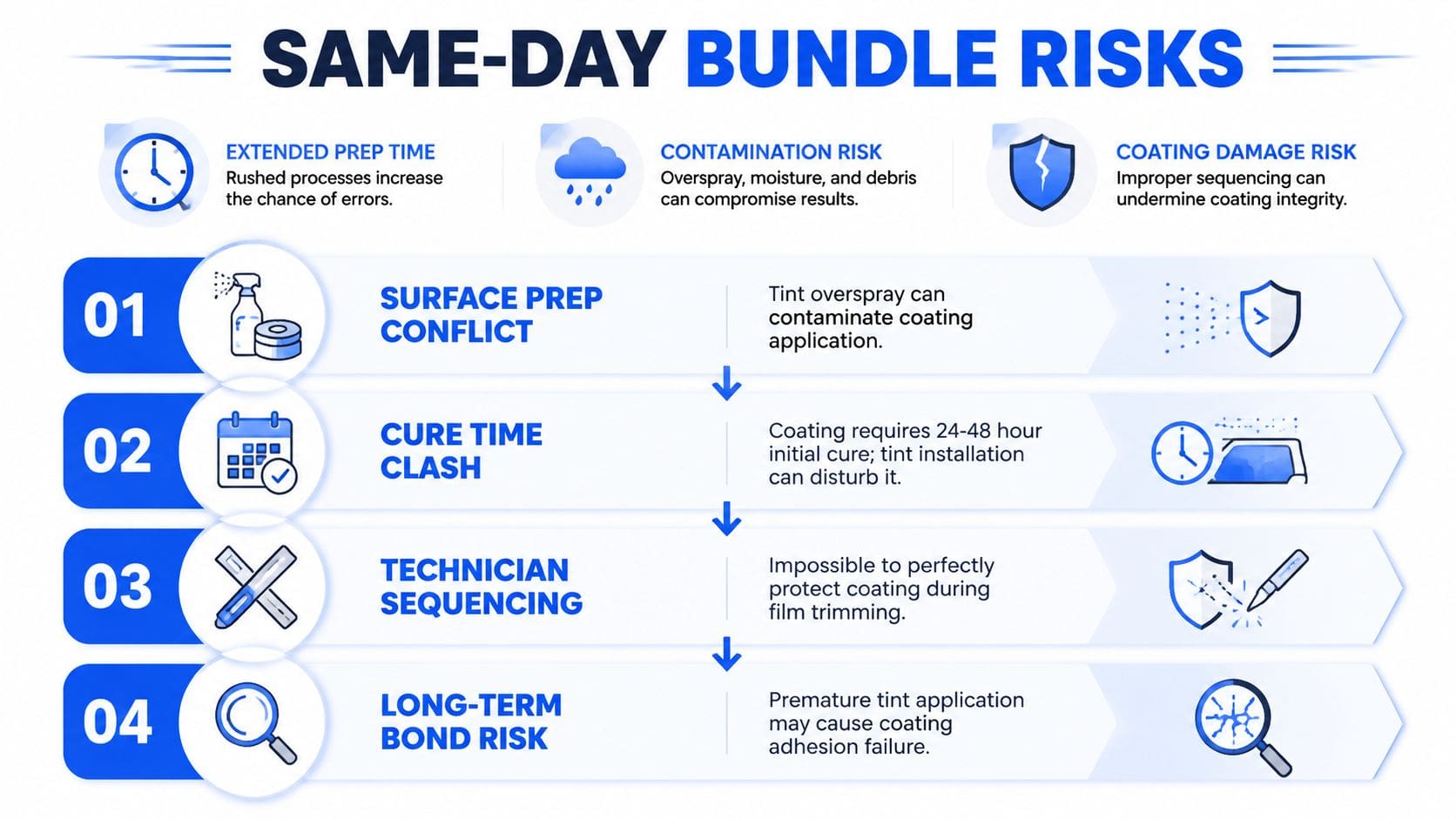
Ceramic coating requires a clean, corrected, residue-free surface. Tint installation involves glass cleaning, film handling, water solution, trimming, and careful work around the doors. If technicians move between jobs without controlling dust, moisture, tools, and contact points, the freshly prepared paint can be contaminated before the coating bonds.
Paint correction also takes as long as the finish requires. A new vehicle may need only light polishing. A used black SUV with washing marks may need considerably more work. Compressing both services into one calendar slot can encourage a shop to reduce correction rather than explain that the appointment needs more time.
Cure windows are real
Fresh coating can release solvents as it settles and cures. Poor environmental control can contribute to visual issues such as amine blushing, where the surface develops a cloudy or hazy appearance. The coating may also be vulnerable to unnecessary touching, moisture, or wiping during its early cure period.
Tint film has its own setting period. Installers may need to leave windows partially down, avoid aggressive door-jamb cleaning, or limit handling around freshly installed film. Those practical details can conflict with the customer's expectation that every surface will be fully finished before pickup.
Ask the shop to explain the sequence
Before booking a same-day package, ask:
- Prep time: How much paint correction is included, and what happens if inspection reveals more defects?
- Cure protection: How will the shop keep tint installation from disturbing fresh coating?
- Coverage: Which painted panels, trim pieces, glass areas, and windows are included?
- Delivery conditions: Will windows remain down, and what water or washing restrictions apply?
- Warranty responsibility: Which company handles a defect caused by sequencing or cure interference?
The safer position is not “never bundle.” It's “bundle the purchase if both services fit, but let the installer choose the schedule that protects the result.”
How a Properly Sequenced Install Should Run
A good installation starts with the condition of the vehicle, not the customer's preferred pickup time.
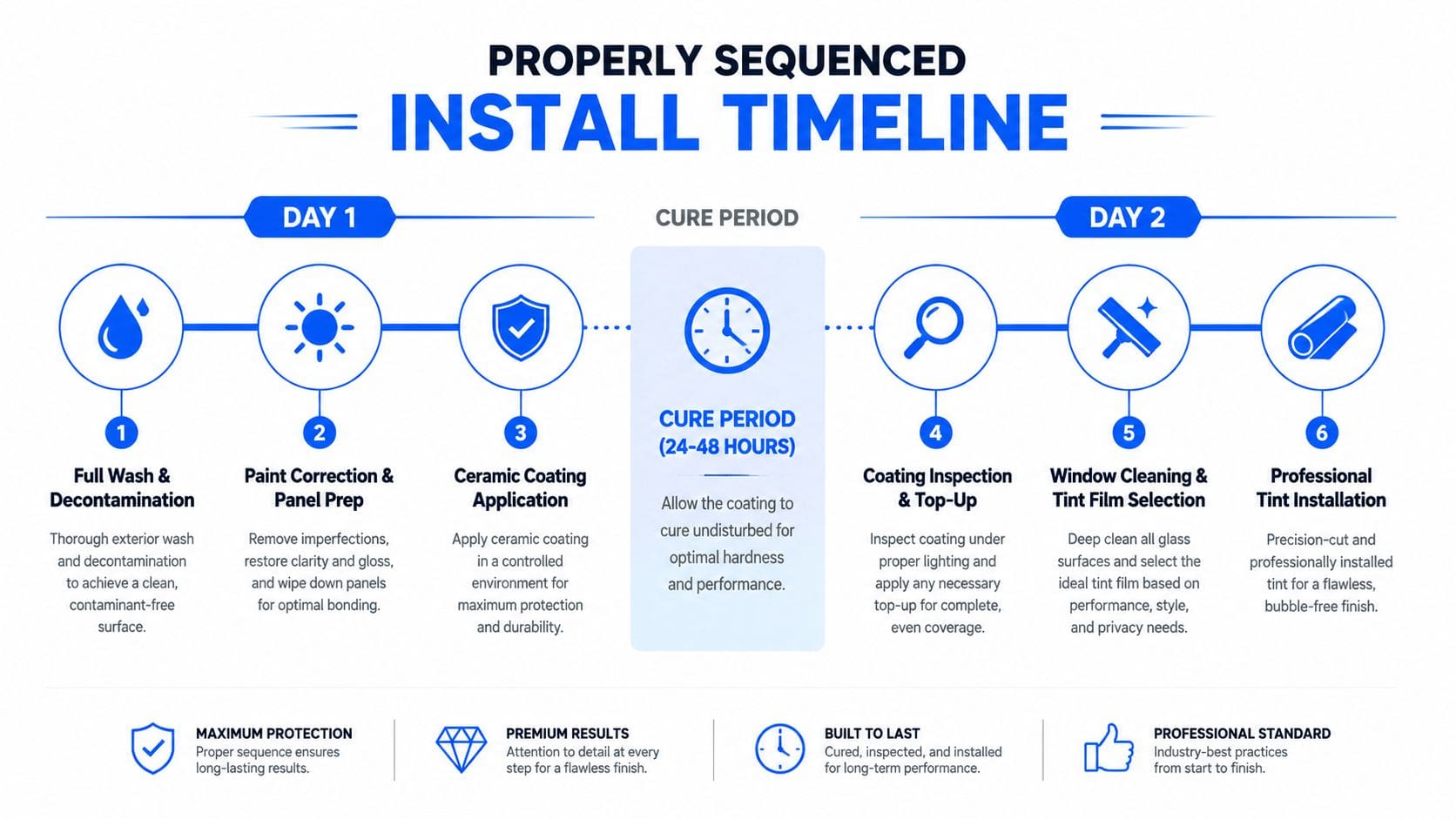
Day one begins with inspection and preparation
The technician should inspect the paint, glass, trim, existing film, scratches, contamination, and previous repairs. That inspection determines whether the vehicle needs a simple enhancement polish or more extensive correction.
The exterior process normally follows this order:
- Wash and decontamination: Remove loose dirt and bonded contamination.
- Paint correction: Refine swirls, haze, and oxidation where appropriate.
- Panel preparation: Remove polishing residue and oils with a suitable solvent wipe.
- Coating application: Apply the ceramic product panel by panel in controlled conditions.
- Inspection: Check flash time, high spots, streaking, and coverage under proper lighting.
- Cure management: Keep the vehicle protected from unnecessary water, dust, and contact.
The exact product instructions control the process. A coating may need an initial cure period of 24 to 48 hours, depending on the product and ambient conditions. That cure range is documented in the provided installation guidance, not a universal rule for every coating.
Tint selection should follow the vehicle and the law
Tint should be chosen by performance and legal visible-light transmission, or VLT, not darkness alone. Ceramic, carbon, and dyed films each offer different combinations of heat rejection, appearance, signal behavior, and cost.
Ohio front-side-window requirements need to be reviewed before installation, particularly if the vehicle already has factory-tinted glass. Windshield film requires its own specification because visibility, placement, and legal limits are different from side and rear glass. Read this plain-language guide to Ohio window tint laws and legal limits before selecting a shade.
The installer should measure existing glass when necessary, explain the selected VLT, identify whether the windshield is included, and provide product information for the film being installed.
Handoff documentation protects both sides
At delivery, you should receive written cure instructions, wash guidance, film-care instructions, product details, warranty terms, and the areas covered. Ask when the first wash is safe, whether the vehicle must remain indoors, and what visual changes are normal while tint settles.
A properly sequenced install might take longer than a rushed same-day package. That's a reasonable trade. The goal is a clean bond, even tint edges, accurate coverage, and a finish that can be maintained without guessing.
Who the Combo Is Actually Built For and What to Do Next
The combination fits some owners extremely well. It's unnecessary for others. I'd use three profiles to make the decision.
The three-to-five-year owner
If you plan to trade the vehicle after 3 to 5 years, buy both when you'll use both during that period. Ceramic coating can keep routine washing more manageable, while quality ceramic tint can improve daily comfort and protect the cabin from UV exposure.
Don't buy the package solely because you expect a guaranteed resale premium. Keep the invoice, film information, coating documents, and maintenance records instead. Those records give a future buyer something concrete to evaluate.
The long-term keeper
If you're keeping the vehicle for 7 to 10 years or driving it past 100,000 miles, the combination becomes more compelling when the vehicle lives outside and sees regular commuting. You'll have more time to benefit from heat reduction, glare control, easier washing, and protection against environmental exposure.
If rock chips are your biggest concern, prioritize ceramic coating services only after considering PPF for high-impact areas. Coating and tint don't replace impact protection.
The driver who hates washing
This owner should think about habits, not promises. Coating is useful when you'll wash with safe methods and maintain the surface. Tint is useful when heat and glare bother you during normal driving. If you don't care about either issue, a package discount won't turn the services into good purchases.
For customers in Hilliard, Dublin, Grove City, Columbus, Powell, or Upper Arlington, the practical next step is an itemized estimate. Ask the shop to separate coating preparation, coating coverage, tint film, tint coverage, legal VLT, cure instructions, warranty terms, and any PPF recommendation.
Lionheart Detailing offers in-shop appointments in Hilliard and mobile service for Columbus-area customers, so you can compare a staged install with a coordinated appointment. Bring the vehicle, your ownership plan, where you park, your daily driving pattern, and the result you want from the tint. That information produces a better recommendation than asking for the darkest film or the cheapest ceramic coating near me.
If you want both services, Lionheart Detailing can review your paint, glass, parking habits, and ownership timeline before recommending a package or separate appointments. Visit Lionheart Detailing for professional ceramic coating, window tint, PPF, or full detailing service in Hilliard and the greater Columbus area.