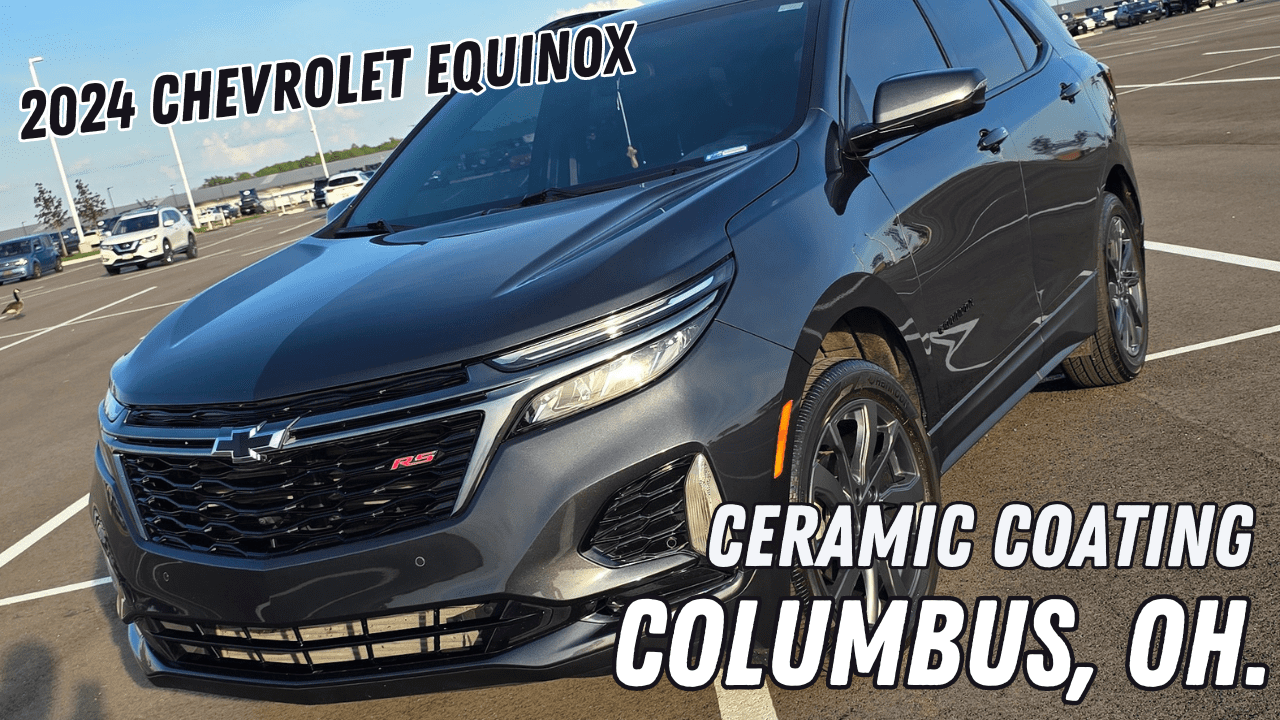
You wash a black Tesla, truck, or sedan on Saturday morning, dry it carefully, and enjoy the deep gloss for a few hours. By Sunday afternoon, dust has settled across the hood, water spots stand out on the doors, and sunlight reveals swirl marks you didn't notice under the garage lights. That's the everyday frustration behind the search for the best ceramic coating for black cars, trucks, and Teslas in Columbus.
The coating itself matters, but it isn't the first decision. On black paint, prep quality, paint correction, installation conditions, and maintenance habits determine whether the finished vehicle looks refined or has a glossy layer over existing defects. A coating can make washing easier and help preserve gloss, but it can't erase scratches that remain underneath.
Table of Contents
- Why Black Vehicles Need Special Protection
- Columbus Climate Challenges for Black Paint
- Paint Correction Before Coating Application
- Understanding Ceramic Coating Performance
- Combining PPF and Ceramic Coating for Maximum Protection
- Maintaining Your Ceramic Coated Black Vehicle
- Getting Professional Ceramic Coating in Columbus
Why Black Vehicles Need Special Protection
Black paint doesn't necessarily collect more dust than a white or silver vehicle. It makes that dust easier to see. The same is true for mineral spotting, dried wash water, pollen, road film, and the fine haze left behind by an automatic car wash.
A black vehicle also exposes poor washing technique quickly. A dirty microfiber towel can drag grit across the clear coat. A brush wash can leave fine circular marring. Even a careful owner can create visible defects by washing in direct sun or allowing water to dry on warm panels. Tesla owners often notice this problem sooner because Tesla paint is widely described in detailing guidance as especially susceptible to visible swirls, with darker colors making careless wiping and wash-induced marring more apparent. This Tesla detailing guidance explains why black Tesla finishes reveal these imperfections so clearly.
Practical rule: Ceramic coating is not a replacement for careful washing. It's a protective surface that rewards careful washing.
A properly installed ceramic coating changes the maintenance equation in two useful ways. First, it creates a chemically resistant surface that helps reduce the way grime bonds to the paint. Second, its water behavior can help rain and rinse water leave the panel more cleanly, reducing the amount of standing water that dries into visible spots.
That doesn't mean a coated black truck stays clean indefinitely. Construction dust still settles on it. Salt still needs to be removed. Bird contamination can still stain if it sits too long. The realistic result is a vehicle that's easier to clean, more resistant to environmental wear, and easier to keep glossy, provided the owner follows a sensible maintenance routine.
If swirl marks are already bothering you, coating should come after correction rather than before it. A useful starting point is this guide to understanding and removing car paint swirls, especially if you're comparing a coating quote that includes polishing with one that only includes washing and application.
Columbus Climate Challenges for Black Paint
Columbus gives black paint a demanding mix of exposure. Local weather information reports approximately 2,074 to 2,185 sunshine hours per year, with peak monthly sunshine reaching about 258 to 261 hours in June and July. The same local source reports a summer ultraviolet index that rises to 9, a very high level of UV exposure. The Columbus climate data provides the local sunshine and UV context.
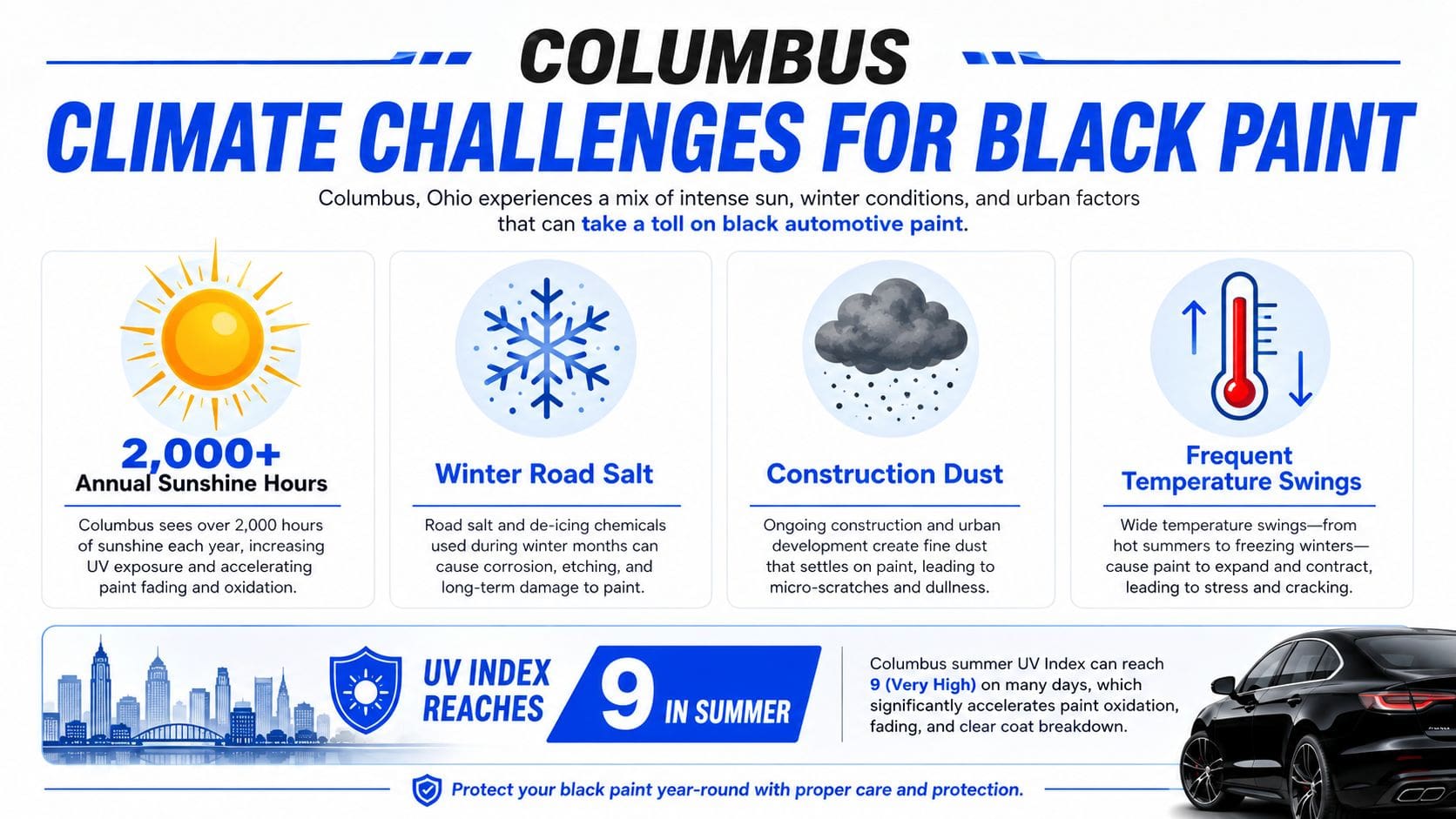
Dark paint absorbs more solar energy than lighter finishes, so heat and sunlight make existing haze, oxidation, and wash marks easier to notice. UV exposure also places long-term stress on clear coat, exterior trim, and interior materials. A ceramic coating doesn't stop every form of aging, but it adds a protective layer between the finish and many environmental contaminants.
The Columbus contaminants that matter most
Winter brings road salt and grime into the equation. Salt residue can remain in seams, behind trim, around badges, and along lower body panels. If you leave that film in place, repeated wetting and drying can make the vehicle harder to clean and increase the chance of staining or etching.
Summer creates a different problem. Pollen, construction dust, hot panels, and dried rain can combine into a stubborn film. Columbus drivers moving through active roadwork zones or parking outside during the day often see that contamination accumulate quickly on horizontal surfaces.
Temperature swings add another layer of stress. Panels heat in the sun, cool during evening weather, and then face repeated washing, rain, and road spray. Those cycles make surface cleanliness and regular rinsing more important, particularly for a black truck or Tesla that shows every change in gloss.
A coating works best here as a maintenance and appearance strategy, not as an excuse to skip care. It helps contamination release during washing and supports strong water behavior, but the owner still needs to remove salt, dust, and organic residue before they sit on the finish.
For more local context, review how Columbus weather affects car paint and ceramic coating maintenance.
Paint Correction Before Coating Application
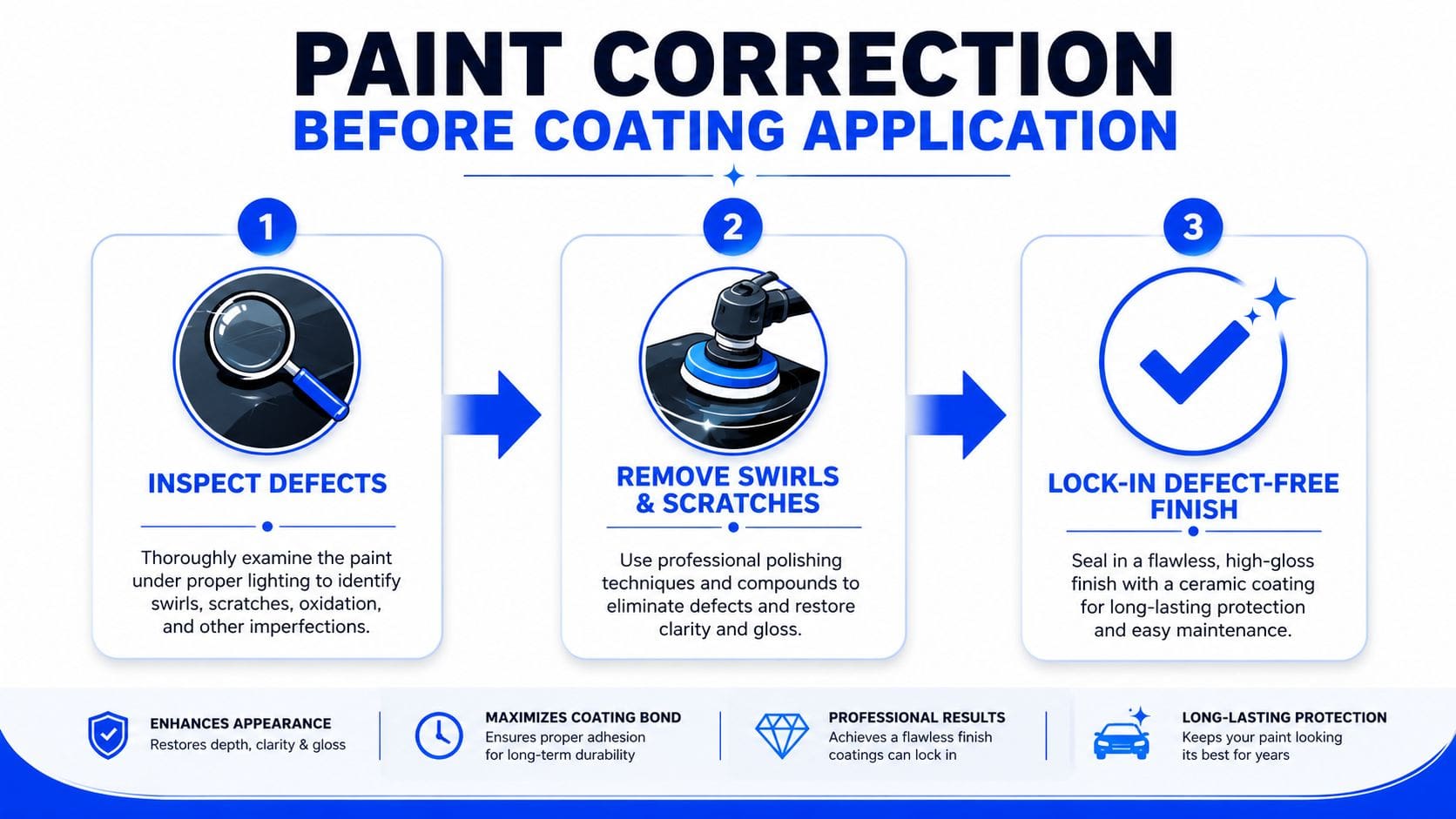
The most important step in coating a black vehicle happens before the coating bottle is opened. Ceramic coating doesn't remove swirls, scratches, oxidation, or haze. If those defects remain, the coating can make the surface look glossier while making the defects easier to see.
A serious installer starts by inspecting the paint under controlled lighting. Outdoor shade alone isn't enough. The technician should examine the hood, roof, trunk, doors, fenders, and previously repaired areas for wash marring, deeper scratches, sanding marks, stains, and uneven clarity.
What professional prep should include
Wash and decontamination: The vehicle needs a thorough wash, followed by removal of bonded contamination such as embedded road film and iron particles. Polishing over contamination can interfere with correction and leave the surface less uniform.
Paint inspection: The installer should identify which defects can be safely improved and which may remain because they're too deep for polishing alone. Honest expectations matter. Not every scratch can be removed without compromising clear coat.
Test polishing: A technician should test a small area with an appropriate pad and compound before choosing a full-vehicle process. Soft Tesla clear coat may respond differently from the harder finish on a truck or luxury sedan.
Correction and refinement: Depending on the condition, the process may involve a single polishing stage or multiple stages. The objective isn't to make the panel shiny. It's to remove or reduce visible marring and refine the finish until the paint has consistent clarity.
Panel wipe and final inspection: Oils from polishing must be removed before application. The paint should be clean, residue-free, and inspected again under appropriate lighting.
The technical literature supports this prep-first workflow, followed by controlled curing. It also places typical coating effectiveness in the 1 to 3 year range, with periodic maintenance washes recommended to preserve hydrophobic performance. The peer-reviewed coating review discusses substrate condition, cure discipline, durability expectations, and maintenance.
This embedded video can help a first-time customer understand why correction is a separate service rather than a hidden feature of the coating itself.
Before approving an estimate, ask whether correction is included, what level of defect removal is realistic, and how the shop verifies the finish before coating. This explanation of professional car paint correction gives useful background for comparing packages.
Understanding Ceramic Coating Performance
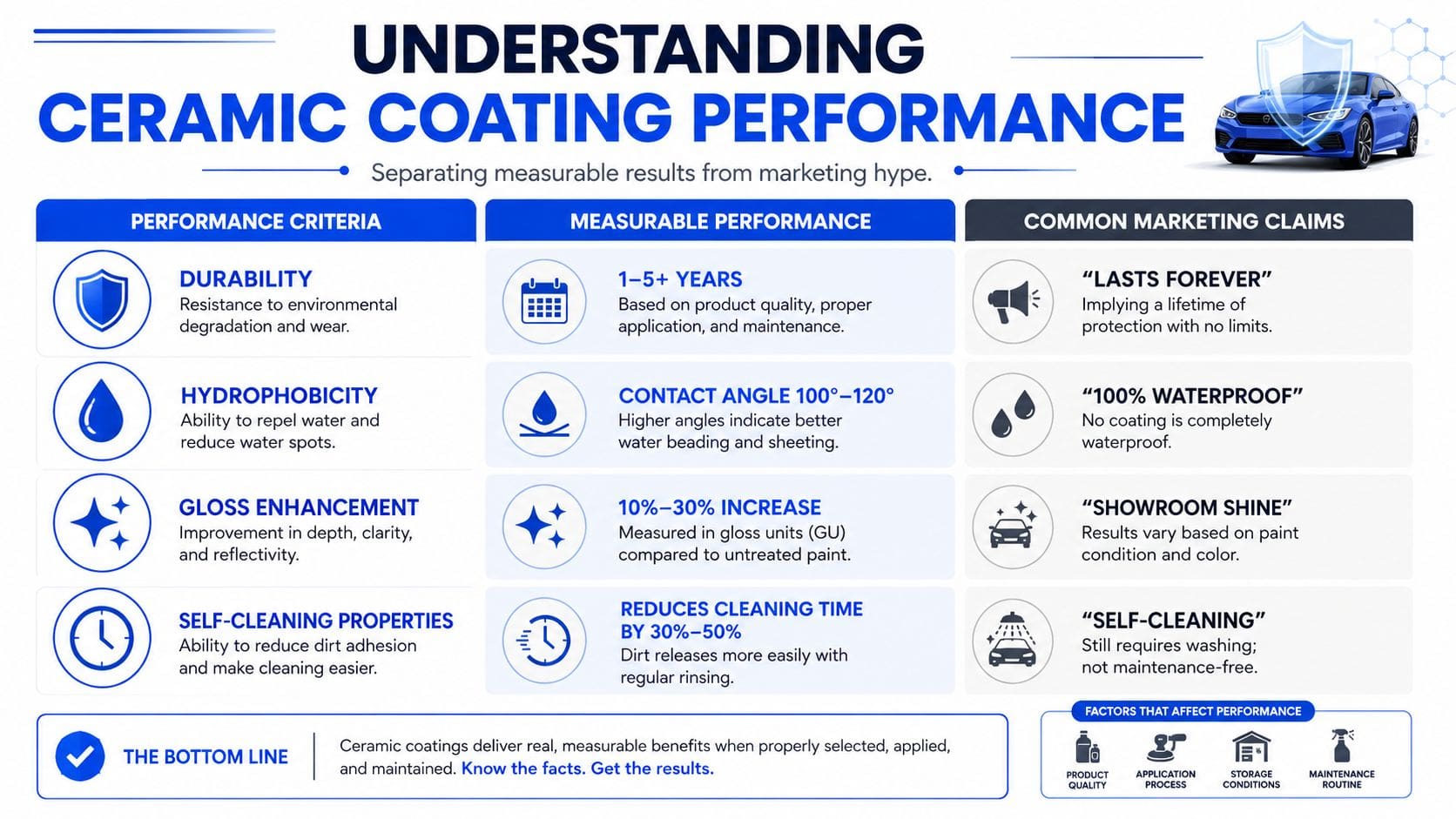
A coating should be evaluated by more than the first impression under showroom lighting. The useful questions are: How does it behave with water? How well does it release contamination? How does it hold up through washing and exposure? What preparation supports the application?
Surface wettability provides one measurable way to compare performance. A review of automotive coating materials explains that a surface with a water contact angle above 90 degrees is considered hydrophobic, while superhydrophobic coatings can exceed 150 degrees. Strong beading can help water roll off and reduce visible spotting, which is especially valuable on black paint. The automotive coating review explains these contact-angle thresholds and their practical meaning.
What to compare in a coating quote
| Performance area | What it means for your vehicle |
|---|---|
| Hydrophobic behavior | Water should bead and release more readily after proper washing. |
| Contamination release | Dirt and road film should require less aggressive cleaning. |
| Gloss and clarity | The coating should preserve the corrected appearance rather than hide defects. |
| Durability | The result depends on preparation, application, curing, and maintenance, not just the product label. |
Independent coating research has reported best-performing superhydrophobic ceramic surfaces reaching water contact angles around 163 degrees with roll-off angles near 6 degrees. Other ceramic systems retained superhydrophobicity after 300 abrasion cycles and maintained corrosion resistance in severe salt and acid exposure. The independent ceramic-coating research provides those performance benchmarks.
Those laboratory results are useful benchmarks, but they aren't a promise that every finished vehicle will perform the same way. Abrasion, poor prep, harsh washing, and neglected maintenance can reduce water behavior. A coating that beads beautifully on delivery day may need professional inspection later if the surface becomes contaminated or mechanically worn.
A separate peer-reviewed study found that a silica-polymer superhydrophobic coating retained superhydrophobicity after 175 hours of UV exposure and withstood strong acids, strong bases, knife scraping, hand kneading, and 100 cycles of tape peeling. The materials study details those durability tests. For a customer, the takeaway is simple: ask about measurable performance and maintenance requirements, not just a dramatic warranty phrase.
Combining PPF and Ceramic Coating for Maximum Protection
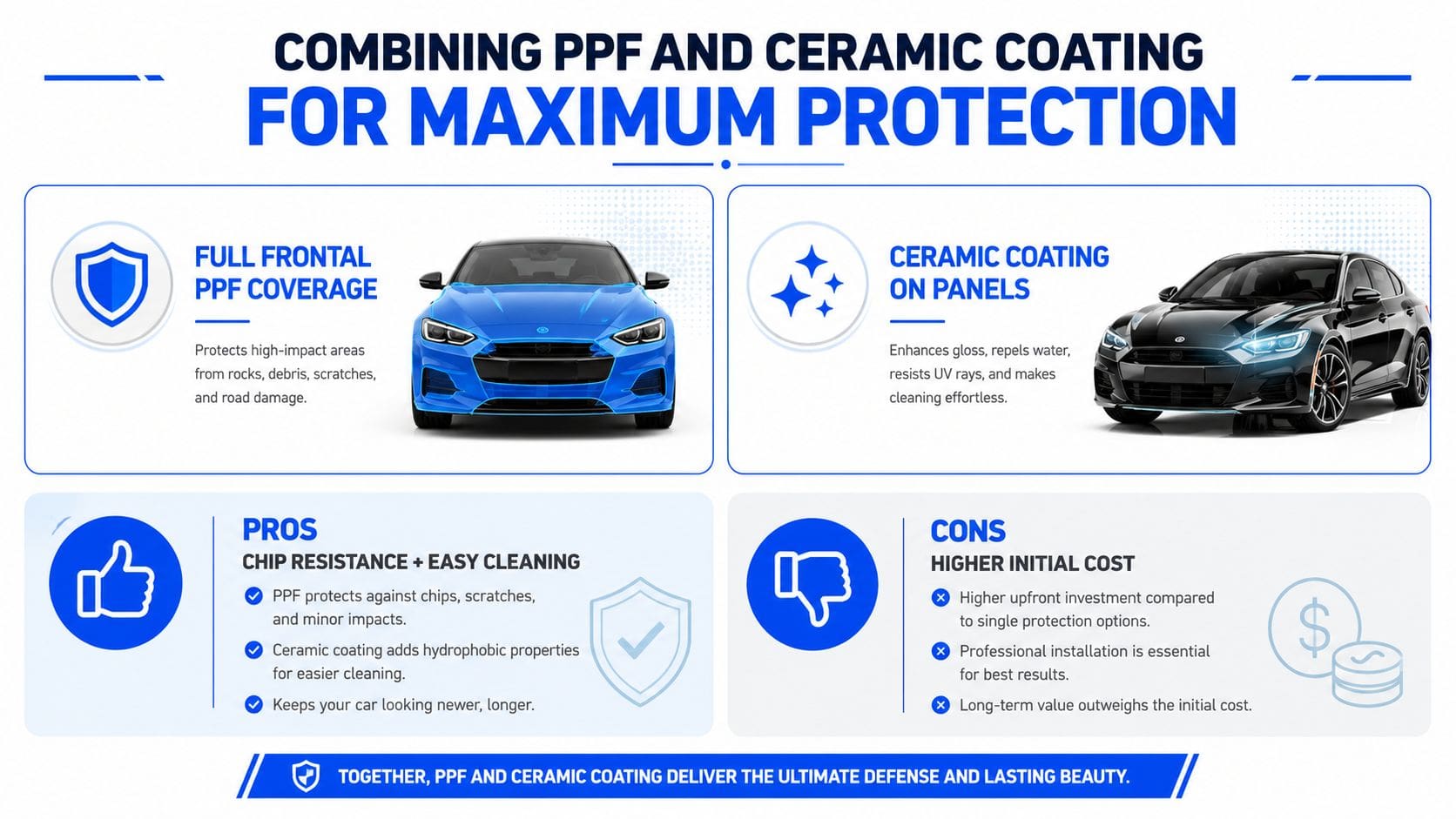
Ceramic coating and paint protection film solve different problems. A coating is excellent for chemical resistance, UV exposure, gloss retention, water behavior, and easier washing. PPF is the more appropriate material when the primary concern is physical impact, such as rock chips, road debris, and abrasion.
That distinction matters for black trucks and Teslas that spend time on highways, near construction, or on roads carrying winter debris. The front bumper, leading hood, front fenders, mirror caps, and sometimes rocker areas take the most direct abuse. Black paint makes the resulting chips and touch-up mismatches particularly noticeable.
How the hybrid approach works
A practical hybrid package usually places PPF on high-impact panels and ceramic coating on the remaining painted surfaces. The coating can also be applied over compatible PPF, which gives the film a slicker surface and can make cleaning easier, subject to the film and coating manufacturer's requirements.
For a Tesla, the choice often depends on how much highway driving the vehicle sees and whether the owner wants to prioritize front-end preservation. For a truck, the decision may include the hood, grille surround, fenders, mirrors, and lower sections exposed to gravel or road spray. A daily commuter that stays mostly on city streets may need less film than a vehicle regularly traveling through construction corridors.
A coating helps you maintain the finish. PPF helps defend the finish from impacts.
Paint protection film is not invulnerable, and ceramic coating isn't impact armor. Technical literature defines impact resistance by a coating system's ability to withstand a heavy blow without cracking, wrinkling, or peeling. That definition helps explain why PPF remains the better choice for chip prevention and direct abrasion concerns. This technical discussion of impact and abrasion resistance clarifies the coating-versus-film distinction.
If you're comparing Columbus PPF with a full ceramic package, don't treat the decision as all or nothing. The right question is which panels face impact and which panels mainly need easier cleaning, UV support, and gloss preservation. You can review paint protection film options before deciding whether a hybrid installation fits your driving pattern.
Maintaining Your Ceramic Coated Black Vehicle
A ceramic coating reduces maintenance effort, but it doesn't eliminate maintenance. Black paint still shows dust and spotting, and neglected contamination can still become difficult to remove.
A good routine is gentle, consistent, and boring. That's exactly why it works.
A practical wash method
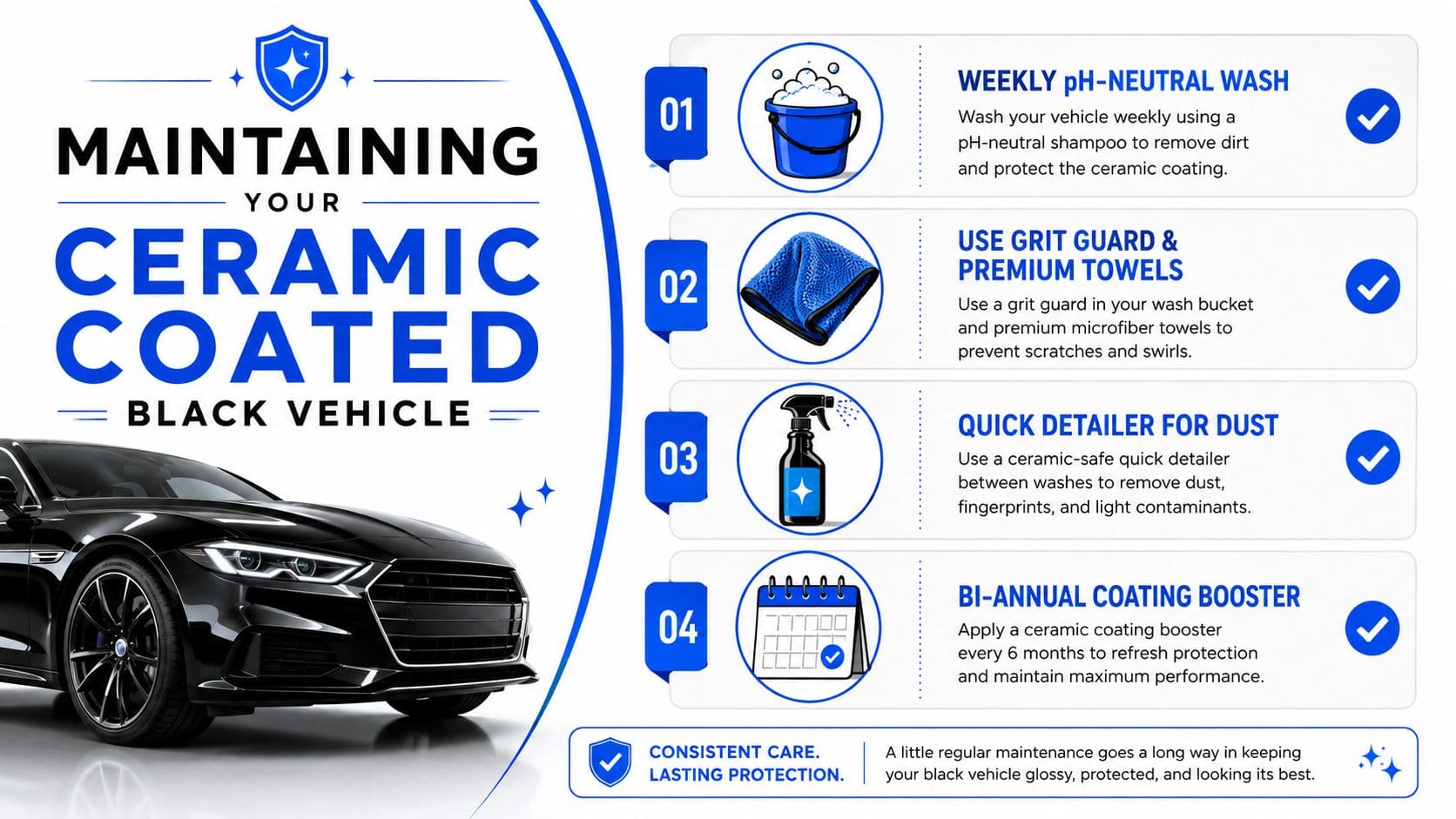
- Choose the right conditions: Wash in shade or during a cooler part of the day. Don't let soap or rinse water dry on hot black panels.
- Rinse first: Remove loose dust and grit before touching the paint with a wash mitt.
- Use separate wash areas: A two-bucket method, with a grit guard where possible, helps keep heavy soil away from the clean wash solution.
- Use pH-neutral soap: Avoid aggressive household cleaners and products that leave heavy residue. A coating-safe shampoo is a better choice.
- Work from clean to dirty: Wash the roof and upper panels before the lower doors, rocker panels, and rear bumper.
- Dry with clean microfiber: Use a dedicated, high-quality towel and gentle pressure. Don't drag a towel across a panel that still has visible grit.
A pressure washer can help with rinsing, but high pressure doesn't replace technique. Automatic brush washes are a common source of new marring, especially on soft or dark finishes. Touchless washes are less mechanically aggressive, but they may rely on stronger chemicals, so they're best treated as an occasional convenience rather than the complete maintenance plan.
Seasonal adjustments in Columbus
Remove winter salt and road film promptly instead of waiting for a full detail. During pollen and construction season, rinse loose dust away before wiping. If water behavior changes noticeably, don't immediately assume the coating has failed. Embedded contamination can mask hydrophobic performance, and a professional decontamination wash may restore the surface response.
Maintenance sprays and coating boosters can be useful when they're approved for the installed system. Don't layer random waxes, abrasive polishes, or household products over the coating without checking compatibility. If the surface develops spotting that a normal wash won't remove, schedule an inspection rather than scrubbing harder.
Getting Professional Ceramic Coating in Columbus
A fair ceramic-coating comparison starts with the process, not the brand name. Two shops may use reputable products but deliver different results because one spends time correcting and preparing the paint while the other moves directly from a basic wash to application.
Ask these questions before booking:
- What prep is included: Does the quote include chemical decontamination, mechanical decontamination, polishing, and panel prep?
- What correction is realistic: Will the shop inspect the paint and explain which defects can be improved?
- How is curing controlled: Is the vehicle kept in a clean, controlled environment during the initial cure?
- What maintenance is required: Will you receive washing guidance and recommendations for future inspections?
- What does the warranty cover: Does it address the coating material, installation, or both, and what owner maintenance is required?
A low price can be reasonable if the vehicle is new and the paint needs minimal correction. It can also be misleading if the package excludes the preparation a black vehicle needs. Compare quotes line by line. A coating applied over visible swirls may cost less at the start but leave you paying for correction later, followed by another coating application.
Red flags worth taking seriously
Be cautious if a shop promises that coating will hide scratches, guarantees permanent protection, refuses to discuss prep, or can't explain what happens after application. Be equally cautious if the installer describes PPF as unnecessary for a truck or Tesla that regularly faces rock debris. Honest recommendations should match the vehicle's use, not push the largest package.
The best Hilliard ceramic coating appointment begins with an inspection. Bring the vehicle in reasonably empty, disclose previous repairs or aftermarket products, and explain how you drive and store it. A black daily driver in Hilliard, Dublin, Powell, Upper Arlington, or elsewhere around Columbus may need a different plan from a weekend vehicle kept indoors.
Lionheart Detailing offers ceramic coating, multi-stage paint correction, PPF, detailing, and related protection services through its Hilliard shop and mobile operation. Its service area includes Columbus and surrounding communities, so customers can discuss whether a coating, PPF, hybrid package, or correction-first detail fits the vehicle.
Lionheart Detailing can inspect your black car, truck, or Tesla, explain the preparation it needs, and recommend ceramic coating, PPF, or correction based on how you drive it. Visit Lionheart Detailing to request professional service in Hilliard and greater Columbus, or ask about mobile detailing for your home or workplace.