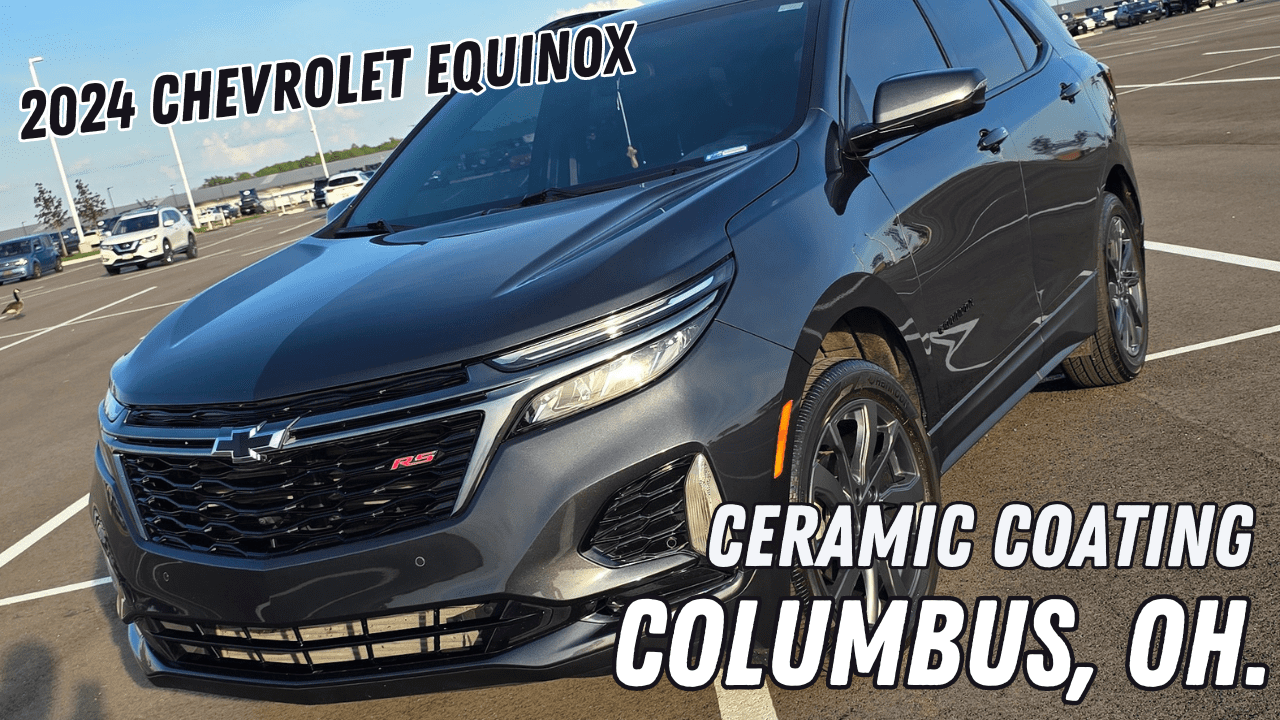
You're standing at the point where a new car, or a freshly corrected daily driver, still looks too good to gamble with. The first winter commute hits, a dump truck sends grit across the lane, and suddenly the question isn't whether to protect the paint, it's how much of the front end needs protection to stay ahead of Columbus roads.
For most local drivers, full front PPF is the safer middle ground. Partial front keeps the budget lower, but it leaves more of the hood and upper front panels exposed, and that matters in a city where highway debris, construction dust, and winter salt keep working on the same vulnerable surfaces.
Table of Contents
- Understanding PPF Coverage Options
- Comparing Coverage Benefits and Costs
- Weighing Seasonal and Local Considerations
- Assessing Aesthetic Impact and Resale Value
- Choosing the Right PPF Package for Your Driving Habits
- Installation and Aftercare Tips by Lionheart Detailing
Understanding PPF Coverage Options
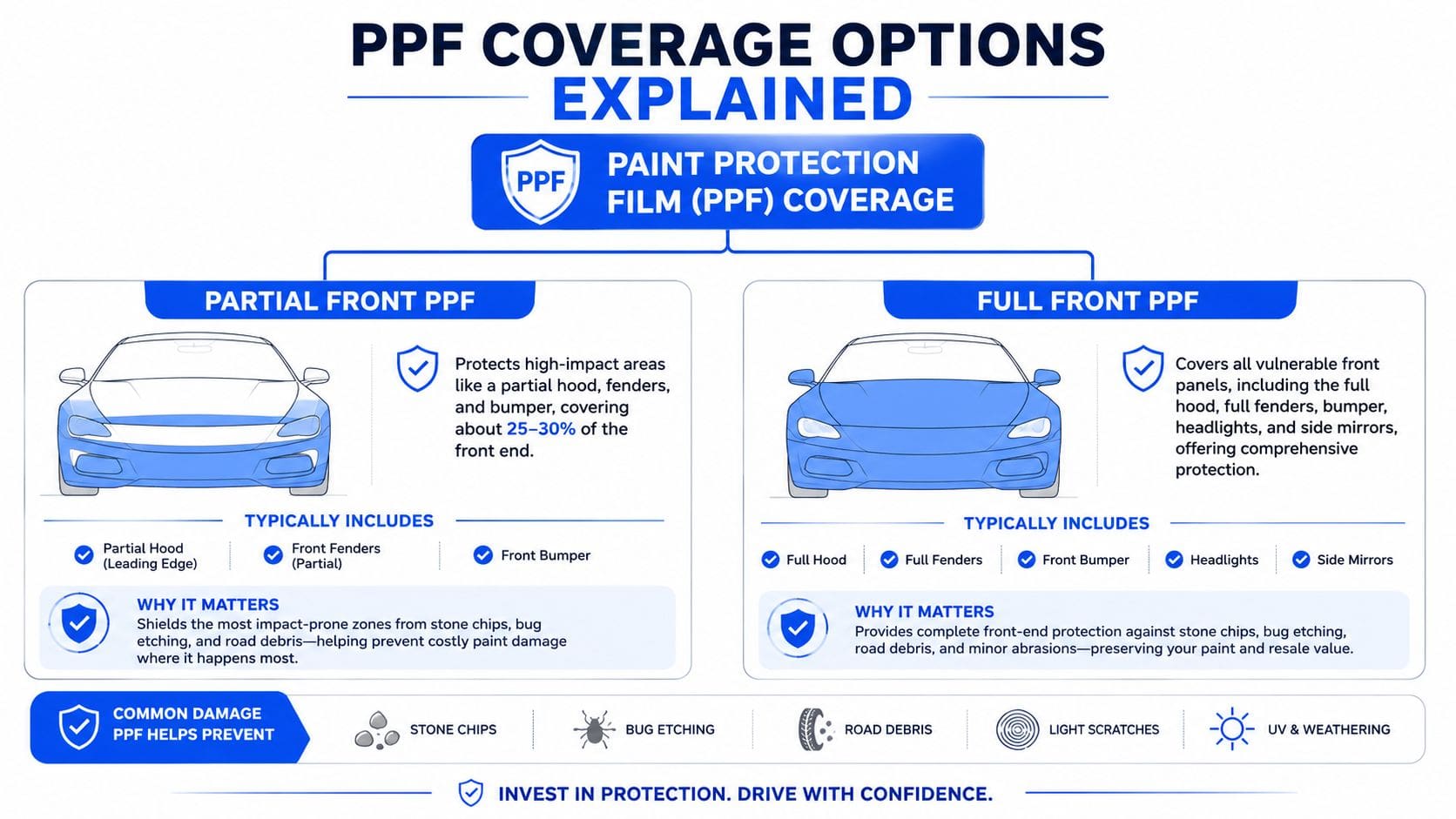
A good first step is to picture the front of the car as a set of impact zones. PPF coverage usually comes down to whether you want to protect only the highest-hit areas or extend protection across the entire front section. Independent coverage guides describe a partial front as covering the front bumper, partial hood, partial fenders, and often mirror caps, while the full front version extends across the entire hood and full fenders as outlined by Garage Slick.
What partial front usually covers
Partial-front kits concentrate on the panels that take the first hits. That usually means the bumper, the leading edge of the hood, part of the fenders, and sometimes mirror caps.
Practical rule: partial front works best when the car spends most of its time in slower city traffic and the owner mainly wants to blunt the first wave of abuse.
That smaller layout is also why partial-front quotes are easier to accept for a lot of drivers. The trade-off is visible. The film stops sooner, so the edge line is more noticeable than it is on a larger coverage package.
What full front usually covers
Full-front packages push the film farther up the hood and out across the full fenders, and many packages also include mirrors and headlights. Independent installers often describe full-front as the middle ground for drivers who want stronger chip protection without going all the way to a full-car wrap as described by Euro Luxe Detailing.
The main difference is simple. More of the painted front section gets protected, and that matters because road debris does not always hit only the lower bumper. It can bounce, lift, and strike the upper panels too.
For Columbus drivers, that matters in a very practical way. Winter grit, road salt, and the mix of city and highway miles can put the hood and fenders in the line of fire sooner than many owners expect. If you are trying to decide how much of that front end is worth wrapping, what areas of your vehicle you should protect with paint protection film gives a useful breakdown of the panels people usually prioritize.
If you are comparing quotes, use the same panel map every time. Ask the shop exactly which parts are included, because “front end” can mean different things from one installer to the next.
Comparing Coverage Benefits and Costs
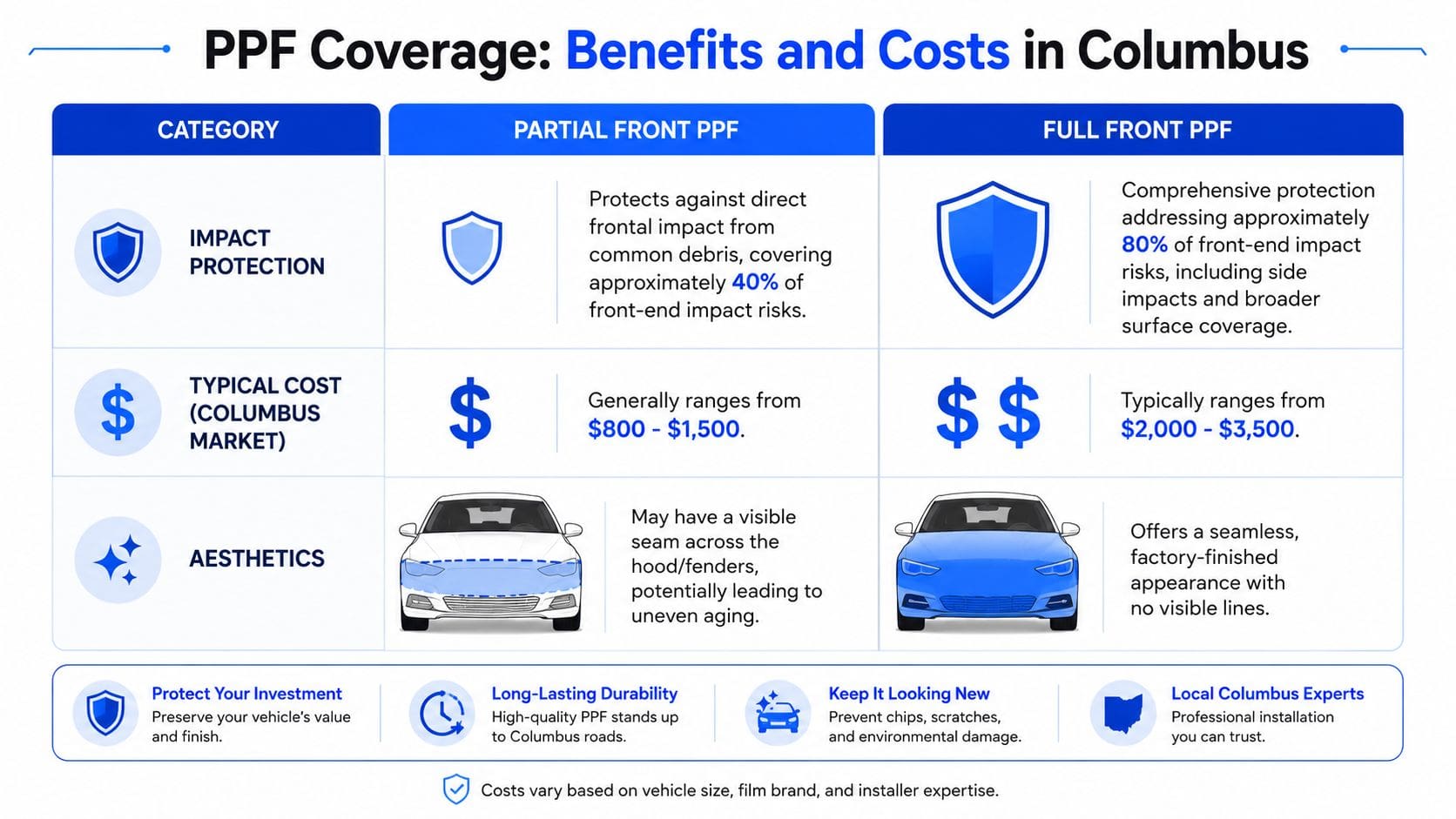
The value gap between partial and full front PPF is easier to judge when you consider the areas each package protects. An independent installer guide says front-end protection addresses about 80% of the damage a car sees in normal driving, while another market guide estimates full-front coverage reaches about 90% of the rock-chip strike zone Upscale Detail Co.. That extra reach matters for drivers who spend time on I-70, I-71, or long suburban runs where loose debris is part of the commute.
The money question
Cost is where many owners pause. Partial-front packages are commonly listed around $600–$1,500, while full-front packages are typically $1,500–$3,500 Upscale Detail Co.. Another pricing guide places partial-front around $500 to $1,500 and full-front around $1,500 to $3,500, depending on vehicle size and included pieces such as headlights Helios Detail.
Bottom line: full front usually costs about twice as much as partial front, but it protects a much broader section of painted metal and plastic.
That price jump still leaves full-front as the more practical value choice for many Columbus drivers. Full-car PPF is a much bigger financial step, with estimates around $4,000–$8,000+, and some setups reaching $6,000–$10,000+ when ceramic coating is added BGI Tint. That is why a lot of shoppers settle on the middle tier instead of going all the way to full coverage.
The protection-to-price trade-off
A partial-front kit gives solid defense where rocks hit first. A full-front kit spreads that defense across the whole nose of the car, including the panels that catch spray, grit, and bounced debris after the first impact.
For Columbus drivers, the decision often comes down to how the car gets used. If you want the lowest-cost way to cut down on chips, partial front does that job. If you want coverage that better matches how front-end damage shows up on real roads, full front usually makes more sense. For a local estimate, Lionheart's page on paint protection film cost is worth checking before you book.
Weighing Seasonal and Local Considerations
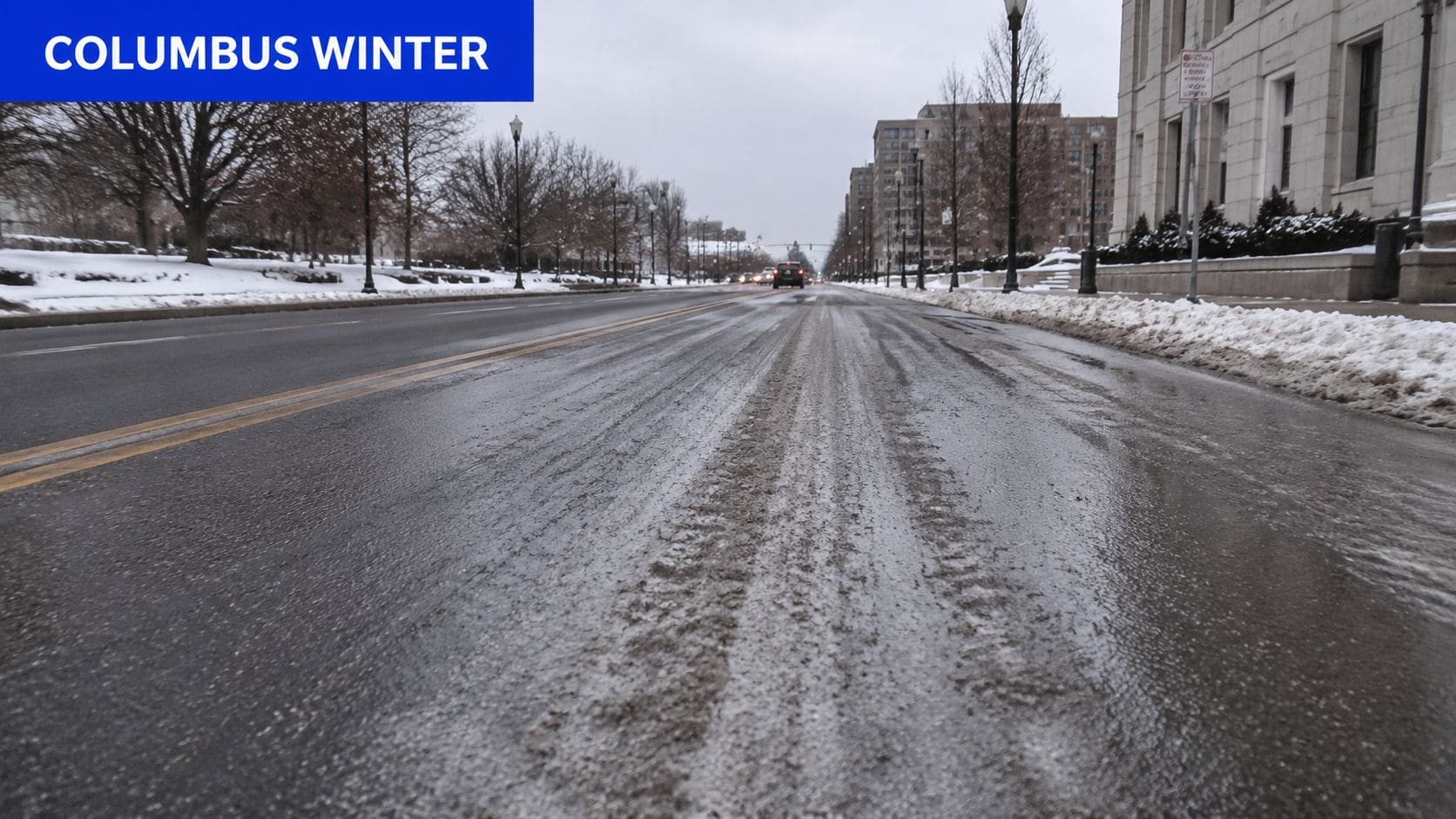
Columbus drivers deal with a mix of highway miles, city streets, winter grit, slush, and construction zones, so the front end takes a beating from more than one direction. Winter roads here spread salt, spray, and dirty slush onto the bumper, hood edge, and lower panels, which raises the chance of chips and staining beyond what a generic PPF chart usually assumes.
Why winter changes the decision
Winter adds more than moisture. It brings fine abrasive contamination that gets pushed up onto the hood, bumper, and fenders, then dries there and gets scrubbed off again during washing. That cycle is hard on exposed paint, especially on cars that see the same roads day after day.
Full-front coverage starts to make more sense in that kind of use. If a driver leaves the car outside, commutes in all seasons, or sees plow residue and slush spray on a regular basis, the broader film coverage helps protect more of the front sheet metal before chips turn into a pattern. Columbus ceramic coating packages can also help with easier cleaning on top of film care.
City miles versus highway miles
A short city commute keeps speeds lower, but it still leaves the nose of the car exposed. Construction dust, tire throw, and traffic close behind you all keep the front end in the line of fire. Highway driving adds a different problem, repeated rock strikes and sudden debris hits that partial-front film can only catch in part.
Some guides steer mostly city-driven cars toward partial-front PPF and push drivers who see more highway debris toward full-front PPF, since the wider layout reaches the hood, fenders, and mirrors. That matches what I see on local cars, because the more time a vehicle spends in Columbus traffic and winter spray, the more useful the extra coverage becomes.
If your car sees both winter commuting and highway runs, full front usually fits the real use case better than the cheaper holdover option.
Partial front still has a place. It gives real chip protection for drivers who want to control cost, and it can be the right call for lower-mileage vehicles that do not spend much time on salted roads. Columbus weather just pushes a lot of owners toward broader coverage sooner, because the front bumper and hood edge take abuse for a larger part of the year.
Assessing Aesthetic Impact and Resale Value
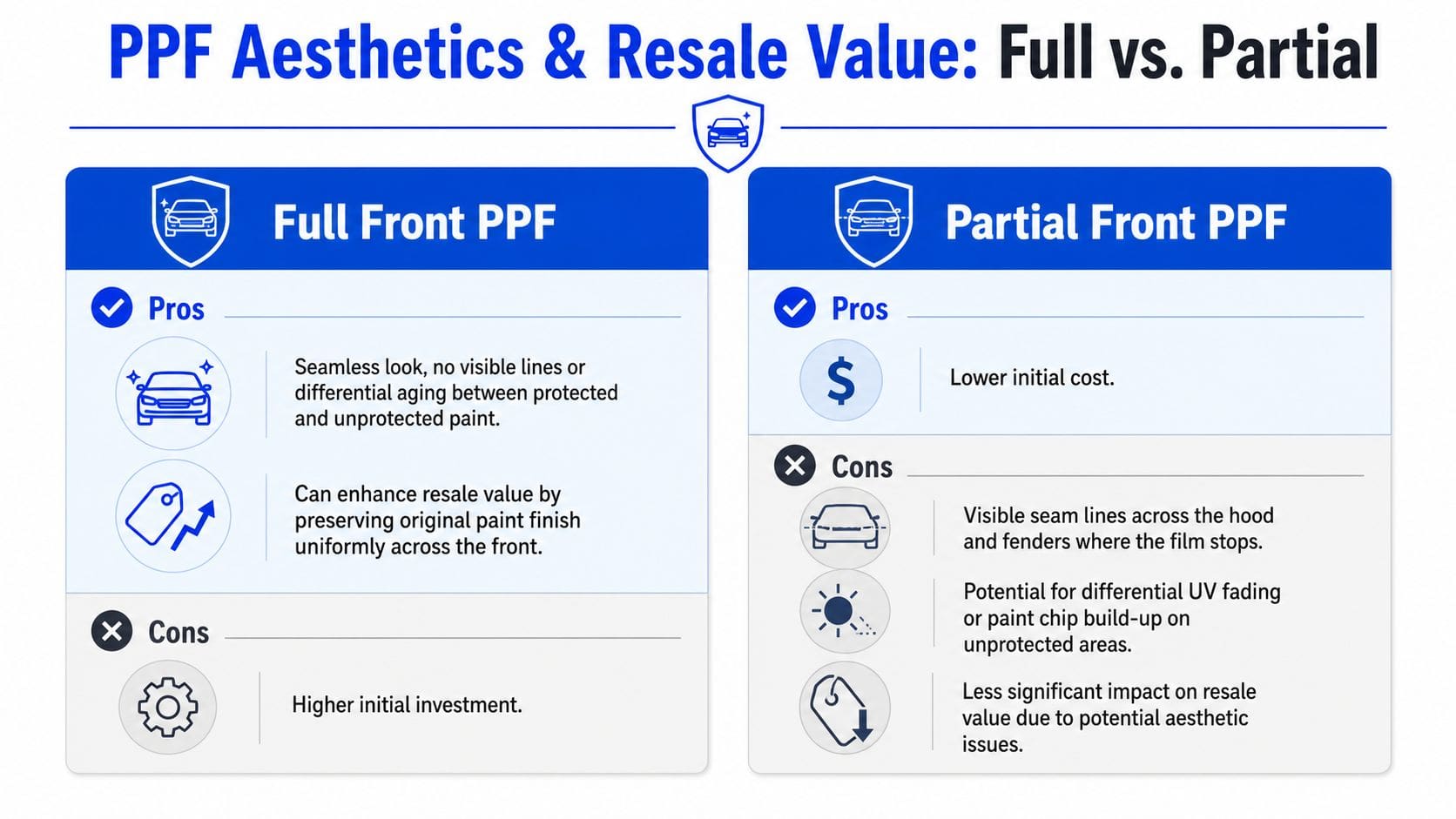
Drivers often start by asking about protection, but the film's look matters just as much after a few years. Full-front packages are explicitly positioned as having a more uniform, factory-like appearance, while partial-front packages leave a visible edge that can affect resale optics after years of use Wraptor. That visible line isn't a technical failure, but buyers notice it, especially on newer or premium vehicles.
Why the seam matters
Partial-front film usually ends somewhere visible on the hood or fender. Over time, that line can make the front of the car look segmented instead of uniformly protected. On dark paint, the edge is even easier to spot.
That matters for owners who keep cars three to five years, because used buyers often respond to presentation before they inspect the details. A cleaner front-end finish helps the car look cared for, even if the buyer doesn't know the technical difference between coverage packages.
Factory look versus obvious protection
Full-front installs are easier to live with visually because the eye doesn't stop at a film edge. The nose of the car reads as one surface, which is what most owners want after paying for a premium protective service.
Partial-front still has a role. If the car is leased, budget-constrained, or already scheduled to rotate out soon, the lower upfront cost can outweigh the appearance trade-off. But for owners who plan to keep the vehicle longer or sell into a more discerning used market, the cleaner finish of full-front tends to age better.
Resale rule of thumb: buyers rarely pay extra for visible film, but they do notice when the front end looks uniformly preserved.
That's why Hilliard auto detailing customers often ask about protection in terms of both appearance and longevity. The front end is the part of the car that tells the story first, and the coverage you choose becomes part of that story.
Choosing the Right PPF Package for Your Driving Habits
The right answer usually comes from your mileage pattern, not from the quote sheet alone. If the car mostly does short, local trips and spends its life in slower traffic, partial-front PPF can still make sense. If the vehicle regularly sees highway debris, long suburban commutes, or year-round road exposure, full-front PPF is the stronger fit.
A simple decision framework
- Choose partial front if the car is mostly a city commuter, the budget is tight, or the ownership window is short.
- Choose full front if you drive highway miles often, keep the car outside, or want a more integrated finish with broader front-end coverage.
- Consider full car later only if the vehicle is a long-term keeper and the paint condition already justifies a much larger investment.
Budget matters, but it shouldn't be the only filter. A cheaper package that leaves the upper hood and full fenders exposed can look like a win on day one and a compromise a year later.
Practical tip: compare quotes panel by panel, not by package name. Two “full front” quotes can differ if one includes headlights and mirror caps while another stops short.
That's especially useful for shoppers searching ceramic coating near me, because many Columbus detailers bundle paint protection decisions into the same consultation. If you're comparing Hilliard paint protection film against a broader exterior package, ask what the car needs based on where it's driven, not just what fits this month's budget.
One last note for owners who plan to sell soon. If the car is in a premium segment, a more invisible install can support a cleaner presentation at trade-in or private sale. That doesn't guarantee a higher offer, but it does remove one more reason for a buyer to negotiate downward.
Installation and Aftercare Tips by Lionheart Detailing
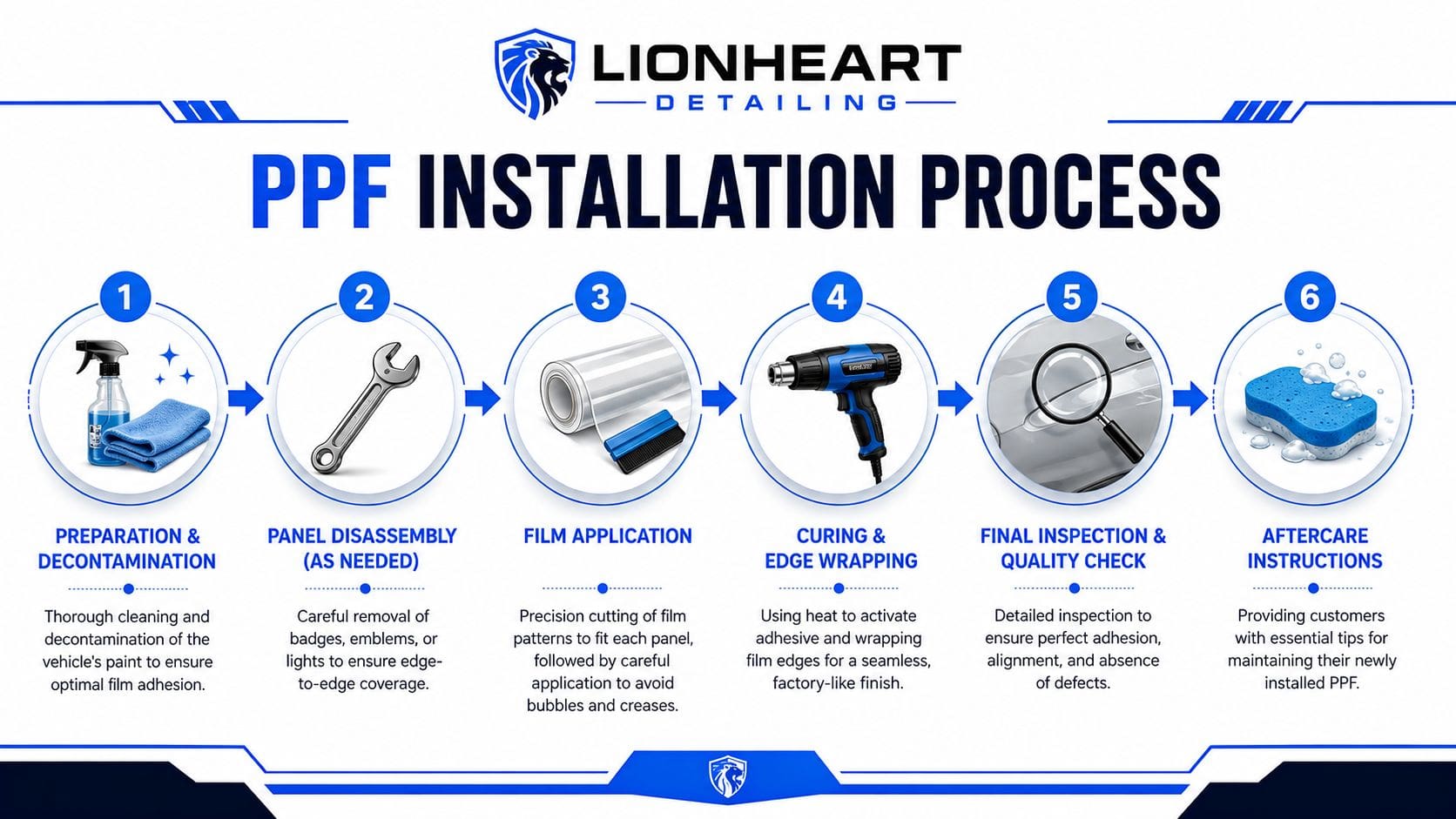
A good PPF install starts long before the film touches the paint. The process should include thorough decontamination, careful panel prep, clean lighting, and enough time for the film to settle without being rushed. In a professional setup, the shop environment matters as much as the film itself, because dust and poor handling can show through the finished result.
What a proper install looks like
A quality installer should prep the paint, remove or loosen badges when needed, lay the film with clean alignment, and finish the edges so the install looks intentional rather than slapped on. That's the point where experience shows up. Clean edges, correct tension, and consistent wrap quality matter more than any sales pitch.
The same thinking applies after the film is on the car. Wash gently, avoid aggressive brushes, and don't attack the edges with high-pressure blasting right away. Film needs time to settle, and the less it's stressed early on, the better it holds up over time.
Aftercare that actually helps
- Use a safe wash method: hand washing is the least risky option for fresh film.
- Keep chemicals mild: avoid harsh cleaners that aren't meant for PPF.
- Watch the edges: lifted corners should be addressed quickly before they worsen.
- Clean seasonal buildup: winter grime and salt deserve prompt removal, not a delayed wash schedule.
For film-safe maintenance products, Lionheart's paint protection film cleaner is a practical place to start. It's a simple reminder that the film is there to reduce damage, not eliminate the need for proper care.
If you want an installer who can handle the job in the shop or through a mobile appointment, Lionheart Detailing serves the Columbus area from its Hilliard base at 4402 Weaver Court North, Suite 204. For drivers who want a cleaner front end, less hassle, and protection matched to real Columbus roads, reach out to Lionheart Detailing and ask about paint protection film, ceramic coating services, or a full detail that fits how you drive.