You notice it on an ordinary day. You park at the grocery store, come back with your coffee, and there it is, a fresh ding in the door or a small crease you swear wasn't there an hour ago. If you're searching for paintless dent repair near me, you're usually not looking for a lecture, you're looking for one honest answer, can this be fixed without turning the whole panel into a body shop project?
For most Columbus and Hilliard drivers, that's exactly why paintless dent repair has become the first call. It keeps the factory finish intact, avoids the sanding and repainting you'd get from conventional body work, and often handles the kind of everyday damage people deal with, parking-lot dings, door impacts, and smaller hail marks (Capital One). The decision isn't just “what is PDR,” it's whether your dent is a good candidate, whether the quote is fair, and whether the technician has the access and skill to do it right.
Table of Contents
- Finding That New Dent in Your Parking Lot
- What Paintless Dent Repair Is
- When Paintless Dent Repair Is the Right Call
- How the PDR Process Works Step by Step
- What Drives PDR Pricing Near You
- Paintless Dent Repair vs Traditional Repair
- Why Columbus Drivers Choose Lionheart Detailing
Finding That New Dent in Your Parking Lot
You don't need a major collision to end up with body damage. One shopping cart nudge, one careless door swing, one tight parking space after work, and the clean side of your car suddenly has a problem you can't unsee. That's usually the moment people start comparing options, because nobody wants to overpay for something that looks small, but nobody wants to ignore damage on a vehicle they care about either.
What most drivers are really weighing
At the counter, the conversation usually comes down to three concerns. First, can it be fixed without repainting? Second, is the quote fair for what looks like a small dent? Third, will the repair keep the original finish looking right? Those are the right questions, because paintless dent repair exists for exactly that middle ground, the damage that's annoying enough to fix, but not so severe that the panel has to be sanded, filled, and refinished.
A good PDR estimate starts with the dent itself, not with a generic price sheet.
For Columbus drivers, that matters because local parking-lot damage, daily commuter wear, and small hail events are the kinds of repairs PDR handles best. The method became a standard alternative to repainting because it preserves the original finish while cutting cost and turnaround compared with traditional body-shop work (Capital One). If you're comparing Columbus ceramic coating, Hilliard auto detailing, or even Columbus PPF services later on, the same mindset applies, you want the option that protects the vehicle you already own, not just the one that's easiest to sell you.
What Paintless Dent Repair Is
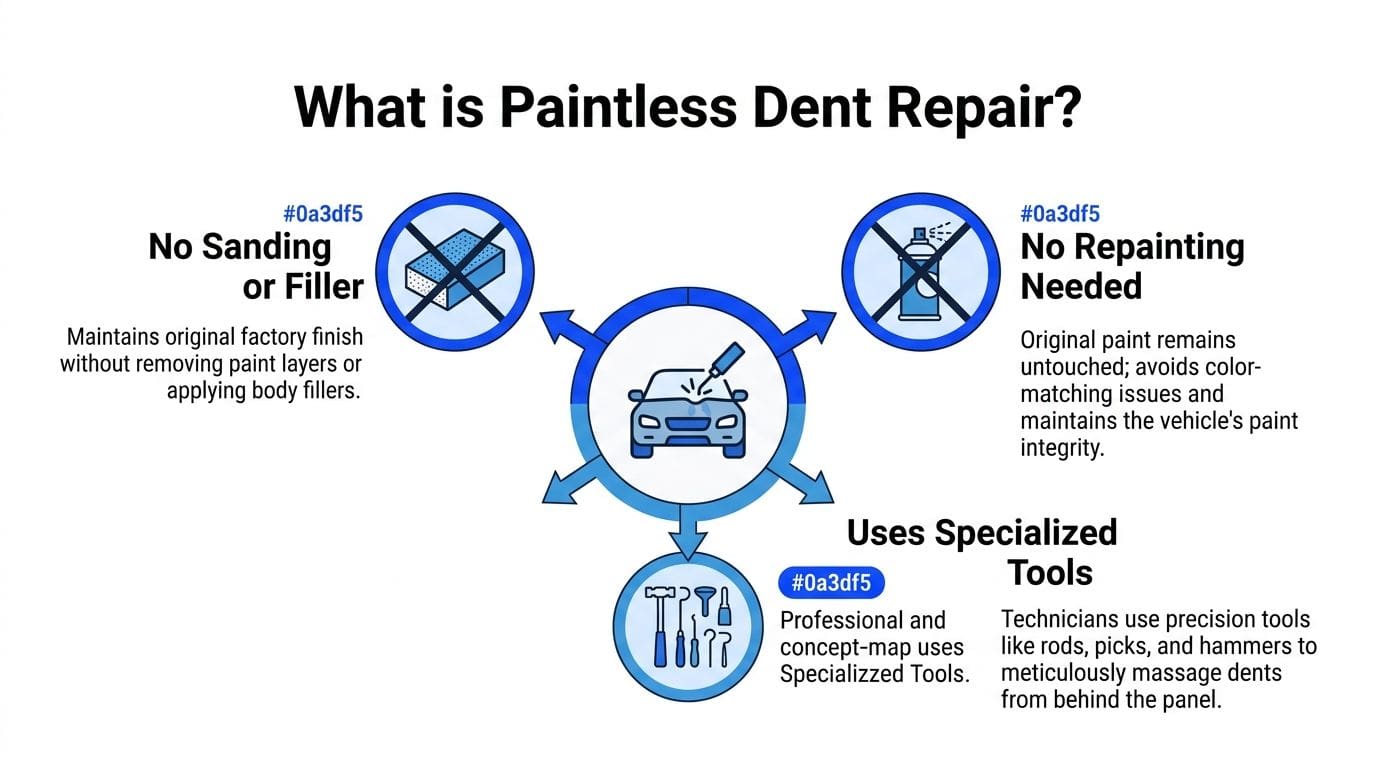
PDR sounds technical until you break it down. Paintless dent repair is a method for reshaping dented metal without sanding, body filler, or repainting, as long as the original paint is still intact (autobodyshopnear.com). That paint condition is the dividing line. If the finish is intact, the technician can work the panel back into shape without turning a small dent into a refinishing job.
How the Metal Is Moved
Technicians use specialized rods, picks, and body bars to apply controlled pressure from behind the panel (Car-O-Liner). The goal is not to pound the dent out. The metal is slowly brought back to its original contour so the surface reads correctly under light again. When the back side is reachable, the repair stays focused on the damaged area instead of spreading work across the whole panel.
Why Factory Paint Matters
Factory paint has an advantage that is hard to replace. Once a panel is sanded and refinished, the car no longer wears the original surface it left the assembly line with. That does not automatically make the repair poor, but it changes the process and the trade-offs. PDR is a strong fit for newer cars and clean finishes because it protects the finish that is already there.
A simple breakdown helps:
- Dent in the metal, the panel is reshaped.
- Paint stays intact, so there is no color match issue.
- No filler is needed, because the goal is to restore the original contour.
- The repair stays targeted, which usually means less downtime than a conventional body process.
If the paint is broken, PDR stops being the right tool. Honesty at that point saves everyone time.
That is the practical difference between PDR and a typical body shop repair. If you are trying to protect a newer daily driver, a leased vehicle, or a car you plan to keep clean long-term, the appeal is obvious. The same preserve-the-original-surface logic also applies when comparing paint protection film pros and cons, because the goal there is also to keep the finish intact instead of rebuilding it later.
When Paintless Dent Repair Is the Right Call
A fresh dent on a clean panel usually brings the same question, can this be fixed without paint, filler, or a full body shop visit? The answer depends on how the damage sits in the metal, whether the finish is still intact, and whether a technician can reach the back side of the panel. Those are the details that decide if PDR is a smart repair or a poor fit.
The three checks that matter most
Start with paint condition. If the clear coat is cracked or the paint has flaked off, PDR is the wrong tool because the process depends on an intact finish that can be worked back without refinishing.
Next is access from behind. PDR works best when a technician can get behind the dent with rods, picks, or body bars and make controlled pushes at the right spot. If the rear of the panel is blocked, the shop may need to remove trim, door panels, headlamps, or tail lamps just to create a working path, and that changes both the repair options and the labor involved.
Then look at dent shape. Rounded, shallow damage is far easier to correct than a sharp fold. Deep impact dents, creases across body lines, and damage on aluminum panels can still be repairable in some cases, but they are much less forgiving and usually take more judgment to price correctly.
A small dent in the wrong place can be harder than a larger one in an open area. A body-line hit may leave the metal looking minor at first glance, then show how much tension is trapped in the panel once light hits it from the side.
The easiest way to waste money is to push the wrong repair method onto the wrong dent.
That same practical judgment matters when you are comparing other appearance work too. If you are weighing protection options, our guide on choosing the best PPF installer in Columbus, Ohio follows the same shop-floor logic, look at access, process, and attention to detail before you look at the price tag. The same preserve-the-original-surface idea also comes up in paint protection film pros and cons, since the goal there is to protect the finish instead of rebuilding it later.
A simple rule of thumb helps at the shop counter:
- Good PDR candidate, paint is intact, dent is shallow, backside access is possible.
- Borderline candidate, deeper dent, body-line damage, aluminum panel, or limited access.
- Poor candidate, cracked paint, heavy stretching, or damage that needs refinishing anyway.
That is the honest filter. It keeps expectations grounded, helps you compare quotes on equal terms, and stops you from paying for a repair method that cannot deliver the result you want.
How the PDR Process Works Step by Step
A good PDR repair starts before a technician touches the panel. Clear photos give a shop enough detail to judge whether the dent is worth repairing without paint, and they also help avoid quotes that look fine on paper but do not fit the damage. A mobile provider usually wants a close-up, a side angle, and a wider shot of the panel so dent depth, access, and size can be checked with less guesswork (Modern Dent Solutions).
From estimate to repair
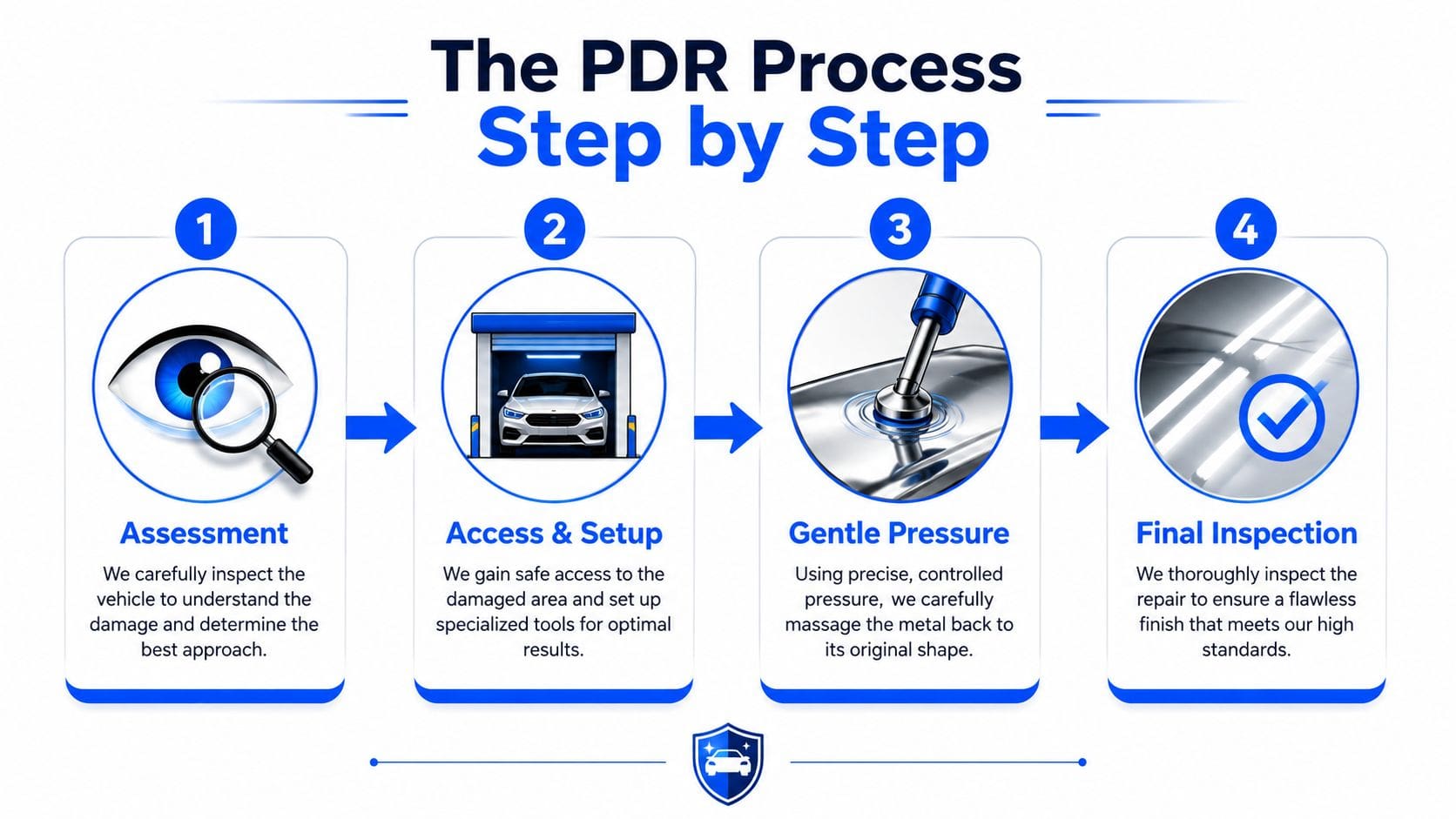
The first step is assessment. You send the photos, and the provider decides whether the dent is a realistic PDR candidate. That first answer matters, because it tells you whether the repair should move forward or whether the damage calls for another method.
Next comes access and setup. If the job is approved, the technician figures out how to reach the back of the panel. On some vehicles, that is simple. On others, trim or interior pieces need to come off so the technician has a clean path to work from (Car-O-Liner).
Then comes gentle pressure. This is the metal work, careful pushes and adjustments that bring the panel back to shape without sanding, filler, or repainting. The job depends on feel, lighting, and restraint, because pushing too hard can create highs that are just as noticeable as the dent itself.
Finally, there is final inspection. A serious technician checks the panel under different lighting angles, because dents and high spots can hide in reflections long after the first pass looks good to the eye. That last check is where a repair is accepted, corrected, or refined before the vehicle leaves the bay.
Here is the practical expectation:
- Send photos first, because that helps sort out whether PDR makes sense.
- Ask about access, especially if the dent sits near an edge, brace, or body line.
- Confirm timing, because simple damage often moves faster than complex repairs.
- Review the panel in bright light, since final quality shows up in reflections.
Some mobile providers advertise same-day turnaround for minor dents, while others want to schedule after the estimate stage, so speed depends on the size of the job and the provider's setup (AJR PDR Goodfellas Detailing). For Columbus drivers comparing Hilliard auto detailing options or looking for ceramic coating near me afterward, that photo-first workflow is a good sign. It shows the shop is judging the repair from the damage itself instead of guessing from a vague description.
What Drives PDR Pricing Near You
A dent can look simple from ten feet away and still cost more than expected once a technician studies it under light. Size, depth, access, panel shape, and metal type all affect the quote, and those details explain why two dents that look alike can land in very different price ranges. A fair estimate is not just about the visible mark, it also reflects how much the panel has moved and how difficult it is to reach the back side cleanly.
A useful pricing table
| Dent Size | Typical PDR Cost | Key Pricing Note |
|---|---|---|
| Small dents | $75 to $195 | Often the best fit for quick PDR work (Capital One) |
| Single small dent, mobile service | $75 to $150 | Common range for mobile estimates, depending on access and dent shape (Thumbtack) |
| Medium dents | $150 to $450 | Depth, creases, and panel location can move the price |
| 1-inch door ding | About $197 | A detailed reference point for a common repair size |
| 3-inch dent | $290 to $344 | Costs rise as the repair area and effort increase |
| 8-inch-plus impact | $700 to $900+ | Larger deformation takes more skill and time |
| Extensive hail damage | $2,500 to $4,000+ | Broad damage across multiple panels can become a major job |
Why two quotes can still be different
A shallow dome dent usually lands near the lower end of the scale. Deeper impact dents can add about 30%, sharp creases can add about 25%, and multiple peaks or compressions can add 25% to 50% (DentTime). Aluminum panels or dents on a body line may increase price by 25% to 50%, while multiple dents on the same panel are often discounted 30% to 50% off the first-dent price (DentTime).
The repair method matters too. PDR usually costs less than conventional body work because it avoids sanding, filler, primer, and repainting, which is why many customers ask for it first when the dent qualifies (Capital One). That said, a low quote is only a good deal if the technician can restore the panel without leaving a high spot, stretched metal, or a visible wave in the finish. If you are comparing estimates in Columbus, it helps to ask what the shop sees from the back side of the panel, not just what shows in the photo.
A mobile estimate can be convenient for a small door ding, but convenience does not change the repair conditions. Access behind the dent, the panel's brace locations, and whether the mark sits on a sharp crease all affect how much time the work will take. For readers who want to understand how surface condition affects the final result, our guide to paint correction can help you separate dent repair from finish restoration.
PDR still gives many drivers a strong value when the damage qualifies, because it preserves the original finish and avoids the extra work of traditional body repair. The right quote should reflect the actual repair difficulty, not a flat guess based on the size of the ding alone.
Paintless Dent Repair vs Traditional Repair
A fresh dent can send a car owner in two very different directions. Conventional body work usually means sanding, filler, primer, paint, and clear coat. PDR keeps the original finish in place and focuses on reshaping the metal, which is why many technicians treat it as a repair method instead of a repainting job.
Side-by-side trade-offs
| Factor | Paintless Dent Repair | Traditional Repair |
|---|---|---|
| Cost | Usually lower when the dent qualifies | Usually higher, especially when the panel needs prep and refinishing |
| Time | Often faster for small dents | Usually slower because of prep, paint, and cure time |
| Paint preservation | Keeps the original finish intact | Replaces or alters the factory finish |
| Resale impact | Better fit for preserving originality | Can be acceptable, but it changes the panel's finish history |
| Repair approach | No sanding or filler | Sanding, filler, paint, and clear coat |
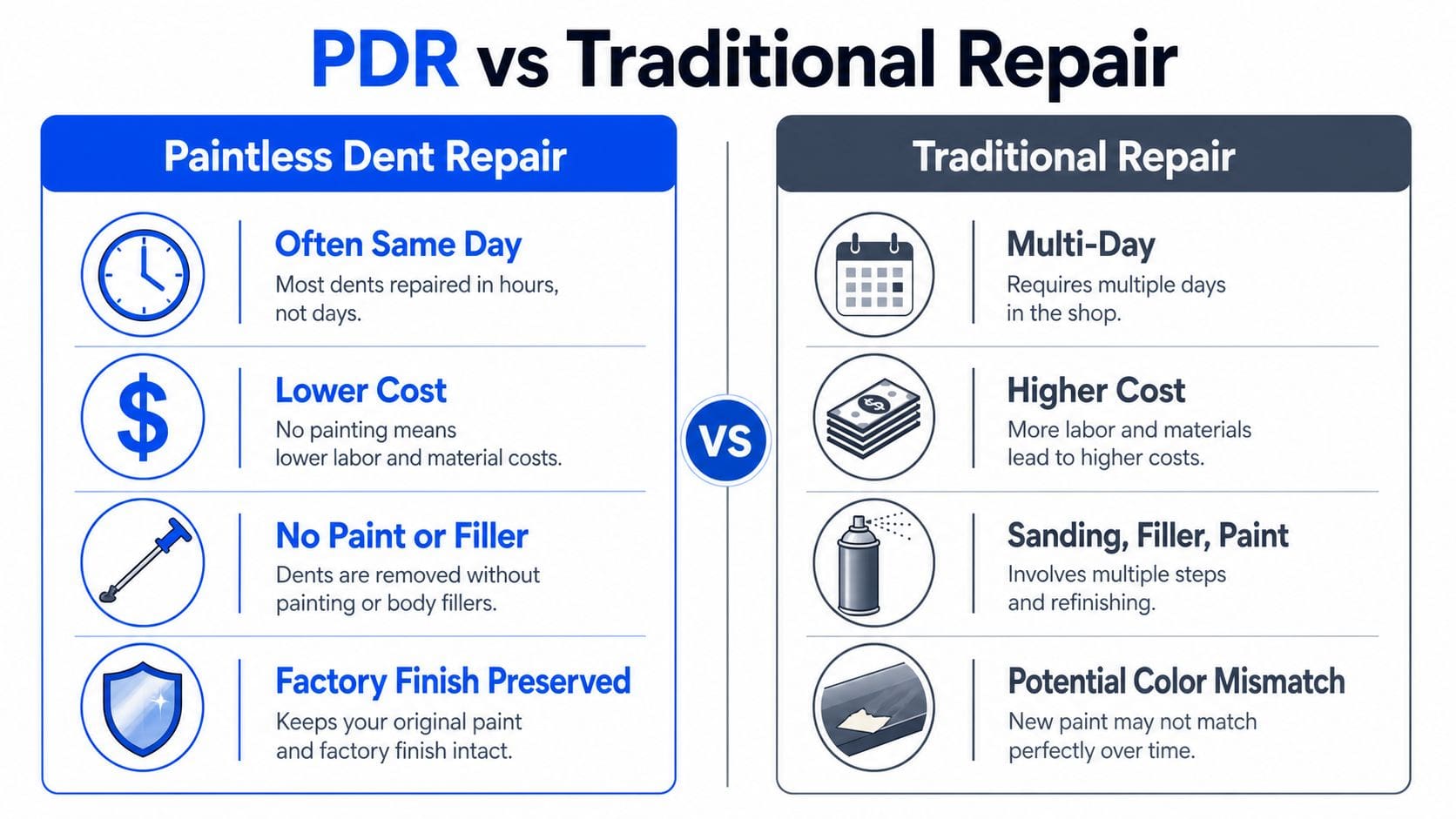
The key difference lies in the repair method. PDR is a good fit when the dent can be accessed cleanly from behind the panel and the paint still holds. Traditional repair takes over when the finish is broken, the dent is too severe, or the panel needs refinishing anyway. Those trade-offs matter because a cheaper quote is only a good deal if the result still looks right under normal light.
When each method makes sense
PDR makes the most sense when the original paint is intact and the dent is structurally friendly to repair. It is also the better choice when the panel gives the technician enough access to work the metal without creating a high spot or leaving a visible wave. Traditional body work makes sense when the paint is cracked, the dent is too severe, or the panel needs refinishing anyway. Choosing PDR just because it sounds cheaper can backfire if the damage falls outside its real limits.
A quick check can save a bad decision. If the dent sits on a sharp body line, near a brace, or in metal that has already stretched, the repair gets harder fast. That is why Columbus drivers comparing local quotes should ask what the technician sees from the back side of the panel, not just what shows in the photo. For readers who want to separate dent work from finish work, our guide to what car paint correction actually does explains how surface restoration fits into the bigger picture.
The better repair is the one that matches the damage. PDR protects what is already on the car, while traditional repair rebuilds the panel after the finish has been broken.
Why Columbus Drivers Choose Lionheart Detailing
Columbus drivers usually want two things at once, a provider who knows the work and a provider who won't oversell it. Lionheart Detailing is based in the Columbus area, was founded by Ryan Maxey in October 2020, and serves the metro through both a mobile setup and a Hilliard shop at 4402 Weaver Court North, Suite 204. That combination matters because some dents are easiest to inspect on-site, while others are better handled in a full facility.
Local convenience with real coverage
The service area includes Dublin, Grove City, Hilliard, New Albany, Powell, Upper Arlington, Westerville, and Worthington. The mobile unit is fully equipped with onboard water and power, so the customer doesn't have to guess whether the appointment can happen in a driveway or at a workplace. For a lot of owners searching paintless dent repair near me, that flexibility is the difference between putting the repair off and getting it done.
Lionheart also sits inside a broader protection and detailing workflow, which is useful for drivers who care about the finish long after the dent is gone. The same attention to detail that matters for PDR matters for ceramic coating near me, Columbus PPF, and full surface care, because the goal is the same, preserve the car instead of patching it carelessly.
What customers usually appreciate
- Transparent judgment, if PDR is the wrong fix, it shouldn't be sold anyway.
- Mobile and shop options, because not every vehicle or repair fits the same setting.
- Experience with clean finishes, which matters on newer vehicles and higher-end paint.
- A local footprint, which makes follow-up and communication easier.
Lionheart's reputation is backed by 200+ five-star reviews on Google and Facebook, and that kind of consistency usually comes from doing the simple things right, clear estimates, honest expectations, and careful execution. For drivers comparing Hilliard ceramic coating, Columbus ceramic coating, or Hilliard auto detailing alongside dent repair, that same standard is exactly what you want from one shop to the next.
If you've got a dent you're staring at in the driveway, Lionheart Detailing can help you figure out whether PDR is the right move or if another repair makes more sense. Visit Lionheart Detailing to ask about paintless dent repair, ceramic coating, PPF, or full detailing, and get straight answers from a local Columbus team that treats your car like it matters.