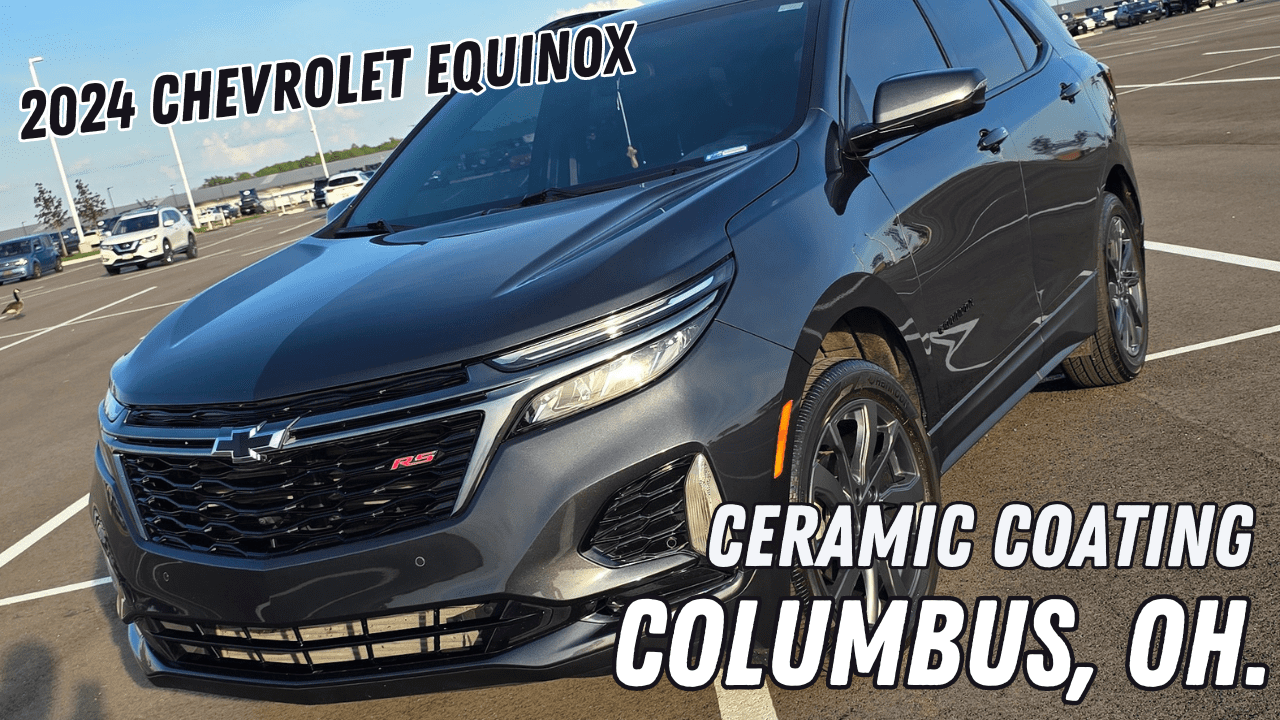
You're probably here because your car is still fairly new, still shiny, and you've already heard that awful ticking sound of debris hitting the front end on I-270, 70, or 71. Around Columbus, it doesn't take long for a clean front bumper to collect chips from gravel, salt residue, bug splatter, and the general mess that comes with Ohio roads. If you've been searching for Hilliard paint protection film, Columbus PPF, or even ceramic coating near me, you've likely seen a lot of articles that make PPF sound either perfect or pointless.
The truth sits in the middle. Paint protection film can be one of the smartest upgrades you make to a vehicle, but it's not right for every car or every budget. Its value depends on what you drive, how long you plan to keep it, where you drive, and how much paint damage bothers you. For Columbus drivers, the answer usually comes down to practical trade-offs, not hype.
Table of Contents
- Is PPF the Ultimate Shield for Your Car in Columbus Ohio
- What Exactly Is Paint Protection Film
- The Unmistakable Pros of Protecting Your Paint
- The Honest Truth About PPF Cons and Considerations
- PPF vs Ceramic Coating Which Protection Is Right for You
- Is Paint Protection Film Worth the Investment in Ohio
- The Lionheart Detailing PPF Process From Start to Finish
Is PPF the Ultimate Shield for Your Car in Columbus Ohio
Columbus roads are rough on paint. Winter adds salt, brine, and sand. Spring brings potholes and road debris. Summer means highway miles, bug splatter, and construction zones. Fall adds moisture, leaf tannins, and more daily grime. If you commute through Hilliard, Dublin, Upper Arlington, or downtown Columbus, your front bumper and hood take the abuse first.
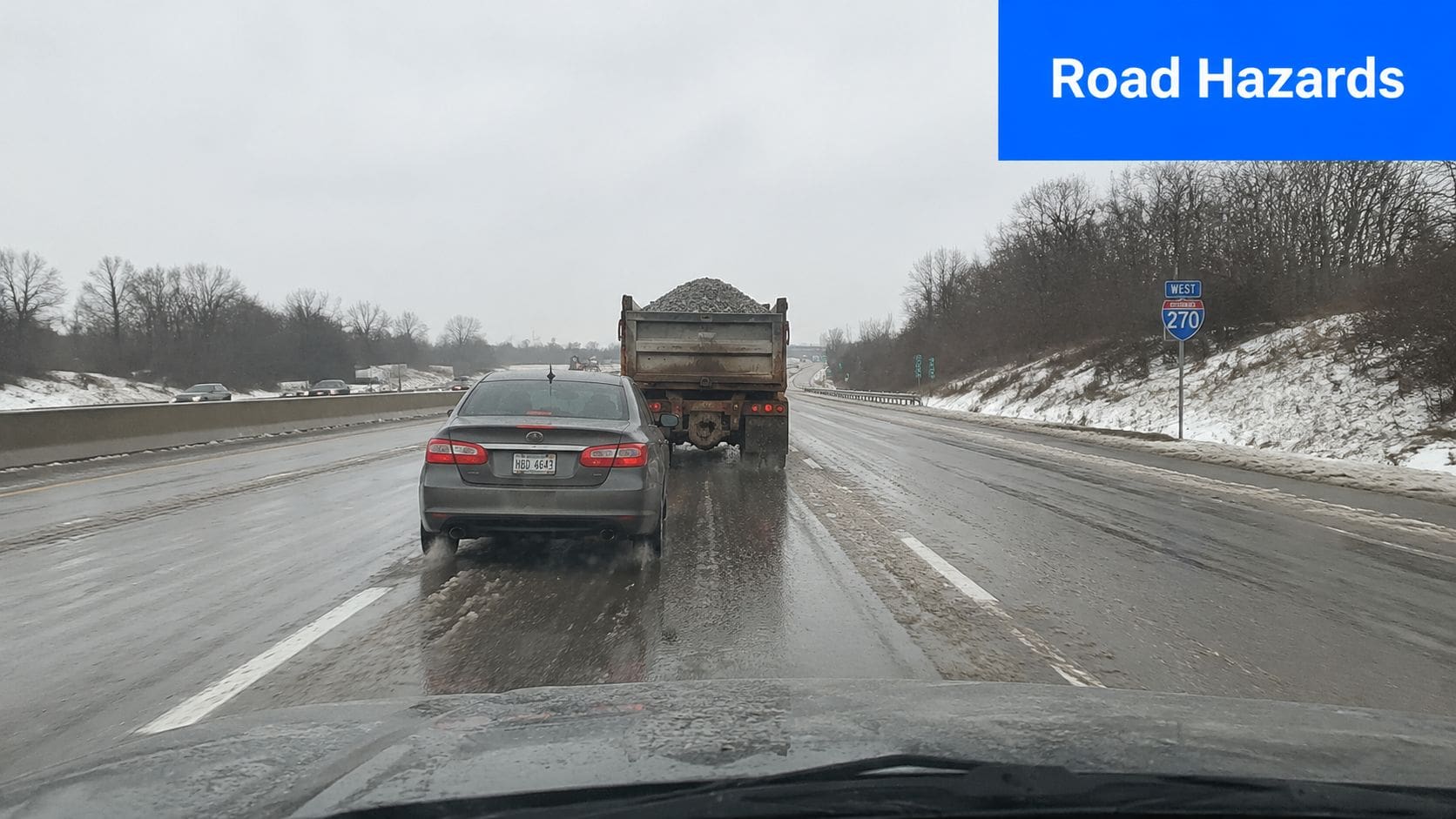
That's where paint protection film pros and cons become a real conversation instead of an internet debate. PPF is the only mainstream paint protection option built around impact defense. It's there to take the hit before your paint does. For a lot of drivers, that matters most on the front bumper, hood edge, mirrors, rocker panels, and rear wheel arch areas.
Why Columbus drivers look at PPF in the first place
Car owners don't start shopping for Columbus PPF because they love detailing jargon. They start after one of these happens:
- A new car gets its first chip: One highway trip can leave a mark on the bumper or hood.
- A dark-colored vehicle starts showing every flaw: Black, blue, and gray paint tend to make chips and light marring stand out.
- They want to keep factory paint intact: That matters more than touch-up paint for many owners.
- They're tired of seasonal abuse: Ohio's four-season cycle punishes exposed paint.
Practical rule: If road rash on the front end will bother you every time you wash the car, PPF deserves a serious look.
What it does well in daily driving
The big advantage is simple. PPF acts like a sacrificial layer over painted surfaces. On roads where loose material gets kicked up, that changes the outcome from “paint chip” to “film took the hit.”
A lot of first-time customers assume PPF is just for exotics. It isn't. It's often most useful on vehicles that see regular highway use, airport runs, suburban commuting, and weekend trips where the car spends real time behind other traffic. That includes plenty of normal daily drivers around Hilliard and Columbus.
Good PPF also keeps the vehicle looking closer to how it left the dealership. It's usually close to invisible once installed well, and it protects the factory finish from the kind of wear that slowly makes a newer vehicle look older.
What it's not
PPF isn't magic. It won't stop every form of damage. It also won't make financial sense for every owner. Those are the parts many articles skip, and they're the parts that matter if you're trying to spend your money wisely.
What Exactly Is Paint Protection Film
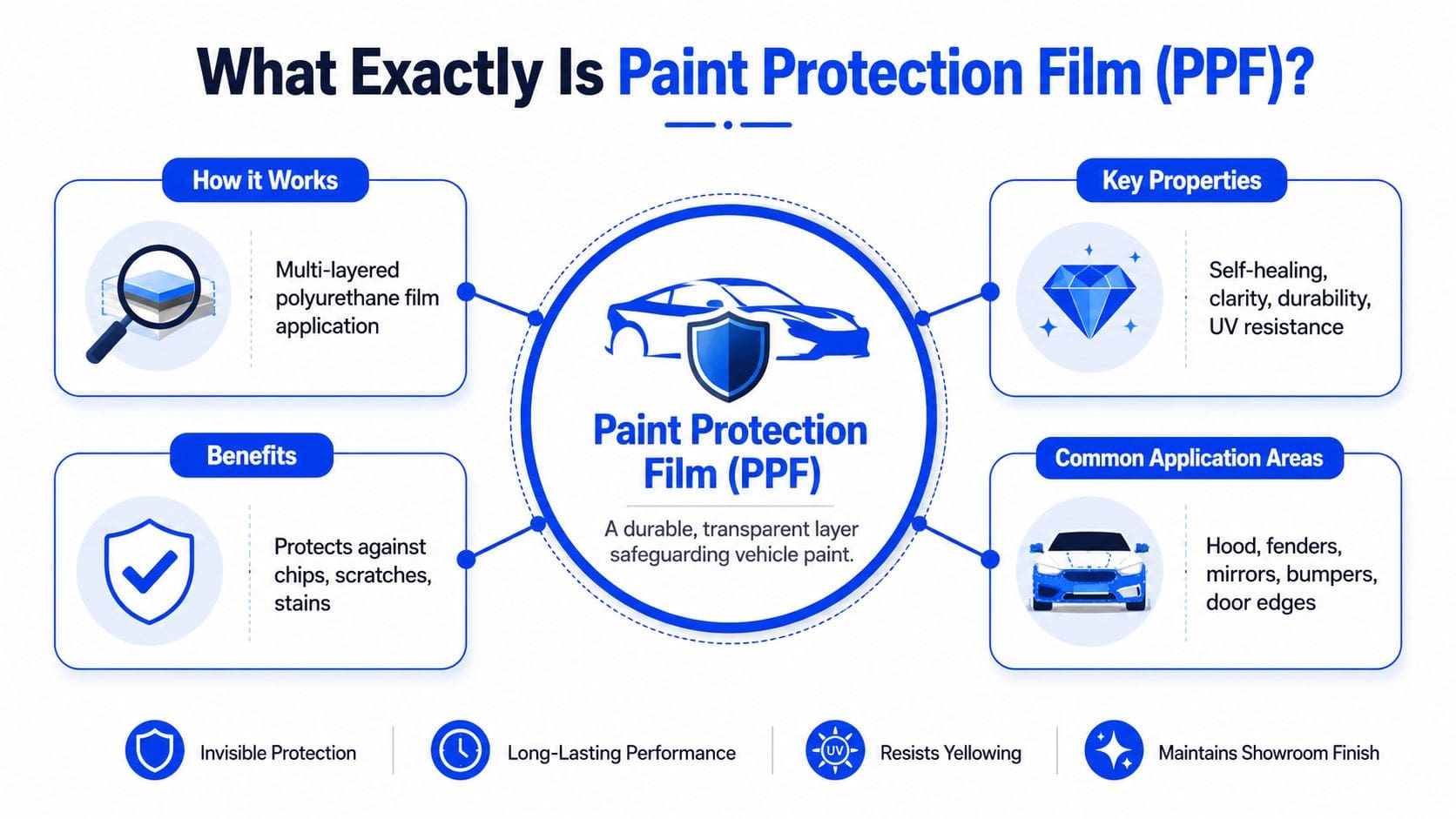
PPF is comparable to a screen protector for your car, though significantly tougher and designed for impact rather than fingerprints. It sits on top of the paint, takes the abuse, and helps preserve the surface underneath.
PPF didn't start in the detailing world. It was originally developed during the Vietnam War in the 1960s to protect helicopter blades from debris, then later moved into automotive use, as noted in this history and overview of paint protection film. That background tells you a lot. The material was created to solve a damage problem, not just to make a car shinier.
A simple way to think about it
When a rock or piece of debris hits bare painted panels, the force goes straight into the clear coat and paint. Sometimes that leaves a tiny mark. Sometimes it leaves a crater. Either way, paint repair is never as simple as wiping the area down.
PPF changes that by putting a flexible barrier between the road and the finish. On a practical level, that means:
- The film takes the impact first
- The paint has a better chance of staying untouched
- You preserve more original finish over time
What the film is made of and why that matters
Paint Protection Film is engineered from a thermoplastic urethane polymer with an acrylic adhesive layer that bonds to the vehicle's clear coat; when impacted by road debris, the urethane flexes and absorbs kinetic energy, preventing paint chipping, according to Loupe Detailing's explanation of how PPF works.
That wording sounds technical, but the takeaway is straightforward. The film isn't just a plastic sticker. It's a material designed to flex instead of fracture, and that flex is what helps it absorb impacts.
A few more practical details matter:
- Professional installation matters: The film is manually installed with a slip solution, then positioned and squeegeed into place.
- Coverage can be selective: You can protect only the front impact zones or cover much more of the vehicle.
- It also helps against UV exposure and bug mess: Many films include UV protection, and the surface is easier to clean than bare neglected paint.
The best way to view PPF is as protective equipment for paint, not as a cosmetic shortcut.
If someone wants a product that hides poor paint prep, PPF isn't the answer. Film locks in whatever is underneath it. If the paint has swirls, scratches, water spotting, or sanding marks, those need to be addressed before installation.
The Unmistakable Pros of Protecting Your Paint
The strongest case for PPF is easy to make because drivers see the difference where damage usually starts. The front bumper, partial hood, full hood, mirrors, fenders, rocker panels, and behind-the-wheel areas all face direct abuse. Those panels tell the story of how a car has been used.
Where drivers notice the difference first
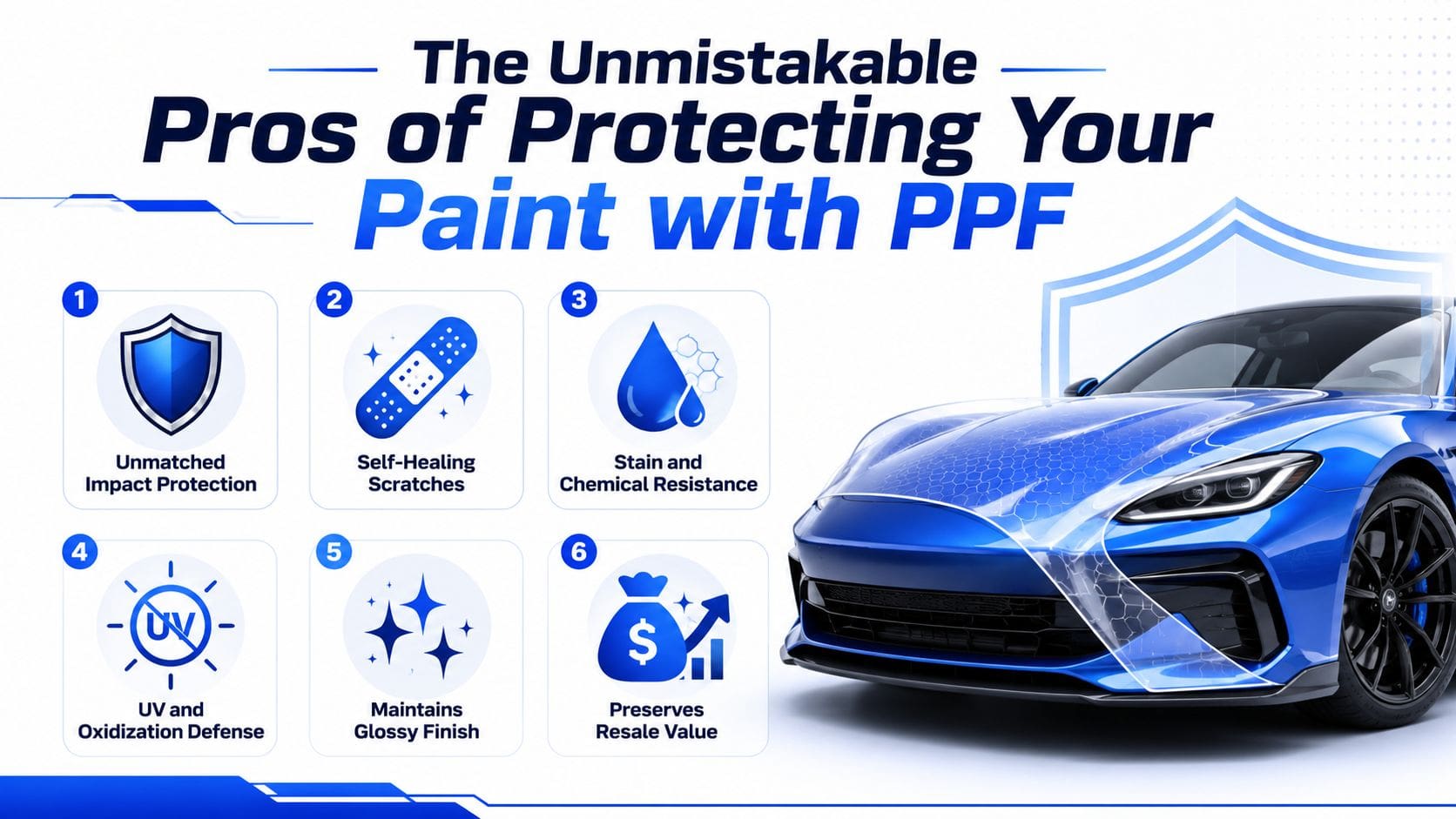
Chip prevention is the main benefit. Paint protection film absorbs and disperses the energy of impacts, preventing that force from reaching the paint surface, which is why it effectively stops rock chips and pitting on high-impact areas during highway driving, as explained in Bespoke Auto's breakdown of PPF performance.
That matters most if your driving looks like this:
- Highway commuting: Long stretches behind trucks, SUVs, and commercial traffic.
- Construction detours: Loose gravel and rough shoulders are common culprits.
- Winter miles: Sand, salt, and debris get tossed up constantly.
- Rural or edge-of-metro driving: Roads outside the city often expose the front end to more loose material.
What good PPF does beyond chip protection
The second big advantage is self-healing. Modern film can allow light scratches and swirl marks to fade when exposed to heat. That doesn't mean every mark disappears, but it does mean a lot of light wash marring doesn't become permanent visual damage.
Other benefits are just as useful day to day:
- UV defense: Quality PPF includes UV inhibitors that help protect against fading, oxidation, and discoloration.
- Easier cleanup: Bug splatter, bird droppings, and road grime are less stressful to clean off a protected surface.
- Maintained appearance: The film is designed to stay nearly invisible, so the original color and look of the paint remain the star.
- Better condition at sale time: On expensive vehicles especially, cleaner original paint helps present the car better to the next owner.
A few practical wins don't get enough attention. Door cups, piano black trim-adjacent painted areas, and luggage-contact zones can benefit from film because those spots get touched constantly. If you use your vehicle like a vehicle, those little friction points add up fast.
A well-chosen PPF package doesn't just protect the paint. It protects the parts of ownership that annoy people most, including staring at new chips and wishing they had acted earlier.
For many Columbus-area owners, the biggest emotional benefit is simple. You stop worrying every time you hear debris hit the car.
The Honest Truth About PPF Cons and Considerations
A Columbus driver buys a new SUV, adds full-front PPF, and expects ten years of perfect paint. Two Ohio winters later, the film has done its job, but the owner is surprised by a few visible edges, some wear in high-impact spots, and the fact that one damaged section may need replacement. That gap between expectation and reality is where disappointment usually starts.
PPF works well. It also has limits, and those limits matter a lot more on a daily driver than they do on a weekend exotic.
Cost is where the decision usually gets real
Price is the first serious drawback. PPF installation can run from a few hundred dollars for small high-wear areas to several thousand for larger packages, depending on the vehicle, the film, and how much surface is being wrapped, as outlined in Elite Wrappers' overview of PPF pricing and installation.
That wide range is why I usually tell people to start with the parts of the car that take abuse. On many Columbus-area vehicles, the front bumper, partial hood or full hood, fenders, mirrors, headlights, and rocker panels give the best return. Full-body film makes sense for some owners, but not every Accord, CR-V, or F-150 needs that level of spend.
For non-luxury vehicles, ROI is where the conversation should stay honest. If the car is a long-term keeper, sees a lot of highway miles, or you care a lot about keeping the front end clean, PPF can make sense. If you trade every two or three years, park indoors, and mostly drive around town, a smaller package or a different protection plan may fit the budget better. We break down those differences in more detail in our guide to wax vs sealant vs ceramic vs PPF.
Film protects paint, but it does not stop every kind of damage
This is the part some shops gloss over.
PPF reduces the damage from road debris. It does not make the surface invincible. Hard impacts can still cut through film. Sharp objects still win. Poor washing can still leave the surface looking rough. If a shopping cart, a garage wall, or a chunk of truck tire hits the panel hard enough, film is not going to save it.
The film itself also takes wear over time. In Ohio, that wear comes from salt, freeze-thaw cycles, heavy sun in summer, bug acids, and repeated washing. Good film holds up well, but lifespan is not the same as staying perfect. The older the install gets, the more likely you are to notice edge buildup, staining in neglected areas, or a section that has taken enough abuse to justify replacement.
Installation quality matters as much as the film brand
A bad PPF install is expensive twice. You pay for it once, then pay again to remove or redo it.
Most problems people blame on PPF are really prep or install issues. Dirty paint under film, silvering, fingers around edges, lifted corners, uneven stretch, and cut lines all come back to workmanship. Even with quality material, a rushed install will show on dark paint and on panels with tight curves.
Some edge visibility is normal. That surprises a lot of first-time buyers. Film has to end somewhere, and certain vehicles hide edges better than others. A good installer can minimize that. No honest installer should promise invisible edges on every panel of every car.
Warranty language is narrower than people expect
Warranty coverage sounds better in conversation than it sometimes reads on paper. Many premium films include manufacturer warranties against issues like yellowing, bubbling, cracking, or delamination. XPEL's warranty terms are a good example of how those limits are spelled out in writing on the XPEL manufacturer warranty page.
Physical damage is usually a separate matter. Rock chips, abrasions, collision damage, scraping, and impact-related failure are often not treated as warranty defects because the film is designed to absorb abuse. That does not mean the product failed. It means the product took the hit.
Before approving a job, ask these questions:
- What brand and line of film are you installing
- Which panels are included, and where do the edges stop
- What does the manufacturer warranty cover, and what is excluded
- What kind of wear should I expect in three to five Ohio winters
- If one section gets damaged, can that panel be replaced without redoing the whole package
Those answers tell you a lot about the shop. They also help you decide whether PPF is the right fit for your car, your expectations, and your budget.
PPF vs Ceramic Coating Which Protection Is Right for You
This is the most common comparison in any Hilliard auto detailing shop. People often assume PPF and ceramic coating are competing products. They're not. They solve different problems.
They solve different problems
PPF is a thick, flexible urethane layer that provides superior impact protection that ceramic coatings don't offer. It also has self-healing ability that allows light scratches to fade with heat. Combining PPF with a ceramic coating delivers optimal protection, as noted in Sunstoppers' guide to PPF and ceramic coatings.
Ceramic coating is better understood as a surface-behavior upgrade. It adds slickness, helps with washing, improves water behavior, and supports chemical and UV resistance. But if your main fear is rock chips on the bumper, ceramic coating is not the tool for that job.
PPF vs. Ceramic Coating at a Glance
| Feature | Paint Protection Film (PPF) | Ceramic Coating |
|---|---|---|
| Primary purpose | Physical impact protection | Easier cleaning and surface protection |
| Rock chip defense | Strong choice for impact zones | Doesn't stop chips |
| Light scratch behavior | Can self-heal with heat on minor marks | Doesn't self-heal like PPF |
| Gloss and slickness | Good, especially with quality film | Strong visual and slickness benefits |
| Hydrophobic behavior | Improved on newer films | Usually stronger as a standalone strength |
| Best use case | Front-end protection, high-impact panels | Whole-vehicle ease of maintenance |
| Budget fit | Higher upfront investment | Lower than PPF in many cases |
A lot of buyers comparing Hilliard ceramic coating and Hilliard paint protection film are really deciding what problem bothers them most. If chips make you crazy, go toward film. If you want easier upkeep and a cleaner-looking car between washes, coating may deliver more value per dollar.
Who should choose which option
Consider PPF first if:
- You do a lot of highway driving
- Your car is new and you want to preserve factory paint
- You're protecting the front clip of a vehicle you care about long term
Consider ceramic coating first if:
- You want simpler washing and better hydrophobic behavior
- You're less worried about chips than about gloss and cleanup
- You want broad protection without the higher film cost
Choose both if your budget allows and you want the most complete result. A common strategy is PPF on high-impact zones and ceramic coating over the rest. If you want a broader breakdown of how those options stack up, this comparison of wax vs sealant vs ceramic vs PPF is a useful next read.
Is Paint Protection Film Worth the Investment in Ohio
You buy a new SUV in Columbus, keep it clean, and six months later the front bumper already has a few highway chips from I-270. That is the moment this question gets real. PPF can be money well spent in Ohio, but only if the coverage matches the car, the miles, and how long you plan to keep it.
The real ROI on a daily driver
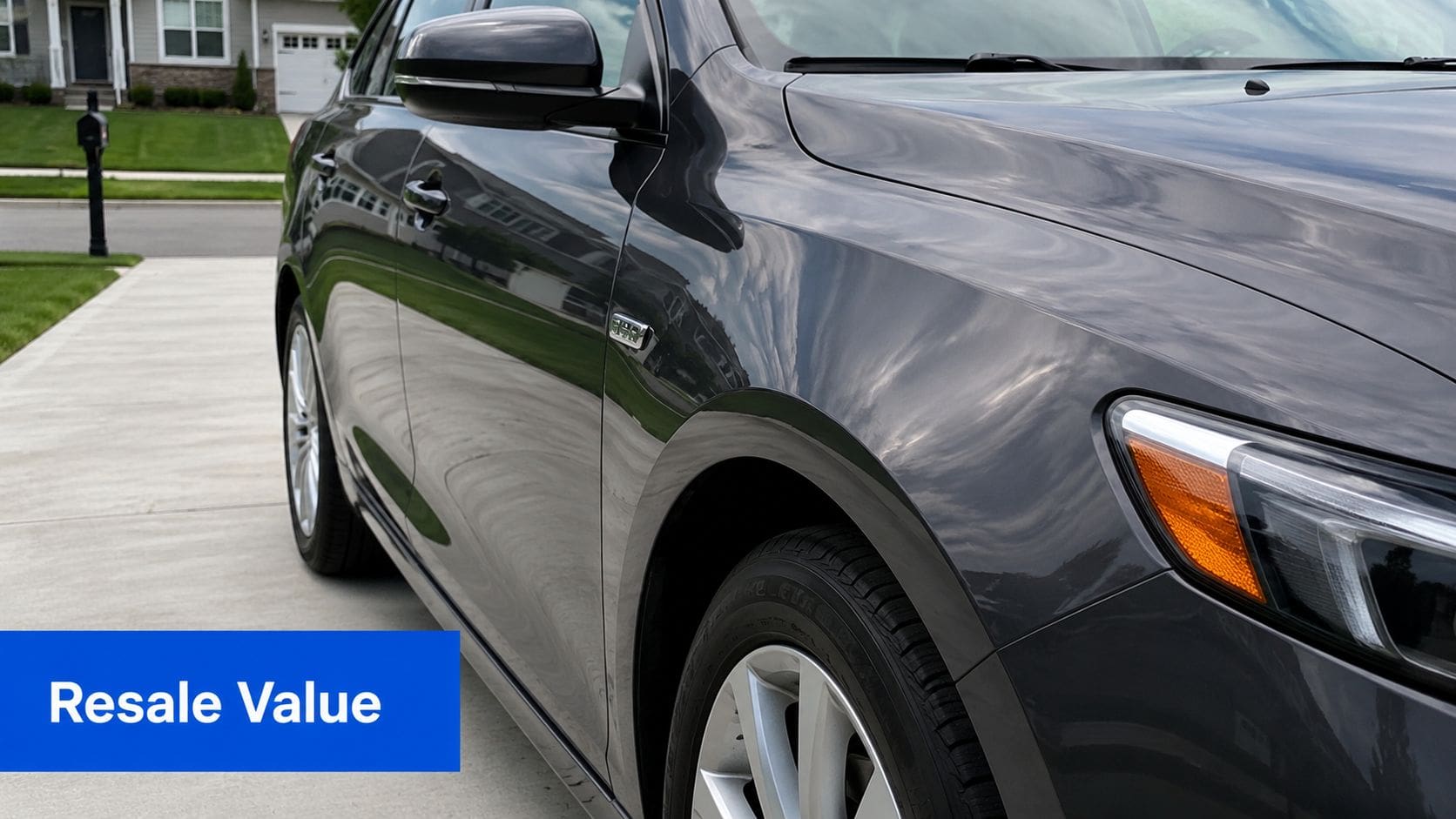
Here is the honest version I give customers in Hilliard. Full-body PPF is rarely the smart financial play on an average commuter car. The install cost can make sense on an exotic, a high-end truck, or something you plan to keep pristine for years. On a typical Accord, CR-V, Camry, or F-150, the return is usually personal, not resale-driven.
That personal return still matters.
A well-chosen front-end package can save the paint from the stuff Ohio drivers deal with every week. Rock chips, sand, winter grit, road rash behind the wheels, and bug damage on the bumper all add up. You may never get every dollar back at trade-in, but you do get a cleaner-looking vehicle during the years you own it.
That is a better way to judge PPF on non-luxury cars. Ask whether avoiding paint damage will matter to you every time you wash the car, not whether a buyer five years from now will reimburse the install.
Ohio shortens the gap between warranty and appearance
Ohio is hard on the front of a vehicle. Winter salt, spring rain, summer heat, freeze-thaw cycles, and regular washing all put stress on film over time. In real use, the hardest-hit panels usually stop looking perfect long before the warranty period ends.
XPEL notes that modern paint protection film is designed for long-term durability and commonly carries a 10-year manufacturer warranty, but real-world life depends heavily on exposure and maintenance, especially on high-impact areas like bumpers and rocker panels, as explained in XPEL's overview of paint protection film construction and durability.
That lines up with what we see locally. Hood and fender sections often stay presentable longer than front bumpers and lower rocker areas. Highway commuters around Columbus usually wear film faster than drivers who stay mostly in town. Spot replacement on the front bumper after several Ohio winters is normal on some vehicles, and customers should plan for that possibility from the start.
Where the investment makes sense
PPF usually earns its keep when the owner has a clear reason for paying for it.
Good fit:
- New vehicles with soft or easily marked front-end paint
- Cars that spend a lot of time on I-70, I-71, or 270
- Enthusiast, luxury, or collector vehicles
- Owners who plan to keep the car long enough to enjoy the protection
Poor fit:
- Cars near the end of their ownership cycle
- Budget-stretched installs where the coverage is driven by image instead of need
- Daily drivers where a few chips will not bother the owner
- Shoppers expecting full-body PPF to pay itself back at sale time on a standard vehicle
For a lot of Columbus drivers, the sweet spot is not full coverage. It is targeted coverage. Front bumper, partial or full hood, front fenders, mirrors, and rocker panels usually give the best value because those are the panels Ohio beats up first.
If you are still comparing material options, different films do not age exactly the same, and a look at best PPF brand considerations can help you choose based on finish, warranty support, and replacement expectations instead of marketing alone.
The Lionheart Detailing PPF Process From Start to Finish
A customer drops off a new SUV on Monday, and from ten feet away the paint looks perfect. Under shop lighting, we usually find road film, rail dust, light wash marring, and factory finishing defects that would show right through the film. That is why the process matters as much as the material.
How a professional install should go
Professional installation matters because PPF is unforgiving. If the surface is not clean, if the pattern is off, or if an edge is stretched too hard, you can end up with trapped debris, lifted corners, visible fingers, and film lines that age poorly. The International Window Film Association has long emphasized trained installation practices for film products, which lines up with what we see in the shop every week.
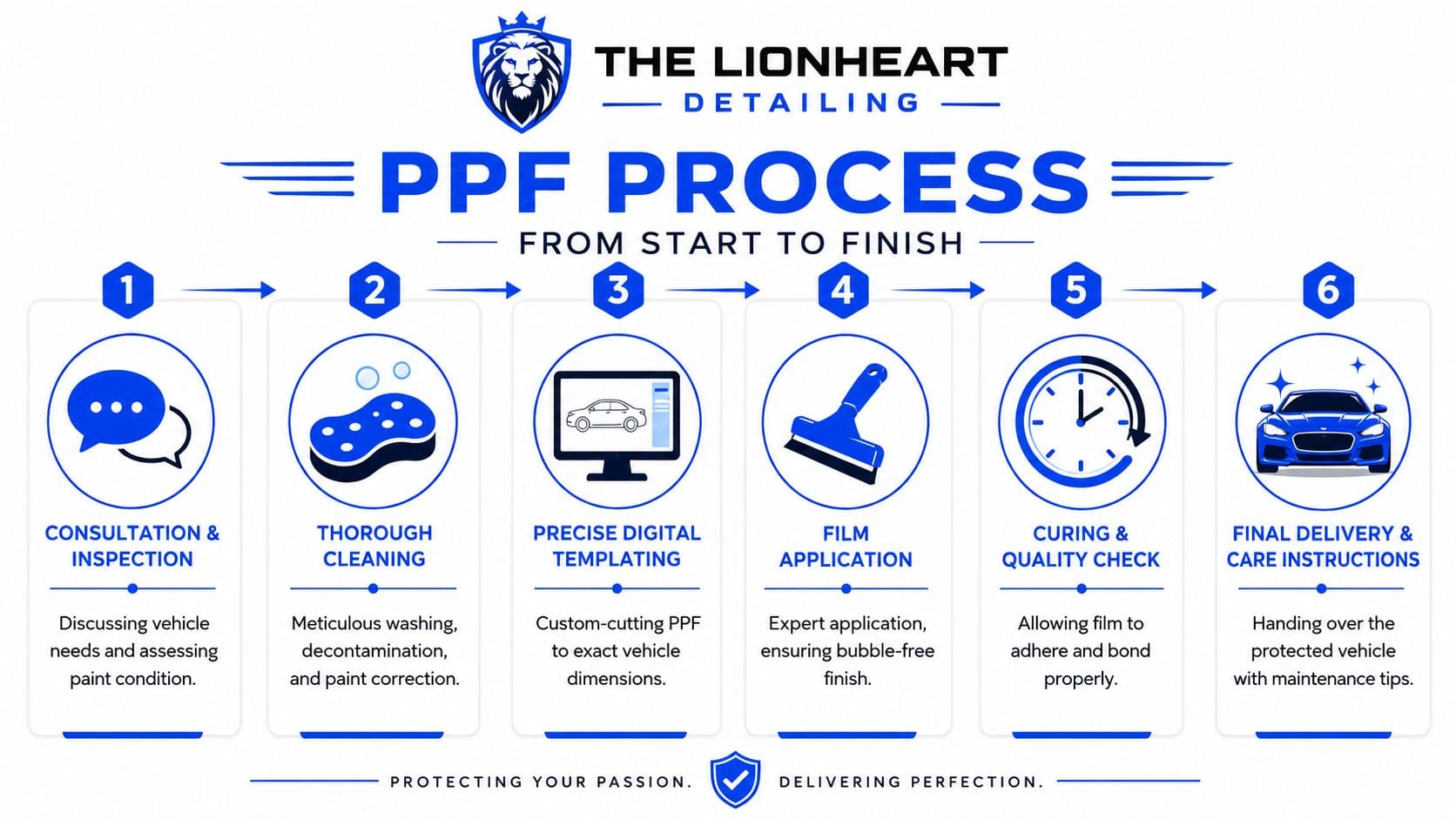
At Lionheart, a solid install usually follows this order:
Consultation and inspection
We look at the actual vehicle, not a generic package sheet. A Columbus commuter on 270 needs different coverage than a weekend car that rarely sees highway miles. Budget matters here too. On many non-luxury vehicles, targeted front-end coverage makes more sense than wrapping the whole car.Wash and decontamination
The paint gets thoroughly washed and chemically decontaminated so the film is not laid over fallout, grit, or residue. PPF hides some things from a distance, but it does not make contamination disappear.Paint correction if needed
Film locks in the finish underneath it. If the paint has haze, swirls, or dealer-installed scratches, correct that first. Our paint correction service is often part of the prep because clean-looking film still looks wrong on flawed paint.Pattern fit and installation
Each section is test-fit, aligned, and installed with attention to tension, edges, and relief areas. The installer's experience is critical here. Tight corners, bumper curves, badges, and sensor cut areas separate an average install from one that stays clean through Ohio heat, salt, and freeze-thaw cycles.Final check and cure guidance
After install, we inspect edges, trapped moisture, clarity, and panel-to-panel consistency. Then we go over cure time, first wash timing, and what normal settling looks like during the first several days.
What to expect after pickup
Fresh film rarely looks exactly the way it will look a week later. A little moisture haze or small pockets during the early curing window can be normal, while silvering, dirty edges, and major lift points are not. Customers should know the difference before they leave.
For drivers in Hilliard, Dublin, Powell, and the wider Columbus area, my advice is simple. Judge the install by clean alignment, edge finish, and how the film wears after real Ohio driving. A good PPF job should look tidy on day one and still make sense for your budget a few winters from now.
If you're weighing real-world paint protection film pros and cons for your vehicle, Lionheart Detailing can help you sort through the options without pushing you into the wrong package. Whether you need PPF on high-impact areas, a Columbus or Hilliard ceramic coating, or full detailing guidance based on your budget and driving habits, reach out and get a practical recommendation that fits how you use your car.