If you've ever parked your car in full sun, stepped back, and caught a web of tiny scratches in the paint, you already know the feeling. The car looks clean from ten feet away, then the light hits it just right and the finish suddenly looks tired, hazy, or covered in spiderweb lines. That's usually the moment people start asking what car paint correction is, and whether it's worth doing before a ceramic coating, PPF, or just as a stand-alone service.
In plain terms, paint correction is not a fancy wax job. It's a controlled polishing process that removes a microscopic layer of the clear coat to level out swirl marks, light scratches, oxidation, and haze, so the paint reflects light more evenly again. That's why the result looks deeper and clearer than a temporary filler product, and why a proper correction job is part of so many Hilliard auto detailing and Columbus ceramic coating packages.
Table of Contents
- What Car Paint Correction Means
- Common Paint Defects and How to Identify Them
- The Multi-Stage Paint Correction Process Explained
- Clear Coat Limits and Why More Polishing Is Not Always Better
- DIY Polishing Versus Professional Paint Correction
- Paint Correction as the Foundation for Ceramic Coatings and PPF
- Expected Costs Timeframes and Aftercare for Lasting Results
- Trusted Paint Correction Services in Hilliard and Columbus
What Car Paint Correction Means
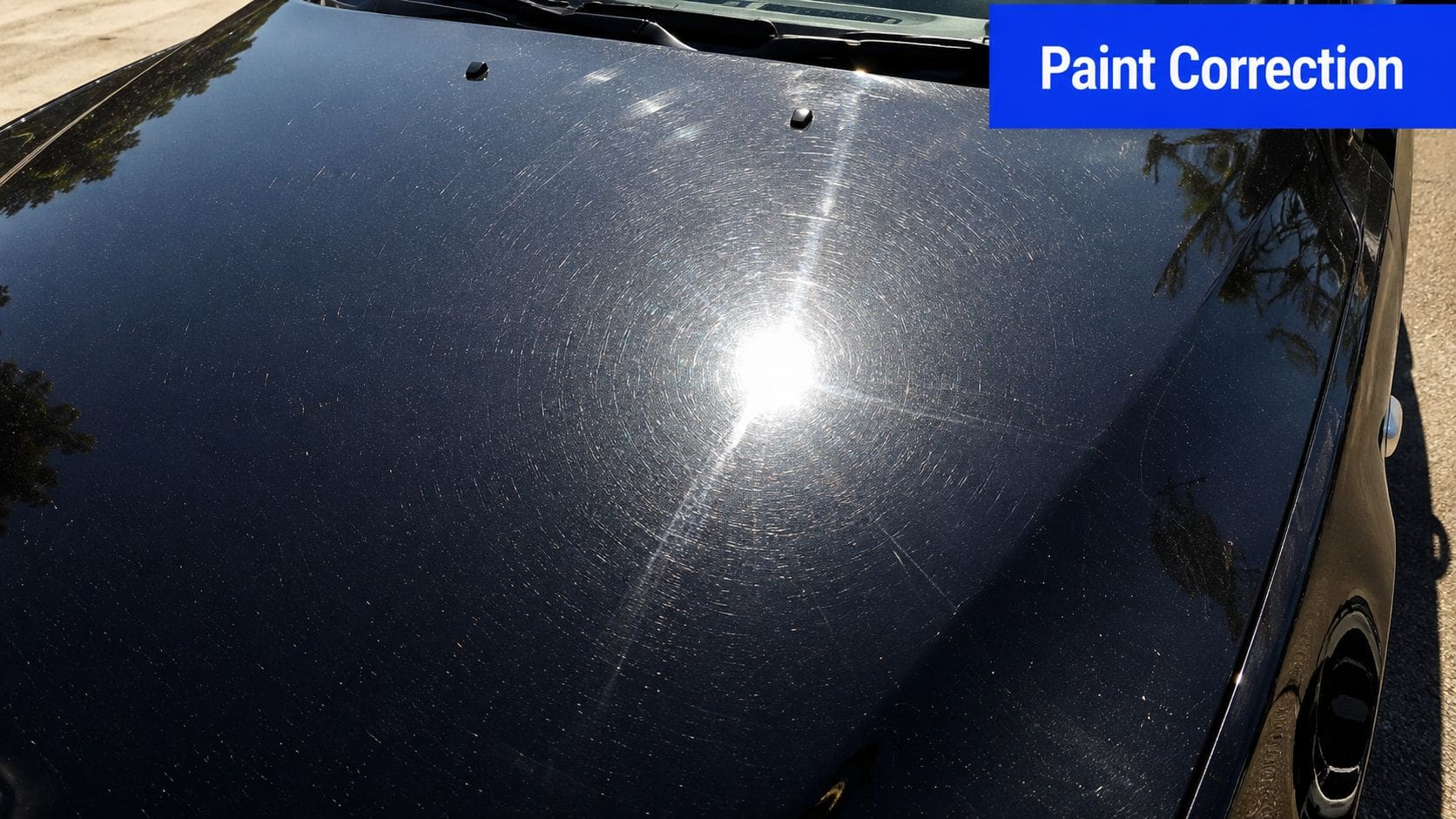
A customer usually spots the need for paint correction right after a wash. The car can look fine in the shade, then sunlight reveals circular marks, light scratches, and dull patches that were hiding in plain sight. That is not dirt on top of the finish. It is wear in the clear coat.
Car paint correction is a mechanical leveling process. A polisher, pad, and abrasive polish remove a microscopic layer of clear coat so the surface becomes more even and the visible defects are reduced. The point is physical improvement, not camouflage. You are restoring clarity in the paint itself, not relying on glaze or wax to fake a better look Permagard. For a visual example of the kind of swirl damage that usually sends people looking for correction, this close-up of swirl marks shows how obvious it can become under direct light.
What correction is, and what it isn't
A lot of people group correction, polishing, and waxing into one bucket. They are separate jobs. Wax can make paint look richer for a while, but it does not level defects. Polishing can improve gloss, but correction is the broader process of reducing damage in the clear coat.
The difference shows up on the car. A waxed panel may look wetter for a short time. A corrected panel looks clearer because light scatters less and reflections tighten up. On dark paint, that contrast is easy to see in direct sun or under inspection lighting.
Practical rule: if the problem is inside the clear coat, correction may help. If the problem is missing paint or a deep gouge, correction will not rebuild what is gone.
That is where the trade-off starts. Every pass removes a little clear coat, so older paint has a limited correction budget, while brand-new vehicles often need only paint enhancement to improve gloss and soften light defects. A car with years of wash marring can sometimes be improved a long way, but it cannot be polished endlessly without thinning the protection layer above the color. A fresh car usually needs less aggressive work, and that matters because preserving clear coat now gives you more options later.
For owners looking at ceramic coating near me, this distinction matters. Coating over uncorrected paint just locks the existing flaws in place. On a clean, well-prepared surface, the coating preserves the finish you wanted in the first place.
Common Paint Defects and How to Identify Them
A lot of first-time customers think paint damage only counts if they can see a scratch from across the driveway. In reality, most of what correction handles is subtler. You're usually looking for defects that show up when light strikes the panel at an angle, not when the car is sitting under flat garage lighting.
The defects that show up most often
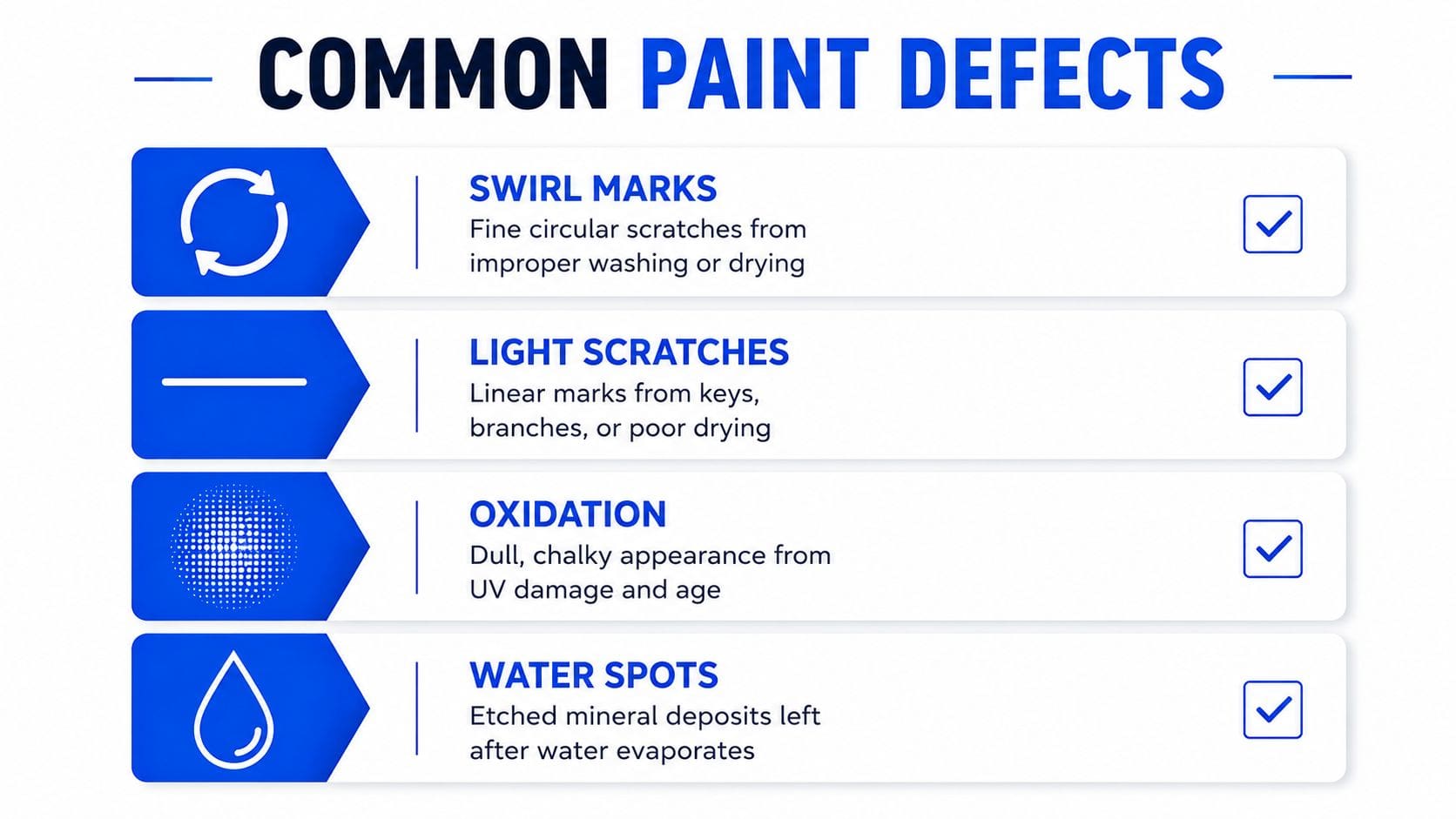
Swirl marks are the classic ones. They're fine circular scratches caused by poor washing, drying with dirty towels, or drive-through brushes. On black, blue, or red paint, they look like spiderwebs when sunlight hits the hood.
Light scratches are usually linear. A sleeve, a dusty towel, a branch, or a careless wash mitt can leave marks that run in one direction. Some of these respond well to correction, but you need to know how deep they go.
Oxidation is a dull, chalky look that builds as paint ages and takes UV exposure. It doesn't always appear as a single obvious defect. Sometimes the whole panel just looks flat and lifeless.
Water spots can be simple mineral residue, or they can be etched into the clear coat if they've baked in long enough. The longer they sit, the harder they can be to remove.
The fingernail test saves time
One simple test helps separate correctable damage from deeper damage. If a scratch catches your fingernail, it's generally not safe to remove by polishing because it likely reaches through the clear coat into the color coat Motorheadz paint correction guide.
That doesn't mean the panel is ruined. It means the answer may be touch-up paint, spot repair, or repainting instead of correction. That's an important conversation to have before you book Hilliard paint protection film prep or a full correction package.
- Swirl marks: usually correctable when they're in the clear coat and not too deep.
- Light scratches: sometimes correctable, sometimes not, depending on depth.
- Oxidation: often improves significantly with polishing if the clear coat still has life left.
- Water spots: may need anything from light correction to stronger defect removal, depending on how far they etched.
If you want a quick visual reference, the article on car paint swirls shows the kind of finish damage people usually spot first.
The Multi-Stage Paint Correction Process Explained
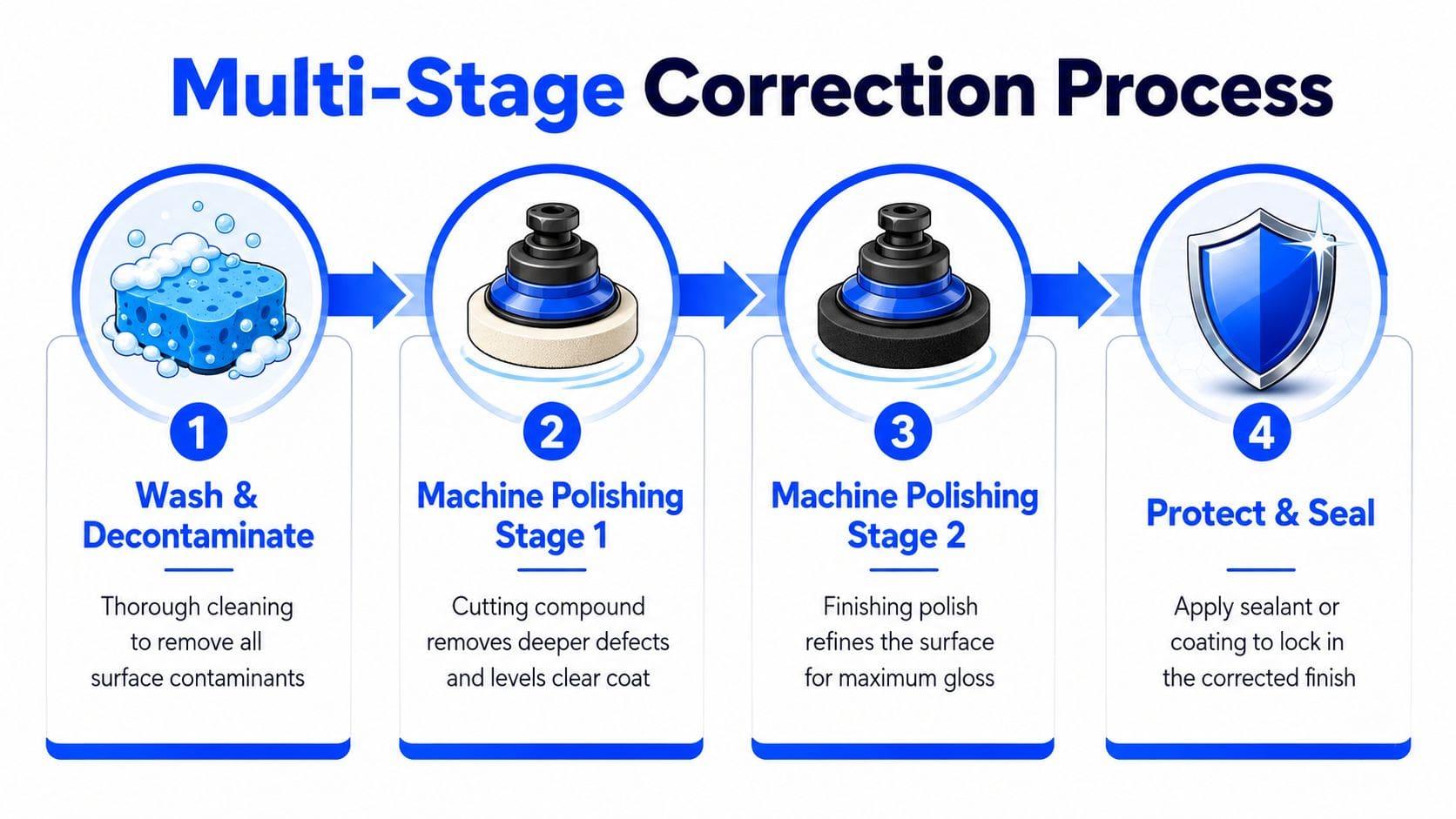
A real correction job starts before a machine ever touches the paint. The panel has to be cleaned well enough that the pad is working on clear coat, not grinding in road film, tar, or leftover grit from a bad wash. If the surface is not fully decontaminated, the polishing step can create fresh marring while trying to remove the old damage, which is why prep matters so much in the first place.
Why the prep step matters
A proper correction begins with a thorough wash and decontamination. That means removing loose dirt first, then dealing with bonded contamination that washing alone leaves behind. Polishing a dirty panel is like sanding through grit, it can make the finish worse instead of better.
Once the paint is clean, the detailer inspects it under strong light and decides how much cut the surface needs. That choice affects the whole job. Dual-action polishers are common because they give more control and less risk on many vehicles. Rotary polishers cut faster, but they also demand more experience because they can build heat and leave holograms if the operator pushes them too hard.
Why many jobs use two stages
A common professional workflow is a two-stage correction. The first step uses a heavier compound to level deeper defects and remove more of the damaged upper layer. The second step uses a finishing polish to clear haze left from compounding and bring back a sharper reflection.
That extra finishing pass matters on a lot of vehicles. Skip it, and the paint can still look improved, but the surface may hold a dull cast or a softer image under direct light. The cut stage does the heavy work, while the finish stage restores clarity.
For customers comparing service levels, the article on one-step vs two-step paint correction gives a practical way to judge how much refinement a vehicle needs before coating or film.
Shop-floor reality: the quickest job is not always the right one. A heavier cut can make a panel look rougher until the finish step brings the gloss back.
Clear Coat Limits and Why More Polishing Is Not Always Better
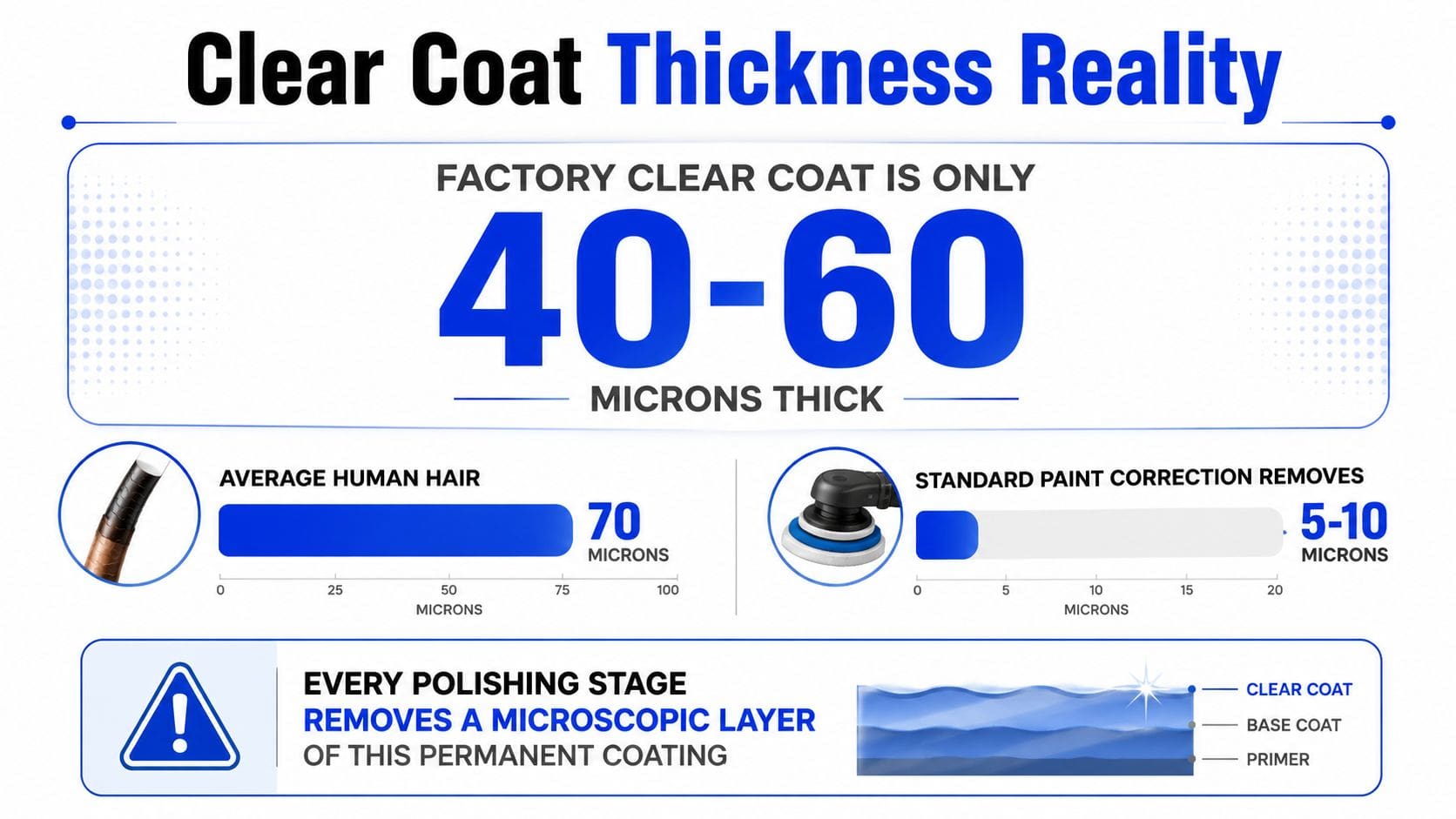
This is the part most glossy marketing pages skip. Clear coat is finite, and once it is removed, it does not come back. Factory clear coat is thin enough that the wrong approach can shorten the life of the finish long before the car is ready for another correction cycle. Some references note that average clear coat thickness is about 25 to 35 microns and that removing too much reduces long-term UV protection Detailed Image. Another instructional source says an average clear coat is about 25 microns thick and estimates a car may only be corrected about six times before the clear coat is effectively exhausted, assuming roughly 4 microns are removed per pass YouTube instructional source.
Why seasoned detailers start mild
Experienced technicians do not begin with the heaviest compound unless the paint calls for it. They start with the least aggressive method, inspect a small test area, and only move up if the defects stay behind. That approach protects the finish and avoids burning through more clear coat than the panel needs.
Factory paint systems are already thinner than a lot of owners expect. One source notes that total paint systems can be roughly 100 to 180 microns overall, while proper correction may remove only 1 to 3 microns of clear coat OTOPRO. That small amount still matters because each pass uses part of a permanent layer, and every unnecessary step reduces the paint's future correction budget.
Why lifetime planning matters
If a car is staying with you for the long haul, the question is not just whether the panel can look better this week. The better question is whether that paint should spend part of its correction budget now or hold some of it back for later. That trade-off matters even more on classics, luxury cars, and newer vehicles you plan to maintain for years.
A light enhancement can be the smarter call when the finish is already in decent shape. A deeper multi-stage correction makes sense when the defects justify the extra removal. Aggressive polishing just because the machine can do it wastes clear coat and can leave you with less room to work in the future.
- Use correction strategically: reserve deeper work for paint that needs it.
- Ask for a test spot: it shows how much improvement is realistic before a full job begins.
- Protect the result: correction without protection means new defects can return fast.
A reputable Columbus ceramic coating installer should talk about clear coat limits before talking about gloss, because the finish has to survive after it looks good.
DIY Polishing Versus Professional Paint Correction
A lot of people can handle a light one-step polish at home now. Consumer machines are better than they used to be, and a motivated owner can improve a car's finish without a shop visit. The problem is that paint correction punishes guesswork.
Where DIY makes sense
If the car has light swirls, the paint isn't fragile, and you're comfortable learning on a practice panel, a one-step DIY polish can be a reasonable project. You'll still need proper pads, polish, lighting, and patience. The biggest wins usually come from correction on neglected daily drivers where the goal is improvement, not perfection.
Where pros earn their money
A professional brings experience with pad choice, speed, pressure, product behavior, and paint hardness. That matters because improper technique can create holograms, overheat a panel, or remove more clear coat than needed. A rotary polisher in the wrong hands can turn a small defect into a much bigger problem.
For higher-value vehicles, the safer move is usually to let a pro handle it. That's especially true if the car is headed for Hilliard ceramic coating or Columbus PPF, because correction mistakes become permanently sealed under the protection layer.
If the paint is thin, soft, or already heavily worked, a cautious one-step enhancement is often smarter than chasing a perfect panel.
I'd also point owners toward options like Lionheart Detailing for correction, coating prep, and protection work when they want the finish assessed before anyone starts cutting. The value is less about a fancy machine and more about knowing how much correction the paint can handle.
Paint Correction as the Foundation for Ceramic Coatings and PPF
If you're planning on ceramic coating near me or Hilliard paint protection film, correction is usually the foundation, not the optional extra. Coatings and film lock in whatever is underneath them. If swirl marks, haze, or oxidation stay on the paint, they stay visible after the protection is applied too.
That's why new-car correction is often better described as paint enhancement. On a brand-new vehicle, the job is often a light one-step polish to remove transport marks or dealership wash swirls, not a heavy restoration. A car can be new and still not be finish-perfect.
New paint, different expectations
A new vehicle doesn't always need multi-stage correction. If the finish is already clean and sharp, a lighter enhancement can be enough before coating or film. That's especially true when the goal is prep, not rescue.
The tricky part is that many buyers assume “new” means defect-free. It doesn't. The factory finish may be fine, but dealership prep, transport, and cleaning can leave marks that are easier to see once the car is in direct light. Skipping correction because the odometer is low is a common mistake.
For buyers comparing protection options, PPF vs ceramic coating helps frame how correction, film, and coating work together rather than competing for the same job.
The practical decision
- Choose light enhancement: when the car is new or already in good shape.
- Choose deeper correction: when visible swirls, haze, or scratches are obvious.
- Choose protection after correction: when you want the improved finish to last.
That order matters because correction is the part that makes the paint look right. Coating or film then preserves that result. For Columbus ceramic coating shoppers, that's the value chain.
Expected Costs Timeframes and Aftercare for Lasting Results
A correction job can look simple from the outside, but the bill and the time on the paint depend on how much clear coat the technician can safely work with. A light one-step on a newer car usually costs less and goes faster. A multi-stage job on older, softer, or heavily marred paint takes more labor because the shop has to remove defects without burning through the finish. That is why real quotes start with the condition of the car, not a package name.
Paint Correction Stages at a Glance
| Correction Stage | Defects Removed | Typical Time | Cost Range |
|---|---|---|---|
| Single-stage correction | Removes light swirls and haze, and usually clears about 50 to 70% of visible flaws, depending on paint and skill Detailed Image | Usually the shortest service, often suited to a maintenance-level enhancement | About $500 to $1,200 for a typical one-step job |
| Two-stage correction | Handles deeper swirls, heavier haze, and more stubborn defects, often reaching about 85% correction on workable paint Detailed Image | Takes longer because the process includes both cutting and refining | About $1,200 to $2,000 when the extra labor is needed |
| Three-stage correction | Pushes toward the cleanest finish possible, often around 90 to 95% defect removal on paint that still has enough clear coat to work with Detailed Image | The longest and most labor-heavy option, especially on larger or harder vehicles | About $2,000 to $2,500+ for the most demanding restoration work |
Those ranges are not random. A shop is pricing the time it takes to inspect the paint, test a combo, correct the panels, refine the finish, and check the result under proper lighting. Paint hardness changes the pace. A hard German clear coat can take more machine time than a softer finish, while an older car with thin clear coat may force a shop to stop sooner and leave a few defects behind rather than chase perfection.
How to protect the result
The finish only stays sharp if the wash routine changes after correction. Use a clean wash mitt, rinse it often, and keep towels free of dirt and grit. Dry with soft microfiber, not a rough towel or a sponge that has picked up debris from the ground. Scratching the paint during maintenance is how swirls return, even after careful correction.
Ceramic coating helps the corrected surface hold up better by making washing easier and reducing the chance that bad wash habits undo the work. It does not prevent every mark, and it will not replace careful maintenance. It does make routine care less punishing for the finish, which matters if you want the result to last on Hilliard auto detailing projects.
Best aftercare habit: wash it like the correction still matters, because every poor wash takes a little bit of that work back.
Trusted Paint Correction Services in Hilliard and Columbus
For drivers in the Columbus area, the question usually isn't whether paint correction exists. It's who can inspect the paint and recommend the right amount of work. Lionheart Auto Detailing & Protection handles that conversation in person at its Hilliard shop at 4402 Weaver Court North, Suite 204, or through mobile service with a fully equipped van that carries on-board water, power, and professional tools to your driveway or workplace.
The team serves Dublin, Grove City, New Albany, Powell, Upper Arlington, Westerville, and Worthington, and the business says it has 200+ five-star reviews across Google and Facebook. If you want directions or reviews, the Google listing is the quickest place to check before you come by or book a visit.
Paint correction makes the most sense when it fits into a larger plan, whether that means a light enhancement before coating, a deeper correction before film, or a full restoration on a car you intend to keep. If you're comparing ceramic coating near me, Columbus PPF, or a correction-first detail, the safest move is to have the paint inspected before anything gets applied.
Lionheart Detailing can inspect your paint, explain what can safely be corrected, and map out the next step for ceramic coating, PPF, or a full detail. If your car has swirl marks, haze, or light scratches, visit Lionheart Detailing to schedule a professional assessment and protect the finish the right way.