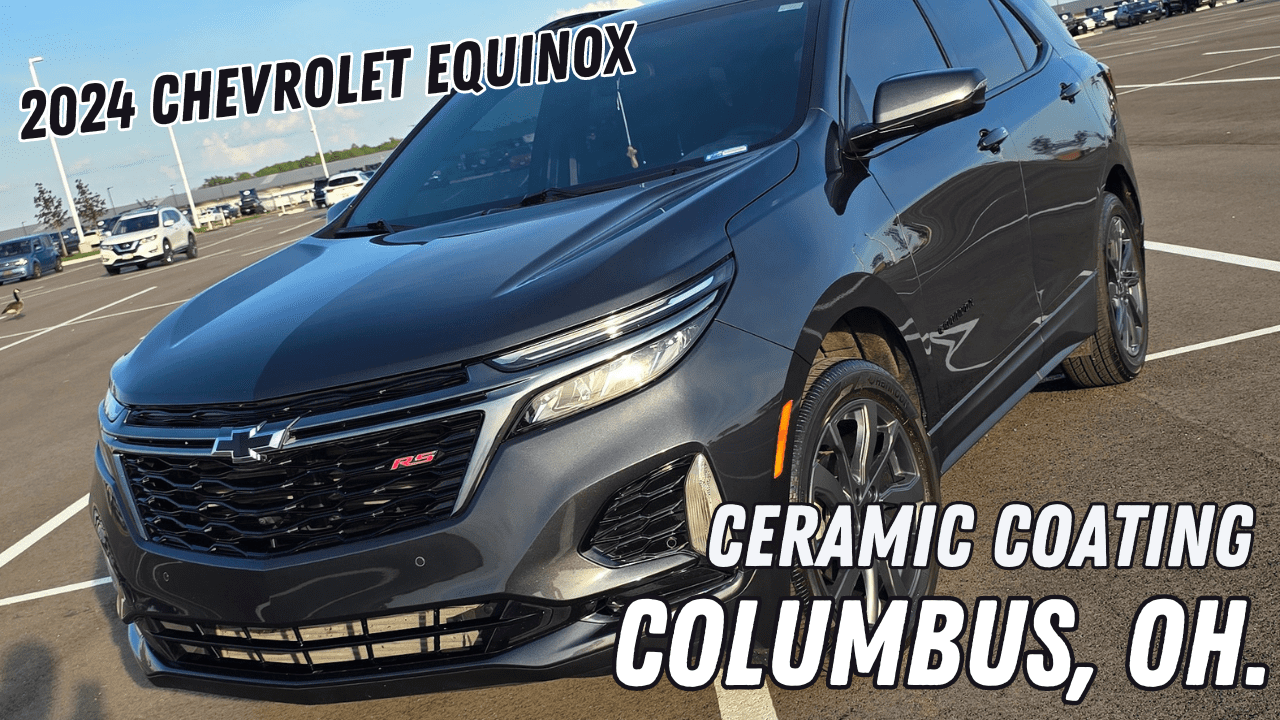
You buy a new car, pull out of the lot, and for the first few weeks you park a little farther away from everyone else. You notice every shopping cart, every bird overhead, every dump truck dropping gravel on the freeway. Then the first chip happens. Usually it's on the front bumper or the leading edge of the hood, right where your eye goes every time you wash the car.
That's usually when people start asking the main question. Is Paint Protection Film worth it?
In Columbus, Hilliard, Dublin, and the rest of Central Ohio, that question isn't theoretical. It shows up on I-270, in construction zones, on back roads with loose gravel, and during winter when road grit gets thrown at the front of your car all day. Some drivers only care about keeping a new vehicle looking sharp. Others are thinking about trade-in value, long-term ownership, or avoiding repaint work that never quite matches factory paint the same way.
From a detailer's perspective, this isn't a simple yes or no. It depends on what you drive, how you drive, how long you plan to keep it, and who installs the film. A rushed job can waste your money. A well-planned install on the right vehicle can save a lot of frustration.
This guide breaks it down the way I'd explain it to a first-time customer walking into a shop in Hilliard or searching for Columbus PPF, Hilliard paint protection film, or even ceramic coating near me. No fluff. Just what works, what doesn't, and how to decide whether PPF makes sense for your car.
Table of Contents
- Introduction That New Car Feeling and the Fear of the First Scratch
- What Exactly Is Paint Protection Film Your Car's Invisible Bodyguard
- The Real-World Value of PPF for Columbus Drivers
- PPF vs Ceramic Coating Which Protection Do You Need
- The Cost of Columbus PPF in 2026 An Investment vs an Expense
- Protecting Your Investment How to Care for a Car with PPF
- Choosing Your Installer The Specialist vs Dealership Difference
- Conclusion Is PPF the Right Choice for Your Car
Introduction That New Car Feeling and the Fear of the First Scratch
A new vehicle changes the way people look at driving. You hear different noises. You notice parking lot spacing. You check the front bumper after highway trips. Even drivers who've never booked Hilliard auto detailing before start paying attention once the paint is fresh and clean.
That anxiety is justified. The front end of a car takes abuse every day. Bugs hit first. Sand and grit grind into lower panels. Small rocks bounce up off traffic ahead of you and strike the hood, mirrors, and bumper before you can react. Most of that damage doesn't happen in one dramatic moment. It builds one tiny mark at a time.
For Columbus drivers, the question isn't whether the paint will get attacked. It's whether you want the factory finish taking those hits, or a sacrificial layer taking them instead.
Practical rule: If a rock chip on the front of your hood is going to bother you every time you see it, you should at least price out PPF.
A lot of people compare PPF to other cosmetic services and assume it's mostly about shine. It isn't. The main value is protection. The shine is a bonus. The peace of mind is a big part of why people end up feeling good about the decision.
That matters whether you just bought a daily driver, a performance car, or a family SUV you want to keep looking sharp. It also matters if you're already researching Columbus ceramic coating or Hilliard ceramic coating and trying to understand whether coating alone is enough. Sometimes it is. Sometimes it isn't.
The right answer starts with understanding what PPF is and what it can do that other products can't.
What Exactly Is Paint Protection Film Your Car's Invisible Bodyguard
Paint protection film is a clear urethane layer applied over painted surfaces that take the most abuse. On a daily driver in Columbus, that usually means the front bumper, hood edge, fenders, mirrors, and rocker panels first.
Paint Protection Film is engineered from thermoplastic polyurethane, or TPU. That material is used because it has the strength and elasticity to absorb the energy from rocks and road debris without the factory paint underneath taking the hit, as explained in this overview of thermoplastic polyurethane PPF construction.
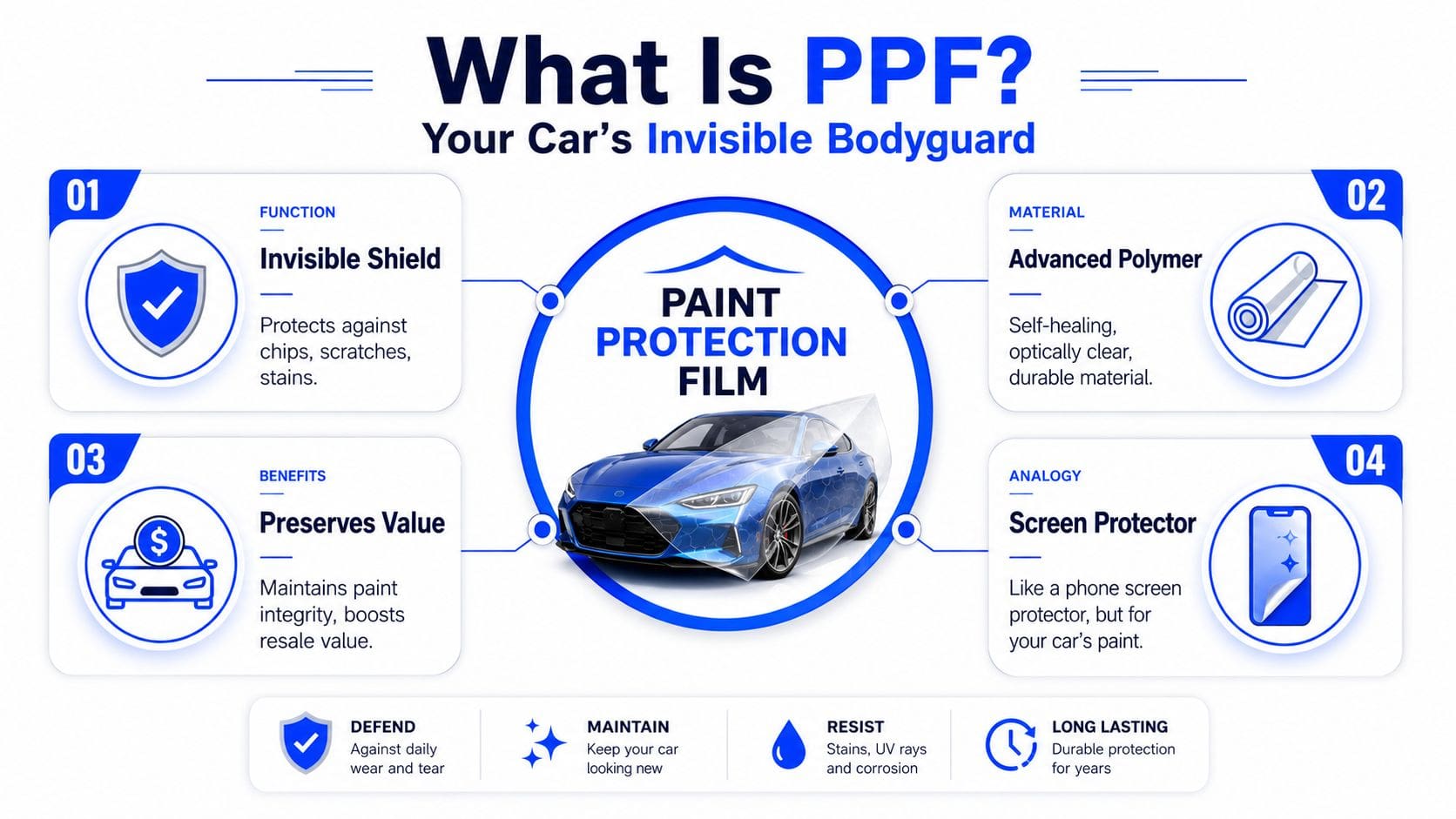
What matters to an owner is simple. PPF is a physical barrier that takes the hit before your paint does. A small stone smacks the bumper, the film flexes, and the painted panel underneath has a better chance of staying chip-free.
That physical layer is what separates film from products that wipe on and cure. Customers often lump PPF in with waxes, sealants, and ceramic coatings because all of them live in the “paint protection” category. In the shop, the distinction gets clear fast. Film protects against impact and abrasion in a way liquids cannot.
Modern PPF also includes a few features that make it easier to live with day to day:
- Self-healing top layer that helps light wash marring settle out with heat
- Optically clear finish so the paint color shows naturally
- Stain resistance against bug splatter, road film, and other contamination
- Coverage options ranging from high-impact front-end areas to a full vehicle wrap
Wax, sealants, and ceramic coatings still have a place. They help with gloss, water behavior, and cleanup. PPF handles a different job. Ceramic coating is great for making the surface slick and easier to wash. PPF is the sacrificial skin that stands between the paint and road debris.
That's why the first areas we protect are usually the places that get chewed up fastest:
| Area | Why it gets protected first |
|---|---|
| Front bumper | It takes direct hits from road debris |
| Hood edge | It sees repeated chip damage at highway speed |
| Fenders | Passing grit and tire-thrown debris land here |
| Mirrors | They sit in the path of rocks and bug splatter |
| Rocker panels | They catch dirt and road spray kicked up from below |
This is also where dealership explanations often fall short. A dealer may sell “paint protection” as a box to check during purchase, but that can mean anything from a small pre-cut kit to a vague add-on with little discussion about film brand, coverage, edge wrap, or installer skill. A specialist installation is more exact. The material, the pattern, the panel prep, and the finish quality all affect how well the film protects and how good it looks a year from now.
If your goal is fewer chips on the parts of the car that see the worst abuse, PPF solves a real problem. If your goal is easier washing and extra gloss, film may be more protection than you need.
The Real-World Value of PPF for Columbus Drivers
A Columbus daily driver usually starts showing wear in the same pattern. The front bumper picks up peppered chips from 270 and 71. The hood edge gets dotted from highway debris. Rocker panels get sandblasted through winter from salt, grit, and slush thrown off the tires ahead of you. I see that pattern every week.
PPF has real value here because Central Ohio is hard on paint in a very specific way. It is not just about one bad rock hit. It is about repeated small abuse that adds up over months of commuting, airport runs, construction detours, and winter driving.
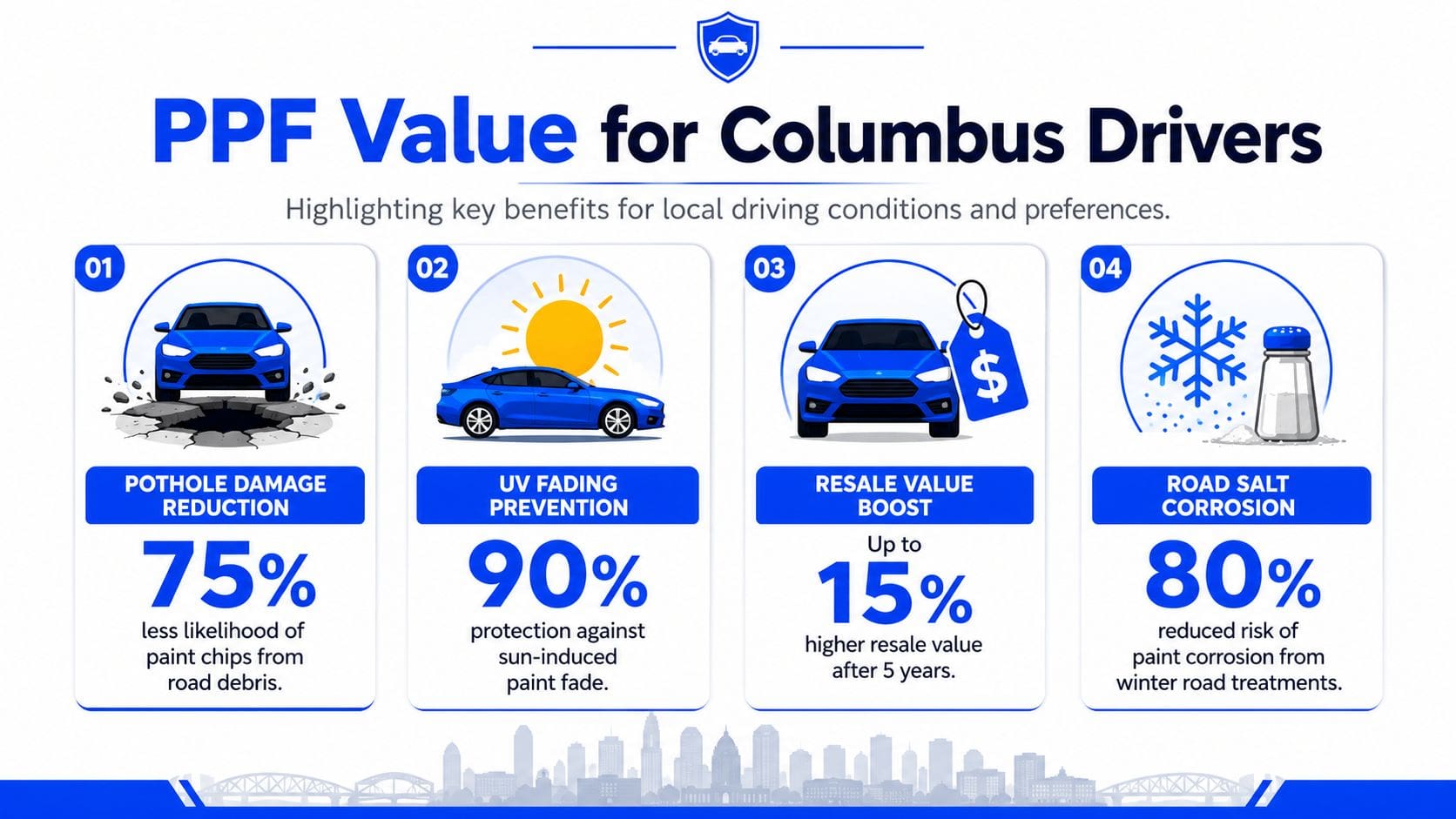
The practical benefit is simple. The panels that normally look tired first stay cleaner, smoother, and closer to factory condition. On a black SUV or a dark sedan, that difference stands out fast. Two Ohio winters can make an unprotected front end look older than the rest of the car. Film helps prevent that uneven aging.
That matters more in Columbus than many buyers expect. A lot of local driving is mixed use. Short city trips during the week, freeway miles on the weekend, and plenty of time behind trucks, semis, and work vans. If the car sees regular highway use, the front clip takes the punishment.
PPF also solves a problem that polish cannot fix. Once paint is chipped, the only real repair is touch-up or repainting. Touch-up helps from five feet away. It rarely looks clean up close. Repainting can improve appearance, but it changes the originality of the panel and adds cost many owners never planned for.
For the right owner, PPF saves frustration more than anything. You wash the car and do not see a new cluster of chips on the bumper. You do not need to keep touching in the hood every spring. You keep the sharp, tight look that sold you on the car in the first place.
Trade-in and resale are part of the equation too. Buyers notice front-end condition immediately. Heavily chipped paint makes a car feel used hard, even when the mileage is reasonable and the service history is strong. Clean original paint supports the impression that the whole vehicle has been cared for.
The value is strongest for a few groups we see all the time around Columbus:
- New car owners who want to protect factory paint before the first winter
- Highway commuters driving I-70, I-71, I-270, or Route 33 several times a week
- Luxury, performance, and black-car owners who notice every chip and sand mark
- Long-term owners who would rather prevent repaint work than pay for it later
There is a limit, and it should be said plainly. PPF is not the right move for every vehicle. If you lease for a short term, drive mostly local roads, or do not care about minor front-end wear, the return may not pencil out. In those cases, a good coating may be the better spend, especially if your priority is easier washing and gloss. We break that down in more detail in this guide on whether ceramic coating is worth it.
One more Columbus-specific point gets missed. Dealer-sold film and specialist-installed film are not the same purchase. Around here, plenty of owners come in after buying a dealership package and find out they only got small partial pieces, visible edges, or film installed with minimal prep. The actual value of PPF depends heavily on coverage, film quality, and install quality. On the right car, with the right coverage, it is a smart defensive investment. On the wrong car, or with a weak install, it becomes an expensive box to check.
PPF vs Ceramic Coating Which Protection Do You Need
A lot of confusion starts here because both services get talked about as “paint protection.” That's true, but they protect against different things.
Two products with two very different jobs
Here's the cleanest way to separate them.
PPF protects against impact.
Ceramic coating protects against sticking, staining, and cleanup headaches.
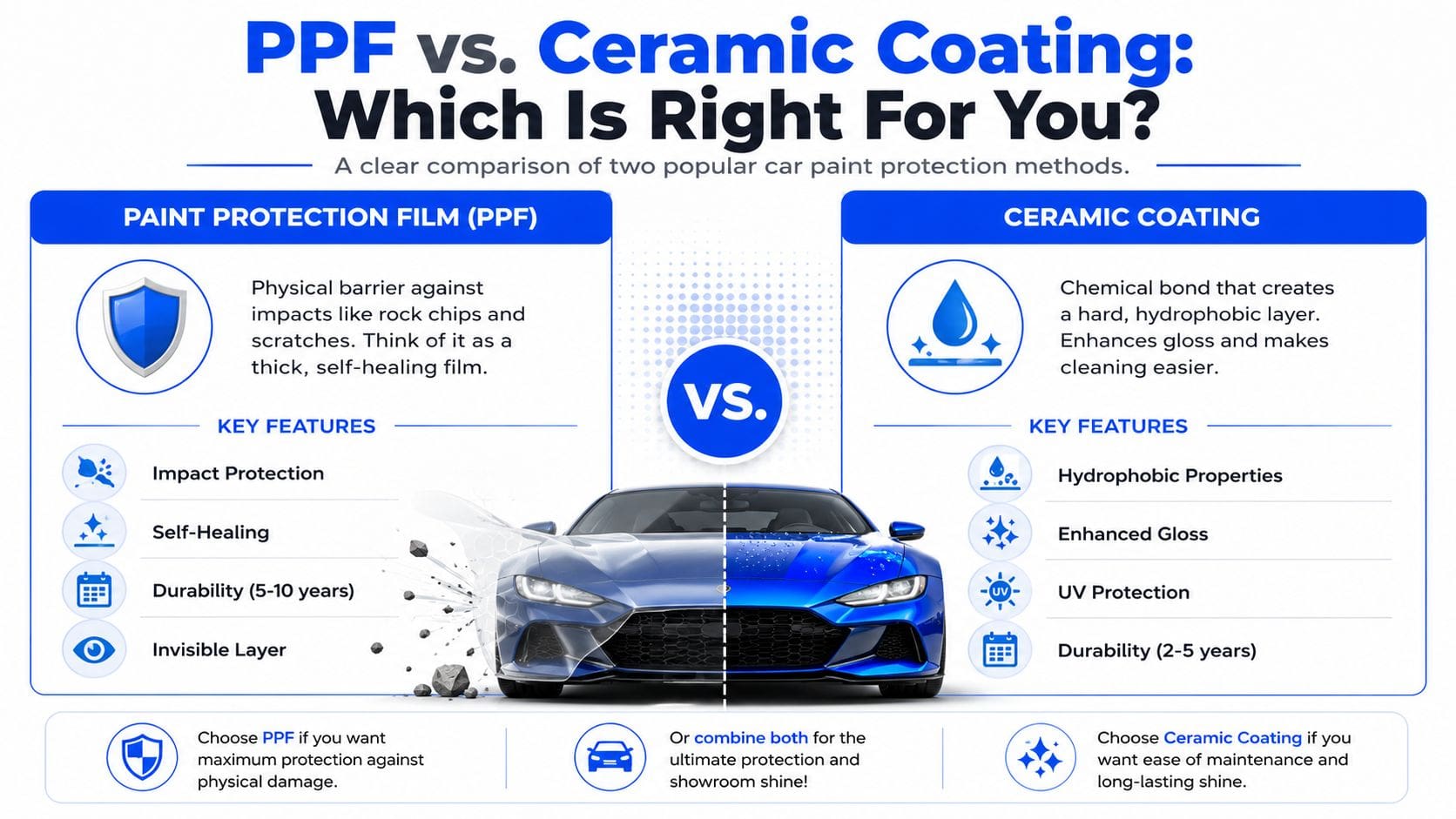
A straightforward comparison helps:
| Protection type | Best analogy | Main job | Best for |
|---|---|---|---|
| PPF | Body armor | Takes the hit from chips and scratches | Front ends, high-mileage drivers, new cars |
| Ceramic coating | Raincoat | Adds slickness, gloss, and easier washing | Daily maintenance, shine, contamination control |
This distinction matters because buyers often search for Columbus ceramic coating or Hilliard ceramic coating thinking it will stop rock chips. It won't. It can help the surface stay cleaner and look glossier, but it isn't a thick sacrificial film.
One source in the verified data puts it plainly. PPF provides the only proven physical barrier against high-impact damage, while ceramic coating mainly addresses surface chemistry and hydrophobicity. That's why the two products are complementary rather than interchangeable.
Who should choose PPF, ceramic coating, or both
If you want the short version, use this framework:
- Choose PPF first if your biggest fear is rock chips, sandblasting on the bumper, or physical wear on the front of the car.
- Choose ceramic coating first if your biggest goal is easier washing, better gloss, and less dirt clinging to the paint.
- Choose both if you want the front of the car physically protected and the whole vehicle easier to clean.
For readers comparing options, this guide on whether ceramic coating is worth it helps clarify what coating does well and where it stops short.
Here's how that looks in real life around Columbus:
- A commuter on I-270 with a newer SUV usually benefits from front-end PPF first.
- A weekend car that sees nice weather and careful washing may be happy with ceramic coating alone.
- A black luxury sedan that gets babied but still sees some highway use often makes the most sense with PPF on impact zones and coating over the rest.
Shop-floor advice: If you can only buy one product and you hate rock chips, buy the one that physically stands between the paint and the road.
That's not anti-coating. It's just matching the product to the problem.
The Cost of Columbus PPF in 2026 An Investment vs an Expense
The price conversation usually gets real after the first highway chip. A Columbus driver buys a new vehicle, keeps it spotless for a few weeks, then one run on I-270 or 71 leaves a mark on the front bumper or hood. That is the moment PPF stops sounding optional and starts looking like insurance for the paint.
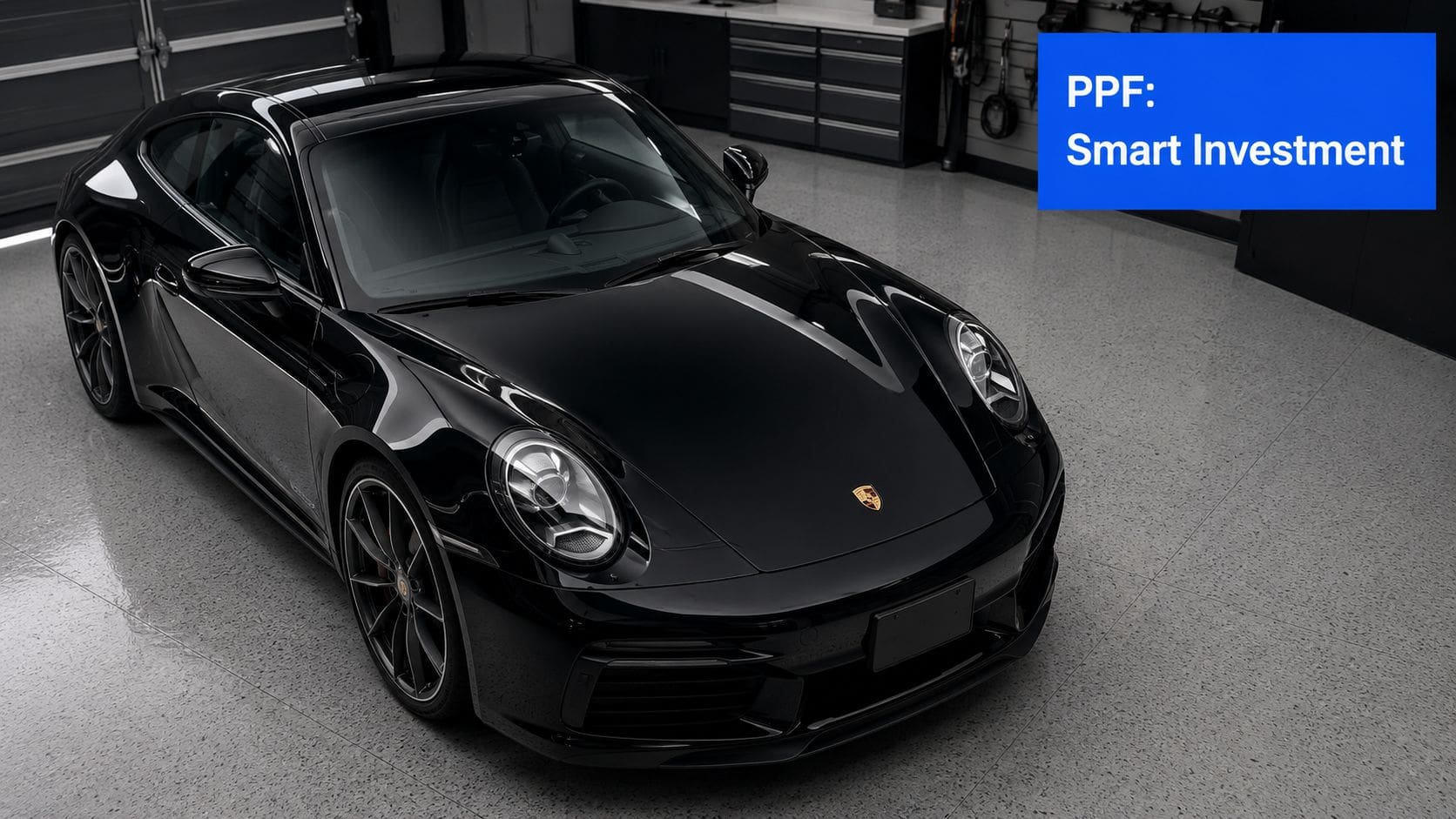
What you're really paying for
PPF is expensive because the labor is expensive. Good film is not cheap, but the bigger part of the bill is the time, prep, software patterns, trimming approach, edge wrapping, and installation skill needed to make it look right and stay down.
One market overview puts PPF packages anywhere from $1,299 to $5,499, while a separate cost discussion places full installations between $2,000 and $10,000 depending on vehicle size, coverage, and complexity, according to this breakdown of PPF cost versus paint repair.
That spread is normal.
A partial front package is one job. A full front on a wide, sculpted SUV is a different job. A full-body wrap on a dark luxury vehicle with lots of edges, sensors, and trim takes more material, more disassembly in some cases, and far less room for mistakes.
In Columbus, the biggest pricing mistake I see is shoppers comparing two quotes that are not selling the same thing. One shop may be covering the first 18 to 24 inches of the hood and fenders. Another may be wrapping the full hood, full fenders, mirrors, headlights, bumper, and tucked edges. Those should not cost the same, and if they do, one of them is cutting something out.
Investment versus expense
PPF makes the most sense when the car is still worth protecting. Newer vehicles, leased luxury cars, performance cars, and daily drivers that live on the highway usually have the clearest case for it.
Analysts cited in this resale-focused PPF report found that vehicles with documented PPF and cleaner original paint can bring more money at resale than similar vehicles showing visible wear. That lines up with what buyers respond to in real life. Original paint in strong condition is easier to sell than a front end full of chips or a bumper that has already been repainted.
That does not mean every owner gets every dollar back. Plenty do not.
If you trade every two years, drive short local routes, and are not bothered by a few chips, PPF can feel like an expense you chose for peace of mind rather than a financial win. If you plan to keep the vehicle for five or six years, drive outerbelt miles every week, or own something where paint condition strongly affects value, the math gets better fast.
There is also the repaint question. A quality repaint on a modern bumper or hood is not just about the invoice. Color match, texture, blend lines, Carfax anxiety, and the simple fact that factory paint is usually the standard all matter. Many Columbus owners choose PPF because they would rather preserve the finish they already paid for than repair damage later and hope the result is close.
Where Columbus owners should be careful
Dealership pricing muddies this conversation.
A dealer may bundle PPF into the sale, mark it up, subcontract the install, and present it like a factory-grade add-on. Sometimes the film is fine. Sometimes coverage is minimal, edges are exposed, and the buyer does not know what brand was installed or who did the work. That is one reason this decision should be judged by coverage, installer skill, and aftercare support, not just the line item on the buyer's order.
A specialist shop usually gives a clearer answer to three questions: what panels are covered, what film is being used, and how the install is handled if you have an issue later. That transparency matters more than a low headline number.
If you want one practical rule, use this. PPF is usually worth it when paint damage would bother you more than the install price, and when the vehicle has enough value, enough exposure, or enough ownership time to justify protecting it. If your goal is to keep the front end cleaner and easier to maintain, using a proper paint protection film cleaner also helps you get the most life and appearance out of that investment.
Protecting Your Investment How to Care for a Car with PPF
Owning a PPF-equipped vehicle isn't difficult. In most cases, maintenance is easier than people expect. The key is avoiding a few bad habits that damage edges or shorten the life of the install.
Simple wash habits that help the film last
Start with gentle, consistent washing. Hand washing is ideal. Clean mitts matter. Drying towels matter. Dirt dragged across film still causes marring, even if the top layer can recover from lighter marks better than bare paint.
A simple routine works well:
- Rinse thoroughly first so loose grit leaves the panel before you touch it.
- Use clean wash media and swap out dirty mitts instead of grinding debris into the surface.
- Dry with soft towels or filtered air rather than letting minerals sit and bake on the film.
- Use products made for film-safe maintenance when you want added slickness or cleanup help.
If you want a dedicated maintenance product, a paint protection film cleaner is designed specifically for this kind of surface.
Common mistakes that shorten film life
The biggest mistake is pressure washer abuse. Verified guidance says high-pressure washer misuse is the primary cause of PPF failure, and the industry “Golden Rule” is to keep the nozzle at least 12–18 inches away from any film edge or seam, as explained in this article about safe pressure washing around PPF edges.
That rule matters because close-range pressure can force water under the film and start lifting at the edge.
Other avoidable mistakes include:
- Aiming directly at seams instead of rinsing across the panel
- Using dirty brushes from public wash bays
- Ignoring bug splatter or sap for too long in hot weather
- Assuming self-healing fixes deep damage when it really helps most with lighter surface marring
Warm water and sunlight can help light marks relax out of quality film, but self-healing doesn't mean invincible.
If you keep wash technique reasonable and don't attack the edges, most owners find PPF easy to live with. That's one reason it works well for daily drivers in Columbus. It protects hard, but it doesn't ask for complicated maintenance in return.
Choosing Your Installer The Specialist vs Dealership Difference
Who installs the film matters as much as the film itself. In Columbus, I see plenty of cars with good material on them and disappointing results because the install was rushed, the prep was weak, or the coverage was sold as an add-on instead of planned around the car.
What quality installation looks like
A proper install starts long before the liner comes off the film. The paint needs to be washed, decontaminated, and inspected under good lighting. Existing chips, edge wear, trim shape, and panel curves all affect how the job should be laid out. If dirt, polish dust, or water spots are left behind, the film will seal them in.
Good installation shows up in small details customers can see without any training:
- Edge work. Wrapped or tucked edges usually look cleaner and stay less noticeable over time.
- Pattern fit. Coverage around headlights, sensors, badges, and corners should look intentional.
- Surface prep. Anything left on the paint stays under the film.
- Panel planning. Seams, stretch, and relief cuts should be chosen for durability, not speed.
That specialist mindset changes the whole workflow. At Lionheart Auto Detailing & Protection, film installation is done in-shop in Hilliard where dust control, lighting, and panel access can be managed properly. Mobile detailing around Columbus is a separate service because maintaining a car and installing film are two very different jobs.
Why dealership add-ons often disappoint
A common pitfall for many Columbus buyers occurs. They buy a new car, get handed a menu in the finance office, and PPF gets presented like floor mats or wheel protection. The problem is that film is only as good as the prep and install quality behind it.
Dealership PPF is not always bad. Some dealers subcontract to capable installers. But many dealership jobs are built around speed, easy upsells, and broad margins. A specialist shop is judged on fit, finish, and how the film looks six months later after road salt, bug season, and a few washes.
Common dealership issues include:
| Problem | Why it matters |
|---|---|
| Visible seams | They collect dirt and make the install stand out |
| Poor edge finishing | Edges are more likely to lift and catch your eye |
| Rushed prep | Contamination gets trapped under the film |
| Limited customization | Coverage may be based on a preset package, not how you drive |
| Removal problems later | Bad cuts and poor adhesion choices can create bigger headaches |
A better question is not just, “What brand of film are you using?” Ask who is installing it, how the paint is prepped, whether edges are wrapped where possible, and what the finished coverage will look like on your specific vehicle.
For owners comparing pro work with a weekend attempt, this guide to PPF DIY considerations explains why film gets difficult fast once you reach mirrors, bumpers, and complex edges.
Paying once for a careful installation usually costs less than paying for removal, repaint correction, and a second install later.
Conclusion Is PPF the Right Choice for Your Car
For the right owner, PPF is one of the smartest ways to protect a vehicle. It makes the most sense when you care about factory paint, notice front-end wear, drive highways often, or plan to keep the car long enough for chips and scratches to add up.
It isn't mandatory for every vehicle. If you rarely drive, don't mind cosmetic wear, or treat cars as short-term transportation, you may not need it. But if chipped paint is going to bother you, or you want to preserve the look and value of a newer vehicle, the answer is usually yes. Paint protection film is worth serious consideration.
The biggest mistake isn't choosing PPF. It's choosing the wrong installer, the wrong coverage, or expecting it to do the job of a ceramic coating. Match the product to your driving habits, your standards, and your ownership plans.
If you're comparing Columbus PPF options, Hilliard paint protection film packages, or trying to decide between film and coating, a short consultation usually clears things up fast.
If you're in Hilliard or the greater Columbus area and want help deciding what makes sense for your vehicle, reach out to Lionheart Detailing. We can walk through your driving habits, the areas that need protection most, and whether paint protection film, ceramic coating, or a full detailing plan fits your car and budget.