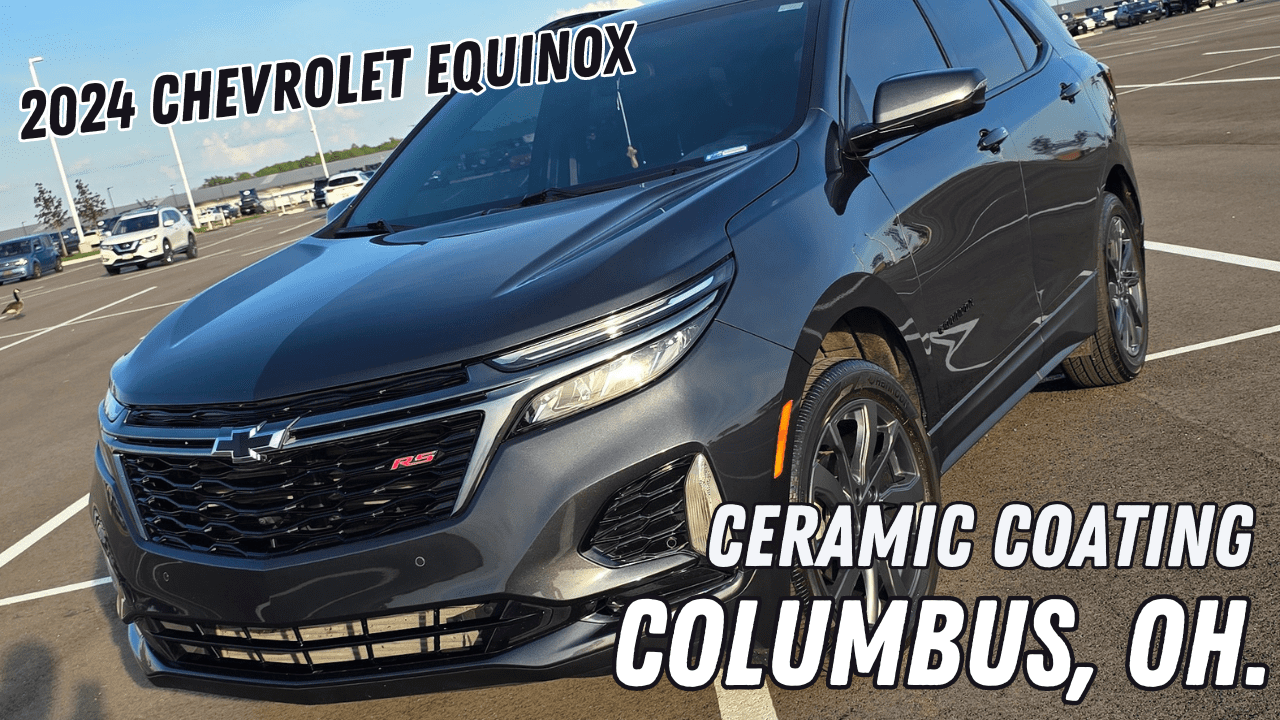
The most popular advice about graphene coating vs ceramic coating is usually too simple: graphene is newer, so it must be better. That isn't how paint protection works. In most detailing products, graphene is an additive inside a ceramic or polymer system, not a completely separate force field for your clear coat. The installer's preparation, the product's binder chemistry, and your washing habits usually matter more than the word printed on the bottle.
For drivers around Hilliard, Dublin, Powell, Upper Arlington, and the wider Columbus area, the better question is practical: do you need easier cleaning and chemical protection, or are you trying to stop rock chips? A coating can help with the first problem. Paint protection film, or PPF, is the right tool for the second.
| Feature | Traditional Ceramic (SiO2) | Graphene-Infused Ceramic |
|---|---|---|
| Main chemistry | Primarily silicon-dioxide-based | Ceramic or polymer system with graphene, graphene oxide, or reduced graphene oxide additives |
| Best use | Gloss, hydrophobic behavior, chemical and UV protection | Similar surface protection, with possible flexibility, thermal, or barrier advantages |
| Water behavior | Strong water repellency when properly applied | May offer strong water repellency, but performance depends on the formula |
| Scratch and chip protection | Helps resist some surface wear, not impacts | Helps resist some surface wear, not impacts |
| Longevity | Product-specific and maintenance-dependent | Product-specific and maintenance-dependent |
| Main buying factor | Preparation, application, and aftercare | The complete formula, testing, preparation, application, and aftercare |
Table of Contents
- The Truth About Graphene and Ceramic Marketing
- What Actually Goes Onto Your Paint
- Comparing Durability Gloss and Maintenance
- The Rock Chip Reality Check
- Choosing the Right Protection for Columbus Weather
- Recommended Service Combinations for Every Budget
- What to Expect From a Professional Application
The Truth About Graphene and Ceramic Marketing
Graphene coating marketing often presents the material as a new category of protection. In practice, many automotive graphene products are ceramic or polymer coatings with a graphene-based additive. That distinction matters in Columbus, where highway grit, winter salt, road chemicals, and frequent temperature changes test the entire paint-protection system.
A graphene coating usually identifies a newer chemistry or a ceramic-graphene hybrid. Formulations commonly combine graphene, graphene oxide, or reduced graphene oxide with silica or polymer binders to create a thin, glossy, water-repellent film. A review of automotive graphene coating chemistry and performance describes conventional automotive ceramic protection as primarily silicon-dioxide-based and graphene systems as newer alternatives or hybrid additives. Reported service life can range from 5 to 10 years, depending heavily on formulation, preparation, installation, and curing quality.
The label alone does not prove better protection. It also does not mean graphene is useless. It means the product and installation deserve closer examination.
What matters more than the label
At Lionheart Detailing, surface preparation comes before the ingredient name. Bonded contamination, oxidation, swirls, and polishing oils can prevent even coverage and weak bonding. A coating cannot create a clean foundation, and it may leave defects visible beneath the cured film.
The practical rule: Pay for preparation and correct installation before paying extra for a fashionable ingredient.
Both coating types can improve gloss, water behavior, cleaning ease, and resistance to environmental contamination. Neither makes a vehicle scratch-proof or protects against a stone striking the paint. Neither removes the need for regular washing and proper drying.
For Columbus drivers, the more important decision may be coating versus paint protection film, or PPF. A coating improves surface appearance and makes maintenance easier. PPF provides a physical barrier for impact-prone areas such as the front bumper, hood, mirrors, and rocker panels. If rock chips are the main concern, choosing between graphene and ceramic will not solve the problem.
Evaluate a graphene product by asking for its complete binder system, graphene concentration, abrasion and chemical-resistance testing, water-repellent retention, curing instructions, and warranty terms. Claims such as “9H hardness” or “next-generation carbon technology” do not establish how the coating will perform after Ohio road exposure.
For a practical evaluation of whether coating protection fits your vehicle, read this guide to whether ceramic coating is worth it. Your parking, driving, washing habits, paint condition, and expectations matter more than the category printed on the bottle.
What Actually Goes Onto Your Paint
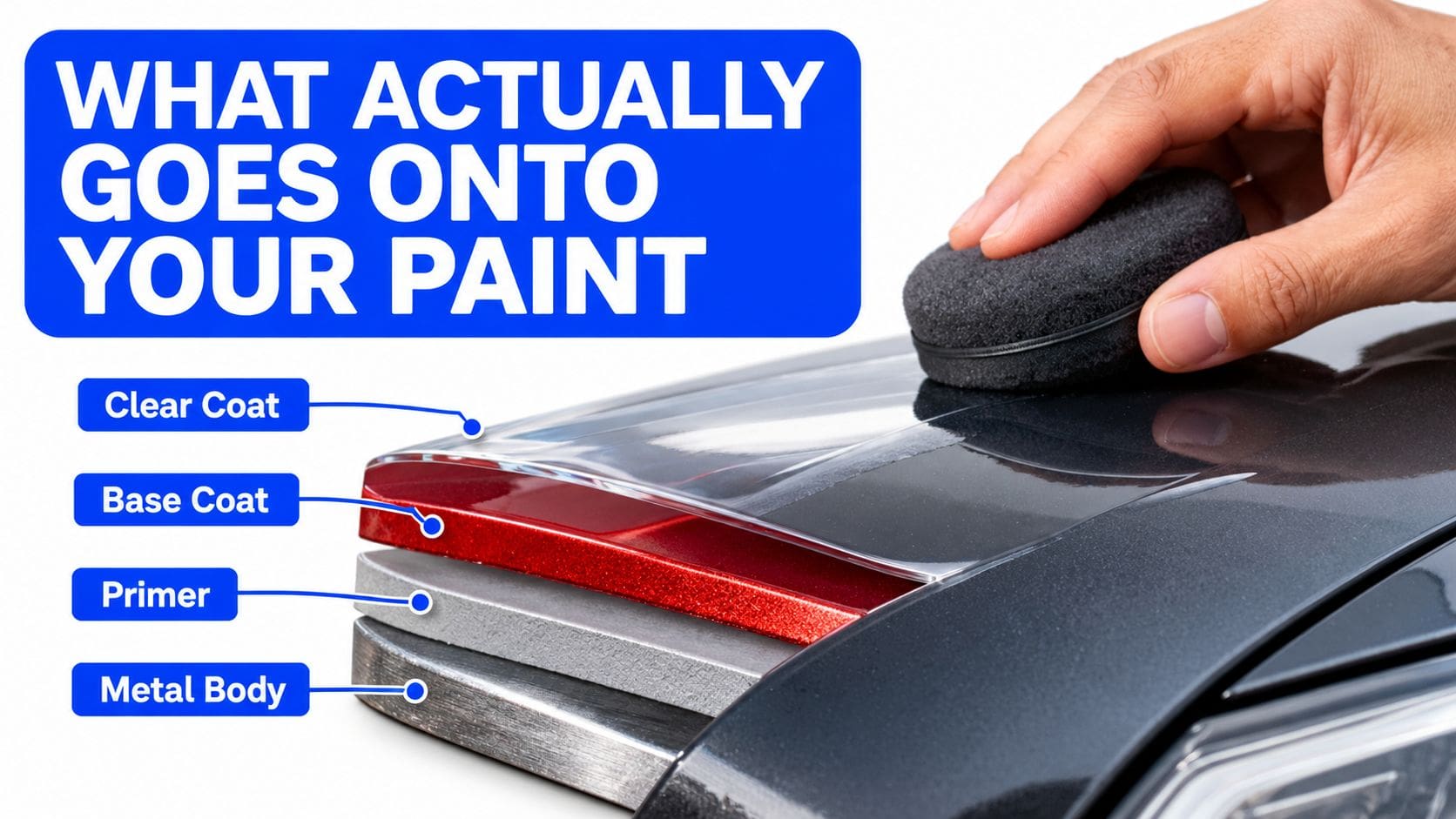
A vehicle's paint system has several layers. The metal body supports the primer, the color-producing base coat provides the finish, and the clear coat sits on top as the factory's transparent protective layer. A coating bonds to the prepared clear coat. It doesn't replace the paint system or repair damage underneath it.
Traditional ceramic chemistry
Most automotive ceramic coatings rely primarily on silicon dioxide, commonly called silica or SiO2. In simple terms, the liquid product spreads across the prepared surface and cures into a thin protective film. That film changes how water, dirt, and contaminants interact with the clear coat. It can add gloss, improve water shedding, support chemical resistance, and make routine washing less labor-intensive.
The coating isn't a thick sheet of glass sitting on the vehicle. It's a very thin cured layer whose performance depends on how evenly it was applied and how well it bonded. High spots, missed areas, poor wipe-off, humidity problems, or contamination during curing can all affect the finished result.
That's why professional paint correction matters before coating installation. Polishing removes or reduces suitable surface defects and improves clarity. It also gives the coating a cleaner, more uniform surface to bond with.
What graphene changes
Graphene is a material family, and automotive products may use graphene, graphene oxide, or reduced graphene oxide. Manufacturers generally incorporate these materials into silica, epoxy, polymer, or other binders rather than applying a pure, freestanding graphene sheet to the vehicle.
The intended benefits are related to barrier behavior, flexibility, water repellency, thermal stability, and wear characteristics. Graphene-based materials can make it more difficult for water, oxygen, chloride, and other corrosive agents to travel through a coating system. Research also points to low friction and high hardness as reasons graphene may contribute to wear resistance, although those laboratory properties don't translate directly into a guaranteed lifespan for automotive clear coat.
Dispersion creates a major challenge. If the additive doesn't distribute evenly through the resin, the finished product may not behave consistently across the panel. The product's binder, curing behavior, film thickness, and surface preparation still control the result.
A graphene bottle, therefore, may contain a useful hybrid formula. It may also offer only a modest practical difference from a strong conventional ceramic. You can't determine that difference from the name alone.
Comparing Durability Gloss and Maintenance
On a customer's driveway, ceramic and graphene-infused coatings often perform more alike than their labels suggest. Both can make water bead or sheet more readily, improve gloss, and help contaminants release during a careful wash. The practical differences usually come from the formula, preparation, application, curing, and the vehicle's environment.
A graphene label does not guarantee longer service life. Some formulations may improve slickness, barrier behavior, or resistance to wear, while another product may offer little advantage over a well-made ceramic coating. Ohio driving adds its own demands: road salt, winter grime, pollen, rain, and hard-water residue all test the coating and the owner's maintenance routine.
Seasonal maintenance matters more than the label
| Maintenance factor | Traditional Ceramic (SiO2) | Graphene-Infused Ceramic |
|---|---|---|
| Winter road salt | Rinse salt and brine from painted surfaces before they dry and build up | Requires the same rinsing routine; the additive does not remove salt by itself |
| Hard-water spotting | Dry panels promptly after washing or rain to limit mineral residue | May help under some formulas and conditions, but drying remains necessary |
| Summer contamination | Remove bird droppings, bugs, and tree sap before they etch or bond to the surface | Follows the same rule, regardless of advertised slickness |
| Maintenance schedule | Needs gentle washing, clean tools, and periodic inspection | Needs the same disciplined care; a graphene additive is not a substitute for upkeep |
A coating's water behavior is easy to see, so it receives heavy attention in advertising. Tight beads look impressive, but beading does not prove that the coating will resist every chemical, prevent scratches, or last longer. Minerals remain behind after evaporation, especially when a vehicle dries outdoors or receives hard water.
Graphene may reduce spotting with certain products and conditions, but there is no universal advantage across every formula. Drying the vehicle after washing or rain still matters.
Washing determines the finish you keep
Use a pH-neutral shampoo, a clean microfiber wash mitt, and separate tools for wheels and painted surfaces. Rinse loose grit away before touching the paint. Work from the top downward, change dirty rinse water, and dry with a clean, absorbent towel instead of allowing mineral-heavy water to evaporate on the panels.
Do not scrub harder because the vehicle is coated. Dry dust, automatic brush tunnels, harsh degreasers, and neglected bird droppings can still create defects or staining. Our ceramic coating maintenance tips for Columbus drivers explain the routine that helps protect the investment after installation.
Slickness makes washing easier. It does not make careless washing safe.
The Rock Chip Reality Check
A ceramic or graphene coating won't stop a rock chip. This is the point I repeat most often because it prevents expensive disappointment. Coatings protect the surface from contamination and help the paint clean up more easily, but they don't have the thickness or structure needed to absorb a highway-rock impact.
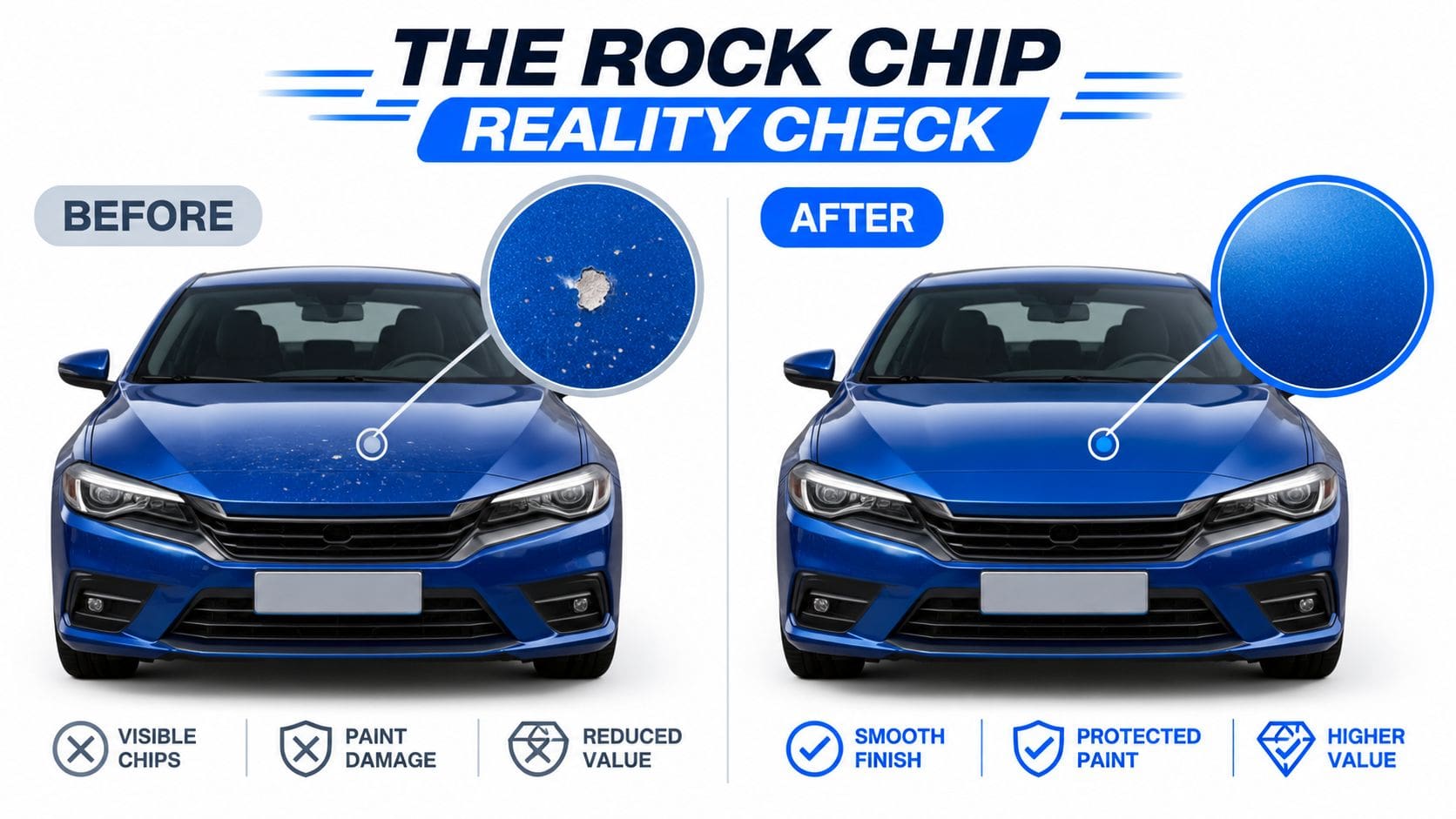
Surface protection and impact protection are different jobs
A coating can help with:
- Chemical exposure: Bird droppings, bug residue, tree sap, road film, and other contaminants have less direct contact with the clear coat.
- Cleaning: Dirt and winter grime can release more readily when the surface is properly coated.
- Gloss retention: A clean, polished surface can keep its clarity and shine with the right care.
- UV and environmental exposure: The coating provides an additional surface layer between the environment and the factory finish.
A coating cannot reliably stop:
- Rock chips: Gravel can strike with enough force to break through the coating and paint.
- Deep scratches: Keys, sharp objects, and careless contact can reach the clear coat or base coat.
- Door dings: A coating doesn't change the flexibility of the body panel.
- Severe impact damage: Hard contact requires a physical protective layer or body repair.
The distinction is supported by research that separates corrosion and surface durability from road-debris impact. Neither coating should replace paint-protection film on bumpers, hoods, mirrors, or rocker panels exposed to road debris, because coating hardness doesn't equal impact resistance (research on coating protection and impact limitations).
Where PPF makes sense
For an Ohio daily driver, the front bumper, leading hood area, front fenders, mirror caps, and rocker panels see the most road debris. That's where a clear urethane film earns its place. It physically absorbs and distributes impact better than a thin surface coating.
The most balanced setup is often PPF on impact-prone panels with ceramic or graphene-enhanced coating over the remaining painted surfaces. The film handles the debris. The coating improves gloss, cleaning, and environmental resistance across the vehicle.
See the available paint protection film options before choosing a coating based on rock-chip concerns. If chips are your main fear, PPF deserves attention before a graphene upgrade.
Choosing the Right Protection for Columbus Weather
Central Ohio gives paint a varied workload. A vehicle may face salt and brine in winter, wet road film during shoulder seasons, bug residue in warmer months, and strong sun while parked outside. Drivers commuting through Columbus, Hilliard, Dublin, Powell, Grove City, or Upper Arlington also deal with highway spray and construction debris.
Both ceramic and graphene-enhanced coatings can help reduce how aggressively that contamination bonds to the paint. Their hydrophobic surfaces make rinsing and washing easier, which matters because winter grime often tempts owners to scrub harder than they should. Less aggressive contact can mean fewer wash-induced marks over time.
Winter salt needs prompt removal
Road salt and brine shouldn't sit on the vehicle longer than necessary. A coating doesn't make salt harmless, but it can make the residue easier to remove when the owner rinses the vehicle properly. Pay particular attention to lower doors, rocker panels, wheel arches, and the rear of the vehicle, where spray accumulates.
A touchless rinse can remove loose material before a contact wash. For heavily soiled vehicles, don't drag a mitt across the paint until the surface has been thoroughly rinsed.
Summer contamination creates a different problem
Bug remains and bird droppings can become difficult to remove when they bake onto a hot panel. A coated surface may release them more easily, but the best approach is still quick removal with a safe microfiber towel and appropriate cleaner. Don't wait for the next full detail if contamination is sitting on the paint.
For vehicles parked outdoors near Hilliard or Grove City, UV exposure is another reason owners consider a coating. Ceramic and graphene systems can add a protective surface layer, but neither replaces washing, decontamination, and occasional inspection. If the vehicle regularly sits beneath trees, mineral deposits and organic residue may matter more day to day than the difference between coating chemistries.
In Columbus weather, a coating earns its keep through easier cleaning and better habits, not by making contamination disappear.
Recommended Service Combinations for Every Budget
A sensible protection plan starts with the vehicle's use. A new BMW that spends nights outside, a Tesla driven daily on the highway, and a work truck used around construction sites don't need the same package. The right choice also depends on whether the paint is already chipped, scratched, or heavily swirled.
Good for straightforward daily driving
A single-layer ceramic coating is a reasonable starting point for a commuter, family SUV, or first-time coating customer. It adds gloss, water repellency, and easier maintenance without turning the decision into a chemistry contest.
Choose this route when:
- The vehicle stays mostly on paved roads: Surface protection and easier washing may solve the main concern.
- The owner washes consistently: Proper maintenance gives the coating a fair chance to perform.
- The budget favors preparation: Good decontamination and polishing are more valuable than a premium label applied over neglected paint.
Our ceramic coating packages in Columbus can be evaluated alongside the paint condition and the vehicle's daily use.
Better for a specific graphene preference
Graphene-infused ceramic can make sense if you specifically value slickness, thermal characteristics, or a product with documented barrier and wear testing. It's a reasonable upgrade when the installer can explain the complete formula and show clear maintenance requirements.
Don't choose it just because an advertisement calls conventional ceramic outdated. A properly installed ceramic coating can outperform a poorly installed graphene product.
Best for highway exposure
For a newer vehicle, enthusiast car, Tesla, BMW, or truck that sees frequent highway driving, I'd rather build a combined system than spend the entire budget on graphene. Put PPF on the front end and other impact-prone areas, then use ceramic or graphene-enhanced coating on the paint, wheels, trim, glass, or the exposed areas that benefit from easier cleaning.
Owners who spend long hours in the vehicle may also consider professional window tinting in Hilliard as part of a broader comfort and protection plan. Tint and exterior coating solve different problems, so combining them works better than asking one service to do everything.
What to Expect From a Professional Application
The coating installation is the visible part of the job, but most of the result comes before the bottle is opened. A proper appointment starts with an inspection of the paint, trim, wheels, glass, existing damage, and previous repairs. That inspection helps identify what polishing can improve and what needs to remain visible as existing damage.
Preparation comes first
The process typically includes:
- Thorough washing: Loose dirt, road film, and surface contamination are removed without grinding grit across the paint.
- Chemical and mechanical decontamination: Bonded contamination is addressed so polishing pads and coating applicators work on a clean surface.
- Paint correction: Swirls, haze, and suitable defects are reduced through machine polishing. Deep scratches and chips may remain because removing too much clear coat isn't a responsible repair strategy.
- Panel preparation: Oils and residue are removed so the coating can bond evenly.
- Controlled application: The product is applied in manageable sections, leveled at the correct time, and checked for high spots or streaking.
- Curing and delivery: The vehicle stays protected from contamination while the coating cures according to the product's requirements.
A controlled shop environment is especially useful during application and curing. Mobile detailing can be practical for inspection, washing, and some preparation, but coating work still requires disciplined control of dust, moisture, lighting, and temperature.
Maintenance protects the warranty and the finish
A coated vehicle still needs regular washing with a coating-safe, pH-neutral soap. Avoid abrasive brushes, automatic tunnel washes, dry wiping, and aggressive household cleaners. Remove bird droppings, bug residue, tree sap, and salt film promptly instead of waiting for contamination to harden.
Lionheart Detailing offers mobile detailing and in-shop appointments at 4402 Weaver Court North, Suite 204, Hilliard, Ohio, serving the Columbus metro and surrounding communities. You can visit Lionheart Detailing for location details before scheduling.
Lionheart Detailing provides ceramic coating, graphene-enhanced coating options, paint correction, PPF, and full detailing for drivers who want a protection plan matched to real use. Contact Lionheart Detailing to discuss your vehicle, driving conditions, and whether a coating, PPF, or combination of both makes sense.