You just brought home a car you've worked toward for years. Maybe it's your first Porsche, Ferrari, McLaren, Lamborghini, or a high-spec BMW M or AMG. You park it in the garage, step back, and the first question hits almost immediately.
How do you keep it looking this good?
That's where exotic car detailing starts. Not with soap and a towel, but with a different mindset. You're not just cleaning a vehicle. You're preserving paint, trim, interior materials, and long-term value.
For new owners in Central Ohio, that usually turns into a second question. Should you book a proper in-shop service, or would a mobile detailer be enough for what you need right now? If you've been searching for ceramic coating near me, Hilliard ceramic coating, Columbus PPF, or Hilliard auto detailing, the options can feel confusing fast.
The good news is that it gets simple once you understand what each service does, what problem it solves, and where professional care matters most. Some services are about appearance. Some are about preventing damage. The best ones do both.
Table of Contents
- Why Your New Car Needs More Than a Simple Wash
- Understanding What Makes Your Exotic Car Different
- The Foundation of Flawless Paint Correction Ceramic Coating and PPF
- Complete Care for the Interior Trim and Windows
- The Detailing Process In-Shop vs Mobile Service Explained
- Your Investment Costs Timelines and Long-Term Maintenance
- How to Choose a Trusted Columbus Exotic Detailing Specialist
Why Your New Car Needs More Than a Simple Wash
A standard wash removes loose dirt. It doesn't solve the things that age an exotic vehicle.
Fine swirl marks from bad wash mitts, light scratching from dealership prep, mineral spotting, bug residue, brake dust buildup, and rough contamination on the paint all start changing how the finish looks and feels. On a regular commuter, that might be annoying. On an exotic, it becomes obvious quickly because the paint, trim, wheels, and glass are usually more visually dramatic.
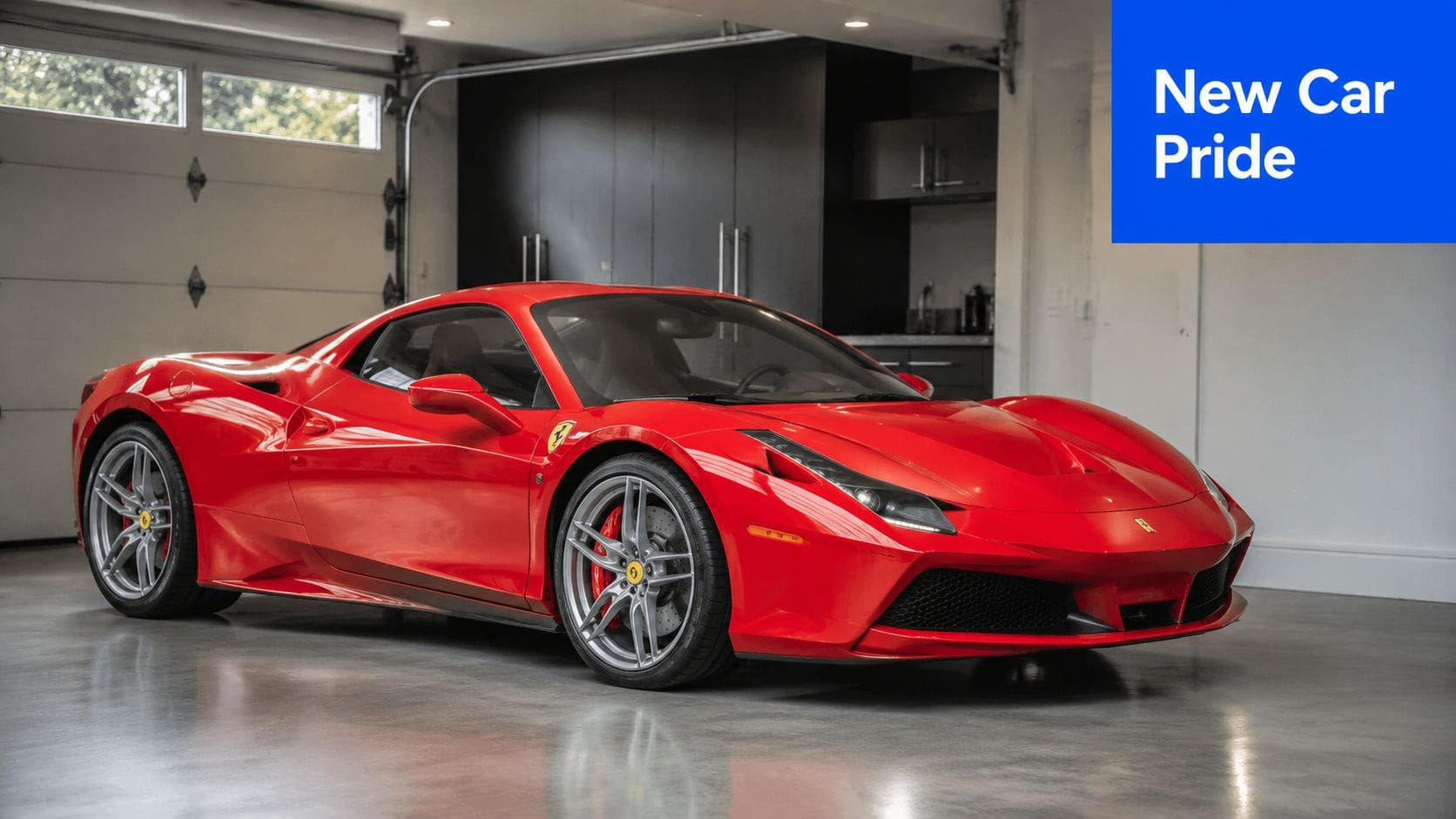
Cleaning is basic, preservation is the real job
Exotic car detailing means treating the car like a collection of specialty surfaces, not one big painted object. Paint needs one approach. Carbon fiber needs another. Alcantara, leather, matte trim, piano black, wheels, calipers, and glass all need their own products and techniques.
That's why experienced owners stop thinking in terms of “wash packages” and start thinking in terms of:
- Correction: Fixing defects already in the finish
- Protection: Preventing chips, etching, UV wear, and contamination
- Maintenance: Keeping the results from falling apart after the initial service
Practical rule: If a process would be acceptable for a daily driver at a tunnel wash, it usually isn't good enough for an exotic.
What new owners usually underestimate
Those new to detailing often assume the biggest threat is dirt. It usually isn't. The bigger threat is improper care.
Common examples include:
- Dry wiping dust: Dust looks harmless, but dragging it across soft paint can leave visible marring.
- Automatic brush washes: They're fast, but they can add swirls and haze.
- Cheap dressings: Some leave greasy residue on trim, leather, or satin surfaces.
- Skipping protection: Chips, staining, and environmental fallout don't wait until the car is older.
If you're in Columbus, Hilliard, Dublin, Powell, or New Albany, the goal isn't to make the car merely clean for the weekend. The goal is to make smart decisions early so the car still looks special years from now.
Understanding What Makes Your Exotic Car Different
You bring the car home, wash it carefully the next weekend, and then notice faint marks in the sunlight that were not obvious at delivery. That experience is common with exotic cars, and it catches new owners off guard. The difference is not hype. It comes from the materials on the car, the tighter visual standards owners expect, and the higher cost of correcting a small mistake.
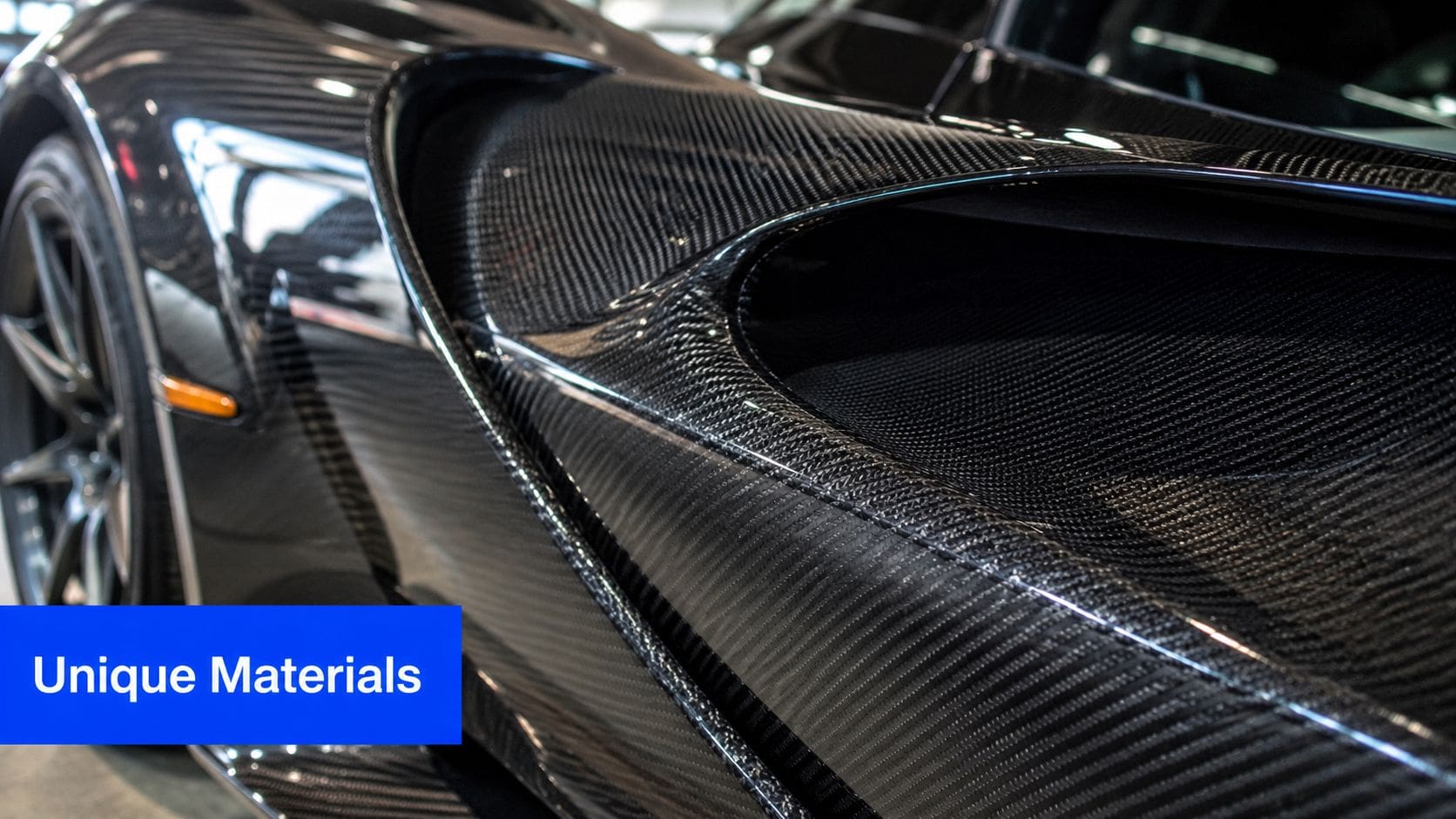
Many exotics use finishes and trim pieces that react differently than the surfaces on a typical commuter car. A wash method that looks acceptable on a family SUV can leave visible marring on a soft, dark finish. Exposed carbon fiber, piano black trim, and delicate interior materials can also show wear quickly if the wrong towel, cleaner, or brush touches them.
Soft paint and specialty finishes change your maintenance plan
This is usually the first surprise for a new owner. The car may look perfect under showroom lighting, then show light wash marks after only a few cleanings. In many cases, that does not mean the paint is defective. It means the finish has less tolerance for friction, leftover debris in a wash mitt, or rushed drying.
A good comparison is a black piano in a living room. It can look stunning, but it also shows fingerprints, dust, and wiping marks faster than a textured surface. Exotic paint and trim often behave the same way.
Matte and satin finishes require even more discipline because they cannot be polished the same way gloss paint can. Carbon-fiber trim needs products that clean without hazing the resin or dulling the finish. Alcantara needs light, controlled cleaning because saturation and aggressive scrubbing can change how the fibers look and feel.
For a new owner in Columbus, the practical question is simple. Which surfaces on your car are expensive or difficult to correct later? Those surfaces usually deserve the most conservative care plan from day one.
Repair difficulty should shape your protection choices
Exotic detailing is different because correction is not always simple, quick, or predictable. A small issue on a standard vehicle may be easy to improve. On an exotic, the same issue can involve delicate trim removal, careful masking, specialty polishing choices, or a decision to protect the area before regular driving adds more wear.
That matters when you are deciding between in-shop work and mobile service. Mobile service can be a strong fit for maintenance washing, light interior care, and convenience-focused upkeep, especially if the vehicle is already protected and stored properly. In-shop work usually makes more sense when lighting, power, contamination control, curing conditions, or precise film installation will affect the result.
Front-end protection is a good example. Before choosing coverage, many owners compare the practical tradeoffs in these paint protection film pros and cons for exotic cars. The right answer depends on how you drive, where you drive around Columbus, and how comfortable you are with future repair work versus prevention now.
What this means for you as an owner
The goal is not to memorize chemistry. The goal is to make fewer expensive mistakes.
Use this framework:
- Identify the sensitive surfaces first: Soft paint, matte panels, carbon fiber, gloss black trim, and Alcantara need their own approach.
- Match the service to the risk: Maintenance work can often be handled mobile. Correction, coating prep, and film work usually benefit from shop conditions.
- Judge products by the surface, not the label: A cleaner that is fine for leather may be wrong for Alcantara or satin trim.
- Prioritize prevention where repairs are harder: If a panel or trim piece is difficult to refine, replace, or match, early protection usually makes more sense.
That is the mindset experienced owners develop. Cleanliness matters, but preservation is the primary goal.
The Foundation of Flawless Paint Correction Ceramic Coating and PPF
You pick up your exotic car, the paint looks glossy under the dealership lights, and the first instinct is to protect it fast. That instinct is right. The part many new owners miss is the order.
Protection only works as well as the surface under it. If the paint already has light wash marks, haze, or delivery prep marring, a coating will preserve those flaws instead of hiding them. If the goal is chip protection, a coating will not stop the first stone kicked up on I-270. Each service has a different job, and understanding that job helps you spend money in the right place.
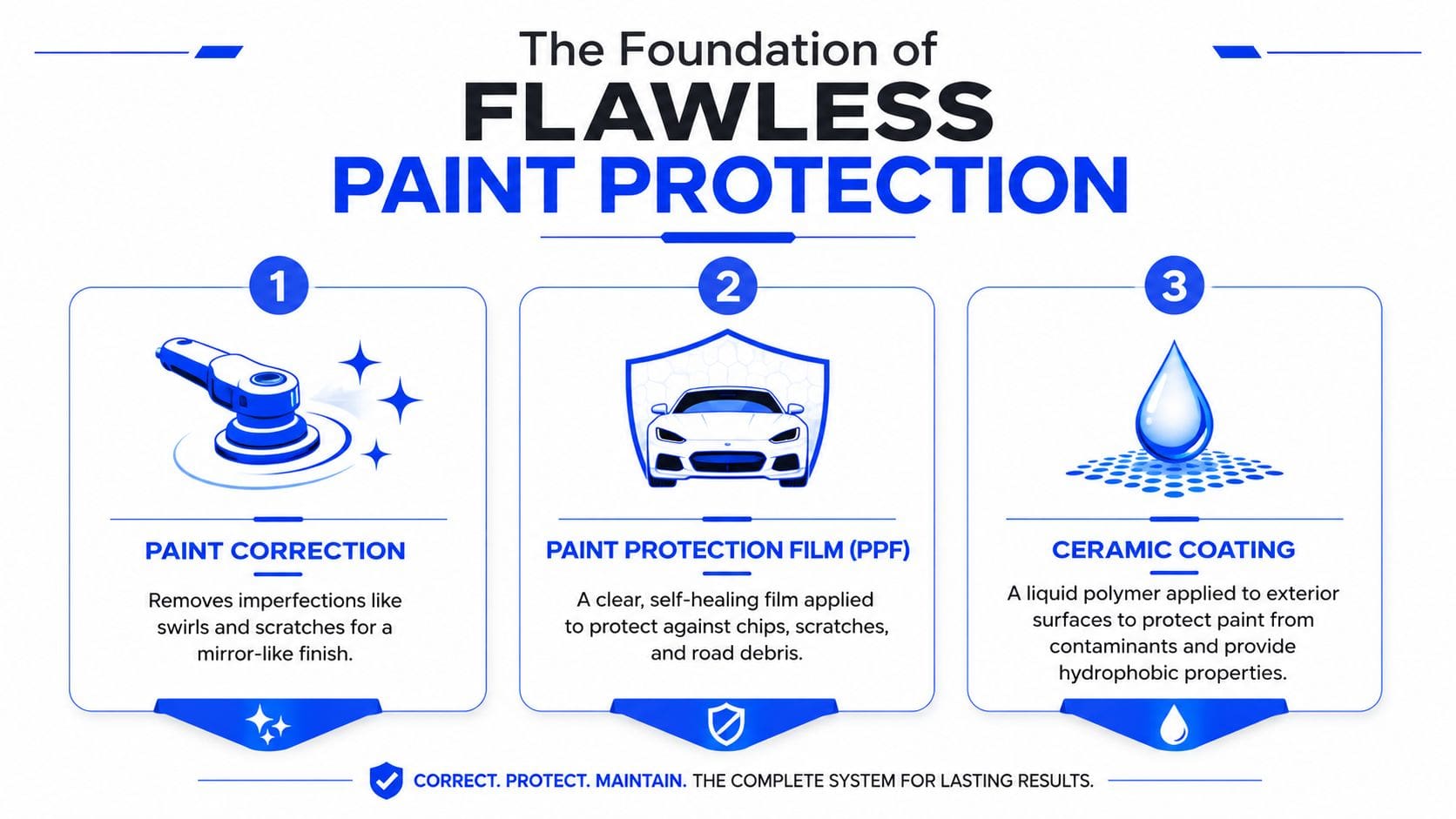
Paint correction refines the finish so you start with clarity.
PPF absorbs physical abuse in the areas that get hit most.
Ceramic coating helps the surface stay cleaner and wash more easily.
Industry analysts at Market Intelo describe luxury car detailing as a growing market and note that the global luxury car detailing market was projected to reach $1.8 billion in 2025. The same market outlook says ceramic coating led the service mix in 2025 at $513 million, or 28.5% of the market. That tracks with what owners ask for in practice. They want protection, but they often need help deciding which kind.
Paint correction creates the right starting point
Paint correction is machine polishing that removes or reduces swirls, light scratches, haze, oxidation, and some water spot etching. It works like sanding wood before you apply stain. If the surface is uneven at the start, the final layer only makes the unevenness easier to see.
That is why prep matters so much on exotic paint, especially on darker colors and softer clear coats that show every mistake.
A proper correction usually includes:
- Wash and decontamination: Removing loose dirt, iron fallout, tar, and bonded contamination.
- Inspection under focused lighting: Finding defects that overhead lights can miss.
- Test spot polishing: Choosing the least aggressive pad and polish combination that gets the result safely.
- Panel-by-panel adjustment: Refining the approach around edges, curves, repainted areas, and sensitive trim.
For owners trying to understand polishing levels before booking service, this guide to one-step vs two-step paint correction helps explain why one exotic may need a light refinement while another needs a more involved polishing plan.
Paint correction improves what is safely correctable. Good detailers know when to stop. Chasing every last defect on thin or delicate paint can create more risk than value.
A brand-new exotic can still need correction. Dealer prep, transport film removal, lot dusting, and rushed washes often leave the first marks before the car reaches your garage.
Here's a helpful visual example of how these layers fit together in practice.
PPF is the physical barrier
Paint Protection Film is clear urethane film installed over painted surfaces that take repeated impact. Its role is straightforward. It stands between the paint and the road.
That matters most on exotics because the shapes that look dramatic also catch abuse. Low front bumpers, wide fenders, mirror caps, rocker panels, and rear flare sections collect chips fast on Columbus roads and highways.
What PPF does well:
- Takes the first hit: Rock chips and road rash strike the film before the paint.
- Protects vulnerable panels: Front clips, rocker areas, and rear wheel impact zones benefit the most.
- Recovers from light surface marring: Many modern films self-heal with heat.
What PPF does not do:
- Correct defects underneath
- Prevent every form of damage
- Replace careful washing
For a new owner, the practical question is coverage. If the car is a weekend car that sees mostly local, fair-weather driving, a front-end package may make sense. If it will see frequent highway miles, spirited road trips, or tight parking situations, full-body coverage becomes easier to justify. This is also where in-shop service usually wins. Film installation depends on controlled lighting, clean panels, precise trimming, and stable conditions during installation.
Ceramic coating is the surface protector
Ceramic coating forms a bonded protective layer over the clear coat or over film, depending on the package. Its value is less about impact resistance and more about reducing how hard the environment sticks to the surface.
The guide to ceramic coating lifespan and prep explains that professional coatings are commonly built around silicon dioxide (SiO₂) or silicon carbide (SiC) chemistry. It also notes that many professional-grade coatings last 2 to 5 years, while some advanced systems can last 7 or more years when the prep and curing process are done correctly.
That prep is where many coating results are won or lost. The surface has to be corrected if needed, stripped of polishing oils, and allowed to cure properly. The same source notes a typical 24 to 72 hour cure window, which is one reason a shop setting often makes more sense than a mobile appointment for coating installation.
Ceramic coating helps with:
- Water behavior: Water beads and sheets off more easily.
- Cleaning: Bugs, bird droppings, and road film release faster during washes.
- Gloss: Refined paint tends to look sharper and deeper after coating.
- Maintenance: Less scrubbing lowers the chance of adding fresh wash marring.
Ceramic coating does not stop rock chips, and it does not make careless washing harmless.
How these services work together
New owners usually do best with a simple decision framework.
| If your main concern is… | Start here | Why |
|---|---|---|
| Visible swirls, haze, or dealer-installed marring | Paint correction | Protection should go over paint that already looks the way you want |
| Rock chips on highways around Columbus | PPF | Film provides physical impact protection that coatings cannot |
| Easier washing and better resistance to grime | Ceramic coating | Coating helps the surface stay cleaner and release contamination faster |
| Long-term exterior preservation | Correction + PPF + ceramic coating | Each layer handles a different risk |
For many Columbus owners, the best answer is not choosing a single service. It is choosing the right sequence.
Correct first if the finish needs refinement. Install PPF on the areas that take abuse. Add ceramic coating where easier maintenance and surface protection matter. If you are deciding between mobile and in-shop service, use a simple rule. Correction and coating can sometimes be done mobile if conditions are controlled, but high-end film work and multi-day protection packages usually benefit from a shop environment.
Complete Care for the Interior Trim and Windows
A lot of owners protect the paint and forget the cabin. That's a mistake, especially in a car where the interior materials are part of what made you fall in love with it in the first place.
Soft leather, Alcantara, contrast stitching, carbon-fiber trim, gloss touchpoints, and specialty switchgear all age differently. A careless interior wipe-down can leave shiny patches on Alcantara, streaks on trim, or residue along seams and perforations.
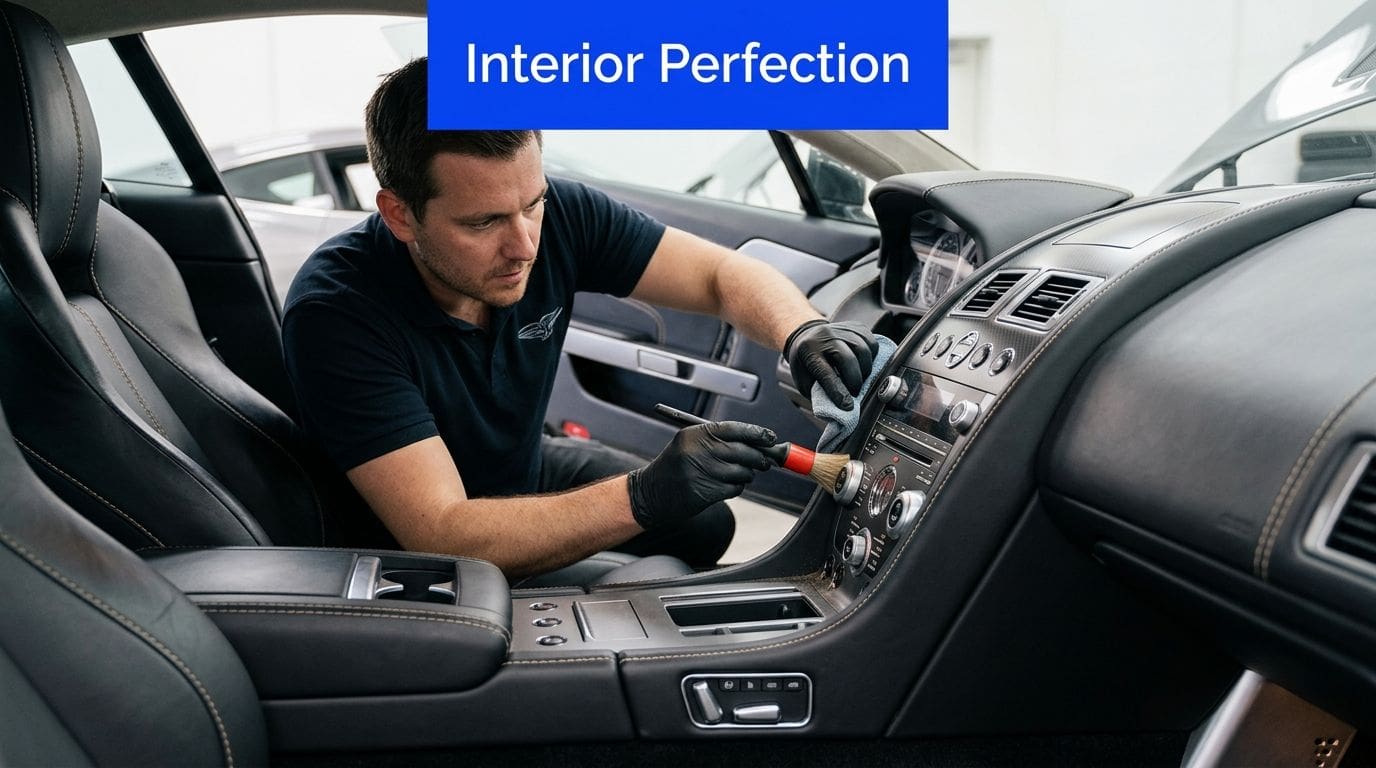
Interior detailing for delicate materials
Professional interior detailing is mostly about restraint. The job isn't to soak every surface with product. It's to clean only as aggressively as the material allows.
Good interior work usually involves:
- Vacuuming with control: Using crevice tools and soft brush attachments around seat rails, stitching, and vents.
- Material-specific cleaners: Leather cleaner for coated leather, low-residue cleaners for Alcantara, and gentle products for carbon fiber and piano black.
- Towel management: Separate towels for leather, trim, glass, and dirty areas.
- Light agitation where needed: Soft detailing brushes around buttons, seams, and emblems.
If you want a basic process to compare against what a shop offers, this article on how to clean a car interior properly is a solid baseline.
Owner habit to avoid: Spraying product directly onto screens, gauge clusters, or Alcantara. Spray into the towel first, then control where the moisture goes.
Wheel brake and glass care matter too
On exotic cars, wheel cleaning isn't routine if the car has carbon-ceramic brakes. It's sensitive work.
This guide to detailing tips for exotic cars with carbon-ceramic brakes notes that wheels should be cleaned only when completely cool using pH-balanced shampoo, with a contact-minimized wash frequency of every 2–3 weeks to help preserve value and avoid heat-induced flash-spotting on delicate hubs or calipers.
That matters because wheels and brakes are usually where rushed detailers get into trouble first.
A safer approach looks like this:
- Check temperature first: If the brakes are warm, wait.
- Use pH-balanced products: Strong wheel acids are a bad gamble on sensitive finishes.
- Minimize contact: Let chemistry do more work than scrubbing.
- Use dedicated tools: Wheel tools shouldn't touch paint or interior surfaces.
Why window tint belongs in the conversation
Window tint often gets treated like a styling add-on. In practice, it's part of a full preservation plan.
Tint helps reduce cabin heat, glare, and UV exposure on the materials you touch every time you drive. That means leather, dashboards, trim, and touchscreens spend less time baking under direct sun. It also makes the car more comfortable to use, which matters if the vehicle isn't just a garage piece.
For owners building a full protection package, interior detailing and tint complete the logic. Exterior protection keeps the outside from degrading. Interior care and tint help the cabin age more gracefully.
The Detailing Process In-Shop vs Mobile Service Explained
You buy the car, bring it home, and want to keep it perfect without adding miles or risking a careless wash. That is usually when the first practical question comes up. Should the detailer come to you, or should the car go into a shop?
For a new exotic owner in Columbus, the right answer depends less on convenience and more on what the service needs to succeed. Some work can be done safely at your home or office. Other work depends on lighting, temperature control, dust management, and cure time. If the environment changes the result, the shop usually wins.
What happens before protection goes on
Before coating, film, or correction, the car needs proper preparation. That includes a safe wash, decontamination, careful drying, inspection under strong lighting, and surface prep so polishing or protection can bond to clean paint.
Prep works like painting a wall in your house. If the surface is dusty or uneven, the finish may look acceptable at first, but the flaws stay underneath and the result does not last the way it should. On an exotic car, that matters even more because soft paint, sharp body lines, exposed carbon fiber, and low ride height leave less room for shortcuts.
A driveway can be fine for maintenance. It is a much harder place to control airborne dust, shifting sunlight, water spotting, or sudden weather when the service involves correction, ceramic coating, or PPF.
When mobile service makes sense
Mobile detailing has grown because many owners want care that fits real life, not just ideal conditions. Analysts at Mordor Intelligence in their car detailing services market report say mobile and on-demand detailing is projected to expand in the coming years, which lines up with what many Columbus owners already prefer: convenience without giving up professional care.
Mobile service is usually a good fit for work such as:
- Maintenance washes: Best for cars that already have paint correction, coating, or film in place
- Interior care: Vacuuming, leather cleaning, trim wipe-downs, and glass cleaning are often well suited to on-site service
- Regular upkeep: Tire dressing, light touch-up cleaning, and preservation visits help keep a protected car from sliding backward
- Owners limiting unnecessary trips: If avoiding road debris, rain, or extra mileage matters, mobile service solves a real problem
For many owners, mobile service is the maintenance phase of the plan. Once the major protection work is complete, a good mobile detailer helps preserve it.
When the shop is the better choice
A shop is the better choice when the result depends on control.
Bring the car in for:
- Paint correction: Proper defect spotting requires stable, high-quality lighting
- Ceramic coating: Clean indoor conditions and stable temperature help the coating flash and cure correctly
- PPF installation: Film work needs controlled dust levels, precise alignment, and enough time without interruption
- Multi-step protection packages: If the car is getting correction, coating, film, wheel work, and trim treatment, it often needs to stay indoors between stages
Here is the simplest way to decide. Ask whether the service changes the condition of the surface or just maintains it. If it is maintenance, mobile is often a smart choice. If it changes the surface through polishing, bonding, curing, or film installation, in-shop service is usually the safer bet.
For Columbus owners, that often leads to a hybrid plan. Use the shop for correction, coating, and PPF. Use mobile service for scheduled washes and interior upkeep after the heavy work is done. That approach protects the finish, respects your time, and gives each type of service the environment it needs.
Your Investment Costs Timelines and Long-Term Maintenance
You pick up your exotic on Friday, schedule a detail on Monday, and expect a quick wash-and-protect visit. Then the estimate includes inspection, decontamination, polishing, coating prep, cure time, and a follow-up wash plan. For a new owner, that can feel like overkill until you understand what you are paying for. The bill is not just for product. It is for time, environment, and the risk control needed to protect a high-value finish.
That is the practical way to read any quote in Columbus. Ask three questions first. What condition is the car really in. What level of protection do you want. Which parts of the job require a shop, and which can be handled at home or by a mobile maintenance visit. Once those answers are clear, the price starts to make sense.
What affects price and scheduling
Two cars with the same badge can need very different work.
A new exotic may still arrive with transport film residue, light wash marring, adhesive traces, or fine scratches from dealer prep. An enthusiast-owned car with soft paint may need careful correction before any coating goes on. PPF pricing also changes fast based on coverage. A partial front package, full front, track package, and full-body wrap are different projects with different labor demands.
Shape matters too. Sharp body lines, deep vents, exposed carbon fiber, large wheels, and tight lower sections all slow the work down. That is not wasted time. It is the difference between forcing a result and building one carefully.
Timelines follow the same logic. A maintenance wash may fit into part of a day. Paint correction, ceramic coating, or film installation usually takes longer because each stage depends on the one before it. If prep is rushed, the final result suffers. Coating over defects is like putting clear glass over dust on a display case. You still see what was left underneath.
For owners trying to decide between in-shop and mobile service, use a simple filter. If the job involves correcting paint, bonding a coating, wrapping film around edges, or allowing materials to cure indoors, plan on shop time. If the goal is safe upkeep after the protection is already in place, mobile service often makes financial and practical sense.
A realistic maintenance rhythm
Long-term cost depends less on the first appointment and more on what happens after it.
Here is a practical baseline for a protected exotic:
| Frequency | Task | Why It Matters |
|---|---|---|
| Every 1–2 weeks | Wash with a pH-neutral shampoo using quality mitts, clean towels, and a low-contact method | Regular washing removes grit before it gets ground into the paint and helps coatings and PPF keep performing as intended |
| Right after coating installation | Keep the car dry and avoid unnecessary exposure during the initial cure window | Fresh coatings need stable time to harden properly, which is one reason in-shop installation is often the safer choice |
| Every few months | Use the maintenance topper or spray recommended by your detailer | This supports water behavior and surface slickness without stacking random products that may interfere with the coating |
| Every 2–3 weeks | Clean wheels carefully, especially on cars with carbon-ceramic brakes | Brake dust, heat, and aggressive cleaners can create avoidable wheel and caliper issues |
| As needed | Remove bird droppings, bug remains, and tree sap quickly | These contaminants can stain, etch, or bond to the surface if they sit too long |
If you drive the car often, shorten the wash interval. If it stays indoors and only comes out for good-weather weekends, you may be able to stretch it a bit. The right schedule depends on use, storage, and how particular you are about the finish.
What you should expect to spend over time
There is no honest flat number that fits every exotic, because the car, the owner, and the goal all change the plan. A better framework is to separate the work into two categories.
Upfront protection work includes correction, coating, and PPF. This is the heavier investment because it is labor-intensive and usually requires shop conditions.
Ongoing maintenance includes safe washes, wheel cleaning, interior upkeep, topper applications, and contamination removal. For these tasks, mobile service can often save time without compromising the result.
For a Columbus owner, that usually points to a hybrid strategy. Do the foundational work once, and do it in the right environment. Then protect that investment with a maintenance schedule that matches how the car is used.
What results you should expect
A properly detailed exotic should look cleaner in direct sun, wash more easily, and hold up better against normal use. You should also spend less time fighting bonded grime, water spotting, and avoidable paint damage.
Keep expectations realistic. Ceramic coating does not make paint immune to scratches. PPF helps absorb physical abuse, but it is not permanent armor. Paint correction improves what is there. It does not rebuild missing clear coat or erase every deep defect safely.
That honest view helps you make better decisions. If your goal is easier maintenance and strong day-to-day protection, a moderate plan may be enough. If your goal is preserving a rare finish, reducing chip risk, and keeping resale appeal high, the larger in-shop investment often pays for itself in fewer corrective problems later.
How to Choose a Trusted Columbus Exotic Detailing Specialist
If you're shopping for Columbus ceramic coating, Columbus PPF, or Hilliard ceramic coating, don't start with the lowest price. Start with the lowest risk of a bad result.
A good specialist should be able to show you how they handle delicate paint, trim, wheels, and interiors on high-value cars. They should talk clearly about prep, limitations, cure time, and maintenance. They shouldn't promise that one product does everything.
Use this checklist when you're comparing shops:
- Ask about exotic experience: Have they worked on specialty paint, carbon fiber, matte finishes, and Alcantara?
- Review the portfolio carefully: Look for close-up photos, not just glossy distance shots.
- Listen for process, not buzzwords: You want to hear about wash method, correction approach, environment, and aftercare.
- Check whether they offer the right setting: Mobile is great for maintenance. In-shop is better for coating, PPF, and correction.
- Pay attention to education: The best detailers explain what the service can't do, not just what it can.
- Read reviews with a filter: Look for comments about consistency, communication, and long-term satisfaction.
For owners in Hilliard, Dublin, Powell, New Albany, Upper Arlington, Westerville, Worthington, Grove City, and the greater Columbus area, that combination matters. You want someone who understands both protection strategy and local practicality.
If you've been searching for ceramic coating near me, Hilliard paint protection film, or a trustworthy shop for exotic car detailing in Columbus, choose the team that gives you clear answers, realistic expectations, and a process that fits the car.
If you want help building the right protection plan for your vehicle, Lionheart Detailing offers professional service in the Columbus area with both mobile detailing and in-shop appointments in Hilliard. Whether you need ceramic coating, paint protection film, window tint, or a careful full detail, reach out for a straightforward consultation and get advice that fits your car, your driving habits, and your goals.