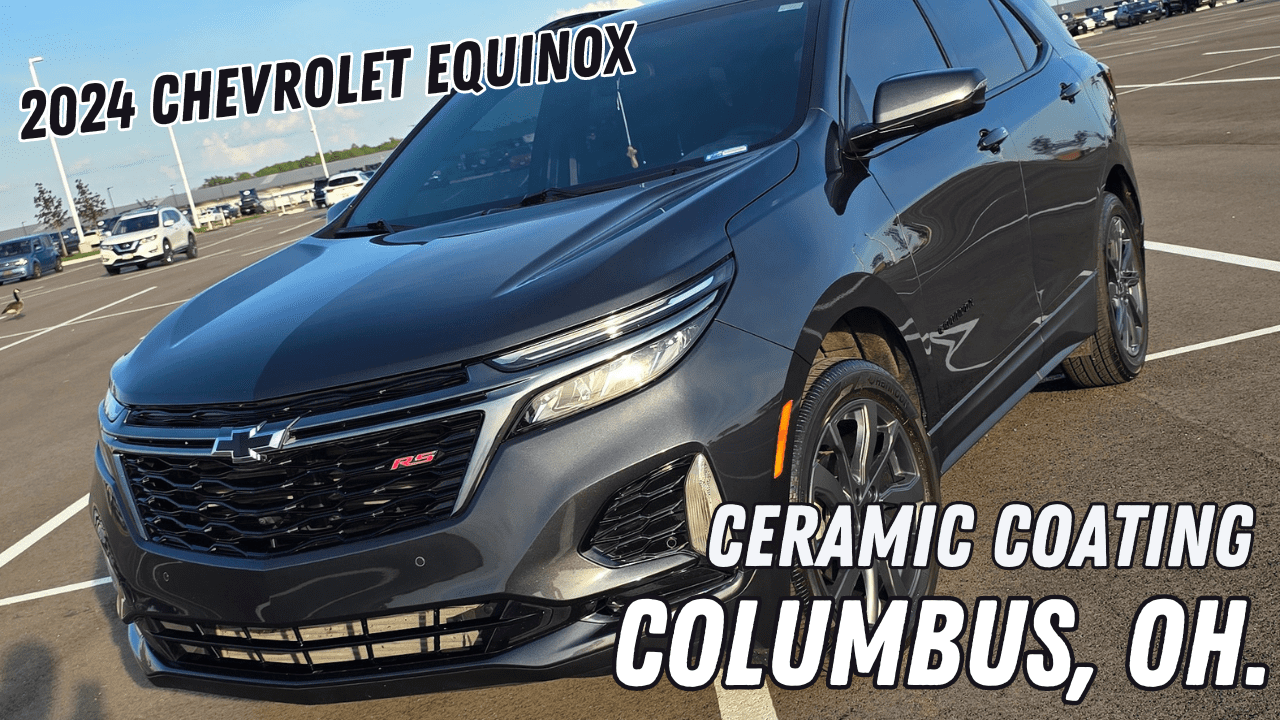
You wash the car, pull it into the driveway, and notice the paint still looks cloudy in the Columbus sunlight. The hood has spiderweb-like marks, and the door scratches stand out just when you're getting ready to photograph it for sale. Another wash won't solve that, but an expensive polishing job isn't automatically the right answer either.
Table of Contents
- Is Paint Correction Worth It for Your Car
- What Paint Correction Really Does to Clear Coat
- How a Careful Paint Correction Is Performed
- Paint Correction Cost Versus Resale Reality
- Who Gets the Most From Paint Correction
- When Paint Correction Is a Poor Spend
- Protect the Finish and Book Local Help
Is Paint Correction Worth It for Your Car
Paint correction is worth it when the defects can be improved safely and the improvement matters enough to justify the price. That might mean presenting a cleaner-looking vehicle to a private buyer. It might mean enjoying the BMW you plan to keep rather than noticing its swirls every time you walk toward it.
The important distinction is between making the paint look better and trying to make it perfect. Those aren't the same job, and they shouldn't automatically carry the same recommendation.
Consider a sound daily driver with distracting wash marks across the hood and doors. A restrained enhancement may suit that owner better than intensive work aimed at isolated scratches. A vehicle with peeling paint needs a different conversation altogether, even if both cars look dull from across the driveway.
Start with your ownership decision
Before asking for a paint correction price in Hilliard, decide what you're trying to accomplish:
- Selling privately: Identify the visible defects that could distract buyers during photographs and an in-person inspection.
- Trading in: Ask whether improved appearance is likely to change the actual offer before committing to extensive polishing.
- Keeping the vehicle: Consider your enjoyment, maintenance habits, and whether you'll protect the finish afterward.
- Returning a lease: Check the return standards first rather than assuming detailing will resolve a chargeable defect.
Lionheart Auto Detailing & Protection has served Hilliard, Dublin, Powell, Upper Arlington, and the wider Columbus area since October 2020, with both mobile service and a Hilliard shop, as outlined in its local detailing service information. That flexibility gives customers different ways to arrange an assessment, but the paint's condition should determine the recommendation.
Practical rule: Buy the improvement you can see and safely maintain, not a promise that every mark will disappear.
Ask the detailer to identify what should improve, what should remain, and why. A clear answer is more useful than an impressive-sounding package name. The sensible target is a visible improvement with a reasonable safety margin, not guaranteed resale profit or flawless paint at any cost.
What Paint Correction Really Does to Clear Coat
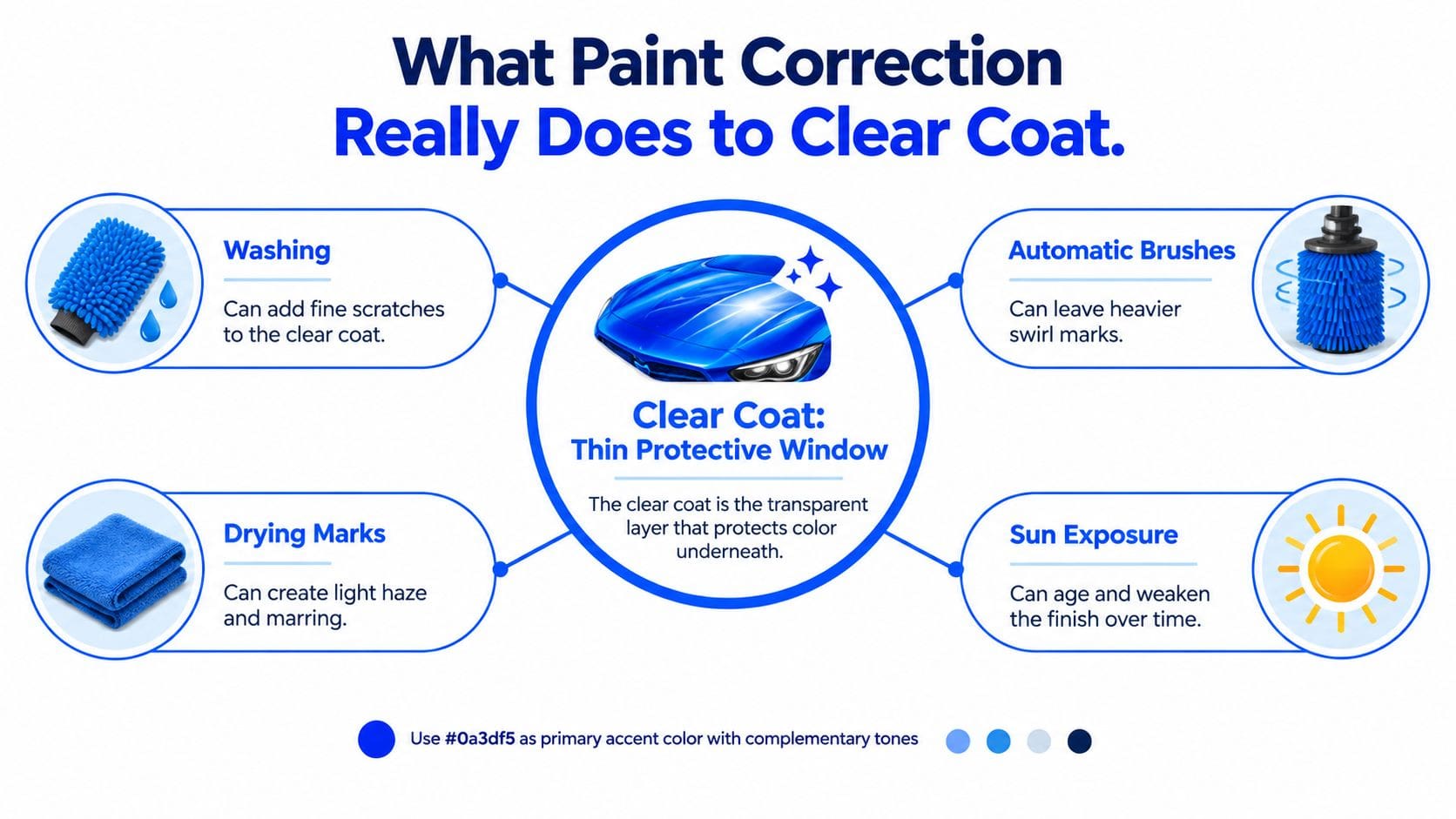
Think of clear coat as a thin, transparent window over the colored paint. When that window develops fine scratches, reflected light scatters instead of producing a crisp reflection. The color underneath can still be sound while the surface looks gray, hazy, or tired.
Washing, automatic-brush contact, improper drying, environmental contamination, and sun exposure can contribute to that deterioration. Machine polishing refines the damaged upper surface rather than applying replacement paint.
A small amount of material makes a visible difference
A technical guide to paint correction describes modern factory paint as commonly 90–150 microns thick overall, with approximately 40–50 microns of clear coat and many cosmetic defects occupying the upper 2–10 microns; it also describes mild polishing as ideally removing single-digit microns, while aggressive correction may remove 10–15 microns.
Those are reference ranges, not measurements of your vehicle. They explain why a shallow mark can improve substantially, but they don't establish how much material a particular panel can safely lose.
Gloss comes from a smoother surface, not from new paint.
That's why a black daily driver, swirled BMW, or Tesla can look noticeably clearer after appropriate polishing. When shallow scratches cover a large area, reducing them changes the whole reflection. It doesn't require treating every isolated mark as a defect that must disappear.
Our explanation of how car swirl marks are removed can help you recognize the difference between widespread wash marring and individual deeper scratches.
Separate haze from missing paint
Look closely at the defect rather than judging only the overall shine:
- Fine spiderweb marks: These may be shallow surface defects that respond to polishing.
- A cloudy reflection: Haze can be polishable, provided the underlying finish remains sound.
- An exposed chip or gouge: Polishing won't replace the missing material.
- A scratch that catches a fingernail: Treat it as a warning, not a challenge to keep cutting.
Correction also won't erase accident history, panel mismatch, or a vehicle-history report entry. Its job is narrower: improve the existing finish where enough healthy material remains. Understanding that boundary makes it easier to judge both the proposed work and the promised result.
How a Careful Paint Correction Is Performed
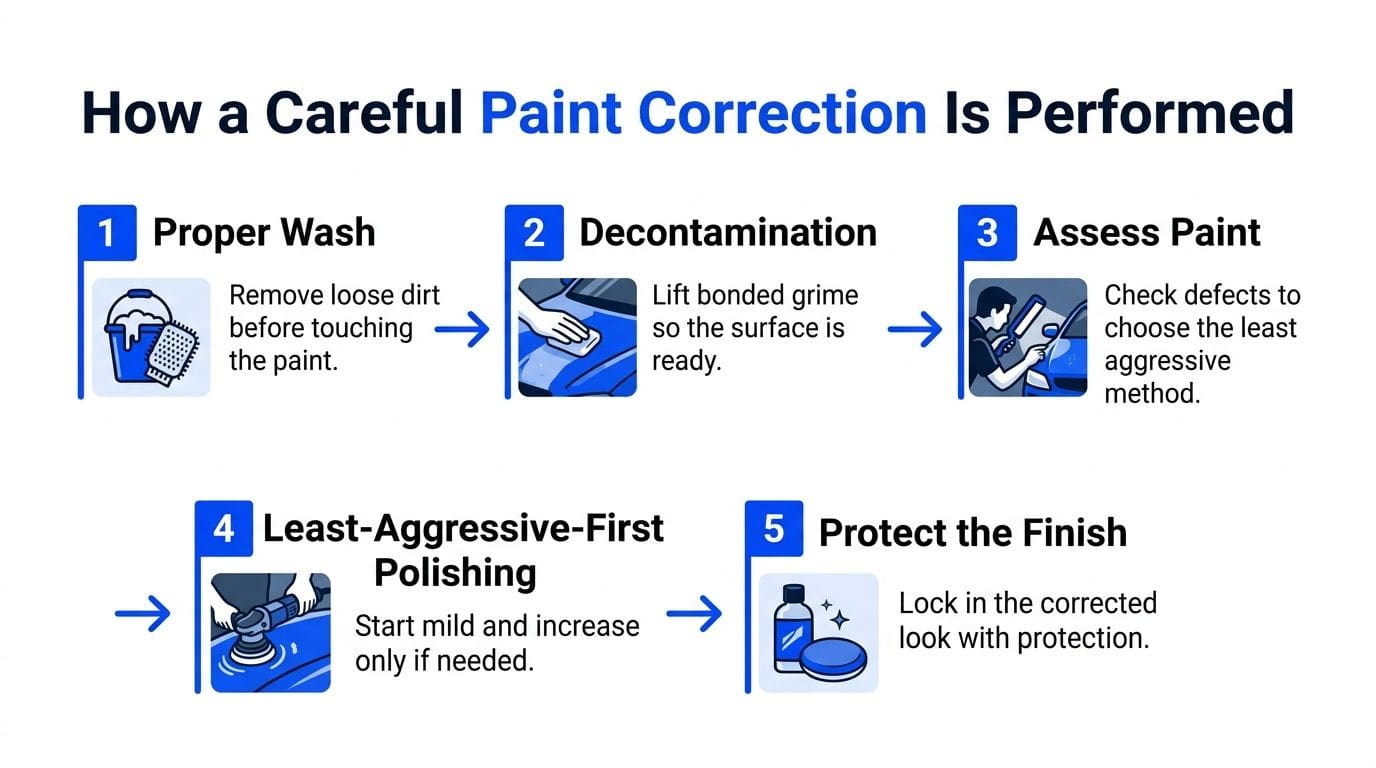
A careful correction starts with preparation and inspection, not the strongest compound on the shelf. The detailer should establish how the paint responds before committing to a process across the vehicle.
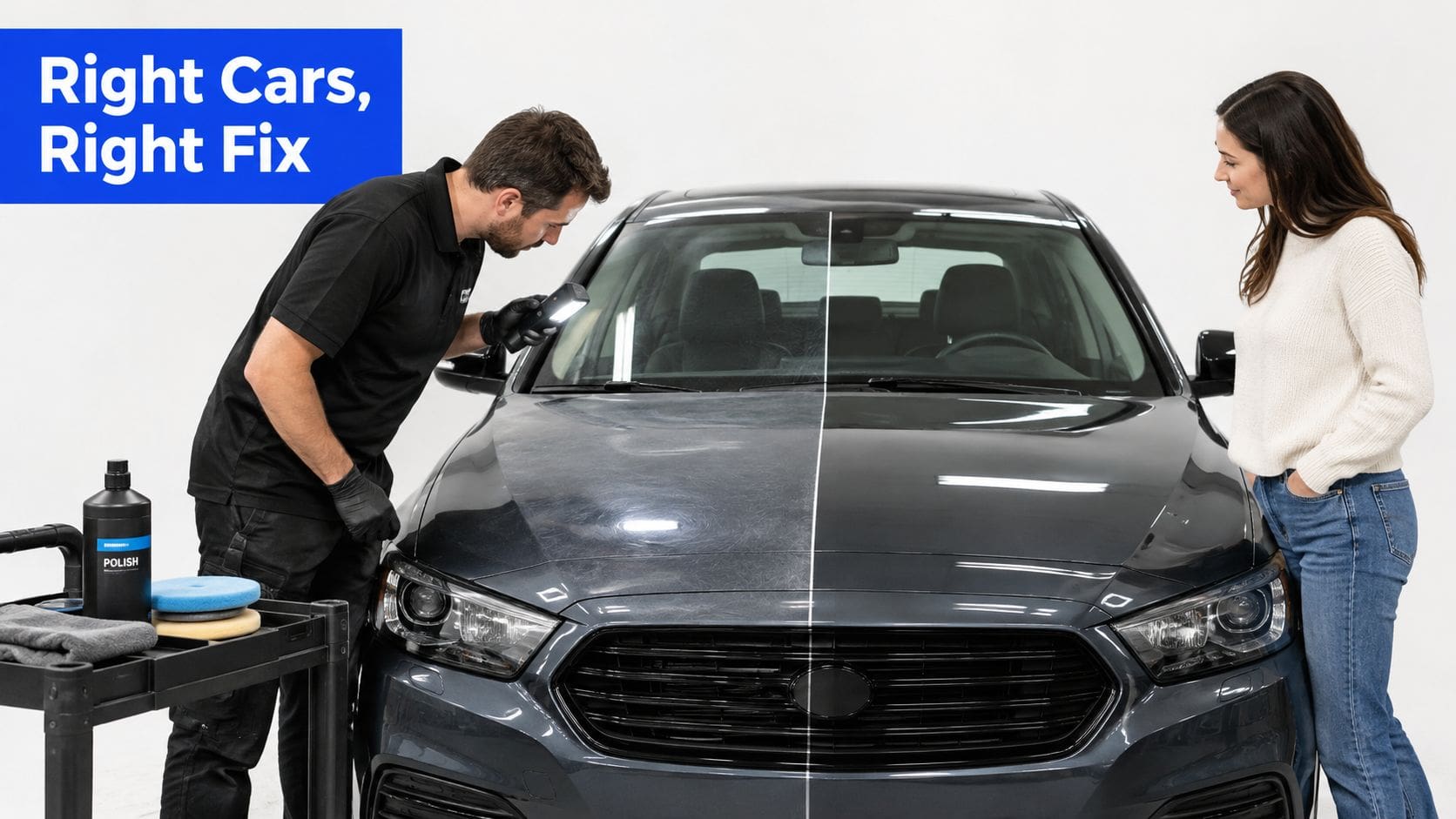
Ask to see a test spot, a small polished area that demonstrates the likely result. It turns a vague discussion about “better gloss” into something you can evaluate.
The preparation and assessment sequence
- Wash thoroughly: Remove loose dirt before evaluating what's real damage and what's just grime.
- Decontaminate the surface: Remove bonded contamination so it doesn't interfere with polishing.
- Inspect under strong lighting: Check the type and distribution of defects, including any previous repairs.
- Take several paint-depth readings: Compare areas across each panel rather than relying on a convenient measurement.
- Polish a test area: Start with a mild pad-and-polish combination, wipe the area clean, and inspect the result before increasing aggressiveness.
A single-stage enhancement uses a polishing approach selected to improve clarity without a separate heavy cutting stage. Deeper, safely correctable defects may justify a cutting stage followed by a refining polish to improve the finish left behind.
A technical paintwork guide provides context for material removal: a typical single-stage polish may remove approximately 1–3 microns, while multi-stage cutting and polishing may remove about 3–8 microns, depending on the pad, compound, pressure, speed, working time, and paint hardness.
Those ranges aren't a material-removal allowance. A detailer still needs to consider the panel's history and response, and aggressive wool, microfiber, or rotary combinations shouldn't be the default just because the car looks rough.
Mistakes that undermine the job
- Polishing dirty paint: Contamination can interfere with the work and create additional marring.
- Skipping the test spot: The chosen combination may be unnecessarily aggressive or produce a disappointing finish.
- Chasing edges and body lines: These areas need restraint, not repeated passes aimed at perfection.
- Expecting rock chips to vanish: A polishing package can't replace missing paint.
For useful process photographs, show the test spot, the machine working on the panel, and the wiped result under consistent lighting. Before authorizing the full job, agree on which defects should remain. That agreement matters more than a blanket promise of dramatic results.
Paint Correction Cost Versus Resale Reality
Paint correction is a condition-positioning expense, not a guaranteed investment return. It can help an otherwise sound car present as well-maintained, but that doesn't mean a buyer will reimburse the detailing bill.
Published paint-repair estimates also need careful labeling. A broad repair range may include work that isn't equivalent to machine polishing, so it shouldn't be presented as a fixed local paint correction price.
What published ranges actually tell you
An industry discussion of paint damage and resale value estimates professional paint repair at approximately $300–$1,500, minor DIY kits at about $50–$150, and potential selling-price reductions associated with chips, scratches, fading, and oxidation at roughly 5%–15%.
Using that same industry estimate for illustration, a $25,000 vehicle discounted by 5% loses $1,250, while a 10% discount equals $2,500. These figures explain why appearance deserves attention, but they don't show that polishing will recover those amounts.
Vehicle age, mileage, color, damage severity, and buyer expectations all affect the outcome. The published figures are industry estimates, not a controlled study isolating the resale return from correction.
Correction Spend Versus What It Can Change
| Option | Published cost range | Best fit | Main limit |
|---|---|---|---|
| Light polish | No separate verified stage-specific range; request an inspection-based quote | Shallow wash marring and a sensible presentation refresh | Deeper defects remain, and resale recovery is uncertain |
| Multi-stage correction | No separate verified stage-specific range; quote depends on the work | More demanding, safely polishable defects on valuable paint | Greater expense and material removal don't guarantee a better sale price |
| DIY attempt | Minor-kit range noted above, not a complete machine-polishing budget | Limited cosmetic work with realistic expectations | Less consistent results and the risk of choosing the wrong repair |
Separate vehicle-color market reporting describes depreciation differences exceeding $5,000 associated with paint color among three-year-old vehicles. That's a different market variable, not evidence of a correction premium, and a polish can't override it.
Use a break-even worksheet
Write down the actual quote, the vehicle's realistic value, your selling channel, and how long you'll keep it. Then identify the specific objection the correction is supposed to reduce.
For a private sale, would clearer paint meaningfully improve presentation? For a trade-in, has the dealer indicated that cosmetic condition affects the offer? If you're keeping the car, separate the enjoyment benefit from any hoped-for resale return.
When the numbers only work if someone pays a speculative premium, choose a lighter service or keep the money.
Who Gets the Most From Paint Correction
The strongest candidates aren't defined by a badge alone. They're owners with sound paint, visible polishable defects, and a reason to care about the improvement.
A newer used-car buyer may want to remove the previous owner's wash marring before choosing protection. A weekend-car owner may care more about reflection quality than an owner preparing an inexpensive commuter for a quick trade.
Match the work to the vehicle's job
- Daily drivers: A light enhancement can be the sensible stopping point when the goal is cleaner reflections rather than show-car presentation.
- BMW and Tesla owners: More involved work may be reasonable when obvious defects bother the owner and the inspection supports it. The badge doesn't establish paint thickness or justify aggressive polishing.
- Classic and enthusiast vehicles: Preserving sound original paint can matter more than eliminating every mark. Finish type and repair history need attention before choosing a process.
- Trucks: Prioritize visible, polishable panels instead of spending heavily on areas dominated by chips or physical damage.
A body-repair cost guide cites approximately $50–$300 for surface scratches and $1,500–$8,000 or more for a full repaint. These are different repair categories, not interchangeable alternatives, but the contrast helps explain why careful preservation matters on a valuable vehicle.
Choose the right service setting
Local options include multi-stage correction, a mobile unit with onboard water and power, and in-shop work at the Hilliard location. Service coverage includes Dublin, Powell, Upper Arlington, Westerville, Worthington, Grove City, and New Albany.
Discuss the job before choosing the setting. A driveway visit may suit one scope, while another owner may prefer leaving the vehicle at the shop for assessment and planned protection.
Dents need their own evaluation. Customers comparing correction with paintless dent repair options should understand that panel shape and surface scratches are separate problems.
Useful before-and-after photographs would compare a black car, a lighter daily driver, and a classic panel under matching light. For the next layer of care, match ceramic coating to maintenance goals and paint protection film to exposure to chips and abrasion. Neither choice makes unlimited correction necessary.
When Paint Correction Is a Poor Spend
More cutting isn't automatically better. If the only way to remove a scratch is to sacrifice too much healthy clear coat, leaving that scratch is the professional decision.
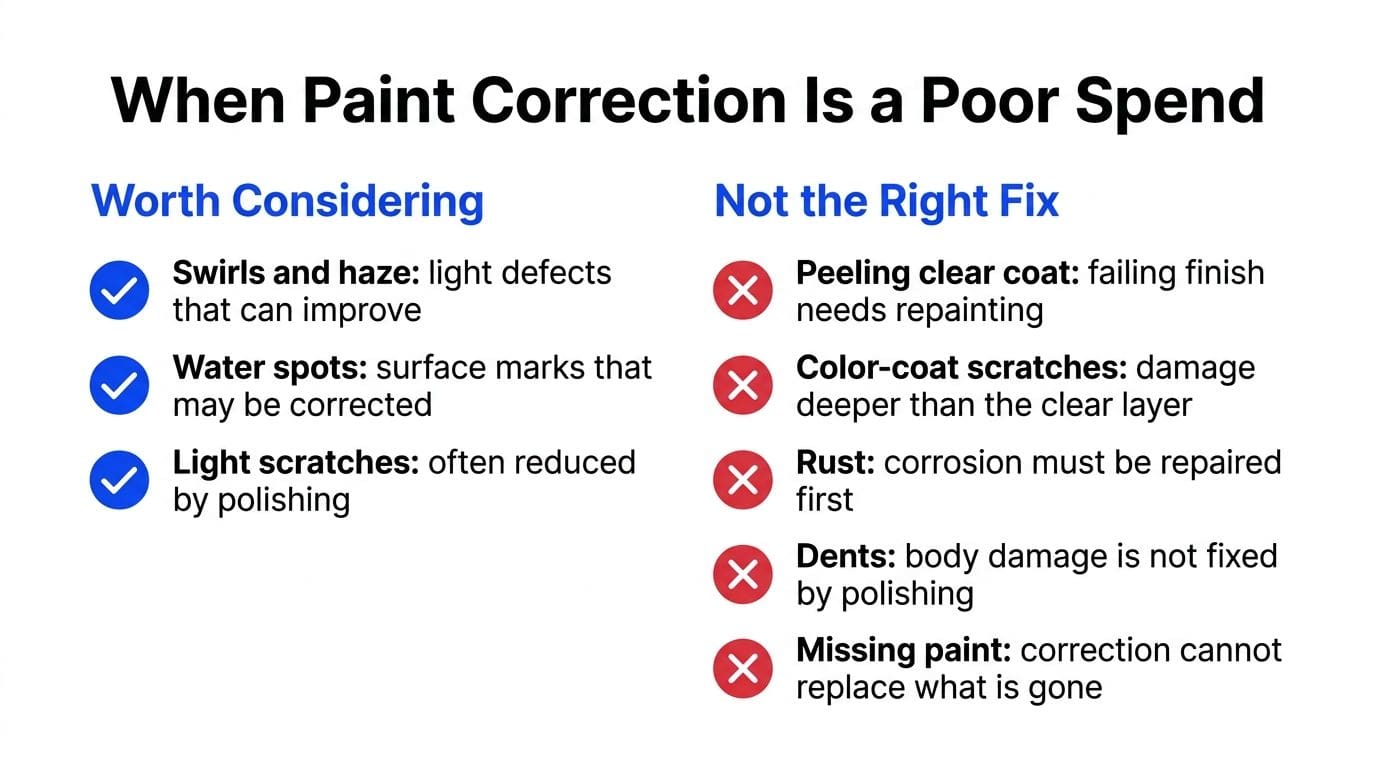
Start by separating surface defects from failed or missing finish. Swirls, haze, some water spots, and light scratches may be candidates for refinement; peeling clear coat, rust, dents, exposed color-layer damage, and missing paint need a different repair path.
Understand what the gauge actually measures
A conventional paint-depth gauge measures the combined coating system, not clear coat alone. A thick reading doesn't prove there's abundant clear coat, particularly on a repainted panel.
An automotive paint-thickness gauge guide cites contemporary factory paint at roughly 95–125 microns total, with clear coat often around 40%, or approximately 38–50 microns; it describes 100–140 microns as generally consistent with healthy original paint, 80–100 microns as calling for lighter polishing, and approximately 75 microns or less as a major warning.
These are screening checkpoints, not universal permission to polish. Several readings and the vehicle's repair history matter more than treating any reference range as a guarantee.
Used BMWs, Teslas, black cars, previously corrected vehicles, and repainted panels deserve careful assessment. Ask how the detailer checks edges, body lines, and bumpers, including areas where the available gauge may not provide a useful reading.
Use a stop-or-refer checklist
- Wash and inspect: Confirm whether the concern is contamination, shallow damage, or finish failure.
- Measure: Investigate thin or inconsistent readings before selecting an abrasive process.
- Test conservatively: Judge whether a mild approach produces enough improvement.
- Stop when appropriate: If a scratch still catches a fingernail after testing, don't keep cutting just to erase it.
- Refer for repair: Seek a body-shop assessment when the defect extends beyond what polishing can safely address.
A remaining scratch is easier to live with than avoidable damage from over-polishing.
An independent pre-sale detailing assessment also cautions against expecting correction to justify its cost on vehicles with major dents, peeling clear coat, or several unrelated condition problems.
If mechanical, structural, or interior issues dominate the vehicle's condition, address those priorities first. A restrained enhancement, targeted panel work, or no correction at all can be the more responsible recommendation.
Protect the Finish and Book Local Help
A good result needs an aftercare plan. Clearer paint is still exposed to washing, sunlight, contamination, and road debris, so decide how you'll maintain it before approving the polishing.
Start with the habits that caused the visible wear. Our explanation of how car washes can damage paint helps you assess whether your current wash routine will undo the improvement.
Choose protection for the problem you actually have
Ceramic coating provides a hydrophobic, UV-resistant layer that helps with washing and maintaining gloss. If easier upkeep is your priority, discuss our ceramic coating packages in Columbus alongside the level of preparation your paint actually needs.
Paint protection film serves a different purpose: impact and abrasion resistance. Explore paint protection film options for exposed areas such as hoods, bumpers, and mirrors rather than expecting a coating to act as chip protection.
Keep comfort upgrades separate from paint repair. Professional window tinting in Hilliard addresses cabin heat, glare, and interior UV exposure, not exterior scratches.
Make the assessment useful
When contacting the shop, explain whether you're selling, trading, returning a lease, or keeping the vehicle. Mention previous paintwork or polishing if you know about it, and identify the marks that bother you most.
- Bring representative photos: Include the full panel and a close view in direct light, rather than only a flattering shaded photograph.
- Ask for a test-spot conversation: Establish the likely improvement and the defects that should remain.
- Discuss access: Ask whether a mobile visit or shop appointment suits the proposed work.
- Request a clear scope: Confirm preparation, polishing stages, protection, and aftercare rather than comparing package names alone.
For Hilliard auto detailing or Columbus ceramic coating questions, call +1 614-620-6039, Monday–Friday, 9:00 AM–5:00 PM. The business has 200+ five-star Google and Facebook reviews, and shop appointments are available at 4402 Weaver Court North, Suite 204, Hilliard.
You don't need to arrive knowing which correction package to buy. Bring your goals and questions, and ask for an honest recommendation based on the paint in front of you.
Lionheart Detailing offers paint correction, full detailing, ceramic coating, and paint protection film, with mobile and Hilliard shop service available. Visit Lionheart Detailing to discuss your vehicle's condition and arrange an assessment before spending money on polishing it may not need.