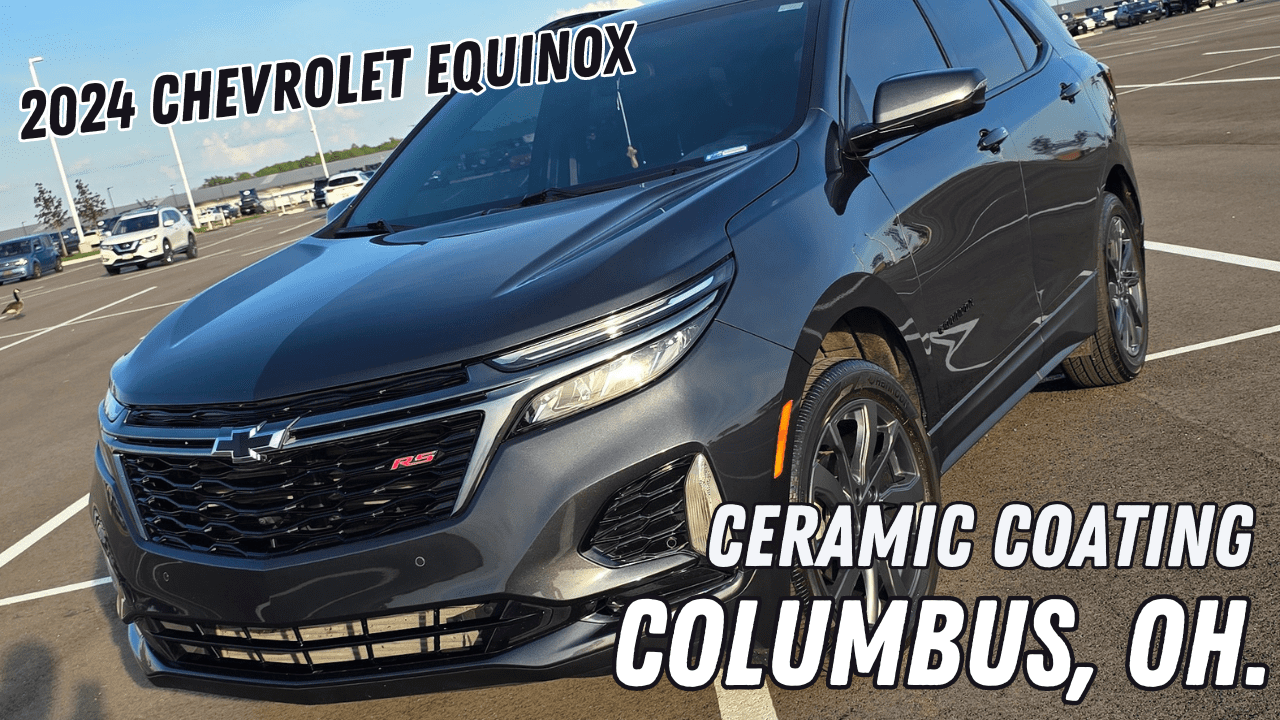
You've just driven your truck through a Columbus winter storm. The wheel wells are packed with gray slush, the lower doors are spotted with brine, and the hood already looks duller than it did in the fall. By summer, strong UV exposure, tree sap, dust, and job-site grime add another layer of abuse. A regular wash removes dirt, but it doesn't create durable protection against the next drive.
That's where ceramic coating for trucks in Columbus, Ohio can make sense. It can help saltwater, mud, and road film release more easily from painted surfaces, preserve gloss, and reduce the effort required to wash a work truck. It won't make the truck scratch-proof or eliminate corrosion risk. The right way to view it is as one part of a protection plan, not a wash-and-forget solution.
Table of Contents
- The Reality of Truck Paint Protection in Central Ohio
- How Environmental Exposure Damages Truck Exteriors
- Understanding Ceramic Coatings and Hydrophobic Technology
- Comparing Protection Methods for Trucks and Work Vehicles
- Lifespan Expectations and Winter Maintenance Realities
- Is Professional Coating Worth the Investment for Your Truck
- What to Expect from a Professional Detailing Service
The Reality of Truck Paint Protection in Central Ohio
A Columbus truck can spend one day at a dusty job site and the next on a salted highway. In summer, sunlight, pollen, insects, and work-site grime bake onto the hood and front end. In winter, slush and road brine settle around the rocker panels, tailgate, wheels, and underbody.
That repeated exposure is harder on a pickup than on a lightly used passenger car. A truck's broad front end collects bugs and grit, while bed rails, running boards, lower panels, wheel openings, and exposed frame areas give contamination more places to stay. Equipment, tools, loading activity, and gravel roads add abrasion before Ohio's freeze-thaw cycles create another round of moisture and residue.
Why basic washing isn't enough
Washing is necessary, but it only removes what is present during that visit. Contaminants can bond to paint between washes, while ultraviolet exposure and chemical residue continue to stress the finish. Wax improves gloss and water behavior for a limited period. Paint sealants generally last longer than traditional wax, yet both depend on regular reapplication.
Ceramic coatings are now an established part of the broader automotive surface-protection market. A market analysis reports the global ceramic coatings market at USD 13.05 billion in 2025, with a projection of USD 25.61 billion by 2034 at a 7.78% CAGR. Transportation and automotive applications accounted for 31.20% of demand in 2025, according to the same ceramic paint protection coatings market analysis.
Market growth alone does not prove that coating your truck is worthwhile. The practical question is whether a more durable, easier-to-clean painted surface fits how the truck is used. For a work truck exposed to Ohio salt, UV radiation, grime, and frequent washing, ceramic protection can reduce cleaning effort and help maintain the finish.
Ceramic coating is not a wash-and-forget treatment. Road salt still needs to be rinsed from seams, lower panels, wheels, and the underbody, especially after brine dries during a freeze-thaw cycle.
Practical rule: Protect the surfaces you can clean and inspect, but don't confuse paint protection with complete corrosion prevention.
A coating does not replace underbody washing, cavity protection, paint protection film, or sensible maintenance. It can give the painted exterior a more resilient, easier-to-clean surface while the truck owner handles the salt and moisture that create corrosion risk.
How Environmental Exposure Damages Truck Exteriors
Truck paint usually fails through repeated exposure rather than one dramatic event. Sunlight gradually degrades the clear coat and exterior plastics. Tree sap and bird droppings can etch the finish when they remain on hot paint. Industrial fallout, brake dust, and road film create contamination that a quick automatic wash may leave behind.
Central Ohio adds a particularly difficult winter variable. The City of Columbus snow-and-ice plan states that salt alone is effective to 15 degrees Fahrenheit, and the city describes salt application as a balance between deicing performance and environmental impact. Ohio-focused reporting also says that salt is spread across more than 3,000 miles of road during every Ohio winter. That means many local truck owners repeatedly drive through salt and brine, not just an occasional snowy weekend. The details are outlined in the City of Columbus snow and ice control plan.
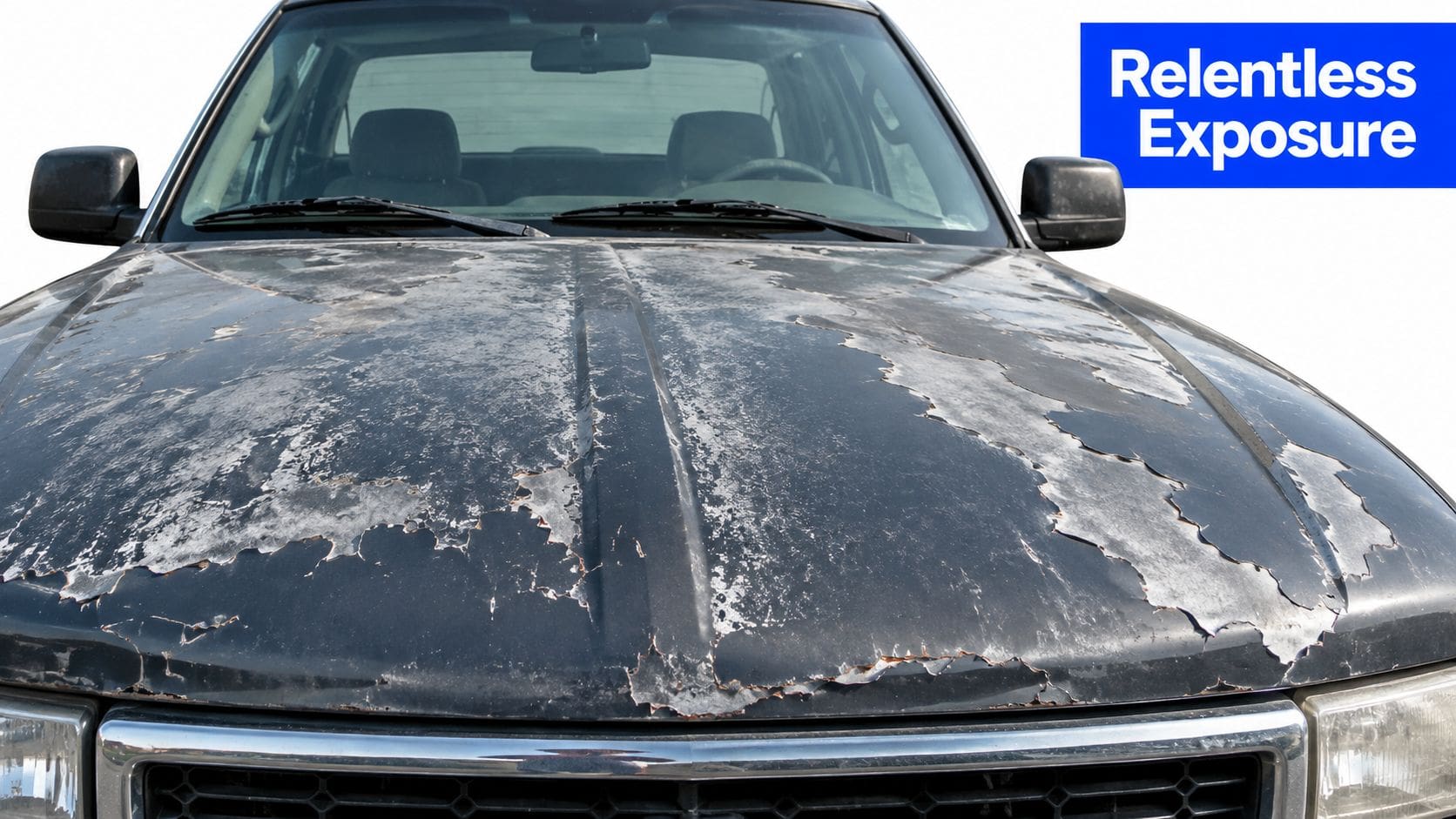
What salt does to uncoated paint
Salt crystals and brine can settle into the microscopic texture of an uncoated clear coat. As moisture evaporates, residue remains behind. Repeated wet and dry cycles give contamination more opportunity to bond, especially on lower doors, bed sides, wheel arches, and behind mud flaps.
A ceramic coating doesn't stop salt from reaching every part of the truck, and it isn't an underbody rust treatment. Its more realistic benefit is surface behavior. Independent winter paint-protection guidance explains that salt can bond to clear-coat micro-pores, while premium coated surfaces can produce a water contact angle above 110 degrees. That behavior encourages brine and road film to bead and shed rather than sit on the paint. The practical explanation appears in this Ohio winter paint protection guide.
Why trucks need a broader plan
A truck's painted exterior is only one part of the corrosion equation. Salt can affect fasteners, suspension components, frame areas, brake hardware, and unpainted metal. Regular underbody rinsing remains essential. A coating may reduce the cleaning burden on painted panels, but it won't protect every material beneath the truck.
For Columbus drivers, the most useful strategy combines a clean, properly prepared exterior with frequent salt removal, attention to wheel wells, and separate underbody care. Read more about how Columbus weather affects vehicle paint before deciding which protection method fits your truck.
Understanding Ceramic Coatings and Hydrophobic Technology
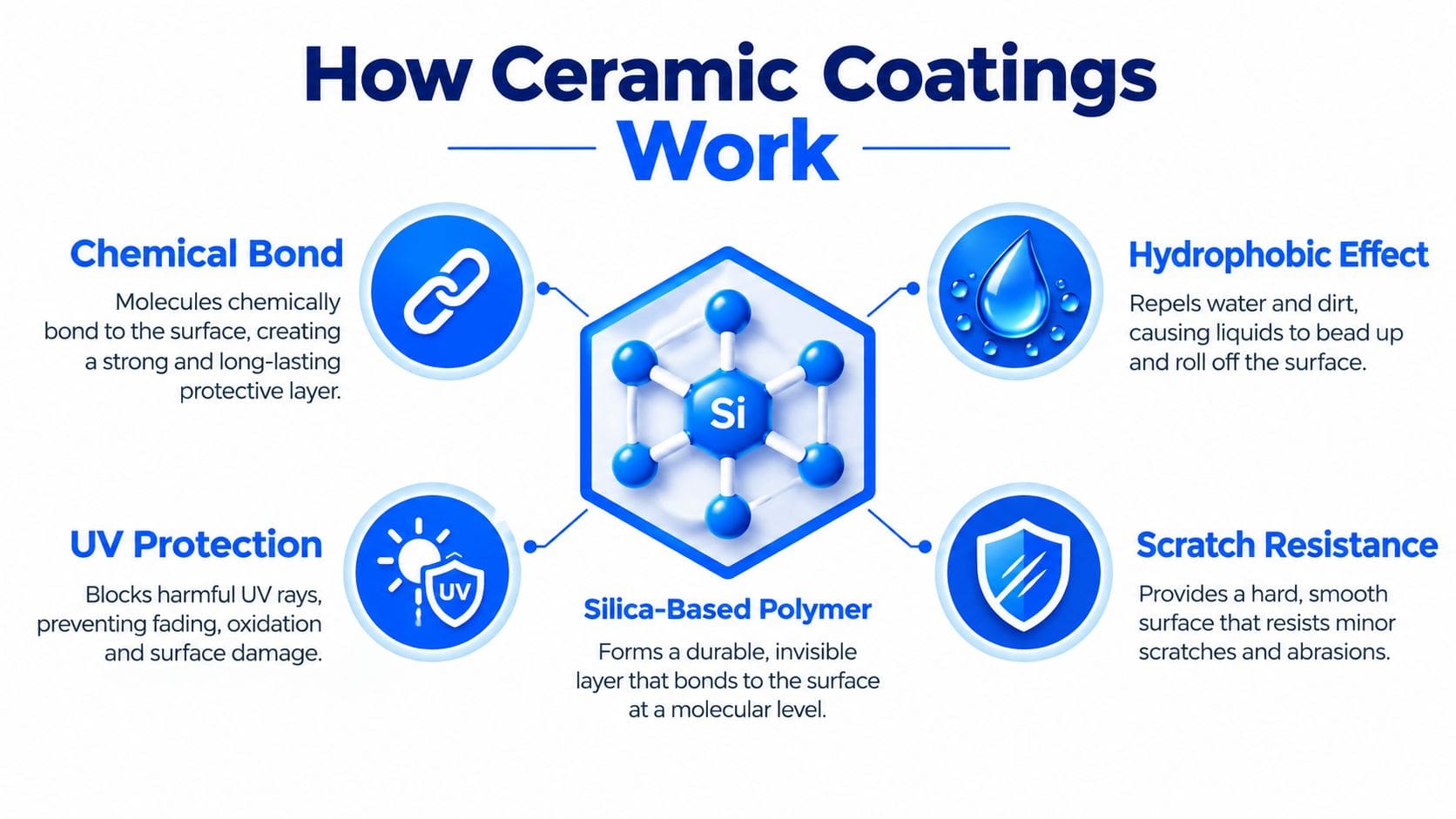
A ceramic coating is a silica-based liquid polymer applied to a properly prepared exterior. Once installed, it chemically bonds with the cured clear coat and forms a thin, hydrophobic barrier. Hydrophobic means the surface has less attraction to water, so water tends to bead instead of spreading into a continuous film.
That change sounds simple, but it affects how contamination behaves. Brine, mud, light road film, and rainwater have a harder time wetting and evenly spreading across a coated surface. When the truck is washed correctly, those contaminants can release with less agitation than they would from neglected, unprotected paint.
What the coating changes
Think of the coating as a surface treatment, not a thick shell. It can provide improved resistance to UV radiation, acid rain, bird droppings, tree sap, snow, and ice. It can also increase gloss and make the paint feel smoother after proper preparation.
Peer-reviewed review literature reports that effective protection commonly lasts about 1 to 3 years, depending on the formulation, exposure, and maintenance. Stronger bonding and lower surface energy are associated with greater durability, as discussed in this review of ceramic coating materials and performance.
Professional comparison guides give broader real-world benchmarks. One guide places common ceramic coating life around 2 to 7 years, depending on product, preparation, and washing. Another places professional-grade coatings in the 3 to 5 year range, with premium products potentially reaching 5 to 7 years or more. These figures come from ceramic coating and PPF longevity comparisons, and they should be treated as ranges, not promises.
What it can't do
Ceramic coating doesn't prevent rock chips, deep scratches, or damage from a metal tool sliding across a bed rail. It may improve resistance to light surface marring, but it isn't impact armor. A truck that regularly travels gravel roads or follows salt trucks closely may need PPF on high-strike areas.
The coating also won't make washing unnecessary. Salt, mud, and industrial contamination still need to be removed. If a truck owner leaves harsh residue on the surface for long periods, the coating can lose performance sooner than expected.
The best result comes from matching the product to the use. A daily work truck benefits from easier cleaning and chemical resistance. A show truck may prioritize gloss and visual clarity. A gravel-road truck may need ceramic coating combined with PPF on the hood, bumper, mirrors, and front fenders.
Comparing Protection Methods for Trucks and Work Vehicles
No single product solves every truck-protection problem. Ceramic coating handles surface contamination and washability. PPF handles impact. Window tint addresses the glass and cabin environment. Wax and sealants provide simpler, more temporary paint protection.
| Protection Method | Primary Benefit | Best For |
|---|---|---|
| Ceramic coating | Hydrophobicity, gloss, UV and chemical resistance, easier washing | Trucks exposed to salt, grime, weather, and frequent cleaning |
| Paint protection film | Physical protection against rock chips and light impacts | Front bumpers, hoods, mirrors, fenders, and other high-strike areas |
| Window tint | Reduced heat, glare, and interior UV exposure | Daily drivers, work trucks, and trucks parked outdoors |
| Paint sealant | Easier maintenance with a shorter-term protective layer | Owners who want a lower-commitment option and maintain the finish regularly |
Ceramic coating versus PPF
The most common comparison is PPF versus ceramic coating, but the products do different jobs. PPF is a physical film that absorbs and distributes energy from road debris. Ceramic coating is a liquid surface layer that improves water behavior, gloss, and resistance to chemical contamination.
Independent comparison guidance also frames PPF as the stronger defense against rock chips and scratches, while ceramic coating is better for hydrophobicity and easier washing. The practical recommendation is often combination protection, especially for a truck that sees both highway debris and Ohio winter grime. You can review PPF for trucks in Columbus when deciding whether high-impact zones need film.
Where window tint fits
Window tint doesn't protect exterior paint. It can reduce glare, manage cabin heat, and limit UV exposure through the glass. For a work truck that sits outside while crews are on a job, tint may improve comfort and help protect interior materials, but it should be considered a separate part of the vehicle-protection plan. Drivers comparing professional window tinting in Hilliard should choose film based on legal requirements, appearance, heat control, and glass coverage.
Choosing by use, not marketing
A commuter truck that stays on paved roads may do well with ceramic coating and disciplined washing. A contractor's truck that travels gravel roads may benefit more from PPF on the front end, with ceramic coating applied over the remaining painted surfaces. A fleet manager may prioritize easy cleaning and consistent maintenance across multiple vehicles.
The least effective approach is buying a coating while expecting it to stop chips, protect the underbody, or eliminate wash appointments. Product selection works best when it follows the truck's actual exposure.
Lifespan Expectations and Winter Maintenance Realities
A ceramic coating makes washing easier. It doesn't make washing optional.
That distinction matters in Columbus because salt and brine can remain on a truck through repeated freeze-thaw cycles. Independent guidance for salt-prone regions recommends regular rinsing and warns that harsh contamination can shorten coating life. Professional-grade coatings commonly last 2 to 5 years, depending on maintenance and environment, according to fleet ceramic protection guidance.
A winter routine that works
Start with a rinse that reaches the lower body, wheel wells, running boards, mud flaps, and behind the wheels. A touchless or low-contact wash can remove loose salt before you place a wash mitt on the paint. Use a pH-neutral shampoo, clean microfiber equipment, and separate tools for wheels and painted panels.
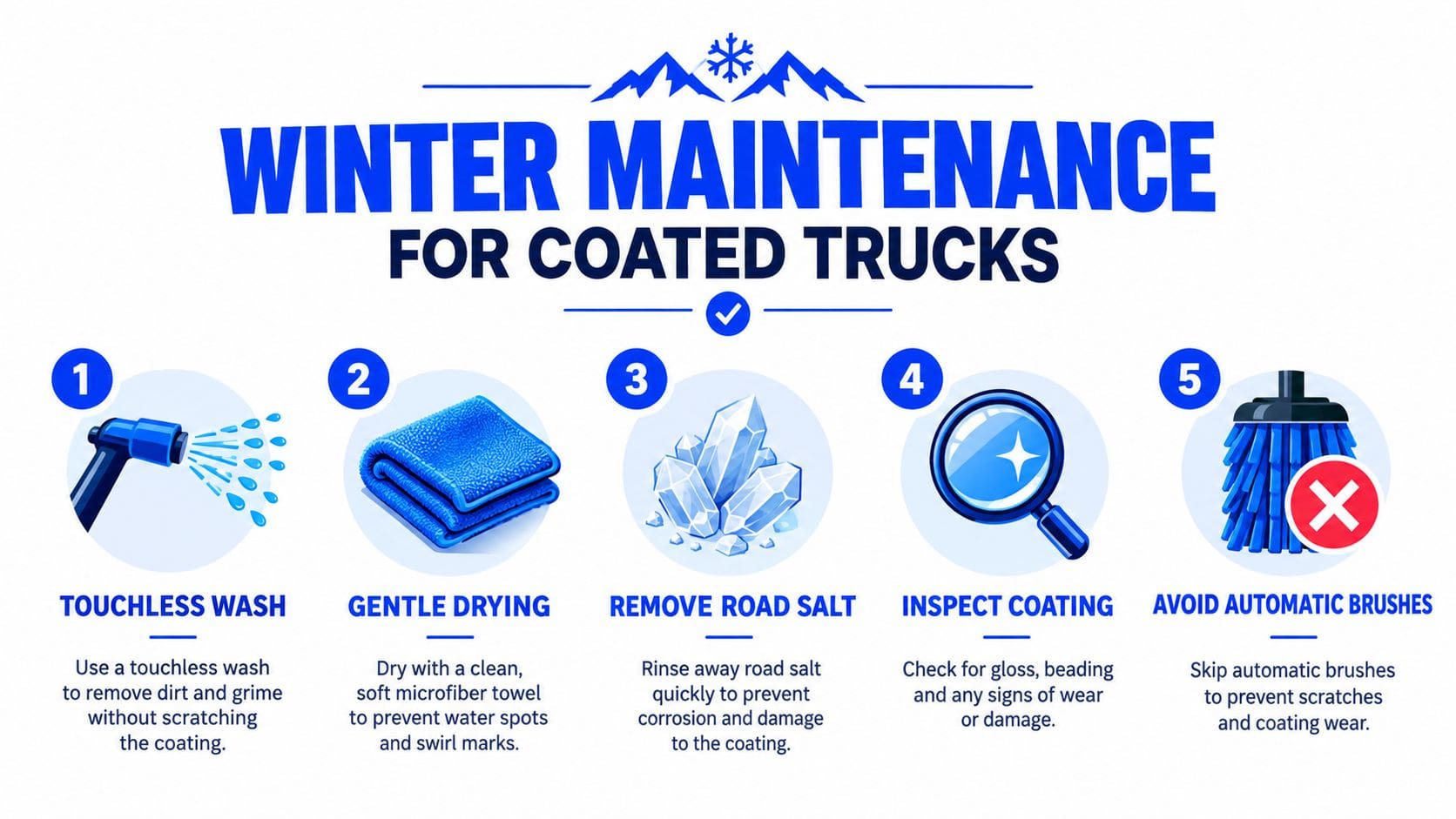
A practical cold-weather routine includes:
- Rinse salt promptly: Remove brine before it dries into a stubborn film, especially from rocker panels and wheel arches.
- Use gentle drying: Blot or use a clean drying towel rather than dragging contaminated fabric across the paint.
- Decontaminate when needed: If the surface feels rough after washing, use a professional decontamination process instead of aggressive scrubbing.
- Inspect the coating: Look for uneven water behavior, bonded residue, or areas that no longer clean easily.
- Avoid automatic brushes: Brush contact can introduce swirls and may push grit across the clear coat.
Cure time matters
After installation, the truck needs protection from water during the initial cure period. Emerging 2026 guidance emphasizes avoiding water exposure for 24 to 48 hours, while the coating may take several weeks to reach full hardness. That timing makes a controlled shop environment useful, especially during wet or freezing Columbus weather.
A coating booster can help maintain slickness and water behavior, but it isn't a replacement for washing. Use products recommended for the installed system, and don't apply random dressings or aggressive cleaners without checking compatibility.
The honest expectation is simple. Your truck should become easier to clean, not maintenance-free. If winter grime remains on the paint for long periods, the coating still faces chemical stress.
Is Professional Coating Worth the Investment for Your Truck
For a Columbus truck owner, the value usually depends on use, storage, and maintenance habits. A daily driver exposed to winter salt, brine, rain, and highway film can benefit from faster cleaning and easier removal of road residue. Freeze-thaw cycles also leave contamination sitting in seams, rocker panels, and wheel arches, so a coating helps most when the owner rinses the truck regularly.
A weekend truck stored indoors receives less practical value from maximum durability. Gloss and paint preservation may still justify the work, but the return is different from a work truck used through every season.
Work trucks require a more careful protection plan. Tools, job sites, gravel roads, and loading areas can create chips and impact marks that ceramic coating will not prevent. PPF on impact zones can address that type of damage, while a coating on the remaining exterior can make salt, mud, and road film easier to remove.
Who tends to benefit most
- Daily drivers: Easier cleaning matters when the truck regularly sees salt, rain, mud, and highway film.
- Outdoor-stored trucks: Protection from UV exposure and bonded contamination can help preserve the finish without covered parking.
- Show and recreational trucks: Gloss and surface clarity may matter more than saved labor.
- Fleet and commercial vehicles: A consistent wash routine becomes easier when grime releases without aggressive scrubbing.
- Older trucks: Preparation determines the result. A coating will not hide oxidation, neglected paint, or deep defects.
A coating is not a wash-and-forget solution. Ohio winters still require prompt rinsing, particularly after brine exposure, and freeze-thaw conditions can keep residue lodged around trim and lower panels. Skipping maintenance allows chemical contamination to remain on the surface, even when the coating is functioning properly.
The price should reflect preparation, paint condition, coating tier, truck size, coverage, cure requirements, and aftercare. For a realistic discussion of ceramic coating cost in Columbus, ask what correction, decontamination, cure time, and maintenance guidance the quote includes. A lower quote may produce a more expensive result if it seals defects into the finish or fails early.
What to Expect from a Professional Detailing Service
A proper truck coating starts before the bottle is opened. The technician first inspects the paint, identifies scratches, oxidation, water spots, overspray, and bonded contamination, then chooses the appropriate correction level.
The usual process includes:
- Thorough washing: The truck is cleaned from the roof down, with separate attention to wheels, wheel wells, lower panels, bed areas, and trim.
- Chemical and mechanical decontamination: Iron particles, tar, sap, and bonded residue are removed without relying on harsh scrubbing.
- Paint correction: Polishing improves clarity and reduces swirls, haze, and light defects. Deep scratches may remain if removing them would risk the clear coat.
- Panel preparation: Polishing oils and residue are removed so the coating can bond directly to clean, cured paint.
- Controlled application: The coating is applied, leveled, and inspected under suitable lighting to catch high spots or uneven areas.
- Cure and aftercare: The truck remains protected from water during the initial cure period, and the owner receives washing and maintenance guidance.
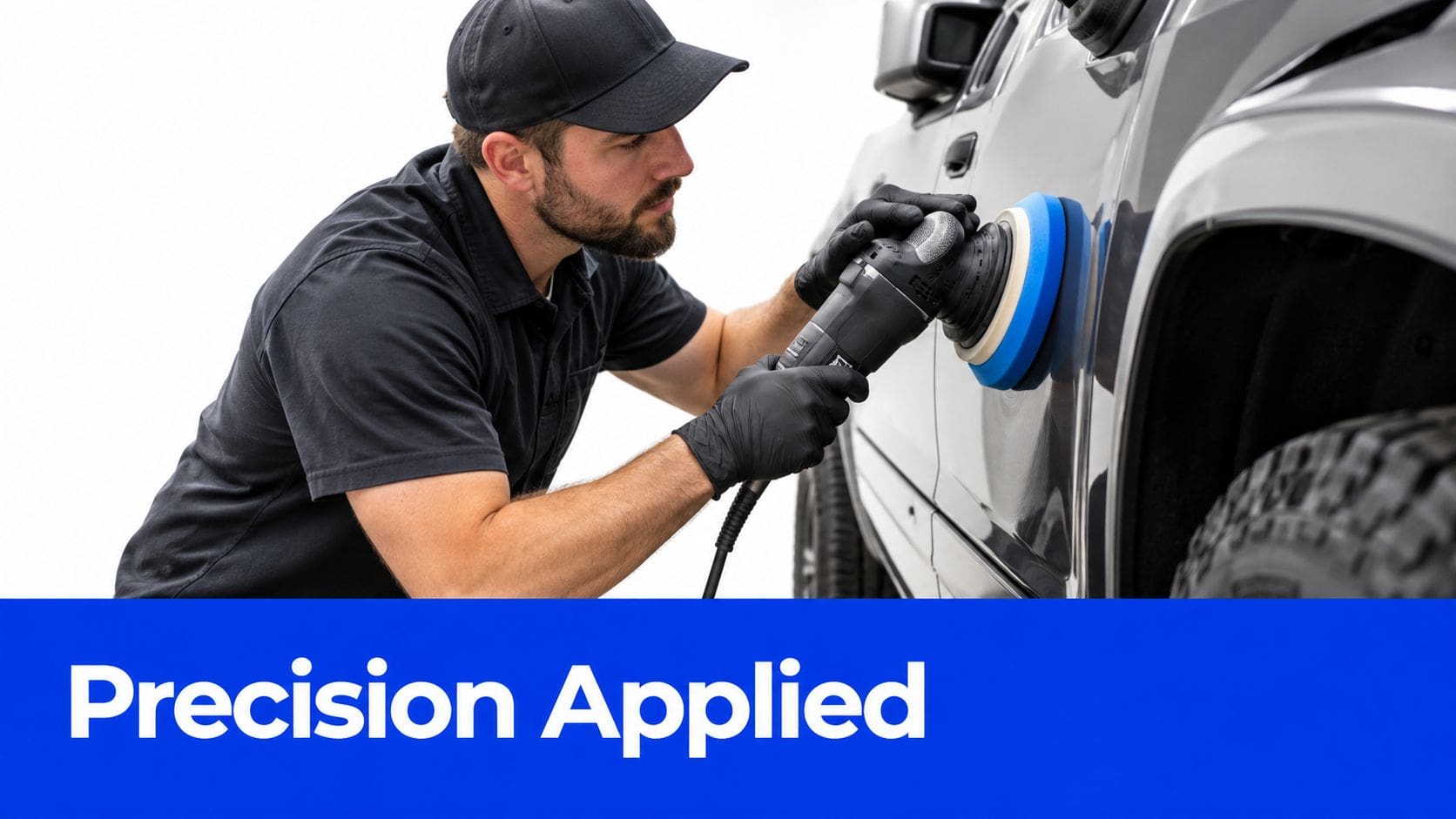
Mobile detailing is convenient when the site is clean, covered, and suitable for the work. Heavy contamination, extensive paint correction, winter moisture, and the need for controlled curing often make an in-shop appointment the safer choice. Lionheart Detailing provides mobile service and in-shop appointments in Hilliard, serving Columbus-area communities including Dublin, Powell, Upper Arlington, and nearby suburbs.
Before booking a Hilliard ceramic coating or Columbus ceramic coating service, ask whether the quote includes paint correction, decontamination, coating coverage, cure instructions, and follow-up maintenance. A professional should also tell you plainly whether your truck needs PPF, underbody care, or a simpler sealant instead.
Lionheart Detailing can assess your truck's paint, prepare the surface, and recommend ceramic coating, PPF, or full detailing based on how you drive and maintain it through Columbus winters. Visit Lionheart Detailing to discuss professional protection for your truck in Hilliard and the greater Columbus area.