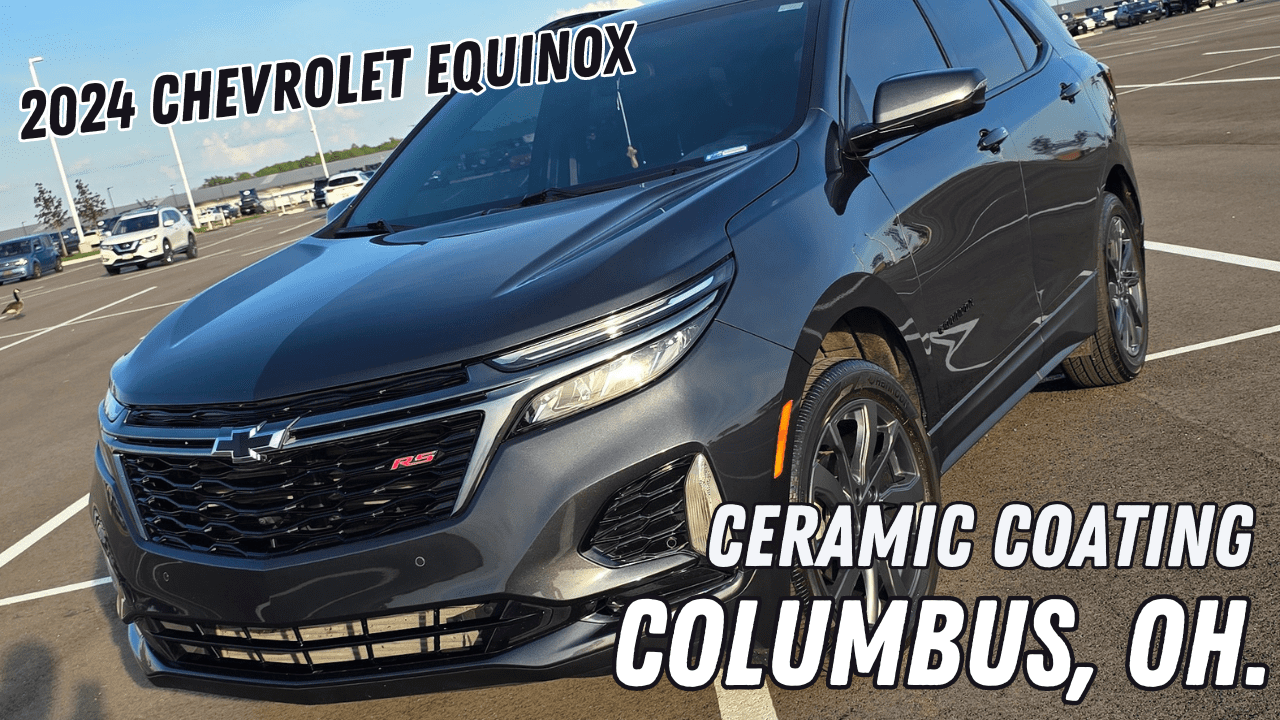
If you've ever opened a car door in Columbus in July and felt a wave of heat hit your face, you already know why tint choice matters. The steering wheel is hot, the seat feels like it's been sitting on a griddle, and the air coming out of the vents doesn't cool the cabin fast enough. That's the problem Columbus drivers are trying to solve, not just dark glass, but a car that's tolerable to get into after sitting in the sun.
The best window tint for heat rejection in Columbus summers is the one that blocks heat before it gets into the cabin, not the one that just looks dark in a parking lot. That usually means ceramic or nano-ceramic film, because the useful measurements are TSER and infrared rejection, not shade alone. For a lot of Columbus cars, that difference is the line between a slight improvement and a real comfort upgrade.
Table of Contents
- Why Columbus Summers Demand Serious Heat Rejection
- Understanding the Metrics That Matter
- Comparing Window Tint Types for Maximum Heat Rejection
- Windshield Tinting and Ohio Legal Considerations
- What to Expect During Professional Tint Installation
- Common Mistakes and Misconceptions About Window Tint
- Making the Right Choice for Your Vehicle
Why Columbus Summers Demand Serious Heat Rejection
A Columbus driver feels it fast. The car sits in full sun during a work shift or a shopping stop, and the cabin comes back hot enough to make the first few minutes uncomfortable. The steering wheel can be painful to grip, the seat surface can feel harsh on bare skin, and the interior holds that heat longer than many drivers expect. That is why heat rejection is a practical upgrade in Central Ohio. It changes how the car feels every time you get back in.
Parked cars in direct sun can get extremely hot, and Columbus summers give that problem plenty of chances to show up. A common figure in the field is that cabin temperatures can reach 140°F without window film Shamrock Detail. That matches what drivers notice when a vehicle sits outside with no meaningful protection.
Practical rule: If the car spends time outside in Columbus, treat tint as interior protection first and appearance second.
Heat does more than make the first few minutes unpleasant. It fades dashboards, dries out leather, weakens plastics, and makes trim lose color faster when the cabin keeps cycling through sun and heat. The air conditioning system also starts from a worse position each time, so it has to work harder to pull the cabin back down.
Dark glass alone does not solve that. A darker film can cut glare and add privacy, but if the construction does not reject heat well, the cabin still gets baked. The useful question is whether the film lowers the heat load before it reaches the people inside and the materials that age from repeated exposure.
For a broader look at the comfort and interior-protection side of the category, see the advantages of window tinting.
What I tell customers in the shop:
- Do not shop by darkness alone. Darker glass can help with privacy, but it does not guarantee strong heat control.
- Think about where the car sits. A garage-kept weekend car and a daily driver parked outside all day need different levels of protection.
- Protect the surfaces you cannot replace easily. Dashboards, stitched leather, and interior plastics age faster than most owners expect.
If summer driving in Columbus needs to feel manageable, the film has to reduce heat before it builds up inside the cabin.
Understanding the Metrics That Matter
On a hot Columbus afternoon, the number that matters is not how dark the glass looks from the curb. The better question is how much solar energy the film keeps out before that heat reaches your seats, dash, and steering wheel. For that, TSER, infrared rejection, and VLT tell you far more than darkness alone.
TSER tells you the full heat story
Total Solar Energy Rejected, or TSER, is the broadest heat metric because it measures how much of the sun's energy the film blocks from entering the cabin. That makes it the closest thing to a real heat-performance score for window tint. A film with stronger TSER should reduce the heat load more effectively, even if it does not look especially dark.
Industry guidance notes that a premium nano-ceramic film at 70% VLT can outperform a much darker dyed film at 20% VLT, with ceramic and nano-ceramic films commonly landing around 45–65% TSER and top-tier nano-ceramic films reaching 65–70%+ TSER Tint Laws. That is the clearest sign that appearance and thermal performance are not the same thing.
A lighter film can still be the better heat blocker if the construction is stronger.
IR rejection explains how cool the cabin feels
Infrared, or IR, rejection matters because infrared energy is a major part of the heat you feel through glass. Columbus guidance says ceramic film can deliver about 70%–90% infrared rejection, and nano-ceramic can reach up to 95% IR rejection Shamrock Detail. That is why a quality ceramic film can feel noticeably cooler than a basic dark film on a parked car that has been sitting in direct sun.
VLT tells you how much light passes through
Visible Light Transmission, or VLT, tells you how much visible light gets through the film. Higher VLT means lighter glass. Lower VLT means darker glass. It affects appearance and visibility, but by itself it does not tell you enough about heat control.
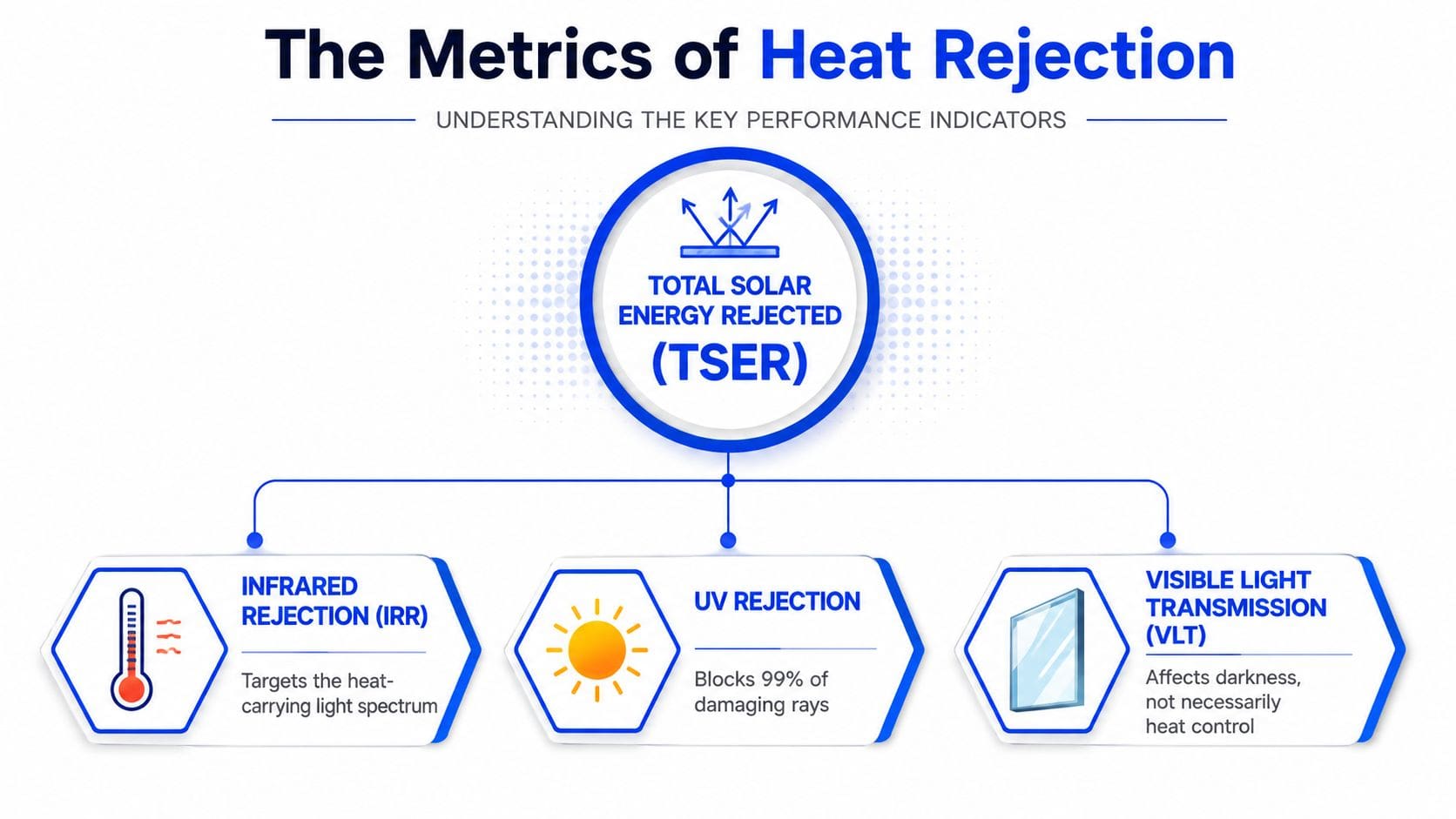
A quick way to shop smarter starts with the numbers that affect comfort most. Ask for TSER first, because that is the closest thing to a real heat score. Check IR rejection next, because that is the number you feel on the road and after the car has been parked. Use VLT for visibility and compliance, but do not let it be the only number you compare.
UV blocking is important for interior protection, but it is a different job from heat rejection. A film can block UV well and still underperform on cabin temperature if its solar control is weak. For a closer look at the differences between film constructions, see ceramic tint vs. carbon tint. Columbus tint guidance says ceramic film can block up to 87% of heat while still blocking 99% of harmful UV rays Columbus Perfect Tint. That combination is why ceramic ends up being the practical choice for so many drivers.
Comparing Window Tint Types for Maximum Heat Rejection
A hot Columbus afternoon exposes the difference between film types fast. Two cars can look equally dark from the outside, yet one still feels muggy after sitting in the sun while the other cools down sooner. The reason is simple. Heat rejection depends on the film's construction, not just how much light it blocks. If your goal is the best window tint for heat rejection in Columbus summers, you need to compare dyed, carbon, ceramic, and nano-ceramic film by performance, not by shade alone.
What each film type does in the real world
Dyed film is the budget-friendly starting point. It darkens glass and adds privacy, but it does little for cabin comfort once the car has been parked in direct sun. It can improve appearance without much heat control, which is why it tends to feel like a visual upgrade more than a thermal one.
Carbon film gives you a cleaner result than basic dyed film and usually holds up better over time. It is a sensible middle option for drivers who want a better look and a modest performance bump without paying for premium ceramic. In practice, it is a reasonable compromise, but it still does not match the heat rejection of higher-end films.
Ceramic film is the point where heat rejection becomes meaningful for daily driving. A good way to compare it with carbon is through a direct film-by-film breakdown like our ceramic tint vs carbon tint comparison. Ceramic is built for stronger solar control, so it does more to reduce the heat that reaches the cabin, the steering wheel, and the seats during a Columbus summer. That matters on workday parking lots, school pickup lines, and long drives on roads with full sun exposure.
Nano-ceramic film sits at the top end for comfort-focused installs. It is designed for drivers who want the strongest heat reduction available without sacrificing visibility more than necessary. For vehicles that sit outside often, or for interiors that heat soak quickly, nano-ceramic is usually the film that gives the most noticeable improvement in real-world use.
Side-by-side comparison
| Window Tint Type | IR Rejection | UV Protection | Heat Reduction | Typical Lifespan |
|---|---|---|---|---|
| Dyed | Lower than performance films | Basic to moderate | Limited | Shorter |
| Carbon | Better than dyed | Good | Moderate | Moderate |
| Ceramic | 70%–90% | 99%+ | 60%–80% | Long |
| Nano-ceramic | Up to 95% | 99%+ | High | Long |
Those numbers matter most when the car has been sitting in the sun and the cabin starts from a hot soak. A darker film can look aggressive, but if it does not reject enough infrared heat, the car still feels hot when you get in. Ceramic and nano-ceramic are the films that usually change that experience in a noticeable way.
My shop-floor rule is straightforward.
- Choose dyed when price and appearance matter more than heat control.
- Choose carbon when you want a step up from dyed without paying for premium ceramic.
- Choose ceramic when you want stronger comfort, better UV protection, and a solid balance for daily driving.
- Choose nano-ceramic when you want the highest heat-rejection performance for a vehicle that spends a lot of time in Columbus sun.
If you are comparing Columbus ceramic coating, Columbus PPF, or tint at the same time, treat them as separate tools with different jobs. Ceramic coating protects paint, PPF absorbs impact, and tint reduces cabin heat. Each one solves a different problem, and tint is the one that directly changes how hot the interior feels.
Windshield Tinting and Ohio Legal Considerations
The windshield is the largest sheet of glass on most vehicles, so it has a direct effect on how much heat reaches the cabin. For Columbus drivers, that matters on long commutes, at stoplights, and anytime the car sits in open sun. A properly chosen windshield film can reduce that hot-soak feeling without getting in the way of everyday driving.
For windshield applications, one Ohio tint guide says 70% VLT is the preferred balance for visibility and protection, and that ceramic windshield film at that level can reject 40%–60% of infrared heat while still blocking up to 99% of UV rays Nathan's Detailing. That kind of performance is useful because the windshield is where a lot of heat enters first, even when the film stays light enough for clear visibility.
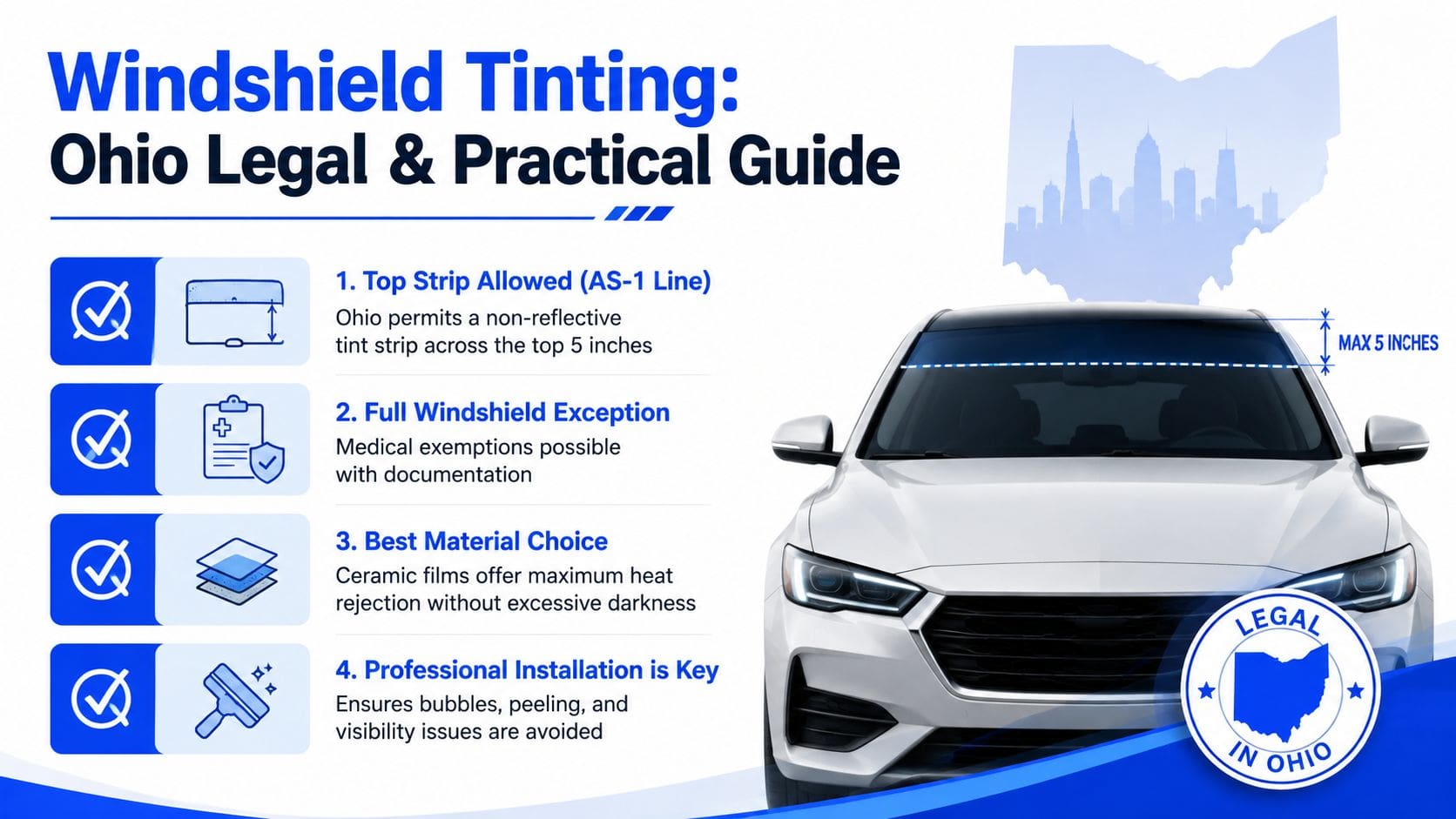
Ohio's practical windshield rule is straightforward for most drivers. The upper strip is limited to the AS-1 line or five inches from the top, and professional installers should confirm current state requirements before applying film. The same guide also notes that medical exceptions can exist with documentation.
Why lighter ceramic windshield film makes sense
A lot of drivers assume windshield tint has to be dark to do anything useful. It does not. A lighter ceramic film can still cut heat and UV exposure while keeping the windshield comfortable for night driving, wet roads, and fast-changing weather. That balance matters around Columbus, where a clear afternoon can turn into a low-light drive home before you know it.
Practical rule: On the windshield, clarity comes first. If the film is too dark to drive comfortably, the install missed the point.
I prefer lighter ceramic windshield film for a simple reason. It gives you heat control without making the cabin feel shut in. You get better daily comfort, better UV protection for the interior, and a safer view in all conditions.
If you are also planning other protection work, it helps to coordinate the job with Professional window tinting in Hilliard. That way the tint choice can be discussed alongside our ceramic coating packages in Columbus or paint protection film options when the goal is to protect the vehicle as a whole, not just the glass.
What to Expect During Professional Tint Installation
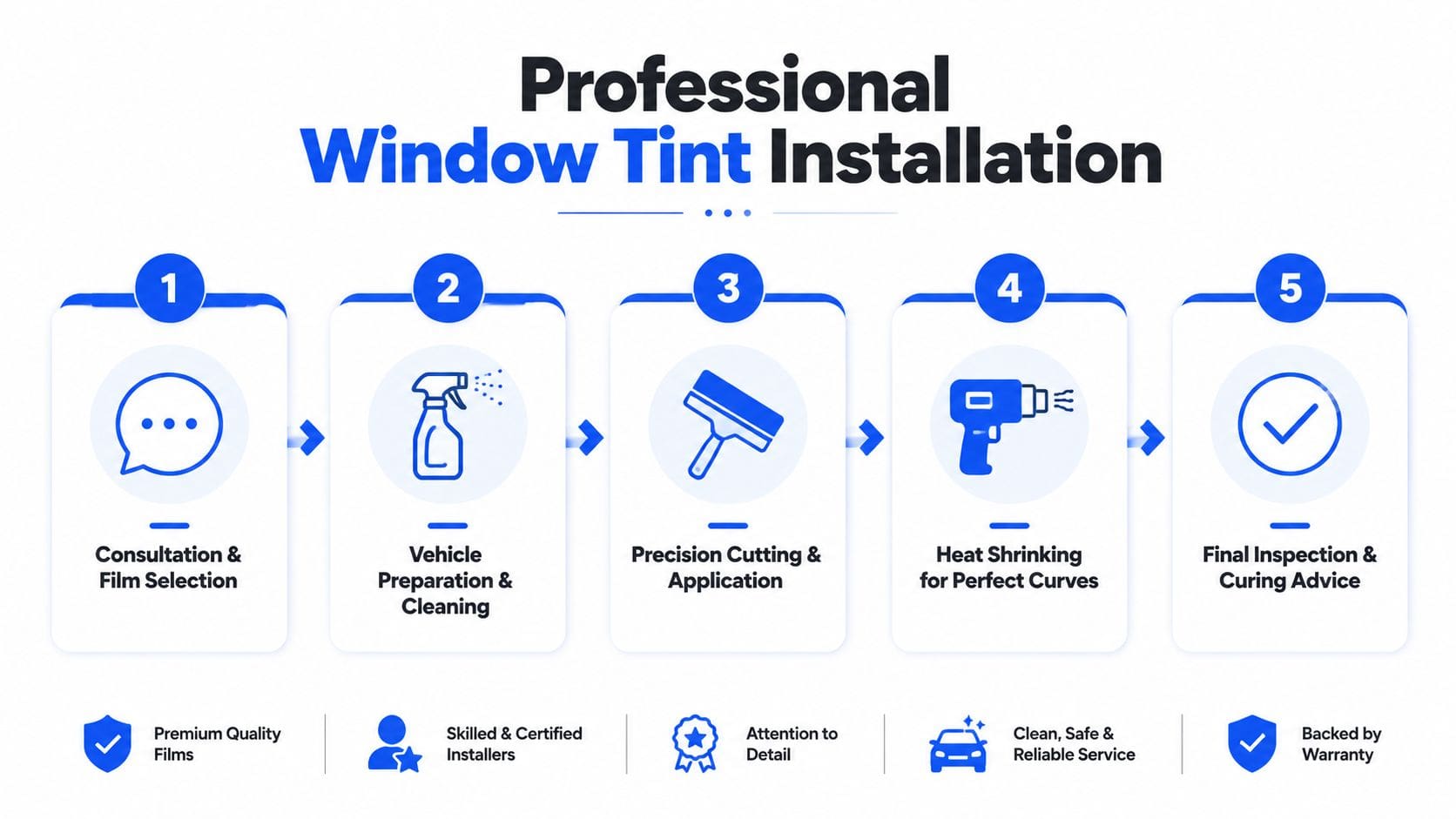
A proper tint job starts before the film ever reaches the glass. The first conversation should cover how you drive, where the vehicle sits, how much heat you want to cut, and how much visibility you need day to day. That is how a shop decides whether ceramic, carbon, or another film gives you the right mix of TSER, IR rejection, and cabin comfort.
The work behind a clean install
The prep work matters as much as the film choice. Glass has to be cleaned thoroughly, because dust, residue, stickers, and old adhesive can show through the finished tint. After that, the film is measured, cut, and fitted with care, then applied from the inside of the glass so outside dirt and weather do not interfere with the bond.
Curved rear glass often needs heat forming, and that is where experience shows up fast. If the install is rushed, you can end up with loose edges, contamination, or bubbles that never should have been there. In Columbus summer heat, those mistakes stand out even more when the cabin bakes in the sun and the film starts curing under stress.
For a practical look at timing, see how long window tinting takes.
What customers should expect after the install
Fresh tint needs time to settle. It can look hazy at first, and you may notice moisture or small water pockets while it cures. That does not automatically mean the film failed. The right move is to give it time and follow the installer's aftercare guidance, especially during the first few days after pickup.
A few simple prep steps make the appointment smoother:
- Clear the cabin first. Remove bags, car seats if possible, and loose items from the windowsills and floor.
- Plan for curing time. Avoid rolling windows down too soon.
- Inspect the edges. Clean, even edges are a good sign.
- Watch the film over the first few days. Bubbles that persist or peeling that starts early can point to a problem.
A quality install should look crisp at the edges, feel clean in the cabin, and settle without drama.
For Columbus and Hilliard drivers, professional installation matters because the film has to be matched to the vehicle and the local driving conditions. That means talking through the use case, daily commuting, parking exposure, nighttime visibility, and how much heat you want to block without making the car unpleasant to live with.
Common Mistakes and Misconceptions About Window Tint
The most common mistake is treating tint like a fashion choice. A lot of people pick the darkest film they can get, then assume it will handle heat best. That's not how performance works, and it's why some cheap tint jobs disappoint fast in Columbus summers.
Myths that cost drivers money
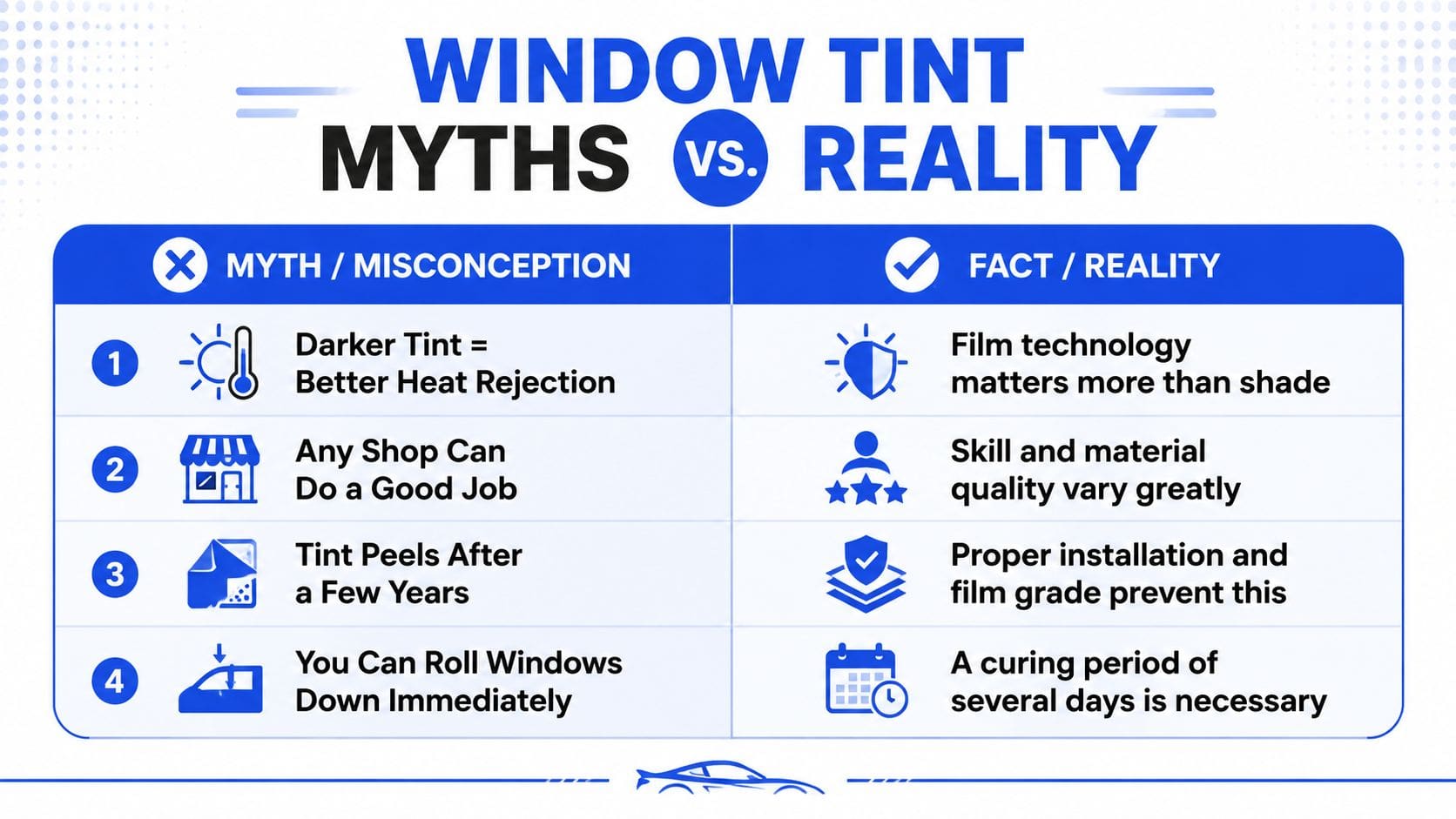
The first myth is that darker tint always means better heat rejection. Ceramic and nano-ceramic films prove otherwise, because technology matters more than shade.
The second myth is that all films protect interiors equally. They don't. One film may be great at blocking UV, while another is better at reducing heat. The best products do both well.
The third myth is that DIY kits are a bargain. Sometimes the material costs less, but the risk is high. Bad cuts, dust, bubbles, and poor edge adhesion usually mean the job gets redone later, which costs more in time and money.
A fourth mistake is choosing the cheapest installer without asking what film they're using. Material quality and install skill both matter. If the film is low grade, it can fade, bubble, or peel much sooner than a better product.
What to look for instead:
- Ask about film construction. Dyed, carbon, ceramic, and nano-ceramic all perform differently.
- Ask about heat metrics. TSER and IR rejection tell you more than darkness.
- Ask about the install process. Clean prep and careful edge work matter.
- Ask what happens if problems show up later. Good shops stand behind their work.
If you're looking for ceramic coating near me or tint at the same time, make sure the shop explains what each service does. Coating helps the exterior stay cleaner and more resistant to weather. Tint helps the cabin stay cooler and protects the interior. They're both useful, but they solve different problems.
Making the Right Choice for Your Vehicle
The right tint depends on how you use the vehicle. If it sits outside all day in Columbus, go after ceramic or nano-ceramic performance first. If you care more about a moderate upgrade on a tighter budget, carbon can be a fair middle ground. If you're mainly after the darkest look, dyed film will do that, but it won't give you the same summer comfort.
Ask any installer a few direct questions. What's the TSER? What's the IR rejection? How will the film affect visibility at night? If the answers stay vague, keep looking. A good shop should explain the trade-offs without pushing you into the darkest option.
For drivers who want a local team that works with Columbus conditions every day, Lionheart Auto Detailing & Protection handles window tinting along with detailing, ceramic coating, and paint protection work for Hilliard and the greater Columbus area. If you're ready to compare options for your car, visit Lionheart Detailing and reach out for a professional consultation.
Lionheart Auto Detailing & Protection can help you choose the right film for Columbus heat, your driving habits, and Ohio visibility rules. If you want cooler cabin temperatures, better UV protection, and a cleaner install, contact us to talk through professional window tinting, ceramic coating, or PPF for your vehicle. You can also check our shop location on Google Maps and plan your visit in Hilliard.