You wash your car on a Saturday, pull it into the light, and there it is. A faint scratch across the hood. Maybe it came from a bad wash, a bush at the edge of the driveway, or the usual road grime and wiping that every daily driver in Columbus sees. That first mark always feels worse when the car is new.
The utility of PPF self-healing becomes evident. It isn't magic, and it isn't a force field. But when it's installed correctly and cared for the right way, it gives your paint a real advantage against the kind of light surface damage that shows up during normal ownership. For Ohio drivers, that matters. We deal with winter grime, cold snaps, spring pollen, summer heat, and plenty of highway miles around I-270, US-33, and the outer suburbs.
If you've been researching Columbus PPF, Hilliard paint protection film, or comparing paint protection film against a Columbus ceramic coating, the self-healing part is usually the most misunderstood feature. Most articles make it sound automatic in every condition. Real life is a little more nuanced, especially in Ohio weather.
Table of Contents
- Your Car's Finish Has a Superpower It's Called Self-Healing PPF
- What Exactly Is Self-Healing Paint Protection Film?
- How to Safely Activate Your PPF's Self-Healing Ability
- Understanding the Limits What Self-Healing PPF Can and Cannot Fix
- PPF vs Ceramic Coating Which Protection Is Right for You?
- Your Columbus PPF Experts When to Call a Professional
Your Car's Finish Has a Superpower It's Called Self-Healing PPF
The biggest emotional win with self-healing film is simple. You stop panicking over every little wash mark and light scuff. That doesn't mean you stop caring for the car. It means the car has a buffer between daily life and your paint.
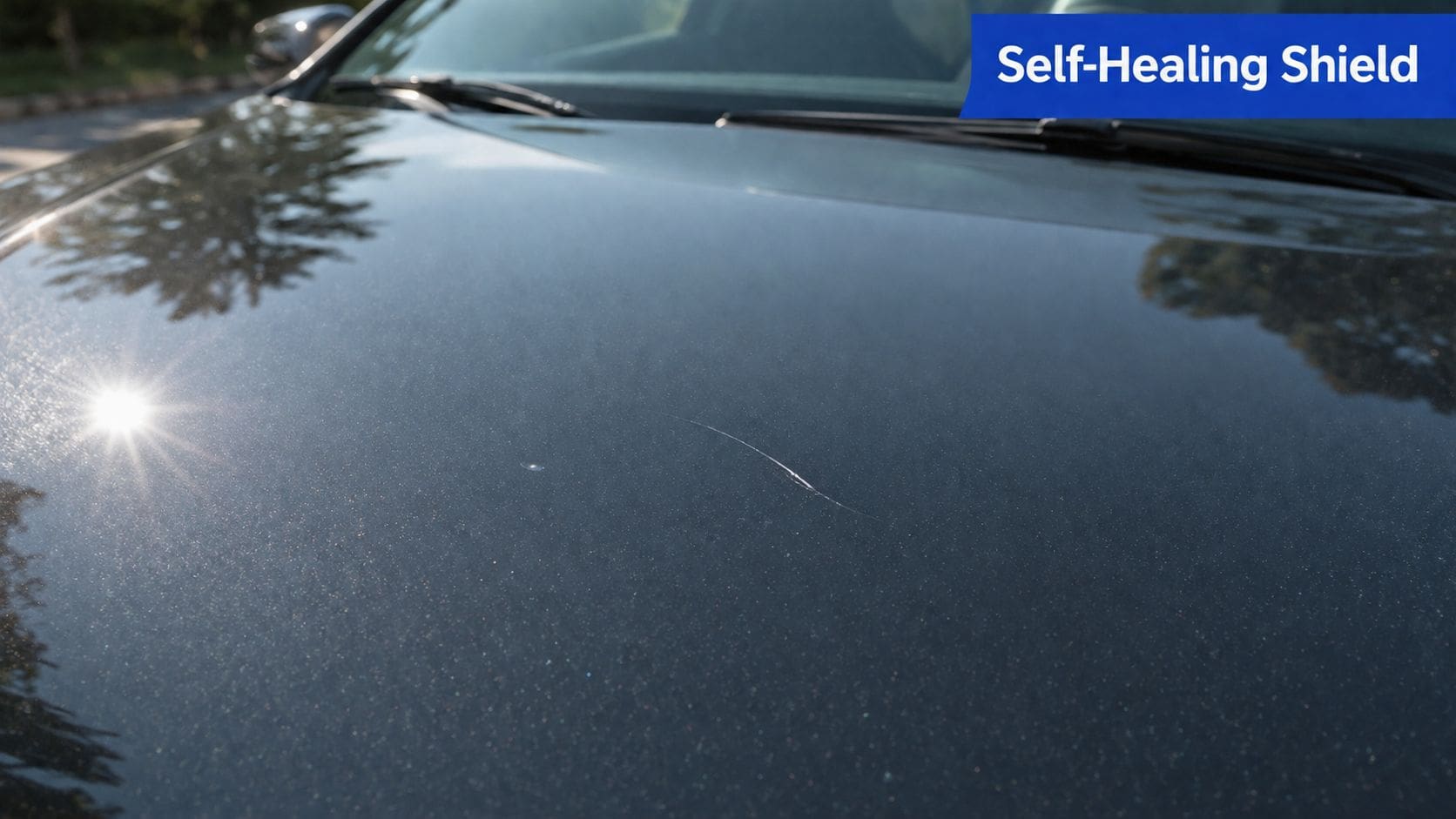
That benefit has become a major reason more owners are looking into this type of protection. The self-healing PPF market is projected to exceed $2.5 billion by 2030, and vehicles protected by premium self-healing film show up to 50% less paint deterioration after three years compared with unprotected vehicles, according to Market Report Analytics research on scratch self-healing paint protection film.
For a Columbus-area owner, that matters most in the places where paint gets beat up fastest:
- Front bumpers from highway debris
- Hoods and fenders from constant road fallout
- Mirror caps from tight parking and brushes
- Door cups and edges from rings, fingernails, and daily use
- Rear quarter panels on wider vehicles that catch road spray and grime
Why Ohio owners notice the difference
In Central Ohio, cars live a harder life than many owners realize. Winter salt residue stays on the surface. Cold weather changes how materials respond. Spring and fall bring muddy water, pollen, and repeated washing. Then summer rolls in and the car sits in full sun in a parking lot at Easton or a driveway in Hilliard.
That combination is exactly why ppf self healing is useful in practical scenarios. The film takes the abuse first, and the top surface can recover from many of the little cosmetic marks that would otherwise slowly dull the finish.
Practical rule: Self-healing PPF is best viewed as a way to preserve appearance between washes, seasons, and years of normal driving. It's not a promise that nothing will ever mark the car.
People searching for Columbus PPF, Hilliard auto detailing, or even ceramic coating near me are usually trying to solve the same problem. They want the car to stay nicer, longer, without obsessing over every wipe mark. Self-healing film is one of the few products to change that ownership experience.
What Exactly Is Self-Healing Paint Protection Film?
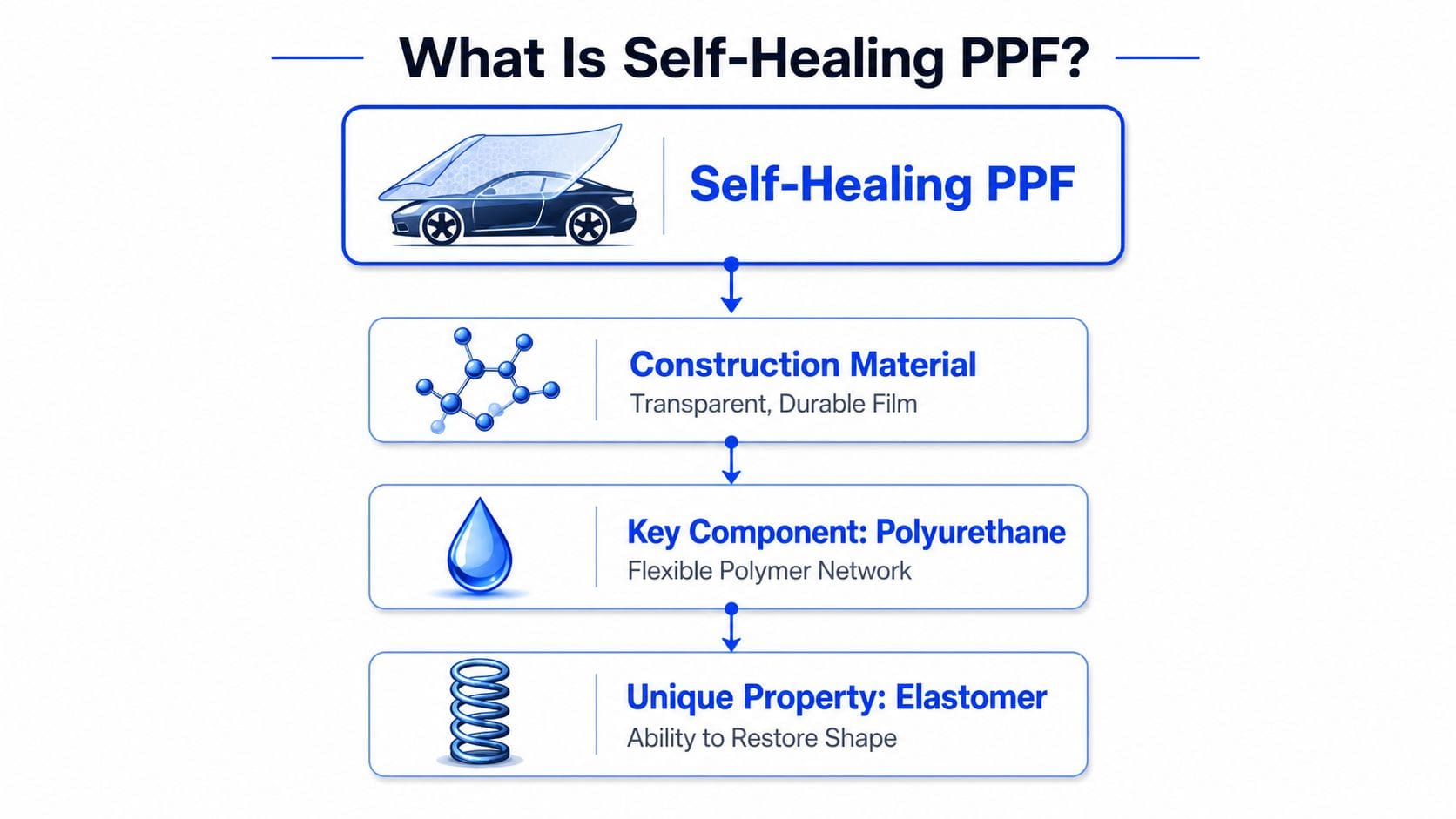
Self-healing paint protection film is a clear urethane film installed over painted panels so the film takes the day-to-day abuse before your paint does. For a Columbus driver, that matters most after repeated washes, winter grime, and the light scuffs that show up from normal use.
How the film is built
PPF works like a transparent outer layer over the painted surface. It needs enough flexibility to wrap bumpers and curves, enough toughness to absorb light impact and abrasion, and enough clarity that it does not change how the paint looks from normal viewing distance.
The main material is usually TPU, or thermoplastic polyurethane. That is the flexible body of the film. It gives PPF its ability to conform to body lines and absorb the kind of wear Ohio cars see from road grit, brush contact, and routine washing.
A typical film system includes a few working layers:
| Layer | What it does |
|---|---|
| Topcoat | Handles light surface marring and gives the film its self-healing behavior |
| TPU body | Provides the main physical protection and flexibility |
| Adhesive layer | Bonds the film to the paint when installed properly |
Where the healing happens
The self-healing part is in the topcoat, not through the full thickness of the film.
According to Perfection Plus on the self-healing properties of modern PPF, modern self-healing film recovers from light surface scratching in that upper layer, but it cannot rebuild missing material from a deep cut or sharp rock strike.
That distinction saves a lot of confusion. If a towel left faint wash marring, the surface may settle back down. If a chunk of film is gouged out, self-healing will not put material back.
A practical comparison is memory foam. Light pressure disturbs the surface, then the material returns to shape when conditions are right. PPF responds in a similar way, with heat helping the top surface relax and smooth back out.
The marks self-healing film handles best are the small cosmetic ones owners notice in direct sun. Fine swirls, wash marring, and light scuffs that sit on the surface.
What that means for Ohio drivers
Ohio weather changes how self-healing performs in practical conditions. In summer, a black hood sitting outside in Columbus can warm up enough for light marks to fade on their own. In winter, the same film gets stiffer and slower to recover, even if the mark is still only in the top layer.
That is one reason I tell owners to judge PPF over a full year, not one week in January. The film is still protecting the paint in cold weather. The visible recovery just tends to be better once the surface gets warm again.
Good maintenance also matters. Dirty wash media and harsh chemicals can leave marks that the film has to deal with later, so using the right paint protection film cleaner helps keep the topcoat in better condition.
Why beginners get value from it
Self-healing PPF helps reduce the cosmetic wear that makes a newer vehicle look tired too soon. It does not replace careful washing, and it does not make the car invincible. What it does well is give you more margin for normal ownership.
For owners comparing Hilliard ceramic coating and Hilliard paint protection film, this is the practical difference. PPF provides physical protection first, and the self-healing surface helps the film keep a cleaner appearance over time. Around Columbus, that usually means fewer visible wash marks, less stress after winter cleanup, and a finish that stays sharper between details.
How to Safely Activate Your PPF's Self-Healing Ability
Self-healing only works when the surface gets warm enough. That's the part Ohio drivers need to understand. In July, the sun may do the job on its own. In January, it probably won't.
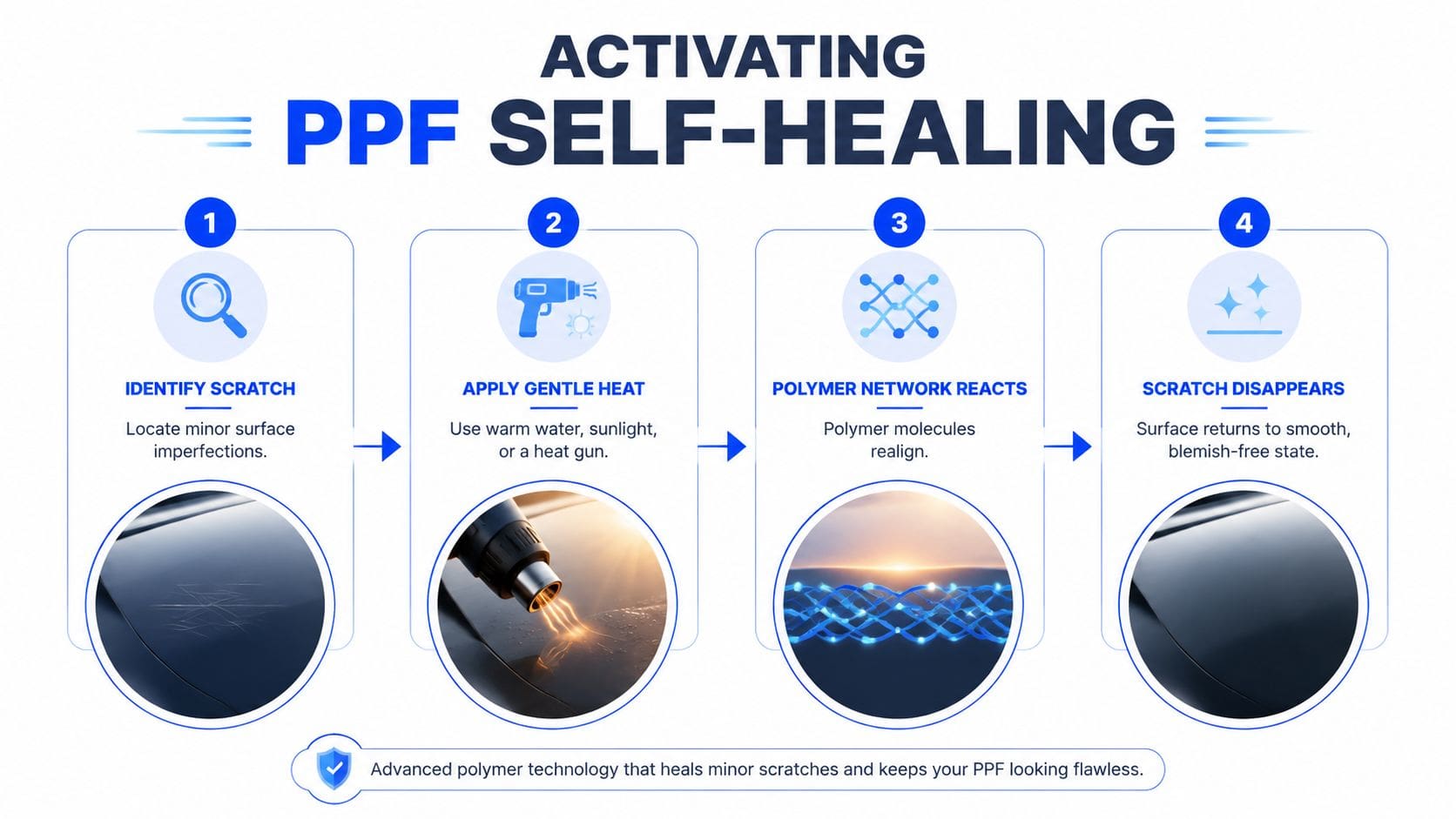
The technical benchmark is straightforward. The film's glass transition temperature is around 104°F (40°C), and optimal healing occurs between 140°F and 160°F. In cold weather, healing slows dramatically, but active heat from hot water or a heat gun can still produce recovery in 30 to 60 seconds, based on Atlanta Tint Lab's explanation of self-healing PPF.
Sunlight is the easiest method
This is the lowest-risk option for most car owners.
If you notice a faint swirl or light scuff on a warm day:
- Wash the panel first so dirt isn't sitting on the film.
- Dry it with a clean microfiber towel.
- Park in direct sun and let the surface warm naturally.
- Check the mark after a short wait instead of touching it every few minutes.
On hot Columbus summer days, this is often enough for very light surface marring. It's slow, but it's gentle.
Best use case: hood, roof, trunk lid, and upper doors during warm weather.
Hot water works well in Ohio
For most Ohio owners, hot water is the practical middle ground. It's safer than a heat gun and more reliable than waiting on the weather.
Use this method when it's cool outside, the mark is localized, or the car isn't getting enough direct sun.
- Start with a clean surface so you don't trap grit against the film.
- Use warm to hot tap water, not boiling water.
- Pour steadily over the affected area for a short pass.
- Watch the mark, then stop and reassess.
- Repeat only if needed instead of dumping excessive heat onto the panel.
If the film is freshly installed, be extra cautious around edges and corners. During the early post-install period, adhesive and edge stability matter.
A good maintenance routine also helps the topcoat respond better. Using a dedicated cleaner made for film surfaces, like the guidance in this paint protection film cleaner guide, keeps contamination from interfering with what you're seeing on the surface.
Warm water is the method I recommend first for most owners because it's controlled, simple, and hard to overdo if you stay reasonable.
Use a heat gun carefully
A heat gun is effective, but it's also the easiest way to make a good situation worse.
Use one only if the mark hasn't improved with sun or hot water, and only if you're comfortable working carefully.
Safe approach:
- Set the heat gun to a low setting
- Keep it moving at all times
- Hold it back from the panel, never tight to the film
- Warm the area gradually
- Stop as soon as the mark relaxes
Do not camp in one spot. Do not blast edges. Do not try to force a deep scratch to vanish.
The sweet spot for healing is narrow enough that careless heat can create edge stress or distort the film, especially near seams and tucked areas.
Mistakes that cause problems
A lot of online advice leaves out the downside. Here are the mistakes that matter.
- Using too much heat too fast. This is the fastest way to stress edges and adhesives.
- Trying to heal dirty film. If grit is still on the surface, you're guessing whether you're seeing contamination or actual damage.
- Working on a fresh install too aggressively. New film needs time to settle.
- Expecting winter sun to act like July sun. In Columbus, temperature and sun angle change the result.
- Trying to heal impact damage. If the damage is beyond the top surface, heat won't fix it.
For local owners searching Columbus ceramic coating, Columbus PPF, or ceramic coating near me, this is one of the biggest practical differences between marketing and reality. The film can self-heal. But the method matters, the weather matters, and restraint matters.
Understanding the Limits What Self-Healing PPF Can and Cannot Fix
A Columbus driver usually notices the limits of self-healing film in a very ordinary moment. The car looks good after a wash, then the light hits the hood or door just right and a few marks are still there. Some soften and fade with time. Others stay put because they are past what the top layer of the film can correct.
That line matters. Self-healing PPF is designed to deal with light surface-level marring in the outer layer of the film. Once damage cuts deeper into the film body, leaves a tear, or physically distorts the material, heat will not restore it.
What usually heals well
Surface defects are the sweet spot:
- Light wash marring from routine drying or contact washing
- Fine swirls that sit in the top layer
- Minor scuffs from soft bags, jackets, or brushing against the vehicle
- Shallow haze that affects the look of the film more than its structure
I see this most often on black trucks, dark SUVs, and daily drivers that go through Ohio winters. Salt grime, repeated washing, and winter wiping can leave the kind of light surface marks that self-healing film is good at addressing.
What usually does not heal
Some marks are beyond the design of the material:
- Rock chip impact points
- Deep scratches that catch clearly with a fingernail
- Cuts from sharp objects
- Torn film
- Lifted edges or failing seams
- Indented damage where the film has been stretched or crushed
Those cases usually mean the film did its job by taking the hit instead of the paint.
A practical test helps. If the mark is only visible from certain angles and feels smooth, there is a fair chance it is in the self-healing range. If it is white-looking, sharply defined, or easy to feel with a nail, I would stop expecting a full recovery.
Ohio weather changes the result too. In July, a parked car may show better self-healing behavior because the film gets naturally warmer. In January, that same surface can stay stiff and hold onto light marks longer, even when the damage is technically shallow enough to improve. That does not mean the film has failed. It means the conditions are different.
The bigger point is simple. Self-healing PPF keeps a vehicle looking cleaner and newer through normal use, but it does not make the surface immune to abuse, impact, or neglect.
If you're weighing whether that trade-off still makes sense for your car, this paint protection film pros and cons guide gives a clear look at where film shines and where it has limits.
For owners comparing Hilliard paint protection film with leaving the paint unprotected, that is the honest answer. Self-healing film can clean up the day-to-day cosmetic wear that makes a vehicle look older than it is. Deep physical damage still calls for repair, replacement, or a professional inspection.
PPF vs Ceramic Coating Which Protection Is Right for You?
A lot of Columbus owners ask this after the first winter or the first highway trip to Cleveland. The paint still looks good, but the front bumper has a few new marks, the rocker panels are dirty, and washing the car feels harder than it should. At that point, the right answer depends on what kind of frustration you want to solve.
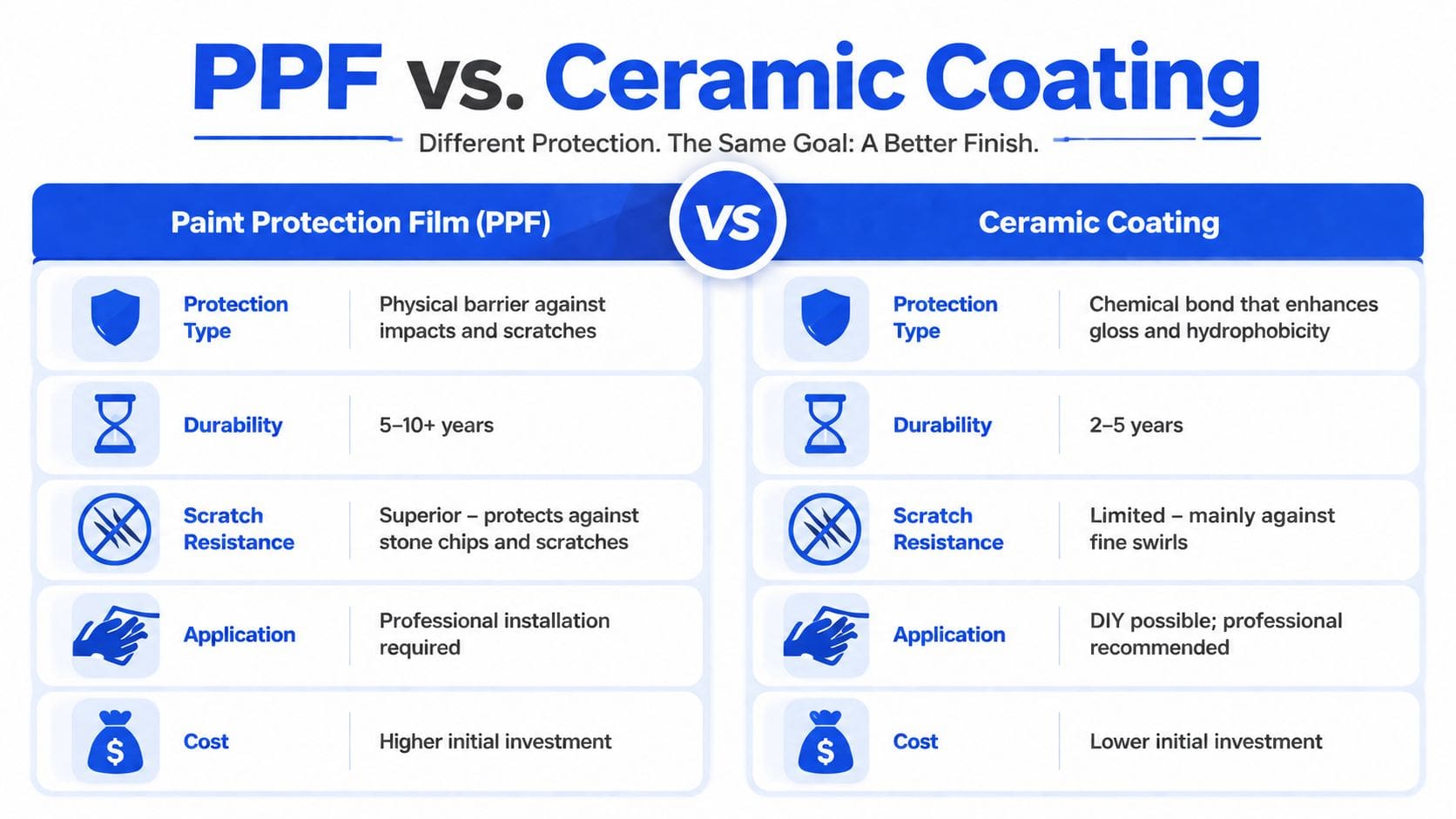
PPF protects against physical abuse. Ceramic coating makes the surface easier to live with.
They solve different problems. Film takes the hit from road debris, light scuffing, and the kind of wear Columbus drivers see on 270, 70, and 71. Coating helps with washability, water behavior, bug cleanup, and the grime that builds up during Ohio salt season and humid summers. If the goal is chip prevention, coating is not a substitute for film. If the goal is easier maintenance, full-body PPF is often more protection than the owner needs.
A practical comparison for Columbus drivers
| Category | PPF | Ceramic coating |
|---|---|---|
| Physical protection | Better choice for chips, scuffs, and abrasion | Very limited |
| Self-healing ability | Available on premium films | None |
| Maintenance | Easier than bare paint | Easier than bare paint, usually slicker |
| Gloss and appearance | Good to very good, depends on film finish | Strong gloss and water behavior |
| Best fit | Front ends, high-impact areas, highway-driven vehicles | Daily drivers, garage-kept cars, owners who want simpler washing |
For local driving, the decision usually looks like this:
- Highway commuter or frequent road trips: PPF makes the most sense, especially on the front bumper, hood, fenders, mirrors, and rocker panels.
- Black or dark-colored vehicle: Ceramic coating helps a lot with washing and drying, but it will not stop chips.
- Lease or newer vehicle you want to keep clean-looking: A front-end PPF package plus coating is often the balanced option.
- Family SUV, truck, or kid hauler: Film on high-contact and cargo-adjacent areas usually gives the best return.
When both are the right answer
In the shop, the most practical setup for many owners is selective PPF with ceramic coating on top. That gives the vulnerable areas real impact protection and makes the whole vehicle easier to wash through pollen, road salt, and summer bug season.
That layered approach does not cancel out the self-healing behavior of the film in normal use. The bigger question is budget. Full-front PPF plus coating costs more up front, but it solves two different problems at once. Coating alone costs less, looks great, and cuts down on maintenance, but it will not stop the peppering that shows up on front-facing panels after an Ohio winter.
If you're trying to sort out the cost side, this guide on whether ceramic coating is worth it gives a useful breakdown.
For many Columbus-area vehicles, the best plan is not an all-or-nothing choice. It is putting film where the car gets hit, then deciding whether a coating belongs over that protection and on the rest of the paint.
Your Columbus PPF Experts When to Call a Professional
Some self-healing issues are owner-level problems. Others need a trained eye. If the film has simple surface marring, you can usually try safe heat and monitor it. If the damage changes shape, exposes an edge, or looks structural, stop experimenting.
Call a pro when you notice these issues
- A scratch catches your fingernail clearly and doesn't improve with safe heat
- The film edge is lifting near a hood, fender, mirror, or bumper seam
- You see a tear or puncture instead of simple marring
- The mark sits near a wrapped edge where too much heat could make things worse
- The panel was recently installed and you're unsure how aggressive to be
- The damage is in a high-visibility area like the hood, piano black trim, or front bumper
These are the moments when DIY can turn a manageable repair into a replacement.
What to expect from a professional inspection
A good installer or detailer should check the depth of the damage, the condition of the surrounding adhesive, the stability of nearby edges, and whether the issue is in the film or just sitting on the surface.
Sometimes the answer is simple. Clean it properly, warm it safely, and leave it alone. Sometimes the honest answer is that the film did its job and the damaged section should be replaced.
For owners in Hilliard, Dublin, Upper Arlington, New Albany, Powell, Grove City, and the rest of the metro, that local judgment matters. Ohio weather changes how film behaves, how fast it heals, and how careful you need to be with heat in winter versus summer.
The short version is this. PPF self-healing is real, useful, and worth understanding. It helps with the cosmetic wear that frustrates owners most. It works best when you know what heat to use, what damage is realistic to expect improvement from, and when to stop and call a professional.
If you're in Hilliard or the greater Columbus area and want honest guidance on paint protection, Lionheart Detailing can help you decide whether PPF, ceramic coating, or a combined protection plan makes the most sense for your vehicle. Whether you need a fresh installation, help evaluating damaged film, or full detailing support, reach out and get a recommendation built around how you drive and care for your car.