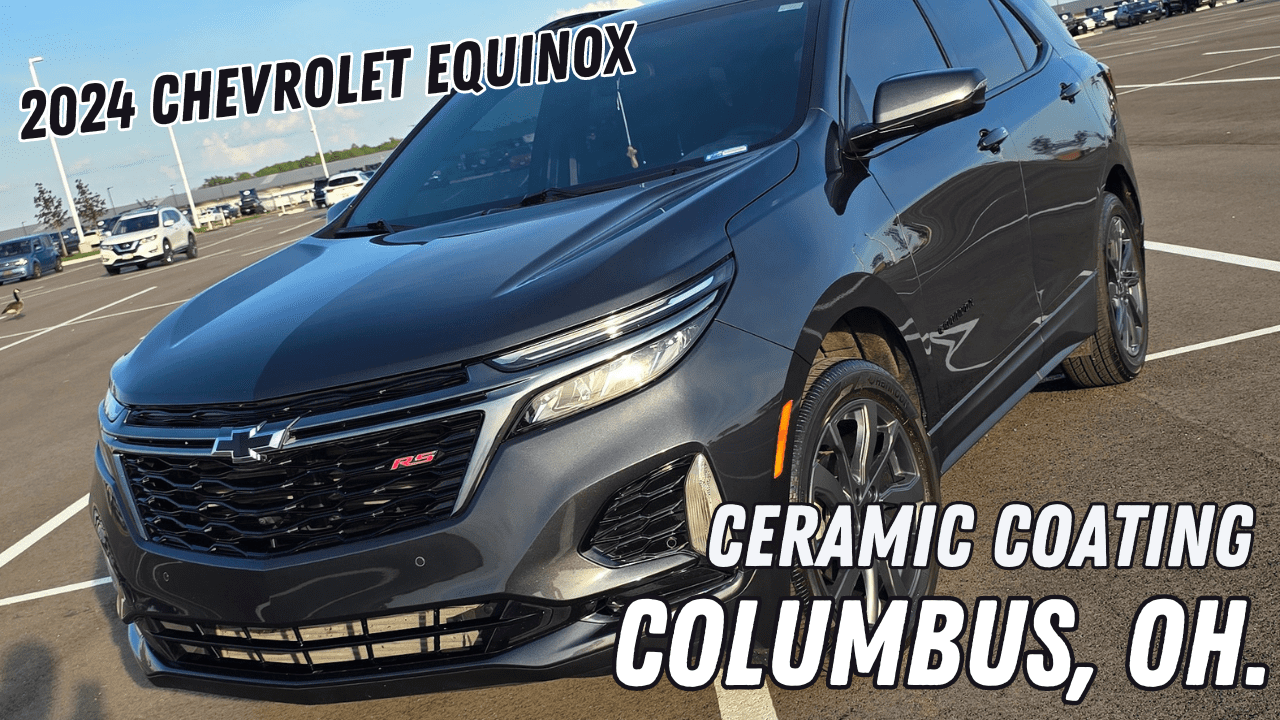
You've probably already had this moment. The Tesla is new, the paint looks sharp in the driveway, and the first few drives feel different because you're paying attention to every little thing. Then you hear it. A tiny ping off the front end on the highway around Columbus, Dublin, or Hilliard. It's a small sound, but it gets big in your head fast.
That reaction is normal.
A Tesla doesn't feel like just another daily driver to most owners. It feels like a big purchase you want to keep looking right. That's why so many people start searching for Tesla PPF, Columbus PPF, or Hilliard paint protection film almost immediately after delivery. They're not being obsessive. They're trying to avoid the first chip, the first scratch, and the first expensive repair.
For a lot of owners, this comes down to a simple question. Is paint protection film worth it, or is it just another add-on people push on new car buyers?
My honest answer is this. If you own a Tesla and plan to keep it looking clean in Ohio traffic, PPF is one of the few upgrades that can make sense both cosmetically and financially. Not for every person. Not in every coverage package. But for the right driver, it solves a real problem.
Table of Contents
- That New Tesla Feeling and the Fear of the First Scratch
- What Is Paint Protection Film Anyway
- Why Your Tesla's Paint Is Uniquely Vulnerable
- Tesla PPF Coverage Options and Typical Costs
- Professional Installation vs a DIY Kit
- What to Ask a Columbus PPF Installer Before You Book
- Protecting Your Investment Is the Smart Move
That New Tesla Feeling and the Fear of the First Scratch
A new Tesla has a way of making you care about paint more than you expected. Even people who've never booked Hilliard auto detailing before suddenly start noticing road grit, parking lot brush-by marks, and bugs on the bumper.
That happens because the finish is part of the experience. Clean paint makes the whole car feel premium. Damaged paint does the opposite. One chip on the hood or one rough section on the bumper can pull your eye straight to it every time you walk up to the car.
I see the same pattern with new owners. They're excited at delivery, careful for the first week, then they hit normal Ohio driving. I-270, 70, 71, construction zones, winter grime, and trucks throwing debris. You don't have to abuse a Tesla to mark it up. You just have to drive it.
What owners are really trying to protect
This isn't just about vanity. It's about three things at once:
- Appearance: You want the car to keep that smooth, deep, factory-fresh look.
- Resale or trade-in value: You don't want visible paint damage dragging the car down when it's time to sell.
- Peace of mind: You want to stop flinching every time road debris hits the front end.
Practical rule: The best time to protect paint is before the damage starts. Once chips and scratches are in the finish, protection becomes a cleanup project instead of prevention.
That's why Tesla PPF gets so much attention from owners who are also looking up Columbus ceramic coating or ceramic coating near me. A coating is helpful for cleaning and gloss. Paint protection film is the thing that takes the hit.
And that difference matters.
What Is Paint Protection Film Anyway
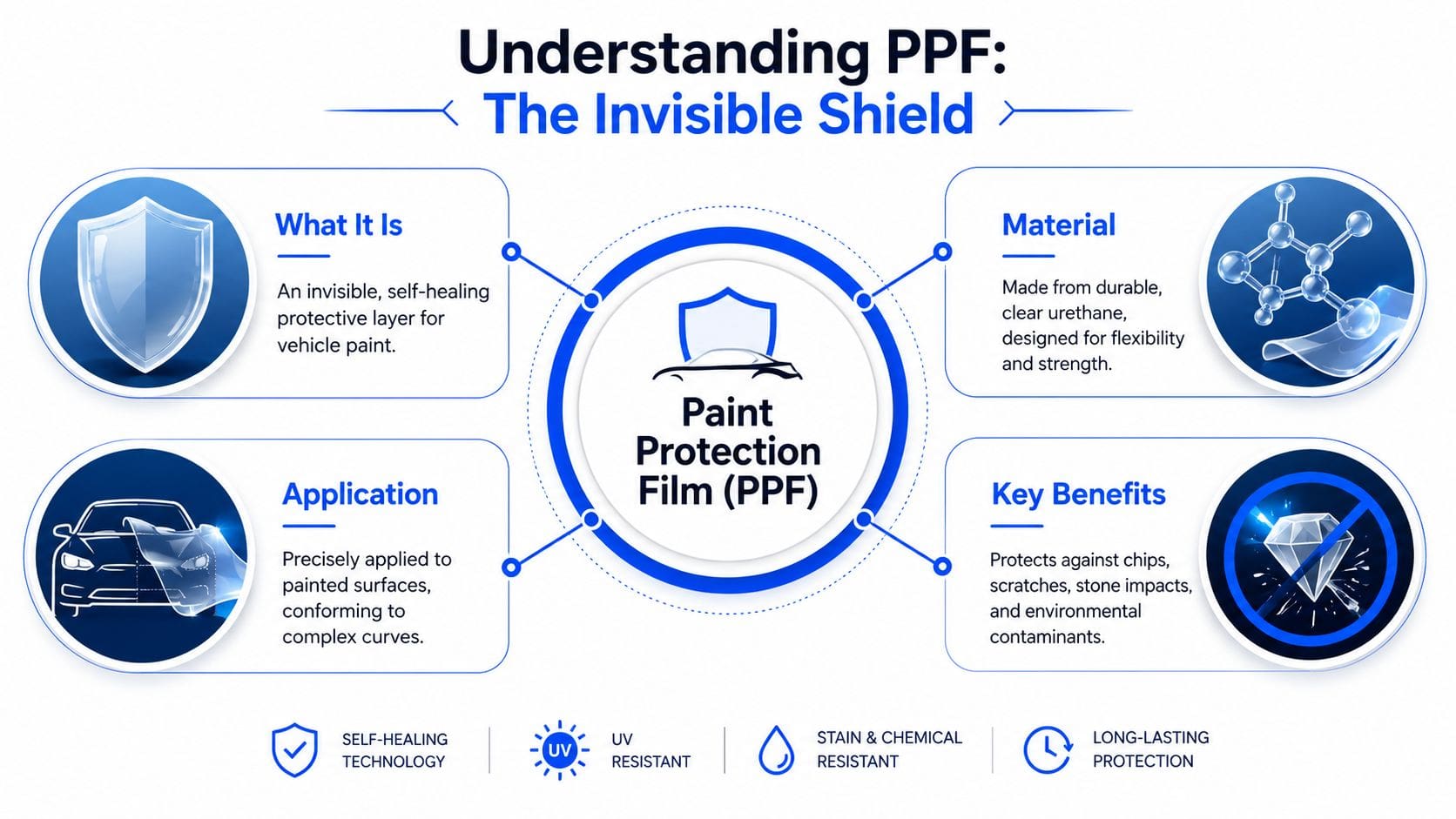
Paint protection film, usually called PPF, is a clear urethane layer applied over painted panels so the film takes the scuffs, chips, and wash wear before your Tesla's paint does.
On a Tesla, installers usually put it on the front bumper, hood, fenders, mirrors, rocker panels, and other high-hit areas. Some owners cover the full front clip. Others go all-in and wrap the whole vehicle. The right choice usually comes down to budget, how much highway driving you do, and how long you plan to keep the car.
How PPF fits into the protection picture
The phone comparison is useful because it separates two different jobs.
Ceramic coating helps with cleaning, gloss, and keeping grime from sticking as hard. PPF is the impact layer. If a small rock, bug stain, or brush-by mark would have hit the paint, the film is there to absorb that wear first.
That matters more than people realize.
A Tesla bumper repaint or blended front-end paint repair in the Columbus area is not a small errand. Once you factor in paintwork, panel blending, and the hassle of being without the car, the bill can climb fast. PPF is easier to understand when you look at it as a way to avoid paying for cosmetic repair later.
PPF does a few jobs well:
- It takes the hit from road debris before the paint does
- It cuts down on visible wear in high-contact areas
- It helps preserve the original factory finish
- It gives you a sacrificial layer that can be removed and replaced
What the film does day to day
Premium film can self-heal from light surface marring with heat, which is one reason dark Teslas benefit from it. That self-healing behavior and the long-term protective role are discussed in this Tesla Model Y PPF guide.
PPF still has limits. It will not stop every sharp impact, and it does not replace proper washing. If a chunk of metal comes off a truck at highway speed, film is not magic. What it does well is handle the kind of routine abuse that slowly ages a daily-driven Tesla.
That is why I tell owners to treat PPF like a replaceable outer skin. If the film gets peppered over time, you replace film. If the paint gets peppered, you are looking at correction, repaint work, or living with the damage.
You still need to wash the car correctly and keep contaminants off the surface. But compared with bare Tesla paint, film gives you a tougher buffer in the places that usually get beat up first.
Why Your Tesla's Paint Is Uniquely Vulnerable
Tesla owners tend to learn quickly that their paint needs extra care. This isn't a brand-bashing point. It's a practical ownership point. If you know the finish is more vulnerable, you can protect it before it becomes a recurring headache.
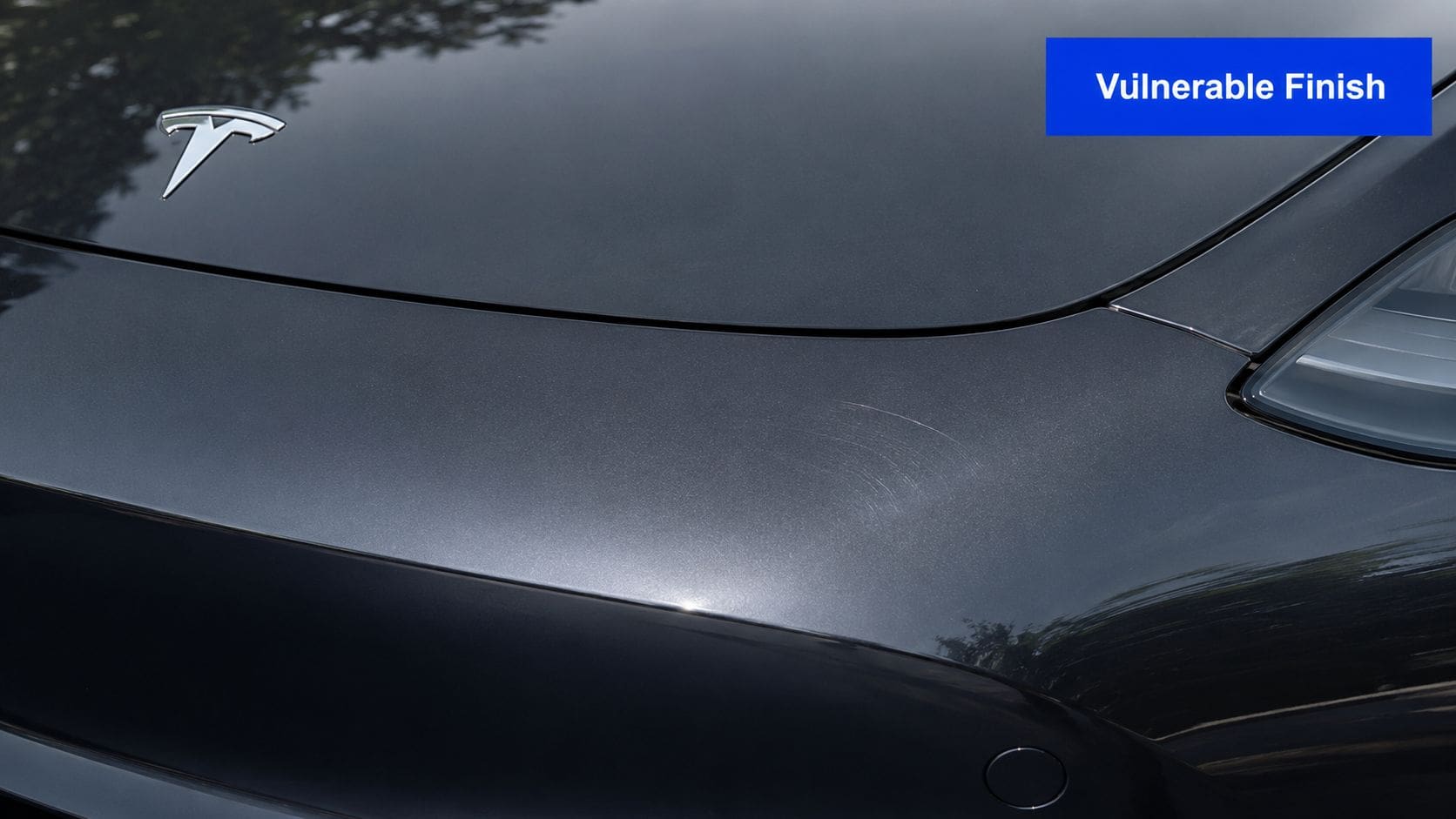
A widely repeated reason Tesla owners choose film is simple: Tesla's factory paint is uniquely vulnerable to rock chips and environmental damage, and PPF is the only solution that can block UV rays, toxins, and impacts while having self-healing properties where minor scratches disappear with heat. For the first 7 days post-installation, the car must not be washed to allow the adhesive to cure properly, as noted in this Tesla paint vulnerability and PPF care guide.
Why Tesla owners notice damage so quickly
The front of a Tesla sees a lot of abuse in regular driving. Bumpers, mirror caps, hood edges, and lower doors tend to collect the first signs of wear. In Ohio, that gets worse with highway debris, seasonal grit, and road conditions that aren't exactly gentle.
The problem isn't always one dramatic hit. It's often a steady accumulation of little hits. A chip here, light marring there, a few bug etchings, then wash marks from trying to keep the car clean. Owners notice it fast because Tesla styling has broad, smooth panels that show defects clearly.
Why PPF fits this problem better than other options
If you're comparing Hilliard ceramic coating, Columbus ceramic coating, and Tesla PPF, it helps to separate what each product is good at.
PPF is for impact resistance and sacrificial protection. Ceramic coating is for easier washing, slickness, and helping contamination release more easily. Those jobs can complement each other, but they aren't the same thing.
That's why owners who really want to preserve a Tesla long term often start with film on the most vulnerable surfaces. It directly addresses the thing bare Tesla paint struggles with most.
Here's what tends to work well in practice:
- Front-end protection for highway drivers: Best for owners who commute, road trip, or follow traffic on debris-heavy routes.
- High-impact area coverage for city parking: Good for people dealing with tight spaces, shopping carts, and general door-side wear.
- Full-body film for long-term keepers: Better for owners who know they want the car staying as close to new as possible for years.
What doesn't work is expecting coating alone to stop chips. It won't. It was never built for that job.
Tesla PPF Coverage Options and Typical Costs
Coverage is where Tesla owners can save money or waste it.
I've seen Columbus drivers buy too little film, then pay for bumper and hood repair after one bad season on I-270. I've also seen owners wrap every painted panel when a full-front package would have covered the areas that receive the abuse. The right answer depends on how you drive, where you drive, and how long you plan to keep the car.
The main package choices
Partial front is the entry point. It usually covers the front bumper, part of the hood, part of the fenders, and mirror caps. It costs less up front, but the cut line across the hood or fender can bother detail-oriented owners, and the uncovered paint above that line can still chip.
Full front covers the full bumper, full hood, full fenders, and mirrors. For a lot of Tesla owners, this is the value play. Those are the panels that get peppered by road debris first, especially on a Model 3 or Model Y that sees regular highway miles around Columbus. If you want to see what that layout usually includes, this full front PPF package example shows the coverage clearly.
Full body wraps all painted exterior panels. This costs the most, but it gives the most consistent protection and keeps the whole car easier to maintain over time. It makes the most sense for long-term owners, darker paint colors, and people who are serious about preserving resale condition.
A previously cited Tesla PPF cost guide notes that partial-front packages often start in the hundreds, full-front packages usually land in the low thousands, and full-body Tesla installs can run several thousand dollars depending on model, film, and installer.
Tesla PPF Coverage & Cost Comparison
| Package | Areas Covered | Best For | Typical Cost Range |
|---|---|---|---|
| Partial Front | Common high-impact front sections such as bumper areas, partial hood, partial fenders, and mirrors | Owners who want lower entry cost and mostly local driving protection | Lower-cost option, usually hundreds to low thousands |
| Full Front | Full bumper, full hood, full fenders, mirrors | Tesla owners who do regular highway driving and want the strongest value | Commonly low thousands |
| Full Vehicle Wrap | Full exterior painted surfaces | Long-term owners, high-mileage drivers, and people who want the most complete protection | Several thousand dollars, depending on model and coverage |
How to think about the cost
The better way to price PPF is against repair risk, not just installation price.
Tesla paint work in the Columbus area is expensive. Once a front bumper, hood, or fender needs proper paint correction or repainting, the bill can climb fast, especially if color match and finish quality matter to you. That's why many owners treat PPF as a financial decision first and a cosmetic one second.
For most daily-driven Teslas, full front is the package I'd look at first. It protects the panels that usually take the hit, and it avoids paying for film on low-risk areas you may never damage.
There are trade-offs. Partial front costs less, but it leaves more exposure and creates visible coverage transitions. Full body gives the best protection, but the jump in price only makes sense if you plan to keep the car for years, drive a lot, or want the whole vehicle to stay as close to new as possible.
Film life matters too. Quality PPF can protect a car for years when it's installed well and maintained properly. Spread over the time you own the Tesla, that cost often looks a lot more reasonable than paying for paintwork after the damage is already there.
Professional Installation vs a DIY Kit
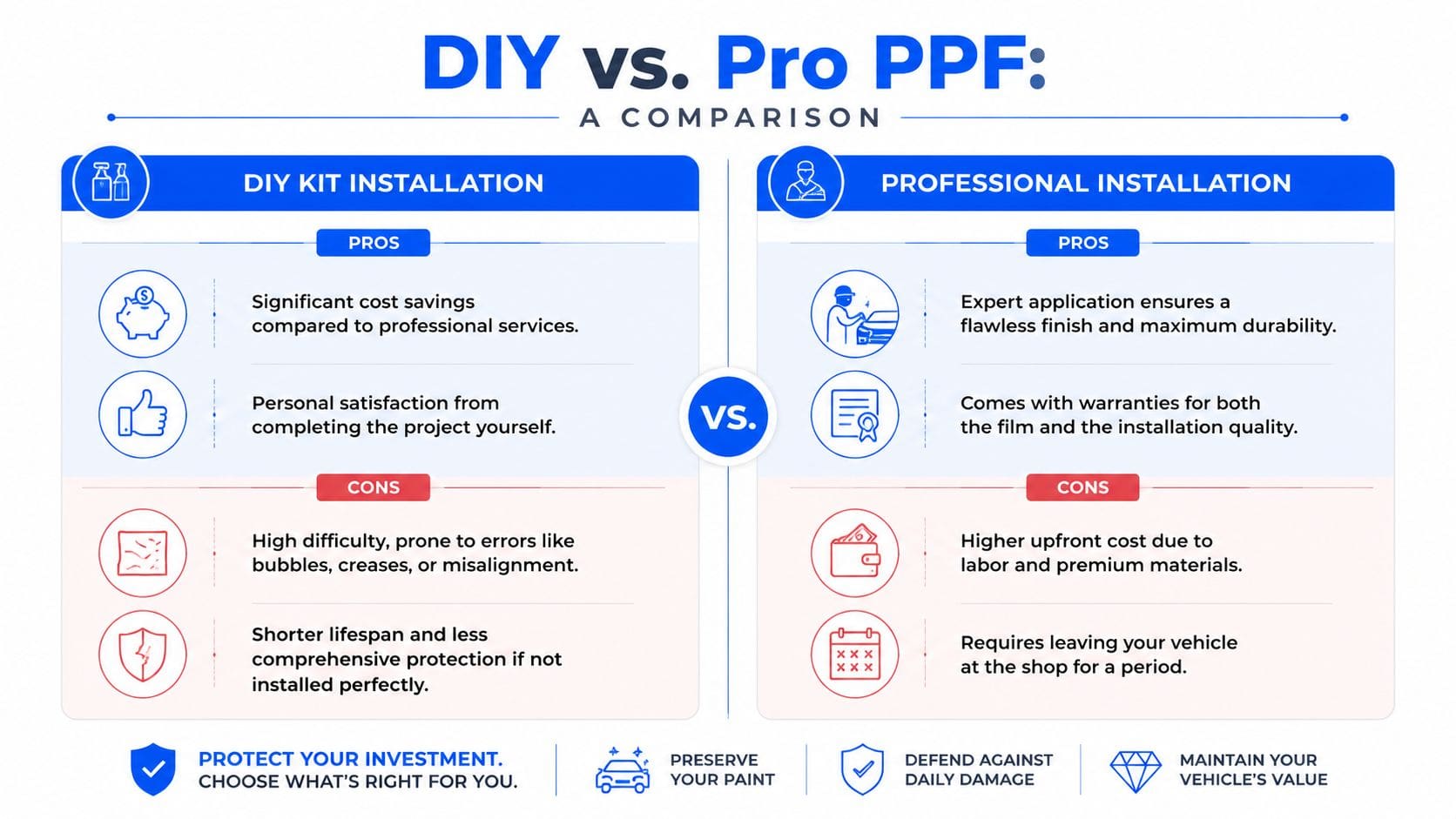
A DIY PPF kit can save money up front. That part is real. If you have a clean garage, good lighting, patience, and steady hands, a kit can work on a small, lower-visibility panel.
The catch is that PPF is one of the least forgiving jobs on a Tesla.
A door cup or luggage strip is one thing. A front bumper on a Model 3 or Model Y is another. Tesla front ends have tight curves, sharp edges, cameras, sensors, and panel shapes that show mistakes fast. One speck of dust, one finger crease, or one stretch mark near a headlight can leave a flaw you notice every time you wash the car.
Where DIY can work
DIY makes the most sense for owners who want to learn, accept some waste, and are comfortable redoing a panel if the first try goes sideways. It can also make sense if your goal is basic protection, not a near-invisible finish.
That said, a bad install has a cost beyond the kit price. If the film lifts at an edge, traps contamination, or goes down crooked around trim, you may end up pulling it off and buying material twice. On a Tesla, that savings can disappear quickly, especially if the panel you were trying to protect is the same panel that later needs paint repair. In Columbus, that repair bill is often the bigger financial risk.
Why professional work costs more
A pro install includes more than laying film on paint. The job starts with wash, decontamination, and paint inspection. Then comes pattern fitment, stretching control, slip solution management, edge wrapping where possible, and finishing work that keeps the film from drawing attention to itself.
That experience matters most on the panels Tesla owners usually want covered first. Bumpers, hoods, mirrors, and fenders are where fit and finish separate a clean install from one that looks patched on. If you are comparing materials, it also helps to read up on how different PPF brands perform over time, because film quality and installer skill both affect the final result.
Here's the practical trade-off:
- DIY costs less at checkout: good for small sections and owners who accept trial and error.
- Professional installation usually looks better: cleaner edges, better alignment, and fewer visible defects.
- DIY carries more downside: wasted film, trapped debris, and redo time are common for first-timers.
- Professional work lowers the chance of paying twice: once for a failed install, then again for replacement film or paint correction.
I tell Tesla owners this all the time. If you enjoy projects, start small. If you want the front of the car to stay clean, consistent, and easier to live with for years, professional installation is usually the cheaper decision in the long run.
What to Ask a Columbus PPF Installer Before You Book
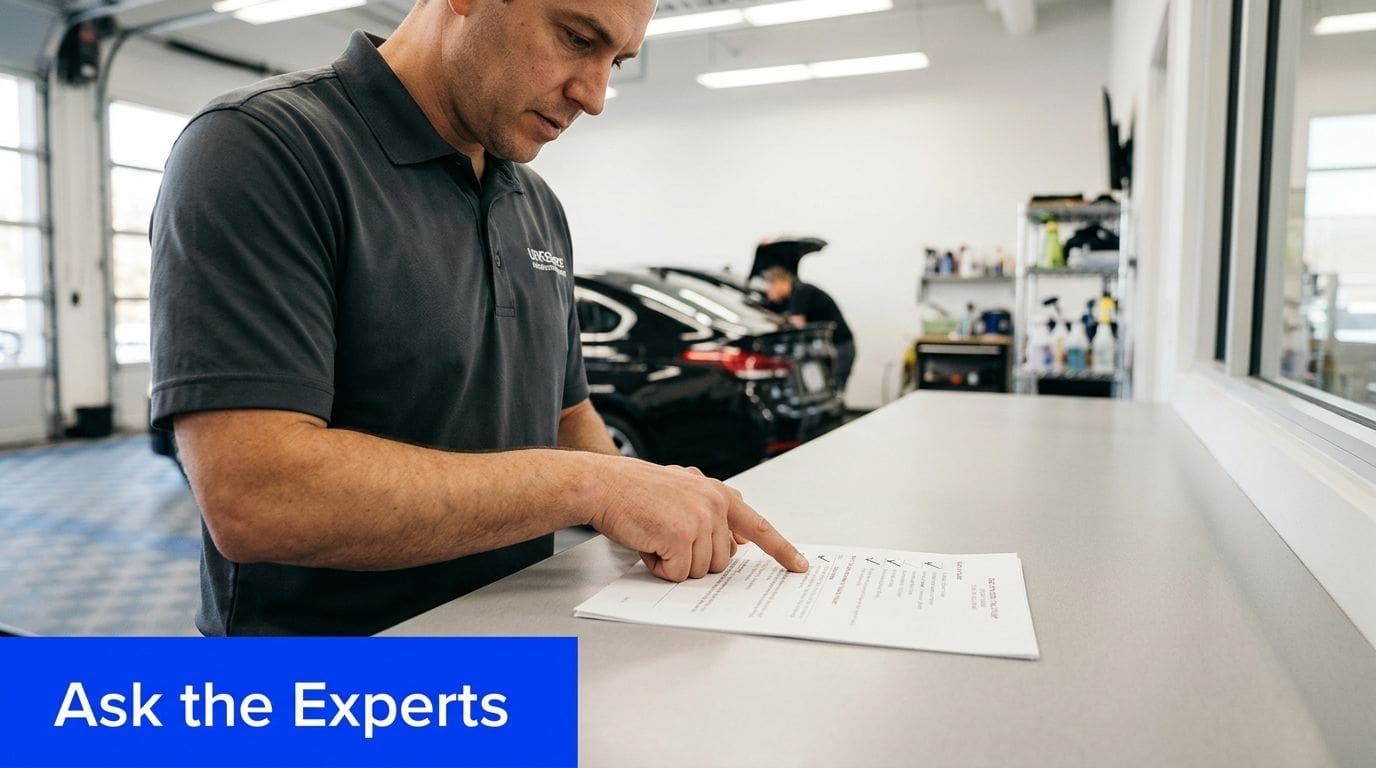
A bad install gets expensive fast on a Tesla. In Columbus, even a small paint repair on a bumper or hood can turn into a much bigger bill than owners expect, especially once color match, blending, and shop time enter the picture. That is why the questions you ask before booking matter almost as much as the coverage you choose.
Questions that tell you a lot fast
Start with a short phone call or in-person consult. A good installer should answer clearly, without hiding behind jargon.
- Do you use Tesla-specific plotter patterns, and do you ever hand-bulk film on difficult panels? Good shops usually work from software-cut patterns for consistency, then adjust their approach when a bumper, mirror, or tight edge calls for more custom work.
- Can I see close-up photos of Teslas you've done? Ask for bumpers, headlights, mirror caps, and wrapped edges. Those areas reveal the quality of the install much faster than wide photos.
- What parts of the film do you wrap, and what edges will stay visible? Every shop has limits based on panel design and safe installation practices. Honest answers are better than perfect-sounding ones.
- What film brand do you install, and why that one? They should be able to explain gloss, self-healing behavior, warranty support, and how that film has held up for their clients.
If you want context before that conversation, this guide to choosing the best PPF brand helps you compare film lines without getting lost in marketing language.
What good answers sound like
Listen for specifics. Tesla owners do not need a sales pitch. They need to know how the shop handles the details that affect how the car will look a week later and two years later.
A strong installer can explain how they prep the paint, what they do around badges or trim, where they prefer wrapped edges, and which Tesla panels tend to need extra attention. They should also be upfront about limits. Film can prevent a lot of chip damage, but it is not armor plating.
A few answers usually signal a shop that knows what it is doing:
- They define the package clearly. You know exactly which panels are covered.
- They explain trade-offs. For example, a wrapped edge may look cleaner, but some areas are better left with a precise finished edge than forced too far.
- They talk about finish quality. Dust control, alignment, relief cuts, and edge work all matter on a Tesla's large, simple panels.
- They know Tesla trouble spots. Front bumpers, rocker areas, mirror caps, and lower doors come up quickly in the conversation.
Ask for photos taken a few inches away, in bright light. That is where silvering, dirt, and edge lift show up.
Maintenance questions matter too
The job is not done when the keys are handed back. Aftercare affects how the film settles, how long it stays clear, and how good it looks after an Ohio winter.
Ask these before you book:
- How long should I wait before the first wash?
- What cleaners are safe on the film?
- Are touchless washes acceptable, and which wash types should I avoid?
- How should I remove bug residue, bird droppings, and sap without damaging the surface?
Owners who already care for ceramic-coated cars will recognize the pattern. Gentle washing and quick cleanup keep protective products looking better for longer.
A trustworthy Columbus installer treats those questions like part of the service, not an inconvenience. That matters, because on a Tesla, the wrong install or poor aftercare can turn a protective upgrade into another paint bill.
Protecting Your Investment Is the Smart Move
If you own a Tesla, the PPF decision isn't really about chasing perfection. It's about avoiding predictable damage and avoiding expensive regret later. That's why this upgrade makes sense for so many owners in the Columbus area.
The short version is straightforward. Tesla paint is vulnerable. Ohio roads are hard on front-end surfaces. Paint repair can get expensive fast. PPF gives you a sacrificial layer where you need it most, especially if your car sees regular highway time.
Not everyone needs a full-body wrap. Some people are best served by a full front package. Others want only the most exposed areas protected. The right answer depends on how you drive, where you park, and how long you plan to keep the car.
If you're still weighing the pros and cons, this breakdown of paint protection film pros and cons is a useful next read before making the call.
What matters most is being honest about the trade-off. PPF costs real money up front. But if you care about preserving appearance, reducing repaint risk, and protecting resale or trade-in appeal, it's often one of the smarter moves you can make on a Tesla.
If you're in Hilliard, Columbus, or the surrounding area and want help deciding whether Tesla PPF, ceramic coating, or full detailing makes the most sense for your car, Lionheart Detailing is a solid place to start. Their team handles paint protection film, detailing, and protection work with a focus on education and clean results, so you can get clear advice before you spend money.