You pick up your new Tesla, enjoy the silent ride home, and then the first hot afternoon hits. The cabin looks bright and open, the glass roof feels futuristic, and the car turns into a heat trap faster than most new owners expect. That surprise is one of the most common conversations I have with Tesla drivers who thought the factory glass had them fully covered.
That's why Tesla window tint isn't just about making the car look cleaner from the outside. On these cars, tint is a comfort upgrade, a glare-control upgrade, and in many cases a quality-of-life upgrade you notice every single day. The challenge is that generic tint advice misses the details that matter on a Tesla, especially the factory privacy glass, the huge roof area, and the warranty fears that keep people from doing the job right.
If you're shopping for Tesla window tint in Hilliard, Columbus, or you're just trying to figure out what's worth paying for, the key is knowing what works, what doesn't, and where people waste money.
Table of Contents
- Your New Tesla Is Here But So Is the Sun
- What Tesla's Factory Tint Actually Does (And Does Not Do)
- Choosing the Right Window Tint for Your Tesla
- The Professional Tesla Tinting Process Explained
- Answering Tesla Owners' Top Tinting Questions
- Finding Your Tesla Tint Expert in Columbus Ohio
Your New Tesla Is Here But So Is the Sun
A lot of Tesla owners have the same first week. The car is incredible in the morning. It feels airy, modern, and different from anything else they've driven. Then they park it outside at work, come back later, open the door, and get hit with that heavy wall of trapped heat.
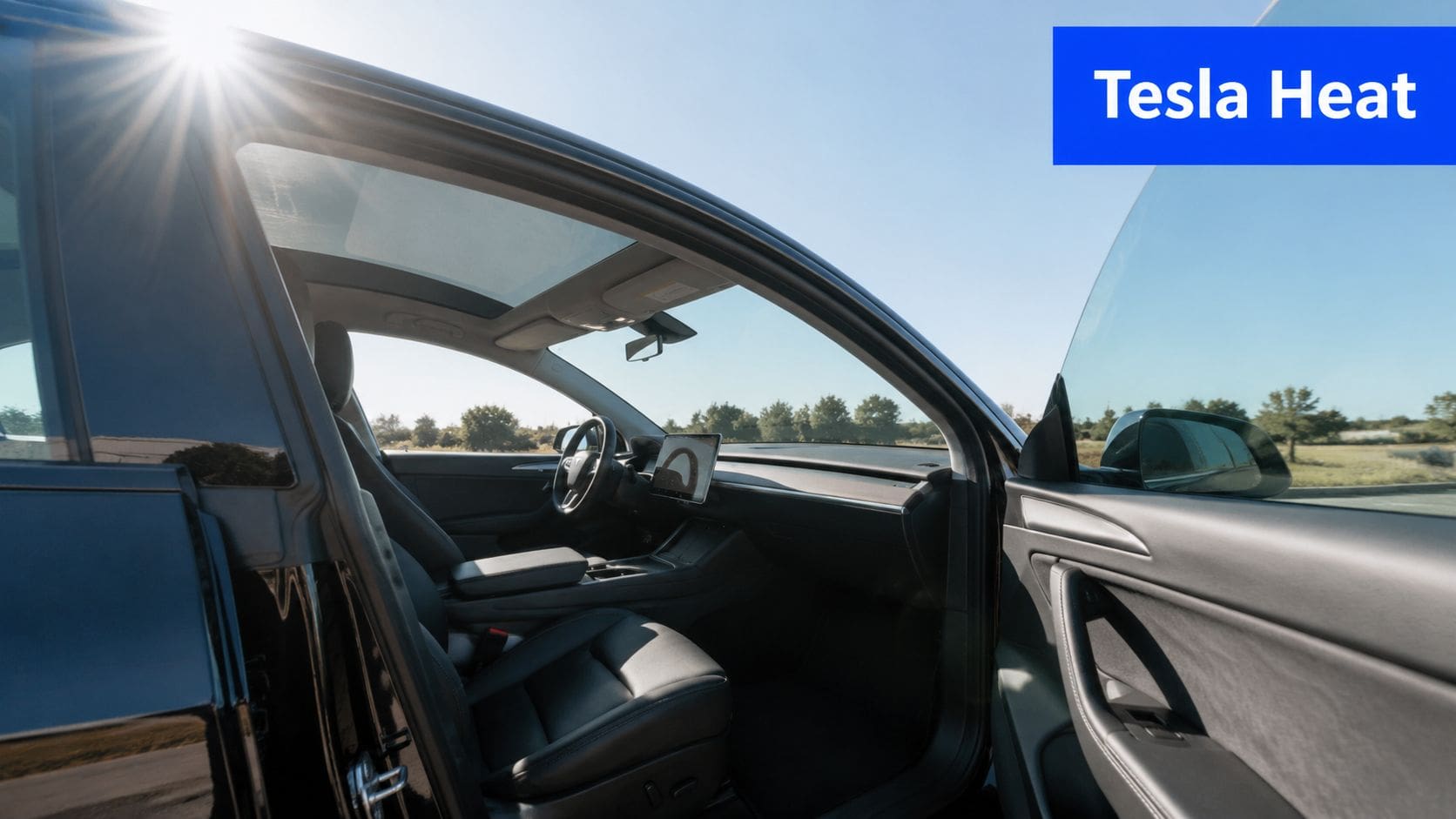
That big glass roof is part of the appeal. It's also part of the problem. On a cloudy Ohio day, it's not a big deal. On a bright summer afternoon in Columbus, the car can feel harsh from above and from the sides, especially if you commute during peak sun or carry kids and pets in the back.
What new Tesla owners notice first
Many don't come in asking for tint because they want the darkest look possible. They usually mention practical stuff first:
- Cabin heat: The interior gets uncomfortable after the car sits outside.
- Glare off the side glass: Bright sunlight and headlight glare wear you out on longer drives.
- Rear-seat comfort: Passengers feel more sun exposure than they expected.
- Interior preservation: Owners want to protect seats, trim, and screens over the long haul.
Practical rule: If you're only thinking about appearance, you're underselling what tint can do on a Tesla.
Tesla owners also tend to research more than the average driver. That's good, but it can also create confusion because a lot of online tint advice mixes together privacy, UV protection, heat rejection, and legal darkness as if they're all the same thing. They're not.
Why Tesla tint decisions need a different approach
A Tesla isn't hard to tint because it's electric. It's different because of the glass design, the frameless windows, and the expectations owners have for fit and finish. On these cars, poor tint work stands out quickly. Dust contamination, rough edges, mismatched shades, or a bad rear glass install will bother you every time you walk up to the car.
That's why the right approach is simple. Focus on comfort first, film quality second, and installation quality right alongside it. If you get those three right, the look usually takes care of itself.
What Tesla's Factory Tint Actually Does (And Does Not Do)
You pick up a new Tesla, look at the rear glass, and it already appears dark. A lot of owners assume the tint job is basically done before they ever visit a shop. Then the first hot afternoon hits, the cabin still feels loaded with solar heat, and the difference between dark glass and heat-control film becomes obvious.
Why the rear glass fools people
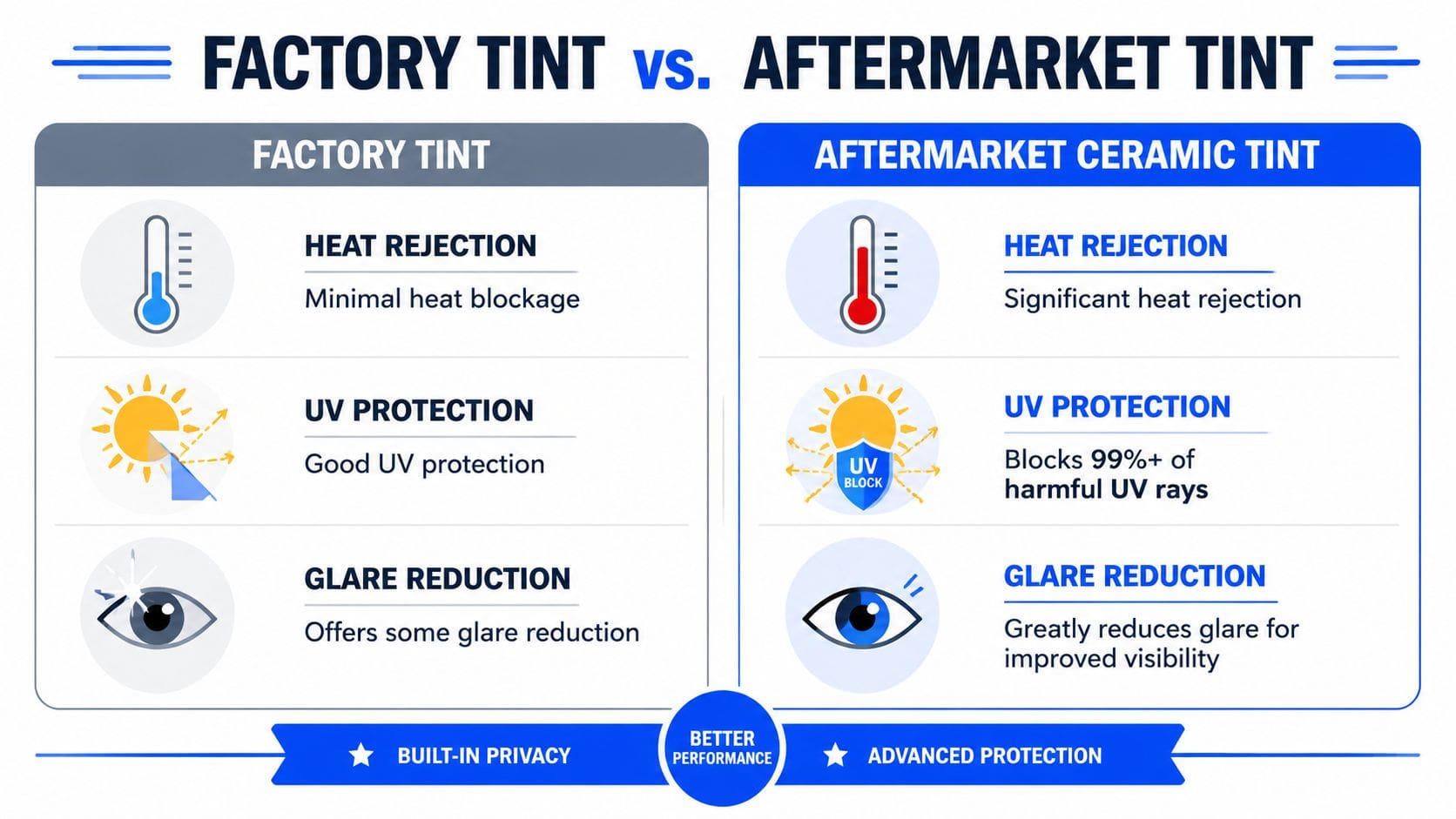
Tesla's rear glass often has a smoked look from the factory. That factory privacy glass helps with appearance and visibility into the cabin, but it is not the same as adding a quality heat-rejecting film.
That distinction matters more on a Tesla than it does on many other cars because there is more glass around you. Owners see the darker rear section and expect the same level of comfort they would get from a full ceramic tint package. In practice, they still deal with glare, hot surfaces, and that greenhouse feeling after the car sits outside.
A simple way to separate the two is this: factory privacy glass mainly changes how the glass looks. Aftermarket film changes how the glass performs.
| Feature | Factory rear privacy glass | Aftermarket ceramic tint |
|---|---|---|
| Appearance | Darker look from outside | Can be subtle or dark |
| Privacy | Good | Good to excellent |
| Infrared heat control | Limited compared with performance film | Strong heat-focused performance, depending on film line |
| Everyday comfort | Modest benefit | Noticeable improvement in many real-world conditions |
UV protection and heat control are different jobs
Tesla factory glass does a good job with UV protection. That helps with skin exposure and slows down fading on interior materials. Owners often hear that and assume the heat side is handled too. It is not.
UV rejection and heat rejection are separate performance categories. A window can block most UV and still let in enough solar energy to make the cabin uncomfortable. That is exactly why some Tesla owners are surprised by how hot the interior feels even though the glass is doing part of its job correctly.
Ceramic film is usually the answer when the goal is comfort, not just a darker look. Film manufacturers publish performance specs for their ceramic lines, and those specs consistently show much stronger infrared and total solar energy control than plain privacy glass. The exact numbers depend on the brand, shade, and test standard, so I would rather set the right expectation than throw around percentages from weak sources.
The roof deserves its own decision too. On a Tesla, the panoramic glass changes the heat load inside the cabin more than many owners expect. If you are weighing whether to tint that area, this guide on tinting sunroofs and panoramic roofs covers the trade-offs.
What this means in the real world
If you only want the rear windows to look dark, the factory setup may seem fine. If you want the car to feel cooler, cut glare, and make long drives more comfortable, factory privacy glass is only a partial solution.
This is also where warranty confusion starts. Adding quality window film does not automatically void your Tesla warranty. Poor installation can create problems, and any damage caused during installation is on the installer, not Tesla. That is very different from the blanket myth that Tesla owners cannot tint the car without risking coverage.
The practical takeaway is simple. Tesla's factory glass gives you some privacy and solid UV protection. It does not replace a properly chosen tint package, especially on a vehicle with this much glass overhead and around the cabin.
Choosing the Right Window Tint for Your Tesla
Choosing film for a Tesla is less about picking the darkest shade on a sample card and more about solving the right problem. Some owners want privacy. Some want the cabin to stop feeling like a greenhouse after the car sits outside for an hour. Those are different goals, and the best setup is not always the darkest one.
The film types that matter
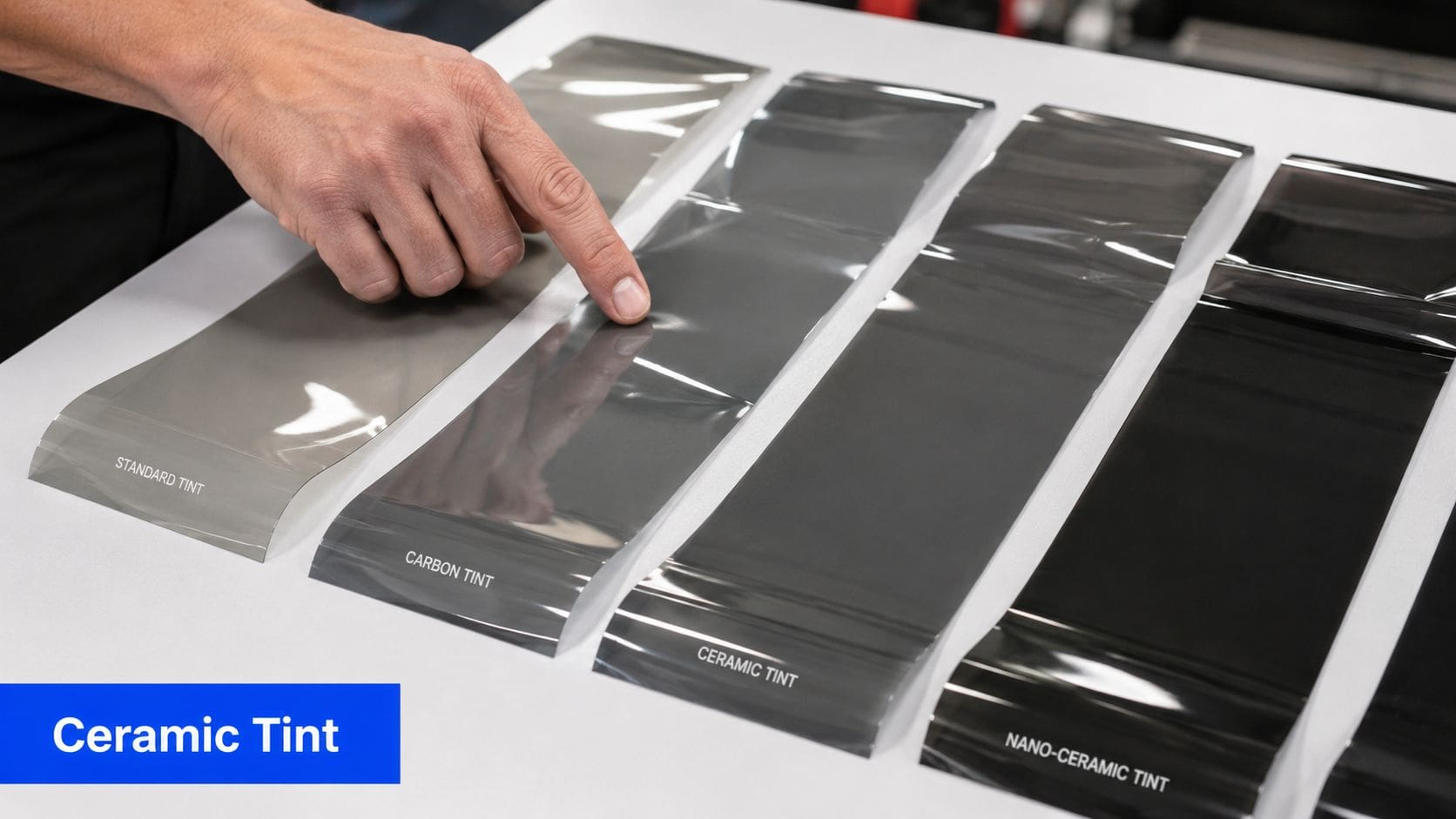
Tesla owners usually end up comparing four categories.
- Dyed film: Low entry cost and a darker look, but limited heat control and a shorter service life.
- Metallic film: Older film technology that I generally avoid on Teslas because there are better options without the same downsides.
- Carbon film: A solid middle tier for drivers who want better performance than dyed film without stepping all the way up in price.
- Ceramic film: The best fit for most Teslas because it balances heat rejection, clarity, and a cleaner finished look.
Ceramic is usually the first place I point Tesla owners for one simple reason. These cars have a lot of glass, and owners notice cabin heat faster than they would in many other vehicles. A good ceramic film helps where Tesla owners notice it, on bright commutes, long drives, and parked-car heat soak. Film manufacturers publish those performance specs by product line and shade, and that is the right place to compare heat-control claims instead of relying on generic blog numbers.
How to think about shade and performance
Shade affects appearance and visibility. Film construction affects comfort.
That distinction matters.
VLT is visible light transmission. It tells you how light or dark the tint looks. Lower VLT looks darker. Higher VLT looks lighter.
Tesla owners often chase a dark look first, then realize their real complaint was glare and cabin heat. A quality ceramic film in a lighter shade can do a better job on comfort than a darker low-end film. That is why I tell customers to separate the decision into two parts:
Shop-floor advice: Pick the shade for appearance and legal compliance. Pick the film type for heat control and clarity.
A practical way to choose:
- For a clean OEM-style look: Stay lighter and spend the money on a better ceramic film.
- For stronger privacy: Go darker only if you are comfortable with the night-driving trade-off and local law.
- For heavy sun exposure: Put more thought into the roof, windshield option, and the glass that gets direct afternoon sun.
- For frequent night driving: Avoid choosing shade based only on looks in the showroom.
The roof changes the conversation on a Tesla. On many cars, window tint is mostly a side-glass decision. On a Tesla, the amount of overhead glass means owners should decide whether they want appearance, privacy, heat reduction, or all three. The right package depends on how the car is used.
What the price difference really buys you
Pricing varies by model, film line, and how much glass you plan to cover. In our shop, a Tesla ceramic package costs more than basic dyed film because the material costs more, the install takes more care, and the result holds up better over time.
That extra cost usually buys four things Tesla owners notice:
- Better color stability: Less risk of fading or discoloration as the film ages.
- Cleaner optics: A sharper view out, which matters on a car with expansive glass and a minimal interior.
- Stronger solar control: Better day-to-day comfort in the sun.
- Fewer regrets: Owners are less likely to come back later asking us to remove cheap film and redo the job.
That last point is real. Redoing a poor tint job costs more than choosing the right film once.
The best value setup for most owners
For most Tesla drivers, ceramic is the sensible starting point. Then choose the shade based on how you drive, where you park, and what your local laws allow. Owners who commute in full sun often benefit more from a balanced, high-quality package than from the darkest tint they can get.
A premium car does not require the most expensive film on the menu. It does benefit from film that matches the way the car is built. On a Tesla, that usually means prioritizing heat control, clarity, and smart coverage instead of buying based on darkness alone.
The Professional Tesla Tinting Process Explained
A proper tint job looks effortless when it's done right. What often goes unnoticed is how much of the result comes from prep, workflow, and restraint. Tesla glass exposes mistakes fast, so process matters.
What happens before film touches the glass
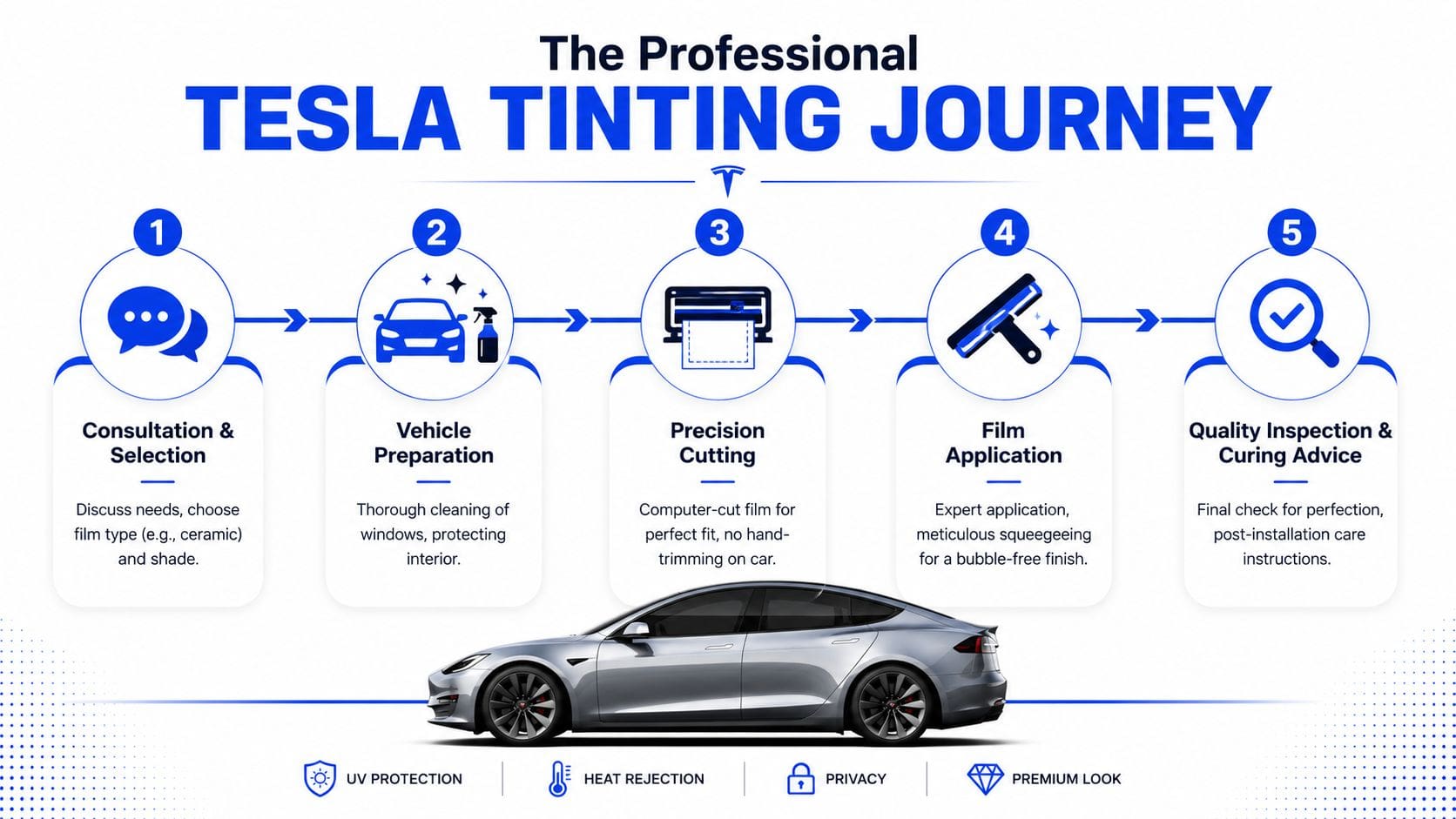
The first step is film selection and confirming the coverage plan. Some owners only want the side and rear glass. Others want a more complete strategy because the roof is where they feel the most heat.
Then the vehicle gets prepped. The glass has to be thoroughly cleaned, and the interior needs to be protected from moisture and handling during installation. On a Tesla, care around trim, panels, and electronics matters just as much as the film itself.
A quality installer will usually rely on computer-cut patterns for Tesla windows whenever possible. That reduces the need to hand-trim directly on the vehicle and helps produce more consistent edges.
Application, inspection, and curing
Once the film is cut, the installer shapes and applies it carefully, then works out the solution with professional squeegee techniques so the film lays flat and clean. Frameless windows and large curved rear glass demand patience. Rushing this part is where contamination, fingers, and edge issues start.
After application, the car should be inspected closely from multiple angles. A good final check looks for trapped debris, alignment issues, edge finish, and how the film sits on challenging areas.
Here's what to expect after the install:
- Small water pockets can appear: That's normal during curing.
- Windows shouldn't be rolled down right away: The film needs time to settle.
- The finish improves as it cures: Fresh tint rarely looks exactly like fully cured tint on day one.
Freshly installed tint can look slightly hazy or show minor moisture patterns. That doesn't always mean there's a problem. It often means the film is still curing.
What separates a clean job from a sloppy one
The best tint work on a Tesla usually has a few things in common:
- Tight edges: The film looks intentional, not trimmed in a hurry.
- Minimal contamination: Dust and fibers are kept under control.
- Balanced appearance: Front and rear windows don't look visually mismatched.
- Good customer guidance: You leave knowing how to care for the film during curing.
If you're also planning Hilliard paint protection film or Columbus ceramic coating, it's smart to coordinate those services so the whole protection package is done in the right order.
Answering Tesla Owners' Top Tinting Questions
Tesla owners usually ask better tint questions than average, and that's a good thing. They're trying to protect a major purchase. The problem is that online forums often mix good advice with myths, especially around warranty coverage.
Will tint void the Tesla warranty
This is the big one, and the fear is usually overstated.
Under the Magnuson-Moss Warranty Act, a manufacturer like Tesla can't void your warranty for using an aftermarket part such as window tint unless they can prove the tint directly caused the specific failure behind your claim, as explained in this window tint warranty myth breakdown.
That means a blanket statement like “aftermarket tint voids the warranty” isn't the legal standard. If a covered issue has nothing to do with tint, the tint alone doesn't automatically cancel protection.
For a deeper look at the confusion around this topic, this article on window tinting myths debunked is a useful companion read.
Important distinction: A shop can still create problems with bad workmanship. That's different from saying tint itself voids the whole warranty.
Can you tint the full roof
Yes, and on a Tesla it's one of the most practical upgrades when the owner wants a cooler, more comfortable cabin. The massive glass area overhead is a big reason these cars feel hotter than some people expect.
The right film choice matters here. Roof glass needs clarity, a clean finish, and an installer who understands how heat-focused film behaves on large panes. This is not the place to experiment with bargain material.
What about Ohio law and Tesla rear glass challenges
Ohio drivers should always confirm current local and state requirements before choosing final shades, especially on front side windows and windshield areas. Tint law is one of those areas where assumptions cause headaches. A good installer should be willing to talk through what's practical, what's legal, and what will still give you the look you want.
Tesla rear glass also creates a shop-quality test. The shape and size of the back window can separate experienced installers from generalists. Poor shrinking, contamination, and bad edge finish show up there quickly.
A few practical questions to ask before booking:
- Do you use computer-cut patterns for Teslas: This helps reduce unnecessary cutting on the vehicle.
- How do you handle the rear glass: You want a clear answer, not a vague one.
- What should I expect during curing: A pro should explain this without being prompted.
- What film line are you installing: If a shop can't answer that clearly, keep looking.
This is also where beginner buyers searching for ceramic coating near me or Hilliard ceramic coating often realize tint shops aren't all the same. Tesla work rewards specialization and careful process.
Finding Your Tesla Tint Expert in Columbus Ohio
A great Tesla tint job usually comes down to three things. The shop understands Tesla glass. The shop uses quality ceramic film. The shop cares enough about prep and finish to keep the install clean.
What to look for in a shop
If you're comparing options for Tesla window tint in Columbus or Hilliard, pay attention to the details that affect the result.
- Tesla-specific experience: Frameless doors and large glass panels punish sloppy habits.
- A clean work environment: Dust control matters more than marketing language.
- Premium film options: Ask what ceramic lines they carry and why.
- Clear aftercare instructions: Good shops don't disappear after the invoice is paid.
Why local Tesla owners should be selective
This isn't just another compact SUV or sedan. A Tesla's cabin design makes bad tint easier to spot and good tint easier to appreciate. If you're already investing in Columbus ceramic coating, Hilliard ceramic coating, or Columbus PPF, your tint decision should match that same standard.
A local resource like this page covering window tint in Columbus Ohio can help you compare service expectations and understand what a specialist should offer.
The right installer won't push darkness for the sake of darkness. They'll ask how you drive, where the car sits during the day, whether rear-seat comfort matters, and how particular you are about the final look. That's usually a better sign than any coupon or flashy ad.
If you want help choosing the right Tesla window tint, or you're planning a full protection package with Lionheart Detailing, reach out for a no-pressure quote. Whether you need window tint, paint protection film, Hilliard auto detailing, or ceramic coating in the Columbus area, the goal is simple: make the car easier to live with and protect it the right way from day one.