Professional ceramic coatings usually last 2 to 5 years, DIY kits often last 1 to 2 years, and high-end multi-layer systems can protect for up to 10 years with proper care. That wide range is exactly why so many Columbus drivers get confused when one shop says “lifetime” and a friend says their coating stopped beading after a year.
If you're reading this, there's a good chance you're trying to make a smart decision before spending money on paint protection. Maybe you just bought a new car. Maybe your current vehicle still looks good and you want to keep it that way. Maybe you've searched for ceramic coating near me, looked at a few Columbus ceramic coating packages, and now you're trying to separate real-world results from marketing.
That's the right approach.
A coating can still be protecting your paint even when the dramatic water-beading effect has faded. That's the part most articles skip, and it's where a lot of owners make the wrong call. They assume the coating is gone, pay for a full redo, and never find out that a proper decontamination wash and maintenance topper might have brought most of the performance back.
For drivers dealing with Ohio weather, that matters. Columbus roads see winter salt, summer sun, rain, pollen, and all the usual contamination that slowly wears on a coated vehicle. Whether you're comparing Hilliard ceramic coating, Hilliard auto detailing, or even deciding between coating and Columbus PPF, the answer comes down to product quality, prep, environment, and maintenance.
Table of Contents
- Sorting Fact From Fiction in Ceramic Coating Longevity
- What Exactly Is a Ceramic Coating Anyway
- The 4 Key Factors That Determine a Coating's Real Lifespan
- Your Maintenance Guide to a Long-Lasting Coating
- Is My Coating Failing How to Tell and What to Do
- Choosing the Right Professional for Your Ceramic Coating in Columbus
Sorting Fact From Fiction in Ceramic Coating Longevity
Ceramic coating ads can make this sound simple. One brand says “lifetime.” Another says “five-year coating.” Then your neighbor says theirs looked amazing at first but seemed dead not long after. No wonder people hesitate.
The honest answer is more grounded than most marketing. Standard professional ceramic coatings usually land in the 2 to 5 year range, DIY kits usually deliver 1 to 2 years, and some higher-end professional systems can go much longer when the product, prep, and care all line up. If you want a fuller look at the value side of the decision, this breakdown on whether ceramic coating is worth it is a helpful next read.
Why the answers online seem all over the place
A lot of people are talking about different things without realizing it.
Some are describing hydrophobic performance, which means how tightly water beads and how quickly it sheets off the panel. Others are talking about actual protection, meaning whether the coating is still bonded and still helping resist UV exposure, grime, and chemical contamination.
Those aren't always the same timeline.
Practical rule: If the water behavior fades, don't assume the coating is gone. In many cases, the surface just needs proper maintenance.
That difference matters for Ohio drivers. A daily driver in Columbus that lives outside, sees winter salt, and goes through careless washes won't age the same way as a garage-kept weekend car. The coating doesn't fail like a light switch. It usually declines gradually.
What customers should expect instead of a magic number
The smarter way to look at ceramic coating is as a system, not a one-time miracle product. The coating itself matters, but so do the prep work, the curing period, the wash habits afterward, and the conditions the vehicle lives in.
Here's what works effectively:
- Reasonable expectations: Treat lifespan claims as ranges, not promises.
- Safe wash habits: Good maintenance protects the investment you already made.
- Periodic inspections: A coating can often be refreshed before it needs to be replaced.
- Matching the product to the car: A daily commuter and a weekend toy don't need the exact same solution.
If you keep that perspective, the whole topic gets a lot less confusing.
What Exactly Is a Ceramic Coating Anyway
A lot of first-time customers in Columbus come in expecting something thick, almost like a second clear coat they can see and feel. A ceramic coating is much thinner than that. It is a transparent, glass-like layer that chemically bonds to the factory clear coat and changes how the surface handles water, grime, and contamination.
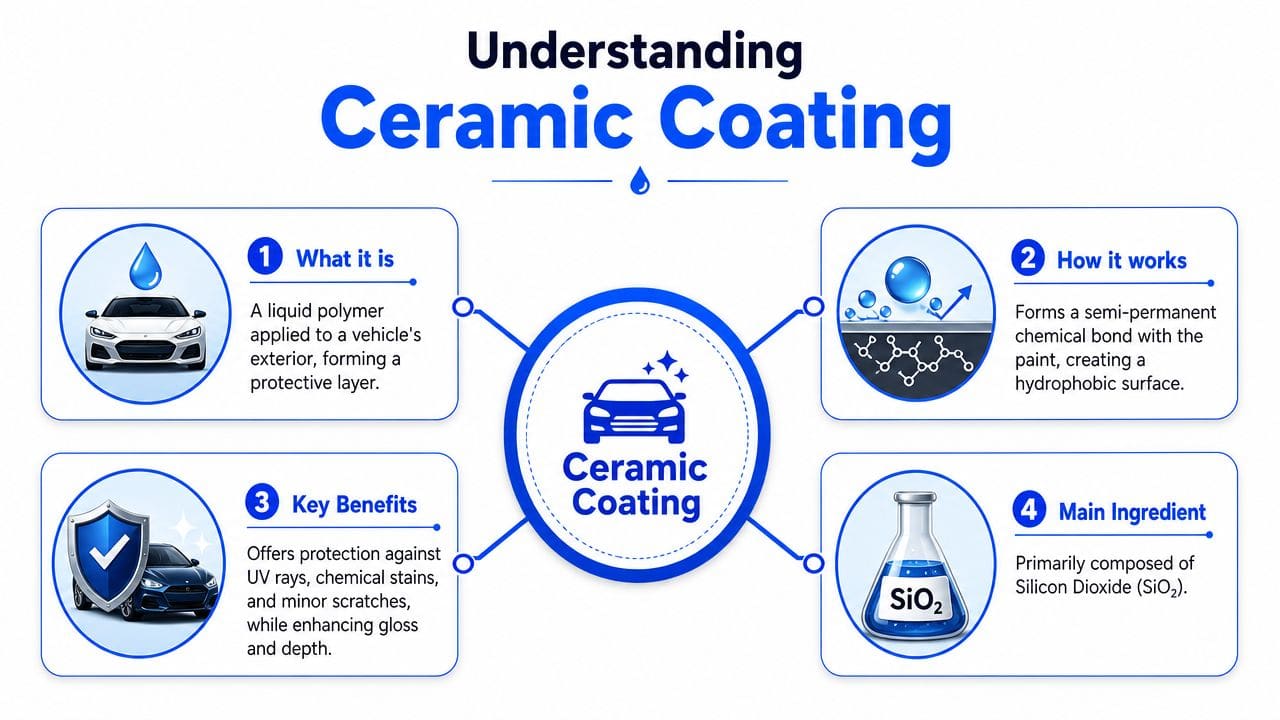
Most coatings are built around silicon dioxide, or SiO₂, chemistry. If you want a plain-English overview, this guide on what ceramic coating is for a vehicle covers the basics well. What matters in practice is simple. The coating bonds to the paint more firmly than wax or a spray sealant, so it does not wash off after a few cleanings. It still wears over time from abrasion, weather, detergents, and neglect.
That distinction helps explain a point that confuses a lot of owners. Water beading is only one visible trait. A coating can lose some of that tight, flashy beading and still remain bonded well enough to keep helping with cleanup, UV exposure, and chemical resistance. In the shop, I see this often after a rough winter. The surface gets clogged with mineral deposits, traffic film, or salt residue, and the owner assumes the coating is dead. Many times, it needs decontamination or a maintenance service, not full removal and reinstallation.
What it protects against and what it doesn't
A properly installed coating helps with the parts of ownership that wear people down over time:
- Easier washing: Road film and dirt release more easily during a safe wash.
- Less staining risk: Bird droppings, bug residue, and similar messes are easier to remove before they etch.
- Better resistance to the elements: UV exposure and chemical fallout have a harder time reaching the paint directly.
- A cleaner-looking finish: Gloss usually stays sharper because the surface stays easier to maintain.
The biggest benefit for many drivers is not maximum shine on day one. It is reduced effort month after month.
A coating also has firm limits. It does not stop rock chips on I-270. It does not make black paint scratch-proof at a tunnel wash. It does not hide poor paint correction or fix bad prep work underneath. If a vehicle needs protection from physical impact on the front bumper, hood edge, mirrors, or rocker panels, paint protection film is the better tool for that job.
Ceramic coating works best as paint maintenance protection, not impact protection. That is the honest way to look at it, and it helps people spend money where it solves the problem they have.
The 4 Key Factors That Determine a Coating's Real Lifespan
Two cars can receive ceramic coating on the same day and age very differently. That isn't a flaw in the concept. It's just reality.
Factor one is the coating itself
Not all coatings belong in the same category. Product tier matters, often leading to considerable confusion.
According to CarLab Detailers' overview of ceramic coating longevity, professional-grade ceramic coatings with higher SiO₂ content typically last 3 to 5 years, premium high-end coatings with layered application can last 5 to 10+ years, and entry-level DIY kits generally last 1 to 2 years.
Here's a practical way to compare them:
Ceramic Coating Tiers Compared
| Coating Tier | Typical Lifespan | Average Cost (Installed) | Best For |
|---|---|---|---|
| Entry-level DIY kit | 1 to 2 years | Varies by product and whether you do your own prep | Budget-minded owners who understand the limits |
| Professional mid-tier coating | 3 to 5 years | Higher than DIY due to prep, correction, and installation labor | Daily drivers that need solid long-term value |
| Premium multi-layer professional system | 5 to 10+ years | Higher-end investment | Owners planning long-term protection and disciplined maintenance |
The cost column stays qualitative here for a reason. Shops vary widely, and the biggest price difference is usually prep time, not just the bottle.
Factor two is prep and installation quality
Many coatings succeed or fail before the car even leaves the shop.
A coating needs clean, corrected, properly prepped paint to bond well. If the surface still has contamination, oils, water spots, or leftover polishing residue, you're not building on a stable foundation. Even an expensive product can underperform if the prep is rushed.
What proper prep usually includes:
- Thorough wash: Remove loose dirt and road film first.
- Chemical decontamination: Break down bonded contamination that normal soap won't touch.
- Paint correction as needed: Remove swirls, haze, or defects before locking them in.
- Panel wipe: Leave the surface ready for bonding.
- Controlled application and cure: The coating needs the right environment and aftercare.
This is also where professional installation often justifies itself. The coating is only one part of the job. The prep is the primary labor.
Factor three is your environment in Columbus and Hilliard
Central Ohio is not a gentle environment for paint protection.
Winter road salt, slush, freeze-thaw cycles, spring pollen, summer UV, and random hard water spotting all add wear. A vehicle that sees daily commuting through Columbus and Hilliard has more working against it than one that stays parked indoors most of the week.
For local owners, the key trade-off is simple:
- Garage-kept and well-maintained: A coating usually has a better shot at reaching the upper end of its expected range.
- Outside year-round and heavily driven: Expect the coating to work harder and age faster.
- Frequent contamination exposure: Tree sap, bird droppings, and road film need faster cleanup.
Factor four is how the vehicle is used
Usage patterns often matter more than brand names.
A weekend car that comes out in good weather, gets hand-washed carefully, and stays indoors is a very different test than a family SUV driven every day, parked outside, and washed whenever there's time. That's why the right answer to how long does ceramic coating last always starts with a few questions about the vehicle's life.
Consider your own habits:
- Do you drive every day?
- Do you park outside most nights?
- Do you use automatic washes?
- Will you keep up with maintenance?
If the answer to the last two isn't ideal, it's better to choose a realistic package than to overbuy a long-term coating you won't support.
Your Maintenance Guide to a Long-Lasting Coating
A customer washes the car, notices the beads are not as tight as they were six months ago, and assumes the coating is gone. In many cases, the coating is still there. What changed is the top surface, which gets loaded up with road film, minerals, salt residue, and wash marring. Good maintenance is what keeps that buildup from masking the coating and making you pay for a recoat too early.
Chemical Guys' discussion of ceramic coating durability describes the “maintenance multiplier” clearly. Proper upkeep can extend a 2-year rated coating to 3 years, while neglect can make a 7-year rated coating fail within months. That matches what shops see in practice.
If you want a deeper maintenance walkthrough, this guide on how to maintain ceramic coating is worth bookmarking.
The wash routine that helps a coating last
A coated vehicle does not need complicated care. It needs consistent care.
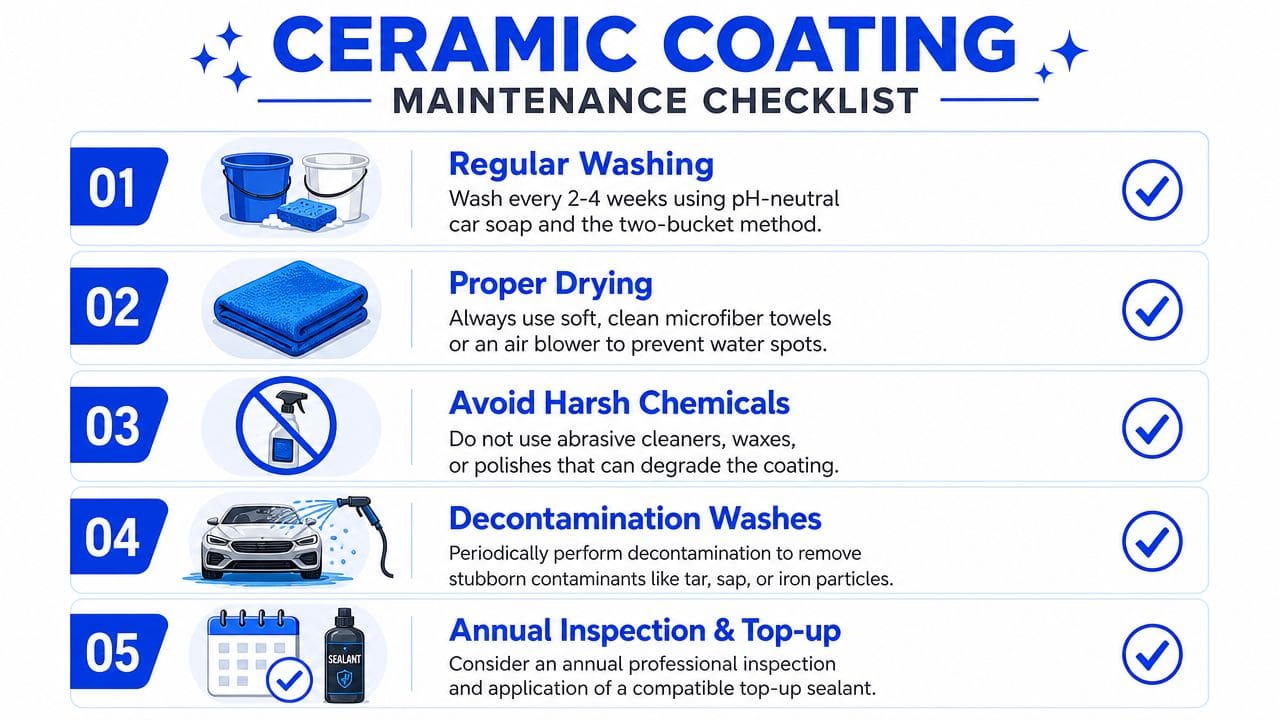
Professional guidance in the verified data recommends washing every 2 to 4 weeks with a pH-neutral shampoo, using regular professional detailing every 6 months, and applying a ceramic spray sealant every 2 to 3 months as a sacrificial layer. The same verified guidance also notes that proper maintenance can include a ceramic booster every 3 to 6 months and removing bird droppings within 24 hours.
That schedule matters for one reason. Maintenance is often what restores the slick feel and water behavior people miss, without touching the underlying coating.
Here's a routine that works well for many daily drivers around Columbus:
- Rinse first: Remove loose grit before the wash mitt touches the paint.
- Use the two-bucket method: Keep clean wash water separate from the rinse bucket.
- Choose a pH-neutral soap: Save stronger cleaners for decontamination work when needed.
- Dry with clean microfiber towels or forced air: Standing water leads to spotting, especially in warm weather.
- Top with a compatible ceramic spray occasionally: This helps refresh slickness and hydrophobic performance.
For owners who do not want to stay on top of that schedule themselves, regular maintenance detailing from a shop familiar with coated vehicles can keep the surface clean and performing the way it should. For example, Lionheart Detailing offers recurring detailing services that can fit into a coating care plan.
Mistakes that shorten coating life fast
Premature coating problems usually come from a few repeat mistakes, not from the coating suddenly giving up.
- Brush tunnel washes: Repeated abrasion wears down the surface and dulls performance.
- Household cleaners: They can weaken protection or leave residues that interfere with water behavior.
- Dirty drying towels: They drag leftover contamination across the paint.
- Letting contamination sit: Bird droppings, bug remains, and mineral deposits become harder to remove the longer they stay on the surface.
- Ignoring cure instructions: Verified data notes the curing process can take 2 to 3 weeks, and the coating needs gentler treatment during that window.
The first few weeks matter more than many owners realize. Keep washes gentle, clean off contamination promptly, and skip any harsh chemicals or unnecessary “tests” of the coating.
Ceramic coating is not maintenance-free. It makes maintenance easier, and that is the honest value. If you keep the surface clean and periodically refresh the top layer, a coating can keep protecting long after the dramatic water beading starts to fade.
Is My Coating Failing How to Tell and What to Do
This is the point where a lot of people spend money they don't need to spend.
Water beading is not the whole story
A drop in water beading doesn't automatically mean the coating has failed. In fact, that's one of the biggest misunderstandings in this space.
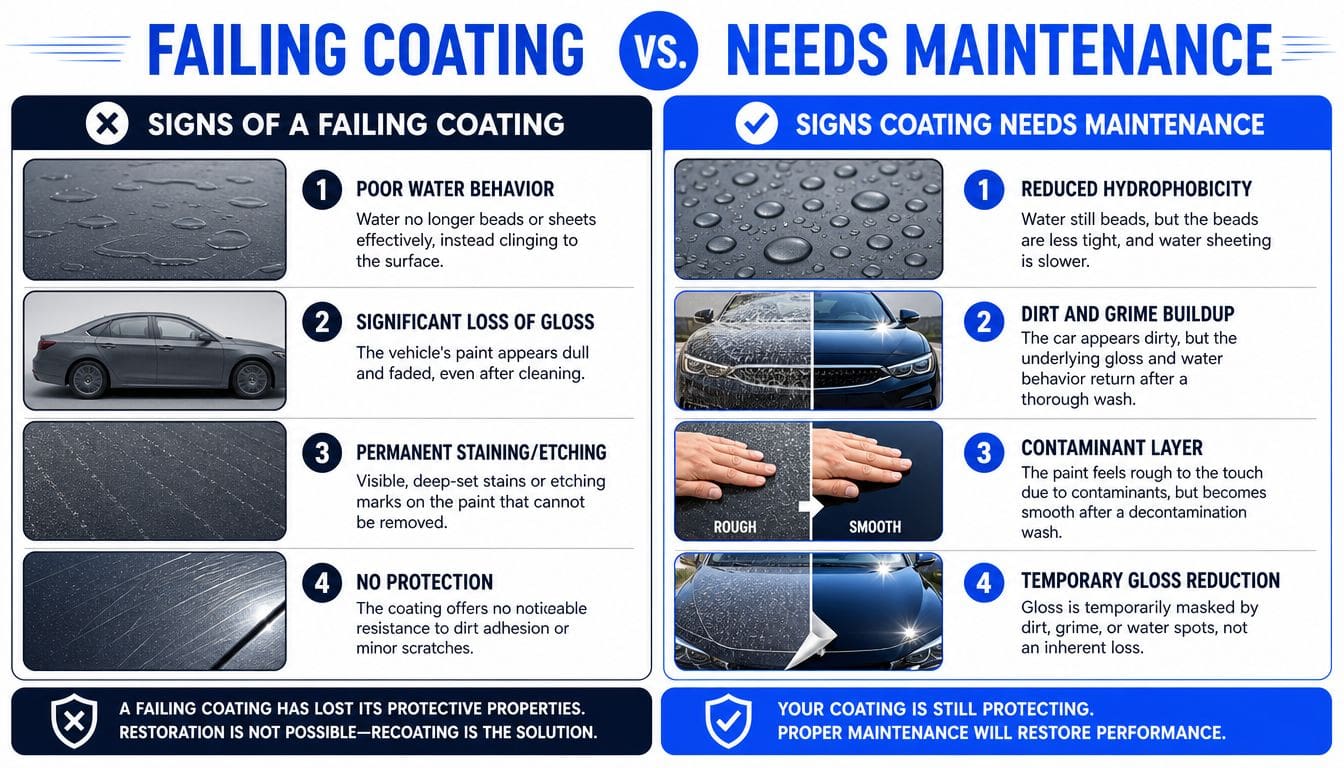
The verified data shows that hydrophobic failure often happens earlier than total coating failure. It also notes that consumer-grade SiO₂ coatings can lose beading after 1 to 3 years while still retaining chemical bond protection. The Garage Automotive's article on coating lifespan also highlights the key distinction: some coatings lose the flashy water behavior before they stop protecting paint, and a booster or light top-coat refresh can restore hydrophobicity without stripping the base layer.
That's why “it doesn't bead like it used to” is not enough information by itself.
A simple check before you pay for recoating
Before assuming the coating is dead, check the surface in a more useful way.
Try this:
- Wash the vehicle properly: Use a pH-neutral soap and clean mitts.
- Feel the paint after washing: If it feels rough, contamination may be sitting on top of the coating.
- Do the baggie test: Put your hand inside a thin plastic bag and lightly glide over the clean paint. Contamination becomes easier to feel.
- Decontaminate the surface: If the coating is clogged, a proper decon wash can wake it back up.
- Apply a ceramic topper: If water behavior improves, the base coating may still be there.
Many coatings that seem “dead” are actually dirty, clogged, or dried out on the surface.
Signs that a coating may only need maintenance:
- Weaker beading but easier washing still remains
- Gloss returns after a proper cleanup
- The paint feels smoother after decontamination
- A topper restores slickness and sheeting
Signs that a coating may be worn out:
- Persistent flat water behavior even after decontamination
- Loss of easy-clean performance
- Staining or etching that doesn't respond to proper maintenance
- Uneven behavior panel to panel without another clear explanation
That distinction can save you from unnecessary polishing and recoating.
Choosing the Right Professional for Your Ceramic Coating in Columbus
A ceramic coating install is not a product purchase alone. It's a prep job, an application job, and a maintenance relationship.
What to ask before you book
If you're comparing Hilliard ceramic coating, Columbus ceramic coating, or searching ceramic coating near me, ask better questions than “how many years is it rated for?”
Ask the shop:
- What prep work is included?
- Is paint correction part of the package or extra?
- What wash method do you recommend afterward?
- What happens if the coating loses water behavior early?
- Do you offer maintenance inspections?
- Can you explain when ceramic coating makes sense and when Columbus PPF is the better choice?
A good shop should also be clear about what coating can't do. If someone suggests ceramic coating will stop rock chips, that's a red flag. That's the lane for Columbus PPF and Hilliard paint protection film services.
Why local experience matters
A local detailer who works on Columbus-area cars every week understands what Ohio roads do to paint. Salt, hard washes, outside parking, and long commutes all affect results.
For many owners, it also helps to work with a shop that can handle more than one layer of protection. Some cars need coating only. Some need correction first. Some owners are better served by combining coating with film on high-impact areas. If you're in Hilliard or the greater Columbus area, that local guidance matters more than chasing the biggest number on a coating label.
The right professional should leave you with realistic expectations, a clear maintenance plan, and a finish that's easier to live with.
If you want help figuring out the right protection plan for your vehicle, reach out to Lionheart Detailing. Whether you're looking at professional ceramic coating, Columbus PPF, or full detailing in Hilliard and the surrounding area, the team can walk you through the trade-offs and help you choose a setup that fits how you drive and care for your car.