You finally brought the Tesla home. The paint looks sharp, the panels reflect everything around them, and for the first few days you probably find yourself glancing back at it every time you park. Then the practical questions start. What happens after the first highway run through Columbus? What about bug splatter, bird droppings, winter grime, water spots, and the little wash marks that seem to show up out of nowhere?
That's where most new owners start searching for answers about ceramic coating for a Tesla. Some hear it's a must. Some hear it's overhyped. Some get told it makes the car “scratch-proof,” which is one of the worst explanations in this business.
The honest answer is simpler. A professional ceramic coating can be an excellent decision for a Tesla, especially if you care about keeping the finish cleaner, glossier, and easier to maintain. But it only works well when you understand what it does, what it doesn't do, and when it should be paired with other protection.
Table of Contents
- Your New Tesla Is Here So How Do You Protect It
- Why Tesla Paint Needs Specialized Protection
- What Exactly Is a Professional Ceramic Coating
- The Real-World Benefits of Coating Your Tesla
- The Professional Coating Process from Start to Finish
- The Honest Truth What a Ceramic Coating Will Not Do
- Investing in Protection A Realistic Cost Breakdown
- Protect Your Investment with Columbus's Tesla Experts
Your New Tesla Is Here So How Do You Protect It
A lot of Tesla owners in Hilliard and Columbus go through the same progression. Day one feels exciting. By week two, they're already worrying about the first wash, the first chip, or whether a coating is something they should've done immediately.
That concern is reasonable. A Tesla doesn't get purchased like an appliance. It's a vehicle people want to keep looking crisp, especially when the design is so clean and the paint and glass show everything. If you've been searching for ceramic coating near me, Columbus ceramic coating, or Hilliard ceramic coating, you're probably trying to make a smart decision early instead of fixing avoidable damage later.
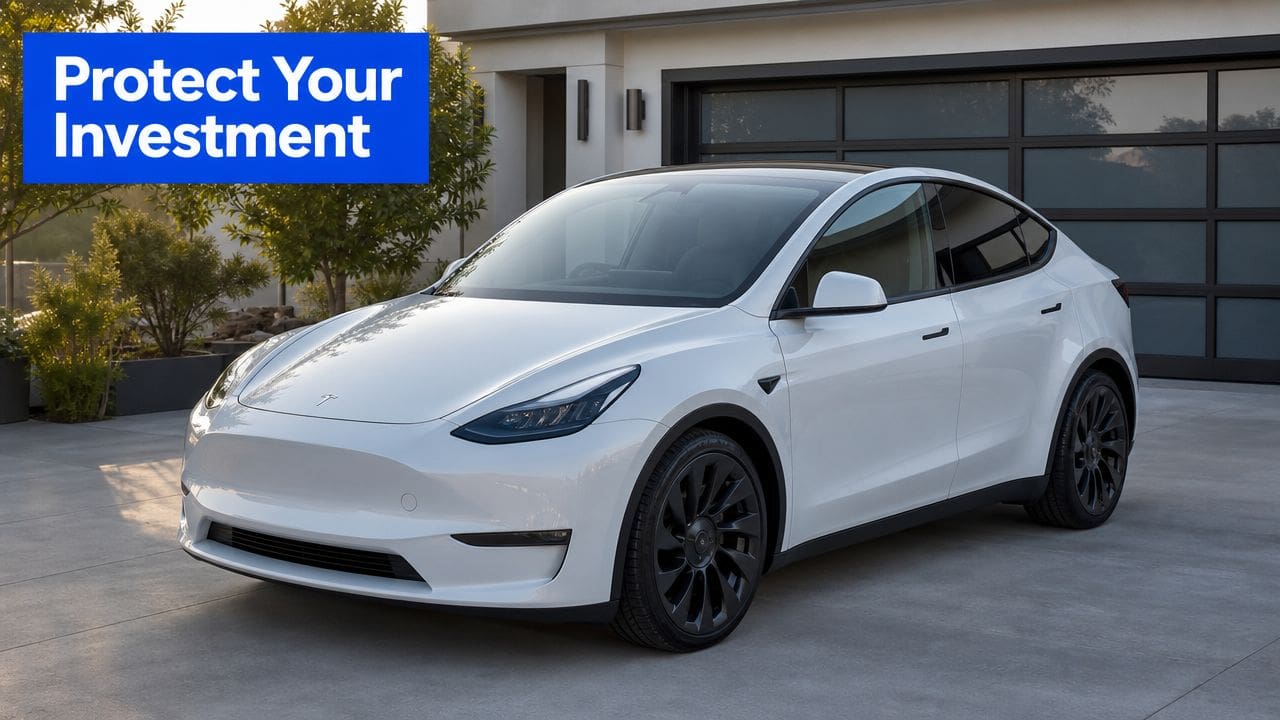
The mistake I see most often is owners getting sold on shine alone. Yes, a coating adds gloss. Yes, it makes the paint slick and easier to wash. But the true value is that it gives a daily-driven Tesla a better chance of staying easier to care for in everyday use.
What new owners usually want
Some want the car to stay glossy without constant work. Others want to avoid the wash-induced swirl marks that make a newer vehicle look older than it is. Many want to know the right order of operations before they spend money.
Most owners are deciding between a few options:
- Do nothing for now: Cheapest in the short term, but it leaves the finish exposed to the usual grime, UV, and maintenance wear.
- Get ceramic coating only: Great for easier cleaning and environmental protection, but limited against impact damage.
- Combine protection methods: This is often the smarter path for people who drive a lot or care a great deal about preserving the finish.
A new Tesla can look fantastic from the factory and still need protection right away. Those two things aren't in conflict.
If your goal is to protect the vehicle instead of just making it shiny for a weekend, you need a plan that matches how you drive and maintain it. That matters even more in Central Ohio, where highway miles, winter contamination, and changing weather test every surface on the car.
Why Tesla Paint Needs Specialized Protection
Tesla paint has a reputation in the detailing world, and owners usually learn why pretty quickly. It's not about attacking the brand. It's about recognizing a real-world characteristic so you can protect the vehicle properly from the start.
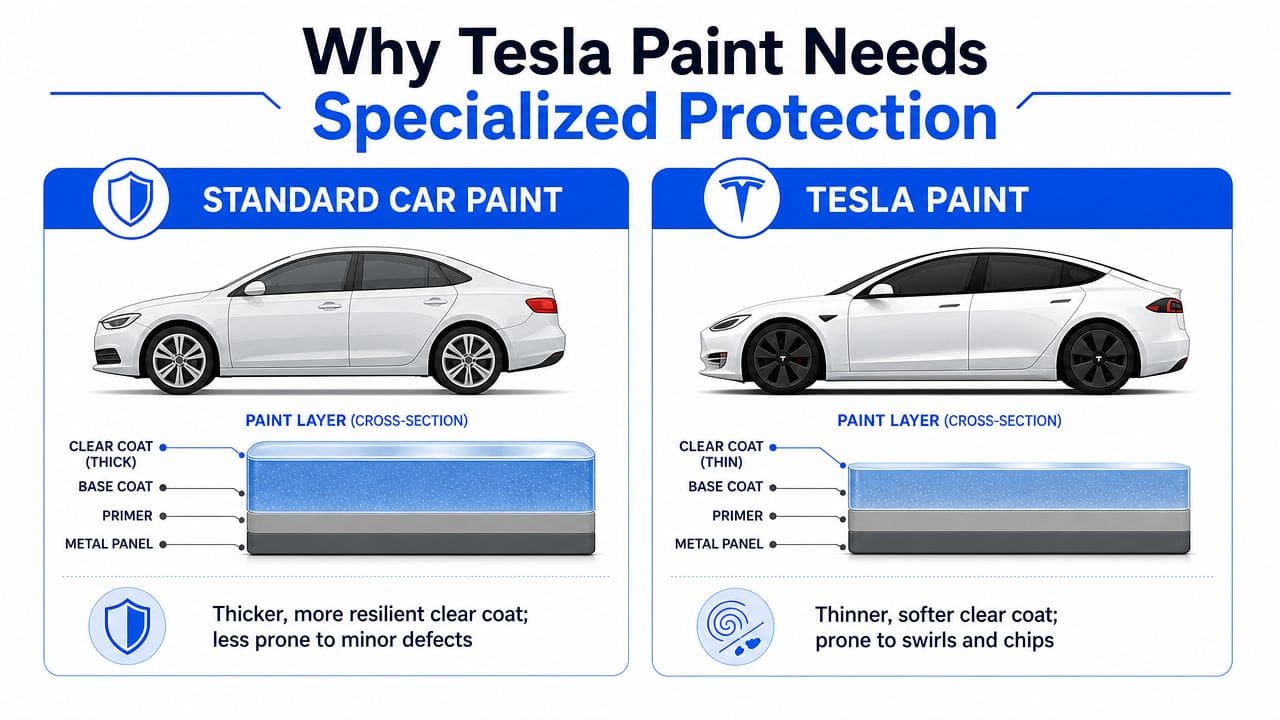
Tesla vehicles have been documented with typical paint thickness readings of 3.5 to 4.5 mils, while vehicles from brands like BMW and Mercedes average 5 to 7 mils, which amounts to a 30% to 40% reduction in clear coat depth according to EuroLuxe Detailing's discussion of Tesla paint thickness. That thinner paint structure makes the surface more vulnerable.
Why new owners notice defects quickly
On a practical level, thinner and softer paint leaves less room for abuse. That means routine contamination matters more. Wash technique matters more. Even small mistakes matter more.
A few common examples:
- Bird droppings left too long: These can stain or etch more easily when the clear coat has less margin.
- Dry wiping dust off the paint: This is one of the fastest ways to create visible marring.
- Automatic car washes: They can put fine swirls into many vehicles, but softer finishes tend to reveal them faster.
Why Columbus conditions make the problem worse
A Tesla in Central Ohio deals with a lot more than sunlight. It sees spring pollen, summer bugs, road film, winter grime, and the contamination that comes with regular commuting. That doesn't mean the paint is doomed. It means protection and maintenance need to be intentional.
Here's the practical takeaway for a new owner:
| Concern | Why it matters on a Tesla | Better response |
|---|---|---|
| Light wash marring | Softer finishes show defects sooner | Use careful hand washing and proper drying |
| Contaminants sitting on paint | Thinner clear coat gives less margin | Remove droppings, sap, and bug residue quickly |
| Daily exposure | Large painted and glass surfaces show neglect fast | Add a durable protection system early |
Practical rule: The less extra clear coat you have to work with, the less careless you can be with washing, drying, and contamination.
This is why ceramic coating makes sense for so many Tesla owners. Not because it turns the car into armor, but because it adds a sacrificial, easier-to-clean layer over a finish that benefits from help.
What Exactly Is a Professional Ceramic Coating
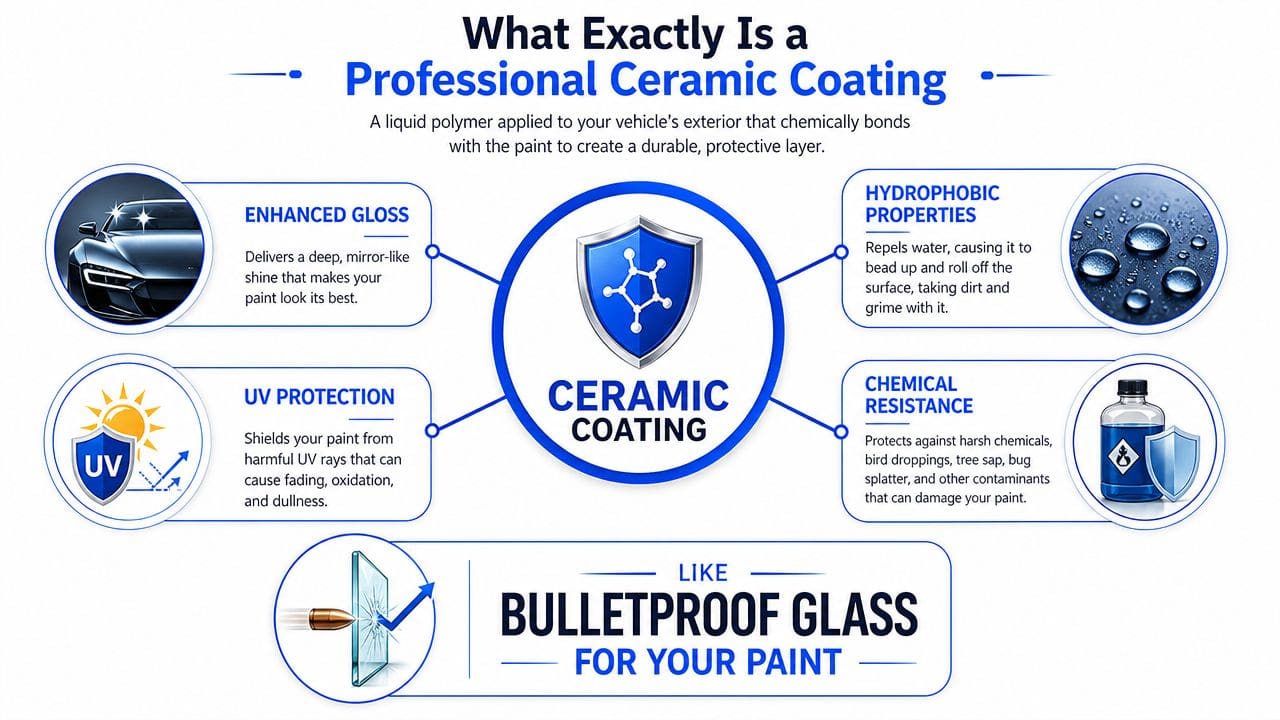
A professional ceramic coating is a cured liquid layer applied to the painted surfaces, trim, and sometimes glass to change how those surfaces handle water, dirt, and contamination. On a Tesla, that matters because the coating becomes part of the maintenance strategy. It does not replace careful washing, and it does not stop impact damage. What it does well is add a durable sacrificial layer that makes the vehicle easier to keep clean and less vulnerable to routine environmental abuse.
Many professional coatings are built around SiO2 or similar ceramic resins. Once they cure, they leave the surface slicker, more chemically resistant, and noticeably easier to wash than bare paint. If you want a practical look at durability expectations, this guide on how long ceramic coating lasts gives useful context.
What the coating is actually doing on the car
The coating changes surface behavior more than it changes appearance. Gloss improves, but its primary value shows up during ownership.
Water beads and runs off more readily. Road film does not anchor itself as aggressively. Bug residue, bird droppings, and fresh contamination are usually easier to remove before they create a bigger problem. That is a meaningful benefit on a Tesla that sees regular commuting, sits outside, or gets washed often.
At the shop level, this is the honest explanation I give owners. A quality coating helps protect the finish from the kind of wear that comes from weather, washing, and contaminants. It does not give the paint more thickness in any meaningful way, and it will not save the front bumper from gravel at highway speed. If chip protection is the goal, paint protection film handles that job far better. The strongest setup for many Teslas is a hybrid one. PPF on the front end and other impact areas, then ceramic coating over the rest of the vehicle, and often over the film as well.
A professional ceramic coating on a Tesla usually gives you these practical advantages:
- Slicker paint: Wash mitts glide better, and grime releases with less effort.
- Hydrophobic behavior: Water sheets or beads instead of sitting flat across the panels.
- Better chemical resistance: Contaminants are less likely to etch immediately if you remove them in a reasonable timeframe.
- Easier drying and upkeep: Less standing water means fewer chances for streaking and water spots.
- A sacrificial layer: The coating takes the routine abuse first, which helps preserve the factory finish underneath.
How it differs from wax or a retail spray ceramic
The biggest difference is not the label. It is the prep work and the way the product cures.
Wax and spray sealants can add gloss and temporary water behavior, and some are perfectly fine as maintenance products. They just do not perform like a properly installed coating after decontamination, polishing, panel prep, and controlled application. If the surface is not corrected and cleaned first, the coating locks in what is underneath, including haze, water spots, or leftover residue.
That is why professional installation costs more than a bottle off the shelf. The value is in the correction, the preparation, and the controlled application as much as the coating itself. Done right, the result is a Tesla that stays easier to maintain week after week, with protection that supports the paint instead of giving you a false sense of armor.
The Real-World Benefits of Coating Your Tesla
A lot of Tesla owners reach out after the first few washes. The car still looks sharp from ten feet away, but the black trim is spotting, the rear bumper is collecting grime, and the paint already feels harder to keep clean than they expected. That is where a ceramic coating earns its keep. It does not turn the car into armor, but it does make ownership easier in ways you notice every week.
If you want a realistic look at lifespan and upkeep, this guide on how long ceramic coating lasts gives a helpful breakdown.
What owners actually notice after the coating cures
The biggest benefit is lower maintenance friction.
Wash the car properly, and dirt releases with less effort. Drying goes faster because water does not sit on the panels the same way. You spend less time chasing drips, less time wiping at light residue, and less time putting unnecessary contact on soft Tesla paint.
That last part matters. Every extra wipe, every aggressive scrub on a dirty panel, and every rushed drying towel pass adds risk. A coating helps reduce how much of that contact is needed.
Tesla styling makes this even more obvious. The broad doors, dark trim, large glass, and smooth body lines look excellent when clean. They also show neglect fast. A coated Tesla tends to stay presentable longer between washes, which is a real advantage for owners who drive often and do not want the car looking tired after a few days on the road.
Where the coating helps most in day-to-day driving
Around Columbus, a Tesla deals with more than dust. Summer bugs, bird droppings, tree fallout, road film, winter salt residue, and hard water all create extra cleanup. A coating gives those contaminants a surface that is easier to wash before they become a bigger problem.
Owners usually see the most value in a few practical areas:
- Road film comes off easier: You still need a safe wash, but grime does not cling as stubbornly.
- Drying takes less work: Water evacuates faster, which helps reduce streaking on dark paint and glass.
- Bug residue and bird droppings are less of a panic: They should still be removed quickly, but cleanup is usually more manageable.
- The glass feels easier to live with: Large Tesla windshields and roofs look cleaner longer when water moves instead of pooling.
A ceramic coating changes the maintenance routine. It does not remove it.
That is the honest value. Less scrubbing. Less friction during washes. Better resistance to the everyday mess that makes a Tesla look older than it is.
The benefit many owners miss
A coating also supports a smarter protection plan.
Tesla paint is often on the softer side, and the front end takes abuse from normal driving. Ceramic coating helps with wash maintenance and environmental exposure, but it does not stop rock chips. Owners who want stronger real-world protection usually get the best result from a hybrid approach. Paint protection film on the front bumper, hood edge, fenders, and mirrors handles impact-prone areas. Ceramic coating over the rest of the exterior helps keep the whole vehicle easier to clean and maintain.
That combination is what I recommend for owners who plan to keep the car, care about the finish, and want protection that matches how the vehicle is used.
The Professional Coating Process from Start to Finish
Much confusion starts when people see a bottle of coating and assume the product is the service. It isn't. The product is one part. The prep is what determines whether the result looks clean, cures properly, and lasts.
Before any real coating goes on, a Tesla needs to be washed, decontaminated, and corrected carefully. For optimal bonding, the final prep step involves an Isopropyl Alcohol (IPA) wipe down, and the prep process often takes at least 8 hours before coating begins, according to this Tesla coating prep walkthrough.
A visual overview helps if you've never seen the process laid out.
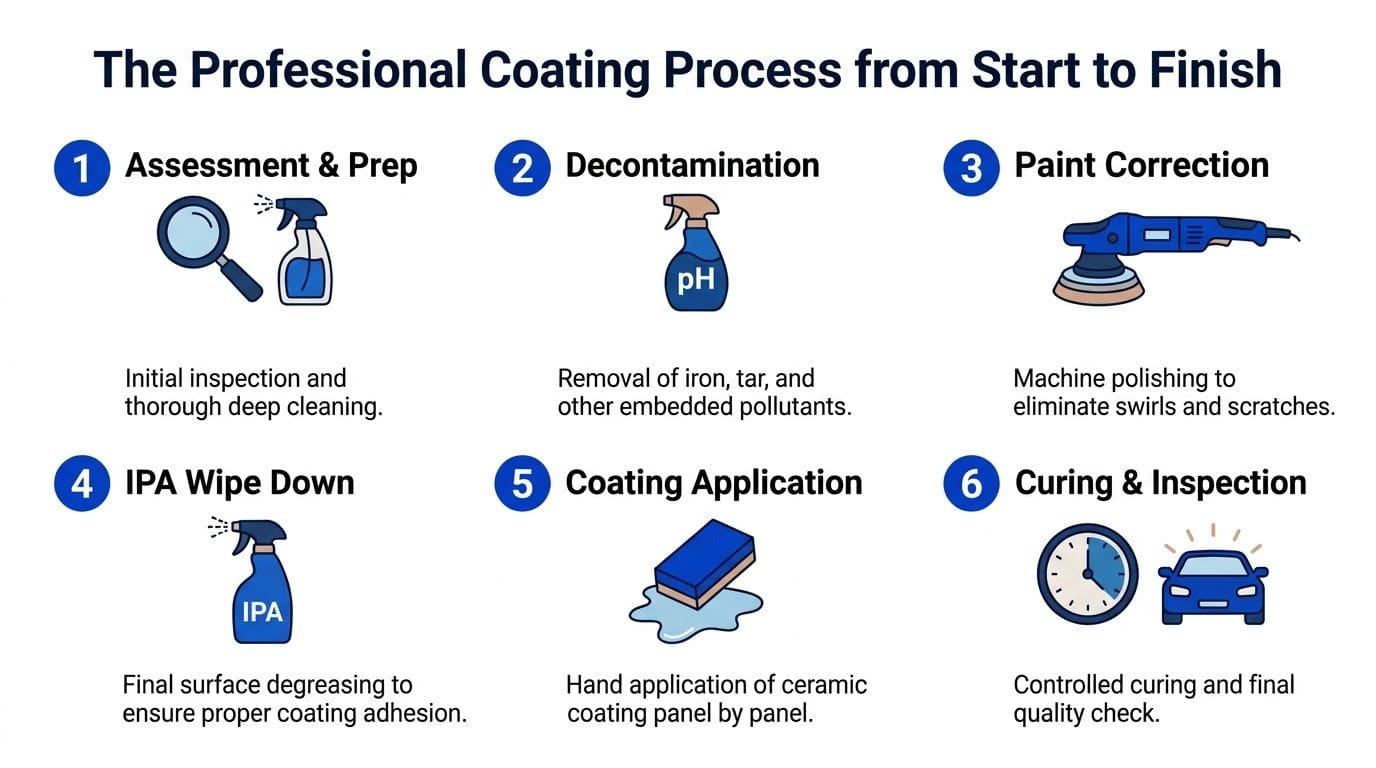
The prep work is the job
A professional detailer doesn't start by opening the coating bottle. The work begins with inspection and surface prep.
Typical workflow looks like this:
Initial assessment
The vehicle is checked for contamination, wash marring, light defects, and areas that need special care.Safe wash and decontamination
This usually includes a careful wash, chemical decontamination, iron removal, and clay treatment where needed.Paint correction
If the paint has haze, swirls, or dealer-installed wash marks, they should be addressed before coating. If you want to understand that stage better, take a look at this page on paint correction.IPA wipe down
This removes leftover oils and residues so the coating bonds directly to the clear coat.
If you coat over defects, you don't hide them. You lock them in.
That's one reason a rushed service can disappoint people. A coating amplifies the finish underneath it. If the paint is properly refined, the result looks sharper. If the paint is hazy, the coating won't magically fix that.
Here's a video element that shows the topic in a more visual format:
Application and curing require control
The application itself is deliberate. The installer uses a microfiber applicator, wipes the coating onto the surface, waits for it to flash into a haze, and then levels it with a microfiber towel. According to Ceramic Pro's Tesla preparation guide, the vehicle surface must be cool, heat speeds flashing and curing, and the vehicle needs a minimum of 24 hours for the initial cure while staying dry and sheltered.
That controlled environment matters. Moisture, heat, residue, or sloppy leveling can all create problems.
A proper install usually means:
- Cool surface conditions: So the coating flashes predictably.
- Panel-by-panel attention: To avoid high spots or uneven residue.
- Indoor cure time: So the coating can bond without getting interrupted by weather.
- Final inspection: To catch streaking, missed residue, or inconsistent leveling.
When someone quotes a “fast ceramic coating” on a Tesla, ask what prep is included and where the car cures afterward. That question tells you a lot.
The Honest Truth What a Ceramic Coating Will Not Do
This is the part too many shops gloss over. A ceramic coating is valuable, but it has limits, and those limits matter most on a Tesla.
Ceramic coating does not stop rock chips. It does not act like a thick physical shield. It does not prevent all scratching. The misconception that it prevents rock chips is false because ceramic coatings bond chemically but lack the physical thickness needed to absorb road-debris impact, as explained in this discussion of Tesla coating myths and the hybrid protection approach.
What coating cannot stop
If you drive on the highway around Columbus, especially on routes with regular truck traffic or seasonal debris, your Tesla's front end takes abuse. A coating helps with cleanup. It doesn't absorb the hit.
Here's what coating won't do:
- It won't stop stone impact: Chips from road debris still happen.
- It won't prevent deep scratches: Keys, hard contact, and abrasive damage can still cut through.
- It won't excuse bad wash habits: Dirty towels, automatic washes, and dry wiping can still mark the finish.
- It won't make maintenance optional: You still need proper washing and contamination removal.
This is the part where honest recommendations matter more than sales language.
| Problem | Ceramic coating | PPF |
|---|---|---|
| Easier washing | Yes | Somewhat |
| Water beading | Yes | Not the main purpose |
| UV and contamination defense | Yes | Yes |
| Rock chip protection | No | Yes |
| Physical impact barrier | No | Yes |
When the hybrid approach makes the most sense
For many Tesla owners, the strongest plan is a hybrid system. That means putting paint protection film on high-impact areas such as the front bumper, hood, and similar impact-prone sections, then applying ceramic coating over the rest of the vehicle and over the film itself.
That approach makes sense because each product solves a different problem.
- PPF handles impact zones: It's the answer when your concern is rock chips.
- Ceramic coating handles maintenance and environmental exposure: It gives the whole vehicle easier upkeep and a more slick, glossy finish.
- Together they cover practical weaknesses better: Especially on a Tesla with vulnerable front-end paint.
If you're researching Columbus PPF, Hilliard paint protection film, or a Tesla-specific package, this is the direction that usually makes the most sense for owners who want long-term protection instead of a partial solution. For a closer look at Tesla-focused film coverage, review this Tesla PPF page.
Coating is for easier care. Film is for impact. Mixing those up is how owners end up disappointed.
This is also the one place in the article where it's worth naming a local option. Lionheart Auto Detailing & Protection offers both ceramic coating and PPF in the Columbus area, which is useful for owners who want the hybrid route handled in one workflow instead of piecing it together across multiple shops.
Investing in Protection A Realistic Cost Breakdown
A lot of Tesla owners call after delivery and ask the same question. "What should I budget if I want to protect this car the right way?" That is the right question, because the price of a coating job has less to do with the bottle and far more to do with the labor behind it.
A professional ceramic coating package for a Tesla can range from a moderate investment to a premium one, depending on paint condition, correction work, coating tier, and whether the car is being paired with film. The wide spread is normal. A new Tesla is not always ready for coating straight off the truck, and that surprises many first-time owners.
What drives the price
Prep is usually the deciding factor.
Two Teslas with the same trim can land in the shop needing very different amounts of work. One may only need a careful decontamination wash and light polishing. Another may arrive with dealership wash marring, adhesive residue, water spotting, or haze in the paint that should be corrected before anything is locked under a coating.
The main factors are:
- Vehicle size and shape: More painted surface means more washing, claying, polishing, coating, leveling, and final inspection.
- Paint condition at delivery: The more defects we have to correct, the more labor goes into the job.
- Correction level: A one-step polish and a multi-stage correction are priced very differently.
- Coating product and warranty structure: Some owners want a shorter-term option. Others want a higher-tier system with more involved prep and registered warranty coverage.
- PPF in the package: Film changes both the labor and material cost. It also changes the protection strategy, which is why hybrid packages sit in a different price category.
That last point matters. If the front end is getting PPF and the rest of the vehicle is being coated, you are no longer comparing one simple service against another. You are building a protection package around how the car is used.
How to judge the value
The cheapest quote often leaves out the work that determines how the car looks a month later.
Ask what is included before you compare pricing. Some shops quote a coating price that sounds attractive, then treat paint correction as an add-on. Others include the correction, panel prep, coating application, cure time, and first maintenance guidance in one clear package. Those are not the same offer.
I tell owners to get clear answers on these points:
- What prep work is included before coating
- Whether polishing or paint correction is included
- What coating is being installed, and how it is maintained
- How long the shop expects the result to last under normal ownership
- Whether the quote changes if PPF is part of the plan
That is how you separate a real Tesla protection package from a low entry price that grows once the car is in the bay.
If your goal is easier washing, better gloss, and less stress from bird droppings, road film, and seasonal grime, ceramic coating usually earns its keep. If your real concern is front-end chip damage, the better investment is often a hybrid plan with PPF on impact areas and coating over the rest. Honest pricing should reflect that difference instead of pretending one product solves every problem.
Protect Your Investment with Columbus's Tesla Experts
A Tesla rewards careful ownership. The finish looks excellent when it's maintained properly, but it also shows neglect and bad wash habits quickly. Ceramic coating is a strong choice when your goals are easier maintenance, better resistance to environmental contamination, and a cleaner-looking finish over time. It just needs to be matched with honest expectations.
If rock chips are your biggest worry, coating alone isn't enough. That's where the hybrid approach of PPF on impact areas and ceramic coating over the vehicle makes the most sense for many owners in Hilliard and Columbus.
If you want help deciding between ceramic coating, PPF, or a combined protection package for your Tesla, contact Lionheart Detailing. A good shop should walk you through the trade-offs, inspect the paint, and recommend the level of protection that suits how you drive and care for the car.