A coffee tips over as you pull out of the driveway. A child's juice box leaks in the back seat, or your dog climbs in with damp paws after a walk. If you're looking at a car seat fabric protector, you're probably hoping the next mess will be easier to clean. That's a reasonable goal, as long as you know what the treatment can and can't do.
A protector can help keep some spills on the fabric's surface long enough for you to blot them up. It won't make your seats stain-proof, stop wear, or replace proper cleaning. For drivers around Columbus, where muddy shoes, winter road grime, kids, and pets are part of ordinary use, the useful question is whether protection makes routine cleanup simpler.
Table of Contents
- What a Car Seat Fabric Protector Actually Does
- How Factory Upholstery Is Already Built to Last
- DIY Sprays Versus Professional Treatments
- How Fabric Protectors Repel Stains in Real Life
- Application and Maintenance Routine That Actually Works
- Heated Seats, Perforated Leather, and Child Car Seats
- Columbus Driving Conditions and Reapplication Timing
- Choosing the Right Approach for Your Vehicle
What a Car Seat Fabric Protector Actually Does
A car seat fabric protector is a surface treatment that changes how liquids and oils interact with upholstery fibers. Rather than soaking in immediately, some spills may bead or spread more slowly, giving you time to blot them before they penetrate the fabric. Think of it as a maintenance barrier, not an invisible shield against every mess.
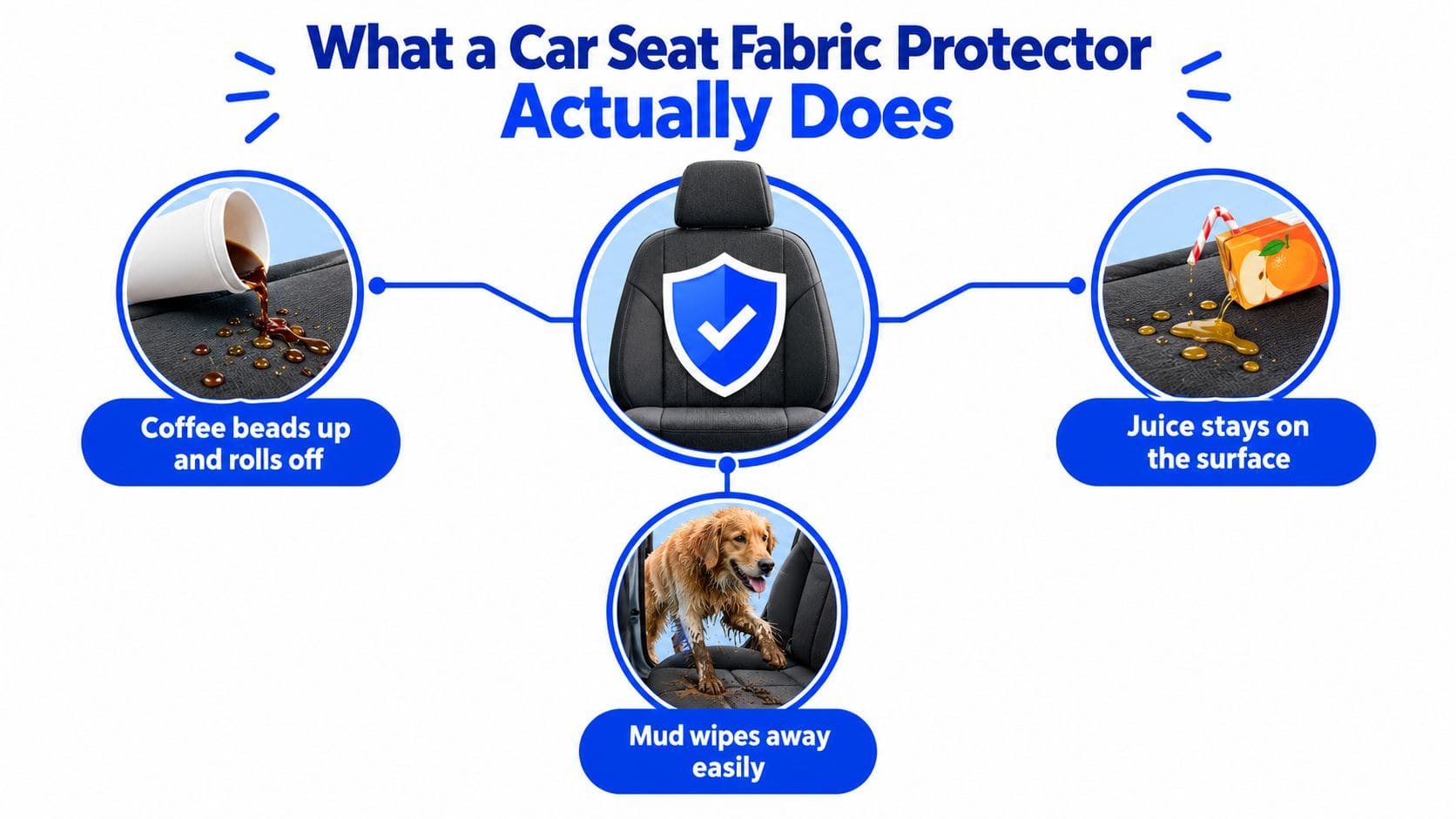
With a treated seat, a small coffee spill may sit on the surface long enough to blot. A juice spill can still leave sugar behind, and muddy paw prints can still push soil into the weave if you rub them. The treatment can make cleanup easier, but the result depends on the material, the spill, and how quickly you respond.
The practical measure of value is the next cleanup. If the surface gives you more time to blot and takes less effort to clean, the protector is doing useful work. It doesn't prevent stains from every liquid, and it won't keep a seat looking new if grit, friction, and repeated spills go unmanaged.
For a first-time customer, I'd put it this way: your upholstery is already built for regular use. A protector is an added convenience for everyday contamination, not a repair for worn or stained fabric. If the seats are already dirty, clean them before applying anything.
How Factory Upholstery Is Already Built to Last
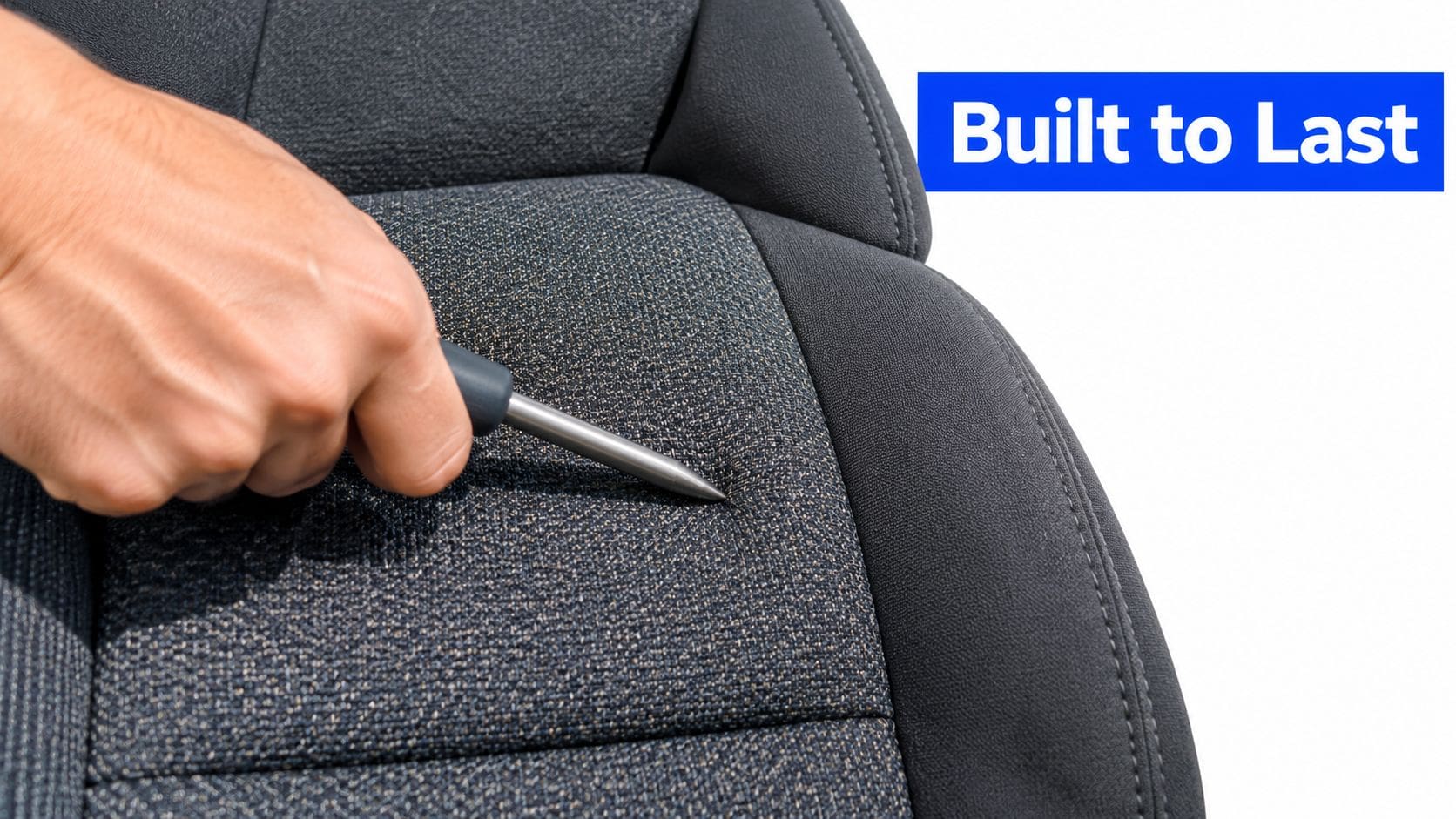
Car upholstery is engineered for a tougher job than the fabric on a couch or office chair. It has to handle people getting in and out, clothing rubbing against the seat, sunlight through the windows, and big temperature changes. That's why a protector isn't what makes a car seat durable. It's an optional layer aimed at making spills and grime easier to manage.
A 2022 peer-reviewed study reported that automotive seat coverings must tolerate ultraviolet radiation and temperatures from below 0°C to above 120°C. Researchers tested eight fabric types before and after a year of simulated UV exposure, and ranked polyester and nylon among the strongest choices for a combination of UV and abrasion resistance (the automotive upholstery study).
That durability doesn't mean fabric is immune to visible soiling. Oils from skin, food residue, dust, and road grime can collect in the fibers, while friction can flatten or wear the surface. A stain protector addresses some of that contamination, but it won't reverse abrasion, prevent UV aging, or restore fabric that has already faded.
What this means when you add a protector
First, identify what you're treating. Automotive textiles vary in their weave, backing, dye, and factory finish, so two seats that look similar may respond differently to the same product. A treatment should be tested in an inconspicuous area before the full seat is sprayed.
Then set the right expectation. Factory upholstery is designed to withstand daily use; a protector is there to help with cleanup, not to upgrade the fabric's structural strength. If your main concern is worn bolsters or faded material, adding a coating won't solve it. If your concern is coffee, food, or muddy shoes, protection may make regular care less frustrating.
DIY Sprays Versus Professional Treatments
A retail spray can be a sensible choice for an older commuter, a quick refresh, or someone comfortable following product directions. A professional treatment may suit a newer vehicle or an owner who wants the seats cleaned, inspected, and treated as part of a broader interior service. Neither option guarantees a fixed service life, and products differ in chemistry and application instructions.
| Factor | DIY Retail Spray | Professional Treatment |
|---|---|---|
| Cost | Usually a lower upfront purchase, but coverage depends on the product and how much is needed. | Typically priced as part of a service; ask what cleaning and preparation are included. |
| Application | You handle the inspection, test spot, coverage, and drying. | A technician applies the treatment after assessing the material and condition. |
| Durability | Depends on the product, application, seat use, and cleaning habits. | Still depends on the fabric and wear. Professional application doesn't make protection permanent. |
| Chemistry | Check the label for ingredients and any PFAS-related disclosure. | Ask which product is used and whether the chemistry is disclosed. |
| Follow-up | You decide when to test or reapply. | Ask whether the shop documents the work and gives you a maintenance plan. |
The honest comparison isn't “cheap versus guaranteed.” It's convenience and control versus preparation and application handled by a detailer. A spray can may work for a modest DIY job, but it won't clean embedded soil for you. A professional service can include that preparation, but the treatment still needs appropriate care afterward.
If the seats have visible spots or a general dingy appearance, start with cleaning rather than spraying over the problem. A proper interior shampooing and stain-removal process can address the existing soil before any protector is considered.
For a new vehicle, ask whether the product is suitable for the exact seat material and what happens if the finish changes its feel or appearance. For an older car, a test patch and careful DIY application may be plenty. The right choice is the one that fits the seat's condition, your comfort with the process, and what you expect the product to do.
How Fabric Protectors Repel Stains in Real Life
A protector generally works by lowering the surface energy of the fibers. In plain terms, that can make liquids bead up rather than wick quickly into the textile. But water repellency and oil repellency aren't the same thing. A spilled soda is mostly water-based; greasy food, skin oil, sunscreen, and automotive grime behave differently.
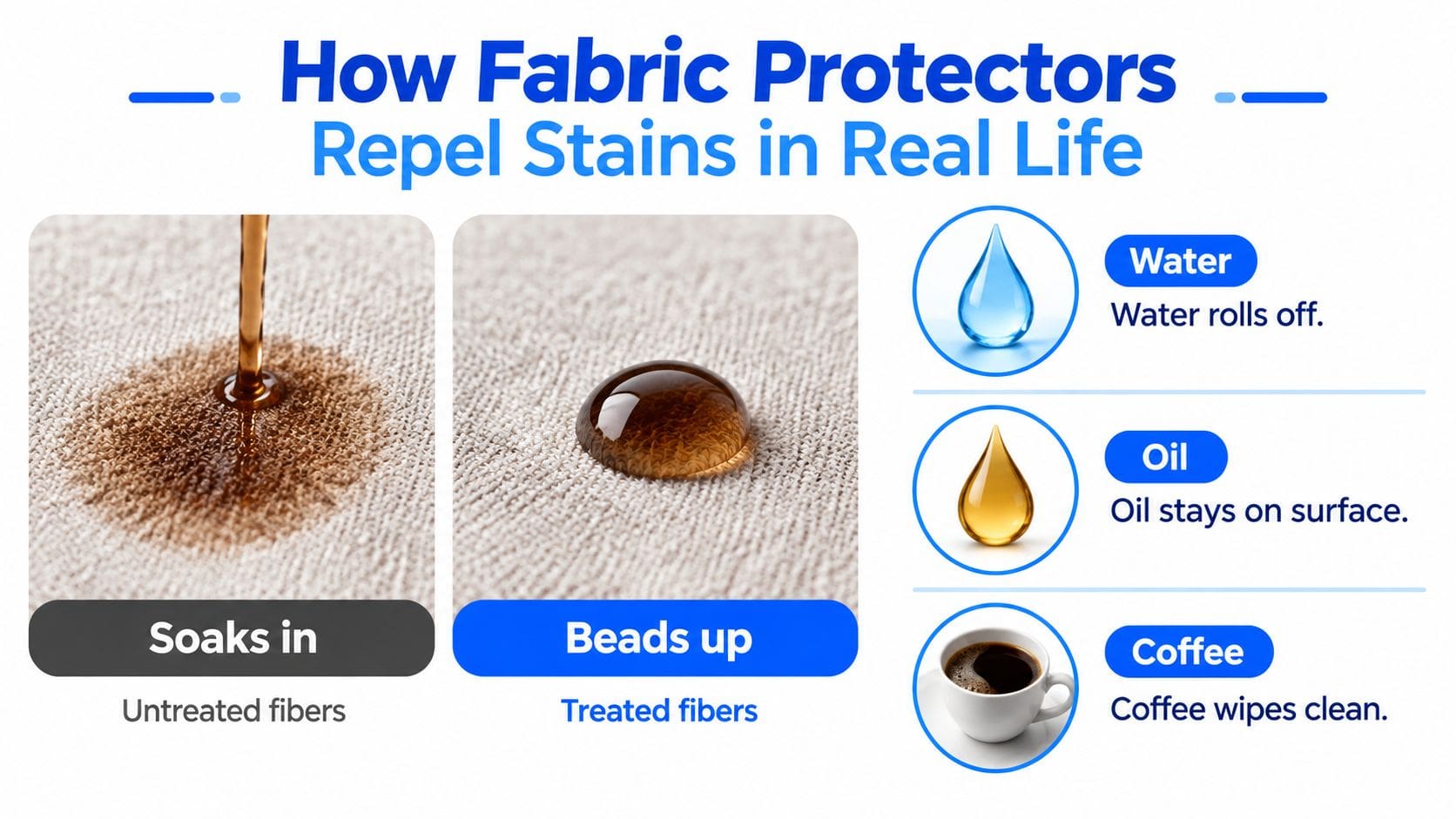
A controlled study compared treated and untreated automotive-relevant fabrics using coffee and oil-based salad dressing. Five of six finished fabrics showed only small stain-performance improvements over untreated controls. The study also found that oil repellency could deteriorate quickly with abrasion; one polyester sample became completely wettable after moderate-to-heavy rubbing (the automotive fabric-finish study).
That matters in the spots people use most. The outer bolster gets brushed by clothing every time someone enters or exits. A seat belt can rub against the fabric, and daily contact with jeans, workwear, or a bag adds friction. The treatment may still help, but the most-used areas can lose performance sooner than less-touched seat panels.
Practical rule: If a French fry lands on the seat, remove the greasy residue promptly instead of assuming a water-beading treatment will handle it. If soda spills, blot it up before it spreads or dries.
There's no single dependable lifespan to promise for every car. Fabric type, application, cleaning, and the amount of friction all affect results. Treat the protector as a renewable maintenance layer and watch how your seats respond rather than relying on a broad marketing claim.
Application and Maintenance Routine That Actually Works
Good application starts with clean fabric. Spraying over dust, body oils, or old cleaner residue can leave contamination under the treatment and make it harder to judge whether the product is working. Follow the product's label first, and check the vehicle's upholstery-care guidance if you're unsure about the material.
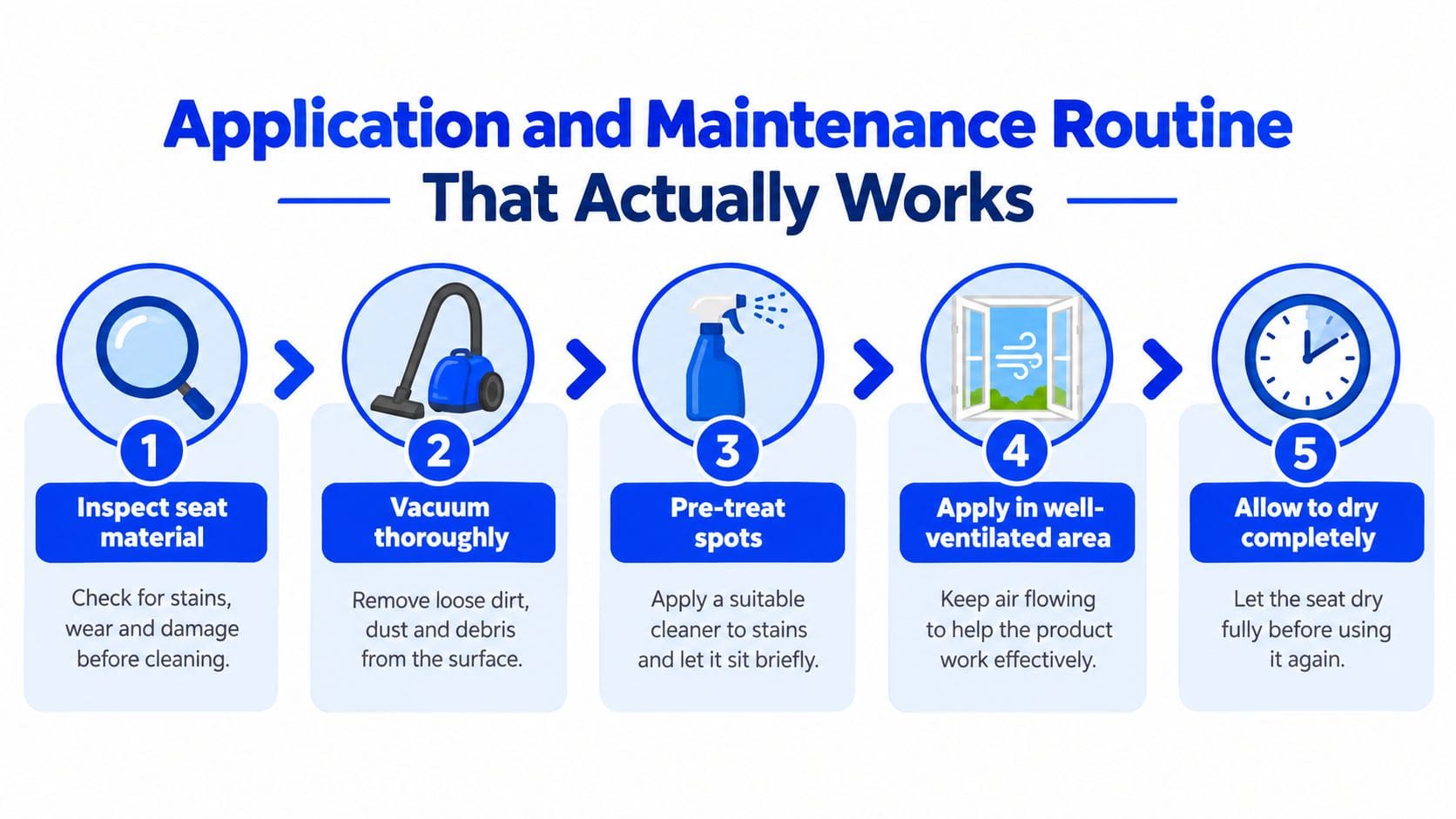
A careful driveway process
- Inspect the upholstery. Look for stains, fading, loose seams, unusual texture, or a factory coating. Test any cleaner or protector on a hidden area and check for color change or tackiness.
- Vacuum thoroughly. Use a crevice tool around seams and under the seat edges. Removing dry grit first reduces the chance you'll grind it into the fabric while cleaning.
- Treat existing spots. Choose a fabric-safe cleaner suited to the spill. General Motors' interior-cleaning guidance recommends removing loose residue, lightly agitating with a soft-bristle brush, and blotting rather than scrubbing. It also warns that leftover alkaline or soapy residue attracts dirt (GM's interior-cleaning guidance).
- Apply evenly in a ventilated area. Keep the nozzle at the distance stated on the label, work in controlled passes, and avoid soaking the seat foam. Uneven application can leave patches, while oversaturation can lengthen drying and create an unpleasant feel.
- Let the seat dry and cure. Keep people and pets off the treated area until the product's directions say it's ready. Don't wipe or scrub a fresh application.
Aftercare and the reapplication test
When a spill happens, blot with a clean absorbent towel. Press and lift; don't grind the spill into the weave. For routine cleaning advice, Lionheart's guide to cleaning a car interior can help you choose a gentler approach before reaching for a strong cleaner.
To check whether protection is still useful, compare how a small amount of water behaves on a hidden section with the way it behaves on a known untreated area, if available. Stop if the fabric darkens or the water absorbs quickly. Don't reapply just because a particular number of months has passed. Clean first, let the fabric dry, and follow the product's instructions.
Heated Seats, Perforated Leather, and Child Car Seats
Not every seat surface should be treated like ordinary cloth upholstery. Heated seats, perforated materials, and child restraints each have restrictions that can matter more than stain resistance. If the owner's manual or product instructions rule out a treatment, don't apply it.
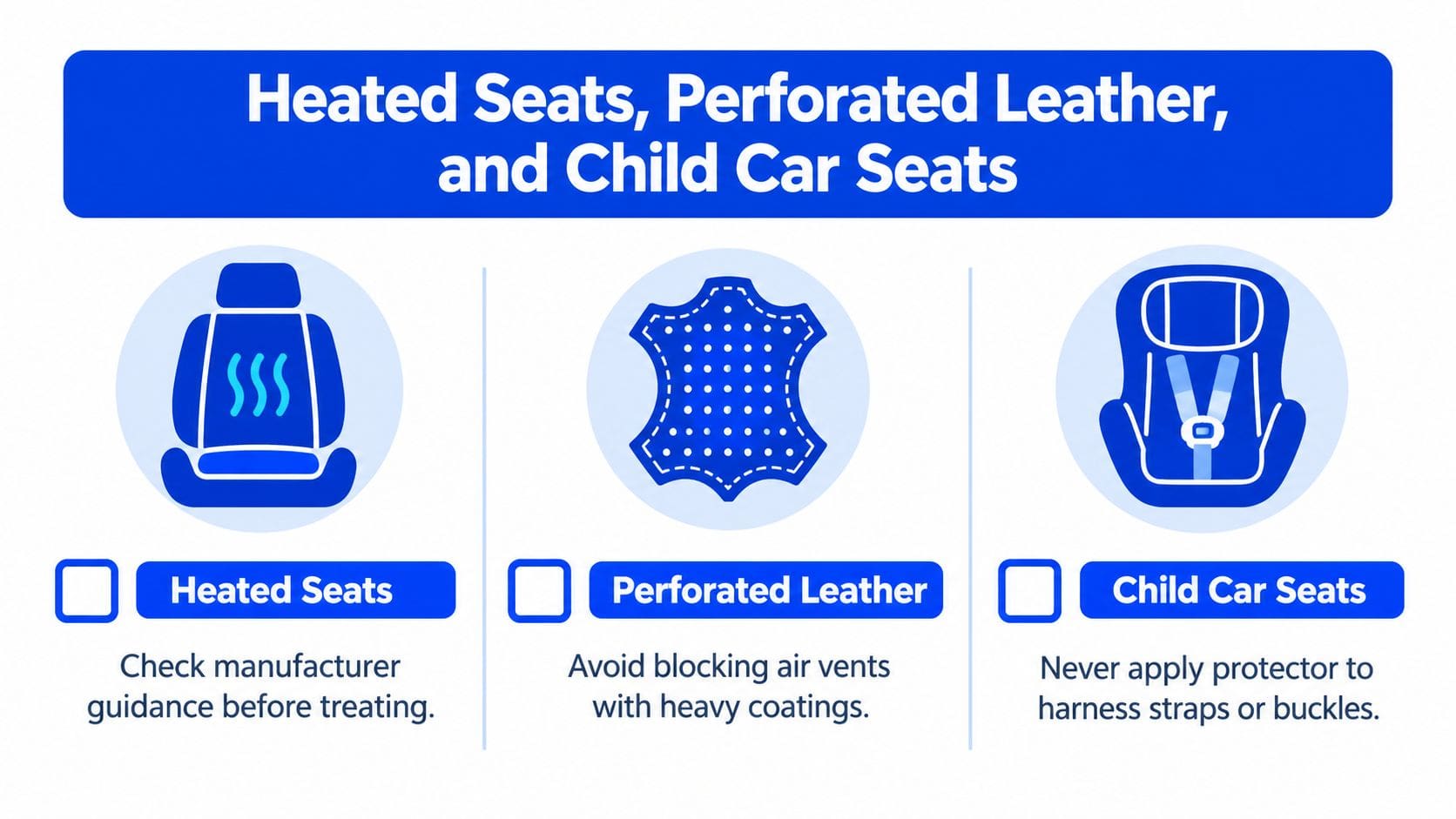
Heated seats and perforated surfaces
For heated seats, use only a controlled, low-moisture method when the vehicle manufacturer permits it. NHTSA-hosted safety instructions for a heated seat cushion warn against immersion, steam cleaning, machine washing, water penetration, aggressive cleaners, metal or nylon-bristle brushes, and sharp tools (heated seat cushion safety instructions). Moisture entering a cushion can create problems for internal components, so protecting the fabric is secondary to keeping the seat safe.
Perforated leather and other perforated surfaces need their own care. Heavy overspray can leave residue in the holes, change the surface feel, or create a visible pattern. A treatment designed for fabric may not be appropriate for leather or microfiber. For advice about those materials, see the leather ceramic coating service information.
Child restraints need manufacturer approval
Don't apply aftermarket protector to harness webbing, buckles, labels, or restraint components. Even a treatment marketed as safe for ordinary vehicle upholstery may not be approved for a child seat. For removable covers, get written approval from the child-seat manufacturer before treating them, and follow the restraint's cleaning instructions.
Families should also ask what chemistry a product uses and whether the manufacturer discloses PFAS content. PFAS have historically been used to make products stain-resistant and waterproof, and Massachusetts guidance lists vehicle upholstery among applications for PFAS-containing durable water repellents (EPA's PFAS overview). If the chemistry is unclear, ask the shop or manufacturer before proceeding.
Columbus Driving Conditions and Reapplication Timing
A seat in a Columbus vehicle can see road salt tracked in on shoes, slush from a winter commute, and repeated wet-dry cycles. Add muddy footwear, dog hair, gym bags, or a child's booster seat and the upholstery may collect a mix of grit and spills. That doesn't mean you need a fixed seasonal schedule. It means you should keep an eye on the places that get used and soiled most.
Start with the front seat bolsters, the seat cushion, and the areas where passengers regularly climb in. When the seats are clean and dry, test a small hidden section with a few drops of water. If the fabric darkens or the water absorbs instead of sitting on the surface, the treatment may be wearing down. Use that as a cue to clean and reassess, not as an automatic instruction to spray more product.
Winter grime can leave mineral and dirt residue behind, so avoid trying to fix it with a fresh coating. A manufacturer technical bulletin filed with NHTSA specifies a minimum of 2.5 liters of clean water per cloth seat cover when cleaning with a wet vacuum, followed by dry extraction and full drying before the vehicle is returned (the cloth-seat cleaning bulletin). That's a specific cleaning procedure, not a universal instruction to soak every seat; follow your vehicle's guidance and avoid excessive moisture.
For daily drivers, the practical plan is simple: vacuum regularly, blot spills quickly, clean visible contamination properly, then retest. Renew protection when performance has noticeably faded and the upholstery is ready for a fresh application.
Choosing the Right Approach for Your Vehicle
An older daily driver with clean seats and a modest budget is a good candidate for a careful DIY application. Read the label, test a hidden area, and accept that results depend on even coverage and suitable fabric. If the upholstery is already stained, spend your effort on cleaning first.
A new-vehicle owner may prefer professional application before regular use builds up soil. A family vehicle or rideshare car may also benefit from professional cleaning and treatment when dependable upkeep matters, but no provider can make the fabric immune to wear or every spill. Ask the shop what product it uses, how the seat will be prepared, whether it will spot-test, and how to tell when a new application is warranted.
Lionheart Detailing offers interior fabric ceramic coating for car seats as one protection option, alongside interior detailing and exterior services. If your priorities also include paint, compare ceramic coating packages in Columbus and paint protection film options, which address different parts of vehicle care.
Choose a treatment for the problem you have. For fabric, that usually means easier cleanup, sensible product disclosure, and a realistic maintenance plan, not a stain-proof promise.
If your seats need cleaning before protection, or you'd like help choosing an appropriate treatment for your vehicle, Lionheart Detailing can assess the upholstery and explain practical options. Contact Lionheart Detailing to discuss interior detailing, fabric protection, or complementary paint protection services in the Columbus area.