You've just brought home a new BMW, Tesla, truck, or daily driver, and the front bumper already looks vulnerable. After a few Columbus highway trips, winter slush, and spring road grime, the question usually comes up: how long does PPF last on a car, and when will it need attention?
The honest answer isn't a single calendar date. Paint protection film has a warranty life, a visual life, and an impact-protection life. Those three timelines can differ from one panel to another, especially around Hilliard and greater Columbus, where road salt, freeze-thaw cycles, ultraviolet exposure, and highway driving all affect the film.
A quality installation can keep factory paint protected for years, but the result depends on the film series, surface preparation, application quality, vehicle use, and maintenance. The practical advantages are outlined in the benefits of paint protection film, but the protection only works well when the film remains properly bonded and in good condition.
Table of Contents
- Introduction to PPF Lifespan
- Typical PPF Lifespan and Warranty
- Key Factors Affecting PPF Longevity
- Warranty Expectations and Caveats
- Signs of PPF Failure and Replacement Timing
- Tips to Maximize PPF Lifespan
- Conclusion and Next Steps
Introduction to PPF Lifespan
A customer may arrive at the shop with a simple concern: “I want PPF, but I don't want to replace it constantly.” That's a reasonable question. Nobody wants to pay for a clear protective layer only to discover that neglected edges, stains, or rock impacts have changed the appearance sooner than expected.
On a newer vehicle, PPF often looks nearly invisible after installation. The front bumper, hood, mirror caps, fenders, and rocker panels can take the abuse that would otherwise reach painted surfaces. Over time, however, each panel experiences a different combination of sunlight, debris, washing, moisture, and road contamination.
That's why I separate PPF performance into three practical categories:
- Warranty life: The period during which the manufacturer provides coverage for specified material or installation defects.
- Visual life: How long the film remains clear, glossy, smooth, and neatly bonded.
- Impact-protection life: How long the film continues to provide useful resistance against chips, abrasions, and everyday road damage.
A film can remain attached after its warranty ends. It may also still absorb impacts after its surface has become hazy or stained. That doesn't mean it's performing at its original standard, particularly when cracking, delamination, bubbling, or edge lift affects coverage.
For Columbus-area drivers, the most useful question isn't whether PPF will last a certain number of years. Ask which panels are exposed most heavily, how the vehicle is stored, how it's washed, and what condition the paint was in before installation.
Typical PPF Lifespan and Warranty
Modern automotive PPF is generally designed to remain in service for approximately 5 to 10 years, depending on the film series, installation quality, climate, vehicle use, and maintenance. 3M's product information provides a useful benchmark, with different product series carrying different warranty periods.
| PPF Series | Warranty Duration |
|---|---|
| 3M Series 50 | 5 years |
| 3M Series 100 | 7 years |
| 3M Series 150 | 10 years |
| 3M Scotchgard Pro Series 200 | 10 years |
Those warranties address specified material defects, including issues such as yellowing, bubbling, and cracking. Some warranty documents also address peeling. They don't mean the film will remain flawless for the entire period, and they don't turn ordinary road damage into a warranty claim.
What the warranty range means in practice
A 5-year warranty may be suitable for an owner who wants meaningful protection during a shorter ownership period. A 7-year warranty gives a longer defect-coverage window. A 10-year warranty is a reasonable fit for someone keeping a vehicle long term, but it still depends on installation quality and care.
The warranty period isn't an automatic removal date. A well-maintained film can remain visually acceptable after its covered period, while a heavily exposed bumper may need earlier replacement because of stone impacts, staining, edge wear, or installation damage.
Columbus conditions matter. Winter road salt can collect around seams and edges, freeze-thaw cycles put stress on exposed areas, and frequent highway driving increases contact with gravel and road debris. A garaged vehicle that receives careful washing is more likely to approach the upper end of a reasonable 5-to-10-year expectation than a vehicle parked outdoors and cleaned aggressively.
Practical rule: Treat the warranty as a coverage limit for defined defects, not as a promise that every panel will look new or avoid every chip.
Before approving an installation, request the exact film brand and series, the warranty terms, the installation date, the registration process, and the defects covered. That paperwork is more useful than a general claim that a film “lasts forever.”
Key Factors Affecting PPF Longevity
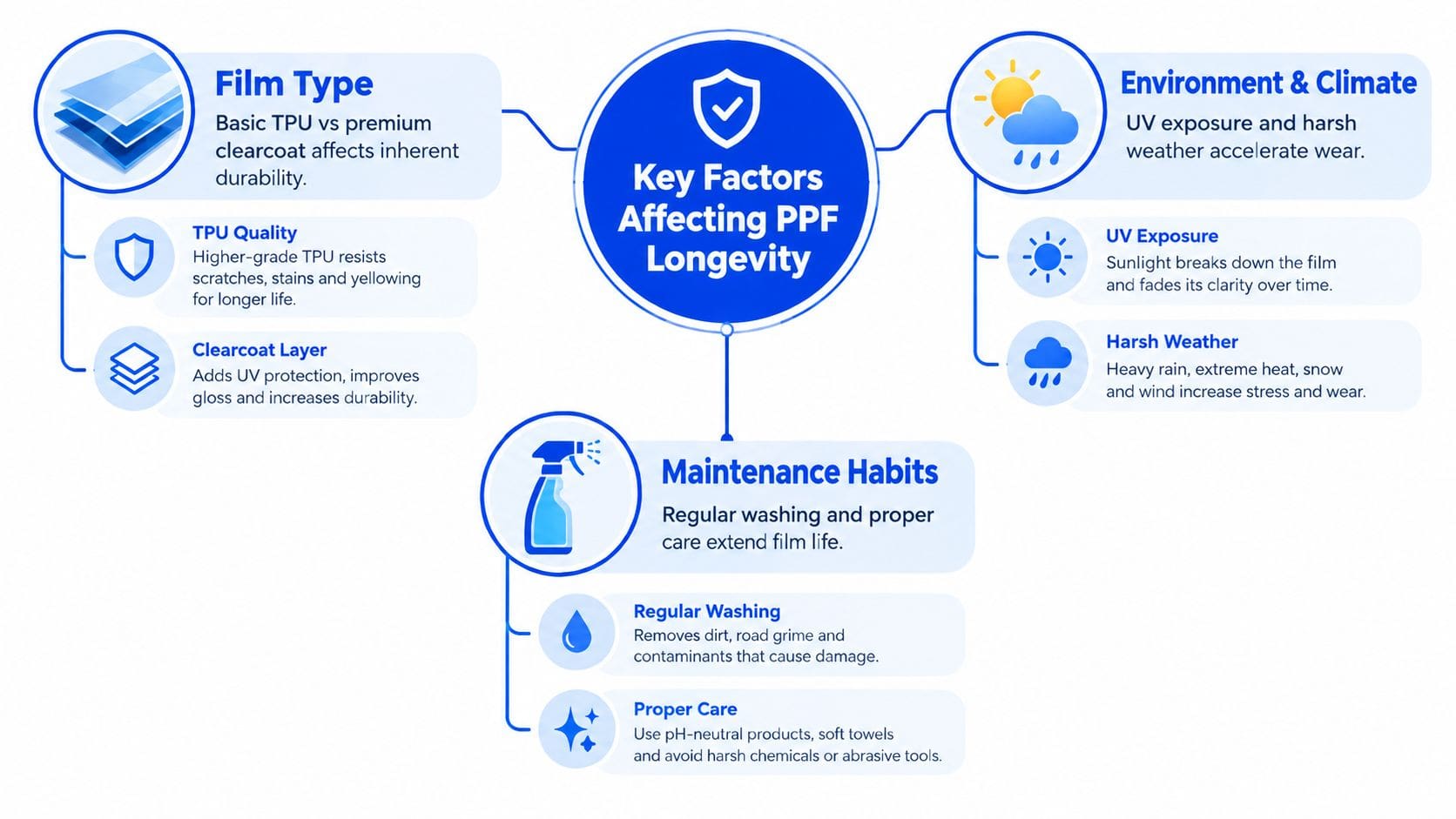
PPF doesn't age based on thickness alone. Its polymer, clearcoat, and adhesive respond to sunlight, temperature changes, moisture, contamination, and physical impacts. 3M's technical information on PPF construction and weathering describes the role of polyurethane layers and protective clearcoats in resisting weathering, discoloration, deformation, and gravel-chip damage.
Film type and construction
The film's construction affects how it handles impact, UV exposure, staining, and surface wear. Premium polyurethane films generally use a tough base with a protective clearcoat. A clearcoat can help the film maintain gloss and resist discoloration, but it won't make the material immune to rock strikes or poor care.
Don't choose a film by thickness alone. Ask about the product's technical documentation, warranty exclusions, recommended cleaning methods, and suitability for the areas you want covered. A front bumper and rocker panel face very different abuse from a garage-kept rear door.
Environment and driving pattern
A vehicle that spends most of its time outside experiences more ultraviolet exposure, moisture, temperature cycling, and contamination. Industrial pollution, tree sap, bird droppings, road salt, and insects can all attack the surface if they remain in place.
Highway driving is another major variable. The hood edge, bumper, mirror caps, fender shoulders, and rocker panels meet more debris than the roof or rear doors. A Columbus driver who regularly travels highways may see those zones age differently from the rest of the vehicle.
Maintenance habits
Washing protects more than appearance. Use a pH-neutral automotive detergent, a clean soft mitt, and gentle drying methods. Remove bird droppings, insects, and tree sap promptly rather than allowing acidic or sticky contamination to remain on the clearcoat.
Inspect the edges periodically. If you notice lifting, don't pull the film back. Dirt and water can work beneath a lifted edge, and an installer can often determine whether trimming, repair, or panel replacement is appropriate.
For owners interested in self-healing behavior and proper care, PPF self-healing information can help explain what light surface marks may respond to heat and what damage requires professional attention.
Warranty Expectations and Caveats
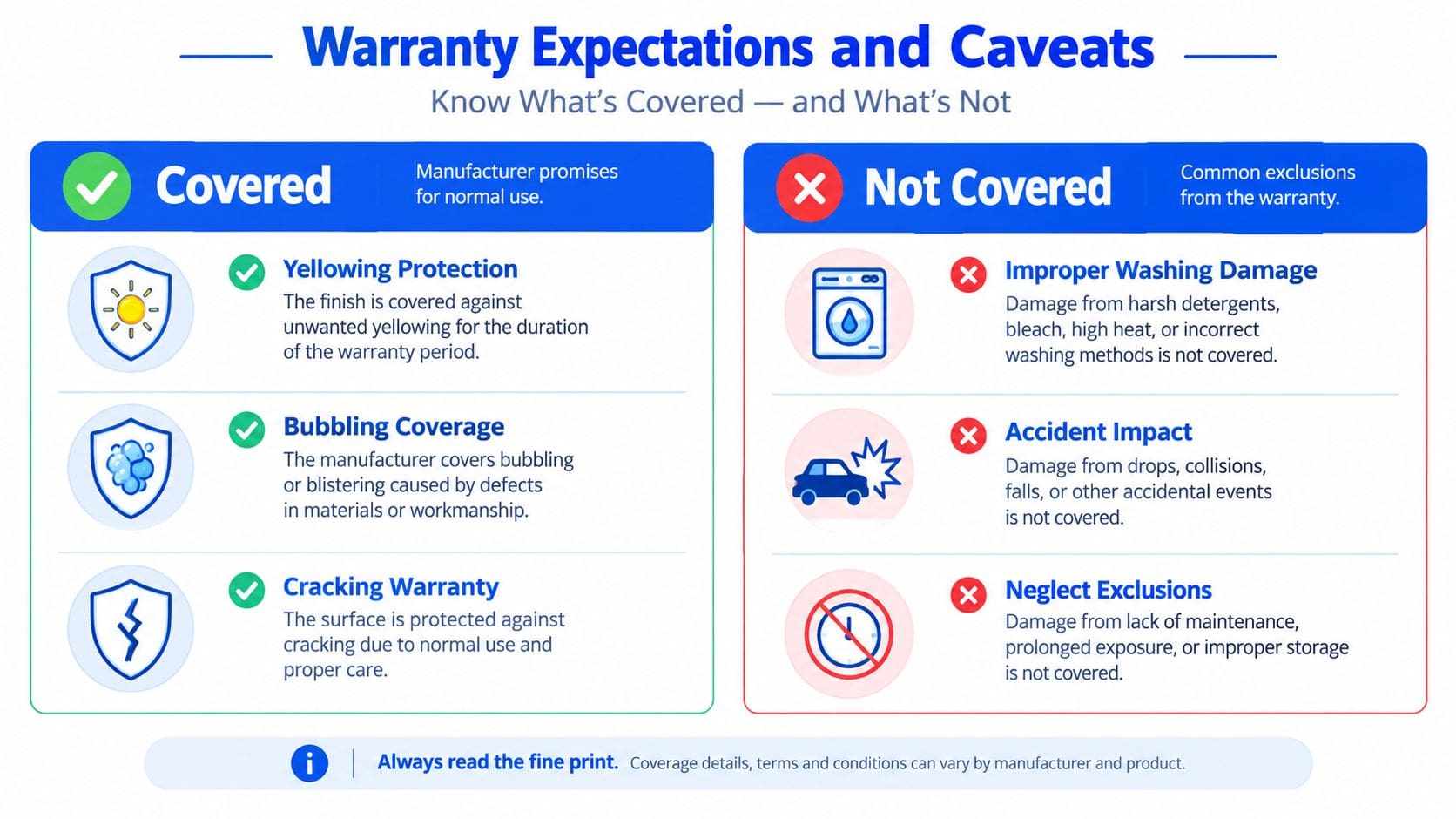
A PPF warranty is valuable when you understand its boundaries. Manufacturers commonly address defects such as yellowing, bubbling, cracking, peeling, discoloration, or adhesive-related problems under stated conditions. They generally don't cover dents from rocks or road debris, accidents, misuse, ordinary wear, neglect, or damage caused by improper washing.
3M's warranty card illustrates the distinction between material and installation defects versus impact damage and ordinary use.
Read the exclusions before installation
A warranty may require professional installation, an approved application surface, product registration, and prescribed maintenance. Those requirements matter on used vehicles, collision-repaired cars, classic vehicles, and cars with aftermarket paint.
Repainted panels deserve a careful inspection before film goes on. The film may bond correctly to a sound refinished surface, but weak paint, incomplete curing, poor preparation, or incompatible coatings can increase removal risk and may invalidate coverage.
Ask for a written condition report that records:
- Paint condition: Identify original factory paint, repaired paint, touch-up work, or resprayed panels.
- Installation details: Record the brand, product series, installation date, and covered areas.
- Photographs: Capture the vehicle before installation, especially on repaired or previously damaged panels.
- Registration information: Confirm who registers the warranty and how future claims are handled.
- Removal responsibility: Clarify who evaluates paint risk if a refinished panel releases during removal.
A long warranty doesn't guarantee safe installation on every surface. It also doesn't promise that a bumper will avoid every stone impact. Get the exact terms in writing, then maintain the film according to those terms.
Signs of PPF Failure and Replacement Timing
You don't need to remove a panel to identify aging film. Inspect the vehicle under good lighting, especially after washing, because water and dirt can hide early defects.
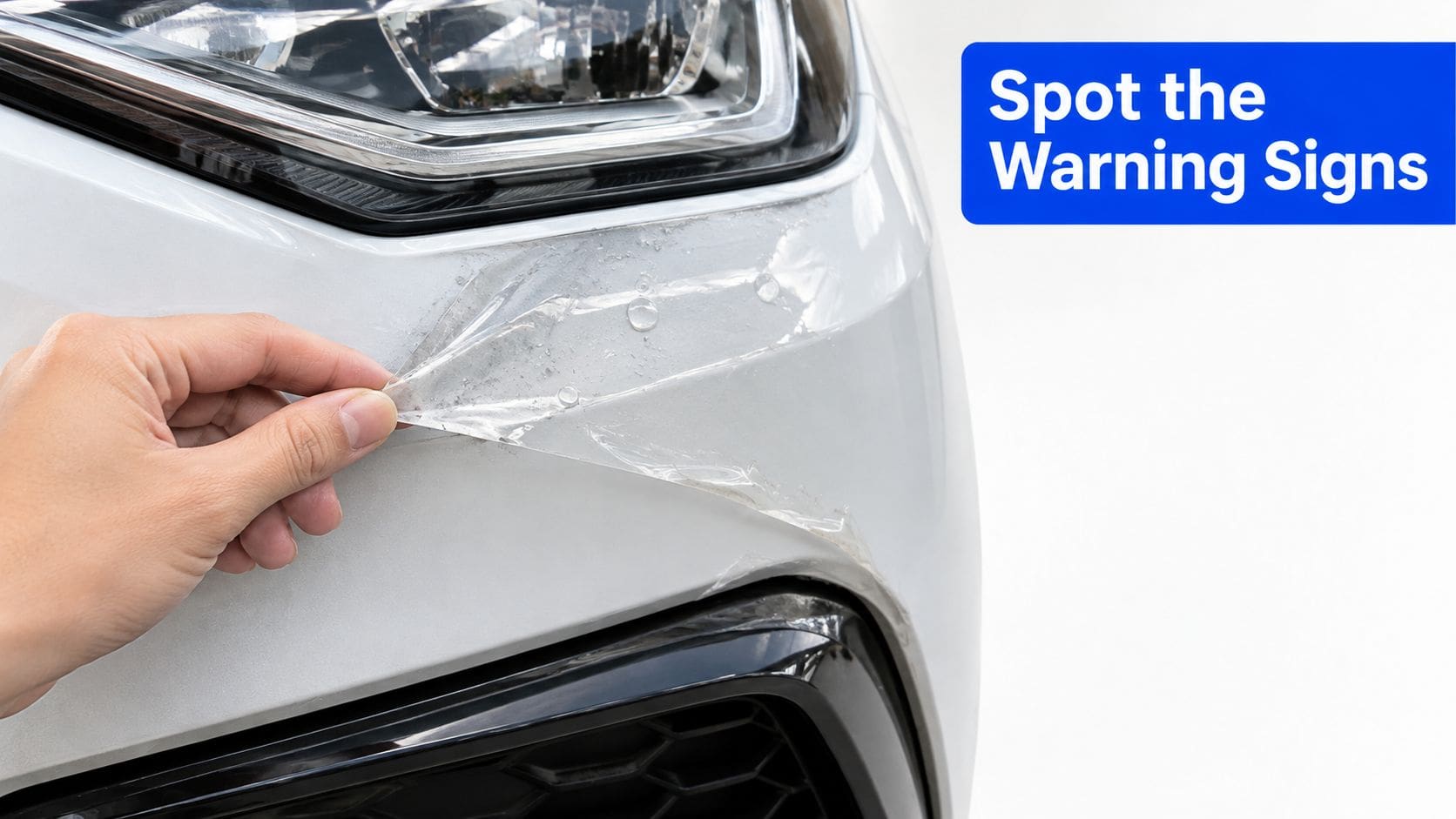
Look closely at the hood edge, bumper corners, mirror caps, wheel-arch areas, rocker panels, and exposed seams. These sections usually encounter more debris and cleaning pressure than broad, sheltered panels.
Watch for these conditions
- Edge lifting: A seam or corner no longer sits flat against the paint.
- Bubbling: Air, moisture, or adhesive failure creates visible pockets beneath the film.
- Yellowing or haze: The film no longer appears clear, particularly against white or light-colored paint.
- Cracking: The surface shows splits or a brittle appearance.
- Delamination: Layers separate, creating cloudy or uneven areas.
- Severe staining: Embedded contamination remains after a safe wash.
- Impact saturation: Repeated chips and abrasions have left a panel visibly worn even though the film remains attached.
Profilm's maintenance and warranty guidance warns that improper high-pressure washing and abrasive cleaners can lift edges, allowing dirt and moisture underneath.
Repair or replace
A small edge issue may be manageable if an installer catches it early. A panel with widespread bubbling, cracking, delamination, heavy staining, or compromised coverage usually deserves a replacement assessment.
Don't tug on a loose corner or try to polish aggressively through a damaged section. Take photographs, wash the area gently, and have a professional evaluate whether the film can be trimmed, repaired, or removed and replaced. Removal risk is higher on weak or poorly prepared refinished paint than on sound factory paint.
Tips to Maximize PPF Lifespan
The most effective PPF maintenance routine is simple and consistent. You don't need complicated equipment, but you do need the right contact materials and washing technique.
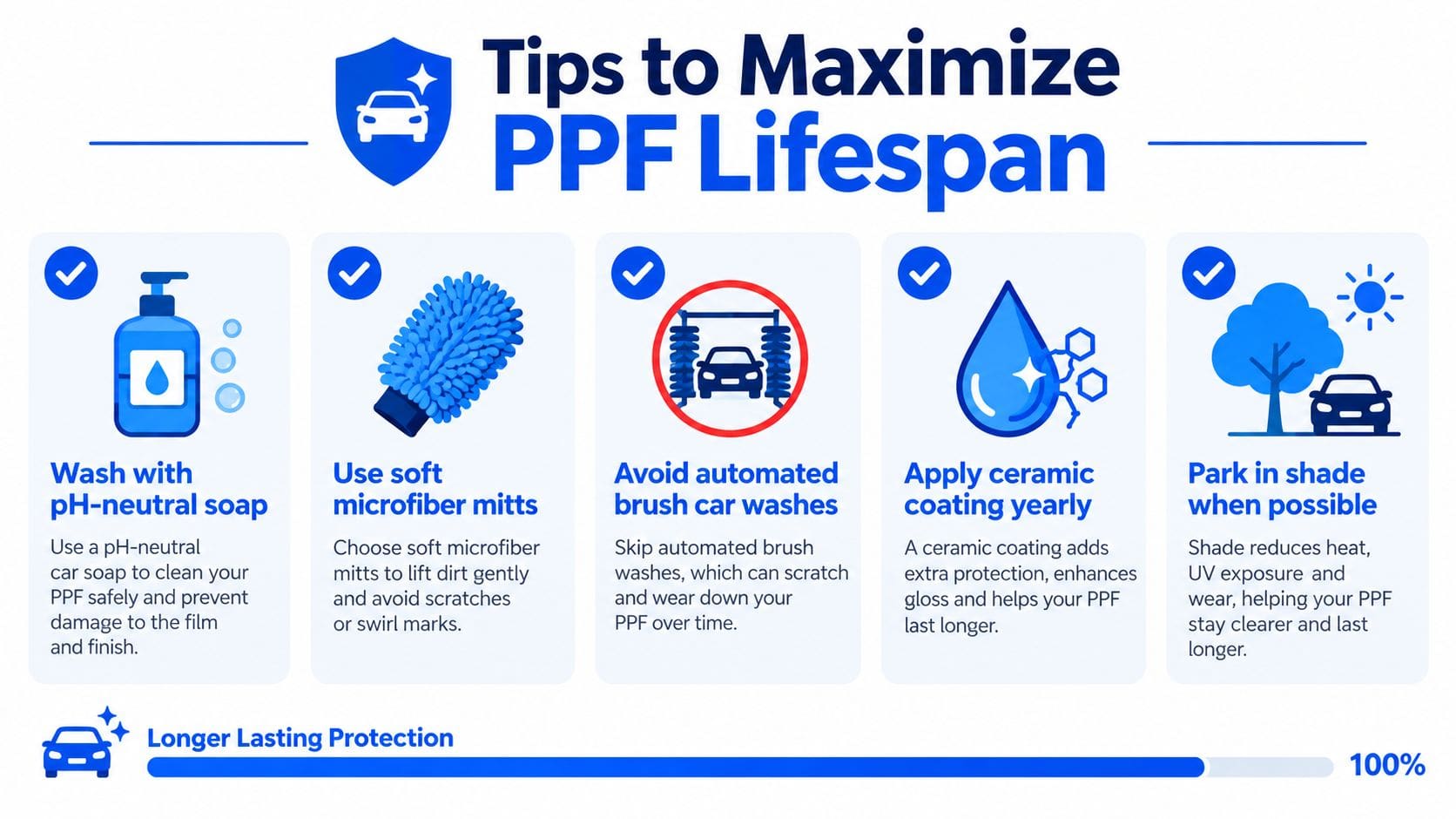
A practical care checklist
Wash with pH-neutral soap. A gentle automotive detergent removes road film without relying on harsh solvents that can affect the surface or adhesive.
Use a clean, soft mitt. Work from cleaner upper panels toward dirtier lower sections, rinsing the mitt frequently. A soft mitt reduces the chance of dragging grit across the film.
Avoid automated brush washes. Rotating brushes can push contamination across the surface and catch exposed seams or corners. Touchless systems are less mechanically aggressive, but you should still inspect pressure and chemical settings.
Keep pressure away from edges. If you use a pressure washer, don't aim the nozzle directly at seams, corners, or lifted areas. Profilm recommends keeping the nozzle at least 50 centimeters from film edges in its care guidance.
Remove contamination promptly. Bird droppings, insects, and tree sap become harder to remove when they dry and bake onto the surface. Soften the material first rather than scraping it.
Use compatible protection. A ceramic coating designed for compatible PPF can simplify cleaning and add a protective surface layer, but it won't stop impact wear or reverse polymer aging. A non-abrasive wax may also help maintain gloss when the product is approved for the film.
Inspect seasonally. Look for edge lift, bubbling, staining, and impact damage after winter salt exposure and again after periods of intense summer sun.
For product-specific washing guidance, use a dedicated paint protection film cleaner rather than treating PPF like unprotected paint.
A compatible ceramic coating is useful for maintenance, not a substitute for PPF. PPF handles impact and abrasion, while ceramic coating primarily adds surface slickness, hydrophobic behavior, and easier cleaning. If you're comparing our ceramic coating packages in Columbus, ask which surfaces the coating is approved for and how it works alongside existing film.
Conclusion and Next Steps
PPF lifespan depends on more than the number printed on a warranty card. Quality film, careful installation, sound paint preparation, Columbus driving conditions, and consistent washing determine whether a panel remains clear and bonded. Evaluate warranty life, visual life, and impact-protection life separately, then replace or repair film when yellowing, cracking, bubbling, delamination, severe staining, or edge lift compromises its purpose.
For drivers in Hilliard, Dublin, Powell, Upper Arlington, and throughout Columbus, a panel-by-panel inspection is the right starting point. It can identify whether your vehicle needs new PPF, maintenance, safe removal, or a different protection plan.
Lionheart Detailing provides PPF installation, maintenance, ceramic coating, paint correction, and full detailing for vehicles in the Columbus area. Visit Lionheart Detailing to discuss your film's condition, coverage needs, and the right protection plan for your daily driver, Tesla, BMW, truck, or specialty vehicle.