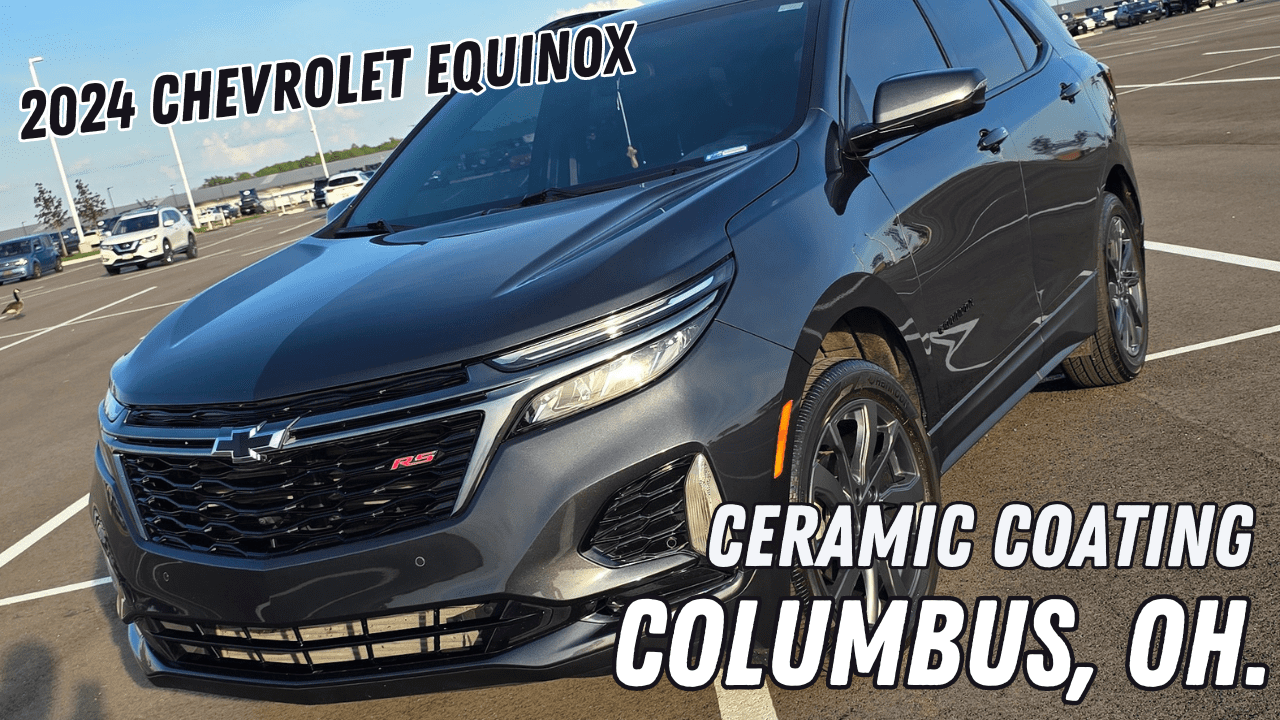
You're probably in one of two spots right now. You either bought a newer vehicle and want to keep it looking sharp, or you've got a daily driver that still matters to you and you're tired of watching bird droppings, road film, tree sap, and Ohio winter grime beat it up.
That's when ceramic coating starts showing up in your search results. Suddenly every shop, every video, and every forum post makes it sound like a magic shield. No more washing. No more damage. Perfect shine forever. That's the part that confuses people.
The honest answer is simpler. Ceramic coating can be absolutely worth it, but only if you understand what you're paying for, what it protects against, and what ownership looks like after the coating goes on. For drivers looking into Hilliard ceramic coating, Columbus ceramic coating, or even just searching for ceramic coating near me, the biggest mistake isn't buying a bad product. It's buying the right product with the wrong expectations.
Table of Contents
- So You're Hearing About Ceramic Coatings
- What Exactly Is a Ceramic Coating And What It Is Not
- The Real-World Benefits for a Columbus Driver
- How Much Does a Ceramic Coating Cost in Ohio
- Ceramic Coating vs Traditional Wax An Honest Comparison
- The Lionheart Process Our Commitment to Perfection
- Is a Ceramic Coating Worth It For You
So You're Hearing About Ceramic Coatings
Ceramic coating usually enters the conversation after a frustrating wash. You clean the car, step back, and it looks good for about a day. Then dust sticks, water spots show up, and something acidic lands on the hood before the weekend is over.
That frustration is real, especially in Ohio. Columbus drivers deal with road salt, pollen, bug splatter, hard rain, summer sun, and the kind of dirty slush that seems to coat the whole lower half of the car. If you've been comparing Hilliard auto detailing options or looking into Hilliard paint protection film and coatings, you're probably not looking for hype. You want something practical.
Ceramic coating is practical. It just isn't magical.
What makes it appealing is that it changes daily ownership. The vehicle stays cleaner longer. Washes go faster. Contaminants don't cling as aggressively. The paint tends to keep that crisp, freshly detailed look with less effort than an unprotected car.
A good ceramic coating doesn't turn your car into a show car by itself. It makes a properly prepped car easier to live with and easier to preserve.
That distinction matters. A coating won't fix neglected paint. It won't hide deep scratches. It won't stop a shopping cart, a rock chip, or bad wash habits. But if your goal is to protect a vehicle you care about and reduce the constant cycle of waxing and heavy scrubbing, it belongs on the shortlist.
Why people get tripped up
Most disappointment comes from one of these issues:
- They expected zero maintenance. Coatings reduce maintenance. They don't erase it.
- They thought it was impact protection. That's where Columbus PPF or Hilliard paint protection film makes more sense for high-hit areas.
- They compared only product names. The result depends heavily on prep work, correction, application environment, and aftercare.
If you keep your vehicles for a while, care about appearance, and want less friction in day-to-day upkeep, ceramic coating is often worth serious consideration. If you want true chip protection on a front bumper or hood, coating and film solve different problems.
What Exactly Is a Ceramic Coating And What It Is Not
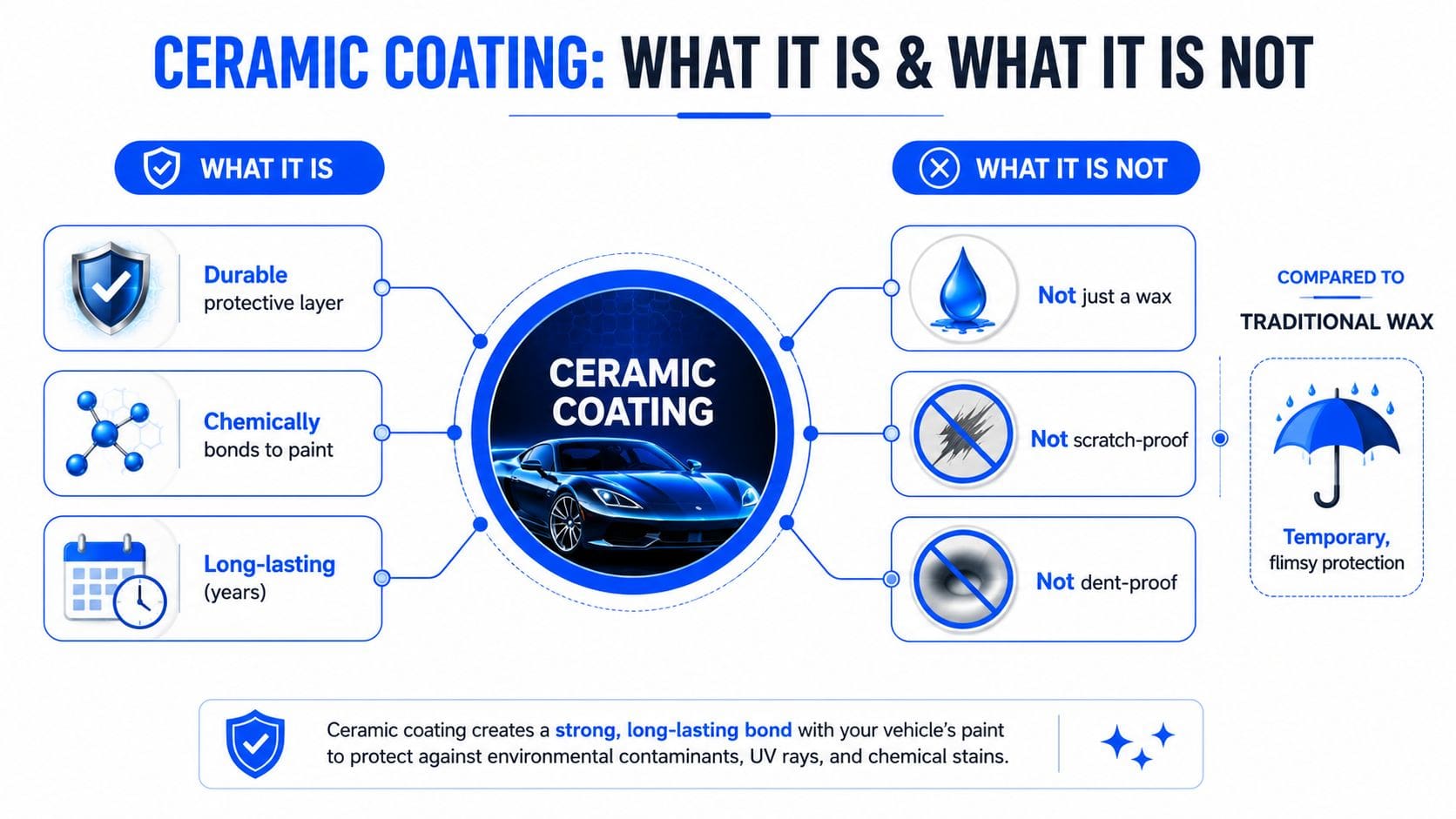
Wax is like a temporary umbrella. It gives you some short-term help, but it sits on the surface and fades out pretty quickly. Ceramic coating is closer to a bonded raincoat. It becomes part of the surface in a way wax never does.
What the coating is doing on your paint
Professional-grade ceramic coatings form covalent siloxane (Si–O–Si) bonds with the paint surface, creating a molecular-level anchor that can persist for 5+ years, while traditional waxes rely on weaker surface attraction and degrade within months, according to Denver Auto Shield's explanation of ceramic coating chemistry. That same source explains that the coating forms a protective layer typically around 1–3 microns thick.
That sounds technical, so here's the plain-English version. The coating isn't just sitting there like greasy residue. Once it's properly applied and cured, it bonds to the clear coat and creates a thin, hard, slick layer that resists contamination far better than old-school wax.
The same chemistry is also why water behavior changes so much. That slick surface produces strong water beading and runoff, which is why coated cars are easier to rinse and dry when maintained properly.
What it will not do
Honest shops then separate themselves from marketers.
A ceramic coating is not:
- Not scratch-proof armor. It can help reduce light wash-induced swirl marks, but it won't stop a deep scratch.
- Not rock-chip protection. If you're driving highways around Columbus, film is the better tool for impact zones.
- Not dent protection. Hail, door dings, and parking lot hits still happen.
- Not a substitute for paint correction. If the paint has defects before coating, those defects get preserved under the coating.
- Not a neglect pass. If you wash carelessly, use dirty towels, or let contamination sit for too long, the finish can still suffer.
Practical rule: Buy ceramic coating for chemical resistance, easier cleaning, and longer-term gloss retention. Don't buy it expecting invincibility.
A lot of first-time customers ask whether coating or wax is “better.” That's the wrong question. A better question is what kind of ownership experience you want. Wax can still make sense if you enjoy frequent DIY upkeep and don't mind reapplying protection often. A professional coating is for the owner who wants a more durable system and is willing to pay for proper prep up front.
If you're new to detailing, this is the key mindset shift. Ceramic coating doesn't replace car care. It upgrades the protection layer you're maintaining.
The Real-World Benefits for a Columbus Driver
For a Columbus driver, the value of ceramic coating shows up in ordinary moments. The rinse after a salty week. The bug cleanup after highway miles. The bird mess you catch before it etches. The black trim and paint that still look crisp instead of tired.
Why Ohio drivers notice the difference
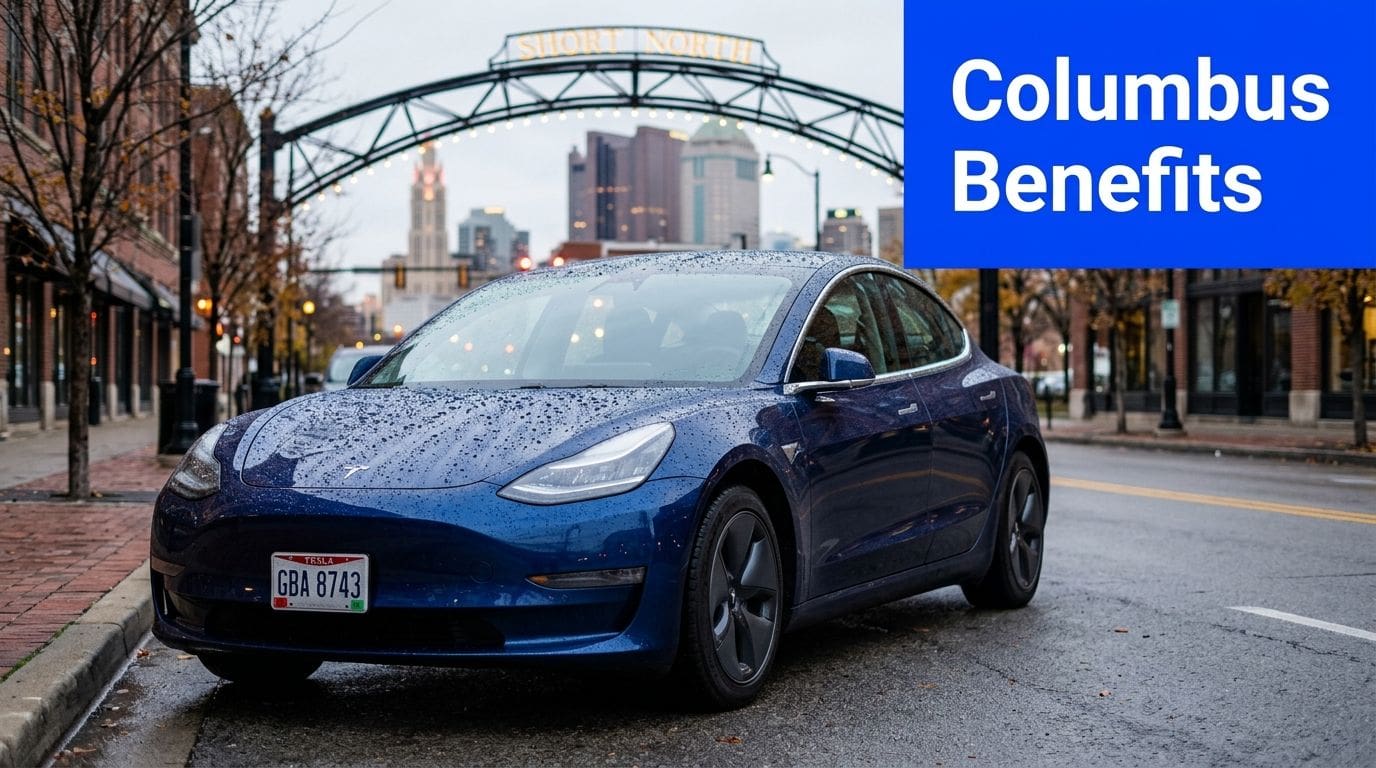
Ohio is rough on exterior surfaces. Winter puts salt and grime on lower panels. Spring adds pollen. Summer bakes contaminants onto the paint. Fall brings sap and organic debris. A ceramic coating helps because that slick surface makes contamination less eager to grab hold.
In practical terms, that usually means:
- Faster wash days. Dirt releases more easily during pre-rinse and contact wash.
- Less aggressive scrubbing. That matters because aggressive scrubbing is how many people add swirls.
- Better resistance to common contamination. Bird droppings, tree sap, and road film are still a problem, but they're easier to deal with if you catch them promptly.
- A cleaner-looking vehicle between washes. The car doesn't stay spotless forever, but it tends to look good longer.
That's the appeal for people searching Columbus ceramic coating services. The payoff isn't just shine under perfect lighting. It's less struggle in regular ownership. If you want a closer look at what a professional service includes, ceramic coating in Columbus, Ohio is a useful reference point.
What you still need to do right
Honesty matters more than sales language. Ceramic coatings are durable, but they aren't scratch-proof. They can reduce light swirl marks, yet they cannot prevent rock chips, and their performance still depends on proper washing techniques so you don't mar the sacrificial layer, as explained in Vive Houston's overview of ceramic coating limitations.
That's why I tell people to focus on washing habits just as much as coating choice.
A coated vehicle still benefits from:
- A quality pre-rinse before touching the paint
- Clean microfiber towels instead of old bath towels or gas station rags
- A pH-friendly wash soap rather than harsh household cleaners
- Prompt cleanup of bird droppings, bug remains, and sap
The coating makes the car easier to clean. It does not make rough washing safe.
If you care about resale, coating also helps indirectly. Cleaner, glossier, better-preserved paint is easier to keep attractive over time. That won't matter to every owner. But if you notice panel condition, trim appearance, and finish clarity when you walk up to your vehicle, you'll probably notice the difference.
How Much Does a Ceramic Coating Cost in Ohio
At this stage, people either get clarity or get skeptical. They hear one price from one shop, another price from somewhere else, and assume someone is overcharging for a tiny bottle of liquid. In reality, the coating liquid is only part of the job.
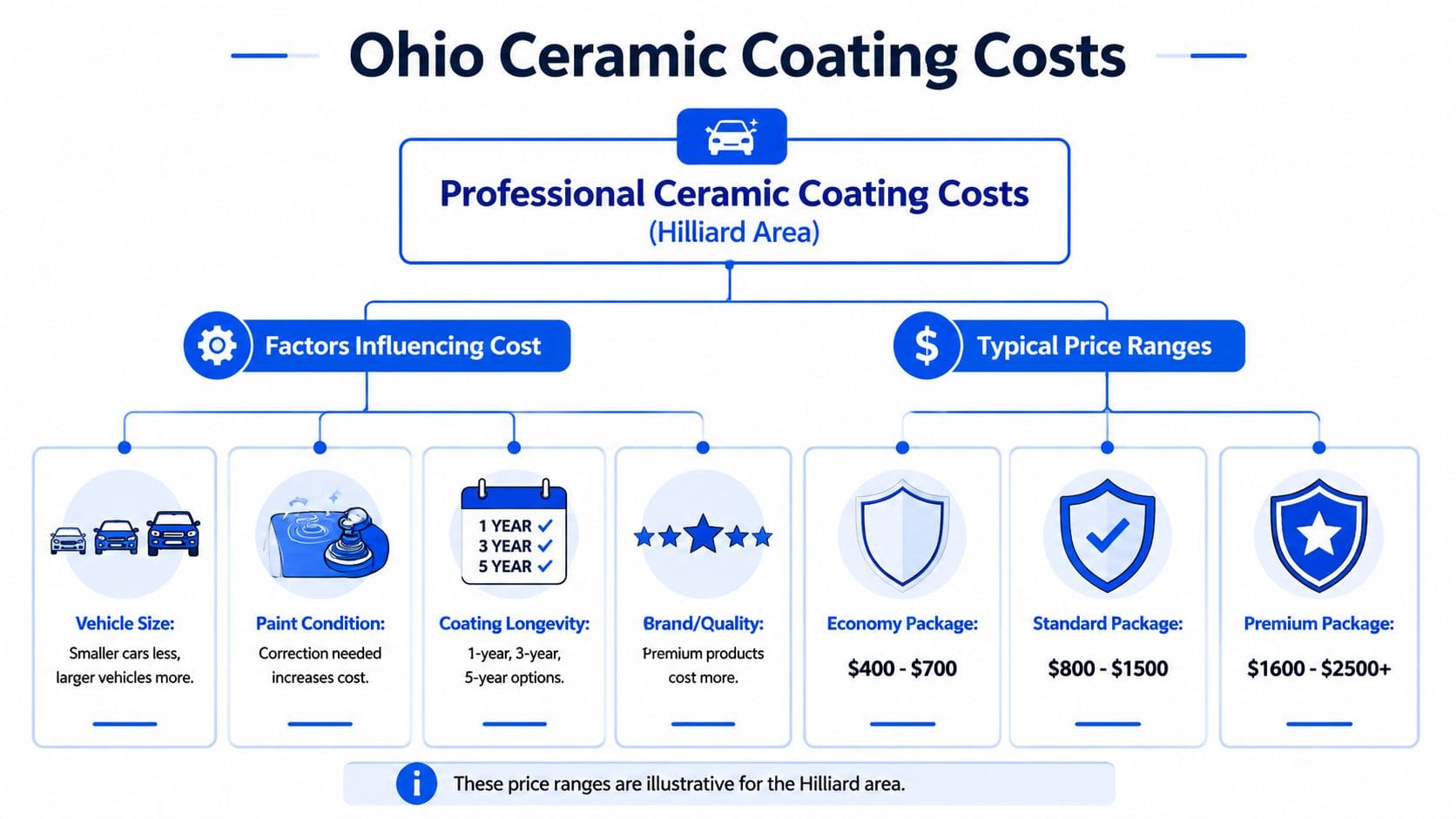
Professional-grade ceramic coating applications typically range from $1,000 to $4,000, especially when the package includes extensive paint correction and multi-layer prep work, according to this professional ceramic coating cost discussion.
What you are actually paying for
Most of the labor sits before the coating ever touches the paint.
A proper job usually includes several stages:
| Step | Why it matters |
|---|---|
| Wash and decontamination | Removes loose grime, iron fallout, tar, and bonded contamination |
| Clay treatment or similar surface decontamination | Clears embedded debris the wash won't remove |
| Paint inspection | Identifies swirls, haze, oxidation, and prior damage |
| Machine polishing or paint correction | Improves clarity and removes defects before they get locked in |
| Panel prep wipe | Strips oils so the coating can bond correctly |
| Coating application and leveling | Prevents high spots and uneven finish |
| Cure management | Gives the coating the right environment to set up properly |
That's why low quotes can be misleading. If a shop skips correction, rushes prep, or applies in poor conditions, the coating may still go on, but the end result won't look or behave like people expect.
For shoppers comparing pricing, this ceramic coating cost guide is worth reviewing because it frames the service as labor, prep, and finish quality rather than just product selection.
Why two quotes can be wildly different
Not every vehicle needs the same amount of work. A newer garaged sedan with soft wash marring is a different project than a larger SUV that's been through tunnel washes for years.
A quote can move based on:
- Vehicle size. Larger vehicles have more surface area and more trim.
- Paint condition. Heavy swirls, haze, or etched contamination add correction time.
- Desired coating package. Longer-lasting systems or layered systems can involve more labor.
- Detail level. Wheels, glass, trim, jambs, and extra surfaces change the workload.
Cheap ceramic coating usually means one of two things. Minimal correction, or rushed application.
For local buyers, that's especially relevant in the Hilliard and greater Columbus market. Some owners only want easier maintenance on a daily driver. Others want a near-showroom finish on a newer car. Both are valid goals, but they shouldn't be quoted or approached the same way.
If you're deciding whether ceramic coating is worth it financially, compare it against your actual habits. If you already pay for recurring detailing or regular protection services, the long-term picture often makes more sense than the up-front number alone. If you rarely wash the car and don't care much about finish condition, the value equation changes.
Ceramic Coating vs Traditional Wax An Honest Comparison
Wax still has a place. I'd rather see a car protected with a decent wax than left bare and neglected. But ceramic coating and wax aren't really playing the same game.
Where a coating clearly wins
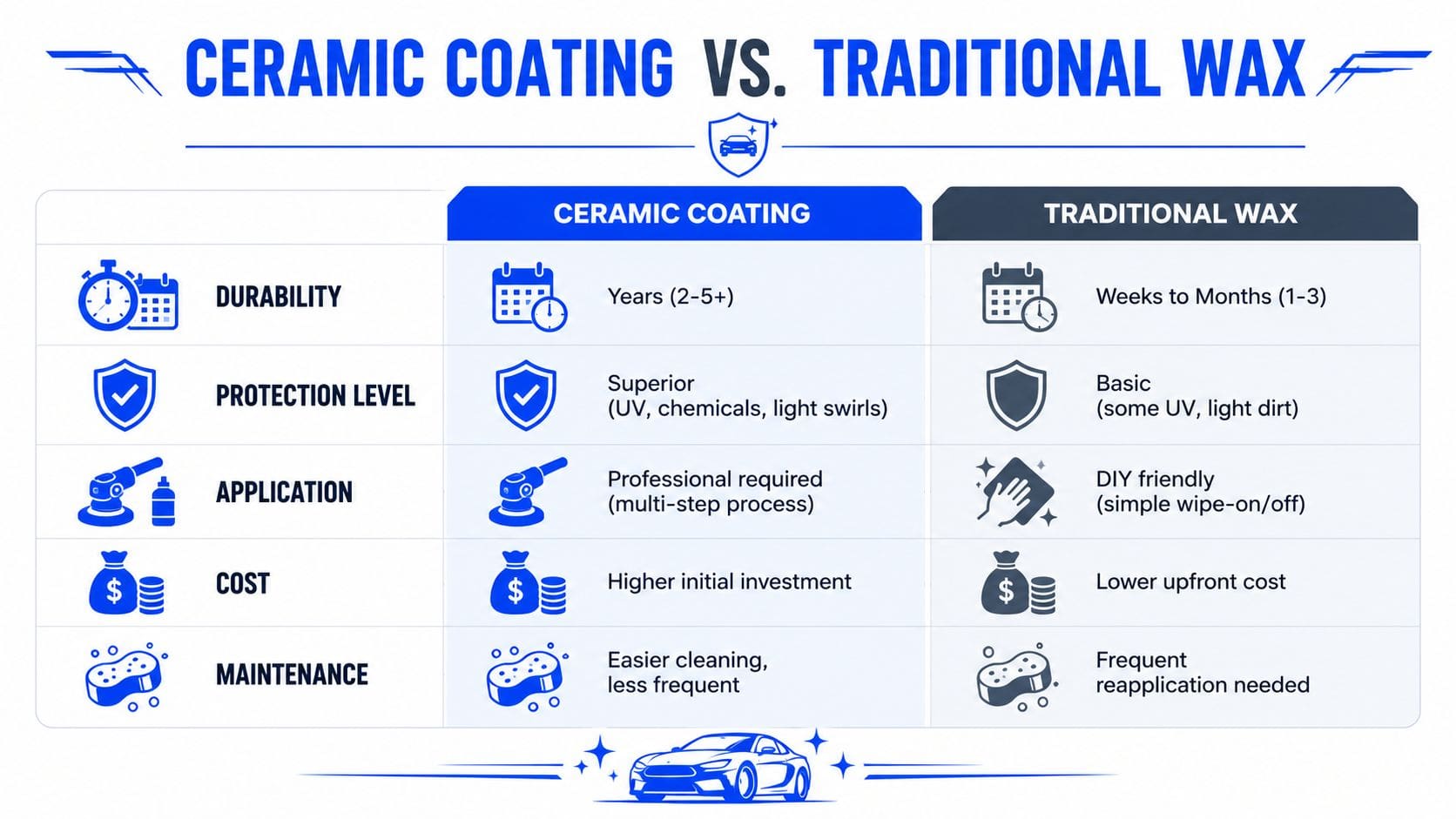
A professional coating forms a durable, semi-permanent chemical bond with the clear coat and typically lasts 1 to 5 years, while traditional wax sits on the surface and degrades within months, requiring more frequent reapplication, according to M&M Auto Detailing's comparison of ceramic coating and wax.
That difference changes the ownership experience.
Here's the straightforward comparison:
Durability
- Ceramic coating: Longer-term protection
- Wax: Short-lived protection that needs repeating
Resistance
- Ceramic coating: Better against contamination and weather exposure
- Wax: Modest help, but fades much sooner
Appearance retention
- Ceramic coating: Keeps the finish looking sharper longer
- Wax: Can look great, but drops off faster
Up-front cost
- Ceramic coating: Higher
- Wax: Lower
DIY friendliness
- Ceramic coating: Professional installation is the safer route for most owners
- Wax: Easy weekend project
If you enjoy detailing as a hobby, wax can still be satisfying. Some owners like the ritual and don't mind the recurring effort. There's nothing wrong with that.
For a broader side-by-side buyer comparison, ceramic coating vs wax is a helpful next read.
The maintenance paradox nobody explains well
This is the part most guides leave fuzzy. Ceramic coating reduces maintenance frequency, but it raises the importance of maintenance quality.
The “Maintenance Paradox” is simple: coatings often last 2–5 years and reduce washing frequency, but improper maintenance, such as harsh shampoos or skipped booster sprays, can weaken hydrophobic performance within 12–18 months, according to Feynlab's discussion of ceramic coating pros and cons.
That means a coated car still needs attention. Just different attention.
Common mistakes include:
- Using aggressive soaps that strip behavior you're trying to preserve
- Going through abrasive tunnel washes that dull the finish
- Ignoring topper or booster maintenance when recommended
- Letting contamination bake onto the surface because the owner assumes the coating will handle everything
A ceramic coating is low-maintenance compared with wax. It is not no-maintenance.
That's why the answer to “Is ceramic coating worth it?” depends partly on personality. If you want less upkeep but you're still willing to wash correctly, it's a strong fit. If you want to stop caring altogether, wax and coating will both disappoint you.
The Lionheart Process Our Commitment to Perfection
When people are new to ceramic coatings, the biggest mystery is the process. They see the glossy after photo but not the work that made it possible. The work is what matters.
A professional coating job at a Hilliard shop or from a properly equipped mobile setup starts long before the bottle is opened.
What happens before the coating bottle comes out
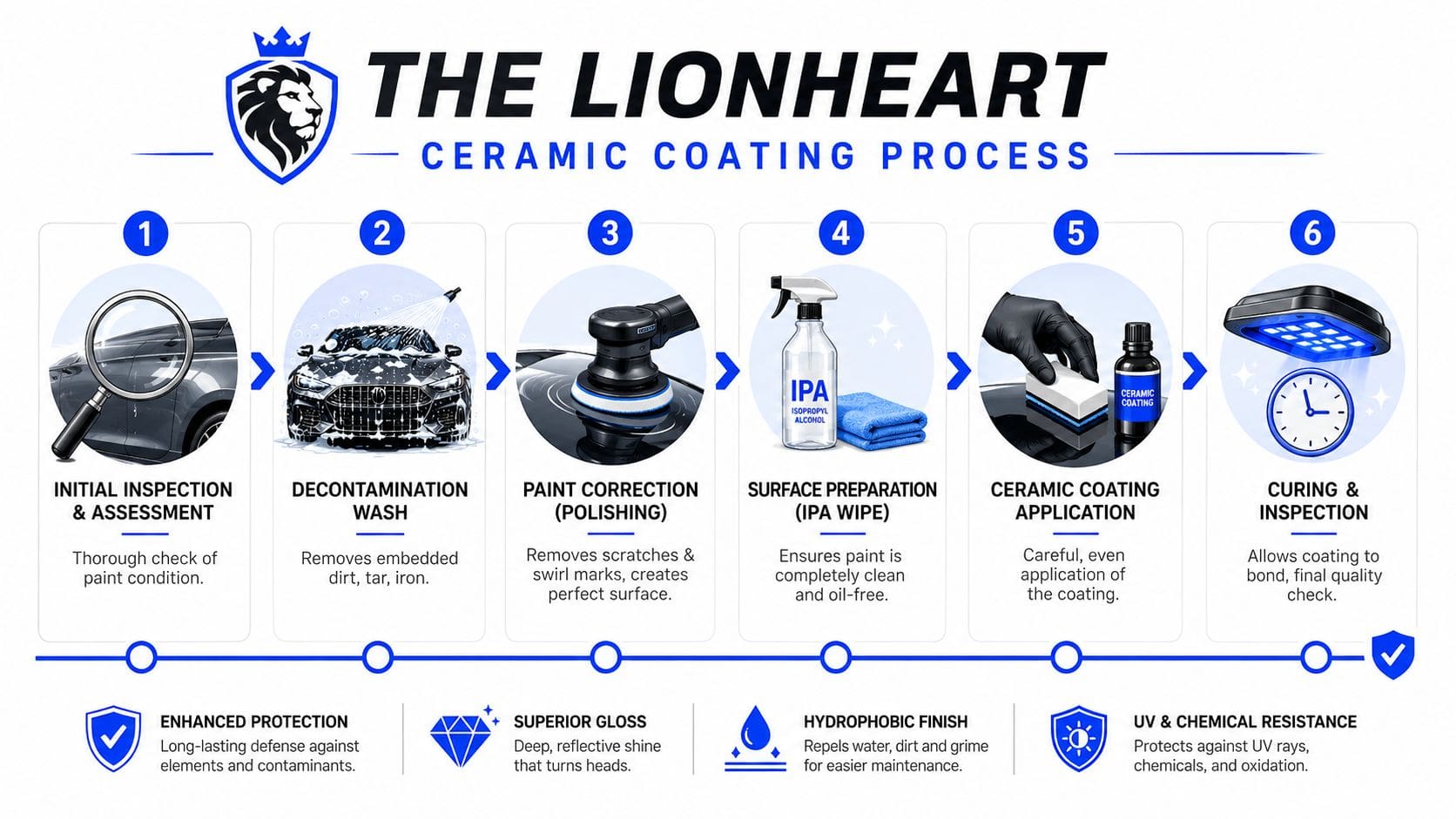
The process begins with inspection. Paint condition tells you everything about how the job needs to go. Swirls, wash marring, oxidation, and prior repairs all affect the plan.
Then comes the cleaning and decontamination stage. That usually means a thorough wash, chemical decontamination for embedded fallout, and mechanical decontamination where needed. If contamination stays on the surface, polishing gets compromised and bonding gets compromised.
After that, paint correction does the heavy lifting visually. This is the step many customers underestimate. If a vehicle has haze, light scratches, or swirl marks, polishing removes or reduces those defects so the coating goes onto a cleaner, sharper finish.
For readers looking at one local option, Lionheart Detailing works from a Hilliard shop at 4402 Weaver Court North, Suite 204 and also offers mobile service around the Columbus area with onboard water and power. That setup matters because it gives owners the choice between a controlled shop visit and on-site convenience, depending on the service.
A quick look at the process in motion helps make the workflow easier to picture:
Application, leveling, and curing
Once correction is done, the surface gets a final prep wipe to remove polishing oils. That leaves clean paint for the coating to bond to. Application itself is deliberate. The installer works panel by panel, watches flash times, levels the coating, and checks for high spots before they harden in place.
The environment matters too. Coating performance depends on proper application conditions. If temperature and humidity are off, the product can become harder to level correctly or fail early.
A careful process usually looks like this:
- Inspect the paint under strong lighting
- Wash and decontaminate thoroughly
- Correct the finish to the agreed level
- Strip remaining oils from the surface
- Apply and level the coating methodically
- Allow proper cure time and perform final inspection
Good ceramic coating work looks slow because it is slow.
That's not inefficiency. That's quality control. It's also why the finished car tends to look different from a quick “coating package” that skipped the hard parts.
Is a Ceramic Coating Worth It For You
A ceramic coating is usually worth it if you want easier upkeep, plan to keep the vehicle for a while, care about paint condition, and don't want to keep cycling through short-term protection. It also makes sense if your car lives outside, sees regular commuting, or gets exposed to the usual Ohio mix of salt, pollen, rain, and summer contamination.
It may not be the right move if the paint is already failing, if you want rock-chip protection more than easier washing, or if the up-front cost doesn't fit your budget right now. Some owners also enjoy waxing by hand. If that's you, wax isn't wrong. It's just a different commitment.
The simplest way to decide is to ask yourself a few honest questions:
- Do I want less work, or no work at all?
- Do I care about preserving the finish long-term?
- Am I willing to wash the car correctly after it's coated?
- Would PPF make more sense on the impact-prone areas I drive most?
If your answers lean toward protection, easier maintenance, and long-term ownership, ceramic coating is often a smart investment.
If you're weighing ceramic coating, Lionheart Detailing can help you sort through the options without the usual hype. If you want pricing clarity, guidance on ceramic coating vs. wax, or a plan that includes ceramic coating, paint protection film, or full Hilliard auto detailing, reach out and start with your vehicle, your goals, and how you use it.