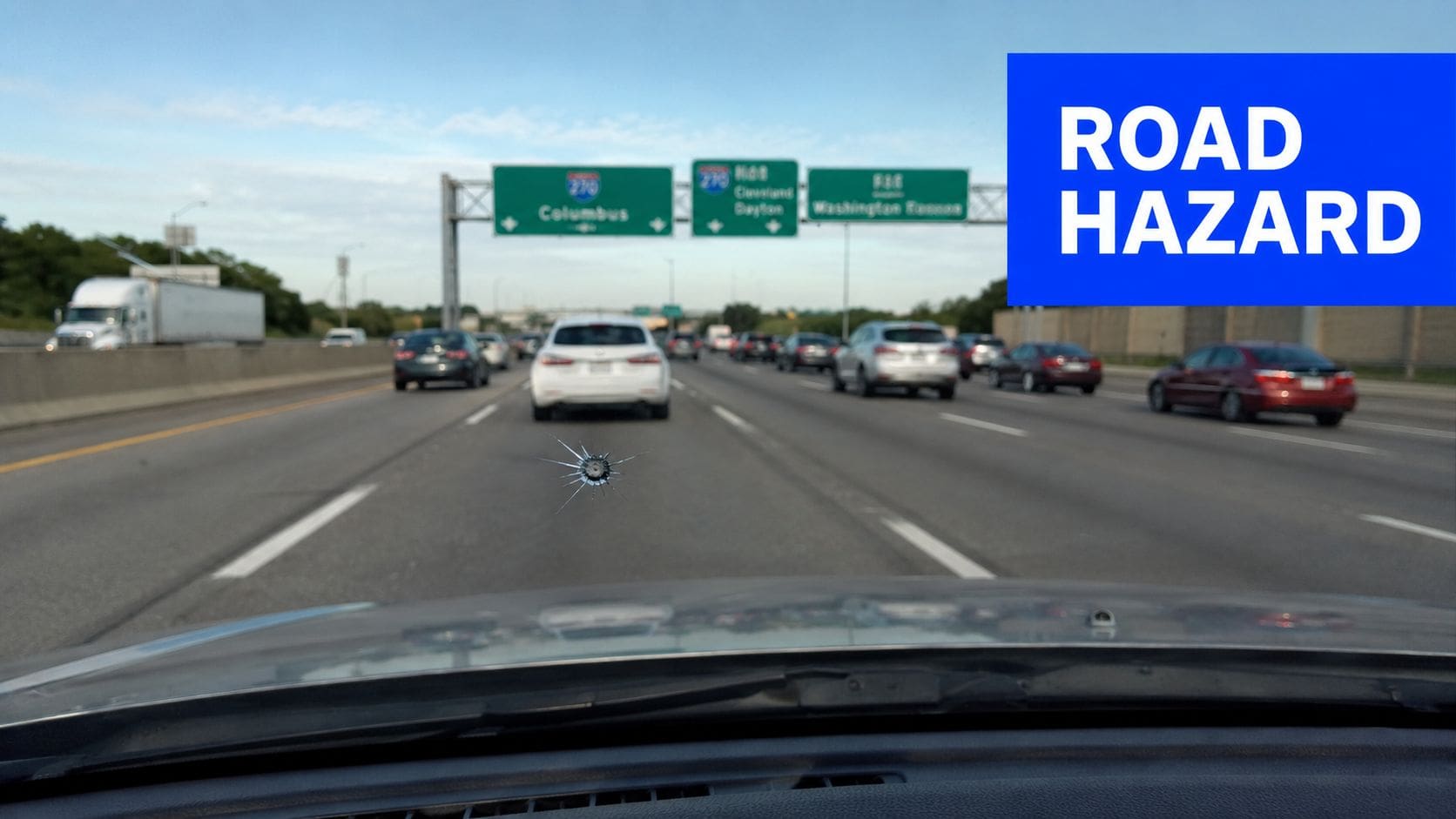
You're merging onto I-270, traffic is moving, and then you hear it. A sharp tick against the glass or paint. If you've just bought a newer vehicle, that sound can turn a good drive into a bad mood in about half a second.
Around Columbus, that worry is justified. Between highway construction, winter debris, salt residue, and trucks dropping loose gravel, Ohio roads are hard on paint. A lot of owners start by searching for ceramic coating near me, hoping there's a simple way to stop damage before it starts. That's a smart instinct, but it helps to know what ceramic coating can do, what it can't do, and where rock chip repair and prevention fit into the bigger picture.
Some chips are tiny and mostly cosmetic. Others break through the protective layers and expose the panel underneath. That difference matters. If you understand what you're looking at, you can make a calm decision instead of guessing.
This guide is written the same way I'd explain it to a first-time customer standing in the shop. Plain language. No inflated promises. Just what works for Columbus ceramic coating, rock chip prevention, and long-term paint care on Ohio roads.
If your main concern is impact protection, start by looking at paint protection film options in Columbus, Ohio. Ceramic coating helps in important ways, but rock impacts are a separate problem and need the right tool.
Table of Contents
- Introduction That Sickening Sound on I-270
- What Exactly Is a Rock Chip A Deeper Look
- How to Assess Rock Chip Severity on Your Car
- Comparing Your Repair Options DIY vs Professional
- The Best Defense Is a Good Offense Prevention Strategies
- Finding the Right Professional Help in Columbus
Introduction That Sickening Sound on I-270
That first impact usually happens when your guard is down. Maybe you just had the car washed. Maybe it's a new-to-you SUV and you've been babying it for a week. Then a dump truck changes lanes, a pebble kicks up, and you hear that snap against the front end.
Drivers often do the same thing next. They wait until they park, walk around the car, and stare at one tiny mark that suddenly feels huge. I get it. When you care about your vehicle, a rock chip feels personal because it breaks the clean, sharp finish you've been trying to keep.
For Columbus drivers, this isn't rare bad luck. It's part of local driving. I-270, 70, 71, and back roads in winter all expose your paint to loose debris. That's why searches for Columbus ceramic coating, Hilliard ceramic coating, and Columbus PPF keep growing. The need is real. People want protection that lasts and advice that isn't sugar-coated.
Practical rule: If your car sees highway driving in Ohio every week, paint damage prevention should be treated like routine maintenance, not a luxury add-on.
A lot of owners also get mixed messages. One shop says ceramic coating stops everything. A dealership says their coating package means you're covered. Another place promises a one-day turnaround that sounds easy and convenient. The problem is that those claims blur together very different services.
Ceramic coating helps with gloss, washing, contamination, and UV exposure. Paint protection film helps with physical impact in high-hit areas. Touch-up paint helps prevent exposed damage from getting worse. Each has a role. None replaces the others completely.
That's where people get frustrated. They buy the wrong solution for the wrong problem, then assume all detailing advice is sales talk. It doesn't have to be that way.
What Exactly Is a Rock Chip A Deeper Look
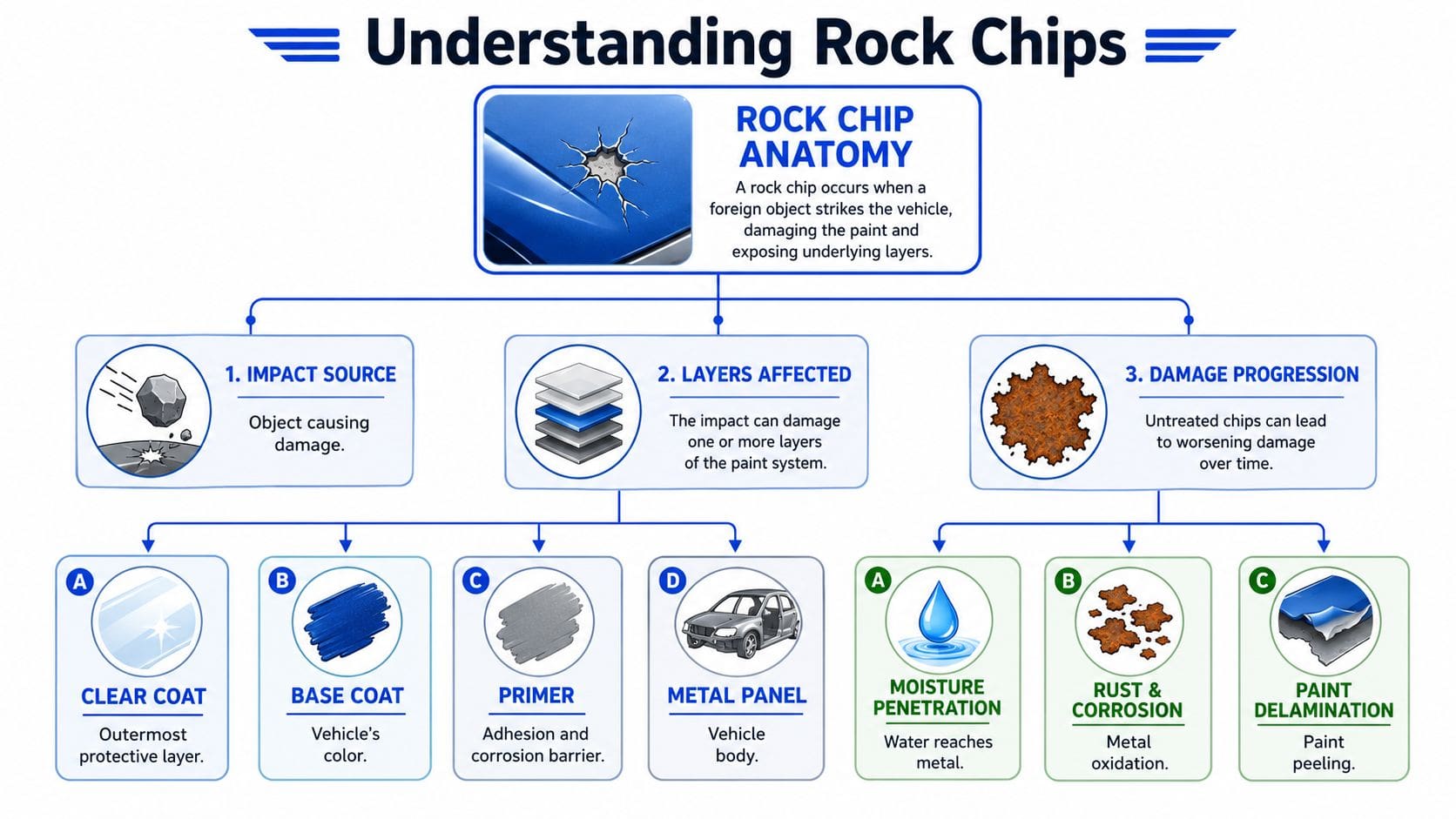
A rock chip isn't just a dot in the paint. It's damage to a layered surface system, and each layer has a job. Once you understand that, the repair choices make a lot more sense.
Your paint is a layered system
Think of your vehicle's finish like a stack.
- Clear coat sits on top. This is the transparent protective layer that gives paint much of its gloss.
- Base coat is the color you see.
- Primer helps the paint system stick and adds corrosion resistance.
- Metal panel or substrate sits underneath on many body panels.
When a stone hits hard enough, it can cut through one layer or several. A shallow nick may only mark the clear coat. A harsher strike can go deeper and expose lower layers. On a steel panel, that matters because moisture can eventually reach what should stay sealed.
A simple way to picture it is an eggshell. If the shell has a little crack, the inside is no longer protected the way it was before. Paint works the same way. Once the top barrier is broken, the system is more vulnerable.
A chip that looks tiny from standing height can still be deep enough to matter.
Common chip shapes you might see
Not every chip looks the same, and shape gives you clues.
Small pit
This is the most common one. It looks like a pinhead-sized dot or nick, often on the hood, bumper, or front edge of the fenders. These may be minor, or they may be deeper than they first appear.
Star shaped hit
This type has a center mark with tiny lines or fractured edges around it. It often happens when the impact is sharp and concentrated. It can look more dramatic than a pit and may spread visually over time if ignored.
Bullseye style mark
Some chips have a center impact with a circular edge around it. You see this description more often with glass damage, but paint can also show a rounded impact zone depending on how the object strikes.
Clustered peppering
This isn't one chip. It's a field of tiny impacts across the front end. If you drive a lot of highway miles, this pattern shows up on the hood and bumper first. It makes the whole front of the car look tired even when each individual chip is small.
Here's the part many new owners miss. A chip is not only a cosmetic issue. If a panel is exposed and stays exposed, water, road salt, and contamination can work their way into the damaged spot. In Ohio, that's the long-term concern.
How to Assess Rock Chip Severity on Your Car
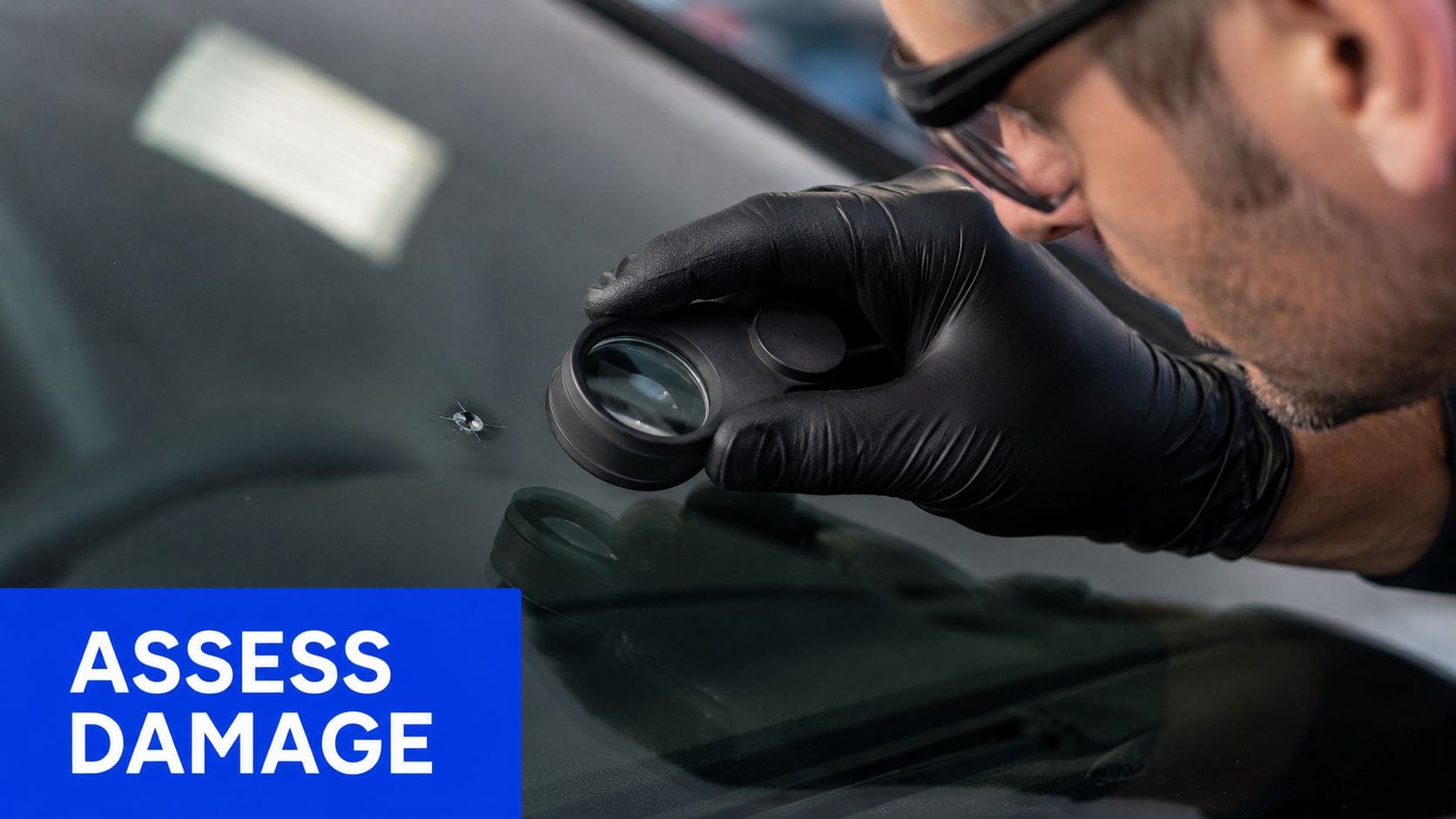
You don't need shop lights and a lift to do a useful first check. You can learn a lot in your own driveway with clean hands, decent daylight, and five minutes of patience.
A five minute driveway check
Start with a wash or at least a gentle rinse in the damaged area. Dirt can make a shallow mark look worse than it is.
Then go through this quick checklist:
- Look at it in natural light. Step close, then step back. Some marks are obvious only from one angle.
- Check the location. A chip on a steel hood deserves more attention than a similar mark on a plastic bumper cover.
- Do the fingernail test. Lightly drag a clean fingernail across the spot. If your nail catches sharply, the damage is usually deeper than a light surface blemish.
- Look for color contrast. If the spot looks white, gray, or dark compared with the surrounding paint, it may have gone through upper layers.
- Inspect the edges. Jagged or lifted edges can mean the area is less stable than a smooth, clean nick.
If you find several chips in the same area, don't judge them one by one only. Look at the panel as a whole. A hood with scattered damage may need a different plan than a single isolated chip on a door.
When to stop guessing and get help
Some situations deserve prompt attention.
- Bare material visible means the damage has gone beyond a simple top-layer nick.
- Fast-growing stain or discoloration around the spot can signal moisture problems.
- Large front-end peppering may make spot repairs less practical than broader protection planning.
- Glass impact should be handled differently from paint impact, especially if it begins to spread.
If you can see the damage clearly from a normal standing position, it's worth getting a real opinion instead of waiting through another Ohio winter.
One more thing people often miss. A bumper and a hood don't behave the same way. Many bumpers are plastic, so the urgency is different than exposed damage on steel. That doesn't mean ignore bumper chips. It means prioritize based on risk, not just appearance.
This kind of check helps you decide whether you need quick touch-up protection, a more refined repair, or a prevention plan like Hilliard paint protection film or Columbus PPF for the areas that take the beating.
Comparing Your Repair Options DIY vs Professional
Most car owners want the same answer here. What's the smartest fix without wasting money? The honest answer depends on how much you care about appearance, how deep the chip is, and whether your goal is protection, looks, or both.
What DIY touch up does well
DIY touch-up paint has a place. It's not glamorous, but it can be useful.
If you have a small chip and your top priority is stopping exposure, a touch-up pen or bottle can cover the damaged spot and reduce the chance that the area gets worse. For a daily driver, that may be enough.
The downside is appearance. Most DIY repairs leave a tiny raised spot or blob. From a few feet away it might be acceptable. Up close, it rarely disappears. That's normal, not user failure.
DIY works best when you accept this tradeoff:
- Lower cost
- Fast protection
- Modest cosmetic result
It works worst when someone expects body-shop visuals from a driveway repair.
What a professional can do differently
A professional detailer or paint specialist has more options, but it helps to separate them clearly.
Paint correction removes swirls, haze, and lighter surface defects by polishing the clear coat. It does not rebuild missing paint inside a deep chip. That's a common misunderstanding with first-time ceramic coating buyers. If paint is gone, polishing alone won't replace it.
Spot touch-up and leveling can improve certain chips more cleanly than DIY. The result depends on color, chip depth, panel location, and how perfectionist you are.
Spot blending or repaint work is the more serious path when the damage is larger, obvious, or spread across an area where appearance matters a lot.
Here's where ceramic coating fits in. It's not a repair method for missing paint. It's a protection step after the surface is brought to the condition you want to preserve. Also, it's worth staying realistic about longevity. The effective life of most commercially available ceramic coatings in outdoor environments is 2 to 4 years, and self-cleaning and gloss enhancement decline after that, even if the coating remains chemically bonded, according to this discussion of real-world ceramic coating lifespan. That's why I tell people to treat ceramic coating like a strong maintenance and protection upgrade, not permanent magic.
If you want a plain-English breakdown of wax, sealants, coatings, and film, this comparison of wax vs sealant vs ceramic vs PPF helps sort out what each product does.
Rock Chip Repair Method Comparison
| Method | Average Cost | Time Required | Appearance Result | Protection Level |
|---|---|---|---|---|
| DIY touch-up pen or bottle | Lower than professional repair | Usually short | Acceptable from a distance, often noticeable up close | Basic coverage for the damaged spot |
| Professional touch-up and refinement | Higher than DIY | Moderate | Cleaner and more controlled than DIY, but not always invisible | Better protection with improved finish |
| Spot blending or repaint work | Highest of the three | Longer | Strongest cosmetic result when done well | Restores finish in the repaired area |
| Ceramic coating after repair | Varies by service | Added installation time | Improves gloss and surface behavior, does not fill missing paint | Helps with upkeep, contamination, and UV, not direct chip repair |
Good repair decisions come from matching the method to the defect. Small chip, practical goal, daily driver. DIY may be fine. High-visibility panel, darker color, owner wants cleaner cosmetics. Professional work usually makes more sense.
If you're new to this, here's the short version. DIY is for protection on a budget. Professional work is for a cleaner finish. Ceramic coating is for preserving the corrected surface afterward, not for pretending the chip never happened.
The Best Defense Is a Good Offense Prevention Strategies
Repair matters, but prevention saves more frustration. Once a car has a few chips, most owners start thinking differently. They stop asking, “How do I fix this one mark?” and start asking, “How do I keep this from happening again?”
That's the right shift.
PPF is the shield
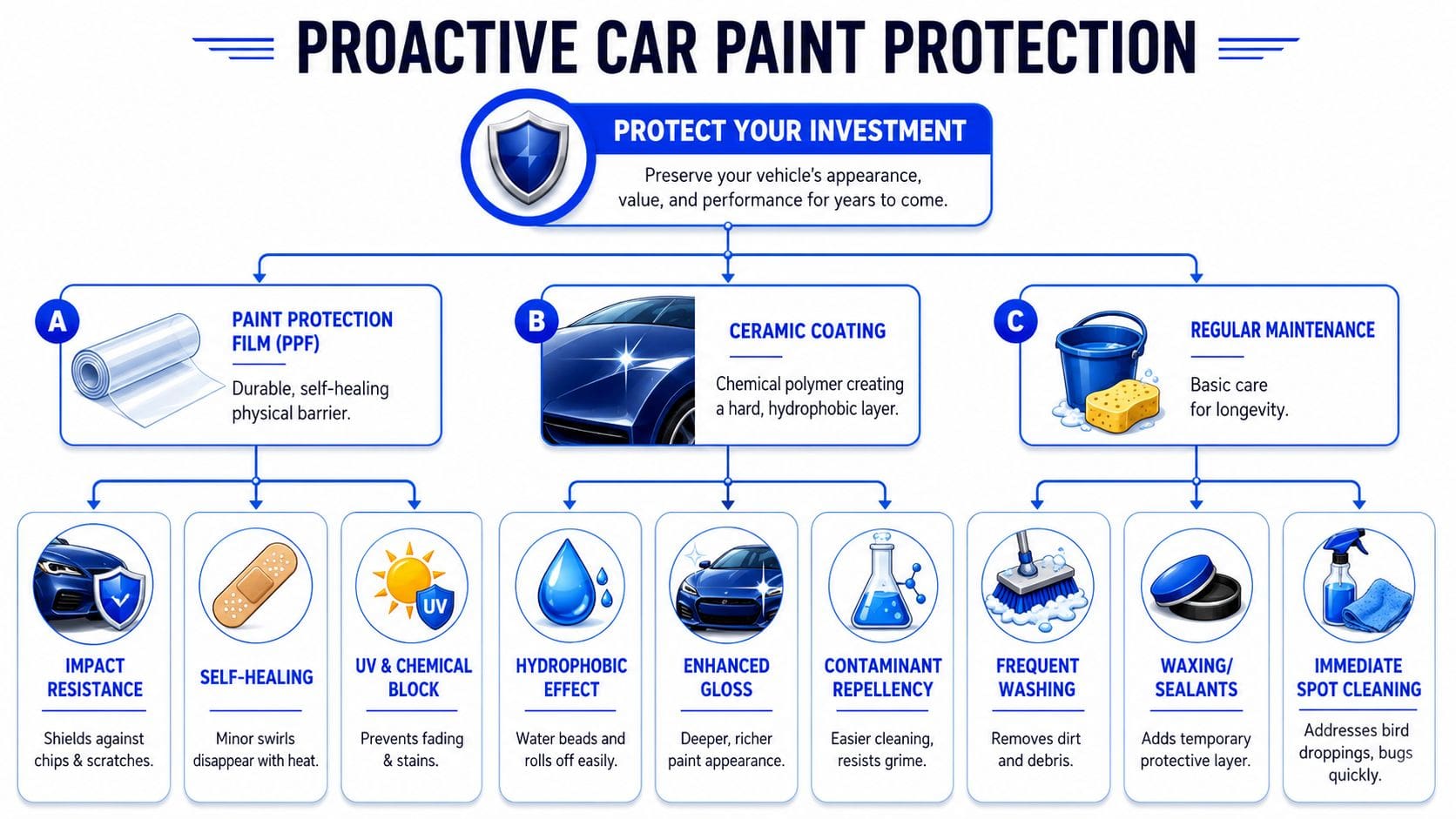
If rock chips are your main fear, paint protection film is the direct answer. It's a physical barrier placed over vulnerable painted surfaces. Hood edges, full hoods, bumpers, mirror caps, fenders, and rocker areas are common targets because that's where road debris hits first.
I explain PPF like a screen protector for your phone, except much tougher and fitted to the car. It takes the hit so the paint underneath has a better chance of staying untouched.
For Columbus PPF and Hilliard paint protection film shoppers, the key mindset is simple. Film is for impact protection. If your car lives on highways, film belongs in the conversation early.
Ceramic coating is the armor for daily use
Ceramic coating plays a different role, and it's still valuable.
Professional-grade ceramic coatings chemically bond with the vehicle's clear coat through functional groups that react with hydroxyl groups on the paint surface, forming a cross-linked polymer network embedded within the clear coat's matrix rather than sitting atop the surface like wax or sealants, as explained in this overview of how ceramic coating bonds to paint.
That sounds technical, so here's the plain version. Wax sits on top like a temporary layer. A real coating integrates with the surface more thoroughly. That's why it behaves differently when it's installed correctly.
What that usually means for the owner:
- Washing gets easier because grime doesn't stick as aggressively.
- Water behavior improves because the surface is more hydrophobic.
- Gloss stays sharper when the car is maintained properly.
- UV and contamination resistance improve compared with an unprotected finish.
The global ceramic coatings market was valued at USD 1.96 billion in 2018 and is projected to reach USD 3.32 billion by 2026, with a 7.1% CAGR, driven largely by automotive demand, according to Fortune Business Insights on the ceramic coatings market. That growth makes sense from what I see in the shop. More owners now understand that easy maintenance and long-term appearance matter, especially for vehicles exposed to Ohio weather.
The combo that makes sense for Ohio roads
For many daily drivers in Central Ohio, the smartest setup isn't choosing PPF or ceramic coating. It's using each where it makes sense.
A practical strategy looks like this:
- High-impact zones get film. Front bumper, hood, mirrors, and sometimes rocker panels.
- The rest gets coated. This makes routine washing easier and helps keep the finish cleaner.
- Maintenance stays gentle. Good washing habits preserve both systems.
That combination is often the most balanced answer for someone searching ceramic coating Columbus Ohio, Hilliard ceramic coating, or ceramic coating near me but also worried about physical chip damage.
One local option for this kind of work is Lionheart Auto Detailing & Protection, which provides ceramic coating, paint protection film, and detailing services in the Columbus area. The important part isn't the brand name of the shop. It's whether the installer explains the limits and matches the service to how you drive.
Here are a few low-cost habits that also help:
- Back off from gravel trucks. Distance won't eliminate risk, but it reduces obvious impact exposure.
- Wash off salt and grime sooner. Contaminants sitting in damaged areas make life harder on paint.
- Clean bird droppings and bug remains quickly. These aren't rock chips, but they do attack already stressed surfaces.
- Inspect your front end seasonally. Small problems are easier to manage early.
The best protection plan is boring in the right way. It prevents drama instead of reacting to it.
Finding the Right Professional Help in Columbus
Choosing a shop around Columbus isn't only about price. It's about whether the person talking to you is honest about limits, process, and tradeoffs. That matters a lot with ceramic coating because this is one of the most overhyped services in car care.
Why dealership coating pitches confuse buyers
A lot of new car owners hear about ceramic coating for the first time in the finance office. It sounds easy. Add a package, roll the cost into the purchase, and leave thinking the paint is handled.
That simplicity is exactly why people get misled.
Data from Lionheart Detailing's own exposé shows that dealerships charge $1,500 to $2,500 extra for coatings that are often single-layer, non-hydrophobic sealants with no durability, while professional-grade ceramic coatings use multi-layer, cross-linked formulas with 5 to 10 year warranties and true hydrophobicity, as detailed in this dealership coating breakdown on Instagram.
That doesn't mean every dealership package is worthless. It means you should ask harder questions. What product is being installed? Who installs it? Is the paint corrected first? What are the maintenance expectations? What exactly is covered?
If those answers get fuzzy, walk carefully.
Why one day coating offers deserve a hard look
The other local trap is speed-based marketing. A one-day ceramic coating package sounds convenient, especially if you commute or can't leave the car for long. But coatings aren't just wipe-on shine products. Surface prep and curing matter.
A rushed coating can look nice at pickup and still disappoint later. When someone sells speed first and process second, that's a red flag. With high-end paint protection, convenience should never outrank prep quality.
What local owners should look for instead
If you're shopping Hilliard auto detailing or Columbus ceramic coating services, look for signs that the installer understands both the chemistry and the conditions of Ohio driving.
Good questions to ask include:
- How is the paint prepped before coating?
- Is paint correction discussed, or are they pretending coating hides defects?
- Where is the work performed? Controlled indoor work matters for precision services.
- Do they also offer PPF? Shops that understand both are usually less likely to oversell coating as an impact solution.
- How do they explain maintenance? Honest shops don't act like you'll never wash the car again.
For local research, this guide to finding top ceramic car coating in Columbus, Ohio is a useful place to compare how shops explain their process.
In practical terms, Columbus-area owners often need two kinds of help. Mobile service is convenient for maintenance detailing and some on-site work. A dedicated indoor shop is the better setting for precision services like ceramic coating and film installation. In Hilliard, that distinction matters because the work environment affects the result.
If you're protecting a newer vehicle, especially a dark-colored one or something that sees regular highway miles, don't buy based on the shortest promise or the slickest sales pitch. Buy based on prep, honesty, and whether the service matches the problem you're trying to solve.
If you want a straightforward opinion on ceramic coating, Columbus PPF, Hilliard ceramic coating, or general paint protection for Ohio roads, reach out to Lionheart Detailing. A good shop should help you sort out what needs repair, what needs protection, and what isn't worth spending money on.