You bought a truck because you wanted something practical, durable, and ready for Ohio driving. Then real life starts showing up on the paint. A few days on I-270, one winter run through salt and slush, or a couple of miles on rough side roads around Hilliard or Grove City, and you start hearing grit strike the lower body. That is usually when truck owners start looking into a better protection plan.
A lot of online advice makes this sound simpler than it is. Some products help with cleanup. Some protect against direct impact. Some sound impressive in a sales pitch but do very little for the painted areas that actually take abuse. If you are researching truck ceramic coating in Columbus, truck PPF in Columbus, or just trying to figure out what makes sense for your daily driver or work truck, you are asking the right question.
For most truck owners in Central Ohio, the smartest protection plan starts with the paint itself. That usually means paint protection film (PPF) on the areas that take the most impact and ceramic coating for easier maintenance, better washability, and added resistance to road grime and environmental contamination.
Protecting Your Truck Is an Investment Not Just an Accessory
A Truck Owner's Checklist for Fender Protection in Columbus
How rust starts behind the flare
The Hidden Risk Trapped Moisture and Fender Rust
My honest material advice for most owners
Ohio fitment matters more than people think
Fender Protector Material Comparison
Material changes how the truck lives day to day
Choosing the Right Protector Material A Pro's Breakdown
What beginners often misunderstand
Fender flares add physical coverage
Fender Flares vs PPF What Is the Difference
What Columbus roads do to truck fenders
Why Every Columbus Truck Owner Needs Fender Protection
DIY vs Professional Installation What Truck Owners Must Know
How corrosion starts around truck wheel openings
The lower body matters more than people think
What Columbus roads do to truck fenders and lower panels
Table of Contents
- Why Columbus Truck Owners Need Paint Protection Early
- PPF vs Ceramic Coating for Trucks
- Where Trucks Need Protection Most
- Choosing the Right Protection Strategy in Ohio
- DIY vs Professional Installation for Truck Protection
- The Hidden Risk of Moisture, Salt, and Neglected Lower Panels
- A Columbus Truck Owner's Checklist for PPF and Ceramic Coating
- Protecting Your Truck Is an Investment, Not Just a Detail Service
Why Columbus Truck Owners Need Paint Protection Early
A new truck owner in Columbus usually learns this fast. The truck looks perfect in the driveway. Then one week of commuting, one rainy day, or one stretch of construction traffic changes the story. Debris gets kicked up, grime sticks to the lower panels, and the paint around the front end, rocker panels, doors, and bed sides starts taking abuse before the rest of the truck shows it.
That is why paint protection matters so much here. Central Ohio throws a rough mix at trucks. Highway gravel, winter salt, standing water, mud, and road film all collect around the lower body. If your truck sees daily driving, job sites, towing, or even regular hardware store runs, the finish starts wearing in the same predictable places.
This is not a niche concern. The Global Fender Cover market was valued at $2.1 billion in 2025 and is projected to reach $3.1 billion by 2034, according to Market Intelo's fender cover market report. That larger growth trend reflects how much more attention vehicle owners are paying to preservation, appearance, and aftermarket protection.
What Columbus roads do to truck paint
Most owners think of one problem, rock chips. In practice, the damage usually comes in layers.
- Stone impact: Small chips on the front end, lower doors, rocker areas, and bedside.
- Road spray: Dirty water carries grit that slowly scours the finish.
- Salt exposure: Winter residue sits in seams, lower edges, and behind wheel openings.
- Wash marring: Dirty lower panels get rubbed during rushed or improper washing.
Practical rule: The first damage on a truck usually does not happen on the roof or upper body. It happens lower, where the truck throws road grime back onto itself.
If you are already researching ceramic coating options in Columbus for long-term paint protection, that is a smart place to start. Just know ceramic coating and PPF solve different problems. Coatings help with cleanup and contamination. PPF helps with direct impact where the truck gets hit every day.
Why waiting usually costs more
The biggest mistake I see from truck owners is waiting until the damage is obvious. By then, you are no longer preserving the finish. You are trying to manage deterioration.
Good protection helps preserve appearance, but it also helps maintain resale condition and saves you from watching a newer truck age faster than it should. The best setup depends on how you drive, what you want the truck to look like long term, and whether you care more about impact resistance, easier cleaning, or both.
PPF vs Ceramic Coating for Trucks
Most truck owners comparing protection end up looking at two products that work very differently. Paint protection film, usually called PPF, and ceramic coating can both improve how a truck holds up, but they are not interchangeable.
One is a physical sacrificial layer that protects painted panels from impact. The other is a surface treatment that improves washability and helps contamination release more easily.
What PPF actually does
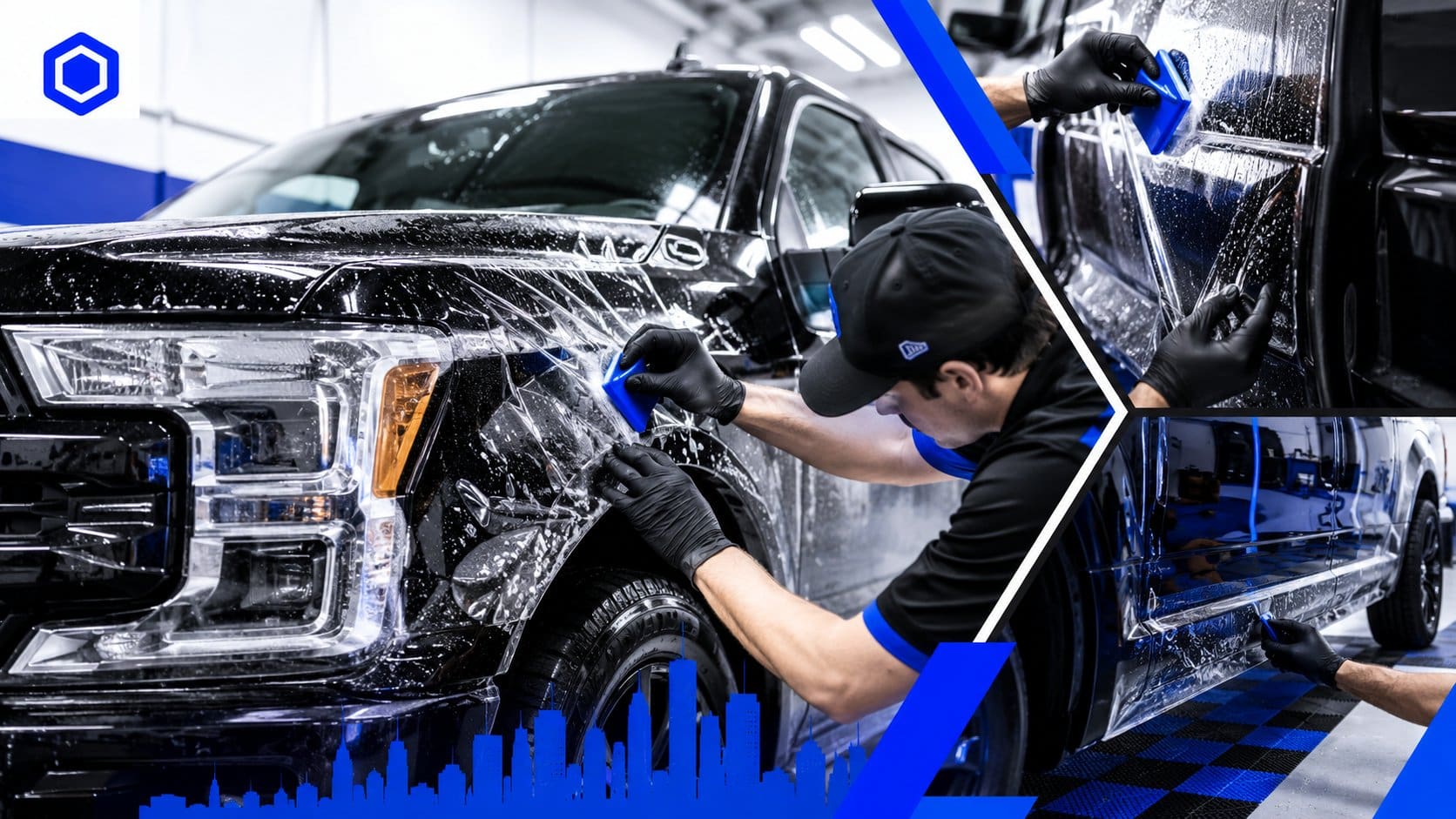
PPF is a clear film applied directly to painted panels. On a truck, it acts like a sacrificial layer between the paint and the road. It helps protect the factory finish while keeping the truck's original look.
For owners who care about appearance, this is usually the cleanest solution. A good Columbus PPF installation protects vulnerable paint without changing body lines or making the truck look modified. If your goal is to keep a newer truck looking stock and well-kept, paint protection film services in Columbus are often the right fit.
What ceramic coating actually does
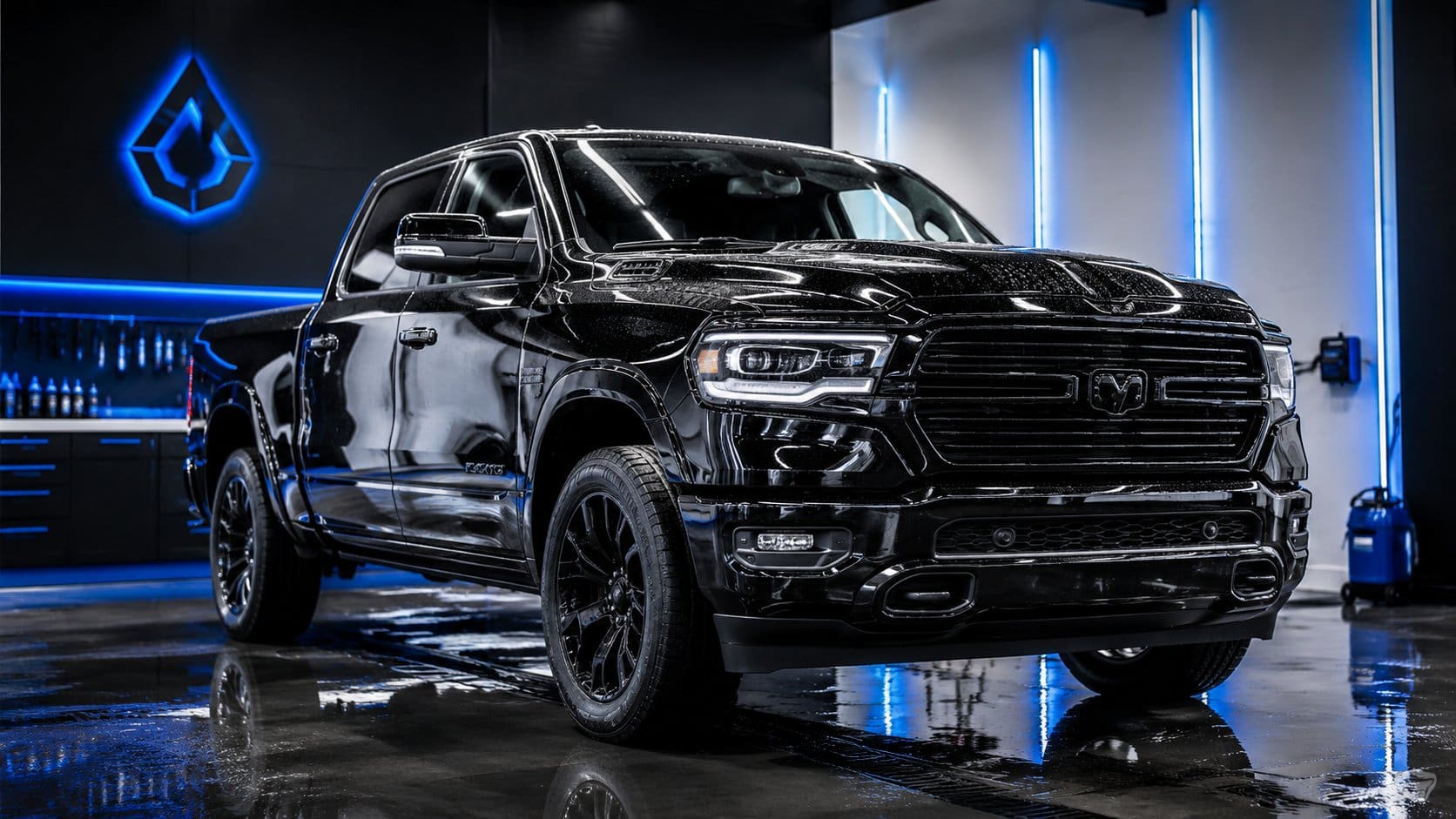
Ceramic coating is not a rock chip solution. It does not stop every impact, and it should never be sold as a replacement for film in high-hit areas. What it does very well is make the truck easier to clean, reduce how strongly grime and road film stick, and add a durable barrier against environmental contamination.
For truck owners in Ohio, that matters. Salt, dirty water, bug residue, and traffic film are just part of normal driving here. A quality coating helps those contaminants release more easily during maintenance, which reduces the need for aggressive scrubbing and lowers the chance of avoidable wash damage.
Which one makes sense for your truck
The right answer depends on how the truck is used.
If your main concern is visible chipping on the front end, lower doors, rocker panels, and bed sides, PPF usually makes more sense. If your truck is mostly a daily driver and you want easier maintenance, better gloss retention, and less hassle washing through Ohio seasons, ceramic coating usually makes more sense.
Here is the practical breakdown:
- Choose PPF when your main goal is preserving factory paint in high-impact zones.
- Choose ceramic coating when your main goal is easier cleaning, improved gloss, and better resistance to grime and environmental fallout.
- Consider both when you want impact protection where the truck gets hit most and easier maintenance on the rest of the vehicle.
Why many truck owners combine both
For many truck owners, the best answer is not one or the other. It is a layered strategy.
PPF works best on the areas that take repeated abuse, such as the front end, front fenders, rocker panels, lower doors, and lower bed sides. Ceramic coating then helps on top of exposed painted areas, wheels, glass, and trim by making routine cleanup easier and helping the truck stay cleaner between washes.
If you are comparing protective options more broadly, this wax vs sealant vs ceramic vs PPF guide gives a useful breakdown of where each product fits.
Simple truth: PPF is for taking hits. Ceramic coating is for making ownership easier. When truck owners confuse those roles, they usually buy the wrong thing first.
Where Trucks Need Protection Most
Truck protection works best when it follows the actual damage pattern. Too many owners protect broad, obvious areas and ignore the spots that get hammered every day.
High-impact zones truck owners overlook
The most vulnerable truck areas often include:
- The front bumper and leading edge of the hood
- The lower front fenders
- Rocker panels and lower doors
- The lower bed sides behind the wheels
- Mirror caps and A-pillars on highway-driven trucks
- Painted areas near step access and cargo contact points
These are the places where road debris, tire-thrown grit, and repeated contact do the most damage. If your budget is limited, protecting the highest-impact zones first usually makes more sense than spreading a lighter solution over everything.
Why lower panels matter so much in Ohio
Most truck owners obsess over the hood and front bumper. Those matter, but the lower body often tells the real ownership story. That is where you see peppered paint, dulling from repeated contamination, and wear that makes a newer truck look tired faster than it should.
That is also why owners searching for truck ceramic coating in Columbus should think beyond gloss. On a truck, the lower half often needs the most realistic protection plan.
Choosing the Right Protection Strategy in Ohio
Product choice matters more than most owners think. It affects durability, maintenance, appearance, and how the truck ages after a few seasons in Ohio.
Daily drivers and newer trucks
If you drive a newer truck around Columbus, Dublin, Hilliard, or Upper Arlington and care about keeping it looking clean, PPF is usually the smartest route for the front end and lower impact areas. Ceramic coating then makes sense across the rest of the truck for easier maintenance and a cleaner finish.
This approach works especially well for trucks that see highway miles, suburban commuting, parking lots, and seasonal weather. It preserves the factory look without changing the truck's appearance.
Work trucks and hard-use trucks
Work trucks need a protection plan that matches how they are actually used. If your truck sees gravel lots, construction entrances, muddy routes, tool loading, and frequent washing, the goal is not perfection. The goal is reducing the kind of wear that makes a hard-working truck look beat up sooner than necessary.
For most hard-use trucks, that means putting PPF only where repeated damage is most likely, such as the front bumper, leading hood edge, lower fenders, rocker panels, and lower bed sides. Those are the zones that usually take the worst abuse from stone impact, boot contact, and road spray. Ceramic coating can still be valuable on the rest of the truck because it helps mud, salt, and traffic film wash off with less effort.
This approach keeps the budget focused on the areas that matter most. A work truck usually does not need every painted surface wrapped to get real benefit. It needs a smart combination of impact protection in the highest-wear areas and easier maintenance everywhere else.
Related professional considerations still come up around vehicle protection and equipment. Industrial contact materials are one example, as shown on Calderon Textiles' product page. Equipment rules can also matter in some truck-use scenarios, as outlined in Ohio Revised Code 5577.11.
My honest advice for most Columbus owners
If you care about keeping your truck looking newer for longer, start with PPF on the high-impact areas. Then add ceramic coating if you want easier maintenance and a better day-to-day ownership experience.
If you skip film and only coat a truck that sees heavy highway or gravel exposure, do not be surprised if the coating still leaves you with chips where the truck gets hit hardest. If you install film but neglect washing and seasonal decontamination, do not be surprised if the lower body still starts looking tired. Product choice matters, but maintenance still decides the long-term result.
DIY vs Professional Installation for Truck Protection
DIY protection kits are appealing for one reason. They look easy. Clean the truck, line things up, stick the material down, and save labor money. That is the pitch.
The problem is that poor installation creates the exact issues truck owners are trying to avoid.
What DIY videos leave out
Surface prep has to be right. Not decent. Right.
For adhesive-backed trim, the surface should be cleaned with a mix of isopropyl alcohol and water, an adhesion promoter should be applied one inch from the edge, and the tape needs 72 hours for full cure, according to Trim-Lok's installation guidance. If you rush that timeline, wash the truck too soon, or expose it to bad conditions before cure, you can weaken the bond before the product ever has a fair chance.
Home installation advice also commonly recommends washing thoroughly with soap and water, removing wax or residue with isopropyl alcohol or degreaser, and letting taped components sit indoors for 12 to 24 hours after installation, based on Maple 4×4's home installation guidance. Painted components may also need 24 to 48 hours of cure time before install depending on conditions, as noted in RealTruck's truck installation guide.
That is already more prep and patience than most DIY jobs get.
Where home installs usually go wrong
The mistakes usually are not dramatic. They are small, and that is what makes them expensive.
- Dirty edges: Leftover wax, polishing oils, or road film stop proper prep.
- Misalignment: Poor placement leaves edges visible, vulnerable, or short-lived.
- Rushed prep: Contamination left in the paint interferes with bonding and finish quality.
- Rushed cure: The truck gets driven, washed, or parked outside before the product has settled.
- Wrong expectations: Owners expect a coating to stop rock damage or expect budget film to perform like premium material.
If the surface is not properly corrected, cleaned, and installed, the job is not almost correct. It is incorrect.
A lot of truck owners can physically apply a product. Fewer can install it in a way that protects the paint long term.
Why professional installation changes the outcome
A proper install starts before any product touches the truck. The panel needs to be washed, decontaminated, and evaluated for defects. The protection plan has to match the truck's real impact zones. Film patterns have to fit cleanly, and coating prep has to remove the residues that shorten durability.
Professional installation is less about convenience and more about risk control. That matters if you care about resale value, clean edges, long-term appearance, and not paying twice because the first job failed.
For truck owners searching for truck detailing in Hilliard, truck PPF in Columbus, or a reputable local protection shop, experience matters. Good installation does not just look cleaner on day one. It prevents the headaches that show up later.
The Hidden Risk of Moisture, Salt, and Neglected Lower Panels
This is the part most marketing leaves out. Even the right product cannot save a truck from neglect.
That matters a lot in Ohio, where water, salt, and road grime hang around for months.
How corrosion starts around wheel openings and seams
The pattern is simple. Debris builds up around the wheel openings and lower seams. That contamination stays damp. Salt sits on the surface longer than it should. The paint weakens, and corrosion starts where owners often do not inspect closely enough.
A detailing industry expert from Steel City Undercoating puts it plainly. Many aftermarket accessories “will just hold the moisture in and further rust the truck,” as shown in their video warning about trapped moisture.
That warning lines up with what detailers and body shops see in practice. Owners often assume the truck is protected because the visible outer surface looks fine. Meanwhile, dirt and salt are steadily attacking the lower body and wheel opening areas.
Rust near the wheel opening is expensive because you usually do not find it early. You find it when the paint starts bubbling, the edge stains, or corrosion is already established.
What actually helps prevent it
There are better ways to handle this.
Regular washing through winter, proper decontamination in spring, and protecting vulnerable painted areas with the right products all help. If your priority is preserving the painted panel itself, PPF has a major advantage in high-impact zones because it directly protects the paint where the abuse happens. Ceramic coating also helps by making grime easier to remove before it sits too long.
A careful installer can also use contact-surface protection methods and seam-management practices to reduce trapped contamination, as described in this Ram truck forum discussion on rust prevention. The larger point is simple. Hidden contamination is the enemy, and every protection strategy should account for it.
A Columbus Truck Owner's Checklist for PPF and Ceramic Coating
By the time most owners reach this point, the right answer is already getting clearer. This checklist helps you sort through the decision without getting distracted by marketing photos or exaggerated claims.
Use this before you buy anything
-
How do you actually drive the truck? A highway commuter usually needs impact-focused protection in specific zones more than a one-size-fits-all package.
-
What are you trying to protect against? If your biggest concern is rock chips on visible paint, think differently than someone whose main frustration is winter grime and hard-to-clean lower panels.
-
Do you want visible change or factory appearance? PPF and ceramic coating let you protect the truck while keeping the stock look.
-
What does your maintenance routine look like? If you will not clean lower panels, inspect wheel openings, or stay on top of winter contamination, no product will fully make up for neglect.
Buyer check: The best product on the wrong truck becomes the wrong product.
A quick reality check before installation day
Ask yourself these questions thoughtfully.
- Where does your truck actually take the most abuse? Good protection follows the real impact pattern.
- Are you prepared to do proper prep and wait through cure time? Most failures start with rushing.
- Are you choosing PPF, ceramic coating, or both for the right reasons? They solve different problems.
- Have you considered moisture risk, not just chip protection? Many owners overlook this.
- Have you researched installer reputation in Columbus? Workmanship matters as much as product choice.
- Will this setup help you keep the truck longer and in better condition? That is the standard that matters.
If you can answer those questions without guessing, you are in good shape. If not, pause before you buy.
Protecting Your Truck Is an Investment, Not Just a Detail Service
Good truck protection does more than make a vehicle look finished. It protects paint, reduces abuse in high-impact areas, and helps you avoid preventable wear that drags down the truck's condition over time.
For some owners, that means targeted PPF. For others, it means ceramic coating. For many, the best answer is combining both in the right places. The wrong choice usually comes from expecting one product to do every job.
The biggest point I would leave any truck owner with is this. Protection products do not automatically protect. Correct product selection, clean installation, and long-term maintenance are what decide whether your investment actually pays off.
That is especially true in Central Ohio. Salt, water, and road grime do not care how expensive the service was. If the lower body stays dirty, if impact zones are left exposed, or if the truck is maintained poorly after installation, the truck pays for it later.
Treat truck paint protection the same way you would treat any serious preservation step. Choose carefully. Install carefully. Maintain what you install. That is how you protect your investment instead of just paying for a temporary cosmetic upgrade.
If you want help sorting out the right protection for your truck, Lionheart Detailing serves Hilliard and the greater Columbus area with professional detailing, ceramic coating, paint protection film, and hands-on guidance based on how you use your vehicle. If you are comparing options and want honest advice before you commit, reach out and start with a conversation.